How Bio and Nano Fertilizers Are Redefining India's Agri-Input Landscape?
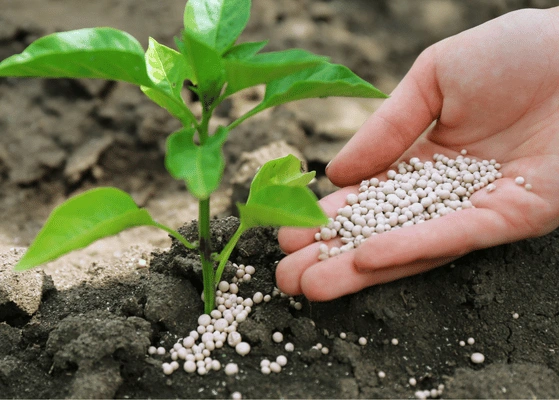
India's fertilizer sector is at the crossroads. The industry has been dominated for decades by chemical fertilizers like urea, DAP, and MOP, which have been subsidized strongly by the government. Although these inputs played a vital role in maintaining food security, they also spawned long-term problems such as soil depletion, nutrient imbalance, and excessive dependence on imports. For input suppliers and agribusinesses, this is a market that is heading squarely towards diversification and innovation.
The Rise of Biofertilizers in Indian Farming
Biofertilizers, which are prepared from living microscopic organisms like bacteria, fungi, and algae, are formulated to increase nutrient availability through fixing atmospheric nitrogen, solubilization of phosphates, or breaking down organic matter. They provide a cost-effective and eco-friendly alternative for farmers.
In India, adoption has been on the rise, especially in crops like cotton, rice, pulses, and sugarcane. To illustrate, Rhizobium biofertilizers find applications in pulse-growing regions of Madhya Pradesh and Maharashtra, while phosphate-solubilizing bacteria (PSB) are increasingly becoming popular in horticulture.
Government schemes, such as subsidies and campaigns, are speeding up adoption. Tamil Nadu and Karnataka governments have established biofertilizer manufacturing units that provide inputs to farmer cooperatives at a subsidy. Companies involved in agri-inputs are also placing bets on R&D to enhance shelf life and effectiveness, overcoming one of the age-old drawbacks of biofertilizers.
Nano Fertilizers Being a Game-Changer in Efficiency
While biofertilizers emphasize natural processes, nano fertilizers are examples of technological advancement at the molecular level. Formulated with nanotechnology, these products provide nutrients in ultrafine particles for plants to absorb more effectively.
India has also been a pioneer in this area, with major agri-tech companies launching nano urea. Based on initial trials, one tiny bottle of nano urea can substitute for a whole bag of traditional urea, slashing wastage and transport expenses significantly. This product is especially relevant to India, where urea abuse has been a chronic problem.
Nano fertilizers also fit India's sustainability agenda well. By enhancing nutrient use efficiency, they reduce greenhouse gas emissions associated with overuse of fertilizers. For the government, this constitutes a strategic means of lessening the subsidy burden without affecting productivity.
Policy and Institutional Push
The Indian government has been keeping pace with both bio and nano fertilizers. Subsidies for innovative products are being increased, and regulatory clearances for new products are being expedited. Programs such as the National Mission on Sustainable Agriculture (NMSA) emphasize the use of biofertilizers as a key to soil health enhancement.
Additionally, government-owned fertilizer corporations are partnering with startups to upscale nano fertilizer manufacturing. Pilot programs are being introduced across various states, with distribution channels adjusting to accommodate these new categories. The drive for "Atmanirbhar Bharat" (self-reliant India) by the government also favors indigenous research and development of fertilizer technology and eliminating import dependence.
Market Opportunities for Agri-Input Companies
The transition towards nano and bio fertilizers provides vast opportunities for agri-input companies, both foreign and Indian. Some of the major areas are:
- Product diversification: Traditional fertilizer companies are expanding portfolios to include biofertilizers, nano inputs, and fortified blends.
- Strategic partnerships: Collaborations between Indian research institutes and global tech firms are accelerating innovation.
- Distribution and scale: Startups focusing on direct-to-farmer channels are well-positioned to capture niche demand for premium inputs.
- Export potential: As global interest in sustainable inputs grows, Indian manufacturers may also find new export markets.
For global suppliers of fertilizer raw materials, these developments need diligent monitoring. Although demand for traditional inputs will persist, the slow move towards sophisticated substitutes might redefine trade patterns in the long run.
Obstacles to Adoption
Even though it looks promising, both bio and nano fertilizers encounter adoption issues. Producers take time to move away from traditional products owing to ignorance or lack of confidence. Biofertilizers, to function well, need good storage and handling, which can act as an impediment at rural supply chains. Nano fertilizers, while being effective, are currently relatively recent, and large-scale field testing is still in progress.
For companies, awareness creation, educating farmers, and availability of surety of distribution will be as crucial as product innovation. Without these, adoption could remain among innovative farmers and larger agribusinesses.
For full insights into product innovation, adoption trends, and growth opportunities, explore our India Fertilizer Market
The Future of Fertilizers in India Is Changing
The advent of bio and nano fertilizers is a paradigm shift from volume-based growth to growth based on efficiency in India's agri-input space. These technologies are not substitutes but complements to traditional fertilizers, providing more intelligent solutions for yield goals without draining resources.
Agribusinesses who diversify portfolios, make investments in awareness, and forge alliances will gain a competitive advantage. For policymakers, the task will be to develop architectures that balance subsidies, innovation, and sustainability.
As India progresses, bio and nano fertilizers is projected to have a pivotal role in charting the future of its agriculture, one which will be more robust, efficient, and eco-friendly.










Share