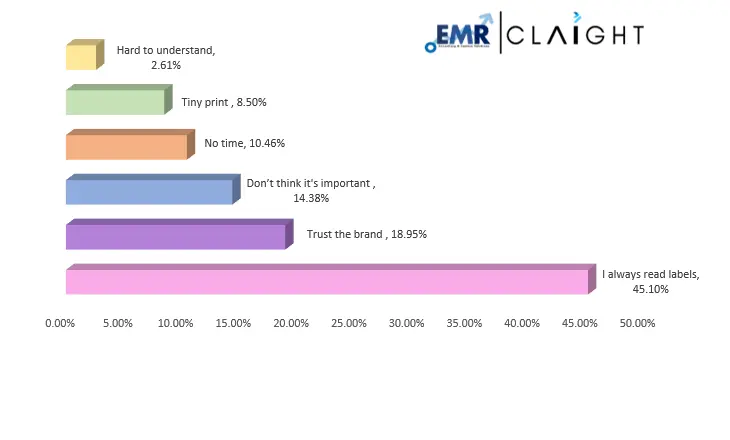
Consumer behaviours regarding label reading impact the industry significantly. A survey by Expert Market Research says that around 45% of consumers always read labels, driven by curiosity about what they are eating. These insights also highlight the need for better label design and consumer education.
Packaged foods are increasingly integrating into our daily lives. Be it a quick snack, a ready-to-eat meal, or kitchen essentials, the convenience and variety offered by these packaged foods are unmatched. Expert Market Research recently conducted a survey involving over 40,000 respondents from India’s top 10 cities, providing insights into the reasons behind consumer label-reading habits and shedding light on the implications for the packaged food industry.
Food Labels Influencing Consumer Purchase
The study reveals that 45.10% of respondents always read the labels on packaged foods. Brand loyalty plays an important role in consumer behavior. Many consumers rely on established brands they trust to provide safe and high-quality products. 18.95% of respondents prefer not to read labels because they trust the brand. However, the survey also indicates that 14.38% of consumers do not think reading labels is important. This may result from a lack of interest in the details of what they are eating and the importance of nutritional information. Additionally, 10.46% of respondents cited a lack of time as the reason they do not read labels. The remaining consumers find it difficult to read and understand the information provided on the labels of packaged food.
From the survey findings it is observed that mostly consumer read labels of food products as these labels provide essential information about ingredients, nutritional value, and allergens, helping them make informed choices that align with their dietary preferences and health goals. A rising percentage of health-conscious consumers prioritize understanding what they are eating. With increasing awareness of health and wellness, consumers, especially Gen Z, are vigilant about avoiding harmful additives, excessive sugars, and unhealthy fats. Where as, for people balancing work, family, and other duties, taking extra time to read labels feels unimportant as convenience takes precedence over carefully checking product details.

What Makes Label Reading Important
The survey finds that a majority of consumers read labels on packaged food products. However, the diverse reasons for not reading labels highlight the need for better consumer education and improved label design. Brands can use technology to enhance label readability and provide additional product information. For example, smart packaging and QR codes that offer detailed product information, sourcing details, and nutritional content are becoming more common. Moreover, brands can launch educational campaigns to inform consumers about the importance of reading labels.












Share