Is the Difference Between Bank ATMs and White Label ATMs Reshaping India’s Cash Access Landscape?
India's ATM network is progressively changing with the help of the cash machines which still seem to be in great demand all over the country in its cities, towns, and villages. Though digital transactions are increasing, still a few millions of people are going to ATMs for money withdrawals, small transactions, and basic banking services on a daily basis. The increased demand for these facilities has resulted in a considerable growth of various kinds of ATMs in India, especially the white label ATMs which have no connection with the traditional bank network have been significantly increased.
Earlier, ATM presence was mainly dominated by the bank ATMs which were installed and managed directly by public and private sector banks. However, now white label ATMs managed by non-bank operators are being widely accepted as a viable supplementary model that contributes to financial inclusion in the co-localized areas. The difference between the two categories is becoming more significant as both consumers and financial institutions are seeking better accessibility, lower operational costs, and enhanced customer convenience.
Understanding the Two ATM Models
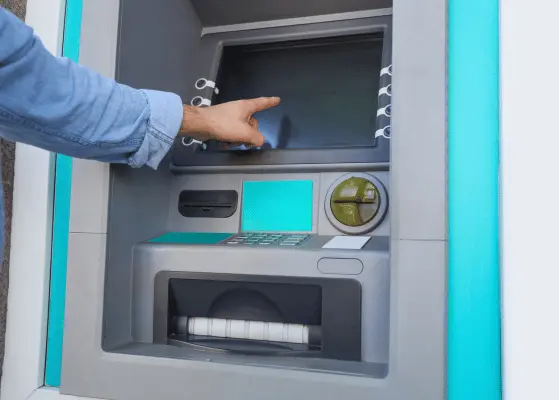
Bank ATMs are the property of banks and solely managed by them. These devices feature the branding of the bank that places them and are usually found at branches or in places of heavy foot traffic like shopping malls. They enable users to withdraw money, check their account balances and carry out other banking operations with their own bank or a different bank.
On the other hand, the white-label ATMs are run by non-bank entities that have got permission from the Reserve Bank of India to establish machines that do not carry any bank branding. With these devices, anyone can withdraw cash or perform other simple transactions. They maintain a payment-based relationship with banks, where the operator gets a revenue share through interchange fees.
The introduction of white label ATMs has led to more convenient access to cash and increased the availability of these machines in localities where banks have been unable to install or maintain ATMs due to financial constraints.
Growing Role of White Label ATMs in India
White label ATMs being installed in less served areas has been one of the major reasons behind their rapid proliferation. Quite a few rural and semi-urban areas do not have enough ATMs due to banks facing challenges in operational costs such as those of cash loading, maintenance, security, and power supply. Meanwhile, non-bank ATM operators follow a different business model that gives them the freedom to install machines even in the low-income regions.
Financial technology companies and cash management service providers who ensure uptime, cash availability, and customer convenience are supporting their expansion. As a result, these devices are increasingly becoming an indispensable part of India’s physical banking system.
Their growth has also been influenced by one more factor i.e. the freedom they have in choosing the location. White label ATMs may be found in local markets, kirana stores, petrol pumps, small shops, transport hubs, and community centers. This enables bank operators to access places not conventionally reachable by banks and serve the increasing demand for cash withdrawals without the need for a branch presence.
Why Consumers Prefer Wider ATM Choices?
A large number of Indian consumers are simply interested in whether an ATM is functional and available and do not really care which brand it is. As cash withdrawals have increased around salary days, festive periods, and for daily expenses, people are willing to use any machine that will provide them with uninterrupted service and quick access to their money.
White label ATMs are the most suitable solution to meet this demand as they provide easier access due to convenient locations, less waiting time, and availability of cash. Since these machines allow withdrawals for customers of any bank, consumers do not have to look specifically for their bank’s ATM. This way, they cut down the time required for traveling and are able to have a nice experience whether they are in a village or a locality with a lot of people. Besides that, the increased usage of white label ATMs has led to fewer instances of ATM downtime in various places as operators consider maintenance their main service offering and hence give it their priority. Good uptime means high consumer satisfaction and repeat usage.
Impact on Banks and Their ATM Strategies
Banks face high operating costs when running large ATM networks. Among these are the costs of cash replenishment, security, rental, and maintenance. In view of the increased pressure to cut down on expenses, a lot of banks are deciding against the expansion of their own ATM network and are choosing to enter into cooperation with white-label operators so as to guarantee coverage in the areas which are remote or of low revenue.
The change is also leading banks to concentrate on their own ATMs for value-added functions such as passbook printing, cheque services, or cash deposits, whereas white label ATMs are free to handle basic withdrawal needs. This separation of roles contributes to the effectiveness and deepens financial inclusion.
There is also one more benefit for banks, that is, the capability to serve customers without going for costly investments in new machines or branch networks. Collaborations with ATM operators give banks the opportunity to stay accessible all over the country and at the same time, enhance the quality of the service.
What This Means for India’s ATM Market?
India's cash ecosystem is becoming more inclusive due to the widening gap between bank owned ATMs and white label ATMs. While non-bank operators are venturing into rural areas and banks are optimizing their ATM models, the entire network is getting stronger and more dependable for users.
Consumers get increased convenience and more places to withdraw cash as the most direct benefits. Banks, on the other hand, stand to gain by lightening the operational load and, at the same time, ensuring that customers continue to be served. The industry, thus, benefits from this transitioning combination that leads to improved coverage and increased financial inclusion in different regions.
For insights on growth drivers, operator performance, and ATM distribution trends, refer to the India ATM Market
Looking Ahead
White label ATMs are poised to expand their role significantly as a result of the support that financial access gets from government initiatives and operator investments, if present trends are maintained. People will be tempted to make use of the nearest ATM which might be a white label one rather than going to the specific bank branded ATM and operators will be given the opportunity to fill the voids in the places which are poorly provisioned with banking infrastructure.
The two kinds of ATMs, bank ATMs and white label ATMs, operating in India will be the backbone of the most needed financial services that must be smooth and inclusive in a scenario of a digital payment adoption which is balanced with the steady demand for cash.











Share