Compliance-Led Demand Is Redefining India’s Analytical Instrument Market
Regulatory pressure has become one of the strongest demand catalysts in India’s analytical instrument market. Unlike earlier phases where capacity expansion drove purchases, the present-day buying decisions are deeply tied to compliance readiness. Laboratories operating in pharmaceuticals, food safety, environmental testing, and chemical sectors are under closer scrutiny from regulators and global customers alike. This shift is pushing labs to replace older systems, upgrade software layers, and invest in instruments that can withstand frequent audits without operational friction.
Major suppliers are clearly aligning their India strategies around this trend. Instead of positioning instruments purely on performance metrics, companies are emphasizing validation support, data integrity, and documentation features. Compliance has transformed from being a secondary consideration to a core product differentiator, and vendors that fail to adapt are losing ground even in price-sensitive segments.
Accreditation Standards Drive Equipment Replacement
NABL accreditation continues to be a key factor for instrument upgrades. Many Indian labs continue to operate equipment installed over a decade ago. These systems often lack electronic audit trails, automated calibration reminders, or secure data storage. While these are technically functional, they create risk during inspections.
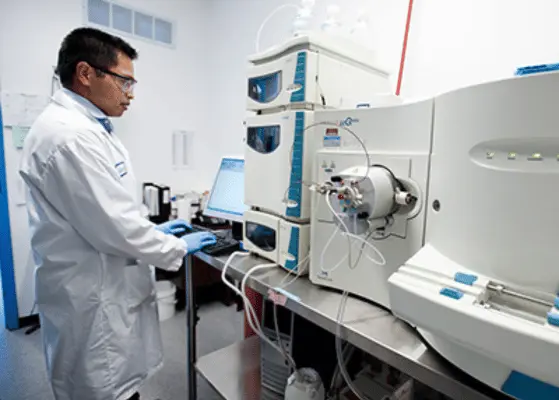
Shimadzu and Agilent have both expanded campaigns in India that specifically address NABL-aligned testing requirements. Shimadzu’s mid-tier chromatography and spectroscopy systems are being positioned as “audit-ready” solutions. The emphasis is not on cutting-edge innovation but on stability, repeatability, and clean documentation. This resonates strongly with third-party testing labs that handle regulatory samples daily.
With India accounting for nearly 20% of global generic drug exports, laboratories cannot afford compliance gaps. Instruments that simplify validation protocols are now preferred, even if upfront costs are higher.
Food and Environmental Testing Tighten the Net
Compliance-led demand is not limited to pharmaceuticals. Food safety and environmental monitoring are becoming equally important growth pillars. FSSAI’s increasing surveillance programs and state-level pollution control mandates are expanding testing volumes across the country.
Thermo Fisher Scientific has responded by strengthening its offering of GC-MS and ICP-MS systems for contaminant analysis. These systems are being promoted for pesticide residue testing, heavy metal analysis, and trace-level detection.
On the other hand, domestic players, like Analytical Technologies Limited, are introducing upgraded atomic absorption and water analysis instruments targeting regional government labs. While these products may not match multinational systems in automation depth, they meet baseline compliance needs and benefit from faster service turnaround. This combination is attractive to public-sector buyers working within tight budgets.
Data Integrity Becomes Non-Negotiable
One of the most noticeable changes in compliance-driven procurement is the focus on data integrity. Regulators increasingly expect traceable, tamper-proof electronic records as manual logs and spreadsheet-based reporting are no longer acceptable in many audits.
Waters Corporation has made informatics central to its India growth strategy. Its chromatography data systems are positioned as tools that reduce data manipulation risk while improving review efficiency. This is especially relevant for contract manufacturing organizations, where audit readiness directly affects client retention.
Companies are also investing in secure data environments for their high-end analytical platforms. Research institutions and advanced testing centers value these features as they collaborate with global partners.
Validation and Training Gain Strategic Importance
Validation support and operator training are becoming decisive factors in vendor selection. Labs increasingly expect suppliers to assist with IQ, OQ, and PQ documentation. Vendors that cannot support these processes struggle to close deals.
Agilent and Thermo Fisher have expanded local application labs and training programs in India. These facilities allow customers to test methods, train analysts, and resolve audit observations faster. This approach reduces onboarding time and strengthens customer retention rates.
Compliance Shapes Product Roadmaps
The regulatory environment is now directly influencing product development decisions. Vendors are prioritizing software upgrades, secure firmware, and standardized reporting modules over experimental hardware features. Labs want instruments that pass audits reliably, not systems that require frequent customization.
For a detailed competitive analysis, regulatory impact, and demand projections, refer to the India Analytical Instrument Market
Compliance Will Continue to Drive Market Structure
Regulatory compliance is actively shaping procurement cycles, vendor strategies, and product design priorities. As enforcement intensity increases across sectors, demand will favor suppliers that combine reliable hardware with strong compliance ecosystems. For buyers, modernization is becoming less optional and more strategic. In this evolving environment, compliance-led demand is expected to continue to define how the Indian analytical instrument market grows and competes.










Share