How Is IoT Changing Retail and Customer Experience?
Retailers constantly face the challenge of satisfying higher customer expectations, tight margins, and complex operations at the same time. Internet of Things technology supports brands in their response by allowing them to set up connected store environments that integrate physical and digital experiences. Smart shelves, in-store sensors, and connected point-of-sale systems gather real-time data on customer movement, product interactions, and inventory levels. This data allows retailers to comprehend customer behavior better and fine-tune store layouts, product placement, and staff scheduling.
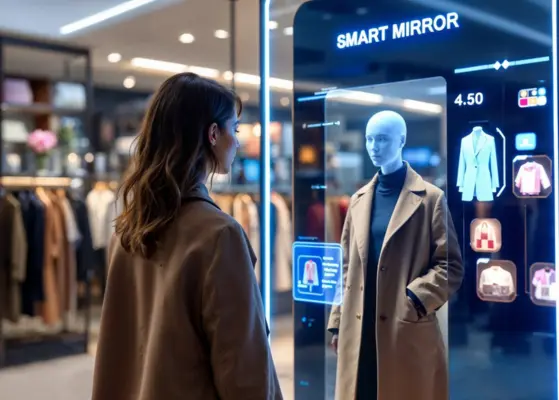
Through mobile apps or digital displays, customers receive faster checkout processes, accurate product availability, and personalized promotions. Retailers, on their part, also get the opportunity to change pricing and merchandising strategies on the fly in accordance with demand patterns. As physical stores transform, IoT gives them the toolset to effectively compete with online platforms by offering convenience and personalized service at a large scale.
Inventory Intelligence Improves Supply Chain Performance
Inventory management is still a big problem for retail chains, especially multi-location stores. IoT tracking devices that are powered by IoT give you a real-time overview of the stock levels in all your warehouses and stores. Connected tags and sensors keep an eye on the products all the way from the suppliers to the shelves, which not only reduces losses but also increases the accuracy of the inventory.
This degree of openness enables retailers to automate the replenishment of shelves and thus avoid stockouts. Moreover, as the demand forecast becomes more accurate, the level of surplus inventory reduces. Supply chain partners also gain from the data that is shared, as it helps them coordinate better and respond to disruptions more quickly.
Temperature and humidity sensors are indispensable for the protection of fresh goods such as food and medicines. Retailers can take action immediately if the storage conditions differ from the set standards, thus ensuring the quality of the products and minimizing waste. Such features enhance operational resilience while at the same time bringing about sustainability goals.
Personalization Through Real-Time Customer Insights
IoT is a great tool for retailers to offer customers highly personalized experiences by capturing a lot of data about customers inside the stores. Various sensors and IoT devices monitor foot traffic, how long customers stay, and their buying behavior. Such data is then sent to customer relationship management systems, which generate a list of personalized recommendations and promotions based on the customers' likes.
Through the detailed data of loyal customers' visits and habits, retailers gain an edge in the effectiveness of loyalty programs. The contents of digital signage can be changed instantly according to the demographics of the audience or the availability of the products. This kind of focused communication not only raises the level of engagement but also results in bigger purchases without the need to depend only on web channels. Besides, personalization is taken to the level of services. The personnel within the store get a notification when a premium customer arrives or when help is required in a particular area. Such a practice not only results in higher customer satisfaction but also in more efficient use of the workforce.
Operational Efficiency and Store Safety
IoT has a significant impact on the retail industry by streamlining operations, which customers hardly notice. For example, energy consumption is efficiently managed in stores as connected equipment continuously checks refrigeration units, lighting systems, and heating controls. Additionally, maintenance personnel are notified instantly when any piece of equipment's efficiency declines, allowing them to promptly fix it before a breakdown occurs.
Moreover, store security is enhanced through IoT solutions like smart video monitoring and environmental sensors. Retailers have the ability to detect excessive crowding, efficiently handle emergency situations, and check air quality for the safeguarding of customers and employees. Although theft is a major issue in retail locations, loss prevention systems are designed to identify suspicious activity and ultimately reduce theft. All these operational changes lead to savings that retailers can spend reimagining the customer experience and undertaking digital transformation.
To explore global retail IoT adoption trends, investment outlooks, and technology developments, access the full Global IoT Market.
Retail in a Connected World
IoT is transforming retail by making physical stores interactive spaces that can immediately respond to the needs of a customer. Connected technologies help to strengthen the bond between brands and customers in every way, from automated stock management to personalized marketing. By embracing IoT, retailers are obtaining greater insights into their business operations and, at the same time, offering their customers smooth experiences, which can make the boundaries between online and offline shopping almost disappear.
As consumer expectations keep changing, connected retail will no longer be a high-end feature but will become the norm. Those companies that are putting their money into the development of scalable IoT platforms now are basically paving the way for their longevity and robustness. The forthcoming retail is all about using data for making the right decisions and having real customer relationships with the help of uninterrupted connectivity.











Share