Public vs Private EV Charging: What India Needs Most
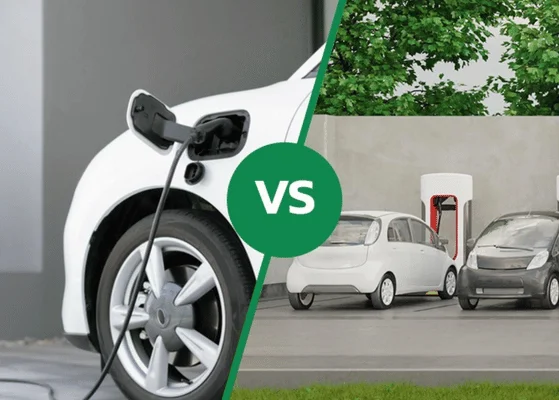
The rising popularity of EVs in India has drawn attention to the infrastructure required for charging them. So, whether India needs more private, or public charging stations remains a highly debated topic. Anyone can use public chargers, which are usually found at parking lots, malls, and highways. At the same time, private chargers are frequently located at fleet depots, official campuses, and residential areas. Because of India's diverse geography, housing patterns, and transportation preferences, the best answer is not an either-or choice but rather a carefully considered mix that fits a range of use cases.
Public charging is essential in urban areas with a high apartment population and little parking. Private charging may be more practical in offices, commercial centers, and suburbs. Building an ecosystem that is inclusive and scalable for all types of EV users requires an understanding of the optimum places for each model.
Highway Coverage and Urban Access Are Made Possible by Public Charging
Public charging stations are more than simply a convenience; they are essential for visibility, range confidence, and widespread adoption. Public charging stations are typically located in commercial areas, transit hubs, and beginning and ending points of major traffic corridors and allow EV owners, particularly those that don't have parking space, to charge their vehicle while they're already out shopping, going to work, or doing chores.
Public charging hubs also facilitate the long-distance travel of EVs by providing readily available charging spots on national highways. These public charging hubs include both alternating current and direct current fast charging options as well as charging for every type of EV, from scooters to SUVs. Operators such as Tata Power and BPCL are expanding their network across the local areas to boost accessibility to public charging.
Private charging enhances everyday utility and operational efficacy
Private charging allows EV users the ability to "fill up" electric vehicles while at home, the office, or the depot while the vehicle is parked. Private charging is most beneficial for EV users with a designated parking spot and fleet operators using EVs to provide logistics or ride-hailing services.
With personal charging, typically a user installs either a Level 1 charger and recharges overnight, avoiding peak tariffs and the need for daily charging station visits. Whereas, in offices and fleet depots, private charging allows for load management and energy cost efficiencies and, more importantly, helps establish a schedule to ensure that users have a fleet of vehicles ready.
Balancing Public and Private Charging Is Crucial for Scale
India's EV mission hinges on blending public and private charging to cover all scenarios. Public charging is essential for dense urban areas, interstate travel, and locations where private space is unavailable. Meanwhile, private charging reduces grid stress during peak hours and supports consistent charging for regular commuters.
State EV policies are increasingly recognizing this balance. Delhi’s EV policy, for example, encourages residential societies and workplaces to install private chargers through a Single Window Clearance system. Simultaneously, it supports the development of accessible public charging at commercial and transport locations.
Key Challenges: Access, Reliability, and Awareness
Despite the progress made over the years, challenges persist. Public charging infrastructure needs to work towards having better uptime combined with real-time app integration and payment options. Meanwhile, for private charging, the need for affordable hardware support and compliance with safety guidelines, along with increased awareness for consumer-level usage.
Interoperability between public networks and types of EVs is another important factor. Confusion in charger types, payment methods that differ depending on provider or network and unclear tariffs, can all be frustrating for users. Unified systems and the open, trusted sharing of data streams between both public and private operators have become necessary
For complete market analysis and growth prospects, see our India EV Charging Market
India Requires a Dual Approach to Charging Infrastructure
The success of the EV future in India highly depends upon the complementary strength of public and private charging options. Public charging drives both accessibility and assurance amongst consumers, while private charging provides convenience for frequent operational use while being a preferable option for grid support. Both will require ongoing investment, supportive and clear policy frameworks, and initiatives to raise consumer awareness to foster a strong, inclusive charging network.











Share