Understanding USB Charging Standards in the Global Charger Market
As the desire for fast, safe, universal charging continues to flourish, standards for USB charging are developing more rapidly than ever before. USB Power Delivery (PD) and Qualcomm Quick Charge (QC) are a couple of the more well-known protocols steering the rapidly evolving USB charger market. As the functionality of consumer electronics have become more complex, it is essential that we begin to understand how they are taking unique approaches to charging, whether it is value derived from product performance, consumer user compatibility, or overall satisfaction.
A consumer will start to form some patterns in the rapid pace of change in the charger space by further distinguishing between charging protocols, and the recent changes charging technology is creating on the global charging industry. PD and QC are not just bestowing faster charging, they are both implementing a more noble desire for intelligence and adaptive delivery in the continuously growing area of laptops, smartphones, tablets, and even small appliances. Companies are racing to provide the best possible user experience, and these features have become tools for product differentiation and fostering consumer loyalty.
Consumer Awareness and the Push Toward Smarter Charging
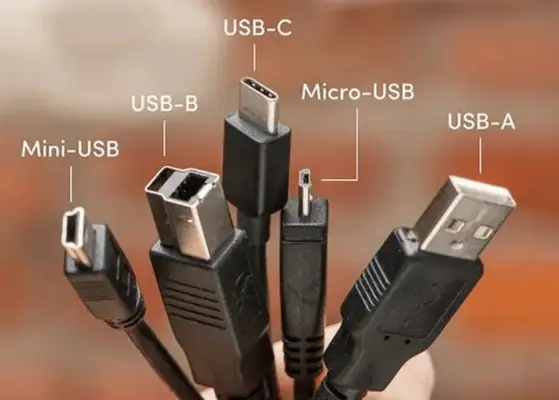
The transition away from old USB-A charging to USB-C with PD or QC is also fueled by increased consumer awareness. Consumers are more knowledgeable today regarding wattage differences, speed of charging, and the safety of devices and tend to expect "PD 65W" or "QC 3.0" prominently displayed on packaging or on online ads.
For example, students and remote workers often select USB PD-supporting chargers for laptops and tablets because of greater power output and protection on the device. Travelers want compact, dual-port chargers that charge a laptop through PD and a smartphone through QC simultaneously. These choices are not only based on technological requirements but also habits of lifestyle.
Smart charging standards are also evolving and continue to address sustainability issues while improving energy efficiency. Chargers that are USB PD or QC generally include over-voltage protection and temperature management as well as low standby power drain, contributing toward more responsible and sustainable energy consumption.
Design Innovation and Market Differentiation
USB PD and QC have opened the doors for a number of innovative chargers, with brands making them faster, smarter and sleeker for enthusiasts and everyday consumers. Along with GaN (gallium nitride) that has also come in to play as a semiconductor that is compatible with both charging protocols while allowing chargers to be lightweight and smaller while still offering much higher wattage - an increasing trend in a variety of consumer electronics product design.
Newer brands are leveraging these charging protocols as differentiators in a saturated market. Some brands offered app-based controls and/or included real-time voltage displays for customers. Others integrate charging functionality into a range of multi-functional devices like, power strips, travel adapters, and car mounts. This suggests that charging protocols PD and QC are not just technical specifications, but product features that play a strategic role in defining the product.
Retail, Distribution, and E-commerce Trends
The method of purchase by consumers for USB chargers is also shifting. Online channels, such as Amazon, Shopee, and Flipkart control the marketplace, providing side-by-side comparisons of QC and PD models. YouTube tech channels and influencer reviews are primary sources of information.
In physical stores, consumer electronics retailers usually categorize products by purpose and feature PD/QC badges to inform the decisions of customers.
Meanwhile, B2B bulk orders are increasing as offices, schools, and co-working centers require centralized charging systems that accommodate fast charging for different devices. PD and QC compatibility is typically a buying specification in institutional contracts.
For deeper insights into charger innovations, adoption trends, and regional demand, read our Global USB Charger Market
The Future of Fast, Flexible Charging
USB PD and QC are more than competing protocols as they represent the shift toward a unified, intelligent power ecosystem. As the global charger market grows to meet the energy needs of increasingly mobile lifestyles, the role of these standards will only become more significant.
There is an opportunity in the market, and brands that can coordinate compatibility, design and consumer experience will have leverage in a very competitive and complex category. For consumers, no matter the speed of charging, PD and QC, and their associated characteristics offer more than the obvious benefits of convenience as they offer peace-of-mind, device preservation, and the possibility of charging anywhere and at any time.
With increasing expectations for the energy efficiency of charging multiple devices and compact size, existing charging solutions will likely find ways to integrate both PD and QC. It is expected that they will continue to develop the price-performance benchmarks upon which consumers evaluate new solutions in the rapidly evolving global charger market.











Share