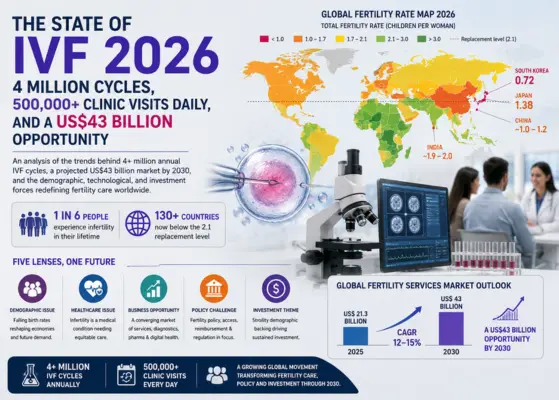
An analysis of the trends behind 4+ million annual IVF cycles, a projected US$43 billion market by 2030, and the demographic, technological, and investment forces redefining fertility care worldwide.
The global fertility services market, estimated at USD 21.3 billion in 2025, is on track to reach USD 43 billion by 2030, growing at 12 to 15% annually against a backdrop where one in six people experience infertility in their lifetime and over 130 of the world's 194 countries now sit below the 2.1 replacement fertility rate. This article maps the demographic, technological, capital, and policy forces converging on that growth, and sets out what it means for healthcare providers, pharmaceutical and MedTech companies, governments, and investors through 2030.
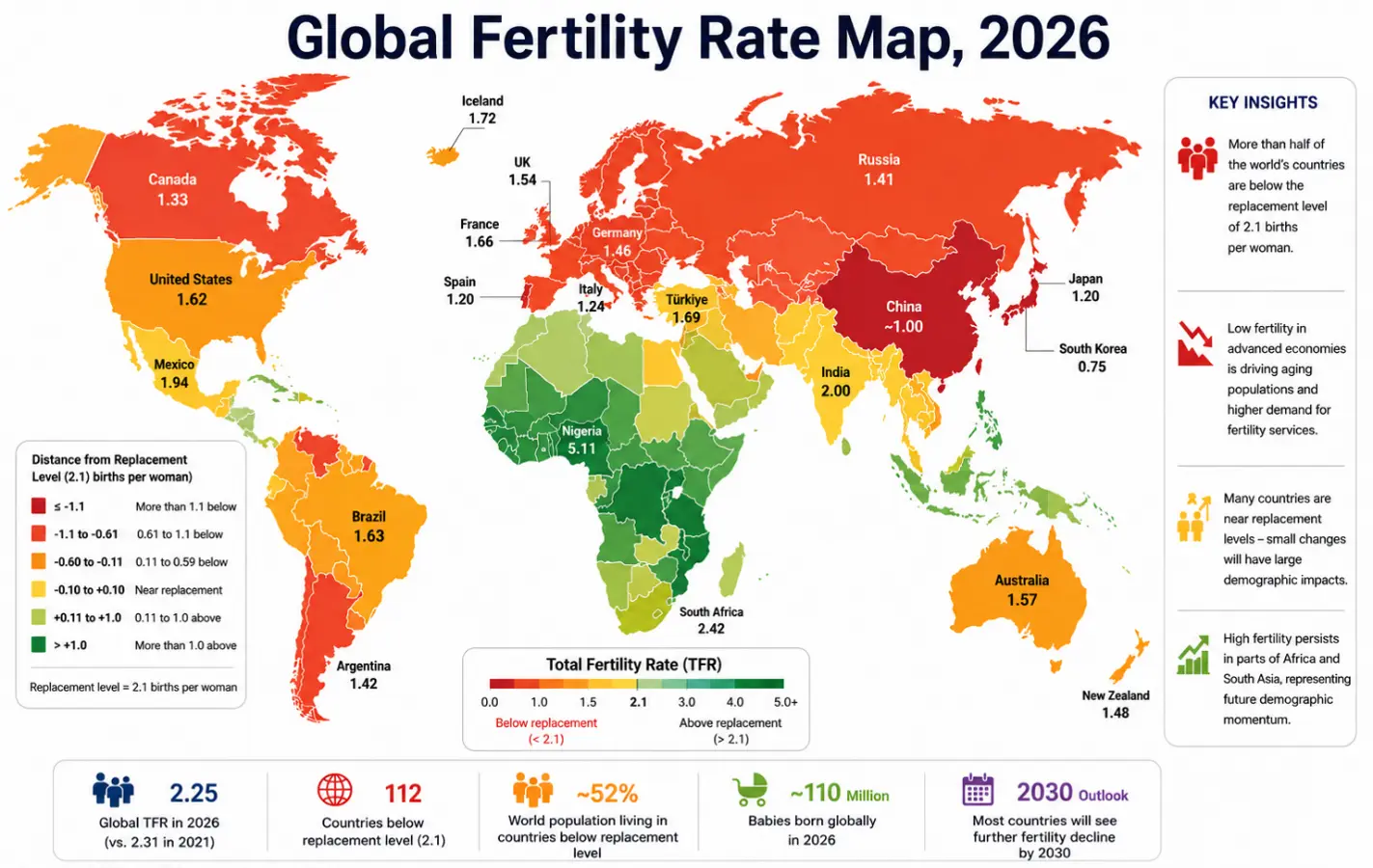
World map of total fertility rate by country 2026 showing the global fertility economy and countries below replacement level
Introduction: Five Lenses on a Single Day
World IVF Day, observed on 25 July, marks the anniversary of the birth of Louise Brown in 1978, the world's first baby conceived through in vitro fertilisation. Nearly five decades on, IVF is no longer an experimental procedure confined to a handful of specialist centres. It is a global clinical practice performed millions of times a year, a fast-growing commercial category, and, increasingly, a matter of state policy in countries as different as China, Japan, France, and Australia.
This article reads Fertility care through five simultaneous lenses, each of which points a different type of organisation toward a different set of decisions.
- A demographic issue. Falling birth rates are reshaping the age structure of major economies, with direct consequences for labour supply, pension systems, and healthcare demand.
- A healthcare issue. Infertility is a widespread medical condition in its own right, not a lifestyle preference, and health systems are only beginning to treat it that way.
- A business opportunity. Fertility services, diagnostics, pharmaceuticals, and digital health platforms are converging into a single addressable market with room for new entrants.
- A policy challenge. Fertility policy, reimbursement, regulation of assisted reproduction, and population strategy are increasingly linked in government thinking, particularly in East Asia and parts of Europe.
- An investment theme. Private equity, venture capital, and strategic acquirers have identified the fertility economy as a durable, demographically-supported growth category within healthcare services, driving sustained IVF investment trends across clinics, diagnostics, and digital platforms.
The State of Global Fertility: 1 in 6 Affected, 130+ Countries Below Replacement
Two demographic facts emerge - first, infertility is common and evenly distributed. Second, birth rates are falling almost everywhere, including in countries that do not yet think of themselves as low-fertility societies.
The Global Infertility Burden: 17.5% Lifetime Prevalence (WHO)
The World Health Organization's most recent systematic analysis, drawing on 133 studies published between 1990 and 2021, estimated that around 17.5% of the adult population, roughly one in six people, experiences infertility at some point in their lifetime. Lifetime prevalence was measured at 17.8% in high-income countries and 16.5% in low- and middle-income countries, a gap the WHO itself describes as narrow enough to show that infertility does not discriminate by geography or income.
Why this matters strategically
Because prevalence is broadly uniform across income levels, the addressable population for fertility care is not concentrated in wealthy markets. The commercial and policy gap between countries is overwhelmingly a gap in access and affordability, not in underlying clinical need.
Declining Fertility Rates: From 0.72 in South Korea to 2.0 in India
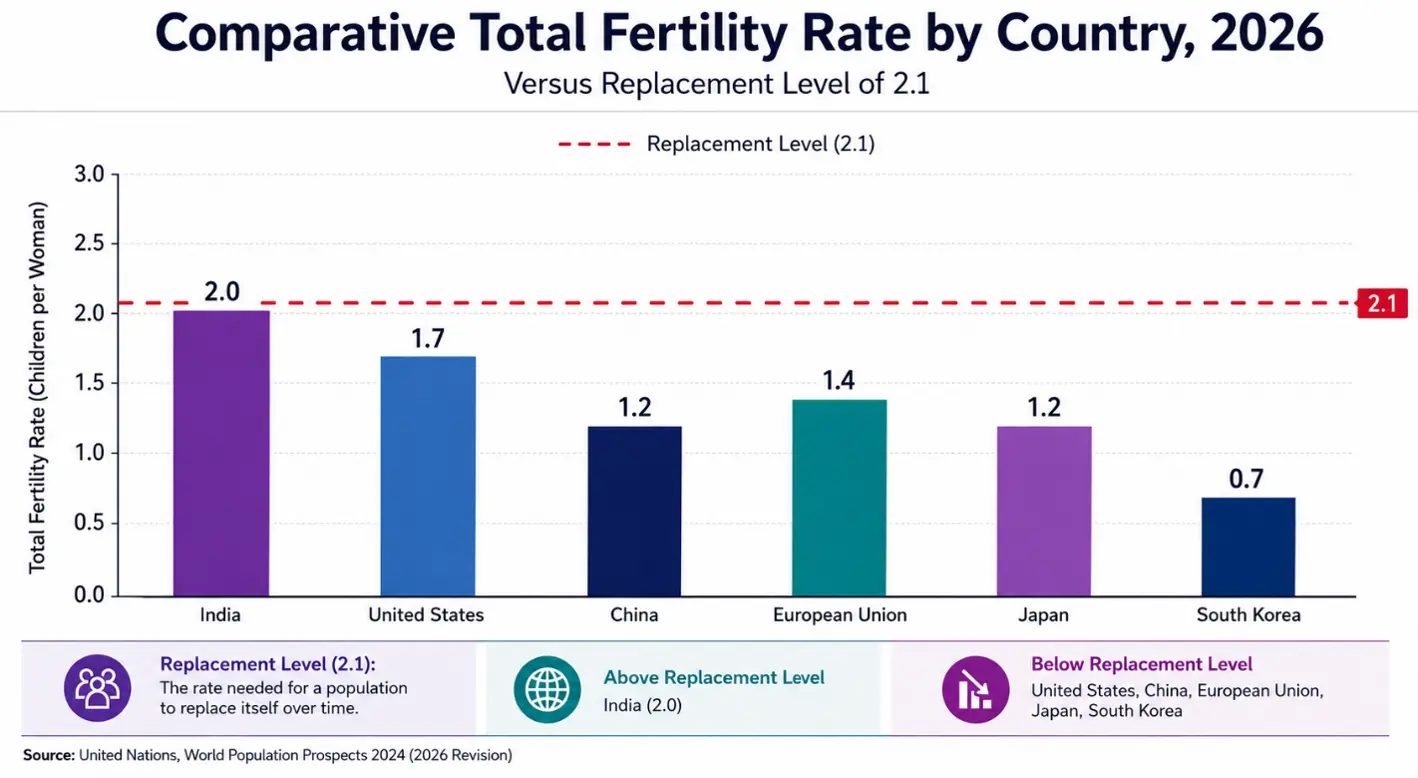
Comparative total fertility rate by country, 2026, versus replacement level of 2.1
The United Nations Population Division's most recent projections put the global average total fertility rate at approximately 2.25 to 2.35 children per woman, only marginally above the replacement threshold of 2.1. Beneath that global average sits enormous variation. More than half of the world's countries, over 130 out of roughly 194, now sit below replacement level, a threshold most of Europe, East Asia, and large parts of the Americas crossed decades ago.
| Country / Region |
Approx. TFR (2025-26) |
Trend |
Notable driver |
| South Korea |
0.72-0.76 |
World's lowest |
Delayed marriage, high cost of living and education, long working hours |
| Hong Kong / Macao |
0.70-0.75 |
Among world's lowest |
Extreme urban density, housing costs |
| Japan |
1.38 |
Slight uptick from 2023 low |
Ageing population, delayed parenthood, shrinking marriage rate |
| China |
approx. 1.0-1.2 |
Falling for four consecutive years |
One-child policy legacy, urbanisation, cost of raising children |
| European Union (average) |
approx. 1.4-1.5 |
Below replacement since 1970s-80s |
Later family formation, dual-income norms |
| United States |
approx. 1.6 |
Below replacement since 1972 (with 2000s uptick) |
Delayed parenthood, cost of childcare |
| India |
approx. 1.9-2.0 |
Near replacement, falling |
Rapid urbanisation, rising female workforce participation |
The strategic implication is that fertility decline is no longer confined to a handful of East Asian outliers. It is now the default trajectory for middle-income and high-income economies alike, including India, historically viewed as a high-fertility market, which is approaching replacement level far faster than earlier UN projections anticipated.
Delayed Parenthood: The Single Largest Driver of Rising IVF Demand
Across almost every market discussed in this report, the single most consistent driver of both declining natural fertility and rising IVF demand is delayed childbearing. Extended education, dual-career households, housing costs, and the cost of raising children are pushing first births later into a woman's reproductive life, at exactly the point where natural fecundity begins to decline and assisted reproduction becomes clinically relevant for a larger share of the population.
Global IVF Market Snapshot: ~USD 20bn in 2025, Heading to ~USD 43bn by 2030
The global IVF market is expanding steadily, although market estimates differ depending on whether analysts measure IVF procedures alone or the broader fertility services ecosystem. Europe has a mature fertility market supported by established clinical networks and regulatory frameworks. The United States remains one of the largest IVF markets due to advanced clinical infrastructure, high healthcare expenditure and increasing fertility benefit adoption. Asia-Pacific represents one of the strongest growth opportunities due to large patient populations, improving healthcare access and increasing private investment. India has become an important fertility services market because of lower treatment costs compared with Western markets and growing demand from domestic and international patients. Middle Eastern markets are also expanding through investments in specialised healthcare facilities.
Regional Comparison: Europe Leads Today, Asia Pacific Grows Fastest
| Region |
Relative market position |
Primary growth driver |
| Europe |
Largest revenue share currently |
Mature private-pay and reimbursed markets, strong PE investment, high per-capita treatment rates |
| North America |
Second-largest, high per-cycle pricing |
Employer-sponsored fertility benefits, patchwork state mandates in the US |
| Asia Pacific |
Fastest-growing region |
China and India volume growth, medical tourism, expanding insurance coverage in China |
| Middle East / GCC |
Smaller base, high growth potential |
Rising incomes, regional medical tourism hub status, evolving regulatory frameworks |
| Latin America |
Emerging |
Growing private clinic networks, medical tourism from North America |
| Africa |
Nascent but underserved |
Very large unmet need relative to installed clinical capacity |
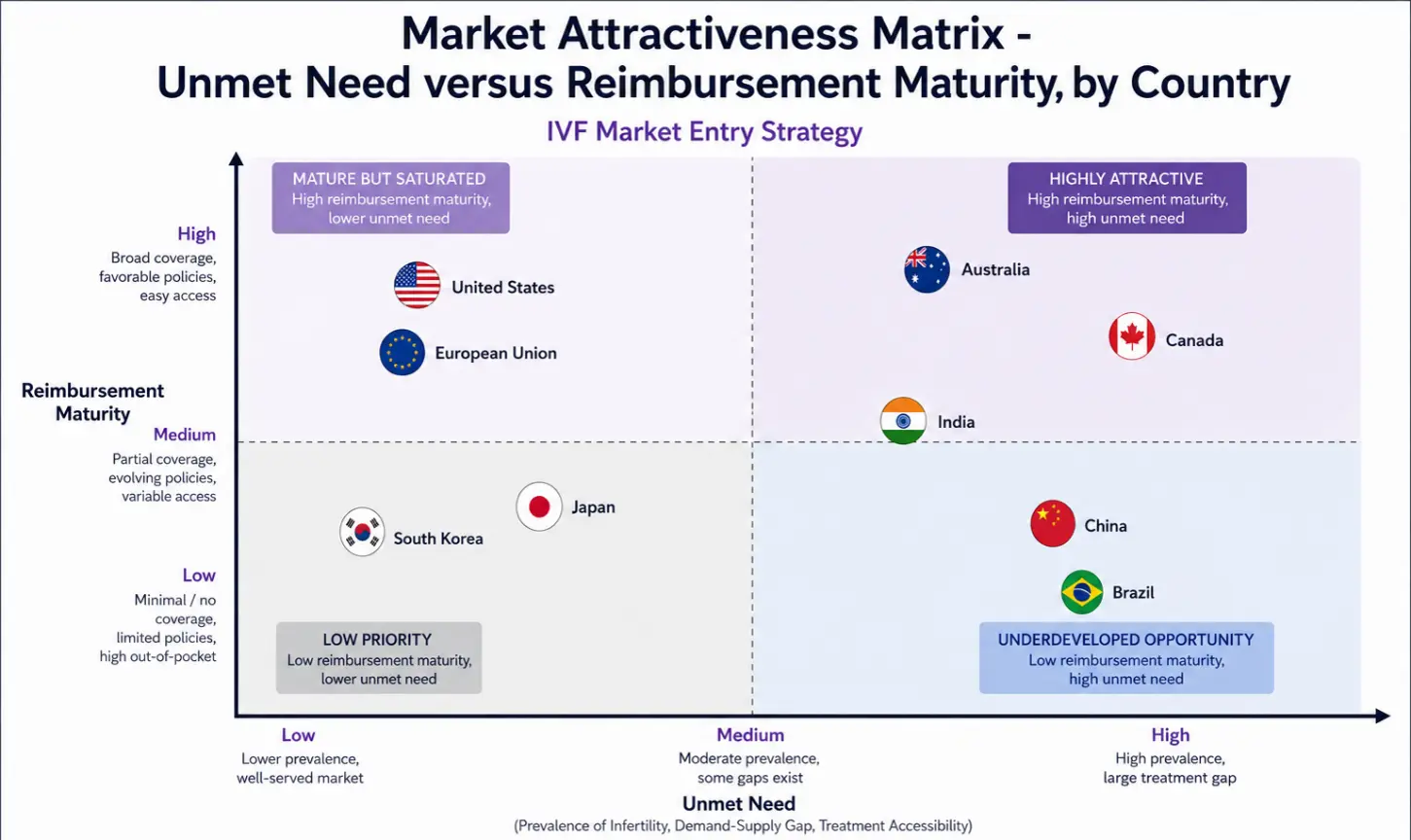
Fertility market attractiveness matrix comparing unmet need and reimbursement maturity across countries for IVF market entry strategy
Five Forces Shaping a USD 100bn+ Fertility Economy
Five structural forces are converging to reshape fertility care from a fragmented clinical service into an investable, technology-enabled healthcare sector. Each force creates distinct opportunities and risks for different categories of stakeholder.
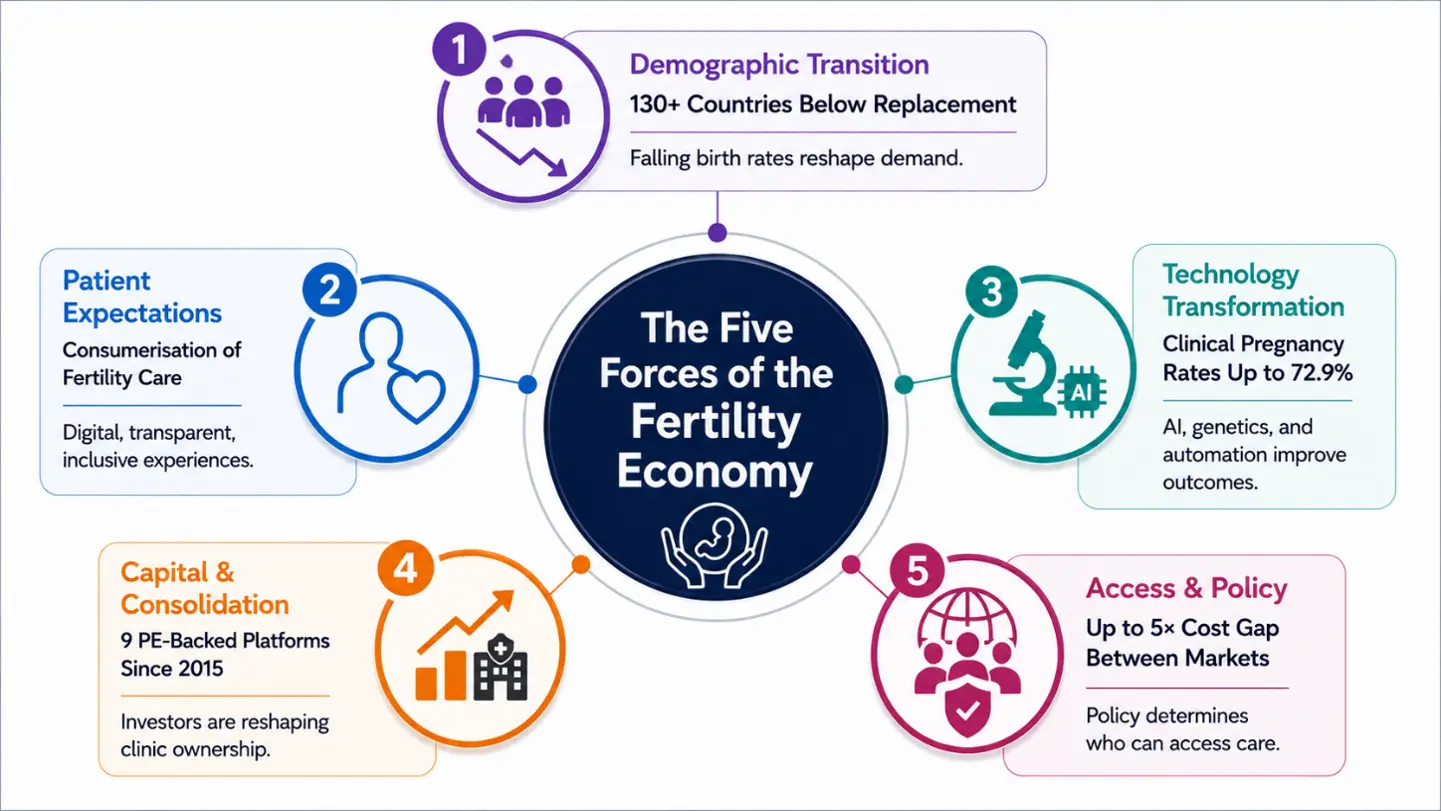
Five Forces of the Fertility Economy framework diagram: demographic transition, patient expectations, technology, capital consolidation, and access policy
Force 1: Demographic Transition, 130+ Countries Below Replacement
Aging populations, falling birth rates, urbanisation, and delayed marriage are compounding one another. Countries that once relied on natural population growth to sustain their workforce and tax base are now actively courting fertility treatment as a partial policy lever, even though assisted reproduction alone cannot reverse national demographic decline at scale.
Force 2: Changing Patient Expectations Across a Widening Patient Base
Patients increasingly expect fertility care to resemble consumer healthcare: transparent pricing, digital scheduling and monitoring, and destigmatised access regardless of relationship status or sexual orientation. Fertility preservation, including elective egg freezing, has moved from a niche offering to a mainstream employee benefit at large employers, and single parents by choice and same-sex couples now represent a growing share of the patient base in many markets.
Force 3: Technology Transformation, From 68% to 72.9% Clinical Pregnancy Rates
AI-assisted embryo grading, time-lapse imaging, expanded genetic screening, and early laboratory automation are converging to standardise what has historically been a highly subjective, embryologist-dependent process. The evidence base is still developing unevenly across specific tools, discussed in detail in Section 5.
Force 4: Capital and Consolidation, Nine PE-Backed Platforms Since 2015
Private equity has been the single largest force reshaping the ownership structure of fertility clinics globally since 2015, discussed in depth in Section 6. Consolidation has moved beyond clinics themselves into adjacent service lines, including genetics testing, donor gamete banks, and surrogacy agencies.
Force 5: Access and Policy, a 5x Cost Gap Between Markets
Reimbursement, government funding, and regulatory environments vary enormously by country and, in federal systems such as the United States, by state. Equity considerations, who can afford treatment and who cannot, are increasingly central to both public policy debate and corporate benefits strategy.
Innovation Landscape: The First FDA-Cleared AI Embryo Tool
Reproductive health innovation is the clearest lens on where the future of IVF is heading. Three categories dominate current activity: AI-assisted clinical decision support, laboratory automation, and digital platforms that sit between clinics and patients.
AI in Embryo Selection: 72.9% vs. 68% in the Pivotal Trial, but Mixed Results Elsewhere
The clearest recent milestone came in May 2026, when Alife Health's Embryo Predict became the first AI-assisted embryo assessment tool to receive FDA clearance in the United States. The clearance was supported by a prospective, randomised, multi-centre trial across seven US fertility clinics involving roughly 440 patients, which reported a clinical pregnancy rate of 72.9% for AI-supported embryo assessment against 68% for traditional morphology-based selection.
Independent commentary in the scientific press notes that AI tools currently show promise for assisting embryo, egg, and sperm selection, but are not yet consistently validated to improve clinical outcomes or to replace embryologist judgement across the board.
What this means for decision-makers
The FDA clearance is a genuine inflection point for regulatory acceptance of AI in fertility care, but outcome claims still vary meaningfully by tool and by trial design. Buyers, whether clinics, health systems, or investors, should evaluate specific products against their own published trial evidence rather than treating 'AI-assisted embryo selection' as a single, uniformly validated category.
Laboratory Automation: A EUR 20 Million Bet on Fewer Repeat Cycles
Spanish-founded Overture Life is among the most closely watched companies applying robotics and automation to core embryology workflows, including automated egg freezing and non-invasive embryo assessment, with the stated aim of reducing the number of repeated cycles patients need and lowering the overall cost of treatment. The company has attracted institutional backing, including a EUR 20 million loan from the European Investment Bank in 2025 under its TechEU initiative, specifically to fund automation and AI-enabled improvements to IVF outcomes.
Digital Fertility Platforms: From IVF Navigation to a Full Benefits Category
Employer-facing fertility benefits platforms, led by companies such as Carrot Fertility and Maven Clinic, have become a distinct and fast-growing sub-category, sitting between traditional clinical providers and corporate HR and benefits functions. These platforms bundle fertility preservation, IVF navigation, and increasingly menopause and broader reproductive health support into a single employee benefit, reflecting how far fertility has moved into mainstream workplace healthcare strategy.
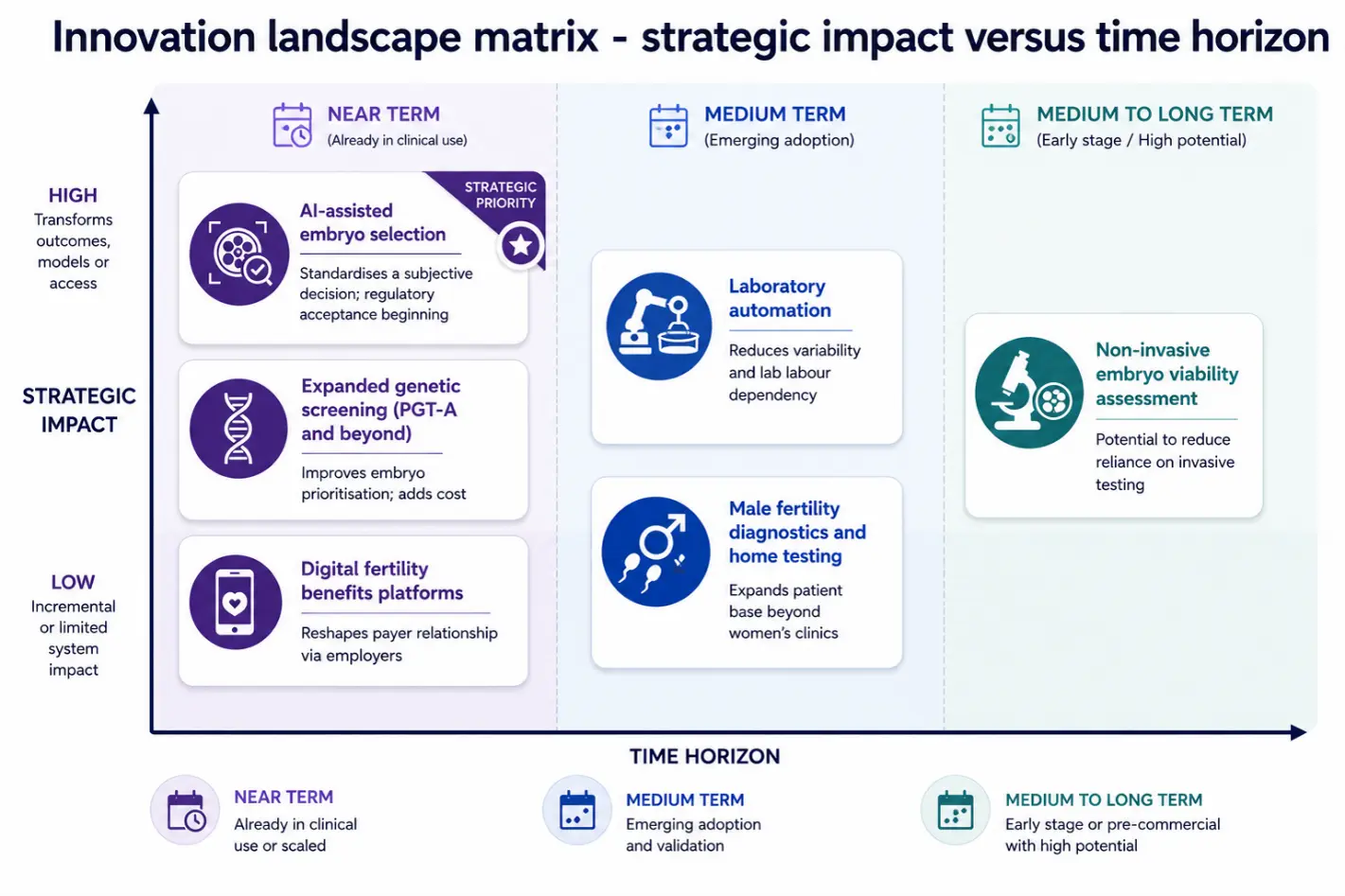
Fertility technology and reproductive health innovation landscape matrix showing AI in fertility care by strategic impact and time horizon
Investment and Competitive Landscape: A USD 3bn Deal at the Top of the Market
IVF investment trends over the past decade tell a consistent story: private capital has moved from opportunistic bolt-on deals to building institutional-scale platforms across the fertility clinics market, and the pace of that consolidation is now shaping how the whole sector is valued and regulated.
A Decade of Consolidation: 9 PE-Backed Platforms, One USD 3bn Deal
Private equity's involvement in fertility services dates to 2015, when TA Associates recapitalised CCRM, a platform that has since become part of Unified Women's Healthcare. In the decade since, at least nine distinct private equity-backed fertility platforms have been built in the United States alone, and by 2022, PE-affiliated clinics were performing a disproportionate share of national IVF cycle volume relative to their share of clinic count, according to peer-reviewed analysis published in JAMA.
The largest single transaction in the sector's history remains KKR's roughly USD 3 billion acquisition of Spain-headquartered IVI-RMA Global, which has since continued to expand through bolt-on acquisitions, including the 2024 purchase of Eugin Group's North American operations (Boston IVF) and a 2025 acquisition of ART Fertility Clinics, a Middle East and India-focused operator, for an estimated USD 400 million to USD 450 million.
2025-2026: A Slower Deal Year Gives Way to a Fuller 2026 Pipeline
Deal volume in 2025 was described by sector bankers as sluggish relative to prior years, reflecting both the maturity of earlier consolidation waves and caution among private equity owners navigating longer hold periods. The largest pending transaction as of late 2025 was the potential sale of US Fertility, the network built around Shady Grove Fertility, by owner Amulet Capital Partners; the deal was widely expected to close in 2026 alongside a fuller pipeline of activity.
At the same time, broader healthcare M&A commentary for 2026 points to a structural reset following 2024 to 2025 antitrust scrutiny of physician practice roll-ups, with capital increasingly flowing toward fertility, behavioural health, and select other sub-sectors, even as deal structures shift toward larger rollover equity stakes and longer earn-outs. Analysts also note that a payer-clinic platform combination in a sector where PE-affiliated clinics already account for a substantial share of national cycle volume would likely draw close regulatory review.
Selected Notable Transactions and Funding Activity in Fertility Services Market, 2024-2026
| Date |
Transaction |
Notable detail |
| 2022 (ongoing platform) |
KKR acquisition of IVI-RMA Global |
Approx. USD 3 billion; largest PE buyout in sector history |
| Jan 2024 |
IVI RMA North America acquires Eugin Group's North American operations (Boston IVF) |
Extends KKR-backed platform's US footprint |
| Jan 2025 |
IVI RMA North America acquires Rise Fertility, Halo Fertility, and Reproductive Health and Wellness Center from Global Premier Fertility |
Expands Southern California presence |
| 2025 |
IVI RMA Global acquires ART Fertility Clinics |
Approx. USD 400-450 million; Middle East and India-focused operator |
| Aug 2025 |
Amulet Capital Partners begins second-round sale process for US Fertility |
Network includes Shady Grove Fertility, IVF Florida, and other groups; expected to close in 2026 |
| 2025 |
European Investment Bank finances Overture Life |
EUR 20 million loan for IVF automation and AI R&D under the TechEU initiative |
| Dec 2025 |
IVFmicro (University of Leeds spinout) pre-seed round |
GBP 3.5 million for microfluidic embryo quality technology |
| 2026 |
Pan-European fertility group acquires UK regional clinic |
Institutionally-backed buyer deepening UK footprint; illustrative of continued cross-border consolidation |
Ten Companies Defining the Fertility Services Competitive Landscape
| Company |
Category |
Position |
| IVI-RMA Global (KKR-backed) |
Clinic network |
One of the largest global fertility clinic groups, spanning Europe, the Americas, and the Middle East |
| US Fertility |
Clinic network |
Major US network including Shady Grove Fertility; approaching USD 1 billion in annual revenue |
| Pinnacle Fertility |
Clinic network |
Multi-state US platform built through PE-backed roll-up |
| Inception Fertility |
Clinic network |
Multi-state US platform with standardised operating model |
| Monash IVF / Boston IVF / Ovation Fertility |
Clinic operators |
Established regional and multi-site providers referenced widely in market coverage |
| Carrot Fertility |
Employer benefits platform |
Leading global fertility benefits navigation platform for employers |
| Maven Clinic |
Digital health platform |
Broader women's and family health platform including fertility |
| Alife Health |
AI / clinical decision support |
Developer of FDA-cleared AI embryo assessment tool |
| Overture Life |
Lab automation |
Automation of egg freezing and embryo handling workflows |
| Gameto, TMRW Life Sciences, Kindbody, Natural Cycles, Conceivable Life Sciences |
Femtech / fertility technology |
Frequently cited among the most heavily funded fertility and reproductive health technology companies |
The IVF Access Gap: USD 2,500 in India vs. USD 25,000 in the US
Cost and coverage differences across markets are the single clearest illustration of why the global fertility market is best understood as a collection of distinct national markets rather than one homogeneous whole.
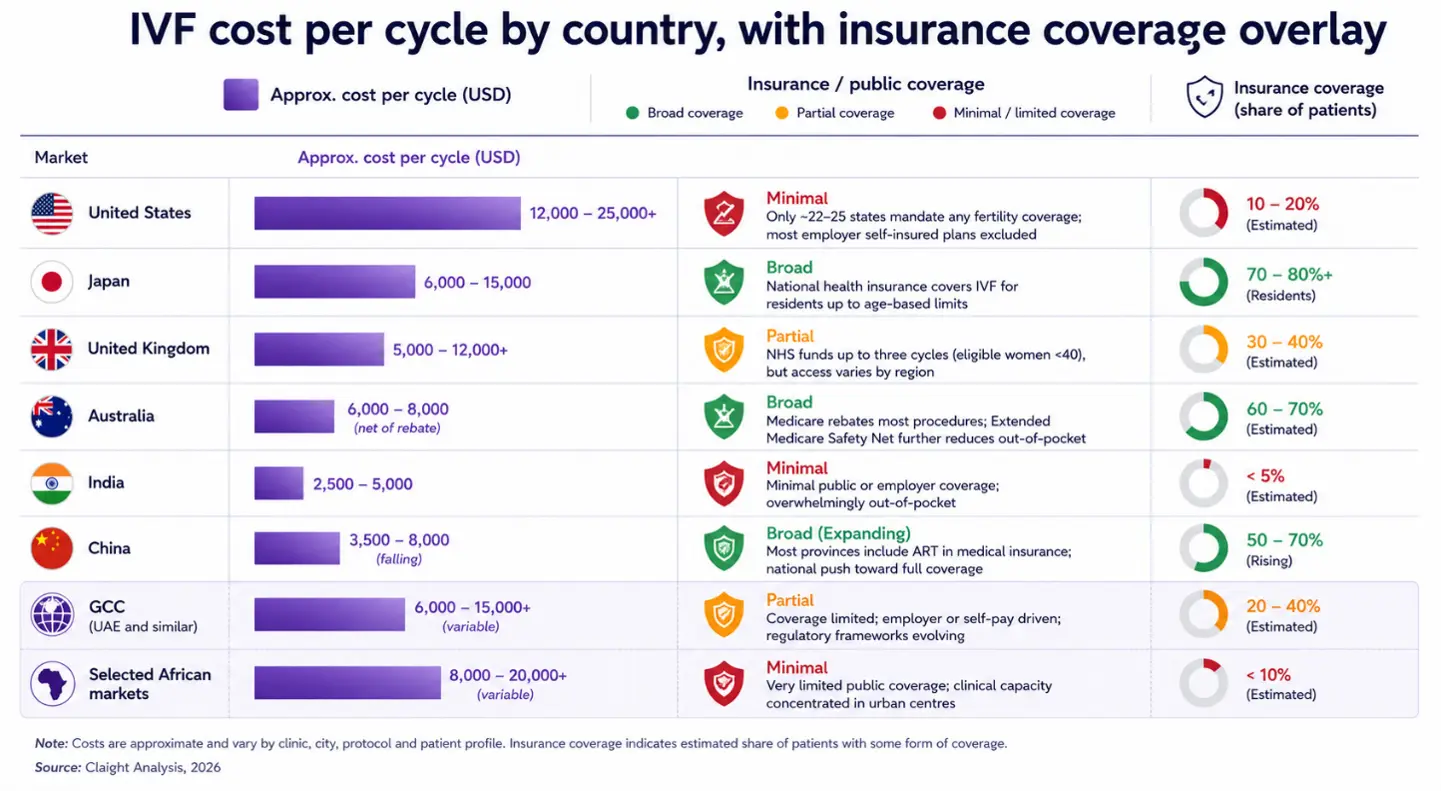
IVF cost per cycle by country comparison with insurance coverage overlay
Fertility Medical Tourism: A 2.7x Higher Likelihood Among the Uninsured
Cost differentials of this magnitude have created a well-established medical tourism circuit. India, Turkey, Thailand, and parts of Eastern Europe are consistently cited as lower-cost destinations attracting patients from the United States, Western Europe, and the Gulf, while China and Japan perform among the highest absolute volumes of domestic cycles globally. Uninsured patients in high-cost markets such as the United States have been shown in prior CDC-referenced analysis to be substantially more likely to pursue treatment abroad than insured patients, reinforcing the direct link between domestic coverage policy and outbound patient flow.
Strategic Implications for a USD 100bn+ Decade
Building a coherent fertility healthcare strategy means translating the five forces and access dynamics described above into distinct priorities for each type of organisation operating in or adjacent to fertility care.
Healthcare Providers
- Capacity expansion in underserved but demographically pressured markets, particularly parts of Asia Pacific and the Gulf, where clinical infrastructure has not kept pace with demand.
- Digital transformation of the patient journey, from first consultation through cycle monitoring, to meet expectations set by consumer-grade digital health platforms.
- Service diversification into fertility preservation, male fertility, and adjacent reproductive health services to broaden the addressable patient base beyond traditional IVF candidates.
Pharmaceutical Companies
- Continued investment in fertility therapeutics, where ovarian stimulation and related drug classes remain a durable, volume-linked revenue stream tied directly to global cycle growth.
- Partnerships with clinic networks and digital platforms to support patient adherence and outcomes reporting.
- Companion diagnostics that pair genetic and hormonal testing with treatment protocols, particularly as personalised stimulation regimens mature.
MedTech Companies
- AI-enabled clinical decision support, positioned carefully against the mixed trial evidence discussed in Section 5, with transparent publication of outcome data as a competitive differentiator.
- Laboratory automation platforms that reduce embryologist dependency and improve consistency across multi-site clinic networks, an increasingly important buyer requirement as consolidation continues.
Governments
- Population policy design that treats fertility care reimbursement as one lever among several, alongside childcare costs, housing, and parental leave, rather than as a standalone fix for declining birth rates.
- Reimbursement frameworks that balance fiscal sustainability with the equity concerns the WHO has explicitly flagged around catastrophic out-of-pocket costs.
- Public-private partnerships that expand capacity without ceding all pricing power to a small number of consolidated private operators.
Investors
- Continued attractiveness of the sector's demographic tailwinds, balanced against a maturing deal environment with more selective buyers and closer regulatory attention to vertical integration.
- Diligence that explicitly weighs consultant and embryologist dependency, regulatory inspection history, payer mix, and technology adoption maturity, the same factors sector-specific advisors now flag as central to deal quality.
Looking Ahead: Three Paths to a ~USD 100bn Market by 2030
Three plausible scenarios frame how the fertility economy could evolve through the end of the decade. These are presented as a planning tool rather than a forecast.
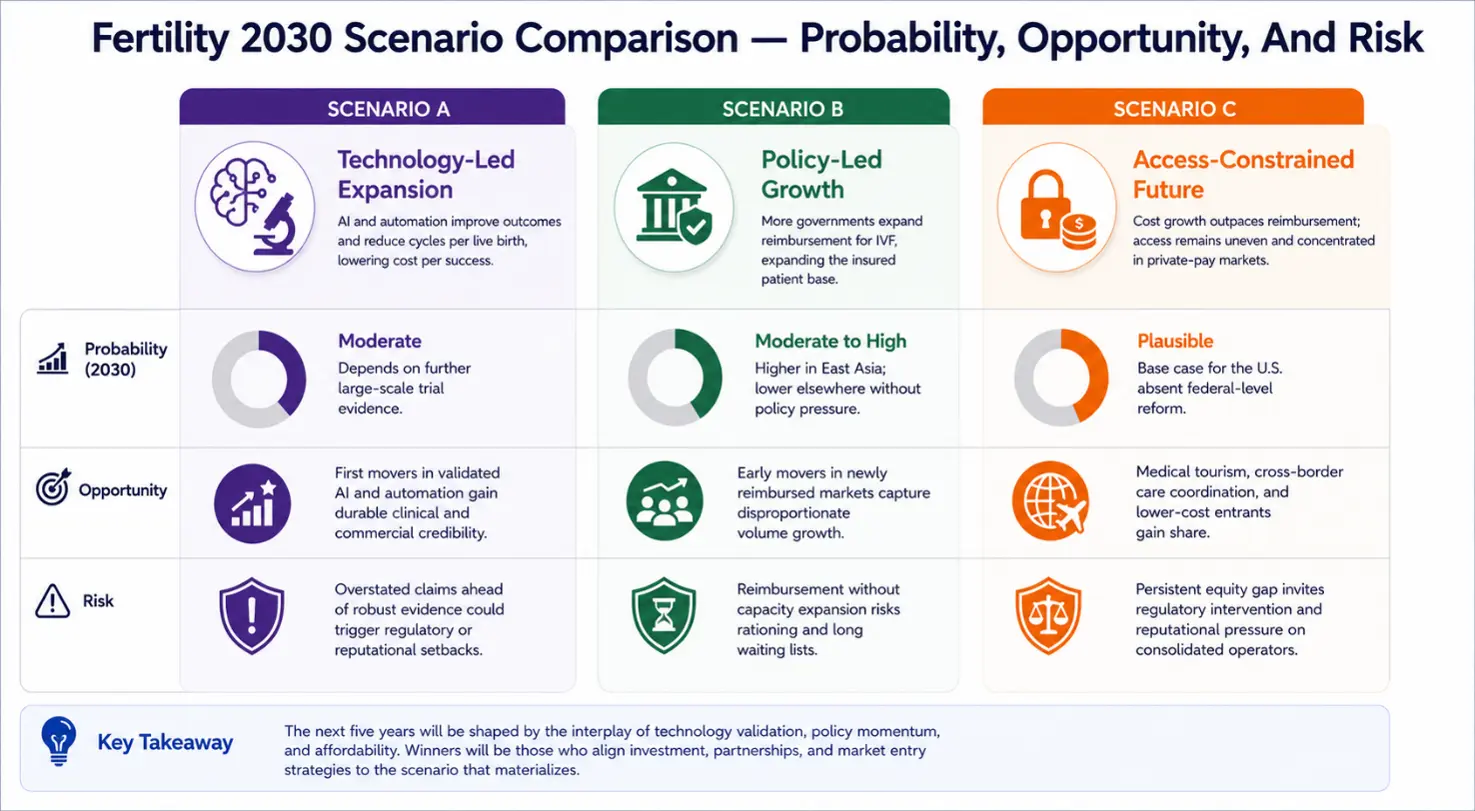
Fertility 2030 scenario planning chart comparing technology-led expansion policy-led growth and access-constrained future scenarios
Scenario A: Technology-Led Expansion, Fewer Cycles per Live Birth
AI-assisted embryo selection and laboratory automation clear further regulatory hurdles and demonstrate consistent outcome improvements across a broader base of trials, materially lowering the number of cycles required per live birth. Costs per successful outcome fall even as headline cycle pricing remains stable, expanding the addressable patient population.
Scenario B: Policy-Led Growth, Following China's 2025-26 Insurance Reforms
Governments facing acute demographic pressure, following China's and Japan's lead, expand public reimbursement for assisted reproduction as part of broader pro-natalist policy packages, materially expanding the insured patient base in previously self-pay-dominated markets.
Scenario C: Access-Constrained Future, the 5x US-India Cost Gap Persists
Cost growth outpaces reimbursement expansion in major private-pay markets, particularly the United States, while consolidation concentrates pricing power among a smaller number of large operators. Access remains sharply stratified by income and geography, and medical tourism continues to grow as a release valve rather than a solution.
Conclusion: A USD 100bn+ Ecosystem, Not a Clinical Niche
Fertility care is no longer merely a clinical specialty. It is becoming an interconnected ecosystem spanning healthcare delivery, diagnostics, pharmaceuticals, digital health, investment, and public policy. The organisations that recognise these shifts today, and build strategy around the specific market, regulatory, and access conditions in each geography rather than a single global narrative, will be best positioned to navigate the next decade of the global fertility economy.
For Claight's clients across healthcare provision, life sciences, medical technology, and investment, the message of World IVF Day 2026 is straightforward: the fertility economy has moved from the periphery of healthcare strategy to its centre, and the window for building considered, evidence-based positions in this market is open now.
Plan Your Position in the Global Healthcare Economy
Claight helps healthcare providers, pharmaceutical and MedTech companies, investors, and governments turn market signals like the ones in this report into investable strategy: market entry assessments, competitive and M&A due diligence, reimbursement and policy analysis, and technology positioning across the fertility value chain.
To commission bespoke market intelligence on fertility, reproductive health, or any adjacent healthcare category, contact us to schedule a consultation.
All figures and market estimates in this report are drawn from multiple public and internal sources and are current as of the publication date. Figures should be treated as directional rather than precise, and readers are encouraged to reach out to our team directly for decisions requiring exact figures.








Share