Rare cancers no longer represent niche markets. They have become catalysts for scientific innovation, regulatory innovation, and new commercial models. The broader orphan drug market, of which oncology is the largest single category at roughly 40% of revenue, reached an estimated USD 250 billion in 2025 and is projected to grow at close to 12% annually to more than USD 675 billion by 2035, even though only around 5% of the world's roughly 7,000 known rare diseases currently have an approved treatment.
Sarcoma sits at the centre of this shift for a specific reason: it is not one disease but a family of more than 100 to 120 distinct molecular subtypes, several of which are now individually addressable with targeted or cellular therapies. That fragmentation, once viewed as a commercial liability, has become a template for how oncology R&D organises itself around biology rather than tumour location, driven by three converging forces.
- Precision medicine has changed the economics of drug development. Molecular profiling now allows a single drug to be developed against a genomically defined subgroup of a few hundred or few thousand patients worldwide, rather than against an entire organ-based cancer type, making previously uneconomic indications viable.
- Regulatory incentives are compressing timelines and de-risking capital. Orphan drug designation in major markets grants extended market exclusivity, tax credits on clinical trial costs, and eligibility for expedited review pathways, materially improving the returns on rare cancer R&D.
- Investors have taken notice. Orphan drug and rare disease assets are now the subject of some of biopharma's largest transactions, including BioMarin's USD 4.8 billion acquisition of Amicus Therapeutics and Gilead's USD 7.8 billion acquisition of Arcellx, both completed within the past 12 months.
Claight insight
Rare cancer programmes increasingly compete for capital not against other rare diseases, but against common-cancer indications on a risk-adjusted return basis. Sarcoma's genomic fragmentation, once a barrier to commercial interest, is now a template for how the rest of oncology is organising its pipeline around molecularly defined subgroups rather than organ of origin.
Global Sarcoma Epidemiology: Under 1% of Cancers, Over 100 Molecular Subtypes
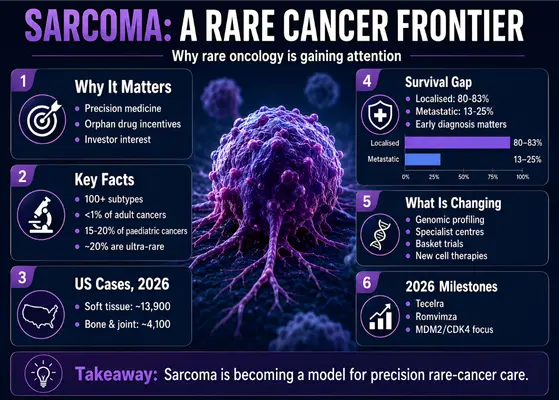
Sarcomas are malignancies of connective tissue, bone, muscle, fat, nerve, and blood vessel origin. They are broadly split into soft tissue sarcoma, the larger category, and bone sarcoma (including osteosarcoma and chondrosarcoma), with more than 100 to 120 recognised histological subtypes across both groups. Roughly 20% of all sarcomas are classified as ultra-rare, with an incidence of one per million people or less.
Sarcoma Epidemiology Data: 18,000+ New US Cases and a Disproportionate Paediatric Footprint
In the United States alone, the National Cancer Institute's SEER programme estimates approximately 13,900 new soft tissue sarcoma cases and 4,100 new bone and joint sarcoma cases in 2026, with roughly 5,400 and 2,200 deaths respectively. Sarcoma accounts for less than 1% of adult cancers, yet accounts for 15 to 20% of paediatric cancers, giving the disease a strategic importance in paediatric and adolescent oncology disproportionate to its overall incidence.
| Metric |
Estimate |
| US soft tissue sarcoma incidence, 2026 |
approx. 13,900 new cases annually |
| US bone and joint sarcoma incidence, 2026 |
approx. 4,100 new cases annually |
| Share of adult cancers |
under 1% |
| Share of paediatric cancers |
15% to 20% |
| Recognised histological subtypes |
100 to 120+ |
| Share classified as ultra-rare (<1 per million) |
approx. 20% |
| Five-year survival, localised disease |
approx. 80% to 83% |
| Five-year survival, metastatic disease |
approx. 13% to 25%, depending on subtype |
Sarcoma Survival Rates: Five-Year Survival Up from 20% to 70%, Metastatic Outcomes Still Poor
Five-year survival across all sarcoma stages has improved from around 20% five decades ago to roughly 70% today, driven by advances in imaging, multiagent chemotherapy, and limb-salvage surgical technique, which is now feasible in around 90% of extremity cases. That aggregate improvement masks a sharp stage-dependent divide: survival for localised disease now exceeds 80% in well-resourced health systems, while metastatic soft tissue sarcoma survival remains in the range of 13 to 25 per cent, largely unchanged over the past decade despite the arrival of new systemic agents.
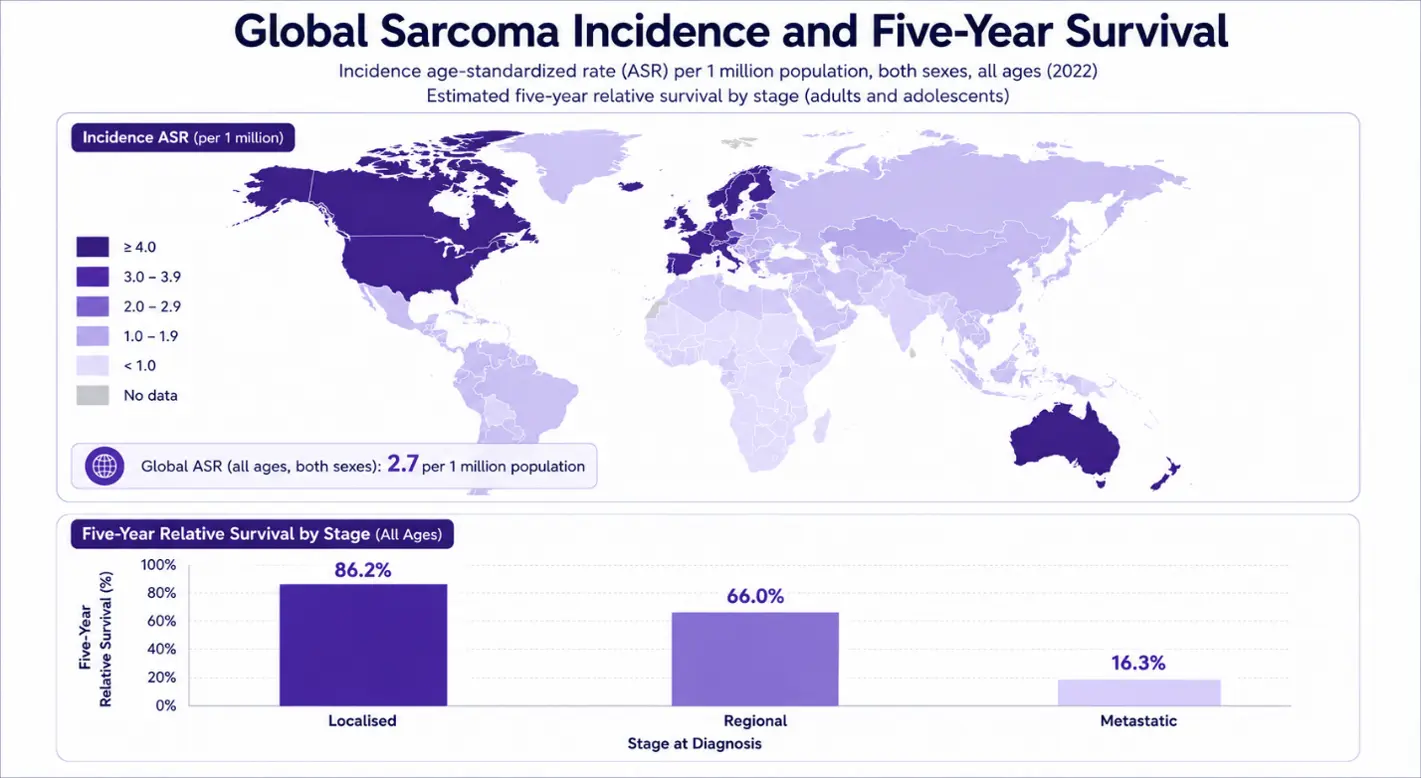
Global sarcoma incidence and five-year survival by disease stage, localised versus regional versus metastatic
Sarcoma Diagnosis Delays: Why Specialist Centre Access Shapes Rare Cancer Outcomes
Because sarcoma is rare and its early symptoms, a painless lump or persistent bone pain, closely resemble benign conditions, diagnosis is frequently delayed until the disease has progressed. Clinical guidance generally recommends that sarcoma be managed in centres treating at least 50 cases per year, yet such specialist centres are concentrated in a small number of countries and even within those countries, in a small number of urban academic centres.
| Region |
Relative burden and access position |
| North America |
Established specialist sarcoma centres and the highest concentration of clinical trial activity; still faces significant diagnostic delay outside major academic centres |
| Europe |
Strong sarcoma reference network (ESMO/EURACAN) and comparable survival outcomes to North America in specialist centres |
| Asia Pacific |
Fastest-growing region for sarcoma drug demand; highly uneven specialist and diagnostic capacity across the region |
| Latin America |
Limited genomic testing infrastructure; survival gap versus high-income markets driven substantially by late-stage presentation |
| Middle East and Africa |
Sparse specialist infrastructure relative to population; sarcoma frequently diagnosed at an advanced, harder-to-treat stage |
Claight insight
The regions most likely to require new investment are not necessarily those with the highest case counts, but those where diagnostic infrastructure and specialist capacity lag furthest behind incidence. Asia Pacific in particular combines high projected drug demand growth with some of the widest gaps in genomic testing and reference-centre density, making it a priority market for diagnostics and specialist-network investment rather than therapeutics alone.
Sarcoma Treatment Evolution: From Surgery Alone to Genomically Matched Precision Oncology
Sarcoma management has moved through three broad paradigms over the past five decades, and the transition between them illustrates a pattern now repeating across rare oncology more broadly.
Traditional Sarcoma Treatment: Radical Surgery and Broad Chemotherapy Regimens
Historically, sarcoma treatment relied on radical surgery, often amputation, with chemotherapy and radiotherapy applied broadly across subtypes with little molecular stratification. This approach delivered meaningful gains, five-year survival rose from around 20% to roughly 70% as multiagent chemotherapy, modern imaging, and limb-salvage surgical technique matured, but treatment selection remained largely independent of the tumour's underlying genomic drivers.
Current Sarcoma Treatment Paradigm: Molecular Stratification and Genomic Biomarker-Matched Approvals
Genomic profiling has revealed that sarcoma subtypes are defined by distinct, often mutually exclusive molecular drivers: EWSR1 gene rearrangements in Ewing sarcoma, MDM2 and CDK4 co-amplification in well-differentiated and dedifferentiated liposarcoma, TP53 and RB1 mutation patterns in leiomyosarcoma, and SS18 rearrangements in synovial sarcoma. This has enabled a first generation of genomically matched therapies and, in 2026, the first two approvals of engineered cell and small-molecule therapies purpose-built for specific sarcoma subtypes.
Emerging Sarcoma Treatment Innovation: Cell Therapy, Antibody-Drug Conjugates, and Basket Trial Design
The next wave in development includes antibody-drug conjugates targeting sarcoma-associated antigens such as LRRC15 and CNTN4, next-generation engineered T-cell therapies following Tecelra's template, and histotype-agnostic basket trials that group patients by molecular alteration rather than tissue of origin, a design increasingly used to make small, rare subtypes trial-viable.
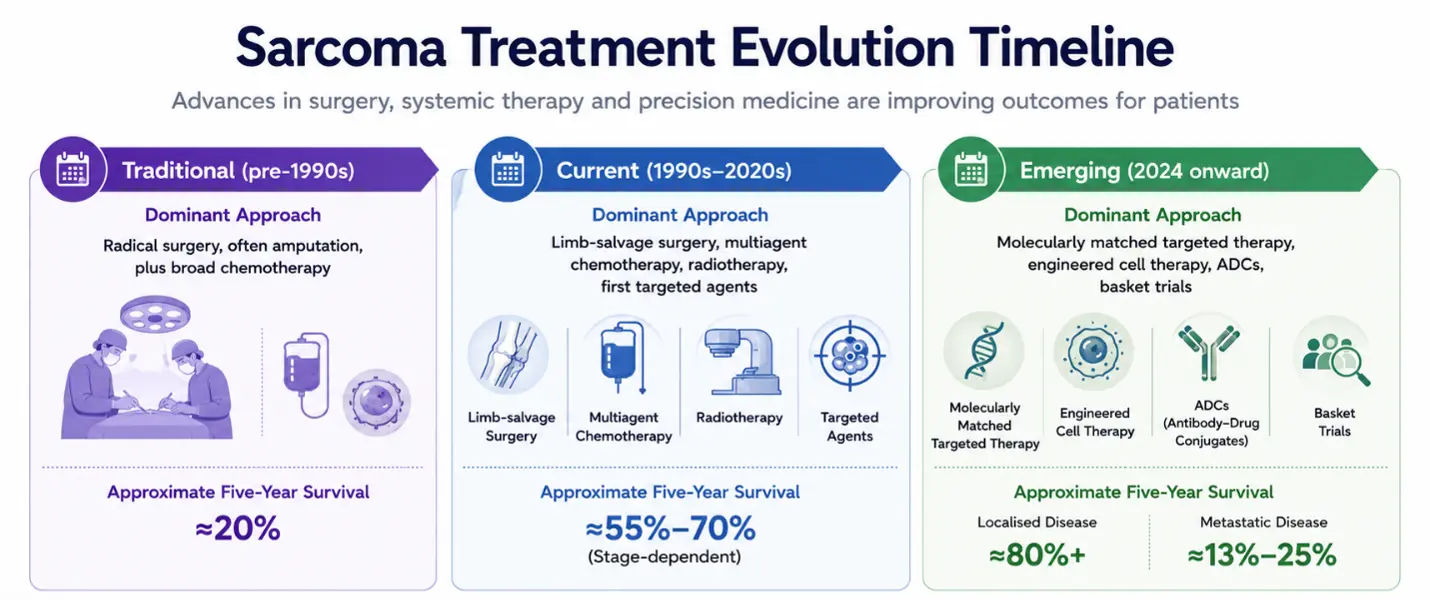
Sarcoma treatment evolution timeline, from radical surgery to genomically matched and cellular therapy
Claight insight
Each shift in treatment paradigm has created a corresponding diagnostics opportunity. Molecular stratification made companion biomarker testing commercially essential rather than optional, and the current move toward cellular and ADC therapies is now doing the same for digital pathology and antigen-expression profiling, which are becoming prerequisites for patient selection rather than research tools.
Sarcoma Market Size and Forecast: A Fragmented USD 3bn+ Family of Subtype Markets
Because sarcoma is a family of distinct molecular diseases rather than a single indication, this rare cancer market is most meaningfully sized at the subtype level rather than as one aggregate figure.
| Market |
2025 Market Size |
2035 Market Forecast |
Forecast CAGR |
| Bone cancer treatment |
USD 1.08bn |
USD 1.68bn |
4.50% |
| Soft tissue sarcoma |
USD 3.69bn |
USD 7.61bn |
7.51% |
| Synovial sarcoma |
USD 1.30bn |
USD 2.94bn |
8.50% |
| Osteosarcoma |
USD 966.m |
USD 1,550.4m |
4.66% |
| Ewing's sarcoma |
USD 52m |
USD 80.5m |
4.32% |
| Gliosarcoma |
USD 1.4bn |
USD 2.1bn |
4.45% |
| Kaposi's sarcoma |
USD 113m |
USD 174m |
3.63% |
Regional Sarcoma Market Comparison: North America Leads, Asia Pacific Grows Fastest
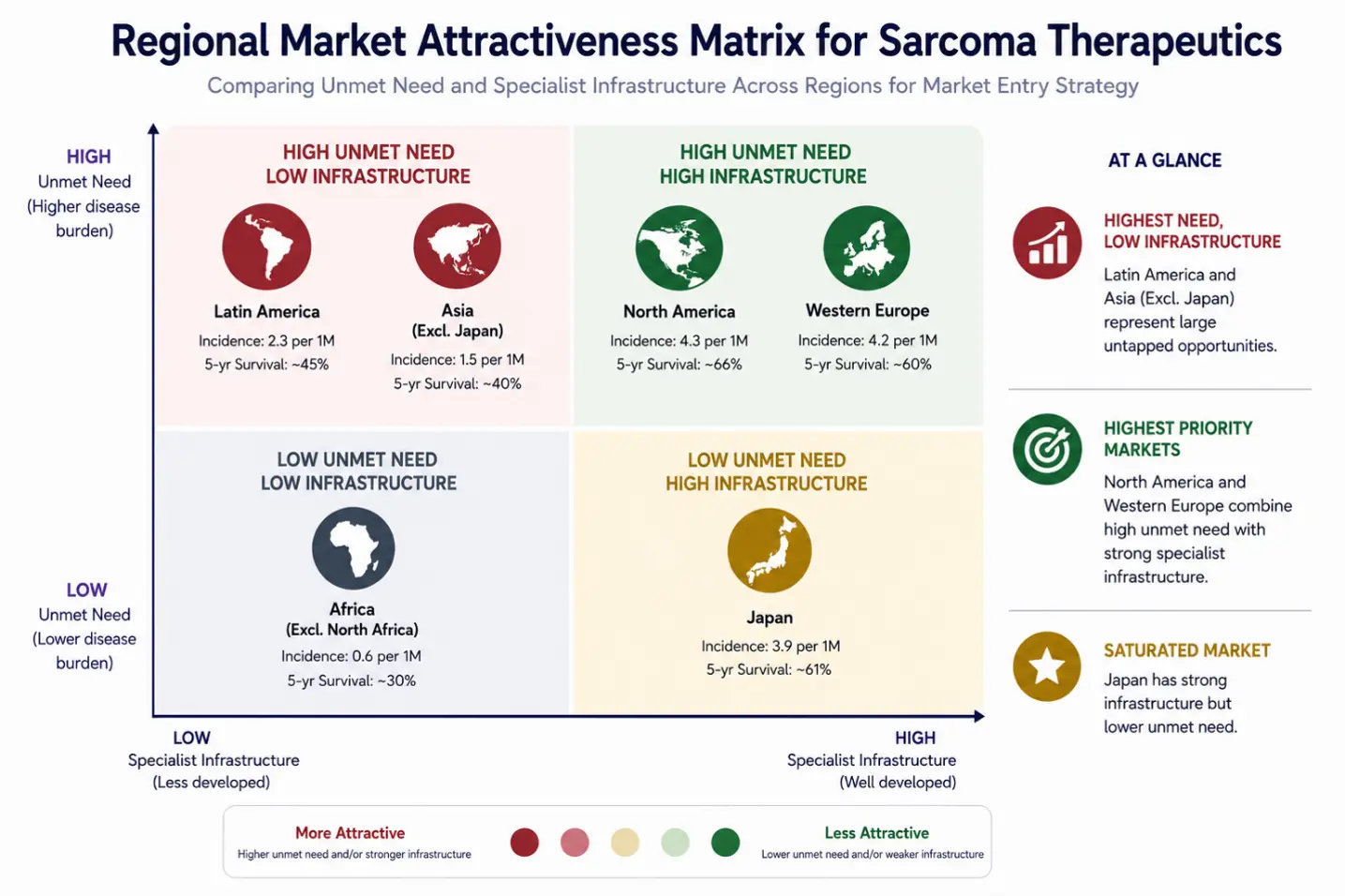
Regional market attractiveness matrix for sarcoma therapeutics, unmet need versus specialist and diagnostic infrastructure
Sarcoma Market Growth Drivers and Rare Cancer Development Challenges
- Growth drivers: earlier diagnosis through improved imaging and biomarker testing; a wave of new subtype-specific approvals (Tecelra, Romvimza, and a growing ADC and radioligand pipeline); expanding use of precision medicine and genomic stratification; and gradually improving reimbursement recognition of orphan drug pricing.
- Structural challenges: extremely small patient populations per subtype complicate trial recruitment and require multi-country enrolment; development costs of USD 1 billion to USD 2 billion per approved rare cancer therapy demand disciplined portfolio prioritisation; and access disparities mean that novel approvals reach only a small fraction of patients globally, concentrated in North America, Europe, and parts of Asia Pacific.
Sarcoma Clinical Pipeline Intelligence: Two Landmark FDA Approvals in a Single 2026
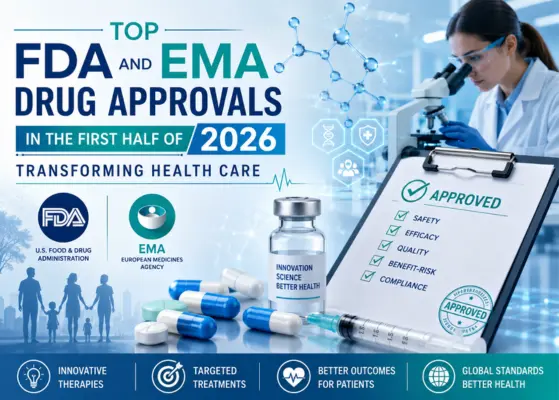
2026 has already delivered two events that mark a genuine inflection point for sarcoma drug development: the full FDA approval and paediatric expansion of Tecelra (afamitresgene autoleucel) for synovial sarcoma in June 2026, the first engineered cell therapy ever approved for a solid tumour, and the earlier full approval of Romvimza (vimseltinib) for tenosynovial giant cell tumour. Both validate that rare, molecularly defined sarcoma subtypes can support standalone regulatory and commercial programmes.
Sarcoma Pipeline by Modality: Six Antibody-Drug Conjugate, Cell Therapy, and Small-Molecule Platforms
| Modality |
Sarcoma-relevant example or status |
Development stage |
| Small molecules / kinase inhibitors |
Vimseltinib (Romvimza) for TGCT; CDK4/6 and MDM2-pathway inhibitors for liposarcoma |
Approved (TGCT); Phase 1-2 for liposarcoma programmes |
| Antibody-drug conjugates (ADCs) |
ZL-6201 (LRRC15-targeting) and GENA-104/EP0089 (CNTN4-targeting) in sarcoma and solid tumour models |
Preclinical to Phase 1 |
| Engineered T-cell / TCR therapy |
Tecelra (afami-cel) for synovial sarcoma; lete-cel in planned commercial launch |
Approved (Tecelra); rolling BLA submission for lete-cel |
| Immune checkpoint inhibitors |
Pembrolizumab plus doxorubicin in dedifferentiated liposarcoma and undifferentiated pleomorphic sarcoma |
Phase 3 |
| Gene-fusion-targeted therapy |
Programmes targeting EWSR1 fusions in Ewing sarcoma and SS18 fusions in synovial sarcoma |
Preclinical to early clinical |
| Radioligand and radiopharmaceutical therapy |
Emerging isotope-based programmes for previously unaddressed subtypes |
Early clinical, several with breakthrough or orphan designations |
Sarcoma Genomic Biomarkers and Molecular Targets: MDM2/CDK4 as the Clearest Dual-Target Opportunity
Genomic profiling has identified recurrent, subtype-specific alterations that now anchor much of the active pipeline. MDM2 and CDK4 co-amplification, present in roughly 25% of unselected sarcomas and near-universal in well-differentiated and dedifferentiated liposarcoma, is described in recent pipeline analysis as the most clearly defined dual-target opportunity in the soft tissue sarcoma field. EWSR1 rearrangements define Ewing sarcoma and desmoplastic small round cell tumour, SS18 rearrangements define synovial sarcoma, and TP53/RB1 mutation patterns define leiomyosarcoma, giving developers an increasingly precise genomic map of where to focus.
Sarcoma Clinical Trials and Basket Trial Design: Making Ultra-Rare Subtypes Commercially Viable
Because individual sarcoma subtypes rarely generate enough patients for a conventional single-indication trial, histotype-agnostic basket trial designs, which enrol patients by molecular alteration rather than tumour site, have become a standard recruitment strategy. Academic sarcoma centres in North America, Europe, and increasingly the Middle East and North Africa region are running real-world genomic-matching programmes to route patients into these trials, with early real-world evidence linking next-generation sequencing-based treatment matching to numerically longer median outcomes, though not yet reaching statistical significance in the small cohorts studied to date.
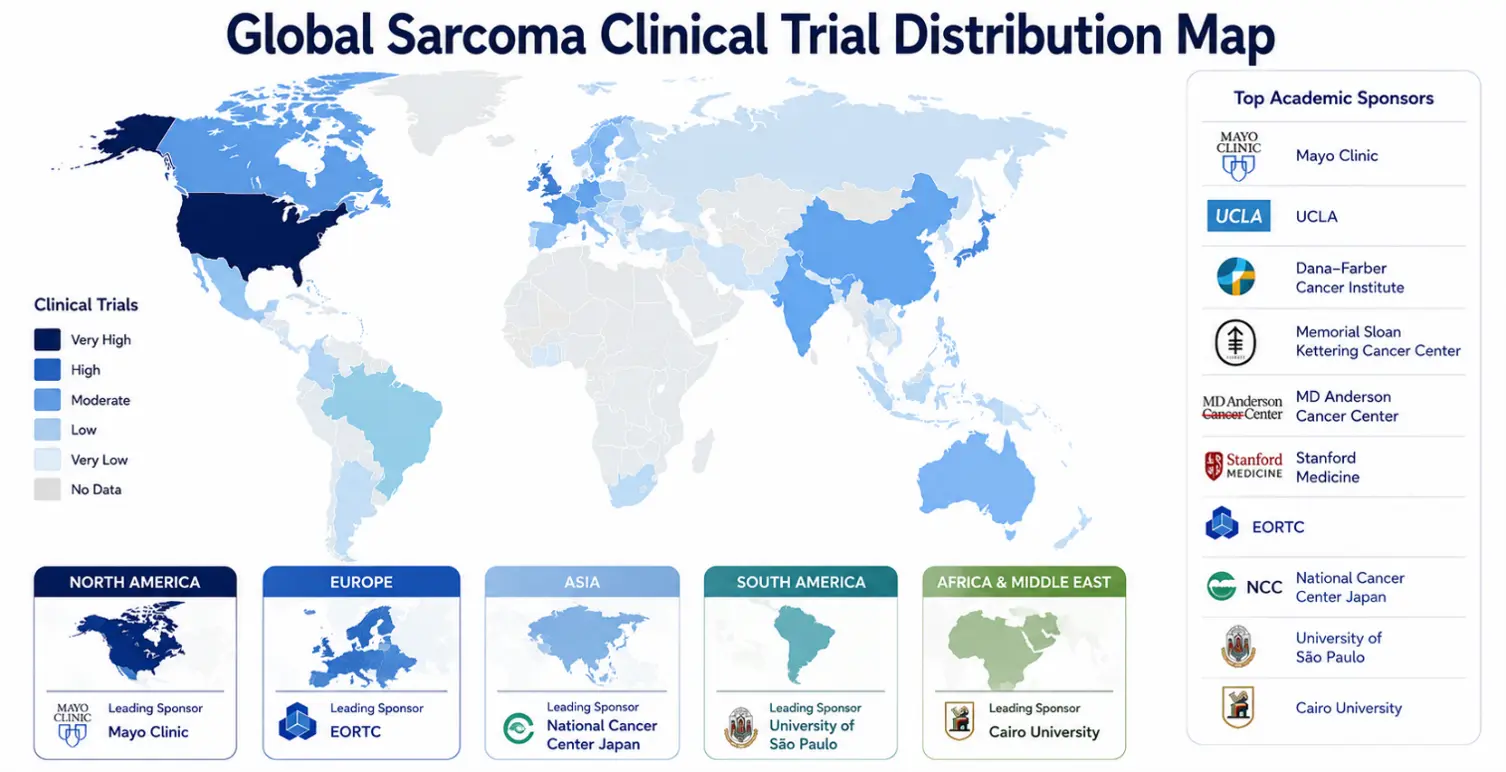
Global sarcoma clinical trial distribution map, showing trial density by country and leading academic sponsors
Claight insight
The largest future commercial opportunities are concentrated at the intersection of a well-defined molecular target and an approved companion diagnostic, exemplified by the MDM2/CDK4 axis in liposarcoma and the MAGE-A4/HLA-A*02 eligibility criteria that gate Tecelra access. Sponsors and investors evaluating sarcoma assets should treat the companion diagnostic pathway as a co-equal workstream to the drug programme itself, not a downstream afterthought.
Sarcoma Competitive Landscape and Rare Disease Biotech M&A: From Academic Origin to a USD 7.8bn Deal
Sarcoma drug development still originates disproportionately in academic and specialist sarcoma centres, given the disease's rarity and the depth of molecular characterisation required, but commercialisation increasingly follows the same licensing, co-development, and acquisition patterns now standard across rare oncology and rare disease more broadly.
Sarcoma Drug Developers: Large Pharma, Biotech, and Academic Centres Across the Competitive Landscape
- Large pharmaceutical companies: Bayer, Pfizer, Novartis, Eisai, and Johnson & Johnson are named among the major companies operating in the sarcoma drugs market, typically through licensed or acquired assets rather than originated in-house rare cancer programmes.
- Emerging biotechnology companies: specialist and platform biotechs, including Adaptimmune (Tecelra's originator, now part of US WorldMeds' commercialisation), Deciphera/Ono Pharmaceutical (Romvimza), and multiple ADC-focused developers, are driving much of the sarcoma-specific innovation.
- Academic and public-private partnerships: sarcoma reference networks such as EURACAN in Europe and NCI-designated comprehensive cancer centres in the United States remain the primary source of genomic characterisation, trial infrastructure, and real-world evidence generation that underpins later commercial development.
Rare Disease Biotech M&A Activity: Why Rare Cancer Assets Command Premium Valuations
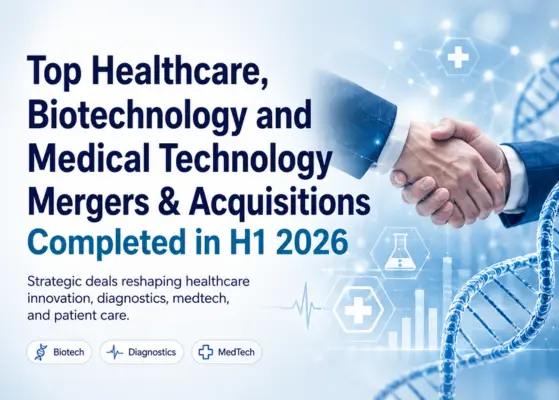
The broader rare disease and orphan drug dealmaking environment provides useful context for what sarcoma-specific transactions are likely to look like going forward. BioMarin's USD 4.8 billion acquisition of Amicus Therapeutics and USD 270 million acquisition of Inozyme Pharma, both completed in late 2025, and Gilead's USD 7.8 billion acquisition of Arcellx, completed in April 2026 for its orphan-designated CAR T-cell asset, illustrate that rare disease and rare cancer portfolios now command valuation premiums when assets are genomically and clinically complementary.
| Date |
Transaction or milestone |
Relevance to sarcoma and rare oncology strategy |
| Aug 2024 |
Tecelra receives FDA accelerated approval |
First engineered cell therapy approved for a solid tumour; Adaptimmune projected peak US sales of USD 400 million |
| Feb 2025 |
Romvimza (vimseltinib) receives full FDA approval |
Second novel sarcoma-specific approval in the current cycle, for tenosynovial giant cell tumour |
| Dec 2025 |
BioMarin acquires Amicus Therapeutics (USD 4.8bn) and Inozyme Pharma (USD 270m) |
Demonstrates the valuation premium for complementary rare disease portfolios |
| Apr 2026 |
Gilead Sciences acquires Arcellx (USD 7.8bn) |
Orphan-designated CAR T-cell asset; template for rare oncology cell therapy dealmaking |
| Jun 2026 |
Tecelra receives full FDA approval and paediatric expansion to age 12+ |
Confirms durability of the accelerated approval pathway for rare solid tumour cell therapy |
| 2026 (ongoing) |
Adaptimmune advances lete-cel toward BLA submission and planned 2026 launch |
Second product in the sarcoma-specific cell therapy franchise |
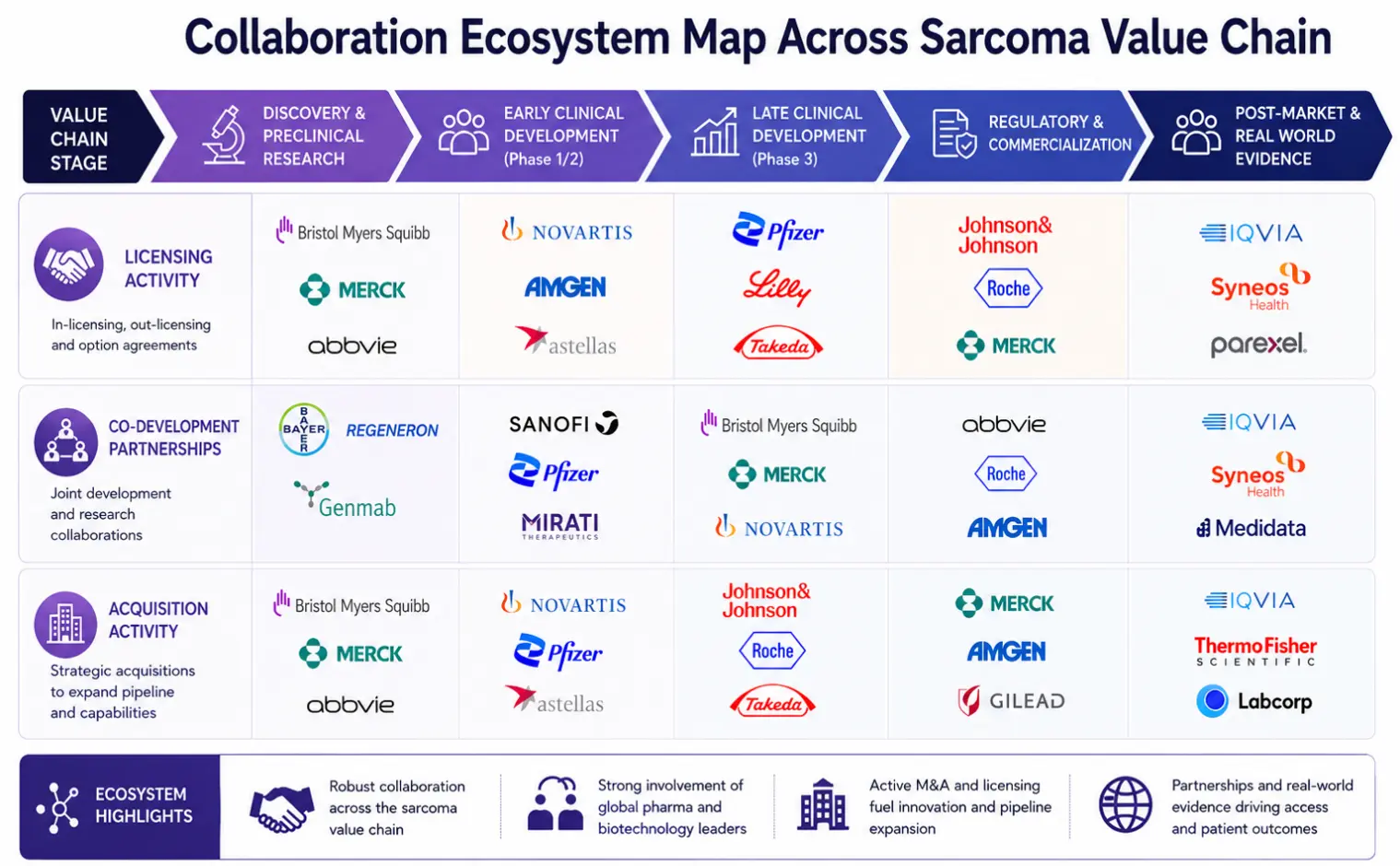
Collaboration ecosystem map showing licensing, co-development, and acquisition activity across the sarcoma value chain
Emerging Sarcoma Technologies: Ten Precision Oncology Platforms Reshaping Rare Cancer Diagnosis and Treatment
Sarcoma's molecular complexity has made it an early adopter, and in several cases a proving ground, for technologies now spreading across rare oncology more broadly.
| Technology |
Role in sarcoma and rare oncology |
Maturity |
| Next-generation sequencing |
Detects fusion genes and copy-number variants (MDM2, CDK4) central to sarcoma subtyping; validated NGS panels now cover 80+ fusion genes |
Mainstream in specialist centres |
| Digital pathology and AI-assisted image analysis |
Supports pattern recognition across 100+ rare histological subtypes where expert pathologist availability is limited |
Early clinical adoption |
| Liquid biopsy |
Emerging application for monitoring circulating tumour DNA in a disease where tissue biopsy is often difficult or high-risk |
Early stage for sarcoma specifically |
| Radiomics |
Extracts quantitative imaging features to support non-invasive subtype and prognosis prediction |
Research to early clinical |
| Cell therapy (engineered T-cell/TCR) |
Tecelra establishes the commercial and regulatory template for further sarcoma-specific cell therapy programmes |
First approval achieved (2024/2026) |
| Gene editing |
Longer-horizon platform for correcting or silencing fusion-driven oncogenic drivers |
Preclinical |
| Antibody-drug conjugates |
Multiple sarcoma-relevant ADC programmes (LRRC15, CNTN4 targets) in preclinical to Phase 1 |
Early clinical |
| Spatial biology |
Maps tumour microenvironment heterogeneity, increasingly relevant for immunotherapy patient selection |
Research stage |
| Multi-omics integration |
Combines genomic, transcriptomic, and proteomic data to refine subtype classification beyond histology alone |
Research to early clinical |
| Digital biomarkers |
Wearable and remote monitoring tools for functional outcomes in limb-salvage and post-surgical recovery |
Early stage |
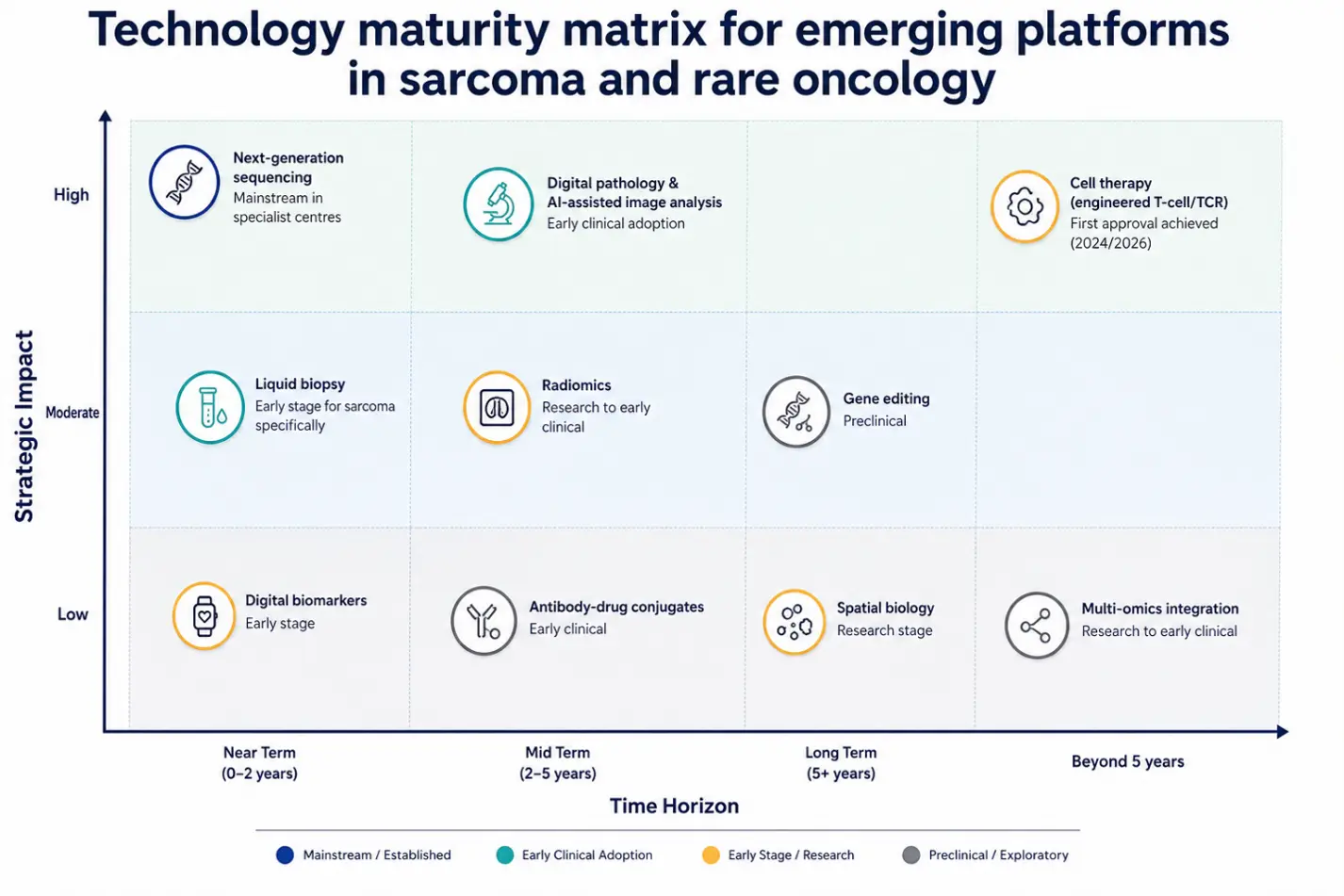
Technology maturity matrix for emerging platforms in sarcoma and rare oncology
Claight Insight
Digital pathology and next-generation sequencing are likely to become mainstream standard-of-care tools within this decade given their already-demonstrated diagnostic utility. Cell therapy and ADCs are positioned to become the dominant new-approval modality over the next five years, while gene editing and spatial biology remain longer-horizon platforms whose sarcoma-specific commercial impact is unlikely to be realised before 2030.
Strategic Implications for Rare Oncology Stakeholders
The pipeline, competitive, and investment shifts described above translate into distinct priorities for each type of organisation with a stake in rare oncology.
Pharmaceutical Companies: Rare Cancer Portfolio Expansion and Orphan Drug Strategy
- Expand portfolios into genomically defined rare cancer subgroups, using sarcoma as a model for other rare solid tumours.
- Prioritise licensing and acquisition of clinical-stage rare oncology assets alongside internal R&D.
- Align regulatory, market access, and commercial strategies around orphan drug economics rather than blockbuster models.
Biotechnology Companies: Platform Technology and Clinical Differentiation Strategy
- Develop platform technologies, particularly cell therapy and ADCs, that can be applied across multiple sarcoma subtypes and rare solid tumours.
- Pursue Phase 2 partnering opportunities once proof-of-concept is established.
- Differentiate through companion diagnostics and molecularly guided patient selection.
Diagnostics Companies: Companion Diagnostics and Genomic Testing
- Develop companion diagnostics linked to approved and pipeline therapies.
- Expand genomic profiling panels covering key sarcoma fusion genes and copy-number alterations.
- Invest in AI-assisted pathology to support diagnosis across diverse sarcoma subtypes.
Investors: Innovation Hotspots and Commercial Risk Assessment
- Focus on high-potential areas such as MDM2/CDK4, cell therapy, and ADCs.
- Assess commercial risk based on small patient populations and recruitment challenges.
- Consider diagnostics and digital pathology as lower-risk rare oncology opportunities.
Governments and Policy Makers: Access, Registry Development, and Specialist Care
- Improve access to novel therapies beyond North America, Europe, and developed Asia-Pacific markets.
- Strengthen sarcoma registries to address epidemiological data gaps.
- Invest in specialist referral centres to improve outcomes and optimise healthcare resources.
Looking Ahead: Precision Oncology, AI Drug Discovery, and Rare Oncology Investment to 2030
By 2030, the sarcoma landscape is likely to be defined by four converging shifts: precision medicine extending from the current handful of genomically matched subtypes to the majority of sarcoma cases; AI-driven drug discovery compressing preclinical timelines for ultra-rare subtypes that would otherwise remain commercially unviable; basket and platform trial designs becoming the default rather than the exception for rare solid tumours; and reimbursement frameworks gradually adapting to orphan drug pricing models as payers gain more experience with cell and gene therapy cost structures.
How Claight Supports Organisations Navigating Rare Oncology
Claight works with pharmaceutical companies, biotechnology firms, diagnostics providers, healthcare organisations, and investors to turn signals like the ones in this report into investable strategy across rare and orphan diseases.
- Disease landscape assessments and epidemiology research, including regions with incomplete registry data
- Market sizing and forecasting across therapeutic modalities and geographies
- Clinical pipeline intelligence, including modality, target, and trial-recruitment analysis
- Competitive benchmarking across large pharma, biotech, and academic sponsor activity
- Technology scouting across diagnostics, digital pathology, and emerging therapeutic platforms
- Strategic foresight and custom healthcare consulting for market entry, licensing, and portfolio decisions
Plan Your Position in the Rare Oncology Landscape
Whether you are evaluating a licensing opportunity, sizing a companion diagnostic market, or building a rare cancer market entry strategy, Claight can turn the trends in this report into a bespoke intelligence engagement.
To commission bespoke market intelligence on sarcoma, rare oncology, or any adjacent healthcare category, contact us to schedule a consultation.
All figures and market estimates in this report are drawn from multiple sources and are current as of the publication date. Figures should be treated as directional rather than precise. Please contact us directly for decisions requiring exact figures.







Share