

Consumer Insights
Uncover trends and behaviors shaping consumer choices today
Procurement Insights
Optimize your sourcing strategy with key market data
Industry Stats
Stay ahead with the latest trends and market analysis.
The aerospace riveting equipment market was valued at USD 132.00 Million in 2025. The market is expected to grow at a CAGR of 5.40% during the forecast period of 2026-2035 to reach a value of USD 223.35 Million by 2035. Rising commercial aircraft production rates, sustained fleet maintenance demand, and continued investment in automated riveting systems are collectively shaping the market's growth trajectory.
The current aerospace riveting equipment market dynamics reflect steady investment by established tool manufacturers in automated and electric riveting systems, as major airframe OEMs pursue higher production rates and greater assembly line consistency. Manufacturers are increasingly differentiating through oil free, electric drive tooling and expanded process monitoring capabilities, addressing rising expectations around traceability and sustainability on modern assembly lines. In October 2025, at Blechexpo in Stuttgart, GESIPA introduced its GAV Neo automated blind riveting system, featuring fully electric, oil free operation designed for integration into automated production lines. At the same time, established fastening technology companies are increasingly pursuing acquisitions of specialist tooling and materials businesses to broaden their aerospace assembly portfolios.
The overall aerospace riveting equipment industry through 2025 continues to be shaped by rising commercial aircraft production rates, sustained demand for maintenance, repair, and overhaul tooling across ageing global fleets, and continued technological investment in process monitoring and traceability systems. Established manufacturers are increasingly prioritising certified, lightweight, and precisely engineered riveting solutions as airframe programmes demand tighter tolerances and greater accountability across every fastening operation performed along each stage of the production line today. Continued demand for such solutions continues to prompt established manufacturers to expand certified production capacity, while ongoing consolidation activity continues to reshape the competitive landscape across the global supply base.
Compound Annual Growth Rate
5.4%
Value in USD Million
2026-2035
Read more about this report - Request a Free Sample
|
Aerospace Riveting Equipment Market Report Summary |
Description |
Value |
|
Base Year |
USD Million |
2025 |
|
Historical Period |
USD Million |
2019-2025 |
|
Forecast Period |
USD Million |
2026-2035 |
|
Market Size 2025 |
USD Million |
132.00 |
|
Market Size 2035 |
USD Million |
223.35 |
|
CAGR 2019-2025 |
Percentage |
XX% |
|
CAGR 2026-2035 |
Percentage |
5.40% |
|
CAGR 2026-2035 - Market by Region |
Asia Pacific |
6.2% |
|
CAGR 2026-2035 - Market by Equipment Type |
Hydraulic Riveting Equipment |
6.5% |
|
CAGR 2026-2035 - Market by Technology |
Automated Riveting Equipment |
6.8% |
|
2025 Market Share by Region |
North America |
36.5% |
The aerospace riveting equipment market is being reshaped by major portfolio consolidation among established fastening technology companies, new joint technology partnerships combining fastening hardware with adhesive bonding systems, government funded research collaboration on next generation automated assembly processes and expanded distributor relationships strengthening aftermarket supply chain visibility across the industry.
Bollhoff Group and DELO combine their ONSERT fastening element with DELO's light curing adhesive to enable lightweight, material friendly, and flame-retardant fastenings for aircraft interior applications without drilling. This kind of joint development model allows fastening technology companies across the aerospace riveting equipment market to broaden their aerospace interior offerings without committing to extensive standalone research investment.
A government funded research consortium including Boeing, Broetje-Automation, KEBA Industrial Automation, and German research institutes completed the SHILA project, developing a fully automated process for shim free assembly of thin-walled aircraft structures without traditional fastening preparation steps. Publicly funded consortia of this kind give airframe manufacturers and automation providers across the aerospace riveting equipment market a lower risk pathway to next generation assembly process development ahead of commercial rollout.
Cherry Aerospace and Century Fasteners Corp showcased their authorized distributor relationship at the 2026 MRO Americas show in Orlando, Florida, highlighting expanded access to Cherry's blind rivet and fastening system product lines. Showcasing authorized distributor relationships at major maintenance industry events has become an effective way for aerospace fastener manufacturers to strengthen aftermarket supply chain visibility.
Stanley Black and Decker announced a definitive agreement to sell its Consolidated Aerospace Manufacturing business, which supplies critical fasteners and engineered components, to Howmet Aerospace for 1.8 billion dollars, with the deal expected to close in the first half of 2026. The transaction reflects a wider pattern among diversified industrial companies of concentrating capital on their core branded tool businesses through similarly focused divestitures.
Diversified industrial and tooling companies across the aerospace riveting equipment market are increasingly divesting aerospace fastening and riveting businesses that sit outside their core branded product lines, often selling to larger, more specialised aerospace focused acquirers seeking to broaden their engineered fastening portfolios across the wider industry. In June 2025, Wipro Infrastructure Engineering announced a planned majority stake acquisition of France based Lauak Group, a Tier 1 aerospace manufacturer, to strengthen its assembly and manufacturing capabilities across Europe.
Automation specialists across the aerospace riveting equipment market are increasingly launching integrated robotic riveting cells capable of managing multiple fastener types through a single device, targeting composite intensive structures across aerospace and automotive manufacturing where thin-walled materials complicate traditional manual fastening. In March 2025, Belotti SpA launched its Automatic Riveting Cell at JEC World in Paris, developed in partnership with Cosberg SpA and integrating a Comau six axis robot to automatically apply rivets and threaded inserts of varying diameters on composite frames and components.
Established automated fastening system providers are increasingly highlighting decades of manufacturing heritage alongside continued technology investment, reinforcing customer confidence in long term product support and reliability. In February 2025, Gemcor Production Solutions, operating under Ascent Aerospace and tracing its automated fastening systems back to 1937, detailed advanced factory integration capabilities spanning precision drilling and fastening applications for modern aerostructure production programmes.
Aerospace fastener distributors are increasingly formalising authorized supply relationships with manufacturers at major industry airshows, broadening their hardware catalogue offerings to better support global aerospace and defense customers. In August 2026, FDH Aero and PennAero announced a full line authorized distributor agreement, officially signed at the Farnborough International Airshow, expanding FDH Aero's access to PennAero's engineered fasteners and precision machined components.
Fastening technology companies are increasingly introducing servo controlled joining systems designed for compatibility with self-piercing riveting applications, improving process precision and simplifying integration into existing automated production lines. In July 2025, TOX PRESSOTECHNIK introduced new servo controlled joining systems compatible with self-piercing riveting applications, enabling improved process precision and flexible integration into automated production lines across multiple manufacturing sectors.
The Expert Market Research's report titled “Aerospace Riveting Equipment Market Report and Forecast 2026-2035” offers a detailed analysis of the market based on the following segments:
Market Breakup by Equipment Type
Key Insight: Pneumatic Riveting Equipment accounts for the largest share of the aerospace riveting equipment market by equipment type, offering a balance of cost effectiveness, reliability, and performance across diverse assembly applications from small components to large structural assemblies. Hydraulic Riveting Equipment is the fastest-growing equipment type, valued for its high setting force and precision in applications where strong, reliable structural joints are critical. Electric Riveting Equipment is gaining share as manufacturers pursue oil-free, lower maintenance alternatives to compressed air systems. The Others category includes specialty and battery powered riveting tools.
Market Breakup by Technology
Key Insight: Manual Riveting Equipment accounts for the largest share of the aerospace riveting equipment market by technology, reflecting its continued widespread use across smaller production runs, prototyping, and maintenance, repair, and overhaul work where full automation is not cost justified. Automated Riveting Equipment is the fastest-growing technology as major airframe manufacturers ramp up production. In July 2025, Spanish manufacturer AGME unveiled a new automated radial and orbital riveting solution combining electric axes with an intelligent process control system, targeting high precision industrial assembly applications. The Others category includes semi-automated and hybrid riveting configurations.
Market Breakup by End Use
Key Insight: Original Equipment Manufacturers account for the largest share of the aerospace riveting equipment market by end use, exceeding 60% of demand as OEMs collaborate closely with equipment manufacturers to develop customized riveting solutions tailored to specific aircraft assembly requirements. Maintenance, Repair, and Overhaul are the fastest-growing end use segments as rising demand for aircraft servicing and retrofitting across ageing global fleets drives increased tooling replacement cycles. The Others category includes component manufacturers and independent tooling suppliers.
Market Breakup by Region
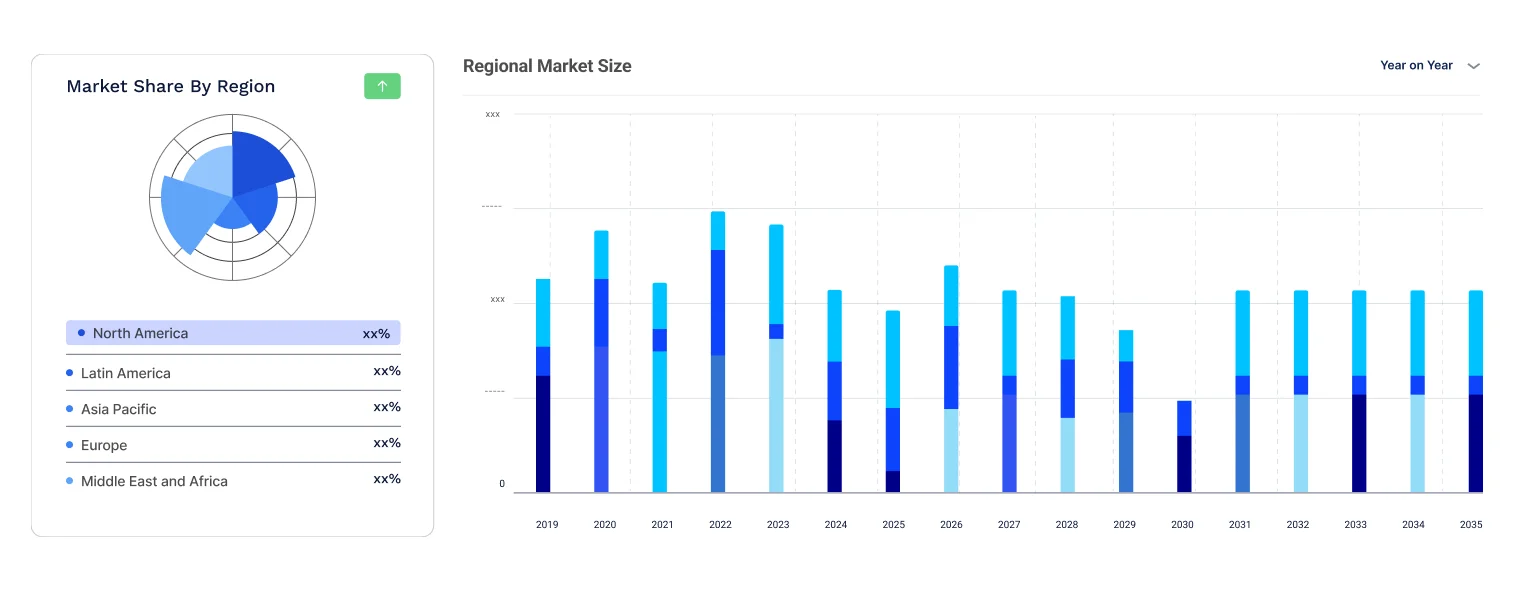
Key Insight: North America dominates the aerospace riveting equipment market, supported by its concentration of major airframe manufacturers and established suppliers. Asia Pacific is the fastest-growing region, driven by expanding aircraft assembly capacity and rising domestic supply chain investment. Europe remains a significant market backed by established fastening technology suppliers. Latin America is growing steadily as regional maintenance and assembly activity expands. The Middle East and Africa region remain smaller but developing, supported by growing aviation infrastructure investment.
By equipment type, pneumatic riveting equipment leads the market on cost effectiveness and reliability across diverse applications
Pneumatic Riveting Equipment accounts for the largest share of the aerospace riveting equipment market by equipment type, offering a balance of cost effectiveness, reliability, and performance across diverse assembly applications used throughout the industry today. Pneumatic tooling remains the preferred choice for high frequency shop floor use given its proven reliability, affordability, and ease of maintenance relative to alternative equipment types.
Hydraulic Riveting Equipment is the fastest-growing equipment type, valued for its high setting force and precision in applications where strong, reliable structural joints are critical for airframe integrity across both commercial and military aircraft programmes. Manufacturers continue to prioritise hydraulic system upgrades as production rates climb, since the equipment's higher force output reduces cycle times on thicker structural assemblies compared to standard pneumatic alternatives available on the market today.
By technology, manual equipment leads the market while automated systems grow fastest on rising production rates
Manual Riveting Equipment accounts for the largest share of the aerospace riveting equipment market by technology, reflecting its continued widespread use across smaller production runs, prototyping, and maintenance, repair, and overhaul work where full automation is not cost justified for lower volume tasks. Independent repair stations and smaller component manufacturers continue to rely heavily on handheld pneumatic and manual tooling given the flexibility these systems offer across varied, non-repetitive assembly and repair tasks.
Automated Riveting Equipment is the fastest-growing technology as major airframe manufacturers ramp up production to meet a persistent backlog of aircraft orders, driving demand for high speed, robotic assembly line integration across final assembly facilities worldwide. Newer automated riveting systems entering the market increasingly emphasise fully electric, oil free operation with shorter cycle times, positioning these systems for direct integration into existing automated production lines without dedicated compressed air infrastructure.
By end use, original equipment manufacturers lead the market while MRO grows fastest on rising fleet servicing demand
Original Equipment Manufacturers account for the largest share of the aerospace riveting equipment market by end use, exceeding 60% of demand as OEMs collaborate closely with equipment manufacturers to develop customized riveting solutions tailored to specific aircraft assembly requirements and production line configurations. OEMs continue to prioritise long term tooling partnerships that support consistent quality and traceability across high volume commercial and military aircraft production programmes worldwide.
Maintenance, Repair, and Overhaul is the fastest-growing end use segment as rising demand for aircraft servicing and retrofitting across ageing global fleets drives increased tooling replacement and upgrade cycles across independent and airline affiliated repair stations worldwide. Extended aircraft service lives and growing fleet utilisation rates continue to sustain demand for portable and handheld riveting equipment suited to onsite maintenance and structural repair work.

Read more about this report - Request a Free Sample
North America dominates the market due to its robust aerospace ecosystem and substantial defense spending
North America dominates the aerospace riveting equipment market, supported by its robust aerospace industry ecosystem encompassing major airframe manufacturers, established suppliers, and research institutions with a long-standing history of aviation innovation and technological expertise across the region today. The region's substantial defense spending continues to fuel demand for riveting equipment supporting military aircraft production and maintenance programmes, reinforcing its leading position relative to other global markets.
Asia Pacific is the fastest-growing region as expanding regional aircraft assembly capacity and growing domestic aerospace supply chain investment continue to attract new manufacturing and tooling investment across several key national markets in the region. In October 2025, BOC Aviation placed three Airbus A320neo aircraft from its orderbook with Zhejiang Loong Airlines, illustrating the continued expansion of regional narrow body fleets that supports sustained demand for aircraft assembly and maintenance tooling across the region.
|
CAGR 2026-2035 - Market by |
Region |
|
North America |
5.9% |
|
Europe |
5.4% |
|
Asia Pacific |
6.2% |
|
Latin America |
5.6% |
|
Middle East and Africa |
5.2% |
The global aerospace riveting equipment market features a moderately consolidated competitive structure led by established fastening technology manufacturers with extensive aerospace certified product portfolios and specialist tooling companies competing on precision engineering and automation capability. Manufacturers including GESIPA and Atlas Copco are competing primarily through automated tooling innovation and strategic acquisitions, while specialist companies including Cherry Aerospace are leveraging focused fastener product lines and distributor relationships to maintain aftermarket presence.
Leading aerospace riveting equipment market players are focusing on automated and electric drive tooling innovation, strategic acquisitions to broaden certified product portfolios, and joint technology partnerships to differentiate their offerings. Increasing government funded research collaboration and expanded distributor relationships are also enabling manufacturers to accelerate technology development while supporting long-term market growth.
GESIPA Blindniettechnik GmbH, headquartered in Moerfelden Walldorf, Germany, and founded in 1955, is a leading developer and manufacturer of blind rivet technology systems operating as part of the internationally active SFS Group. The company develops and manufactures its own blind rivet tools and fasteners in-house, with dedicated research and development departments driving continuous advancement in automation, digital features, and smart tooling.
Atlas Copco AB, headquartered in Nacka, Sweden, and founded in 1873, is a global industrial manufacturer providing compressors, vacuum solutions, and industrial assembly and tooling systems across a wide range of manufacturing sectors including aerospace. The company's Industrial Technique business area supplies smart, connected fastening and assembly solutions to aerospace manufacturers and Tier 1 suppliers pursuing smart factory transformation.
Cherry Aerospace, LLC, headquartered in Santa Ana, California, United States, and founded in 1940 is a global leader in the design and manufacture of fastening systems for the aerospace industry, with the Cherry name synonymous with aerospace blind rivets, blind bolts, and rivetless nut plates. The company provides extensive research and development and technical sales support to original equipment manufacturers and the aftermarket repair industry.
Bollhoff Group, headquartered in Bielefeld, Germany, and founded in 1877, is a global provider of 360 degree fastening and assembly technology with more than 145 years of product experience serving customers across aerospace, automotive, and industrial sectors. The company operates a global network of subsidiaries, with around 3,400 employees supporting continuous expansion into new manufacturing regions and joint technology development with adhesive and materials partners.
Other key players in the market report include Ingersoll Rand Inc., Stanley Engineered Fastening, Broetje-Automation GmbH, LAS Aerospace Ltd., and Brown Aviation Tool Company, among others.
*Please note that this is only a partial list; the complete list of key players is available in the full report. Additionally, the list of key players can be customized to better suit your needs.*
Explore the latest trends shaping the aerospace riveting equipment market 2026-2035 with our in-depth report. Gain strategic insights, future forecasts, and key market developments that can help you stay competitive. Download a free sample report or contact our team for customized consultation on the market trends 2026.


Upto 15% Off
USD
$2499 $2249
$3999 $3599
$4999 $4249
$5999 $5099


*While we strive to always give you current and accurate information, the numbers depicted on the website are indicative and may differ from the actual numbers in the main report. At Expert Market Research, we aim to bring you the latest insights and trends in the market. Using our analyses and forecasts, stakeholders can understand the market dynamics, navigate challenges, and capitalize on opportunities to make data-driven strategic decisions.*
In 2025, the aerospace riveting equipment market reached an approximate value of USD 132.00 Million.
The market is projected to grow at a CAGR of 5.40% between 2026 and 2035.
The key players in the market include GESIPA Blindniettechnik GmbH, Ingersoll Rand Inc., Cherry Aerospace, LLC, Stanley Engineered Fastening, Atlas Copco AB, Broetje-Automation GmbH, Bollhoff Group, LAS Aerospace Ltd., and Brown Aviation Tool Company, among others.
Leading manufacturers are pursuing automated and electric drive tool innovation, strategic acquisitions to broaden certified product portfolios, and joint technology partnerships to differentiate their offerings.
Key challenges include skilled labour shortages affecting the transition to automated riveting systems, high capital costs for advanced tooling, and integration complexity when upgrading existing production lines.
Explore our key highlights of the report and gain a concise overview of key findings, trends, and actionable insights that will empower your strategic decisions.
|
Report Features |
Details |
|
Base Year |
2025 |
|
Historical Period |
2019-2025 |
|
Forecast Period |
2026-2035 |
|
Scope of the Report |
Historical and Forecast Trends, Industry Drivers and Constraints, Historical and Forecast Market Analysis by Segment:
|
|
Breakup by Equipment Type |
|
|
Breakup by Technology |
|
|
Breakup by End Use |
|
|
Breakup by Region |
|
|
Market Dynamics |
|
|
Competitive Landscape |
|
|
Companies Covered |
|
Datasheet
One User
USD 2,499
USD 2,249
tax inclusive*
Single User License
One User
USD 3,999
USD 3,599
tax inclusive*
Five User License
Five User
USD 4,999
USD 4,249
tax inclusive*
Corporate License
Unlimited Users
USD 5,999
USD 5,099
tax inclusive*
*Please note that the prices mentioned below are starting prices for each bundle type. Kindly contact our team for further details.*
Flash Bundle
Small Business Bundle
Growth Bundle
Enterprise Bundle
*Please note that the prices mentioned below are starting prices for each bundle type. Kindly contact our team for further details.*
Flash Bundle
Number of Reports: 3
20%
tax inclusive*
Small Business Bundle
Number of Reports: 5
25%
tax inclusive*
Growth Bundle
Number of Reports: 8
30%
tax inclusive*
Enterprise Bundle
Number of Reports: 10
35%
tax inclusive*
How To Order

Select License Type
Choose the right license for your needs and access rights.

Click on ‘Buy Now’
Add the report to your cart with one click and proceed to register.

Select Mode of Payment
Choose a payment option for a secure checkout. You will be redirected accordingly.
Strategic Solutions for Informed Decision-Making
Gain insights to stay ahead and seize opportunities.

Get insights & trends for a competitive edge.

Track prices with detailed trend reports.

Analyse trade data for supply chain insights.

Leverage cost reports for smart savings

Enhance supply chain with partnerships.

Connect For More Information
Our expert team of analysts will offer full support and resolve any queries regarding the report, before and after the purchase.
Our expert team of analysts will offer full support and resolve any queries regarding the report, before and after the purchase.
We employ meticulous research methods, blending advanced analytics and expert insights to deliver accurate, actionable industry intelligence, staying ahead of competitors.
Our skilled analysts offer unparalleled competitive advantage with detailed insights on current and emerging markets, ensuring your strategic edge.
We offer an in-depth yet simplified presentation of industry insights and analysis to meet your specific requirements effectively.




