

Consumer Insights
Uncover trends and behaviors shaping consumer choices today
Procurement Insights
Optimize your sourcing strategy with key market data
Industry Stats
Stay ahead with the latest trends and market analysis.
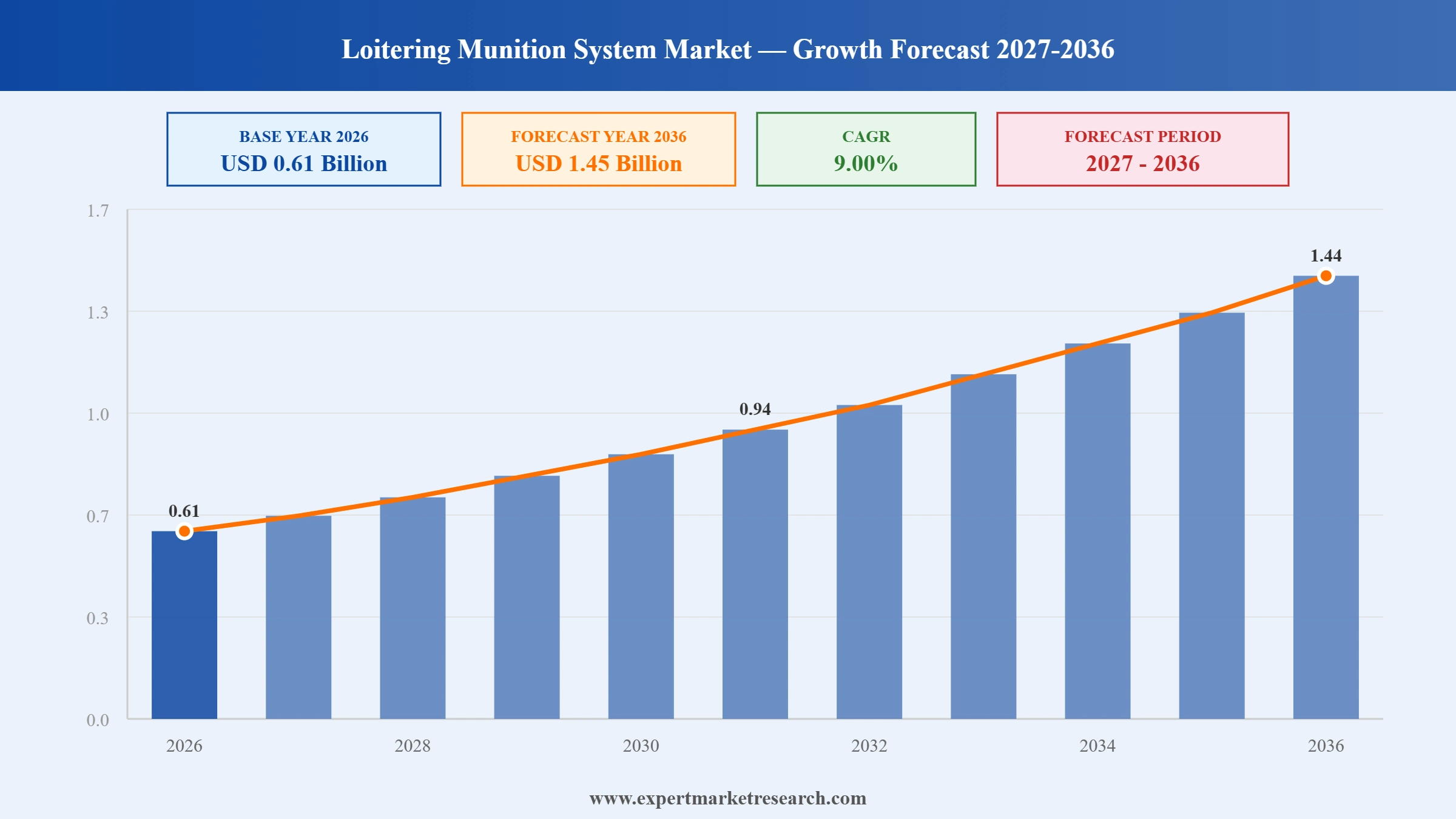
The Loitering Munition System market was valued at USD 0.56 Billion in 2025. The market is expected to grow at a CAGR of 9.00% during the forecast period of 2026-2035 to reach a value of USD 1.33 Billion by 2035. Rising global defense modernization spending, growing demand for cost-effective precision strike alternatives to traditional guided missiles, and increasing autonomous and AI-enabled targeting capabilities are collectively driving market growth.
The Loitering Munition System market is shaped by escalating global defense modernization spending and rising demand for cost-effective precision strike alternatives to traditional guided missile systems. North America dominated the market with a share of approximately 35% in 2024, supported by sustained defense budgets and established domestic manufacturing capacity among leading system integrators. Medium-range systems account for the largest share by range, reflecting their balance of tactical flexibility, endurance, and cost relative to short-range and long-range configurations.
Established defense manufacturers are reinforcing their market presence through continued contract wins, capacity expansion, and strategic acquisitions rather than relying on a single growth lever. In March 2026, for example, EagleNXT, formerly known as AgEagle Aerial Systems, announced a strategic investment in Israel-based Aerodrome Group, a precision loitering munition developer, expanding its autonomy and precision-strike capabilities as part of a broader defense technology strategy. This multi-pronged approach is helping leading manufacturers scale production capacity and expand export reach even as demand accelerates across NATO and allied defense forces, with several suppliers pursuing large-scale multi-year procurement agreements to secure long-term production visibility.
The competitive landscape remains moderately consolidated, with supply concentrated among established defense contractors such as AeroVironment, Elbit Systems, Israel Aerospace Industries, and UVision Air that maintain deep systems engineering expertise, proven combat track records, and long-standing relationships with national defense ministries. Participation requires sustained investment in autonomous targeting technology, guidance systems, and export licensing compliance, creating meaningful entry barriers and reinforcing the position of long-established players across land, air, and naval platform categories.
Read more about this report - REQUEST FREE SAMPLE COPY IN PDF
|
Loitering Munition System Market Report Summary |
Description |
Value |
|
Base Year |
USD Billion |
2025 |
|
Historical Period |
USD Billion |
2019-2025 |
|
Forecast Period |
USD Billion |
2026-2035 |
|
Market Size 2025 |
USD Billion |
0.56 |
|
Market Size 2035 |
USD Billion |
1.33 |
|
CAGR 2019-2025 |
Percentage |
XX% |
|
CAGR 2026-2035 |
Percentage |
9.00% |
|
CAGR 2026-2035 - Market by Region |
Europe |
12.5% |
|
CAGR 2026-2035 - Market by Platform |
Air |
9.8% |
|
CAGR 2026-2035 - Market by Range |
Short-Range |
10.1% |
|
2025 Market Share by Region |
North America |
35% |
The Loitering Munition System market is being reshaped by large-scale defense contract activity, rapid international export expansion by Turkish and Israeli manufacturers, and strategic acquisitions aimed at building integrated counter-drone and strike capabilities. Rising NATO and allied defense modernization spending is further reshaping the competitive landscape.
Elbit Systems was awarded a $1.635 billion contract to supply a European country with a broad portfolio of defense solutions, including long-range precision strike artillery-rocket systems and a range of unmanned reconnaissance and loitering aerial combat systems spanning operational to tactical ranges. The award reinforced Elbit's position as a full-spectrum supplier across strike, reconnaissance, and electronic warfare domains. Other companies can pursue similar multi-domain framework contracts to diversify beyond single-product sales relationships.
STM signed its first European export contract for the rotary-wing KARGU and fixed-wing ALPAGU loitering munition systems with a NATO and EU member country, integrating the systems onto armoured land vehicles alongside battle management software. The deal brought Turkish-made autonomous strike drones directly into NATO land force inventories. Other companies can pursue similar systems-integration offerings, bundling software alongside hardware exports.
UVision Air and U.S. integrator Mistral secured a $982 million multi-year U.S. Army contract for Hero-120 loitering munitions, including training and sustainment, under the Lethal Unmanned System program. The award marked one of the largest loitering munition contracts secured by an Israeli manufacturer. Other companies can pursue similar partnerships with local integrators to win large domestic programs.
AeroVironment announced plans to acquire BlueHalo, a company specializing in counter-drone systems and laser communication technologies, in an all-stock deal valued at approximately $4.1 billion. The acquisition aimed to expand AeroVironment's capabilities across counter-UAS, cyber, and space technologies. Other companies can pursue similar adjacent-capability acquisitions to build integrated strike and counter-drone portfolios.
Rising drone and loitering munition use in active conflicts is driving unprecedented defense budget allocation toward autonomous strike and counter-drone capabilities, as militaries race to close capability gaps exposed on modern battlefields. This is reshaping procurement priorities across NATO and allied defense ministries. For example, the U.S. fiscal year 2026 defense budget includes more than $3 billion specifically for counter-drone capabilities as part of the Pentagon's Replicator initiative, which aims to field thousands of autonomous systems across the joint force.
Rising drone activity around sensitive military and civilian sites is prompting governments to modernize oversight and interagency coordination for counter-drone operations, as incursions increasingly outpace existing legal and organizational frameworks. This is creating new compliance and reporting requirements across defense and homeland security agencies. For example, the U.S. fiscal year 2026 National Defense Authorization Act introduced the most significant counter-UAS restructuring since the Department of Defense's original authorities were enacted, establishing a dedicated task force to unify the department's previously fragmented approach across military branches and domestic installations.
Battlefield demand for infantry-deployable precision strike systems is drawing new manufacturers beyond established defense primes into the loitering munition market, as smaller companies move quickly to fill gaps left by traditional procurement cycles. This is broadening the competitive base beyond the traditionally dominant Israeli and Turkish suppliers. In September 2025, for example, Lithuanian company Granta Autonomy unveiled its X-Wing vertical take-off and landing loitering munition, designed for deployment by small infantry units without specialized launch equipment or extensive logistical support.
Electronic warfare resilience and reduced operator cognitive load are pushing loitering munition design toward greater autonomy, as GPS-denied and contested electromagnetic environments limit reliance on continuous operator control. In July 2025, for example, India's Artemon Aerospace completed demonstration trials of its canister-launched loitering munition with the Indian Army's Infantry Directorate under the iDEX initiative, featuring GNSS-denied navigation and EO/IR sensors for autonomous operation. Swarm coordination capabilities are also advancing, allowing multiple munitions to communicate and execute synchronized, multi-axis strikes against hardened or point-defended targets.
The same low-cost drone economics that make loitering munitions attractive are also driving demand for cost-effective interceptor and counter-drone systems, as traditional air defense assets prove economically mismatched against inexpensive threats. This is creating an adjacent, fast-growing category alongside the core loitering munition market. In March 2026, for example, Ukrainian-Polish company OSIRIS AI unveiled its OSIRIS UEB-1 autonomous interceptor UAV at the Xponential Europe defense forum in Dusseldorf, Germany.
The Expert Market Research's report titled "Loitering Munition System Market Report and Forecast 2026-2035" offers a detailed analysis of the market based on the following segments:
Market Breakup by Platform
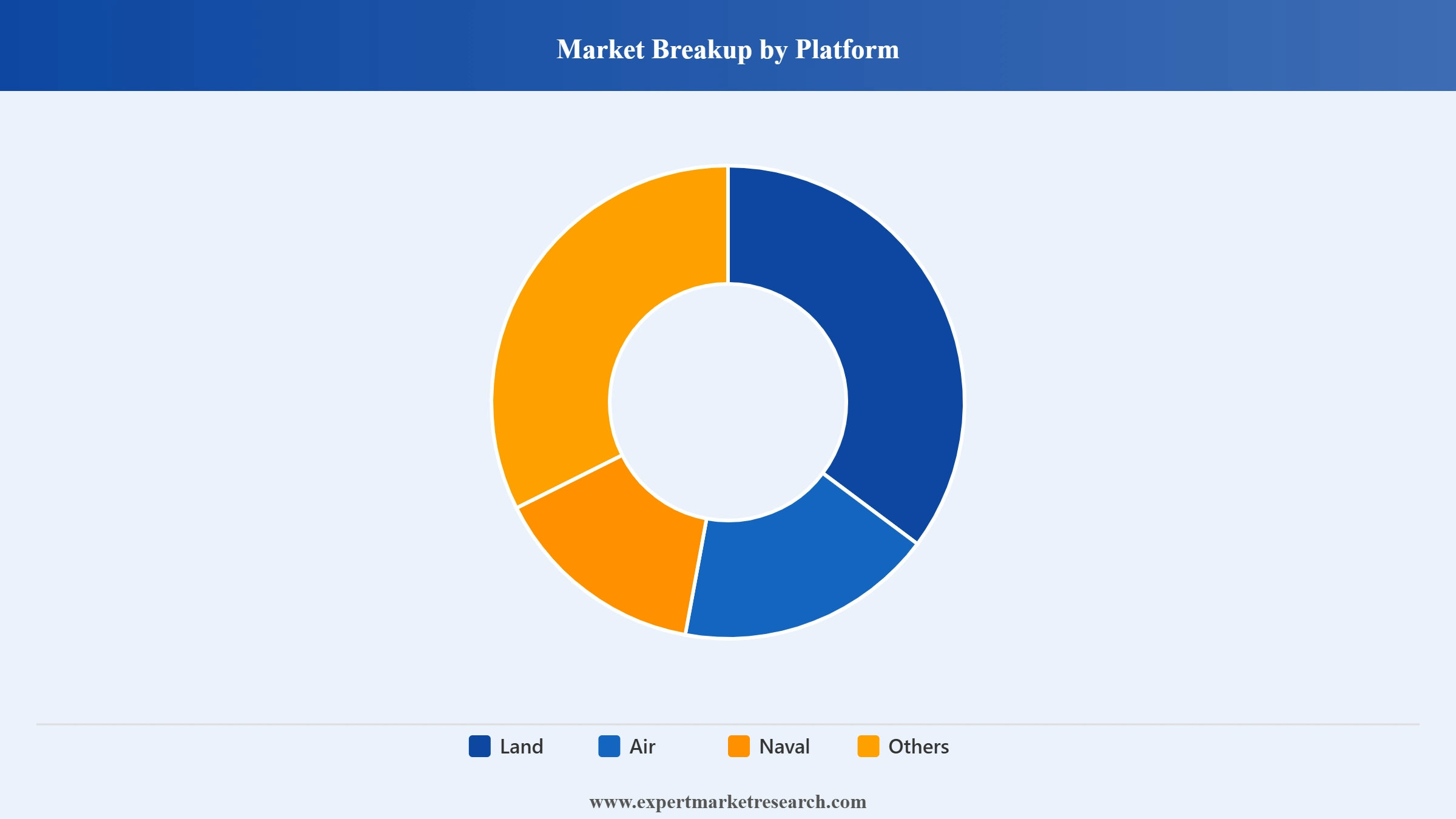
Key Insight: Land-based systems account for the largest share of the market by platform, reflecting sustained army-led procurement for ground-based precision strike and rapid battlefield interdiction. Air-launched systems continue to see strong adoption as air forces integrate loitering munitions for extended-range surveillance and strike missions from fixed-wing and rotary platforms. Naval platforms represent a smaller but growing category as maritime forces adapt loitering munitions for coastal defense and vessel-launched strike roles; in February 2026, for example, the U.S. Navy issued a solicitation under its Runway Independent Maritime and Expeditionary Strike program seeking a long-range strike drone capable of delivering 1,000-pound class munitions at a range of at least 1,400 nautical miles. Others, including dismounted and special forces-portable variants, round out the platform's broader operational footprint.
Market Breakup by Range
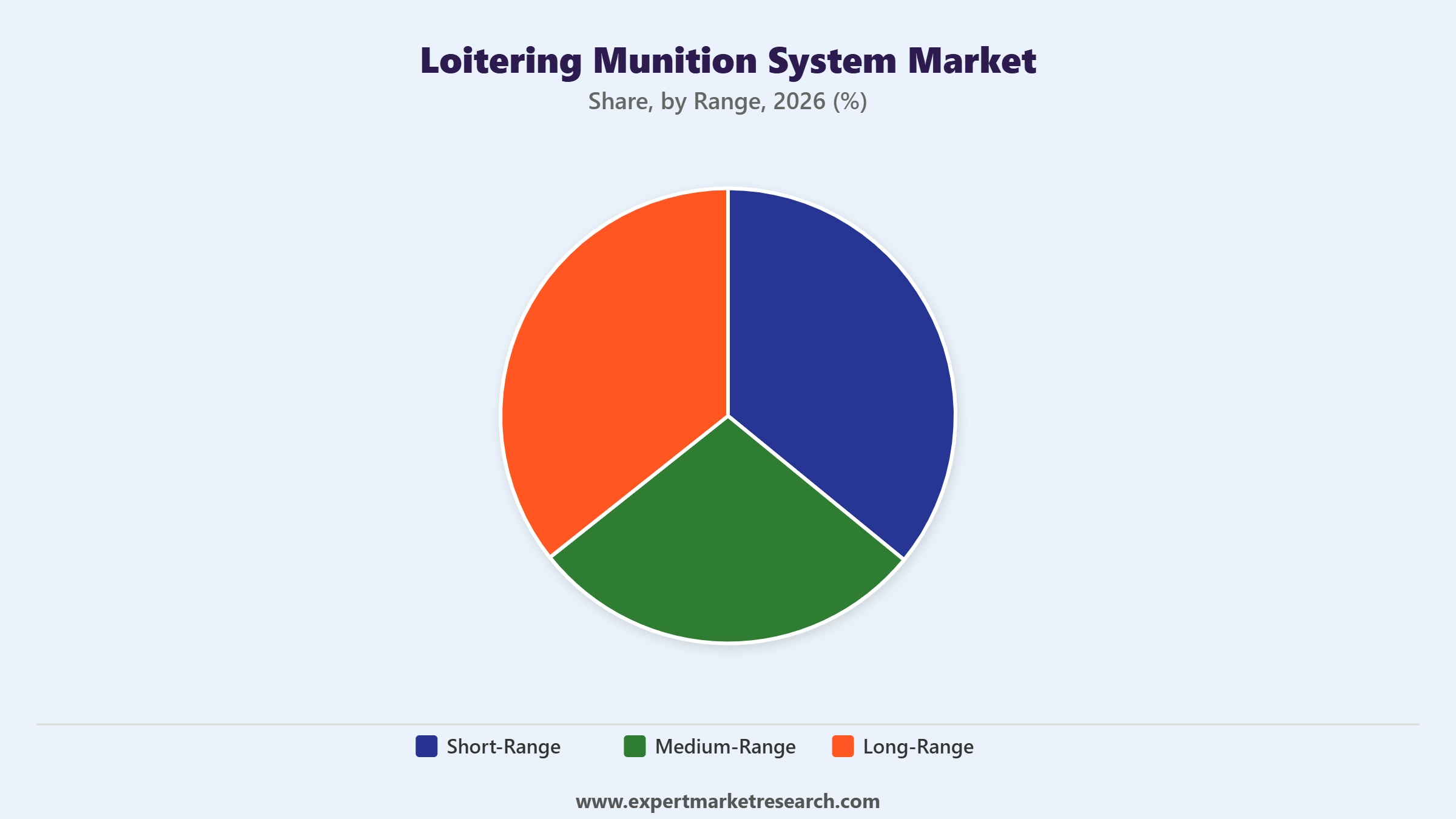
Key Insight: Medium-range systems account for the largest share of the market by range, reflecting their balance of tactical flexibility, endurance, and cost relative to short-range and long-range configurations, supporting extended tactical operations beyond the immediate frontline. Short-range systems are the fastest-growing range category, driven by rising demand for portable, infantry-level precision strike and rapid tactical engagement capabilities that prioritize affordability and ease of deployment. Long-range systems continue to serve smaller-volume, specialized deep-strike and high-value target missions given their higher cost and stricter operational controls; in February 2025, for example, AeroVironment received its third delivery order under a five-year Army contract, totaling $288 million for Switchblade loitering munition systems across the Lethal Unmanned Systems program.
Market Breakup by End User
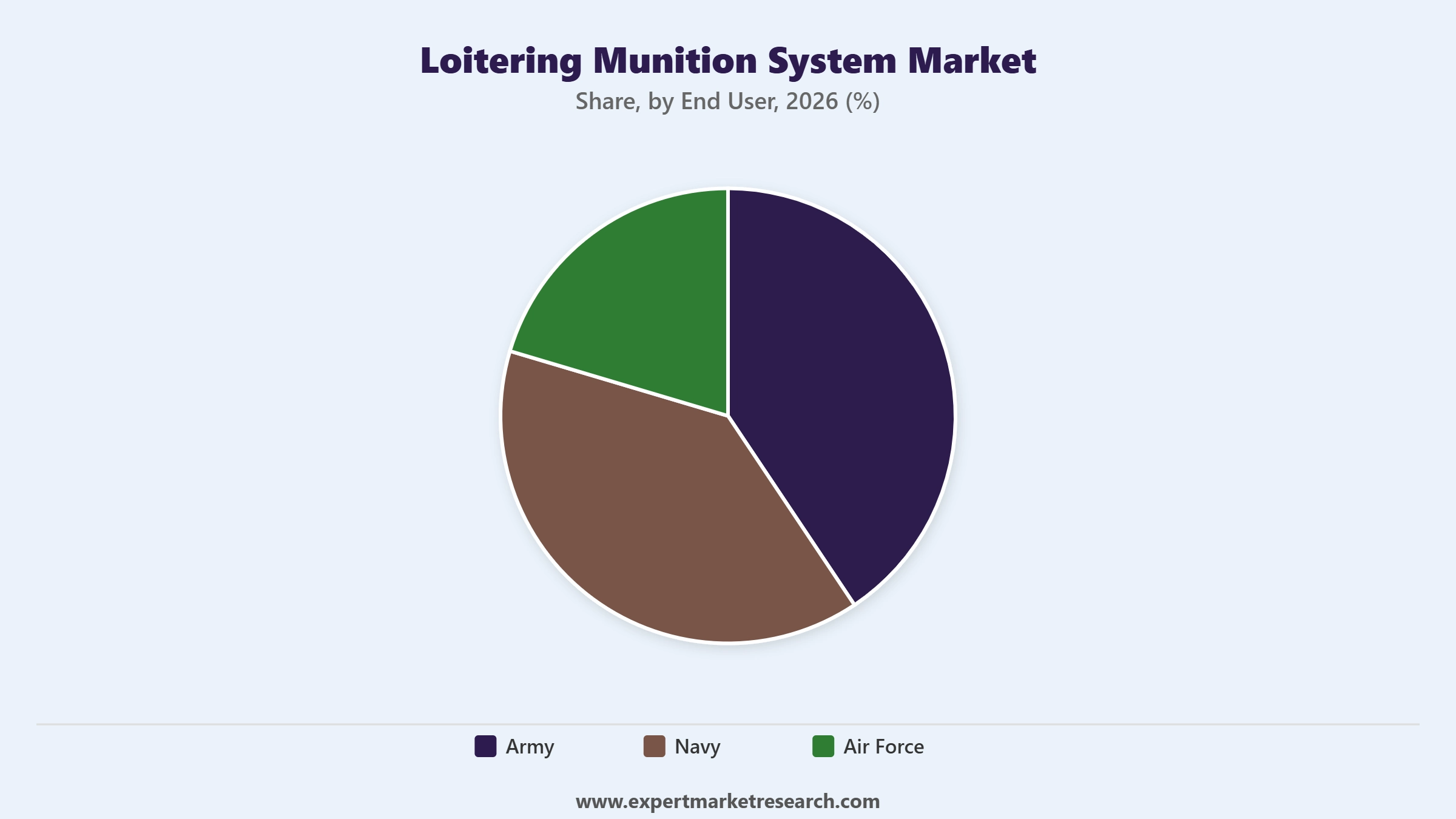
Key Insight: Army end users account for the largest share of the market, driven by increasing demand for ground-based precision strike capabilities in close combat, counterinsurgency, and tactical support roles. Air force end users are the fastest-growing category as the U.S. Air Force pursues its first program of record for air-launched modular munitions; fiscal year 2027 budget documents outline plans to acquire nearly 28,000 FAMM rounds for approximately $12.6 billion, with the Pentagon signing multiyear framework deals with Anduril, CoAspire, and Zone 5 in July 2026. Navy end users continue to see steady adoption for coastal defense and maritime strike applications, while other end users, including special operations and paramilitary forces, represent a smaller, specialized share of overall demand; the U.S. Marine Corps' Organic Precision Fires-Light program, for example, is deploying Teledyne FLIR's vertical take-off systems in parallel with fixed-wing designs, giving dismounted infantry squads organic precision strike capability.
Market Breakup by Region
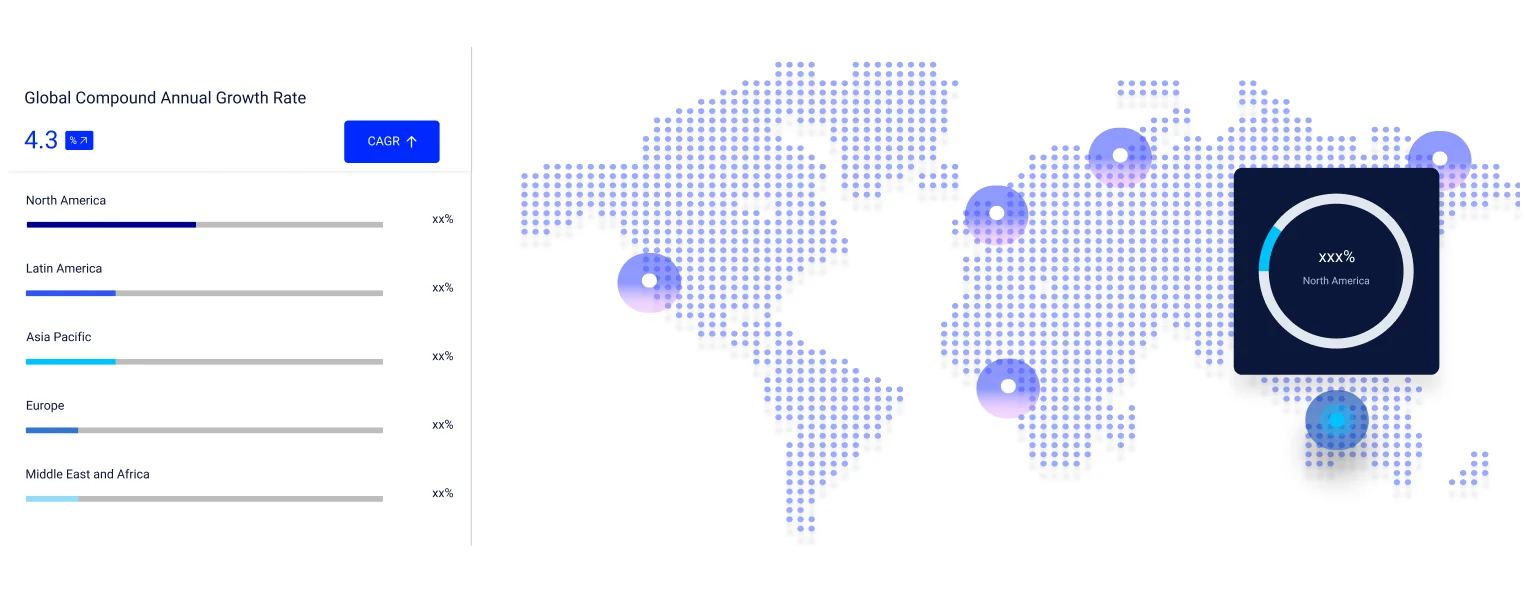
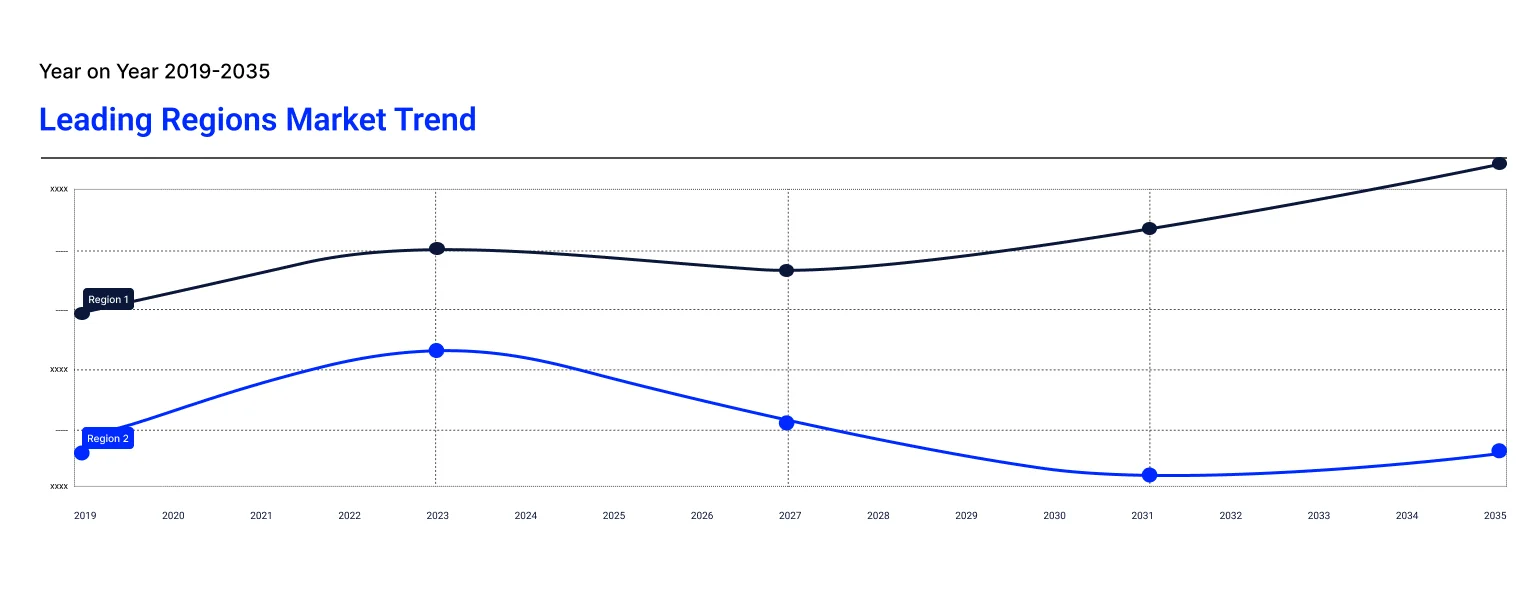
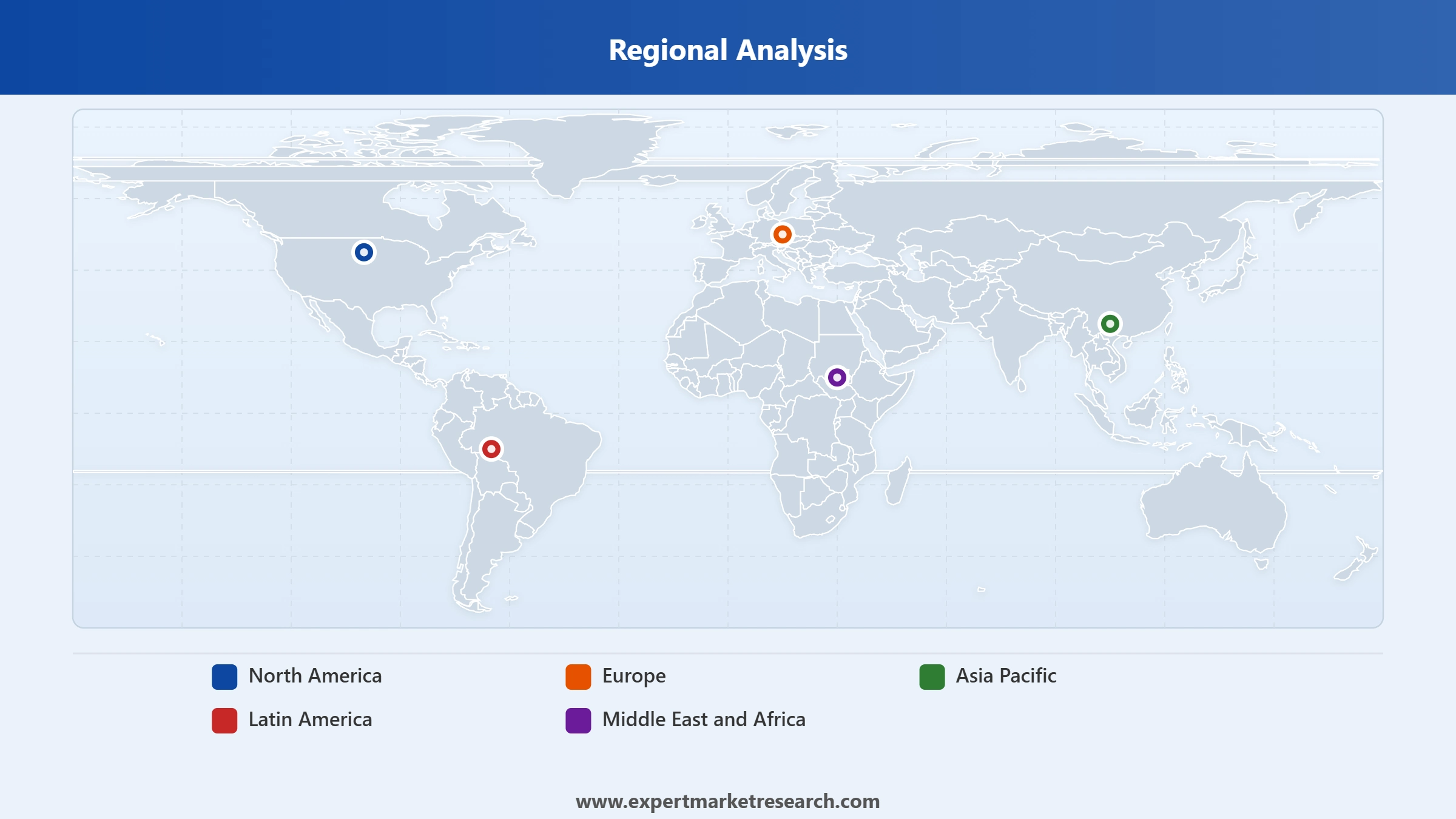
Key Insight: North America dominates the loitering munition system market, supported by sustained defense modernization spending and established domestic production capacity among leading system integrators. Europe is a significant and fast-growing market as NATO members increase procurement in response to regional security concerns, with Turkish and Israeli manufacturers securing multiple export contracts across the continent. Asia Pacific continues to see steady growth tied to expanding regional defense budgets, while Latin America and the Middle East and Africa witness steadier growth linked to broader military modernization and counterterrorism procurement programs.
Read more about this report - REQUEST FREE SAMPLE COPY IN PDF
By platform, land-based systems dominate the market due to sustained army-led ground strike procurement
Land-based systems account for the largest share of the market by platform, reflecting sustained army-led procurement for ground-based precision strike and rapid battlefield interdiction. In May 2025, for example, the U.S. Marine Corps confirmed plans to deploy three new types of loitering munitions into infantry battalions by early 2026, with Teledyne FLIR delivering the first 127 systems for testing that summer.
Read more about this report - REQUEST FREE SAMPLE COPY IN PDF
Air-launched systems are a fast-growing platform category as air forces integrate loitering munitions for extended-range surveillance and strike missions from fixed-wing and rotary platforms. In July 2026, for example, U.S. Special Operations Command issued a solicitation seeking an air-launched loitering munition specifically designed for deployment from fixed-wing aircraft, with industry white papers due by the end of that month.
By range, medium-range systems lead the market due to their balance of tactical flexibility, endurance, and cost
Medium-range systems account for the largest share of the market by range, reflecting their balance of tactical flexibility, endurance, and cost relative to short-range and long-range configurations. In March 2026, for example, AeroVironment received a $186 million U.S. Army order combining Switchblade 600 Block 2 and Switchblade 300 Block 20 loitering munitions, the first order to introduce explosive next-generation variants across both ranges under the Army's Lethal Unmanned Systems program.
Read more about this report - REQUEST FREE SAMPLE COPY IN PDF
Short-range systems are the fastest-growing range category as forces prioritize rapid-deployment, cost-effective platforms; the LUCAS loitering munition, for example, was unveiled in July 2025 under the Pentagon's T-REX rapid-acquisition framework and was operationally employed by February 2026 in coordinated strikes against Iranian military infrastructure.
By end user, army forces lead the market due to sustained demand for ground-based precision strike capabilities
Army end users account for the largest share of the market, driven by increasing demand for ground-based precision strike capabilities in close combat, counterinsurgency, and tactical support roles. In August 2026, for example, AeroVironment received a $51 million U.S. Army order for additional Switchblade 600 Block 2 systems, with the company noting the system had been fielded across more than 20 brigade combat teams since 2025.
Read more about this report - REQUEST FREE SAMPLE COPY IN PDF
Air force end users are the fastest-growing category as the U.S. Air Force pursues its first program of record for air-launched modular munitions; fiscal year 2027 budget documents outline plans to acquire nearly 28,000 FAMM rounds for approximately $12.6 billion, with the Pentagon signing multiyear framework deals with Anduril, CoAspire, and Zone 5 in July 2026. Rheinmetall was commissioned in late 2025 by a NATO customer to supply several hundred Hero loitering munitions, with deliveries beginning in the first quarter of 2026 and production based at RWM Italia's facility in partnership with UVision Air.
North America dominates the market due to sustained defense modernization spending and established domestic manufacturing capacity
North America dominates the Loitering Munition System market, holding approximately 35% share, supported by sustained defense modernization spending and established domestic production capacity among leading system integrators such as AeroVironment. The region's large defense budget and continued procurement of autonomous strike systems reinforce its leading position across both army and air force end-user categories.
Read more about this report - REQUEST FREE SAMPLE COPY IN PDF
Europe is the fastest-growing region as NATO members increase procurement in response to regional security concerns, with Turkish and Israeli manufacturers securing multiple export contracts across the continent. In February 2026, for example, Germany, France, Italy, Poland, Sweden, and the United Kingdom signed a letter of intent to jointly develop a low-cost, long-range, deep-strike loitering munition under the European Long-range Strike Approach, reflecting deepening multinational cooperation across the region's defense industrial base.
|
CAGR 2026-2035 - Market by |
Region |
|
North America |
7.5% |
|
Europe |
12.5% |
|
Asia Pacific |
8.5% |
|
Latin America |
9.0% |
|
Middle East and Africa |
9.5% |
The global market features a moderately consolidated competitive structure led by established Israeli, Turkish, and North American defense contractors with proven combat-tested platforms. Loitering munition system companies like AeroVironment, Elbit Systems, and STM are competing primarily through combat track record and export reach, while UVision Air and other manufacturers focus on modular, open-architecture system design.
Leading Loitering munition system market players are focusing on autonomous targeting technology, export expansion, and integrated systems partnerships with local defense integrators to strengthen their competitive position. Increasing emphasis on electronic warfare resilience and swarm coordination capabilities is also enabling manufacturers to diversify their customer base while supporting long-term market growth.
AeroVironment, headquartered in Arlington, Virginia, and founded in 1971, is a leading U.S. defense technology company specializing in small and medium uncrewed aircraft systems, loitering munitions, and adjacent autonomy capabilities. Its Switchblade family of loitering munitions is combat-proven and fielded with the U.S. Department of Defense and more than 55 allied nations.
Elbit Systems, headquartered in Haifa, and founded in 1966, is a diversified Israeli defense contractor supplying loitering munitions, electronic warfare systems, and precision strike solutions to defense and homeland security customers worldwide. The company's broad portfolio spans air, land, and naval combat systems, supported by subsidiaries across Israel, North America, and Europe.
UVision Air, headquartered in Tzur Yigal, Israel, and founded in 2011, specializes in the Hero family of loitering munitions, ranging from man-portable systems to medium- and long-range platforms for fortified target engagement. The company maintains a U.S. subsidiary with production facilities in Stafford, Virginia, dedicated to serving American military requirements.
STM, headquartered in Ankara, Turkey, and founded in 1991, is a Turkish defense technology company known for its KARGU rotary-wing and ALPAGU fixed-wing loitering munition families. STM's autonomous systems are in service across four continents and more than 15 countries, supported by battle management software and systems integration capabilities.
Other key players in the market report include Israel Aerospace Industries Ltd., Rafael Advanced Defense Systems Ltd., Textron Systems Corporation, Baykar Defence, and QinetiQ Group plc, among others.
*Please note that this is only a partial list; the complete list of key players is available in the full report. Additionally, the list of key players can be customized to better suit your needs.*
Explore the latest trends shaping the loitering munition system market 2026-2035 with our in-depth report. Gain strategic insights, future forecasts, and key market developments that can help you stay competitive. Download a free sample report or contact our team for customized consultation on the market trends 2026.


Upto 15% Off
USD
$2499 $2249
$3999 $3599
$4999 $4249
$5999 $5099


*While we strive to always give you current and accurate information, the numbers depicted on the website are indicative and may differ from the actual numbers in the main report. At Expert Market Research, we aim to bring you the latest insights and trends in the market. Using our analyses and forecasts, stakeholders can understand the market dynamics, navigate challenges, and capitalize on opportunities to make data-driven strategic decisions.*
In 2025, the Loitering Munition System market reached an approximate value of USD 0.56 Billion.
The market is projected to grow at a CAGR of 9.00% between 2026 and 2035.
The key players in the market include AeroVironment, Inc., Textron Systems Corporation, Elbit Systems Ltd., Israel Aerospace Industries Ltd., UVision Air Ltd., Rafael Advanced Defense Systems Ltd., STM Savunma Teknolojileri Muhendislik ve Ticaret A.S., Baykar Defence, and QinetiQ Group plc, among others.
Leading manufacturers are pursuing autonomous targeting innovation, export contract expansion, and strategic acquisitions to strengthen combat capability and market position.
Key challenges include export licensing restrictions, high system development costs, and the technical complexity of ensuring reliable autonomous targeting.
Explore our key highlights of the report and gain a concise overview of key findings, trends, and actionable insights that will empower your strategic decisions.
|
Report Features |
Details |
|
Base Year |
2025 |
|
Historical Period |
2019-2025 |
|
Forecast Period |
2026-2035 |
|
Scope of the Report |
Historical and Forecast Trends, Industry Drivers and Constraints, Historical and Forecast Market Analysis by Segment:
|
|
Breakup by Platform |
|
|
Breakup by Range |
|
|
Breakup by End User |
|
|
Breakup by Region |
|
|
Market Dynamics |
|
|
Competitive Landscape |
|
|
Companies Covered |
|
Datasheet
One User
USD 2,499
USD 2,249
tax inclusive*
Single User License
One User
USD 3,999
USD 3,599
tax inclusive*
Five User License
Five User
USD 4,999
USD 4,249
tax inclusive*
Corporate License
Unlimited Users
USD 5,999
USD 5,099
tax inclusive*
*Please note that the prices mentioned below are starting prices for each bundle type. Kindly contact our team for further details.*
Flash Bundle
Small Business Bundle
Growth Bundle
Enterprise Bundle
*Please note that the prices mentioned below are starting prices for each bundle type. Kindly contact our team for further details.*
Flash Bundle
Number of Reports: 3
20%
tax inclusive*
Small Business Bundle
Number of Reports: 5
25%
tax inclusive*
Growth Bundle
Number of Reports: 8
30%
tax inclusive*
Enterprise Bundle
Number of Reports: 10
35%
tax inclusive*
How To Order

Select License Type
Choose the right license for your needs and access rights.

Click on ‘Buy Now’
Add the report to your cart with one click and proceed to register.

Select Mode of Payment
Choose a payment option for a secure checkout. You will be redirected accordingly.
Strategic Solutions for Informed Decision-Making
Gain insights to stay ahead and seize opportunities.

Get insights & trends for a competitive edge.

Track prices with detailed trend reports.

Analyse trade data for supply chain insights.

Leverage cost reports for smart savings

Enhance supply chain with partnerships.

Connect For More Information
Our expert team of analysts will offer full support and resolve any queries regarding the report, before and after the purchase.
Our expert team of analysts will offer full support and resolve any queries regarding the report, before and after the purchase.
We employ meticulous research methods, blending advanced analytics and expert insights to deliver accurate, actionable industry intelligence, staying ahead of competitors.
Our skilled analysts offer unparalleled competitive advantage with detailed insights on current and emerging markets, ensuring your strategic edge.
We offer an in-depth yet simplified presentation of industry insights and analysis to meet your specific requirements effectively.




