

Consumer Insights
Uncover trends and behaviors shaping consumer choices today
Procurement Insights
Optimize your sourcing strategy with key market data
Industry Stats
Stay ahead with the latest trends and market analysis.
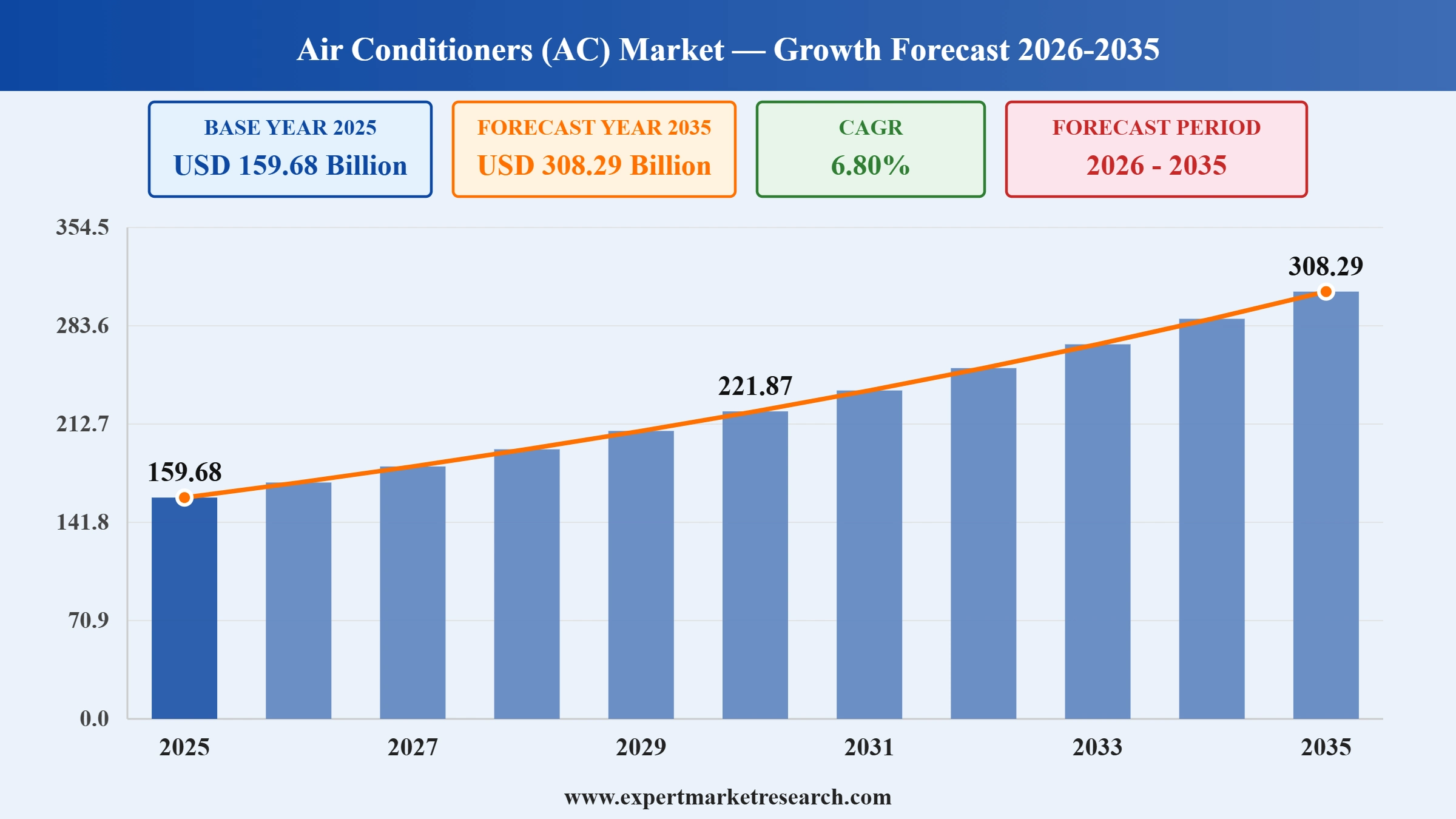
The global air conditioners (AC) market attained a value of USD 159.68 Billion in 2025 and is projected to expand at a CAGR of 6.80% through 2035. The market is further expected to achieve USD 308.29 Billion by 2035. The global shift toward low-GWP refrigerants is becoming a niche growth catalyst for air conditioners. Regulations under the Kigali Amendment and regional refrigerant rules are compelling manufacturers to redesign systems around alternatives such as R-32, R-454B, and R-290. This is accelerating demand for compatible compressors, heat exchangers, safety controls, and next-generation AC architectures.
The global air conditioners (AC) market is set to experience structural growth due to higher temperatures, increased urbanization, growing household incomes, growing commercial construction activities, and demand for energy-efficient cooling systems. There is an increasing need for cooling systems in residential buildings, office buildings, commercial buildings, hospitals, hospitality businesses, industries, logistics, and data centers. In 2026, extreme temperature conditions in Europe have led to the increased demand for imported air conditioners, which signifies the growing importance of cooling in traditionally low penetration regions.
Simultaneously, energy efficiency standards are changing the nature of product development. The stringent BEE star-rating standards in India in 2026 are leading companies to develop higher energy efficient products, while Europe's F-gas regulation is leading towards the development of GWP refrigerants, thereby boosting the air conditioners (AC) market value.
The shift toward energy-efficient and smart cooling systems is reshaping the air conditioner market as consumers seek lower electricity costs and governments tighten efficiency standards. For example, in February 2026, Panasonic launched 57 new residential AC models in India, featuring inverter technology, smart capabilities, and DustBuster Technology. The company also plans to increase annual AC production capacity to 2 million units by FY2028. This development highlights how manufacturers are combining energy efficiency, connected features, and climate-resilient technologies to capture rising cooling demand while expanding production capacity and strengthening their position in India’s rapidly growing air conditioner market, thus aiming more towards the air conditioners (AC) market developments.
Read more about this report - REQUEST FREE SAMPLE COPY IN PDF
Panasonic launched 57 residential AC models featuring inverter technology, smart functionality, and multiple energy-efficiency ratings. The launch strengthens competition in India’s residential AC segment and expands consumer choice across price points. Panasonic’s planned capacity expansion also supports localization, production scalability, and stronger positioning amid rising cooling demand, thereby affecting the air conditioners (AC) market growth.
LG introduced its Essential Series air conditioners in India with Smart Inverter Compressor, Convertible 6-in-1 cooling, VIRAAT mode, and durability features. The development intensifies competition in affordable and mid-range segments while accelerating adoption of flexible, energy-efficient cooling technologies. It also strengthens LG’s India-focused manufacturing and product strategy.
Daikin launched Remote Automatic Energy-Saving Control via AI which will help to forecast the cooling load and operate the air conditioners optimally. This technology not only enhances the demand for smart energy management but also contributes to reducing electricity usage. It will also play a major role in making Daikin dominant in the expanding commercial AC market where energy efficiency plays a vital role while making purchase decisions.
Daikin started mass production in its first full-scale plant for air conditioners for homes in Indonesia. The factory will produce units for the local market. It enhances the company’s production capabilities within the region, as well as makes it more flexible to respond to local demands, thereby bolstering the air conditioners (AC) market revenues.
Heatwaves across Europe are creating a niche opportunity for Chinese air conditioner manufacturers, particularly in markets with historically low AC penetration. During the first half of 2026, Chinese AC exports to Europe rose sharply as France, Germany, and the UK experienced extreme heat. Manufacturers can target older European housing with compact, portable, and easy-to-install systems, while distributors can expand seasonal inventories ahead of summer demand. This trend creates a relatively new growth avenue beyond traditional high-penetration Asian and Middle Eastern markets, thus affecting the air conditioners (AC) market dynamics and trends.
The BEE Standards for India 2026 are making it necessary for manufacturers to move towards more efficient air conditioners. These new standards have led to improvements in inverter compressors, heat exchanges, and energy management systems. Manufacturers can increase their market share through more efficient products offered at various price segments, and not only available as premium models. Retailers could also focus on lower electricity expenses as an aspect of the total cost of ownership, thus encouraging replacement of existing fixed-speed air conditioners.
Shift towards lower GWP refrigerants provides an opportunity for companies developing R290 air conditioners. In April 2026, Midea announced 10 million sales worldwide of its R290 air conditioners, signaling increased adoption on a commercial scale. Early investments in R290-friendly compressors, safety systems, and manufacturing processes could be helpful in preparation for stricter refrigerant laws. Companies with existing R290 production facilities could enjoy a competitive edge as the marketplaces limit high GWP refrigerants, thereby boosting the trends in the air conditioners (AC) market.
Air conditioner manufacturers are increasingly developing AI features that actively optimize energy consumption rather than simply providing smartphone connectivity. LG’s 2026 Indian AC portfolio includes Energy Manager+, which supports monitoring and management of electricity consumption. This creates a niche for manufacturers combining AI with occupancy patterns, usage analytics, and automated cooling adjustments. Such capabilities can differentiate premium residential systems while supporting higher-value connected-home ecosystems and giving manufacturers opportunities to monetize energy-management services.
Rapid data-center construction is creating a specialized growth opportunity for air conditioning companies beyond conventional residential and commercial cooling. Daikin identified particularly strong data-centre-related demand in North America and Europe, while Carrier reported data-centre orders rising more than 300% year over year in Q2 2026. Manufacturers supplying precision cooling, chillers, heat-rejection systems, and digitally controlled HVAC can capture higher-value projects requiring continuous operation, high reliability, and precise thermal management.
The Expert Market Research’s report titled “Air Conditioners (AC) Market Report and Forecast 2026-2035” offers a detailed analysis of the market based on the following segments:
Market Breakup by Type
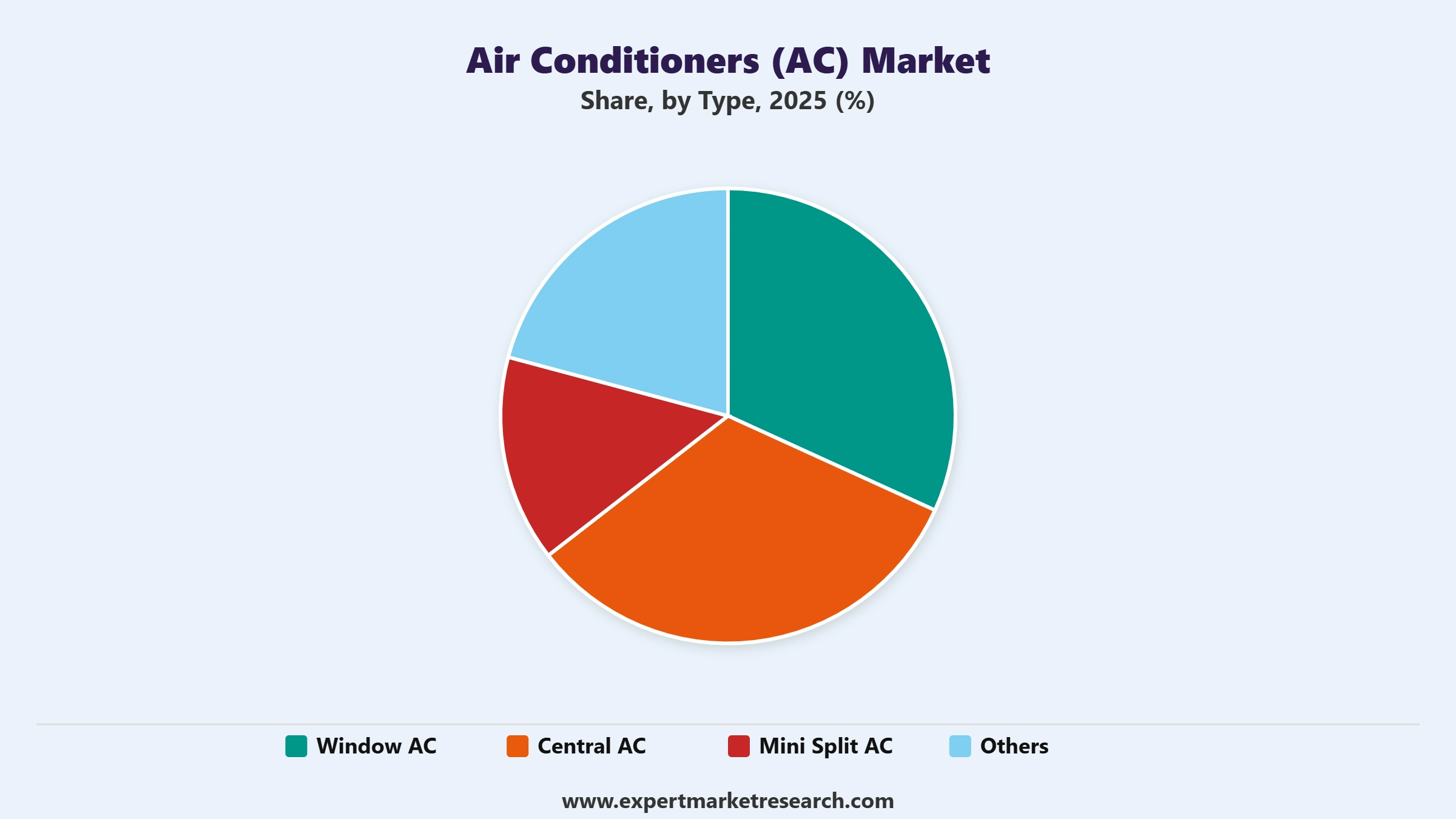
Key Insight: Window ACs remain relevant in cost-sensitive markets due to affordable pricing and simple installation, particularly in compact homes and rental properties. Central ACs are gaining traction in offices, hospitals, hotels, data centres, and large residential developments requiring whole-building cooling. Mini Split ACs are expanding through flexible zoning, inverter efficiency, and ductless installation. Other products, including portable and packaged systems, are finding niche demand in temporary spaces, smaller rooms, and specialized commercial applications where permanent cooling infrastructure is impractical, thereby opening up new opportunities and boosting the growth of the air conditioners (AC) market.
Market Breakup by Size
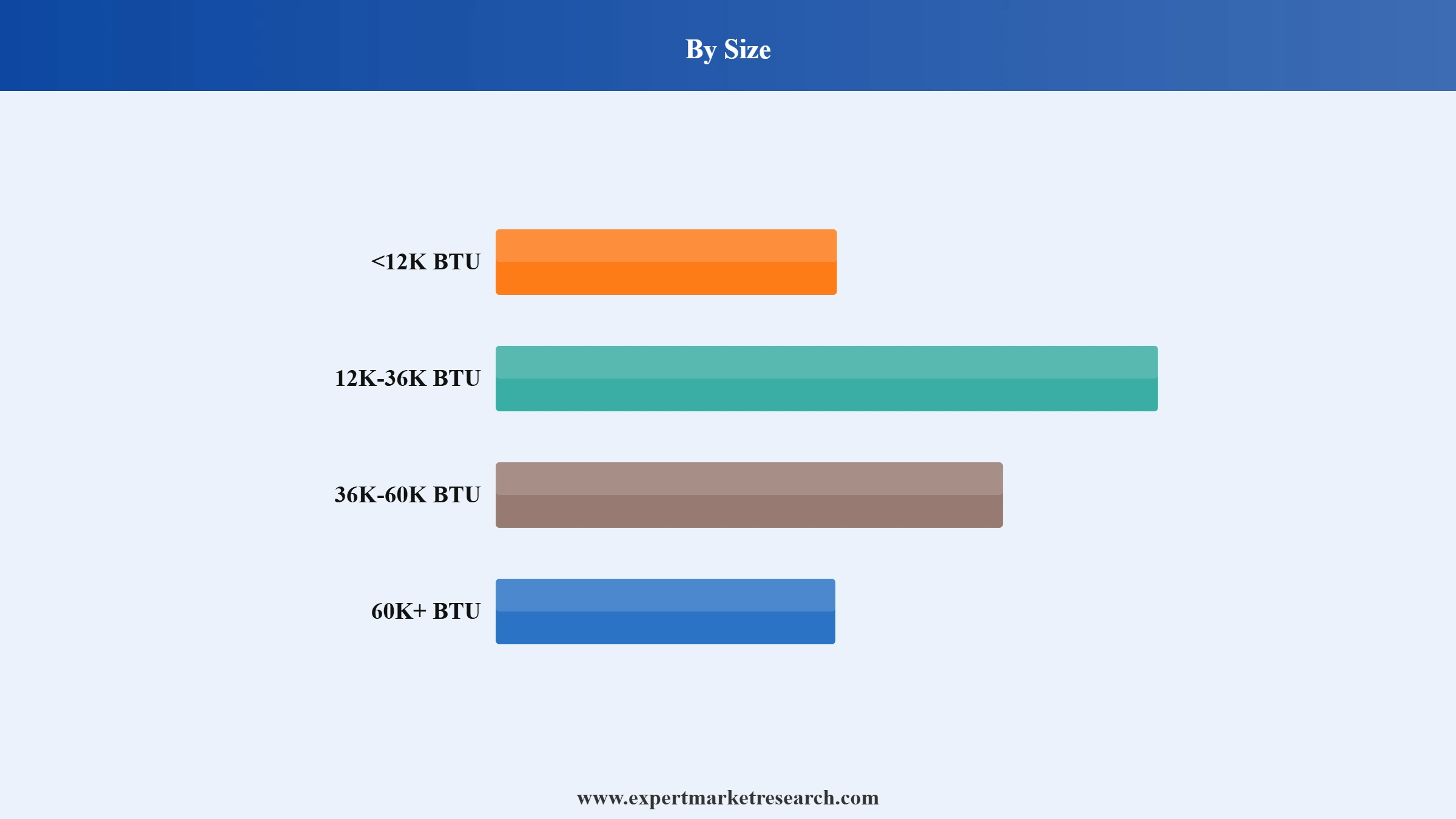
Key Insight: The <12K BTU segment serves small rooms and compact urban spaces, particularly in budget-conscious markets. 12K–36K BTU represents the core residential range, covering typical home cooling requirements and gaining from rising split inverter AC adoption. 36K–60K BTU units are increasingly used in larger homes, offices, retail outlets, and hospitality spaces. 60K+ BTU systems cater mainly to large commercial and industrial facilities, including malls, data centres, hospitals, and institutional buildings requiring high-capacity cooling.
Market Breakup by End Use
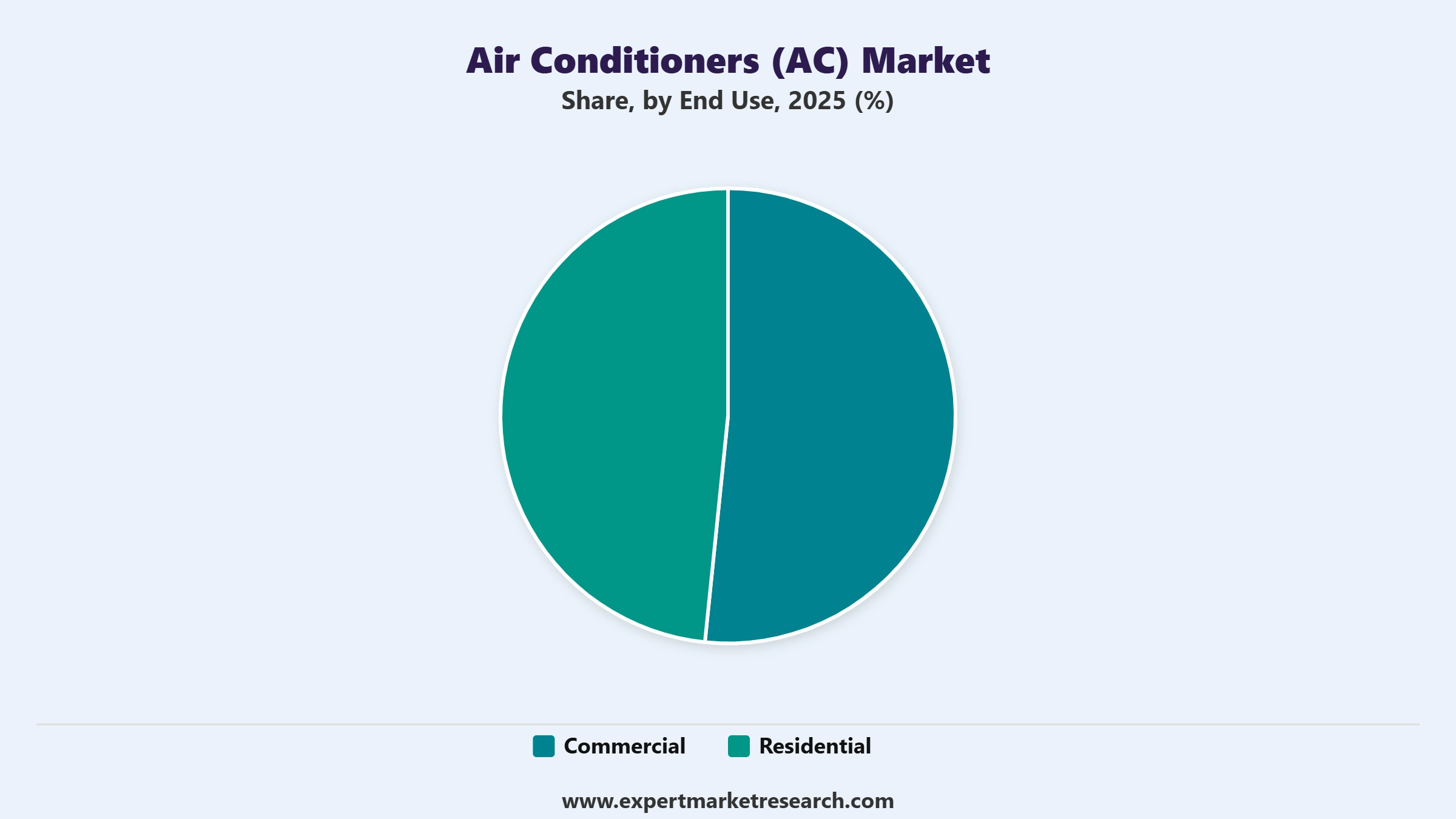
Key Insight: As per air conditioners (AC) market study, demand from the residential sector continues to remain an important driving factor due to growing household adoption of ACs, increased urbanization, rising temperatures, and replacement of old systems. The commercial HVAC market is witnessing growing popularity due to increasing offices, retail stores, hotels, hospitals, educational institutions, and data centers. The demand is increasingly moving towards energy-efficient central HVAC systems, VRF, and intelligent HVAC systems, which lower operating costs without compromising on the comfort of the indoor environment. The commercial cooling market is also expected to witness robust growth due to increased infrastructural developments.
Market Breakup by Distribution Channel
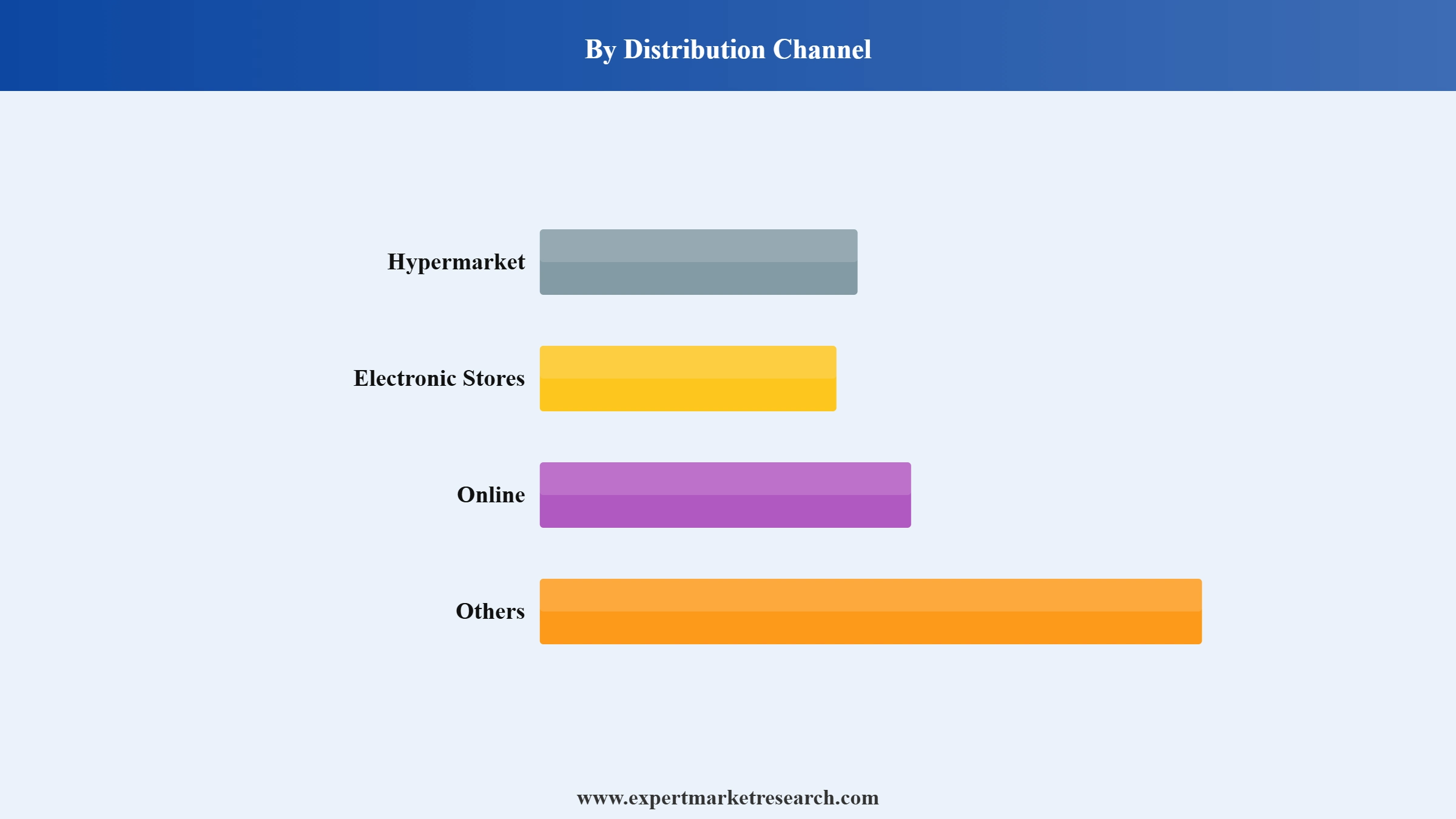
Key Insight: Hypermarkets remain important for mass-market AC sales, offering price comparisons, promotions, financing, and installation packages. Electronic Stores continue to attract buyers seeking product demonstrations, expert advice, and installation support, particularly for higher-value systems. Online channels are gaining rapidly through wider product selection, price comparison, digital financing, and bundled installation services. Others, including brand outlets, distributors, and specialist dealers, remain important for customized purchases, commercial projects, and after-sales support.
Market Breakup by Region
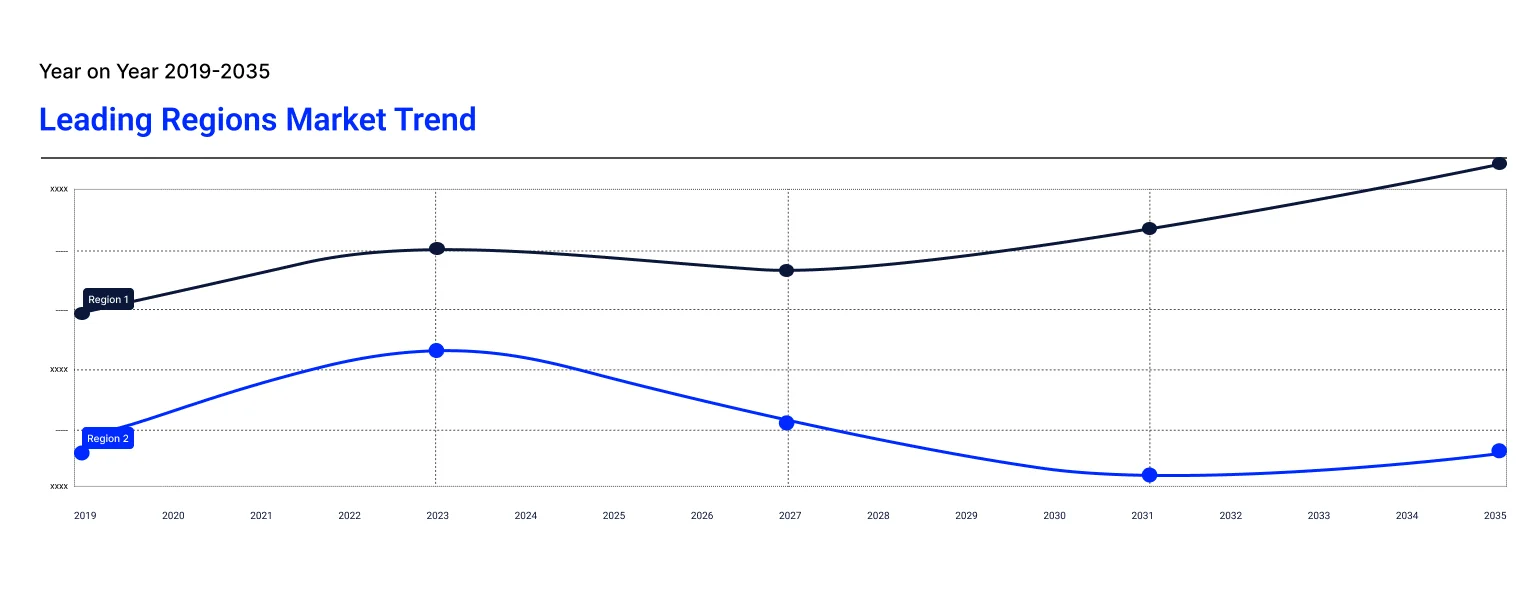
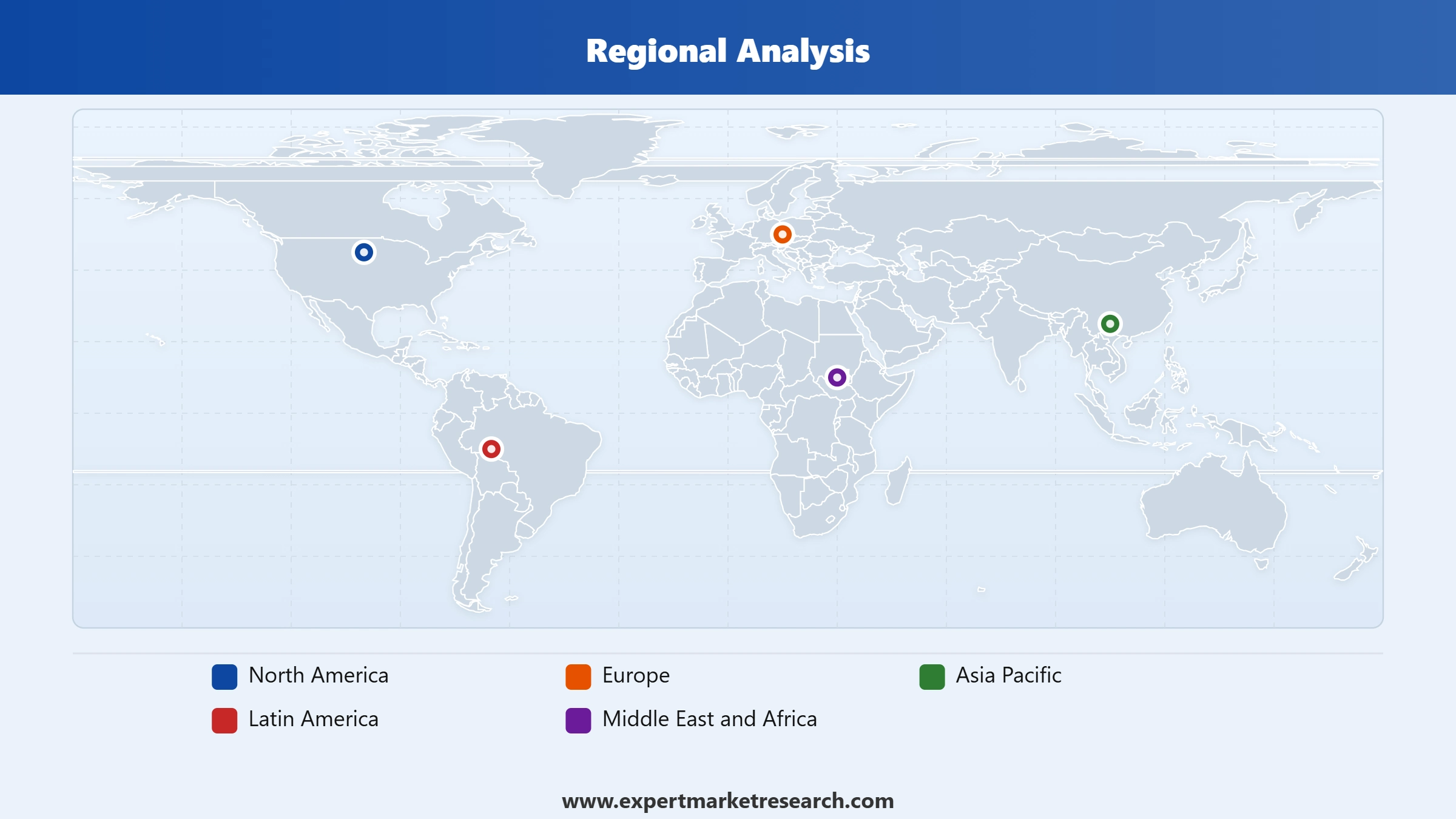
Key Insight: There are advantages for North America due to increased AC ownership, replacement demand, and increasing cooling needs in the extended summer season. Europe is seeing an increase in use owing to more heatwaves, especially in nations where there is lower penetration of ACs. The Asia Pacific region is the leading regional market, driven by urbanization, increased income levels, production capacity, and new household installations. Latin America is growing owing to urbanization and rising temperatures.
Read more about this report - REQUEST FREE SAMPLE COPY IN PDF
Mini-split ACs dominate due to easy installation and zoning
Mini Split ACs continue to dominate as they provide easy installation, room-by-room zoning, and inverter-driven performance. The highest demand for these units is recorded in residences where the presence of ductwork is not feasible or affordable. These systems are especially important in apartment renovations and urban housing; manufacturers are working on integrating smart control features into mini-splits and low-GWP refrigerant-based systems, thus boosting the overall air conditioners (AC) market development.
Read more about this report - REQUEST FREE SAMPLE COPY IN PDF
Central ACs are gaining momentum in large-scale applications such as data centres, hospitals, offices, hotels, and shopping complexes. The expansion of digital infrastructure is creating a particularly strong demand for high-capacity cooling. Carrier, for example, reported significant growth in data-centre-related orders in 2026, highlighting the increasing importance of specialized cooling infrastructure for large commercial facilities.
12K–36K BTU units dominate mainstream residential cooling demand
The 12K–36K BTU range remains highly relevant to mainstream residential cooling because it covers common room and apartment requirements. Panasonic’s February 2026 launch of 57 residential AC models across different segments and price points demonstrates manufacturers’ focus on providing multiple capacity and efficiency options for household users. This broad product strategy supports demand across varied Indian climatic conditions, and hence bolstering the air conditioners (AC) market revenues.
Read more about this report - REQUEST FREE SAMPLE COPY IN PDF
Higher-capacity systems are gaining traction in commercial spaces requiring stronger and more continuous cooling. Daikin showcased next-generation VRV, commercial, and data-centre cooling technologies at the 2026 AHR Expo, while Carrier introduced the AquaEdge 30CF specifically for data centres. Such developments indicate growing demand for larger-capacity systems in infrastructure-intensive applications.
Residential applications dominate, driven by growing household cooling demand
Demand for residential usage is still a key aspect of the manufacturers’ product strategy, especially in emerging countries where residential cooling is constantly growing. For example, Panasonic released 57 new ACs for the Indian market in February 2026, designed for various types of consumers. Even LG developed its Essential Series, which is designed to be used in Indian households.
Read more about this report - REQUEST FREE SAMPLE COPY IN PDF
Commercial cooling is becoming a particularly attractive niche because of data centres, offices, healthcare facilities, and other infrastructure requiring continuous cooling. Daikin’s 2026 announcements emphasize advanced data-centre and commercial cooling technologies, while Carrier continues expanding its dedicated data-centre portfolio. These investments show manufacturers moving toward specialized, high-performance commercial HVAC applications.
Read more about this report - REQUEST FREE SAMPLE COPY IN PDF
Electronic stores and authorized dealers remain dominant purchase channels
Electronic stores and authorized dealers remain important for AC purchases because installation, product selection, financing, and after-sales service often influence buying decisions. Panasonic’s 2026 Indian portfolio expansion across multiple price points is supported by its established market presence and distribution network. Physical retail remains particularly useful for consumers requiring assistance with capacity selection and installation.
Online channels are gaining traction as manufacturers increasingly promote connected ACs with features that can be compared digitally, including energy management, Wi-Fi, AI cooling, and inverter technology. LG’s 2026 AC range, for example, includes ThinQ Wi-Fi and Energy Manager+ features. Such products are well suited to online discovery, comparison, and digitally assisted purchasing.
Read more about this report - REQUEST FREE SAMPLE COPY IN PDF
Asia Pacific dominates due to urbanization, manufacturing, and cooling demand
The Asia Pacific region is still an important market for various reasons such as high urbanization rate, higher cooling penetration, and significant manufacturing centres of air conditioners in China, Japan, South Korea, and India. One of the important features of this region is that there is a high inclination towards inverters and connected air conditioners. Additionally, China manufacturers also exported more air conditioners to Europe in 2026 because of the heatwaves that occurred in Europe. Such factors are directly boosting the air conditioners (AC) market regional growth.
The Middle East and Africa are gaining momentum through extreme cooling requirements, large-scale construction, and expanding tourism and hospitality infrastructure. A notable opportunity is the growing adoption of district cooling and centralised HVAC systems for airports, malls, hotels, and mega-projects. Saudi Arabia’s large-scale development pipeline, including new hospitality and urban infrastructure projects, is creating demand for high-capacity, energy-efficient cooling systems capable of operating reliably under severe outdoor temperatures.
Global air conditioners market players are working towards scalability via innovations in products, expansion in manufacturing capacity, and using energy-efficient technology. They are developing smart and inverter and energy-efficient technology to cater to their changing needs as well as those of regulations.
Partnerships, acquisitions, marketing, geographical expansion are some of the strategies being pursued by the air conditioner companies to gain market share. Manufacturers are focusing on affordable cooling solutions in developing countries and premium smart systems in developed ones. Digital selling, localization, and after-sales services are other methods which will assist in achieving scalability in the wake of increasing demand for cooling solutions.
Founded in 1967 and headquartered in Providence, Rhode Island, Nortek has offered residential and commercial air-conditioning and heating solutions. Its portfolio includes air handlers, packaged DX rooftop systems, coils, energy-recovery/DOAS systems, and custom HVAC solutions for commercial and industrial applications.
Founded in 1919 and headquartered in Stockholm, Sweden, AB Electrolux offers air conditioners under brands including Electrolux, AEG, and Frigidaire. Its portfolio includes room air conditioners and related cooling solutions, alongside other household appliances, serving residential consumers across global markets.
Established in 1958, LG Electronics is headquartered in Seoul, South Korea. Its Home Appliance & air Solution business offers residential and commercial air conditioners, including split systems and advanced cooling solutions featuring inverter technology, smart connectivity, and energy-efficient operation for diverse consumer and business needs.
Founded in 1924 and headquartered in Osaka, Japan, Daikin specialises in air conditioning and refrigeration. Its portfolio spans residential, commercial, and industrial systems, including split, packaged, VRV/VRF, heat-pump, and integrated HVAC solutions, supported by controls and energy-efficient technologies.
Other key players in the market include Fujitsu General Limited, Johnson Controls, Carrier Global Corporation, Midea Group Co., Ltd, Gree Electric Appliances, Inc. of Zhuhai, Mitsubishi Electric Corporation, Samsung Electronics Co., Ltd., Trane Technologies plc, Haier Smart Home Co., Ltd., Voltas Limited, Panasonic Holdings Corporation, and Whirlpool Corporation, among others.
*Please note that this is only a partial list; the complete list of key players is available in the full report. Additionally, the list of key players can be customized to better suit your needs.*
Explore the global air conditioner market with Expert Market Research. The report covers market size, trends, competition, supply, demand, pricing, and growth opportunities. Download the sample report for market forecasts and strategic insights.
Air Handling and Indoor Ventilation Growth
HVAC Compressors and Refrigeration Innovations
Smart Thermostats and Intelligent HVAC Control
Heat Pump Systems and Energy Efficient Cooling


Upto 15% Off
USD
$2499 $2249
$3999 $3599
$4999 $4249
$5999 $5099


*While we strive to always give you current and accurate information, the numbers depicted on the website are indicative and may differ from the actual numbers in the main report. At Expert Market Research, we aim to bring you the latest insights and trends in the market. Using our analyses and forecasts, stakeholders can understand the market dynamics, navigate challenges, and capitalize on opportunities to make data-driven strategic decisions.*
In 2025, the global market reached a value of nearly USD 159.68 Billion.
The market is projected to grow at a CAGR of 6.80% between 2026 and 2035.
Key strategies driving the air conditioners (AC) market include energy-efficient product development, smart technology integration, eco-friendly refrigerants, product diversification, competitive pricing, strategic partnerships, digital marketing, and expansion into emerging markets.
Growing consumer awareness regarding energy efficient cooling systems and emergence of technologically advanced air conditioners are the key industry trends.
The major regional markets are North America, Latin America, the Middle East and Africa, Europe, and the Asia Pacific.
The various types of AC in the market are central AC, window AC, and mini split AC, among others.
Based on size, the market is divided into <12K BTU, 12K-36K BTU, 36K-60K BTU, and 60K+ BTU.
The end-uses of the market are commercial and residential.
The several distribution channels in the market are hypermarket, electronic stores, and online, among others.
The major players in the industry are Nortek, AB Electrolux, LG Electronics, DAIKIN INDUSTRIES, Ltd., Fujitsu General Limited, Johnson Controls, Carrier Global Corporation, Midea Group Co., Ltd, Gree Electric Appliances, Inc. of Zhuhai, Mitsubishi Electric Corporation, Samsung Electronics Co., Ltd., Trane Technologies plc, Haier Smart Home Co., Ltd., Voltas Limited, Panasonic Holdings Corporation, and Whirlpool Corporation, among others.
Key challenges in the air conditioners (AC) market include high energy consumption, rising raw material costs, intense competition, stringent environmental regulations, refrigerant phase-outs, supply chain disruptions, and seasonal demand fluctuations.
Explore our key highlights of the report and gain a concise overview of key findings, trends, and actionable insights that will empower your strategic decisions.
| REPORT FEATURES | DETAILS |
| Base Year | 2025 |
| Historical Period | 2019-2025 |
| Forecast Period | 2026-2035 |
| Scope of the Report |
Historical and Forecast Trends, Industry Drivers and Constraints, Historical and Forecast Market Analysis by Segment:
|
| Breakup by Type |
|
| Breakup by Size |
|
| Breakup by End Use |
|
| Breakup by Distribution Channel |
|
| Breakup by Region |
|
| Market Dynamics |
|
| Competitive Landscape |
|
| Companies Covered |
|
Datasheet
One User
USD 2,499
USD 2,249
tax inclusive*
Single User License
One User
USD 3,999
USD 3,599
tax inclusive*
Five User License
Five User
USD 4,999
USD 4,249
tax inclusive*
Corporate License
Unlimited Users
USD 5,999
USD 5,099
tax inclusive*
*Please note that the prices mentioned below are starting prices for each bundle type. Kindly contact our team for further details.*
Flash Bundle
Small Business Bundle
Growth Bundle
Enterprise Bundle
*Please note that the prices mentioned below are starting prices for each bundle type. Kindly contact our team for further details.*
Flash Bundle
Number of Reports: 3
20%
tax inclusive*
Small Business Bundle
Number of Reports: 5
25%
tax inclusive*
Growth Bundle
Number of Reports: 8
30%
tax inclusive*
Enterprise Bundle
Number of Reports: 10
35%
tax inclusive*
How To Order

Select License Type
Choose the right license for your needs and access rights.

Click on ‘Buy Now’
Add the report to your cart with one click and proceed to register.

Select Mode of Payment
Choose a payment option for a secure checkout. You will be redirected accordingly.
Strategic Solutions for Informed Decision-Making
Gain insights to stay ahead and seize opportunities.

Get insights & trends for a competitive edge.

Track prices with detailed trend reports.

Analyse trade data for supply chain insights.

Leverage cost reports for smart savings

Enhance supply chain with partnerships.

Connect For More Information
Our expert team of analysts will offer full support and resolve any queries regarding the report, before and after the purchase.
Our expert team of analysts will offer full support and resolve any queries regarding the report, before and after the purchase.
We employ meticulous research methods, blending advanced analytics and expert insights to deliver accurate, actionable industry intelligence, staying ahead of competitors.
Our skilled analysts offer unparalleled competitive advantage with detailed insights on current and emerging markets, ensuring your strategic edge.
We offer an in-depth yet simplified presentation of industry insights and analysis to meet your specific requirements effectively.




