

Consumer Insights
Uncover trends and behaviors shaping consumer choices today
Procurement Insights
Optimize your sourcing strategy with key market data
Industry Stats
Stay ahead with the latest trends and market analysis.
The Australia smart meters market attained a value of USD 0.49 Billion in 2025 and is projected to expand at a CAGR of 6.35% through 2035. The market is further expected to achieve USD 0.91 Billion by 2035. Surging integration of electric vehicles is pushing utilities to adopt smart meters enabling dynamic load management, time-of-use optimization, and network congestion forecasting across residential and commercial charging infrastructure deployments.
State-led mandates continue to support universal smart meter adoption, while retailers are using interval data to design flexible tariffs. At the same time, growing commercial energy management adoption is increasing demand for meters compatible with building management systems. Such factors are expanding use cases beyond billing, driving the Australia smart meters market growth. They are positioning smart meters as operational tools rather than compliance devices, creating sustained demand for advanced metering platforms and value-added services across Australia.
Companies are focusing on how advanced metering infrastructure has now become a foundation layer for demand response, dynamic pricing, and distributed energy coordination. In April 2023, Landis+Gyr advanced its Australian smart metering portfolio by expanding deployments of its Gridstream AMI platform across eastern states utilities, targeting higher data granularity and outage responsiveness. The rollout aligns with the country’s transition toward real-time grid visibility. According to the Australia smart meters market analysis, only around 30% of NEM (National Electricity Market) connected customers are using smart meters, which indicates ample opportunities for companies. Vendors can focus on analytics-ready meters, secure communication modules, and software upgrades.
The market is also shaped by software-defined functionality and interoperability. Utilities are prioritizing meters that support remote firmware updates, voltage monitoring, and bi-directional energy flow tracking. For example, in September 2025, EDMI announced the connection of 5 million smart meters to its Storm Cloud Intelligence platform across the Australia and New Zealand (ANZ) region. Manufacturers are thus aligning designs with evolving metrology standards and cyber resilience expectations, propelling growth in the Australia smart meters market. Product roadmaps now emphasize edge computing capability and longer device lifecycles. These features help utilities reduce truck rolls and manage assets more efficiently.
Compound Annual Growth Rate
6.35%
Value in USD Billion
2026-2035
Itron, Inc. entered into an agreement with TasWater to implement Temetra, Itron’s widely utilized cloud-based system that simplifies and consolidates meter data collection and management. Leveraging such developments in the Australia smart meters market, meter vendors and software firms can invest in analytics, interoperability, and utility-focused SaaS models beyond hardware sales.
The Australian Renewable Energy Agency (ARENA) announced AUD 9.75 million in funding for utility services provider Intellihub to implement a Demand Flexibility Platform aimed at managing 510 MW of aggregated load by enrolling more than 140,000 customer devices. Companies can use this as an opportunity to co-invest in flexibility platforms, load aggregation software, and device orchestration linked to metering infrastructure.
Intellihub declared the purchase of the smart metering assets from Downer’s Spotless Advanced Metering (SAM) division. Such developments in the Australia smart meters market signal consolidation opportunities, showing how asset ownership models can attract infrastructure investors and enable competitors to fund growth through fleet expansion and long-term service revenues.
AGL partnered with PLUS ES to test smart meter–controlled hot water systems for grid stability and lower consumer energy costs. Such pilot initiatives demonstrate how smart meters enable demand response use cases, encouraging technology providers and retailers to fund innovation in appliance integration and dynamic tariff-driven grid optimization solutions.
Industry growth is driven by rollout of advanced metering infrastructure aligned with national energy reforms. State governments and distribution networks are completing legacy meter replacements. Victoria remains the benchmark market, while New South Wales and Queensland are accelerating voluntary installations. Utilities are prioritizing meters with remote connect disconnect and voltage sensing features. Vendors like Landis Gyr and Itron are upgrading communication modules, accelerating demand in the Australia smart meters market. This factor supports procurement cycles and contracts for metering technology suppliers. In November 2025, MicroEJ announced that Kimbal partnered with MicroEJ VEE Energy to power its new on-device software platform Kimbal EI (Edge Intelligence).
Rising rooftop solar and home battery penetration is reshaping smart meter demand patterns in Australia. Networks require bidirectional data visibility to manage exports and voltage fluctuations. In November 2024, the AEMC published the Accelerating Smart Meter Deployment Rule that seeks to implement the recommendations of the AEMC’s review of the metering framework in 2023. Companies developing firmware upgradable meters are gaining advantage. This Australia smart meters market trend favors suppliers offering interoperability and long device lifecycles. Smart meters are thus becoming grid management tools rather than billing devices. This expands revenue potential beyond initial hardware deployment cycles.
Electric vehicle adoption is influencing smart meter specifications across Australia. The utility sector, comprising electric, gas, and water companies, is also preparing for localized load spikes from residential and fleet charging. On the other hand, government-backed EV strategies are encouraging smart charging frameworks. In response, meter suppliers are enabling real time load measurement and time of use signaling. Manufacturers offering meters compatible with charging management software are gaining traction. For example, Smart Metering Systems (SMS) offers a new end-to-end EV charge-point infrastructure solution to enable businesses to establish, manage, and grow charging networks since October 2022. This trend creates Australia smart meters market opportunities in both residential and commercial segments. It also strengthens long-term relevance of advanced metering investments.
Cyber resilience is emerging as a key driving factor accelerating growth in the market. Utilities are facing stricter data protection and infrastructure security expectations as government agencies are emphasizing secure communications for critical energy assets. Meter vendors are responding with encrypted data transmission and secure firmware update capabilities. In August 2024, TPG Telecom secured one of the country’s largest smart metering project, winning a 10-year contract to manage one million NB-IoT smart meters for South East Water in Victoria. Therefore, procurement decisions increasingly favor vendors with strong cybersecurity roadmaps and ongoing software support commitments, stimulating the Australia smart meters market value.
Commercial and industrial users are driving new demand for smart meters beyond residential rollout. Businesses seek granular consumption data to manage costs and emissions. State energy efficiency programs support data driven optimization. Meter suppliers are offering enhanced measurement accuracy and integration with building management systems. In December 2024, Sense and Landis+Gyr announced an Asia Pacific regional partnership, exemplifying new opportunities in the Australia smart meters market. This creates opportunities for analytics-enabled metering solutions.
The EMR’s report titled “Australia Smart Meters Market Report and Forecast 2026-2035” offers a detailed analysis of the market based on the following segments:
Market Breakup by Product
Key Insight: Product segmentation in the Australia smart meters market reflects utility-led priorities and efficiency goals. Smart electricity meters dominate the market due to regulatory replacement programs and grid digitization needs. Smart water meters are gaining momentum as utilities focus on leak detection and consumption visibility. In July 2024, Genus Power Infrastructures Limited announced the first successful shipment of its Smart Ultrasonic Water Meters DN20 to Australia. The usage of smart gas meters remains limited, mainly serving selective network upgrades. Each product category addresses different operational challenges. Vendors are adjusting portfolios to balance volume-driven electricity contracts with emerging water metering opportunities.
Market Breakup by Technology
Key Insight: AMI leads the Australia smart meters demand growth due to two-way communication and real-time control capabilities. Utilities favor AMI for long-term grid planning and analytics integration. AMR continues to grow where cost sensitivity remains high. Regional utilities adopt AMR as an interim solution, while vendors position AMR as upgrade-ready to future AMI systems. This phased approach supports gradual modernization. Technology decisions are influenced by budget cycles, infrastructure readiness, and data requirements.
Market Breakup by Application
Key Insight: Application-based demand in the Australia smart meters market highlights varied purchasing behavior. Residential installations dominate due to state-driven rollout policies and billing reforms. Commercial adoption is increasing as businesses seek energy monitoring and cost control. Industrial usage remains targeted, focused on large sites with specific measurement needs. Application diversity improves market resilience as it presents a balanced structure that supports stable growth and encourages innovation across metering hardware, communications, and data-driven services.
Market Breakup by Region
Key Insight: Victoria leads the market due to early mandates and completed rollouts. Queensland is expanding rapidly through voluntary adoption and utility programs. New South Wales continues steady progress driven by retailer initiatives. In February 2025, Hunter Water implemented a pilot program to trial advanced digital water meters across its service area in NSW. Vendors prioritize regions offering faster approvals and scalable contracts. Regional variation influences product configuration and deployment models. This geographic spread improves Australia smart meters market penetration, creating opportunities for suppliers to tailor strategies.
By product, smart electricity meters dominate the market due to regulatory rollout and grid modernization
Smart electricity meters dominate the smart meters market in Australia due to regulatory backing and grid digitization needs. Utilities rely on these meters for interval data, outage detection, and remote operations. Electricity meters support time-of-use tariffs and demand response programs. Manufacturers are embedding voltage monitoring and firmware upgrade capability. Smart electricity meters also integrate with rooftop solar and batteries. For instance, ABB smart solutions for metering and monitoring are flexible and grant a 7% improvement in energy efficiency, ensuring access to LEED Certifications.
Smart water meters are rapidly expanding its share in the Australia smart meters market revenue dynamics due to water efficiency priorities. Utilities are adopting smart water meters to detect leaks and reduce non-revenue water. State governments encourage digital monitoring to support drought resilience. In response, manufacturers are offering battery-efficient designs with long lifecycles.
By technology, AMI dominates adoption due to real-time data and remote management
AMI accounts for the largest share of the Australia smart meters market due to its two-way communication capability. Utilities increasingly prefer AMI systems for real-time data access and remote control capabilities, which support efficient operations. AMI enables over-the-air firmware updates and faster outage detection and resolution. Network operators rely on these capabilities to optimize grid performance and manage distributed energy resources. In October 2025, Horizon Power rolled out advanced metering infrastructure (AMI) across six remote communities, with a AUD 4.1 million investment.
AMR technology is growing in retrofit-heavy regions and smaller utilities, broadening the Australia smart meters market scope. AMR provides a cost-effective path to automation without requiring full infrastructure upgrades, making it attractive to utilities with constrained capital budgets. Many regional networks adopt AMR to reduce manual meter reading costs while improving billing accuracy. Manufacturers are offering hybrid AMR solutions designed to remain compatible with future AMI migration, which lowers technology risk.
Residential applications lead installations supported by state-led metering mandates
Residential applications register the dominant position in the Australia smart meters market dynamics due to universal rollout policies. Households require interval meters for billing accuracy and utilities use residential data for load forecasting. Retailers are designing time-of-use tariffs for households, supported by smart meters that provide granular consumption data. These meters also enable accurate monitoring of rooftop solar generation and exports, which is critical as residential solar adoption rises. Manufacturers are responding with compact, secure meter designs suited for mass deployment.
Commercial applications are also gaining momentum in the market as businesses seek energy transparency. Smart meters are increasingly supporting cost optimization and regulatory reporting across commercial facilities, enabling retailers to offer tailored tariffs to business customers. Meter data is also being integrated with building management systems to improve energy monitoring and control. Manufacturers are supplying higher-capacity meters designed for commercial load profiles, while clients prioritize uptime and analytics reliability.
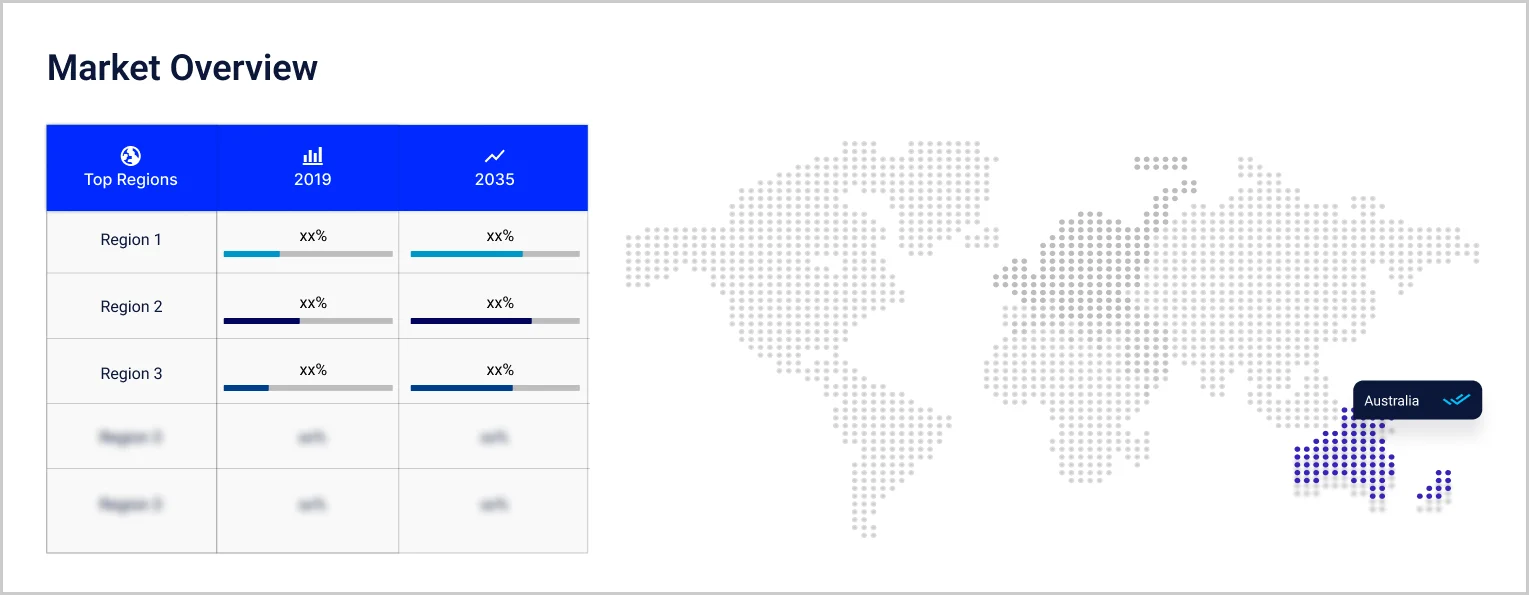
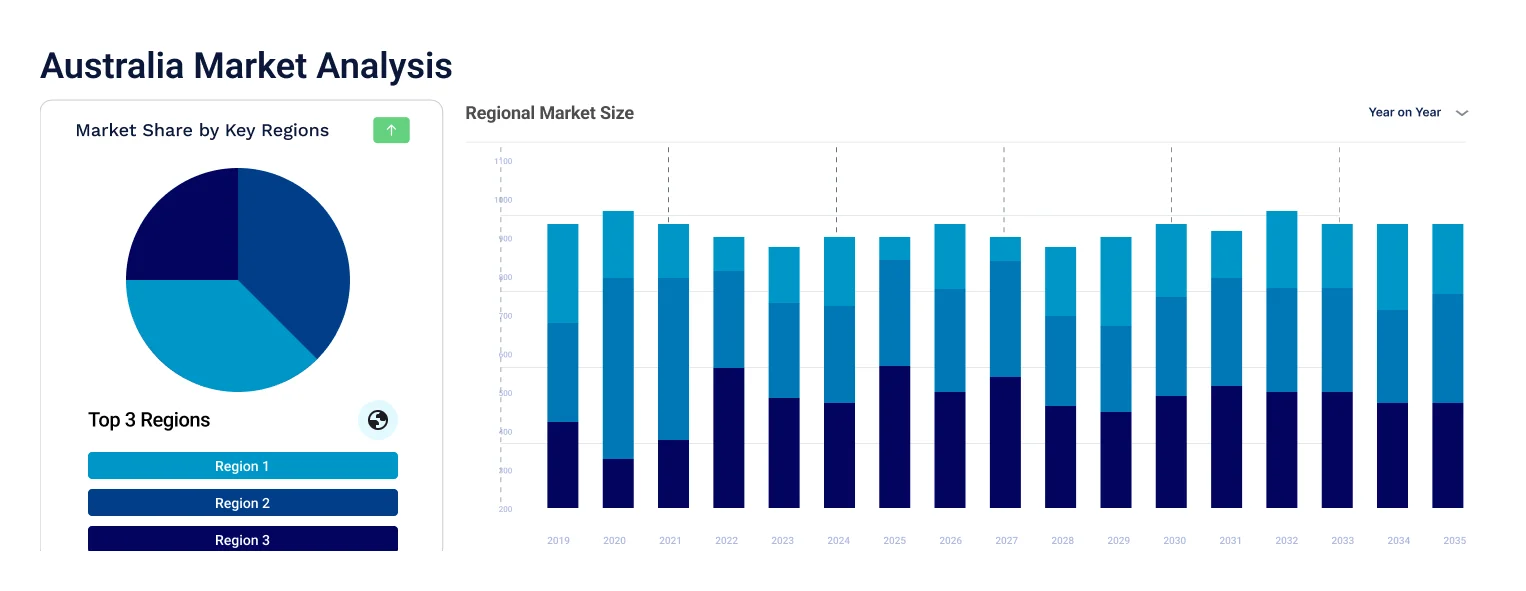
Victoria dominates deployments driven by early mandate and infrastructure readiness
Victoria dominates regional smart meter deployment in Australia due to its early mandate, which enabled utilities to complete large-scale rollouts ahead of other states. Strong infrastructure readiness supports advanced applications such as data-driven tariffs and real-time usage analytics. Vendors are establishing a solid regional presence early, using Victoria as a proving ground for operational scale.
Queensland represents the fastest-growing regional smart meters market in Australia due to accelerating voluntary adoption. Utilities are expanding smart meter programs. In November 2025, EDMI renewed its long-term partnership with Bluecurrent, extending over two decades of collaboration supporting intelligent, resilient, data-driven smart metering and grid solutions, boosting market growth. Diverse climate conditions are driving demand for meters with enhanced durability and communication performance. Competitive retail markets are encouraging faster rollout to support differentiated tariff offerings.
Prominent Australia smart meters market players are focusing less on volume hardware sales and more on long-term service contracts. Utilities are demanding meters with remote upgrade capability, cyber-secure communication, and DER compatibility. This creates opportunities around analytics platforms, meter asset management, and integration services.
Australia smart meter companies are also targeting retailer-led deployments tied to flexible tariffs and EV charging optimization. Commercial metering is emerging as a parallel opportunity, especially for multi-site users. Competitive advantage now comes from execution reliability and interoperability rather than price. Firms investing in cloud-native data platforms and utility partnerships are winning repeat contracts. The market favors suppliers that can support evolving regulatory frameworks while extending meter value across billing, grid monitoring, and energy optimization use cases.
Founded in 1987 and headquartered in Udaipur, India, Secure Meters supplies smart electricity and water meters to Australian utilities. The company focuses on durable metering hardware with advanced communication modules. In Australia, Secure Meters targets large-scale deployments through distributor partnerships. Its products emphasize long lifecycle performance and secure data transmission.
Established in 1978 and headquartered in Singapore, EDMI Ltd is a key smart metering supplier in Australia. The company delivers electricity and gas meters integrated with AMI platforms. EDMI works closely with distribution networks and retailers. Its focus is on interoperability and grid compliance. The firm supports utilities with deployment and lifecycle services.
Shell plc, founded in 1897 and headquartered in London, United Kingdom, operates in Australia through Powermetric Metering Pty Ltd. The company focuses on metering services for commercial and industrial users. Powermetric delivers advanced electricity metering and data services to support energy optimization and reporting.
Founded in 2018 and headquartered in Sydney, Australia, Intellihub Australia operates as a metering services provider rather than a manufacturer. The company owns and manages smart meter fleets. It partners with retailers to deploy and maintain meters. Intellihub focuses on data services and asset management. The firm benefits from Australia’s competitive metering framework.
*Please note that this is only a partial list; the complete list of key players is available in the full report. Additionally, the list of key players can be customized to better suit your needs.*
Other key players in the market include Yurika Pty Ltd, among others.
Unlock the latest insights with our Australia smart meters market trends 2026 report. Discover regional growth patterns, consumer preferences, and key industry players. Stay ahead of competition with trusted data and expert analysis. Download your free sample report today and drive informed decisions in the market.


Upto 15% Off
USD
$3999 $3599
$2499 $2249
$4999 $4249
$5999 $5099


*While we strive to always give you current and accurate information, the numbers depicted on the website are indicative and may differ from the actual numbers in the main report. At Expert Market Research, we aim to bring you the latest insights and trends in the market. Using our analyses and forecasts, stakeholders can understand the market dynamics, navigate challenges, and capitalize on opportunities to make data-driven strategic decisions.*
The market is projected to grow at a CAGR of 6.35% between 2026 and 2035.
The smart meters market is categorised according to products, including smart gas, smart electricity, and smart water meters.
The key players in the market include Secure Meters Ltd., EDMI Ltd, Shell plc (Powermetric Metering Pty Ltd), Intellihub Australia Pty Ltd, and Yurika Pty Ltd, among others.
Based on the smart meter applications, the market is divided into industrial, residential, and commercial.
The market is broken down into New South Wales, Victoria, Queensland, Australian Capital Territory, Western Australia, and others.
In 2025, the market reached an approximate value of USD 0.49 Billion.
Companies face challenges from regulatory variation, cybersecurity compliance costs, integration complexity, pricing pressure from mature markets, and the need to continuously upgrade software without disrupting existing utility operations.
Stakeholders are strengthening utility partnerships, expanding data analytics capabilities, upgrading cybersecurity features, targeting commercial deployments, and bundling hardware with long-term services to sustain relevance in competitive procurement cycles.
Explore our key highlights of the report and gain a concise overview of key findings, trends, and actionable insights that will empower your strategic decisions.
| REPORT FEATURES | DETAILS |
| Base Year | 2025 |
| Historical Period | 2019-2025 |
| Forecast Period | 2026-2035 |
| Scope of the Report |
Historical and Forecast Trends, Industry Drivers and Constraints, Historical and Forecast Market Analysis by Segment:
|
| Breakup by Product |
|
| Breakup by Technology |
|
| Breakup by Application |
|
| Breakup by Region |
|
| Market Dynamics |
|
| Competitive Landscape |
|
| Companies Covered |
|
Single User License
One User
USD 3,999
USD 3,599
tax inclusive*
Datasheet
One User
USD 2,499
USD 2,249
tax inclusive*
Five User License
Five User
USD 4,999
USD 4,249
tax inclusive*
Corporate License
Unlimited Users
USD 5,999
USD 5,099
tax inclusive*
*Please note that the prices mentioned below are starting prices for each bundle type. Kindly contact our team for further details.*
Flash Bundle
Small Business Bundle
Growth Bundle
Enterprise Bundle
*Please note that the prices mentioned below are starting prices for each bundle type. Kindly contact our team for further details.*
Flash Bundle
Number of Reports: 3
20%
tax inclusive*
Small Business Bundle
Number of Reports: 5
25%
tax inclusive*
Growth Bundle
Number of Reports: 8
30%
tax inclusive*
Enterprise Bundle
Number of Reports: 10
35%
tax inclusive*
How To Order

Select License Type
Choose the right license for your needs and access rights.

Click on ‘Buy Now’
Add the report to your cart with one click and proceed to register.

Select Mode of Payment
Choose a payment option for a secure checkout. You will be redirected accordingly.
Strategic Solutions for Informed Decision-Making
Gain insights to stay ahead and seize opportunities.

Get insights & trends for a competitive edge.

Track prices with detailed trend reports.

Analyse trade data for supply chain insights.

Leverage cost reports for smart savings

Enhance supply chain with partnerships.

Connect For More Information
Our expert team of analysts will offer full support and resolve any queries regarding the report, before and after the purchase.
Our expert team of analysts will offer full support and resolve any queries regarding the report, before and after the purchase.
We employ meticulous research methods, blending advanced analytics and expert insights to deliver accurate, actionable industry intelligence, staying ahead of competitors.
Our skilled analysts offer unparalleled competitive advantage with detailed insights on current and emerging markets, ensuring your strategic edge.
We offer an in-depth yet simplified presentation of industry insights and analysis to meet your specific requirements effectively.




