

Consumer Insights
Uncover trends and behaviors shaping consumer choices today
Procurement Insights
Optimize your sourcing strategy with key market data
Industry Stats
Stay ahead with the latest trends and market analysis.
The global smart gas meter market attained a value of USD 3.25 Billion in 2025 and is projected to expand at a CAGR of 4.80% through 2035. The market is further expected to achieve USD 5.19 Billion by 2035. Investments in technologies such as advanced metering infrastructure, ultrasonic flow sensing, remote shutoff valves and grid edge analytics are helping utilities improve gas safety and operational efficiency.
Increasing utility focus on gas safety and network loss reduction is encouraging distribution companies to replace ageing mechanical and diaphragm meter fleets with communication enabled alternatives. At the same time, the growing scope of grid edge analytics and predictive maintenance software is allowing utilities to refine field service scheduling, prioritise leak response, and forecast replacement needs more accurately across large, geographically dispersed distribution networks.
The smart gas meter market is witnessing further developments as major metering technology providers speed up their innovation around modular, interoperable communication infrastructure. An example of such innovation was the presentation of the Smart Metering Hub, a modular IoT gateway concept, by Diehl Metering at E-world 2026 in Essen in February 2026, developed to help utilities gradually digitalise gas, water and heat infrastructure without a full meter exchange. This innovation helps distribution companies extend the working life of existing meter fleets while introducing new communication technology in stages.
In addition, smart gas meter market players are allocating more investment toward leak detection, remote shutoff and retrofit communication upgrades to meet tightening gas safety regulation across mature markets, in line with trends across the wider smart meter market. For instance, Honeywell partnered with UK multi utility metering provider Energy Assets in September 2025 to upgrade 67,000 gas meters with narrowband IoT communication modules ahead of the country's planned 2G network switch off. Similarly, in July 2026, Mahanagar Gas signed a memorandum of understanding with India Post to deploy technology-enabled digital gas meter reading services across Mumbai, improving reading accuracy and operational efficiency as India's city gas distribution networks continue to expand into smaller towns.
Compound Annual Growth Rate
4.8%
Value in USD Billion
2026-2035
Read more about this report - REQUEST FREE SAMPLE COPY IN PDF
| Global Smart Gas Meter Market Report Summary | Description | Value |
| Base Year | USD Billion | 2025 |
| Historical Period | USD Billion | 2019-2025 |
| Forecast Period | USD Billion | 2026-2035 |
| Market Size 2025 | USD Billion | 3.25 |
| Market Size 2035 | USD Billion | 5.19 |
| CAGR 2019-2025 | Percentage | XX% |
| CAGR 2026-2035 | Percentage | 4.80% |
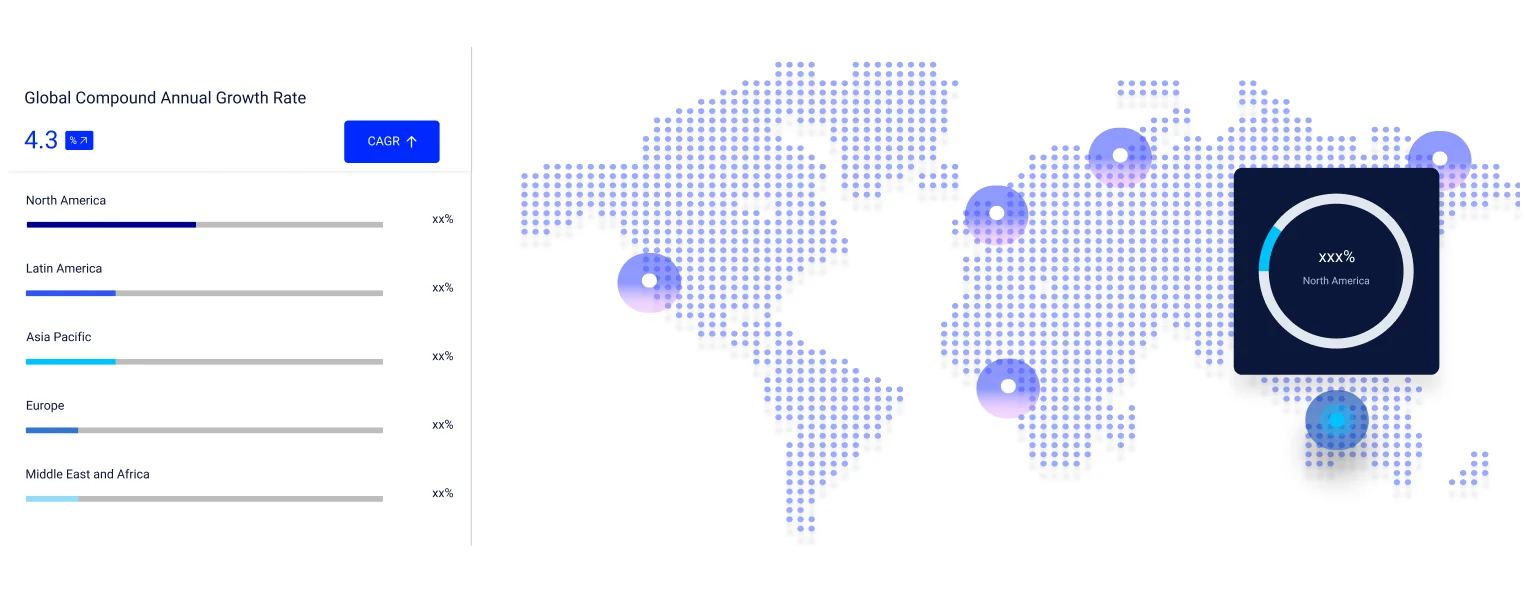
| CAGR 2026-2035 - Market by Region | Asia Pacific | 5.6% |
| CAGR 2026-2035 - Market by Country | India | 6.0% |
| CAGR 2026-2035 - Market by Country | China | 5.4% |
| CAGR 2026-2035 - Market by Technology | Automatic Metre Reading (AMR) | 4.5% |
| CAGR 2026-2035 - Market by Type | Smart Ultrasonic Gas Metre | 5.4% |
| Market Share by Country 2025 | Australia | 2.7% |
Diehl Metering renewed its GPI certification after an AFNOR audit, reaffirming its manufacturing quality system for gas and water metering equipment across its production facilities. Utilities can draw on such independent, third-party quality certifications when evaluating suppliers for large scale replacement programmes.
Landis+Gyr introduced its G480 NB-IoT Ultrasonic Gas Metering line, offering advanced ultrasonic measurement technology with high precision and remote connectivity for utilities. Companies can use narrowband IoT enabled ultrasonic meters to enhance operational efficiency and safety across gas distribution management.
Aclara Technologies extended its smart utilities communication technologies to facilitate grid modernisation projects across gas, water and electric distribution networks. Companies can broaden existing communication platforms across multiple utility types to support wider grid modernisation programmes.
Kaynes Technologies India Ltd. acquired Iskraemeco India Pvt. Ltd. to expand its smart metering and IoT enabled electronics portfolio, aligning with its strategic objectives in the energy and utility sector. Companies can pursue such acquisitions, capitalising on such smart gas meter market developments.
Artificial intelligence and machine learning are becoming central to how utilities extract value from smart gas meter market data, moving beyond billing toward predictive maintenance, leak detection and asset lifecycle planning. Vendors are building software layers that sit above meter and network data to flag anomalies before they become safety incidents, helping distribution companies prioritise field visits and reduce unnecessary truck rolls. Itron has been expanding this capability, reporting more than 16 million edge intelligence endpoints shipped and continued growth in recurring software revenue. In January 2026, Itron deepened its collaboration with Microsoft to introduce the Itron Intelligent Edge Operating System (IEOS) Connector for Microsoft 365 Copilot, letting utility staff surface consumption, outage and tamper detection insights through natural language queries grounded in trusted grid edge data.
Utilities are placing growing weight on meters that can actively protect customers rather than simply record consumption, particularly in dense residential settings, a priority increasingly shaping the wider smart gas meter market. Manufacturers are responding with integrated pressure sensing, automated shutoff valves and continuous self-diagnostics built directly into the meter body. In March 2026, Honeywell expanded its gas safety portfolio with the launch of its 4-Series NDIR Hydrocarbon Gas Sensor, using non-dispersive infrared technology to detect flammable gases such as methane, propane and butane with improved accuracy and lower power consumption for both portable and fixed detection systems. By layering sensor level leak detection alongside meter level shutoff capabilities, vendors are giving utilities and field crews earlier warning of hazardous conditions across the wider gas distribution network, reducing response times before incidents escalate.
Metering vendors are repositioning their platforms as sources of continuous operational intelligence rather than simple billing tools, a shift also reshaping the wider smart gas meter market. In February 2026, Xylem's Sensus brand launched Sensus Evolve at DTECH 2026, a new intelligent grid platform designed to turn meter and network data into real time insight that helps utilities manage grid complexity, improve reliability and plan for future capacity needs without disrupting daily operations. This move beyond traditional advanced metering infrastructure illustrates how vendors across gas, water and electric metering are converging on data driven, software layered products rather than treating hardware and connectivity alone as their core offering.
As utilities look beyond individual meter replacement toward broader smart city interoperability, vendors are expanding LoRaWAN-based network infrastructure that can support multiple connected devices across a single wireless standard. In September 2025, ZENNER International reached its ten-millionth integrated LoRaWAN sensor, reinforcing its position as operator of the world's largest LoRaWAN network with availability across 15 countries. Such large-scale network deployments let utilities connect gas, water and other municipal infrastructure through a shared low-power wireless standard, supporting gradual digitalisation of ageing networks without requiring a full, one-time meter exchange programme.
Rapidly expanding piped natural gas connections across India and other emerging markets are creating large scale opportunities for smart gas meter deployment from initial rollout rather than later retrofit. In September 2025, India's Union Minister for Petroleum and Natural Gas inaugurated a new Smart Gas Meter Manufacturing facility set up by Indraprastha Gas Limited in partnership with Genesis Gas Solutions, with capacity to produce around one million smart and prepaid gas meters annually and production beginning that October. The facility is intended to make India more self-reliant in domestic gas meter manufacturing, illustrating how local manufacturing capacity is becoming a strategic priority alongside network expansion across fast growing city gas distribution markets.
Read more about this report - REQUEST FREE SAMPLE COPY IN PDF
“Global Smart Gas Meter Market Report and Forecast 2026-2035” offers a detailed analysis of the market based on the following segments:
Market Breakup by Technology
Key Insight: Automatic meter reading continues to account for a considerable share of the installed base, reflecting the large number of one-way communication meters already deployed across mature gas markets, where utilities read consumption remotely without two-way control. Advanced metering infrastructure is the faster growing category as distribution companies prioritise two-way communication that supports remote configuration, pressure monitoring and automated shutoff in the smart gas meter market. In May 2025, Itron marked the three millionth shipment of its Intelis solid-state AMI gas meter, delivered to Peoples Natural Gas, the largest gas distribution utility in Pennsylvania, underscoring how far AMI adoption has scaled across North American gas networks. Utilities upgrading ahead of scheduled 2G and 3G network retirements are frequently choosing AMI enabled replacements rather than like for like AMR swaps.
Market Breakup by Type
Key Insight: Smart diaphragm gas meters remain the most widely installed type across residential distribution networks, owing to their established manufacturing base, installer familiarity and lower upfront unit cost. Smart ultrasonic gas meters are growing at a faster pace as utilities value their absence of moving parts, extended service life and compatibility with higher pressure commercial, industrial and hydrogen blended gas streams, a shift reshaping the wider smart gas meter market. In May 2025, Apator Metrix was selected to supply bellows gas meters with data transmission functionality to Polska Spolka Gazownictwa under Poland’s eGazomierz smart metering programme, an offer valued at PLN 134.4 million with deliveries due by September 2026.
Market Breakup by Component
Key Insight: Hardware, comprising the meter body, sensors, communication modules and shutoff mechanisms, accounts for the larger share of smart gas meter market value given the physical and installation intensive nature of gas metering deployments. Software is growing more quickly as utilities invest in meter data management, predictive analytics and grid edge intelligence platforms to convert raw readings into operational insight. Vendors are increasingly bundling managed software and analytics services alongside hardware sales, reflecting a broader industry shift toward recurring, outcome-based revenue. In February 2025, Polaris Smart Metering secured India's largest gas meter contract (1 million units, INR 500+ crore) with THINK Gas, bundling hardware with AI-enabled data management software.
Market Breakup by End Use
Key Insight: Residential end use represents the largest share of the smart gas meter market by installed volume, driven by large scale replacement programmes and new household connections across both mature and emerging gas distribution networks. The commercial segment is growing at the fastest pace, supported by expanding piped natural gas connections to small businesses, restaurants and multi-unit buildings in developing city gas distribution markets. Industrial end use continues to rely on higher capacity ultrasonic and diaphragm meters suited to larger volume, continuous flow applications.
Market Breakup by Region
Key Insight: Regional dynamics in the smart gas meter market continue to reflect the differing maturity of gas distribution infrastructure worldwide. Europe leads the market on the back of established replacement programmes and coordinated regulatory deadlines around communication network retirements. Asia Pacific is the fastest growing region, supported by expanding city gas distribution networks across India, China and Southeast Asia. North America continues to invest steadily in safety focused meter upgrades, while Latin America and the Middle East and Africa are gradually scaling adoption alongside broader utility digitalisation efforts.
By technology, advanced metering infrastructure is the fastest growing category as utilities prioritise two-way communication
Automatic meter reading holds a considerable share in the smart gas meter market across mature gas markets, where large volumes of one-way communication meters were deployed over past replacement cycles and continue to serve utilities reliably. Utilities value AMR for its lower complexity and established field service processes, particularly in networks that have not yet faced urgent communication upgrade deadlines.
Advanced metering infrastructure is growing at the fastest pace as distribution companies prioritise two-way communication that supports remote configuration, pressure monitoring and automated shutoff, boosting the smart gas meter market value. National Grid has been rolling out next-generation AMI 2.0 infrastructure across upstate New York, having deployed roughly 400,000 smart meters by early 2025 as part of a multi-year plan that includes installing 640,000 gas modules alongside 1.7 million electric meters. Utilities upgrading ahead of scheduled 2G and 3G network retirements are frequently choosing AMI enabled replacements, and vendors including Honeywell and Diehl Metering continue to expand retrofit communication modules designed to convert existing meters onto modern networks without a full exchange
By type, smart diaphragm gas meters dominate the market due to their established manufacturing base and lower upfront installation cost
Smart diaphragm gas meters continue to dominate the market owing to their established manufacturing base, familiarity among installers and lower upfront unit cost across large scale residential deployment programmes. Utilities replacing legacy mechanical meters frequently favour diaphragm designs for their proven reliability across varied climates and gas compositions.
The fastest growing trend in the smart gas meter market is ultrasonic metering, as utilities value the absence of moving parts, extended service life and suitability for higher pressure commercial and industrial applications. In July 2026, Cavagna Group, whose Mesura Metering division produces the dual MID-certified Prodigi ultrasonic smart gas meter for both natural gas and LPG, confirmed it will present at the Compressed Gas Association's TECH26 Technical Summit in Phoenix this November. Companies can use such technical summits to showcase certification milestones that differentiate their products from single-fuel competitors
By component, hardware retains the largest share of the market supported by steady replacement demand across mature meter fleets
Hardware accounts for the largest share of value in the smart gas meter market, reflecting the physical and installation intensive nature of gas metering deployments, where meter bodies, sensors, communication modules and shutoff mechanisms represent the bulk of project cost. Large scale replacement programmes across mature markets continue to anchor steady hardware demand.
Software is becoming the most rapidly growing component as utilities invest in meter data management, predictive analytics and grid edge intelligence platforms, accelerating growth in the smart gas meter market. In January 2026, Itron partnered with Snowflake to advance its AI-driven Grid Planning solution, making its Model Validator and Load Forecasting modules generally available to utilities while its Power Flow Analyzer and Hosting Capacity Analyzer entered private preview, illustrating how vendors are shifting toward recurring, outcome-based software revenue alongside traditional hardware sales.
By end use, residential leads the market due to the scale of global household gas connections requiring metering
Residential end use represents the largest share of the market by installed volume, driven by large scale replacement programmes and new household connections across both mature and emerging gas distribution networks. Utilities continue to prioritise residential rollouts given the scale of customer safety and billing accuracy benefits involved.
Commercial end use is growing at the fastest pace, supported by expanding piped natural gas connections to small businesses, restaurants and multi-unit buildings in developing city gas distribution markets, a trend broadening the smart gas meter market across Asia and Latin America. In mid-2026, India's federal government laid the foundation for a new city gas distribution project across West Bengal's Bankura and Purulia districts, targeting piped natural gas connections for more than 250 commercial units alongside surrounding households and industrial consumers. Local metering specialists are partnering with international communication providers to extend connected metering ecosystems into these fast-growing commercial segments.
Read more about this report - REQUEST FREE SAMPLE COPY IN PDF
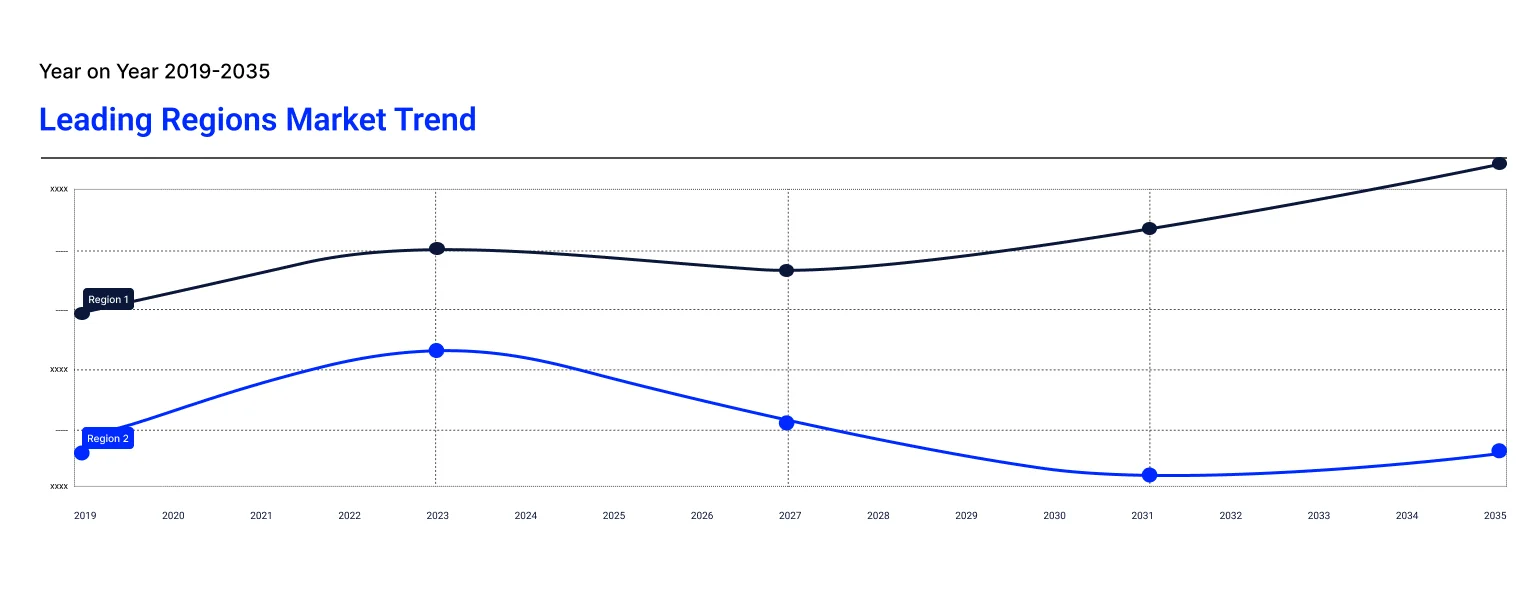
Europe registers the largest share of the market through coordinated network retirement deadlines and established replacement programmes
Europe holds the largest share of the smart gas meter market, supported by well-established gas distribution networks and coordinated regulatory deadlines around the retirement of older mobile communication standards used by existing meters. Utilities across the United Kingdom, Germany, France and Italy are running structured, multiyear replacement and retrofit programmes, often in partnership with specialist metering technology providers, to migrate customers onto narrowband IoT and other modern communication networks well before switching off dates.
Asia Pacific is the most rapidly developing regional smart gas meter market, powered by the expansion of city gas distribution networks across India, China and Southeast Asia that are bringing new residential and commercial connections online. Rising numbers of new gas connections are giving utilities the opportunity to deploy smart, communication enabled meters from the outset rather than retrofitting older infrastructure later. In December 2025, Vi Business expanded its IoT and advanced metering infrastructure offerings to include smart gas metering for city gas distribution networks in India, reinforcing telecom-led commercial support for the country's energy distribution modernisation efforts.
The global industry is becoming innovation oriented as major smart gas meter companies engage in competition by leveraging leak detection technology, ultrasonic measurement, modular communication gateways and grid edge intelligence software. Manufacturers are enhancing retrofit communication upgrade programmes for existing meter fleets, developing interoperable IoT gateways, and growing their capabilities in predictive analytics to enhance utility customer engagement. Corporate restructuring across the wider metering industry, including recent divestitures and spin outs, continues to reshape which companies own which regional and product line assets.
Major smart gas meter market players are focusing on gas safety innovation, modular smart city metering hubs and localised communication technology partnerships. The opportunities are growing in areas such as ultrasonic metering, AI driven asset lifecycle software, retrofit communication upgrades and city gas distribution expansion in emerging markets. Manufacturers that manage to integrate advanced software capabilities with reliable, regionally adapted hardware are expected to hold a competitive advantage over the coming years.
Founded in 2015 and headquartered in Jaipur, Rajasthan, India, Sehaj Synergy Technologies specialises in LoRaWAN based Internet of Things devices, including end nodes, gateways and smart modules used across smart city, energy and utility metering applications. The company has extended its automatic meter reading ecosystem, originally developed for water metering, toward gas distribution use cases as India's city gas distribution networks continue to expand.
Founded in 1906 and headquartered in Charlotte, North Carolina, United States, Honeywell supports the smart gas meter market through its Smart Energy portfolio, including the AC-250 NXS diaphragm meter line and its newer NXU Residential Smart Gas Meter, which combines pressure sensing, leak detection and remote shutoff. The Honeywell Forge IoT platform pairs with its meters to give utilities near real time operational insight.
Founded in 1902 and headquartered in Nuremberg, Germany, Diehl is a family-owned industrial group whose Diehl Metering division develops smart metering equipment spanning gas, water, heat and electricity. Diehl Metering's IZAR platform integrates mobile and fixed network meter reading, and the company continues to expand its modular Smart Metering Hub concept for smart city deployments.
Tracing its metering heritage back to 1870 and long headquartered in Raleigh, North Carolina, United States, Sensus operates as a smart gas, water and electricity metering brand offering ultrasonic gas meters such as the Sonix IQ, paired with its FlexNet communication network for real time monitoring. Sensus was acquired by Xylem in 2016, and while non-North American water and heat metering operations were divested to AURELIUS in 2025 and 2026 as Sensus International, Xylem retained its North American Sensus gas metering business.
Founded in 1977 and headquartered in Liberty Lake, Washington, United States, Itron provides gas metering equipment integrated with its broader advanced metering infrastructure portfolio, including solid state ultrasonic gas meters and grid edge intelligence software. The company's recent acquisitions of Urbint and Locusview, together with its Gen6 network platform, have expanded its AI driven recurring revenue base.
*Please note that this is only a partial list; the complete list of key players is available in the full report. Additionally, the list of key players can be customized to better suit your needs.*
Unlock the latest insights with our smart gas meter market trends 2026 report. Discover regional growth patterns, technology adoption trends, and key industry players. Stay ahead of competition with trusted data and expert analysis. Download your free sample report today and drive informed decisions in the market.


Upto 15% Off
USD
$2499 $2249
$3999 $3599
$4999 $4249
$5999 $5099


*While we strive to always give you current and accurate information, the numbers depicted on the website are indicative and may differ from the actual numbers in the main report. At Expert Market Research, we aim to bring you the latest insights and trends in the market. Using our analyses and forecasts, stakeholders can understand the market dynamics, navigate challenges, and capitalize on opportunities to make data-driven strategic decisions.*
The market is projected to grow at a CAGR of nearly 4.80% in the forecast period of 2026-2035.
In 2025, the global market of smart gas meters attained a value of nearly USD 3.25 Billion.
The market is estimated to witness healthy growth in the forecast period of 2026-2035 to reach almost USD 5.19 Billion by 2035.
Investing in ultrasonic metering technology, expanding grid edge intelligence and predictive analytics software, building modular interoperable communication gateways, and partnering with local telecommunications providers to support city gas distribution expansion in emerging markets.
The key smart gas metre market trends include rapid advancement in technologies and the growing demand from various end-users to adopt smart gas metres.
The various technologies of smart gas meters include automatic meter reading (AMR) and advanced metering infrastructure (AMI).
Based on end-use, the smart meter market is divided into residential, commercial, and industrial.
The smart metre and in-home display communicate via a secure national network that is solely for smart metres.
Gas smart metres are powered by a battery that's built into the metre.
The competitive landscape consists of Sehaj Synergy Technologies Pvt. Ltd., Honeywell International Inc., Diehl Stiftung & Co. KG, Sensus, and Itron Inc., among others.
The market is broken down into North America, Europe, Asia Pacific, Latin America, the Middle East, and Africa.
Utilities face high upfront replacement costs for legacy meter fleets, fragmented communication network standards, cybersecurity considerations around connected infrastructure, and the operational complexity of coordinating large scale retrofit programmes without disrupting gas supply continuity.
Explore our key highlights of the report and gain a concise overview of key findings, trends, and actionable insights that will empower your strategic decisions.
| REPORT FEATURES | DETAILS |
| Base Year | 2025 |
| Historical Period | 2019-2025 |
| Forecast Period | 2026-2035 |
| Scope of the Report |
Historical and Forecast Trends, Industry Drivers and Constraints, Historical and Forecast Market Analysis by Segment:
|
| Breakup by Technology |
|
| Breakup by Type |
|
| Breakup by Component |
|
| Breakup by End Use |
|
| Breakup by Region |
|
| Market Dynamics |
|
| Competitive Landscape |
|
| Companies Covered |
|
Datasheet
One User
USD 2,499
USD 2,249
tax inclusive*
Single User License
One User
USD 3,999
USD 3,599
tax inclusive*
Five User License
Five User
USD 4,999
USD 4,249
tax inclusive*
Corporate License
Unlimited Users
USD 5,999
USD 5,099
tax inclusive*
*Please note that the prices mentioned below are starting prices for each bundle type. Kindly contact our team for further details.*
Flash Bundle
Small Business Bundle
Growth Bundle
Enterprise Bundle
*Please note that the prices mentioned below are starting prices for each bundle type. Kindly contact our team for further details.*
Flash Bundle
Number of Reports: 3
20%
tax inclusive*
Small Business Bundle
Number of Reports: 5
25%
tax inclusive*
Growth Bundle
Number of Reports: 8
30%
tax inclusive*
Enterprise Bundle
Number of Reports: 10
35%
tax inclusive*
How To Order

Select License Type
Choose the right license for your needs and access rights.

Click on ‘Buy Now’
Add the report to your cart with one click and proceed to register.

Select Mode of Payment
Choose a payment option for a secure checkout. You will be redirected accordingly.
Strategic Solutions for Informed Decision-Making
Gain insights to stay ahead and seize opportunities.

Get insights & trends for a competitive edge.

Track prices with detailed trend reports.

Analyse trade data for supply chain insights.

Leverage cost reports for smart savings

Enhance supply chain with partnerships.

Connect For More Information
Our expert team of analysts will offer full support and resolve any queries regarding the report, before and after the purchase.
Our expert team of analysts will offer full support and resolve any queries regarding the report, before and after the purchase.
We employ meticulous research methods, blending advanced analytics and expert insights to deliver accurate, actionable industry intelligence, staying ahead of competitors.
Our skilled analysts offer unparalleled competitive advantage with detailed insights on current and emerging markets, ensuring your strategic edge.
We offer an in-depth yet simplified presentation of industry insights and analysis to meet your specific requirements effectively.




