

Consumer Insights
Uncover trends and behaviors shaping consumer choices today
Procurement Insights
Optimize your sourcing strategy with key market data
Industry Stats
Stay ahead with the latest trends and market analysis.
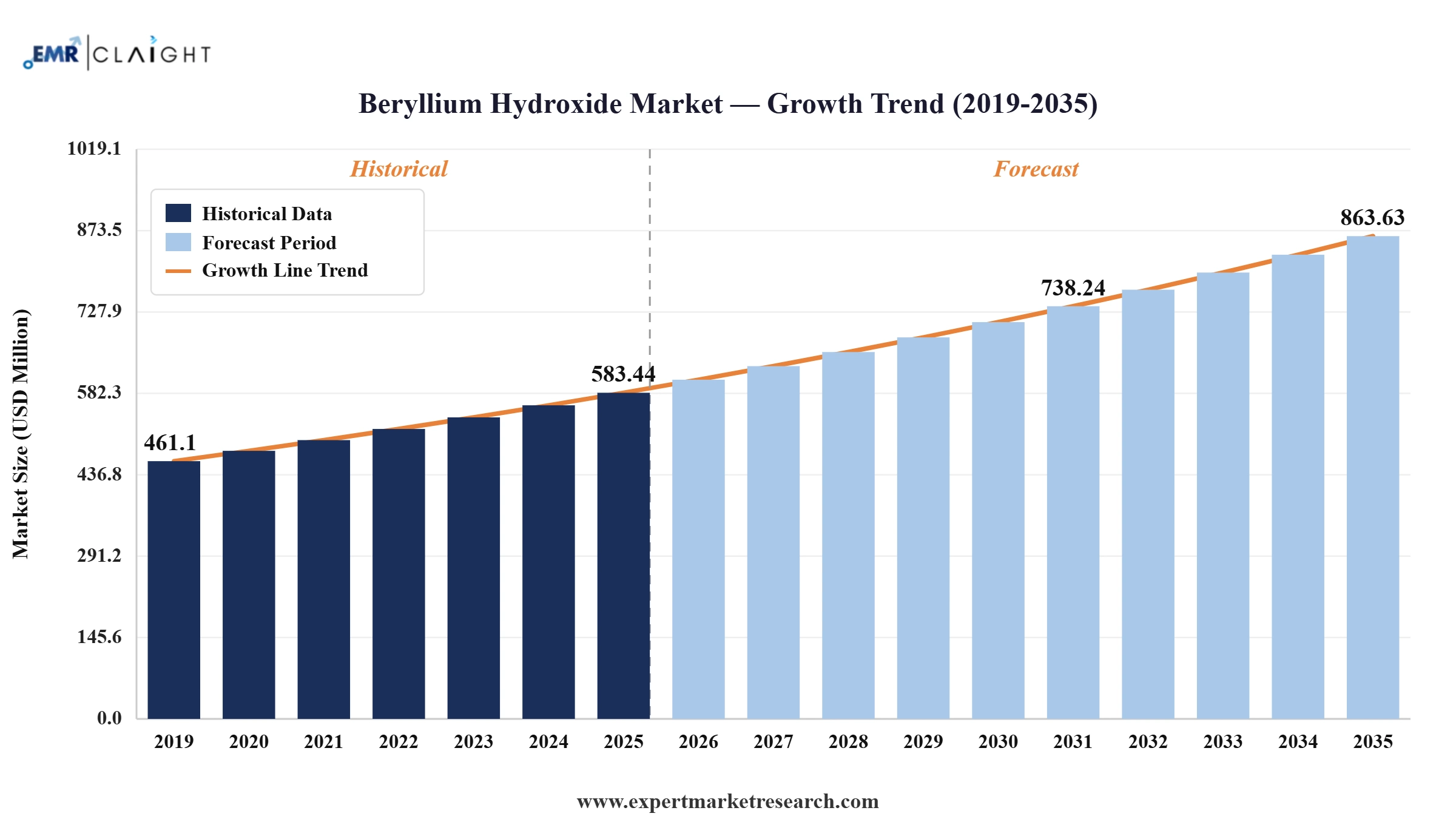
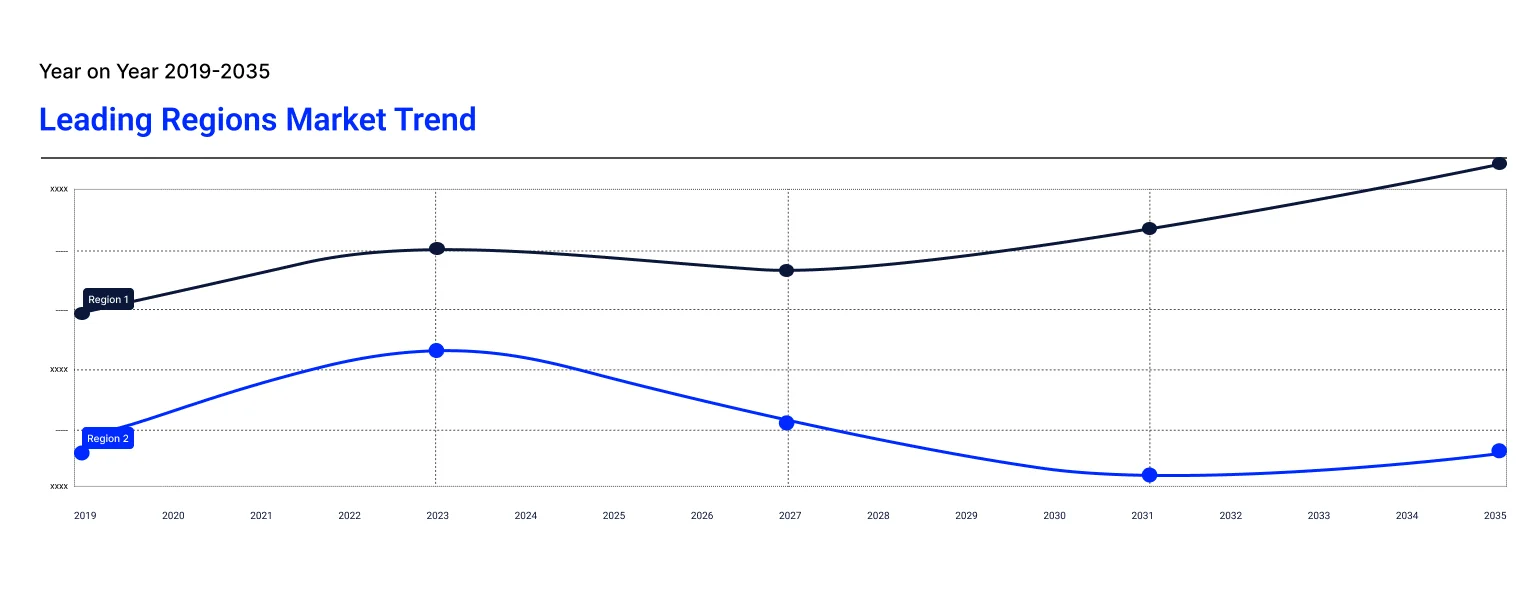
The beryllium hydroxide market attained a value of USD 583.44 Million in 2025 and is projected to expand at a CAGR of 4.00% through 2035. The market is further expected to achieve a value of USD 863.63 Million by 2035. Critical mineral trade policy directing negotiations towards price floors and domestic processing capacity, defence electronics demand, extreme supply concentration across a small number of producers, and occupational exposure regulation governing every handling stage are together shaping the beryllium hydroxide industry.
The beryllium hydroxide market covers an amphoteric compound, also known as hydrated beryllia, obtained industrially from the processing of bertrandite and beryl ores. It occupies a mandatory position in the beryllium value chain, since every downstream product beryllium metal, beryllium oxide ceramic and copper beryllium alloys is manufactured from it. Supply divides into technical grade, used as feedstock for alloy production, and refined grade, required where impurities would affect thermal conductivity, neutron behaviour or dimensional stability.
What defines this market is the combination of irreplaceability and extreme concentration. Beryllium delivers a property set low density with high stiffness, dimensional stability across temperature, transparency to X-rays, low neutron absorption that no substitute reproduces, which makes demand largely insensitive to price. Yet commercial production exists at only a handful of facilities worldwide, because extraction requires handling a material whose dust causes irreversible lung disease, demanding containment, monitoring and medical surveillance that few operators can justify establishing.
Read more about this report - REQUEST FREE SAMPLE COPY IN PDF
Defence and Space Applications Without Substitutes
Beryllium metal enables satellite structures, space telescope mirrors, guidance assemblies and X-ray windows where stiffness-to-weight ratio and radiation transparency determine whether an instrument functions at all. Procurement in these sectors is relatively insensitive to price and highly sensitive to supply assurance, which is precisely why beryllium carries critical mineral designation and why the January 2026 Section 232 determination identified processing capacity as a national security matter.
Critical Mineral Policy Supporting Processing Investment
Presidential Proclamation 11001 of 15 January 2026 concluded that the United States is too reliant on foreign sources with insufficient domestic processing capacity, and that price volatility deters domestic investment. Rather than imposing tariffs, it directed Commerce and the USTR to negotiate agreements within 180 days, with price floors under consideration a framing that addresses the beryllium constraint directly, since the bottleneck has never been ore but conversion capability.
Electronics Miniaturisation Sustaining Alloy Tonnage
Copper beryllium consumes the greatest volume through connectors, contacts and springs across computing, telecommunications and automotive electrical systems. Component miniaturisation increases rather than reduces this requirement, since smaller contacts must sustain conductivity and fatigue resistance at dimensions where ordinary alloys fail.
Beryllium hydroxide, also known as hydrated beryllia, is an amphoteric hydroxide with a chemical formula BeH2O2. It can dissolve in both acids and alkalis. At an industrial scale, beryllium hydroxide is obtained as a by-product in the extraction of beryllium metal from bertrandite and beryl ores. The compound is the universal raw material used in the manufacture of beryllium and all its forms.
Market Breakup by Type
Key Insight: Technical grade accounts for the larger volume share of the global beryllium hydroxide market, serving as feedstock for copper beryllium alloy production where trace impurities are tolerable because the hydroxide is subsequently reduced and alloyed with copper at concentrations around two percent, and where cost per unit of contained beryllium governs purchasing. Refined grade commands substantially higher unit values, supplying beryllium oxide ceramic manufacture and pure beryllium metal production for nuclear, aerospace and instrumentation applications where impurities affect thermal conductivity, neutron behaviour and dimensional stability, and where specification rather than price determines supplier selection.
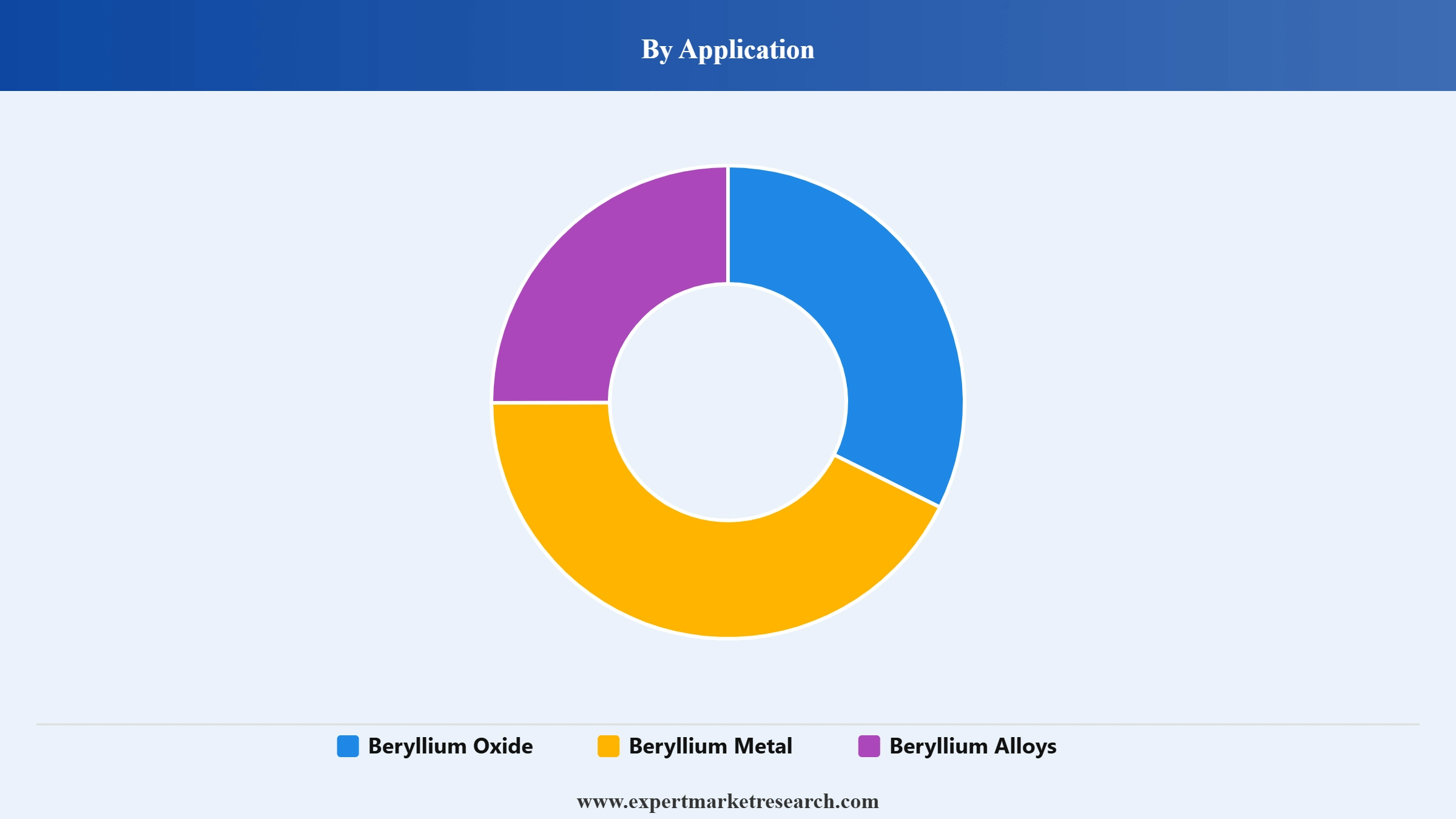
Market Breakup by Application
Key Insight: Beryllium alloys, principally copper beryllium, constitute the largest application of the global beryllium hydroxide market by tonnage, serving electrical connectors, springs, bearings, moulds and non-sparking tools where the combination of fatigue strength, electrical conductivity and formability has no equivalent substitute. Beryllium oxide serves high-power electronics, laser systems and microwave devices as the ceramic combining electrical insulation with thermal conductivity approaching that of metals. Beryllium metal occupies the highest-value positions in satellite structures, space telescope mirrors, X-ray windows and nuclear instrumentation, where stiffness-to-weight ratio and radiation transparency justify cost that few applications could absorb.
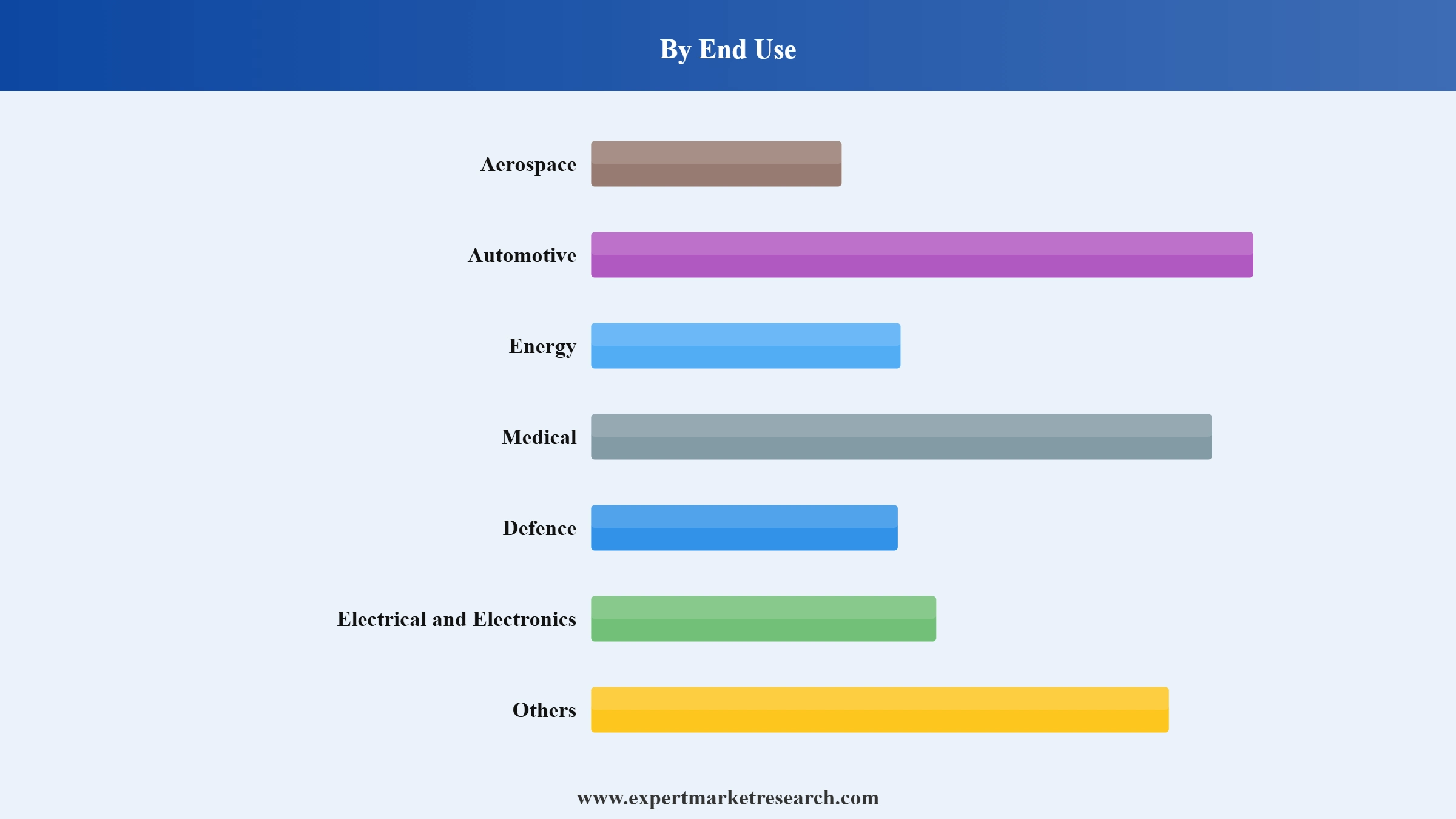
Market Breakup by End Use
Key Insight: Defence and aerospace jointly anchor the global beryllium hydroxide market, applying beryllium metal to satellite structures, guidance systems, optical assemblies and radiation-hardened components where stiffness-to-weight performance and dimensional stability under thermal cycling determine mission capability, and where critical mineral designation reflects this strategic dependence. Electrical and electronics consumes the largest alloy tonnage through connectors and contacts requiring sustained conductivity under repeated cycling. Medical applications use beryllium windows in imaging and analytical equipment on X-ray transparency grounds, energy covers nuclear instrumentation and reflector applications, while automotive employs copper beryllium in specialised electrical and moulding components.
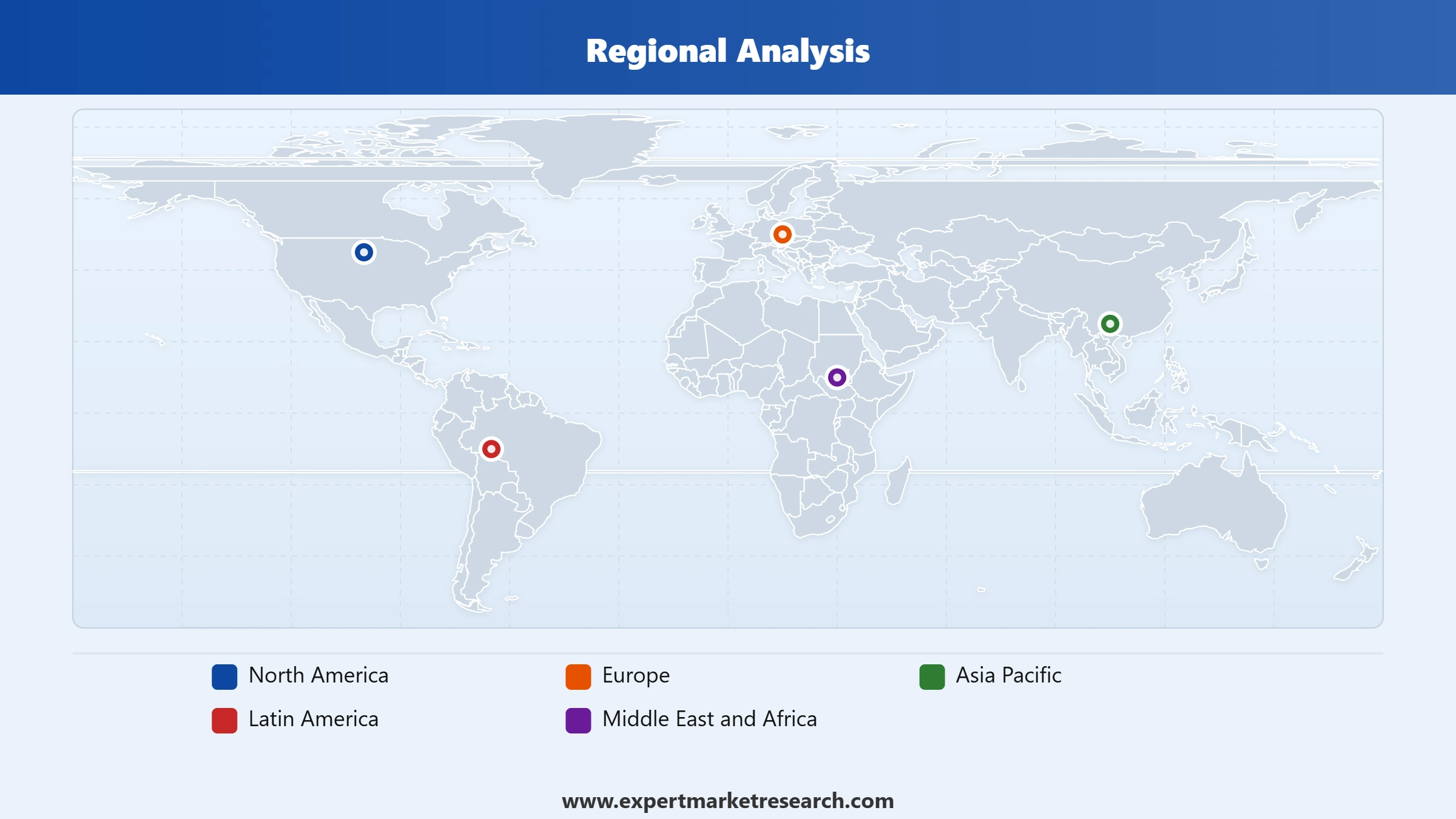
Market Breakup by Region
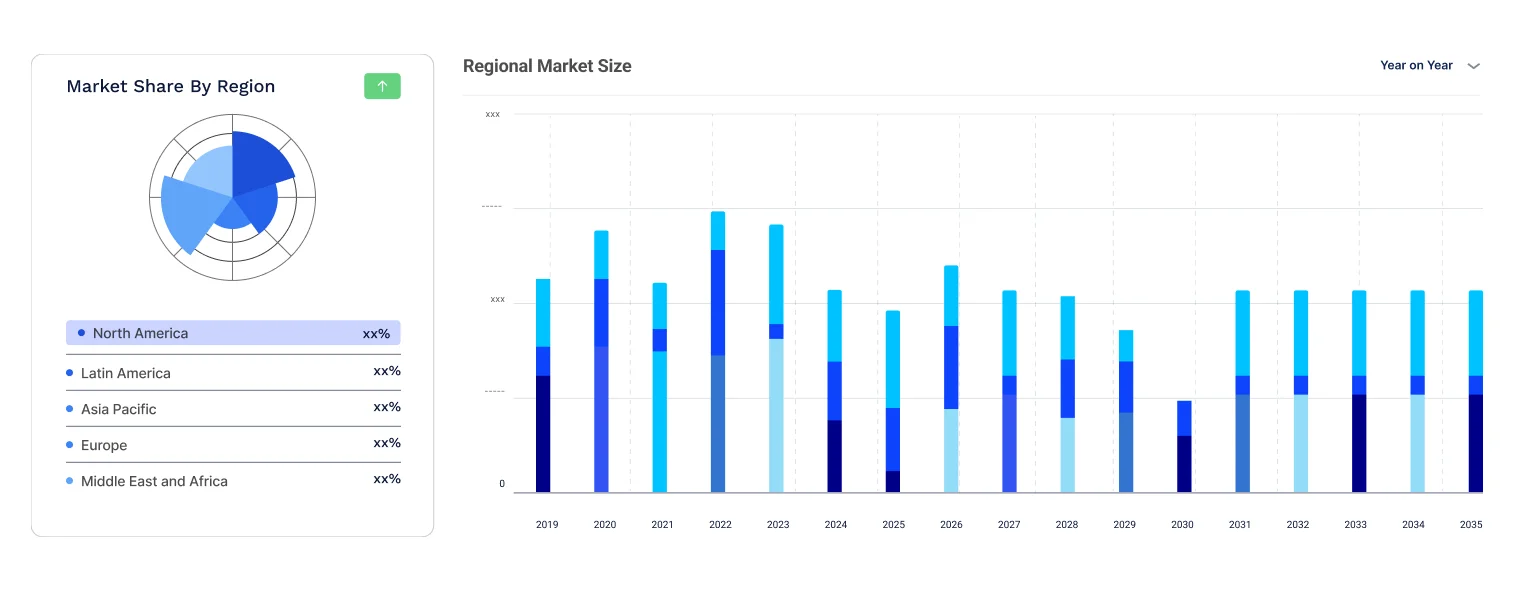
Key Insight: North America dominates the global beryllium hydroxide market on both production and consumption, holding the principal Western processing capability alongside the defence, aerospace and electronics demand that beryllium products serve, and its position is reinforced by critical mineral designation and the January 2026 policy direction towards domestic processing capacity. Asia Pacific is the fastest-growing region, driven by electronics manufacturing consuming copper beryllium alloys and by expanding aerospace and defence programmes. Europe imports substantially against limited domestic processing, while Central Asia contributes materially to global supply through established processing operations, and Latin America and the Middle East and Africa remain minor consumers.
Read more about this report - REQUEST FREE SAMPLE COPY IN PDF
By application, beryllium alloys dominate the market on tonnage and irreplaceable properties
Beryllium alloys account for the largest share of the global beryllium hydroxide market, since copper beryllium at approximately two percent beryllium content consumes far greater volume than pure metal or oxide applications while delivering a property combination that no substitute reproduces. Electrical connectors require conductivity alongside spring characteristics that survive millions of insertion cycles, moulds demand thermal conductivity with hardness, and non-sparking tools serve environments where a single ignition source would be catastrophic. These applications tolerate beryllium cost because failure consequences exceed material expense.
Beryllium oxide and beryllium metal occupy the higher-value positions within the global beryllium hydroxide market and require refined grade feedstock. The oxide is the only widely available ceramic combining strong electrical insulation with thermal conductivity approaching metallic levels, which makes it essential in high-power semiconductor packaging, laser systems and microwave devices. Metal applications concentrate in satellite structures, telescope mirrors, X-ray windows and nuclear instrumentation, where stiffness-to-weight ratio and radiation transparency determine whether an instrument can function at all.
Read more about this report - REQUEST FREE SAMPLE COPY IN PDF
By end use, defence and aerospace anchor the market while electronics consumes the greatest tonnage
Defence and aerospace applications anchor the global beryllium hydroxide market strategically rather than by volume, since beryllium metal enables satellite structures, guidance assemblies and optical systems that no alternative material supports at equivalent mass. This dependence is precisely why beryllium carries critical mineral designation and why the January 2026 Section 232 determination identified processing capacity as a national security concern. Procurement in these sectors is relatively insensitive to price and highly sensitive to supply assurance, which shapes contracting towards long-term arrangements.
Electrical and electronics consumes the greatest tonnage within the global beryllium hydroxide market through copper beryllium connectors, contacts and springs used across computing, telecommunications and automotive electrical systems, where component miniaturisation increases rather than reduces the requirement for materials sustaining conductivity and mechanical performance at small dimensions. Medical applications depend on beryllium X-ray windows in imaging and analytical instruments, while energy covers nuclear reflector and instrumentation uses where the low neutron absorption cross-section and high scattering behaviour of beryllium remain valuable.
Read more about this report - REQUEST FREE SAMPLE COPY IN PDF
North America accounts for the largest market share through integrated production and defence demand
The global beryllium hydroxide market is dominated by North America, which combines the principal Western processing capability with the defence, aerospace and electronics demand that beryllium products serve. The region controls extraction from bertrandite ore through hydroxide production to downstream metal, oxide and alloy manufacture within a largely integrated supply chain, a structure that critical mineral designation and the January 2026 direction towards domestic processing capacity reinforce. Procurement policy and defence stockpile considerations provide demand support that is largely insulated from commercial cycles.
The Asia Pacific beryllium hydroxide market is witnessing the fastest growth, driven by electronics manufacturing consuming copper beryllium connectors and contacts at scale and by expanding aerospace and defence programmes across the region, with demand met substantially through imported hydroxide and alloy. Central Asia contributes materially to global supply through established processing operations that serve international customers. Europe imports the majority of its requirement against limited domestic processing capability, applying beryllium across aerospace, scientific instrumentation and industrial electronics, while Latin America and the Middle East and Africa remain minor consumers concentrated in specialised industrial applications.
Read more about this report - REQUEST FREE SAMPLE COPY IN PDF
The report gives a detailed analysis of the following key players in the global beryllium hydroxide market, covering their competitive landscape, capacity, and latest developments like mergers, acquisitions, and investments, expansions of capacity, and plant turnarounds:
The comprehensive Expert Market Research report provides an in-depth assessment of the market based on the Porter's five forces model along with giving a SWOT analysis.
The beryllium hydroxide industry operates under a health regulation burden heavier than almost any comparable chemical intermediate. Inhalation of beryllium particulate causes chronic beryllium disease, an irreversible lung condition, and permissible exposure limits require enclosed handling, ventilation engineering, respiratory protection, continuous monitoring and lifelong medical surveillance of exposed workers. These obligations extend beyond producers to every fabricator machining beryllium-containing components, and they impose fixed costs that no operator can avoid regardless of scale.
Several restraints temper the market. Supply concentration across a small number of facilities means disruption at any single site affects global availability, and customers have no practical alternative source. Production cost confines adoption to applications where substitution is genuinely impossible, capping addressable demand. The fusion sector, long cited as a future growth application, has also revised away from beryllium, with ITER moving to tungsten first wall armour across its 440 blanket modules on erosion, toxicity and melting grounds, and subsequent burning-plasma devices planned similarly.
Opportunities remain meaningful. Critical mineral policy is directing government support towards domestic processing economics rather than trade restriction. Downstream integration allows producers holding hydroxide capacity to allocate constrained output towards the highest-return products. Alloy scrap recycling supplements primary supply at value densities that justify recovery.


Upto 15% Off
USD
$2499 $2249
$3999 $3599
$4999 $4249
$5999 $5099


*While we strive to always give you current and accurate information, the numbers depicted on the website are indicative and may differ from the actual numbers in the main report. At Expert Market Research, we aim to bring you the latest insights and trends in the market. Using our analyses and forecasts, stakeholders can understand the market dynamics, navigate challenges, and capitalize on opportunities to make data-driven strategic decisions.*
The market is projected to grow at a CAGR of 4.00% between 2026 and 2035.
The growing industrialisation, the robust growth of the automotive and defence sectors, rising disposable incomes, increasing population, the developing medical sector, and growing technological advancements are the driving the market.
The growing R&D activities and the construction of the ITER fusion reactor are the key trends guiding the growth of the market.
The major regions in the market are North America, Latin America, the Middle East and Africa, Europe, and the Asia Pacific.
Technical grade and refined grade are the major types of beryllium hydroxide in the market.
The significant applications of beryllium hydroxide are beryllium oxide, beryllium metal, and beryllium alloys.
Aerospace, automotive, energy, medical, defence, and electrical and electronics, among others, are the significant end-use segments of the product.
The major players in the market are Materion Corporation, Ulba Metallurgical Plant JSC, IBC Advanced Alloys Corp., and American Elements, among others.
In 2025, the market attained a value of nearly USD 583.44 Million.
The market is estimated to witness a healthy growth in the forecast period of 2026-2035 to reach about USD 863.63 Million by 2035.
Explore our key highlights of the report and gain a concise overview of key findings, trends, and actionable insights that will empower your strategic decisions.
| REPORT FEATURES | DETAILS |
| Base Year | 2025 |
| Historical Period | 2019-2025 |
| Forecast Period | 2026-2035 |
| Scope of the Report |
Historical and Forecast Trends, Industry Drivers and Constraints, Historical and Forecast Market Analysis by Segment:
|
| Breakup by Type |
|
| Breakup by Application |
|
| Breakup by End Use |
|
| Breakup by Region |
|
| Market Dynamics |
|
| Competitive Landscape |
|
| Companies Covered |
|
| Report Price and Purchase Option | Explore our purchase options that are best suited to your resources and industry needs. |
| Delivery Format | Delivered as an attached PDF and Excel through email, with an option of receiving an editable PPT, according to the purchase option. |
Datasheet
One User
USD 2,499
USD 2,249
tax inclusive*
Single User License
One User
USD 3,999
USD 3,599
tax inclusive*
Five User License
Five User
USD 4,999
USD 4,249
tax inclusive*
Corporate License
Unlimited Users
USD 5,999
USD 5,099
tax inclusive*
*Please note that the prices mentioned below are starting prices for each bundle type. Kindly contact our team for further details.*
Flash Bundle
Small Business Bundle
Growth Bundle
Enterprise Bundle
*Please note that the prices mentioned below are starting prices for each bundle type. Kindly contact our team for further details.*
Flash Bundle
Number of Reports: 3
20%
tax inclusive*
Small Business Bundle
Number of Reports: 5
25%
tax inclusive*
Growth Bundle
Number of Reports: 8
30%
tax inclusive*
Enterprise Bundle
Number of Reports: 10
35%
tax inclusive*
How To Order

Select License Type
Choose the right license for your needs and access rights.

Click on ‘Buy Now’
Add the report to your cart with one click and proceed to register.

Select Mode of Payment
Choose a payment option for a secure checkout. You will be redirected accordingly.
Strategic Solutions for Informed Decision-Making
Gain insights to stay ahead and seize opportunities.

Get insights & trends for a competitive edge.

Track prices with detailed trend reports.

Analyse trade data for supply chain insights.

Leverage cost reports for smart savings

Enhance supply chain with partnerships.

Connect For More Information
Our expert team of analysts will offer full support and resolve any queries regarding the report, before and after the purchase.
Our expert team of analysts will offer full support and resolve any queries regarding the report, before and after the purchase.
We employ meticulous research methods, blending advanced analytics and expert insights to deliver accurate, actionable industry intelligence, staying ahead of competitors.
Our skilled analysts offer unparalleled competitive advantage with detailed insights on current and emerging markets, ensuring your strategic edge.
We offer an in-depth yet simplified presentation of industry insights and analysis to meet your specific requirements effectively.




