

Consumer Insights
Uncover trends and behaviors shaping consumer choices today
Procurement Insights
Optimize your sourcing strategy with key market data
Industry Stats
Stay ahead with the latest trends and market analysis.
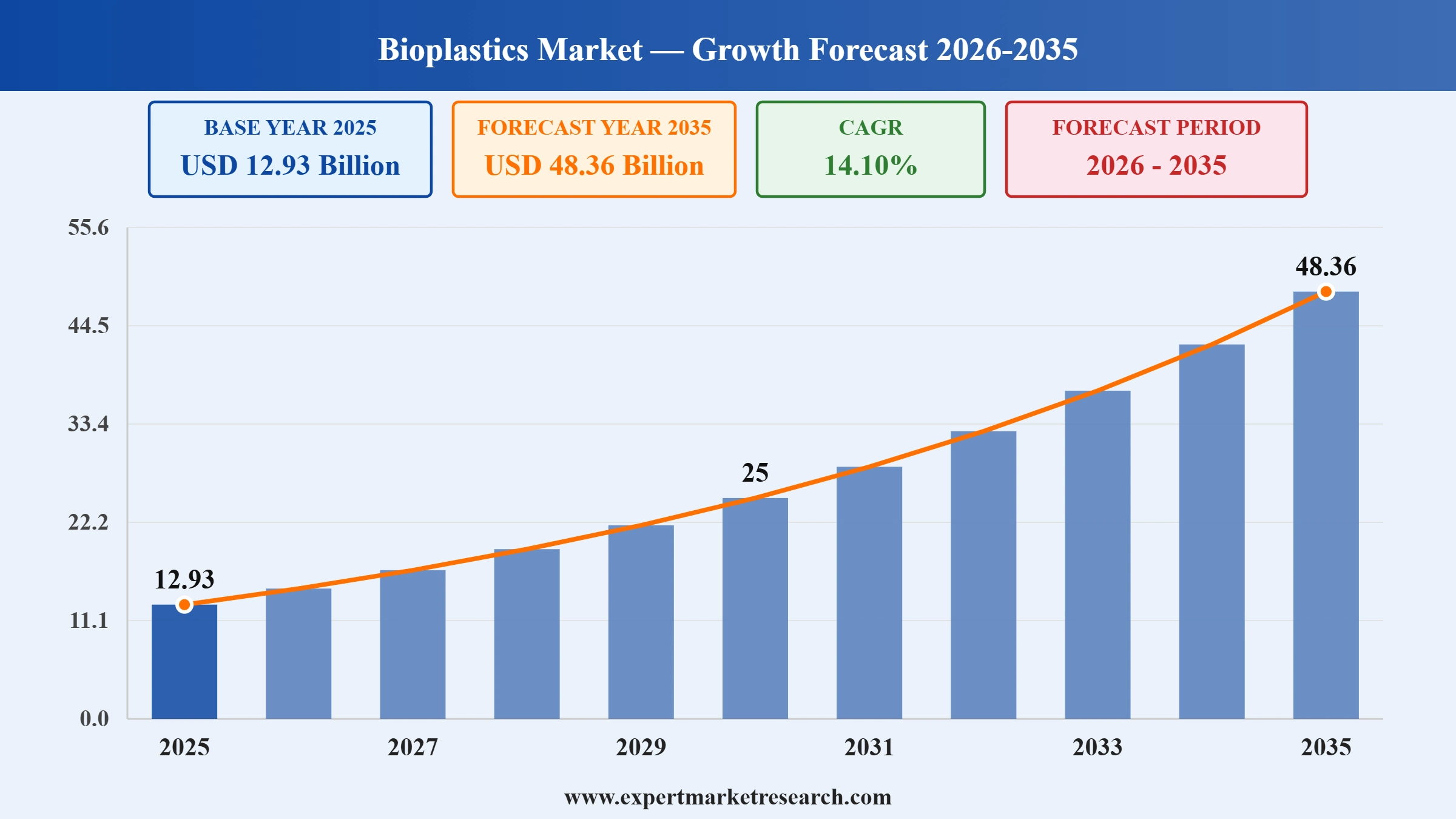
The bioplastics market attained a value of USD 12.93 Billion in 2025 and is projected to expand at a CAGR of 14.10% through 2035. The market is further expected to achieve USD 48.36 Billion by 2035. Growing investment in bio-based feedstocks and polymer technology innovation are allowing manufacturers to introduce highly durable and high-performance bioplastics for use in automobiles, medical care, electronics, and various forms of packaging.
Greater involvement by regulators in promoting compostable and bio-based products is driving manufacturers to increase commercial production and expand their catalog of certified products in regulated industries. At the same time, prominent multi-national consumer product corporations are entering into long-term contracts with bioplastics suppliers to ensure a consistent supply of sustainable raw materials.
The bioplastics market is experiencing a major transition as there is a move towards specialized high-performing bioplastics as manufacturers look beyond the use of the traditional bioplastic used in the production of packaging material and move to manufacture bioplastics for automotive, electronics, and medical industries. A major breakthrough was realized in June 2026 where TotalEnergies Corbion launched its range of Luminy PLA grades for durable consumer goods with enhanced heat resistance and mechanical performance in applications that were traditionally the domain of fossil-based plastics.
The bioplastics market continues to experience progress as resin makers, compounders, and converters focus on developing more flexible feedstock, recyclability, and regional production capability. They are adopting fermentation technology, chemical recycling collaborations, and bio-polymer blends that offer improved barrier performance and processability. For example, in March 2026, BioSupPack demonstrated brewery waste conversion into high-performance bioplastics, advancing circular packaging solutions compliant with EU PPWR sustainability requirements.
Read more about this report - REQUEST FREE SAMPLE COPY IN PDF
Mitsui Chemicals came up with marine biodegradable plastics technology, which helps to enhance environmental degradation properties and application of sustainable packaging materials. Companies can develop next-generation marine biodegradable polymers to cope with stringent environmental laws and sustainable packaging requirements.
Maharashtra enacted state bioplastics policy that will promote investment in bioplastic manufacturing, innovations and developments in sustainable polymer productions. Companies can develop their production capacity regionally under the bioplastics policy, accelerating demand in the bioplastics market.
Biodegradable bioplastics of enhanced strength were created through a new process invented by Wageningen scientists, making them more durable and commercially viable. Advanced biodegradable plastics, which provide better mechanical characteristics and can be used in packaging, consumer goods, and industry, are becoming commercially available to companies.
Intec Bioplastics announced USD 7.5 million Regulation A offering to boost production, marketing, and expansion of sustainable bioplastics. Companies have an opportunity to raise capital in order to enhance manufacturing capabilities and broaden commercialization in high potential bioplastics markets.
Currently, bioplastics are gaining traction not only in single-use disposables but also in automotive and other industries as developers launch more sophisticated biomaterials with high thermal stability, chemical resistance, and mechanical properties. Following such trends in the bioplastics market, in October 2024, POLYMEER launched a EUR 4.9 million initiative converting brewery spent grain into high-performance bioplastics for packaging, agriculture, and automotive applications. In addition, the European Union continues supporting bio-material innovations within the framework of the Circular Bio-based Europe Joint Undertaking through funding projects for industrial-scale application of novel bio-based polymers.
Regulations on waste are making companies move towards compostable packaging. The EU is compelling enterprises to substitute traditional polymers with more sustainable ones where appropriate, via the Single-Use Plastics Directive. Italian regulators are also maintaining the policy of supporting certified compostable shopping bags and organic waste collection systems to boost the consumption of biodegradable materials, thereby accelerating demand in the bioplastics market. In July 2025, Cortec launched Eco Works 100 with 100% USDA-certified biobased content, expanding certified industrially compostable packaging film solutions. These measures stimulate developers to create innovative solutions like blends of starches, PLA compounds, and compostable films.
Diversified feedstock sourcing reduces reliance on food crops and increases supply chain resilience and sustainability, redefining the bioplastics market trends and dynamics. Manufacturers are increasingly promoting bioplastics that originate from agricultural waste, used cooking oil, sugar industry waste, and non-food biomass. In December 2025, Renaissance BioScience partnered with Biome Bioplastics on a CAD 1.5 million initiative to scale renewable bioplastic building blocks using fermentation. Neste is also developing additional renewable feedstock partnerships for production of bio-based polymers through waste and residue sourcing, while Braskem is continuously working on development of bio-based polyethylene from ethanol produced from sugarcane. Resource-efficient circular economy approaches in Brazil and the European Union are being promoted through investment in bioeconomy and sustainable biomass usage.
Large-scale material companies are integrating their operations of bio-based polymers production with chemical recycling technology. The bioplastics market witnesses investments in depolymerization and advanced recycling solutions that are able to recover high-quality raw materials from used bioplastic packaging. In January 2026, Mitsui Chemicals and Lawson introduced bio-based, chemically recycled plastic bags, advancing circular packaging through mass balance polyethylene adoption. NatureWorks is collaborating with companies producing recycling technologies to strengthen recovery systems for its PLA. In addition, Japanese Ministry of the Environment supports further development of advanced plastic resource circulation system. This allows producers to increase resource efficiency, decrease virgin materials usage, and fulfill their corporate sustainability initiatives.
Producers are making massive investments in establishing new manufacturing units for meeting increasing demand from the industries regarding bio-polymers usage in packaging, medical, agricultural, and consumer sectors. Companies in the bioplastics market like NatureWorks are developing a fully integrated plant for producing PLA in Thailand, which will not only help improve the supply in the region but also enhance the production process efficiency. In October 2024, Balrampur Chini Mills announced a commercial PLA bioplastics plant, expanding sustainable sugarcane-based polymer production by 2026. In the same way, many Asian countries are promoting local bio-based production by offering industrial development benefits and green manufacturing initiatives.
The EMR’s report titled “Bioplastics Market Report and Forecast 2026-2035” offers a detailed analysis of the market based on the following segments:
Market Breakup by Type
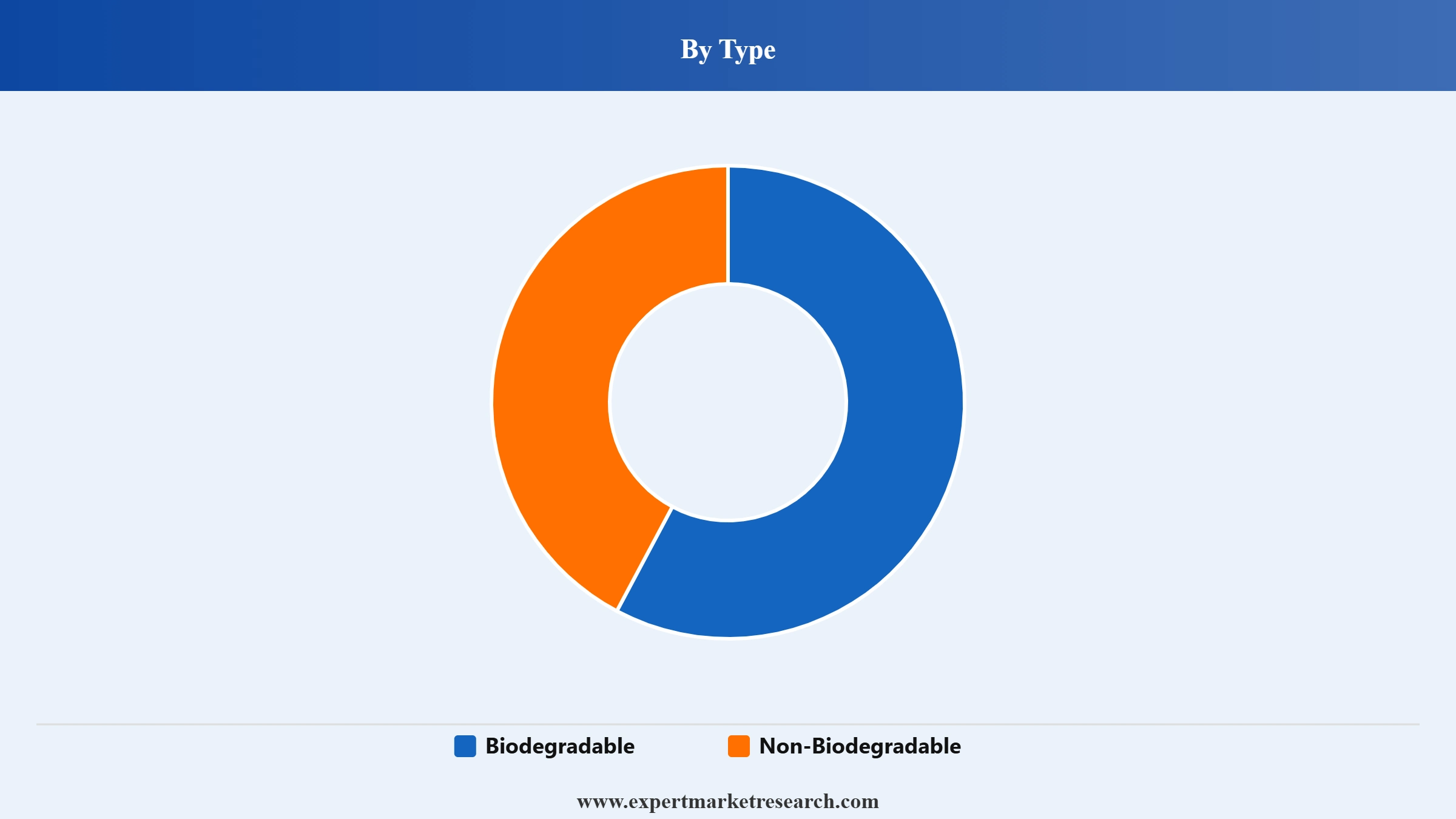
Key Insight: The bioplastics market covers both biodegradable and non-biodegradable types, catering to different needs of various industries. Biodegradable types have an overwhelming position in the market through materials such as starch blends, PLA, PBAT, PBS, PHA, and some other specialty polymers that can be used for making compostable materials. Non-biodegradable variants include Bio-PET, Bio-PA, Bio-PE, Bio-PTT, and some other types of bioengineering plastics suitable for durable goods. Starch blends continue to be cost-effective for making disposables; PLA provides a combination of functionality and processability, while PBAT is more flexible, and PBS is more durable.
Market Breakup by Application
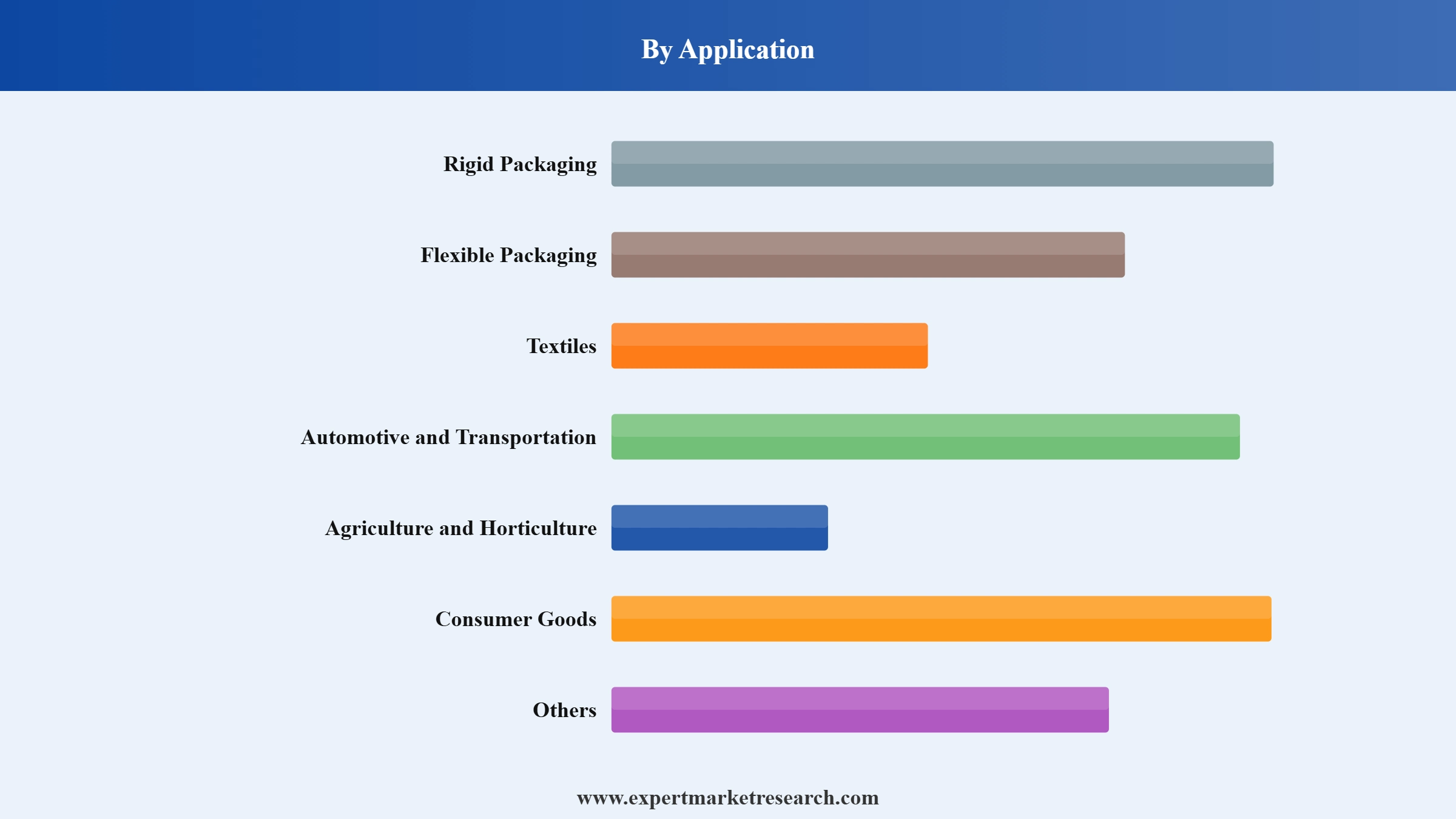
Key Insight: Bioplastics find their application in several market segments such as rigid packaging, flexible packaging, textiles, automotive and transportation, agriculture and horticulture, consumer goods, and industrial applications. Rigid packaging benefits from the characteristics of durability and protection of the package with the help of bottles, jars, trays, and special containers. Flexible packaging is the dominant bioplastics market segment because of its light weight and use of less amount of material. The textile sector uses renewable fiber, whereas the automotive industry focuses on making lighter components. Agriculture makes use of mulch films that are biodegradable along with accessories of plants, and consumer goods use sustainable polymers in their products.
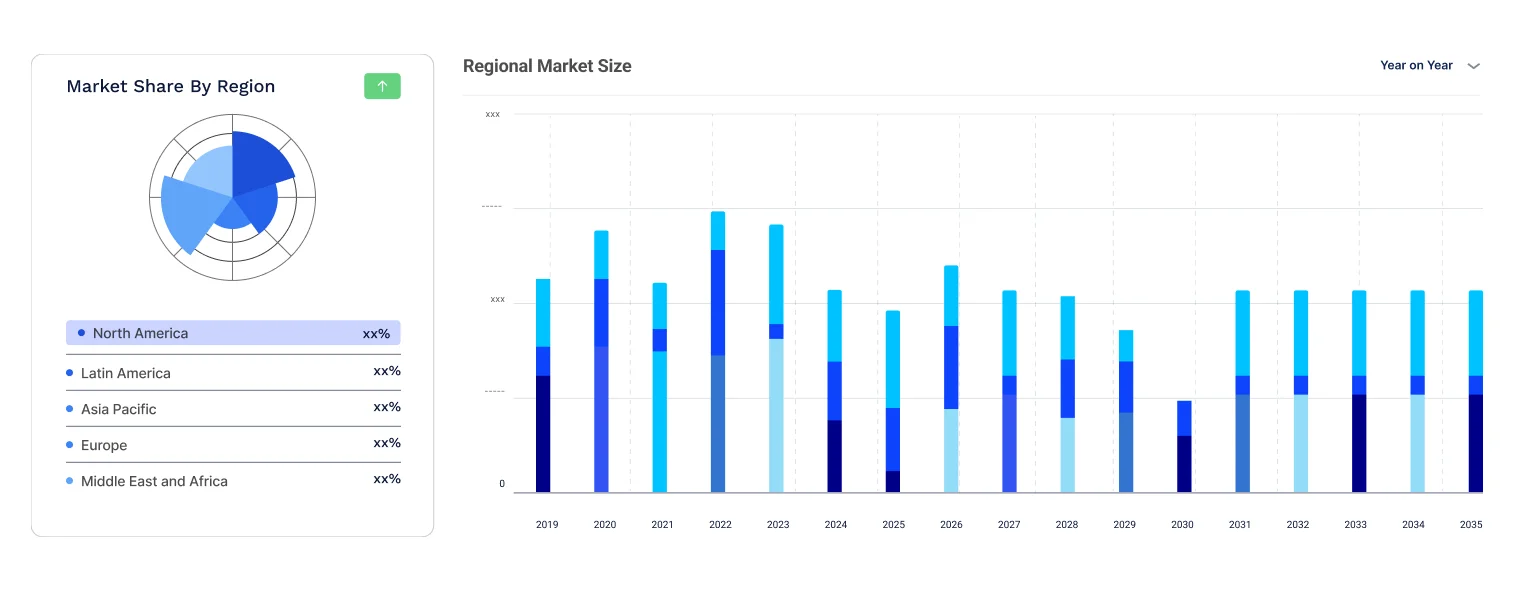
Market Breakup by Region
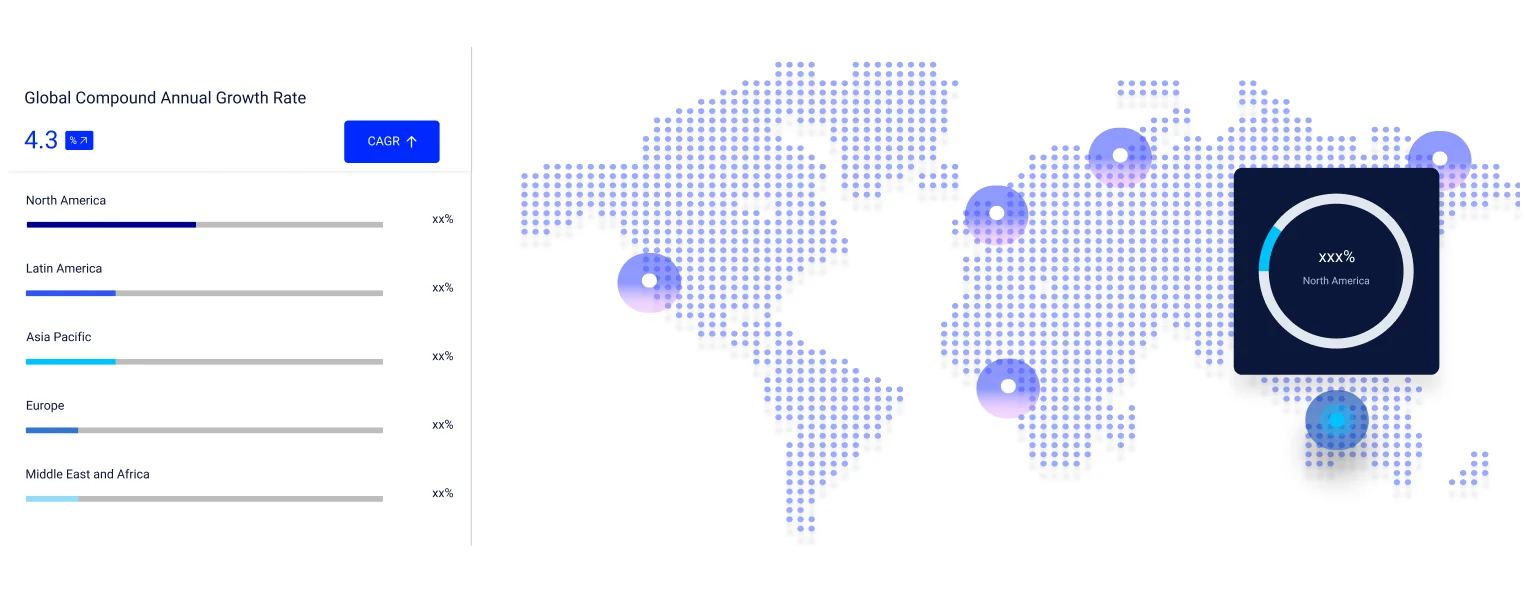
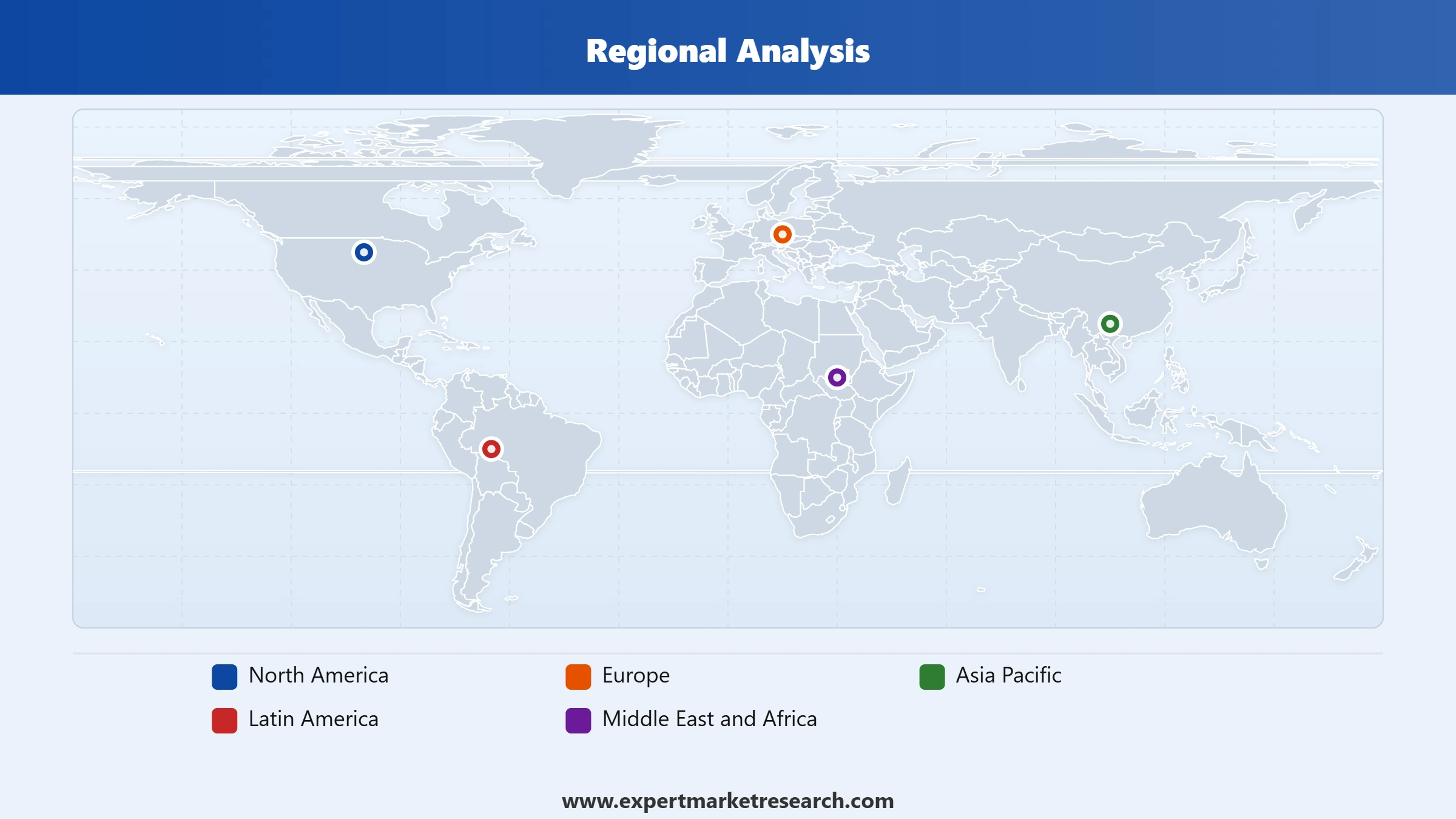
Key Insight: Technological innovations, sustainability programs by corporations, and increased demands for sophisticated biomaterials are contributing positively to the bioplastics market in North America. Europe is at the forefront due to advanced regulations, efficient composting networks, and strong industrial partnerships. The Asia Pacific region enjoys the highest growth potential owing to expanding manufacturing facilities, increased packaging usage, and increased polymer manufacturing within the region. Latin America exploits the vast availability of agricultural feedstocks to improve bio-material manufacturing and promote exports. The Middle East and Africa are gradually embracing bioplastics through diversified packaging, sustainability programs, and industrial development programs.
Read more about this report - REQUEST FREE SAMPLE COPY IN PDF
By type, biodegradable polymers dominate the market owing to expanding compostable packaging regulations
The biodegradable bioplastics market observes significant exponential growth since manufacturers are increasingly using compostable plastics to meet the regulatory and sustainability goals of retailers. PLA, PBAT, starch composites, PBS, and PHA replace traditional plastics in the use of food packaging, disposables, agricultural films, and organics waste bags due to their suitability for industrial composting and low amount of persisting plastic waste. The constant improvement in mechanical properties and ease of processing enables biodegradable polymers to be used in premium applications in packaging and consumer goods. In October 2025, Monash researchers created compostable PHA bioplastics from food waste sugars for sustainable packaging and agricultural film applications.
Read more about this report - REQUEST FREE SAMPLE COPY IN PDF
PHAs are growing at the fastest rate of growth in the bioplastics market due to their ability to biodegrade in soil, water, and ocean, together with high biocompatibility. Companies manufacture PHAs for use in food packaging, medical products, coated paper, and agriculture. High investments in microbial fermentation technology are decreasing costs and increasing commercial viability of PHA production. Increasing interest of brand owners to find an alternative to traditional compostable plastics creates opportunities for growth for biotechnology and specialty polymer companies.
By application, flexible packaging leads the market through sustainable retail and food packaging demand
Flexible packaging emerges to be the most dominant application sector in the bioplastics market, owing to the need for lightweight, efficient, and sustainable materials in packaging for food products, ecommerce packaging, and retail packaging. Bioplastics are being used increasingly in pouches, shopping bags, waste bags, and specialty films that use less material while ensuring sustainability goals. Enhanced sealing ability, printability, and barrier properties are leading to increased commercial acceptance in consumer goods and food products. Increasing commitments from retailers to use less traditional plastic packaging continues to drive converters to use biodegradable and bio-based flexible packaging materials on a large scale. In May 2025, Intec Bioplastics launched EarthPlus Hercules Bioflex sustainable stretch wrap, expanding plant-based recyclable packaging solutions for logistics and food applications.
Read more about this report - REQUEST FREE SAMPLE COPY IN PDF
Automotive and transportation applications are experiencing high levels of growth in the overall bioplastics market revenue owing to the efforts by vehicle manufacturers to use lightweight materials that can ensure less emissions and better sustainability credentials. Increased use of bio-based polymers in interior panels, trims, seats, and functional parts is becoming common because of improvements in heat resistance, dimensional stability, and mechanical strength. Increased investments in manufacturing electric vehicles are providing long term opportunities for advanced bioplastic producers catering to global automakers.
Europe sustains market leadership through circular economy regulations and mature bioplastics ecosystem
Europe continues dominating the global bioplastics market owing to its stringent environmental laws, advanced composting systems, and consumer inclination towards sustainable materials. Innovation in bio-based polymers continues through the efforts of the regional manufacturers along with the substitution of traditional plastics by alternative materials among the packaging companies. The presence of established research institutions, favorable policies, and value chain collaboration helps in the fast commercialization of advanced technologies in bioplastics. High involvement of resin manufacturers, converters, brand owners, and recyclers is further adding to the leadership of Europe in packaging, agricultural, consumer goods, and industrial segments. In June 2026, the European Union reviewed bio-based plastics under PPWR, shaping future packaging regulations, sustainability criteria, and circular economy adoption.
Read more about this report - REQUEST FREE SAMPLE COPY IN PDF
The fast-growing regional bioplastics market is that of Asia Pacific on account of increasing manufacturing capacity, improved environmental consciousness, and investment in sustainable packaging. Biopolymer manufacturing activities are increasing across Asia Pacific, supported by the establishment of new production facilities by multinational companies within the region. Industrialization, increase in the demand for food packaging, and export-based manufacturing activities are contributing towards increased consumption of bio-based materials. Improved regulatory framework and collaboration of regional producers with global technology suppliers are further promoting the commercialization of the market in Asia Pacific.
The industry witnesses increasing competition since companies seek advanced polymer technologies, feedstock diversity, and circular material solutions. Leading bioplastics companies develop specialty bioplastics with better heat resistance and recyclability to increase usage of these materials not only in packaging but in the automotive, healthcare, and consumer goods industries as well. Strategic alliances between the producers of bioplastics and brand owners, chemical recyclers, and biotech companies facilitate faster introduction of new materials.
In addition, leading bioplastics market players are opening regional manufacturing plants to reduce the lengths of supply chains and ensure the availability of raw materials. Another area of interest is the development of polymers that can be used on existing equipment. This way, converters will have an opportunity to use bio-based materials without large-scale investments.
Founded in 1989 and based in Novara, Italy, Novamont S.p.A. is engaged in research on biodegradable bioplastics through biorefineries. The firm works on compostable bioplastics for use in sectors such as packaging, agriculture, food services, and waste management. As a result of its ongoing investments in renewable resources and circular bioeconomy, clients have access to sustainable substitutes for traditional plastics.
Founded in 1994 and based in Tennessee, United States, Eastman Chemical Company offers cutting-edge specialty materials and molecular recycling technologies for circular plastics. The company is extending its molecular recycling technologies that recycle plastic waste into high-value raw materials, along with bio-based products for packaging, consumer goods, cosmetics, and healthcare sectors.
Founded in 2004, the Arkema headquarters is located in France. Arkema manufactures advanced biopolymers for applications in the automotive industry, electronics, sports, and industrial production. The company expands renewable materials' offerings by producing advanced engineering plastics, which offer lightness, durability, and environmental benefits, thus allowing producers to accomplish their sustainability goals.
Corbion NV was founded in the year 1919. Its headquarters is located in Amsterdam, Netherlands. The company specializes in developing bio-based ingredients and advanced technologies for lactic acid production, which is useful for the production of sustainable polymers. Corbion NV provides advanced materials via its PLA business for food packaging, textile, medical, and consumer goods industries.
Other key players in the market include Mitsubishi Chemical Corporation, BASF SE, Biome Bioplastics Limited, Futamura Group, Polymateria Limited, Plantic Technologies Limited, CJ CheilJedang Corp., Roquette Frères, PTT Global Chemical Public Company Limited, FUTERRO SA, and TotalEnergies Corbion, among others.
*Please note that this is only a partial list; the complete list of key players is available in the full report. Additionally, the list of key players can be customized to better suit your needs.*
Unlock the latest insights with our bioplastics market trends 2026 report. Discover regional growth patterns, consumer preferences, and key industry players. Stay ahead of competition with trusted data and expert analysis. Download your free sample report today and drive informed decisions in the market.


Upto 15% Off
USD
$3999 $3599
$2499 $2249
$4999 $4249
$5999 $5099


*While we strive to always give you current and accurate information, the numbers depicted on the website are indicative and may differ from the actual numbers in the main report. At Expert Market Research, we aim to bring you the latest insights and trends in the market. Using our analyses and forecasts, stakeholders can understand the market dynamics, navigate challenges, and capitalize on opportunities to make data-driven strategic decisions.*
In 2025, the global bioplastics market attained a value of USD 12.93 Billion.
The market is assessed to grow at a CAGR of 14.10% between 2026 and 2035.
The market is estimated to witness a healthy growth in the forecast period of 2026-2035 to reach USD 48.36 Billion by 2035.
Expanding renewable feedstock partnerships, investing in specialty polymer research, strengthening recycling collaborations, optimizing regional manufacturing, developing application-specific formulations, and enhancing certification capabilities are creating sustainable competitive advantages.
The key market trends guiding the growth of the market include the rising environmental consciousness, government initiatives, and investments in research and development activities by market players to expand the market.
The major regions in the market are North America, Europe, the Asia Pacific, Latin America, and the Middle East and Africa.
The major types of bioplastics include biodegradable and non-biodegradable.
The various applications of the market include rigid packaging, flexible packaging, textiles, automotive and transportation, agriculture and horticulture, and consumer goods, among others.
The key players in the market include Novamont S.p.A., Eastman Chemical Company, Arkema, Corbion NV, Mitsubishi Chemical Corporation, BASF SE, Biome Bioplastics Limited, Futamura Group, Polymateria Limited, Plantic Technologies Limited, CJ CheilJedang Corp., Roquette Frères, PTT Global Chemical Public Company Limited, FUTERRO SA, and TotalEnergies Corbion, among others.
High production costs, inconsistent composting infrastructure, feedstock availability concerns, evolving regulations, performance limitations in demanding applications, and competition from inexpensive fossil-based plastics continue challenging commercial expansion and profitability.
Explore our key highlights of the report and gain a concise overview of key findings, trends, and actionable insights that will empower your strategic decisions.
| REPORT FEATURES | DETAILS |
| Base Year | 2025 |
| Historical Period | 2019-2025 |
| Forecast Period | 2026-2035 |
| Scope of the Report |
Historical and Forecast Trends, Industry Drivers and Constraints, Historical and Forecast Market Analysis by Segment:
|
| Breakup by Type |
|
| Breakup by Application |
|
| Breakup by Region |
|
| Market Dynamics |
|
| Competitive Landscape |
|
| Companies Covered |
|
| Report Price and Purchase Option | Explore our purchase options that are best suited to your resources and industry needs. |
| Delivery Format | Delivered as an attached PDF and Excel through email, with an option of receiving an editable PPT, according to the purchase option. |
Single User License
One User
USD 3,999
USD 3,599
tax inclusive*
Datasheet
One User
USD 2,499
USD 2,249
tax inclusive*
Five User License
Five User
USD 4,999
USD 4,249
tax inclusive*
Corporate License
Unlimited Users
USD 5,999
USD 5,099
tax inclusive*
*Please note that the prices mentioned below are starting prices for each bundle type. Kindly contact our team for further details.*
Flash Bundle
Small Business Bundle
Growth Bundle
Enterprise Bundle
*Please note that the prices mentioned below are starting prices for each bundle type. Kindly contact our team for further details.*
Flash Bundle
Number of Reports: 3
20%
tax inclusive*
Small Business Bundle
Number of Reports: 5
25%
tax inclusive*
Growth Bundle
Number of Reports: 8
30%
tax inclusive*
Enterprise Bundle
Number of Reports: 10
35%
tax inclusive*
How To Order

Select License Type
Choose the right license for your needs and access rights.

Click on ‘Buy Now’
Add the report to your cart with one click and proceed to register.

Select Mode of Payment
Choose a payment option for a secure checkout. You will be redirected accordingly.
Strategic Solutions for Informed Decision-Making
Gain insights to stay ahead and seize opportunities.

Get insights & trends for a competitive edge.

Track prices with detailed trend reports.

Analyse trade data for supply chain insights.

Leverage cost reports for smart savings

Enhance supply chain with partnerships.

Connect For More Information
Our expert team of analysts will offer full support and resolve any queries regarding the report, before and after the purchase.
Our expert team of analysts will offer full support and resolve any queries regarding the report, before and after the purchase.
We employ meticulous research methods, blending advanced analytics and expert insights to deliver accurate, actionable industry intelligence, staying ahead of competitors.
Our skilled analysts offer unparalleled competitive advantage with detailed insights on current and emerging markets, ensuring your strategic edge.
We offer an in-depth yet simplified presentation of industry insights and analysis to meet your specific requirements effectively.




