

Consumer Insights
Uncover trends and behaviors shaping consumer choices today
Procurement Insights
Optimize your sourcing strategy with key market data
Industry Stats
Stay ahead with the latest trends and market analysis.
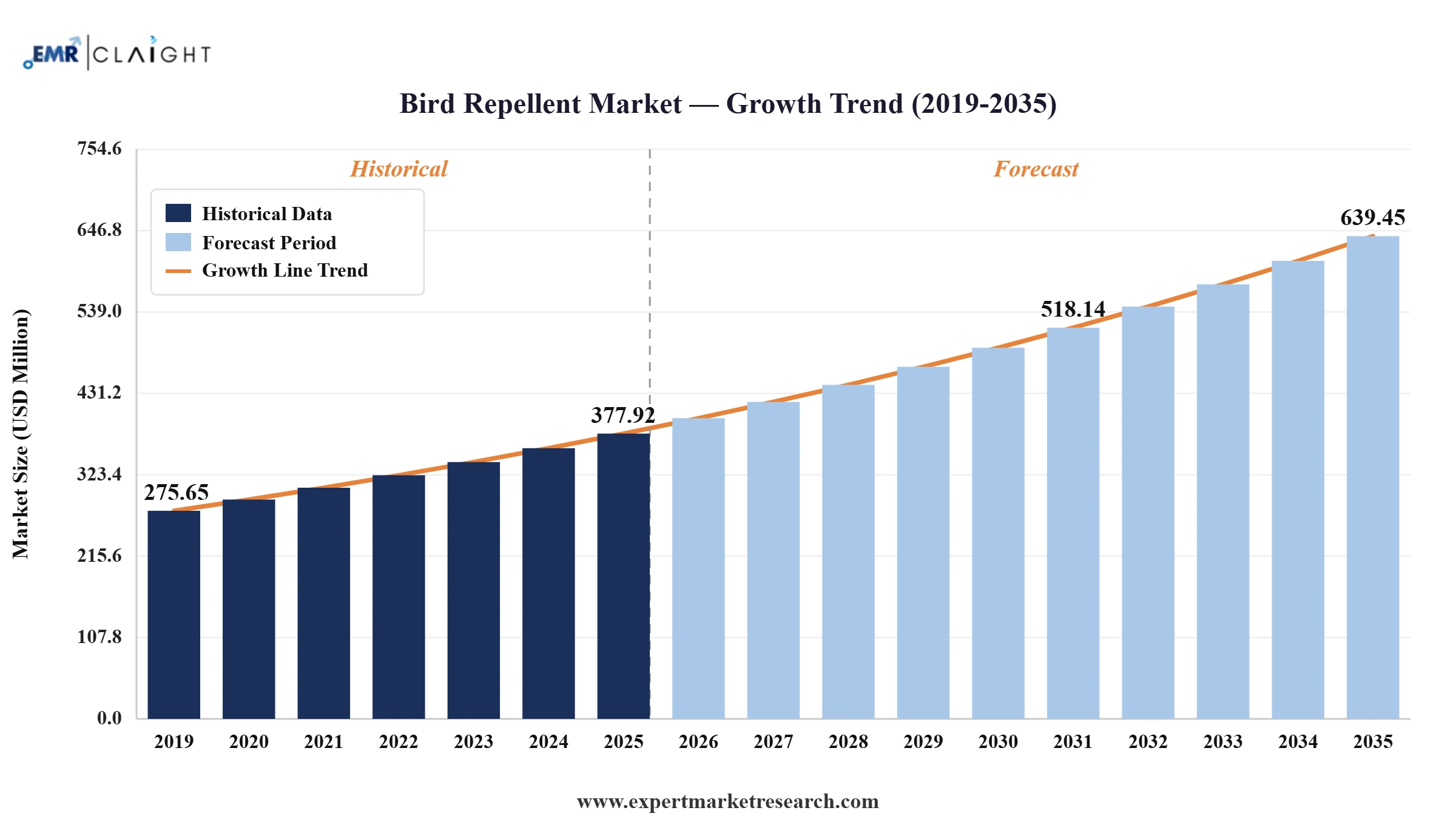
The global bird repellent market size attained a value of USD 377.92 Million in 2025. The market is projected to grow at a CAGR of 5.40% between 2026 and 2035 and reach around USD 639.45 Million by 2035.
Read more about this report - REQUEST FREE SAMPLE COPY IN PDF
The wide adoption of electric bird repellents in farms due to their multiple advantages such as easy installation, power efficiency, and low maintenance are aiding the market development. By 2030, the global population is projected to reach 8.5 billion. The expanding population and the considerable demand for quality food are leading to the excessive utilisation of bird repellents.
Some of the factors driving the bird repellent market growth are the development of nontoxic bird repellents and the rising need for efficient air control systems to deter birds at airports. According to industry reports, around 21,000 bird strikes are reported annually, or about 50–60 per day. With the incidences of air strikes, the development of innovative bird repellent solutions like bio-acoustics to prevent bird strikes and relocate pest birds from runways and other open areas is rising.
Authorities at Devi Ahilyabai Holkar Airport in Indore, India, announced the installation of ultrasonic sound systems and advanced sensors to reduce bird and wildlife activity around the runway. The initiative is aimed at mitigating bird-strike risks by using automated detection and deterrence rather than relying solely on manual bird-scaring operations. The planned system forms part of a broader airport wildlife-management approach, where technology is being introduced to monitor and discourage birds from entering aircraft operating areas. The development demonstrates growing adoption of electronic and sensor-based bird-repellent systems in aviation environments where bird activity can directly affect flight safety.
Bird Control Group highlighted the expanding use of its automated AVIX laser bird-repellent systems across agricultural and industrial applications. The company's automated systems operate continuously and use moving green laser beams to trigger birds' natural avoidance response without physically harming them. The technology can be deployed across large areas and is designed to reduce bird activity without relying on chemical repellents or permanent physical barriers. Bird Control Group reports that its laser systems are used in more than 110 countries, covering applications ranging from agriculture and poultry to industrial facilities and renewable-energy sites. This reflects the increasing commercialisation of automated optical bird deterrence.
Bird-X highlighted laser-based bird deterrence as an increasingly important solution for airport bird management, particularly during low-light conditions. Laser systems provide a non-contact approach in which a moving beam is used to discourage birds from entering protected areas. The company has incorporated laser deterrence into its broader commercial bird-control portfolio alongside sonic, ultrasonic, visual, and physical exclusion products. The development illustrates a wider shift toward combining multiple deterrence techniques according to site conditions rather than relying on a single repellent method. Airports are a particularly important application because bird activity near runways creates operational and aircraft-safety risks, thus shaping the trends in the bird repellants market.
Robin Radar Technology continued expanding the use of its radar-based bird detection technology for aviation and other infrastructure applications. Its MAX 3D bird-detection radar provides 360-degree coverage, scans approximately once per second, and classifies birds according to size while generating flight-path information. The system is designed to give airport wildlife-control teams real-time information about bird movements so that they can respond before birds create a collision risk. Robin Radar's technology is also being used around wind farms and other sites where understanding bird flight patterns is important. This development represents a shift toward detection-led bird management, where repellents can be activated based on actual bird movements.
Bird repellent lasers are being developed in a way that the technology can be automated and adapted to specific locations. With new technology, the laser can be operated automatically in specific zones and based on the time of day, location, and activity of the birds in question. For this reason, the technology can prove useful in orchards, vineyards, airports, warehouses, and renewable energy facilities, where manual human presence can be too expensive. The technology is also attractive because it provides a non-contact, non-lethal method of dispersing birds without physical barriers or chemical application. Commercial suppliers are increasingly positioning laser systems as part of broader automated wildlife-management programmes, strengthening their role within technology-based bird-control portfolios.
Bird-control systems are increasingly incorporating radar to detect approaching birds before they reach sensitive areas. With radar technology, data is provided regarding the location of the birds, their heading, altitude, and movements. Moreover, some radars even provide data about flocks. This becomes useful especially in airport settings, where deterring birds after they enter the runway area may be ineffective. In addition, radar can also be linked to other types of deterrents, making it more of a detection and response system than just a deterrent. The broader shift is toward continuous monitoring in which bird-control equipment responds to actual movement patterns, helping operators reduce unnecessary activation of acoustic, visual, or laser deterrents.
Bird management systems in the commercial sector have started to include a combination of visual, acoustic, laser, physical, and electronic deterrents instead of relying on only one deterrent system. Birds may get used to a stimulus that is continuously repeated through sounds or visuals or a fixed deterrent system, hence there is the need for an advanced system which changes the stimulus or uses various deterrent systems at once. An agricultural facility, for instance, may use bird netting or wire along with a sound or laser system. This approach allows the control strategy to be adapted to the species, location and operating conditions. The market is therefore moving toward integrated bird-management packages rather than isolated repellent products, thus bolstering the growth of the bird repellants systems.
Bird-control product development is increasingly centred on non-lethal and low-impact deterrence, particularly for locations where chemical application or physical removal is unsuitable. Electronic sound systems, lasers, reflective devices, bird wires, nets and other exclusion technologies can discourage birds without directly harming them. This is particularly relevant in airports, food-processing facilities, public buildings and environmentally sensitive sites, where operators need to manage birds while meeting wildlife-protection and safety requirements. Manufacturers are consequently expanding portfolios around products that provide deterrence without poisoning or trapping birds. The emphasis on humane control is also encouraging the development of longer-lasting and reusable systems that can replace repeated chemical applications.
Solar installations are emerging as an important application for specialised bird-deterrence solutions. Birds can roost beneath solar panels, build nests, leave droppings on modules, and create maintenance and cleaning requirements. This has encouraged the use of panel-level exclusion systems, bird mesh, deterrent wires and other protective technologies designed specifically around photovoltaic installations. Unlike conventional building applications, solar sites can cover very large areas, creating demand for solutions that are scalable, weather-resistant and compatible with panel layouts. The expansion of solar farms is therefore creating a distinct commercial application for bird-control suppliers, particularly for systems that can protect panels while avoiding damage to photovoltaic equipment.
Heavy bird pecking of fruits and vegetables results in huge financial losses to the farmers, which is propelling the use of bird repellents. Additionally, there is a rising need for efficient air control systems to deter birds at airports, enhancing passenger safety.
Furthermore, a variety of pest birds impact food manufacturing plants, triggering a host of concerns, including failed audits and contamination of products, that can lead to plant closures and production stoppage, financial damages, and health hazards to occupants. This has increased the adoption of spikes, wire, gel, sonic and ultrasonic devices, and lasers and optical deterrents, among others, in food processing plants.
"Global Bird Repellent Market Report and Forecast 2026-2035" offers a detailed analysis of the market based on the following segments:
Market Breakup by Type
Market Breakup by End Use
Market Breakup by Region
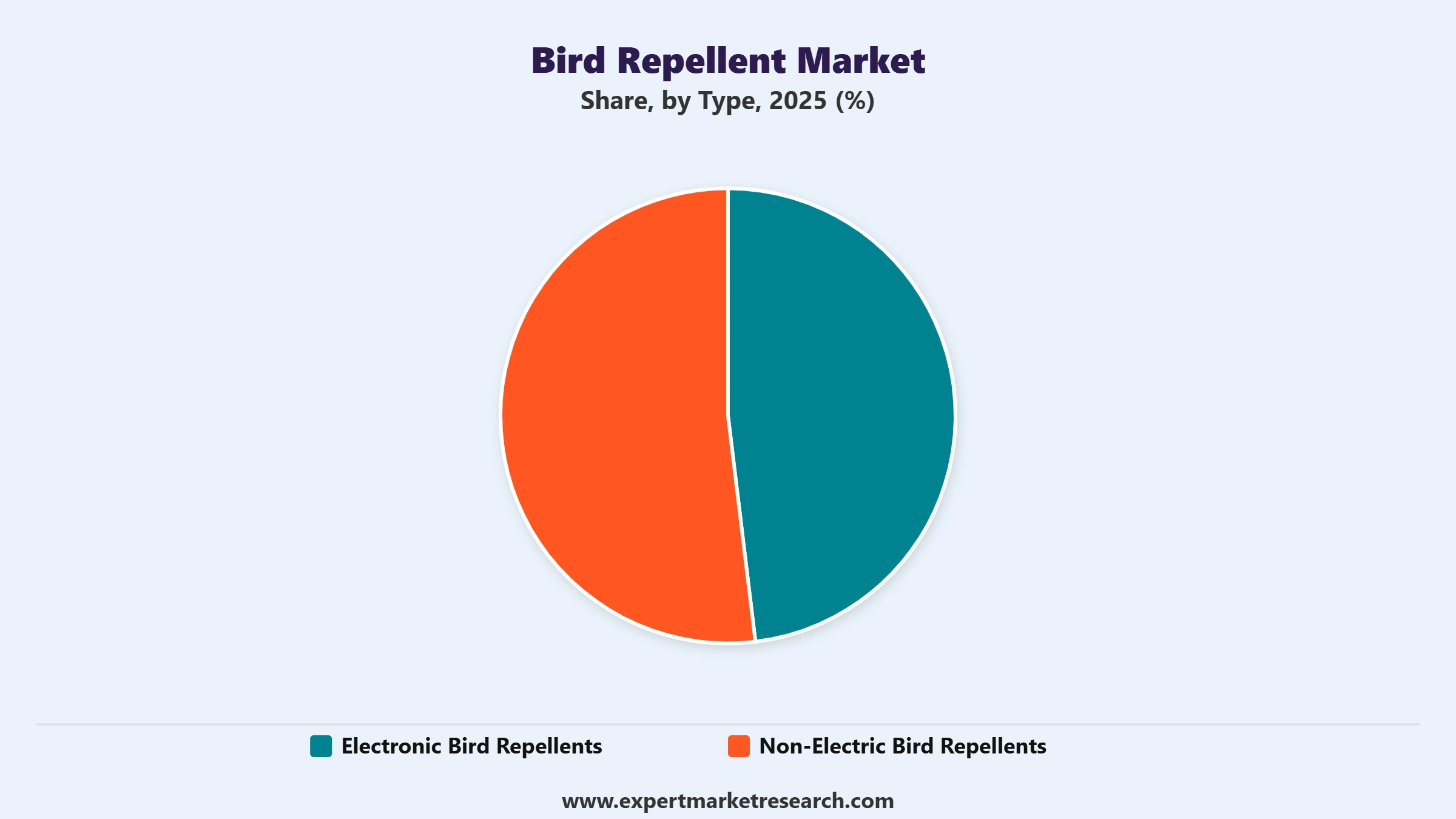
Non-electric bird repellents are expected to dominate the bird repellent market share as they are used extensively to protect buildings and crops.
Non-electric bird repellent solutions like bird netting are extensively used to protect buildings and crops from bird damage and prevent birds from accessing certain areas. Spikes are one of the most popular anti-roosting non-electric bird repellent products due to their versatile applications, durability, and ease of installation.
Read more about this report - REQUEST FREE SAMPLE COPY IN PDF
Electronic bird repellents like ultrasonic bird scarers can be employed in various environments without causing human interference, which makes them ideal solutions for situations in which noise-related scaring is not an option. The rising trend of sustainability is anticipated to increase the demand for electronic bird repellents as they are environmentally friendly.
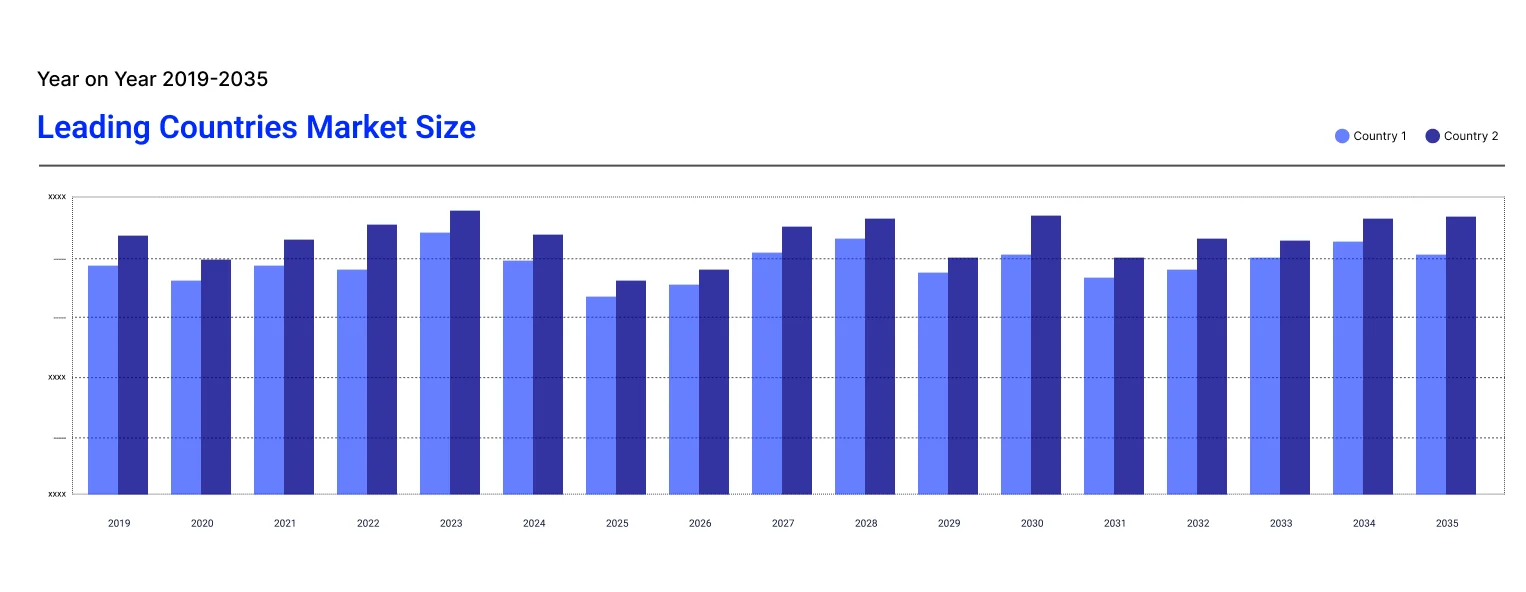
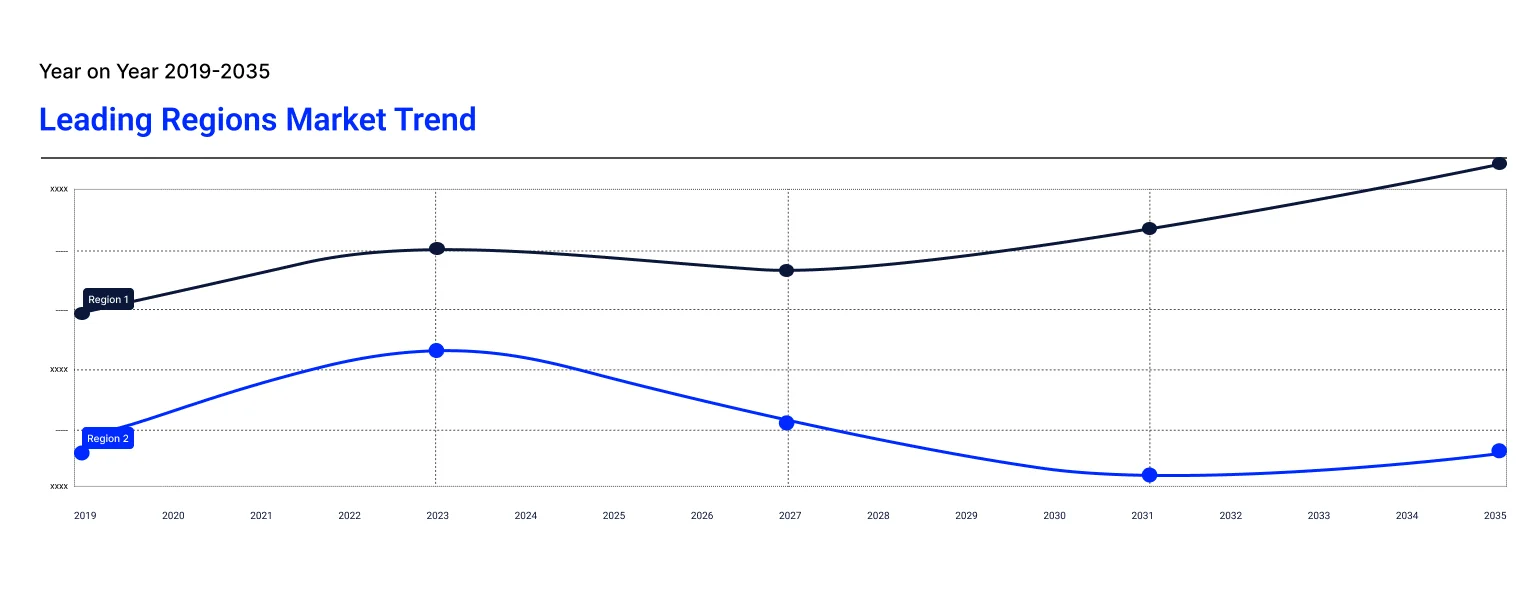
Read more about this report - REQUEST FREE SAMPLE COPY IN PDF
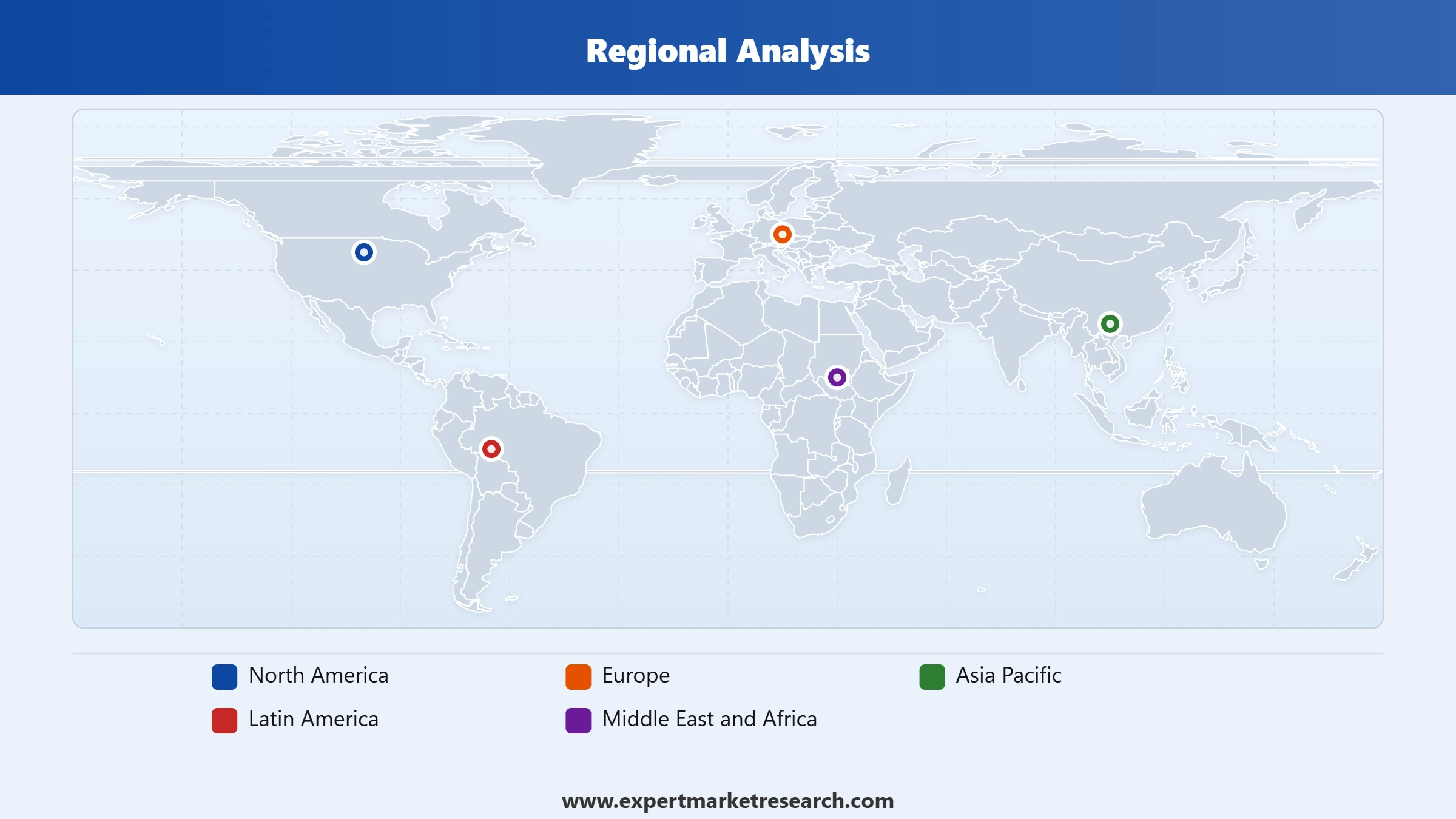
The Asia Pacific is a prominent region due to the rising utilisation of liquid deterrent bird sprays in countries like China and India. The deployment of cutting-edge laser bird-deterrent technologies to support substations and prevent outages, lower repair and equipment costs, and increase reliability is expected to spike in upcoming years as a result of the rising number of bird-induced power outages caused by bird roosting and bird droppings.
Leading companies in Asia are developing automated bird deterrent solutions that can be easily programmed through phone apps and customised in accordance with day-to-day farm operations.
In Europe, projects such as The BIRD RELEASE (REpelLEnt Auto-SystEm) initiated by the European Union focused on advancing the commercialisation of innovative bird deterrent systems offering customers enhanced sustainability, profitability, and safety while significantly decreasing bird nuisance. The application of automated laser beam solutions to scare birds away is expected to rise due to the growing amount of research activities, aiding the Europe bird repellent market expansion in the coming years.
In North America, authorities are spending money on several strategies to prevent bird strikes at airports, including removing visually appealing elements from the property, installing netting or spikes to keep birds from roosting, using fireworks, putting predator effigies on display, using chemical repellents, making loud noises, or employing trained raptors to keep birds away from the airport during take-offs and landings.
Read more about this report - REQUEST FREE SAMPLE COPY IN PDF
Major bird repellent market players are increasing their collaboration, partnership, and research and development activities to gain a competitive edge.
Pelsis Ltd, headquartered in the UK and founded in 1984, offers various products for all skill levels and helps solve problems economically and safely. The products include Exclusion such as Bird netting, bird net hardware and garden netting, sensory such as gel, laser and fogging & MA and bird reduction.
Bird Control Group, headquartered in the Netherlands and founded in 2009, provides two solutions that are effective and user-friendly for customers. The solutions include automated bird repellent and manual bird repellent.
Headquartered in the USA and founded in 1964, Bird-X, Inc. offers various products such as electronic bird repellers including sonic bird repellers, ultrasonic bird repellers, and non-electronic repellers.
Headquartered in the USA and founded in 1993, Bird Barrier America, Inc. offers a wide range of bird-repellent products such as Edge-to-edge, corner-to-corner defence devices, stop birds on roofs, courtyards and agriculture, traps and nets for indoor/out bird capture and relocation, and others.
*Please note that this is only a partial list; the complete list of key players is available in the full report. Additionally, the list of key players can be customized to better suit your needs.*
Other key players in the bird repellent market include Bird Gard, LLC.
Folding Electric Bicycle Market
North America Building Thermal Insulation Market
Commercial Property Pest Risk Management
Non-Lethal Pest Control Technologies
Crop Protection Solutions For Yield Loss


Upto 15% Off
USD
$2499 $2249
$3999 $3599
$4999 $4249
$5999 $5099


*While we strive to always give you current and accurate information, the numbers depicted on the website are indicative and may differ from the actual numbers in the main report. At Expert Market Research, we aim to bring you the latest insights and trends in the market. Using our analyses and forecasts, stakeholders can understand the market dynamics, navigate challenges, and capitalize on opportunities to make data-driven strategic decisions.*
In 2025, the market value was approximately USD 377.92 Million.
The market is projected to grow at a CAGR of 5.40% between 2026 and 2035.
The market is estimated to witness a healthy growth in the forecast period of 2026-2035 to reach around USD 639.45 Million by 2035.
The major drivers include the surging use of bird repellent in buildings and the growing demand for quality food due to the expanding population globally.
The key trends include the development of nontoxic bird repellents and the increasing application of bird repellents in airports.
The different types of bird repellent include electronic bird repellents and non-electronic bird repellents.
The major end uses of bird repellent include agriculture and horticulture, aviation, architecture and construction, food processing, and gas and oil fields.
The major players in the market include Pelsis Ltd, Bird Control Group, Bird-X, Inc., Bird Barrier America, Inc., and Bird Gard, LLC.
Explore our key highlights of the report and gain a concise overview of key findings, trends, and actionable insights that will empower your strategic decisions.
| REPORT FEATURES | DETAILS |
| Base Year | 2025 |
| Historical Period | 2019-2025 |
| Forecast Period | 2026-2035 |
| Scope of the Report |
Historical and Forecast Trends, Industry Drivers and Constraints, Historical and Forecast Market Analysis by Segment:
|
| Breakup by Type |
|
| Breakup by End-Use |
|
| Breakup by Region |
|
| Market Dynamics |
|
| Competitive Landscape |
|
| Companies Covered |
|
| Report Price and Purchase Option | Explore our purchase options that are best suited to your resources and industry needs. |
| Delivery Format | Delivered as an attached PDF and Excel through email, with an option of receiving an editable PPT, according to the purchase option. |
Datasheet
One User
USD 2,499
USD 2,249
tax inclusive*
Single User License
One User
USD 3,999
USD 3,599
tax inclusive*
Five User License
Five User
USD 4,999
USD 4,249
tax inclusive*
Corporate License
Unlimited Users
USD 5,999
USD 5,099
tax inclusive*
*Please note that the prices mentioned below are starting prices for each bundle type. Kindly contact our team for further details.*
Flash Bundle
Small Business Bundle
Growth Bundle
Enterprise Bundle
*Please note that the prices mentioned below are starting prices for each bundle type. Kindly contact our team for further details.*
Flash Bundle
Number of Reports: 3
20%
tax inclusive*
Small Business Bundle
Number of Reports: 5
25%
tax inclusive*
Growth Bundle
Number of Reports: 8
30%
tax inclusive*
Enterprise Bundle
Number of Reports: 10
35%
tax inclusive*
How To Order

Select License Type
Choose the right license for your needs and access rights.

Click on ‘Buy Now’
Add the report to your cart with one click and proceed to register.

Select Mode of Payment
Choose a payment option for a secure checkout. You will be redirected accordingly.
Strategic Solutions for Informed Decision-Making
Gain insights to stay ahead and seize opportunities.

Get insights & trends for a competitive edge.

Track prices with detailed trend reports.

Analyse trade data for supply chain insights.

Leverage cost reports for smart savings

Enhance supply chain with partnerships.

Connect For More Information
Our expert team of analysts will offer full support and resolve any queries regarding the report, before and after the purchase.
Our expert team of analysts will offer full support and resolve any queries regarding the report, before and after the purchase.
We employ meticulous research methods, blending advanced analytics and expert insights to deliver accurate, actionable industry intelligence, staying ahead of competitors.
Our skilled analysts offer unparalleled competitive advantage with detailed insights on current and emerging markets, ensuring your strategic edge.
We offer an in-depth yet simplified presentation of industry insights and analysis to meet your specific requirements effectively.




