

Consumer Insights
Uncover trends and behaviors shaping consumer choices today
Procurement Insights
Optimize your sourcing strategy with key market data
Industry Stats
Stay ahead with the latest trends and market analysis.
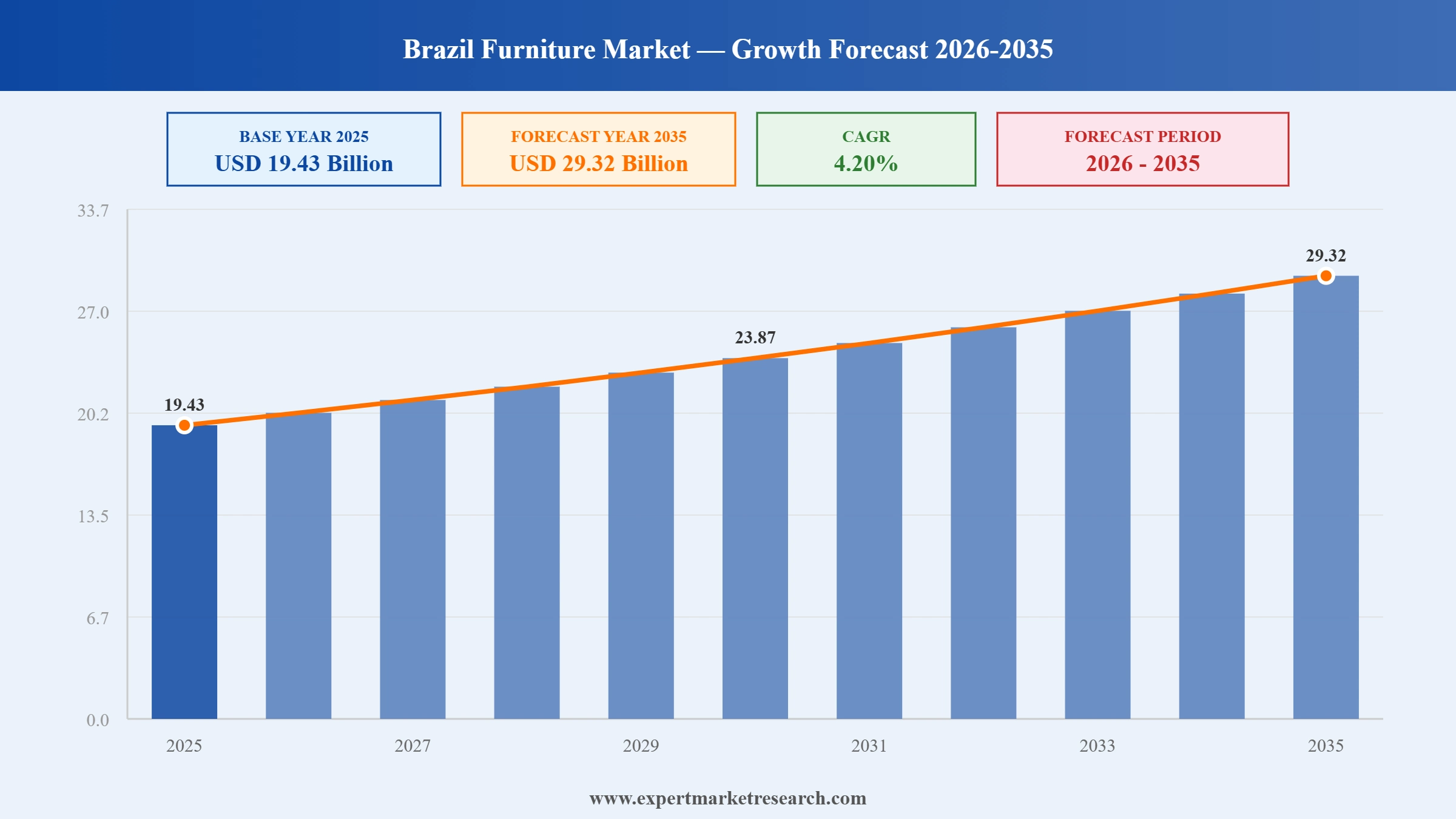
The Brazil furniture market reached a value of USD 19.43 Billion at 2025 and is projected to expand at a CAGR of around 4.20% during the forecast period of 2026-2035. Lifted by sustained urbanisation, government-led affordable housing programmes, a structural domestic wood supply advantage, and the rapid rise of e-commerce in furniture retail, the market is expected to reach USD 29.32 Billion by 2035.
Read more about this report - REQUEST FREE SAMPLE COPY IN PDF
Brazil's furniture industry is reshaping itself on multiple fronts at once. Trade fair participation and international showroom expansion are lifting the global profile of Brazilian design, sustainability conversations are reshaping procurement, and e-commerce is restructuring the entire distribution logic. The pace of change has accelerated over the past 18 months in ways that older industry assumptions had not anticipated.
In March 2025, Sao Paulo hosted the inaugural edition of Interior Lifestyle South America, a trade fair developed through a partnership between Grupo Eletrolar and Messe Frankfurt. The event positioned Sao Paulo as the regional hub for Latin American furniture and interiors trade, linking Brazilian manufacturers with international retailers and design studios.
In November 2024, LIXIL Corporation, the Japanese building materials and housing equipment company, formalised a partnership with Brazilian distributors to promote sustainable furniture and interior solutions made with eco-certified materials. The move brings international sustainability standards to locally distributed products for corporate buyers and high-end residential developers.
In March 2024, Breton, a family-owned Brazilian luxury furniture brand, opened its first international showroom in Dubai, occupying 2,300 square metres across two floors along Al Wasl Road. The Dubai entry validated the export potential of Brazil's premium furniture segment and positioned Brazilian design originality against established global luxury players.
In February 2024, Tok and Stok partnered with a group of prominent Brazilian designers to launch a new collection of environmentally friendly furniture. The collection prioritised sustainable materials, responsible sourcing, and lower-impact production, reinforcing the retailer's design credentials alongside a sharper sustainability positioning for urban middle-class buyers.
Brazil's planted forest programmes and the manufacturing cluster in the south of the country give domestic producers a structural cost advantage. International buyers are now asking harder questions about FSC and CERFLOR certification, and manufacturers investing in traceability are turning sustainability from a procurement risk into a Brazil furniture market growth lever in export segments.
Mercado Livre, Americanas, and Magazine Luiza have invested heavily in white-glove furniture delivery, assembly, and hassle-free returns. Once those barriers fell, online furniture purchasing accelerated past optimistic projections, putting structural pressure on specialty and flagship store economics and reshaping the Brazil furniture industry's channel mix.
Brazilian companies returned to offices faster than counterparts in North America or Europe, but workspace redesign has stuck. Tok and Stok reported a rise in commercial sales tied to ergonomic and modular products. Brazil's NR17 regulation, mandating ergonomic standards for workplace seating, anchors a compliance-driven floor under the Brazil furniture market trends in this segment.
Breton's 2,300 square metre Dubai flagship in March 2024 is the headline example, but the broader pattern matters more. The ABIMOVEL and ApexBrasil-backed Brazilian Furniture Project has built systematic trade fair presence across Europe, the Middle East, and North America, generating over USD 35 million in export business rounds at IMM Cologne 2024 alone.
Brazil's federal housing programme keeps generating new household formation at scale, particularly across the lower and middle income segments that anchor organised retail's customer base. Each new home translates into a complete furniture purchase cycle, supporting steady Brazil furniture industry growth across bedroom, living room, and kitchen categories.
The report by Expert Market Research titled "Brazil Furniture Market Report and Forecast 2026-2035" offers a detailed analysis of the market based on the following segments:
Market Breakup by Type
Key Insight: Wood is and will remain the dominant material type in the Brazil furniture market through 2035. The reasons are structural, not cyclical. Brazil runs one of the world's most extensive planted forest programmes, with eucalyptus and pine plantations that have dramatically expanded certified timber availability over the past two decades. Southern Brazil, particularly the Bento Goncalves cluster in Rio Grande do Sul, holds centuries of craft tradition in wood furniture manufacture and exports to over 100 countries. Metal furniture grows steadily in the commercial and contract segments where durability and standardisation outrank aesthetics, while plastic and glass serve niche outdoor and premium accent applications.
Market Breakup by End Use
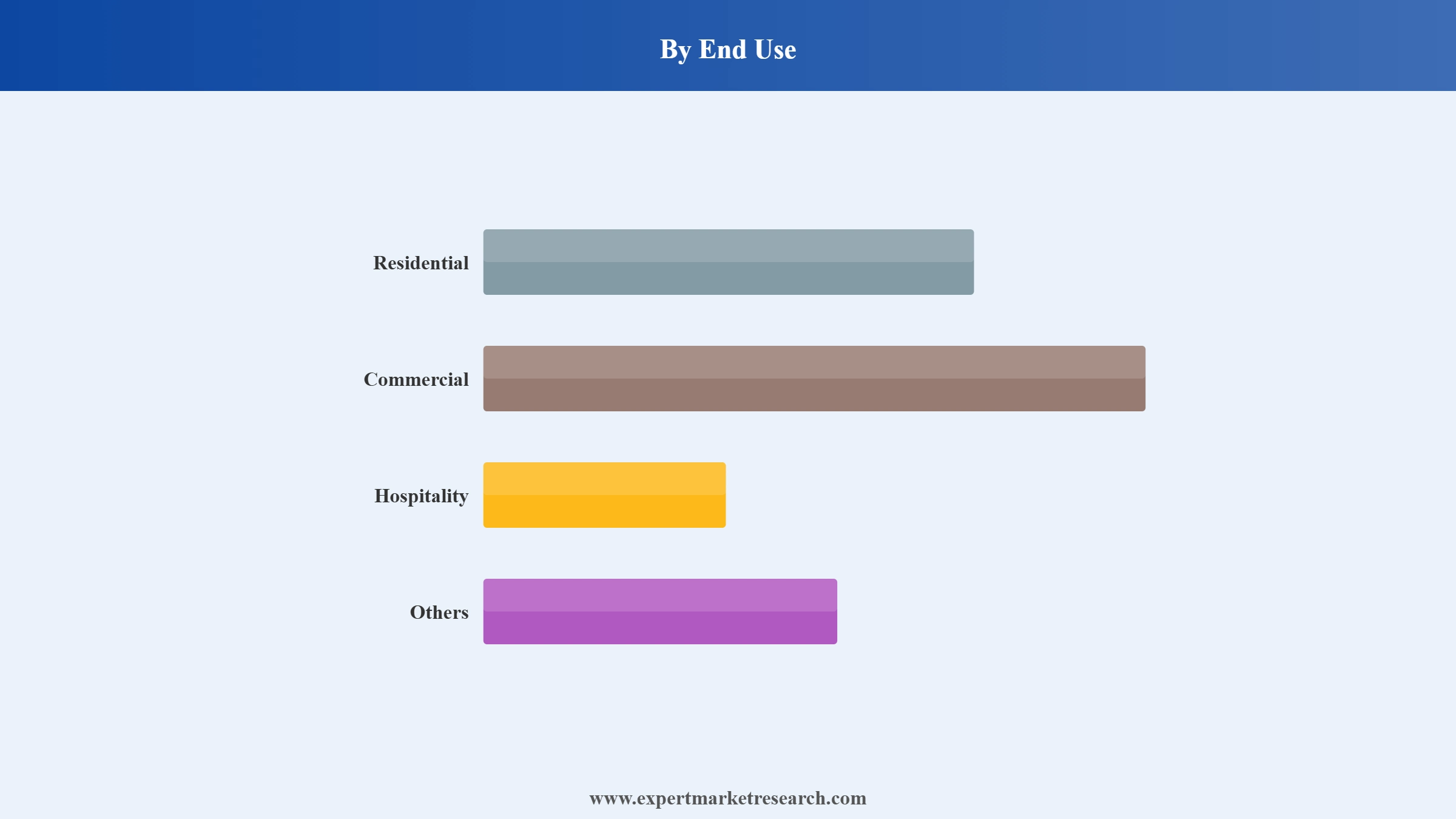
Key Insight: Residential dominates by a wide margin, and the maths is simple. Brazil's annual household formation, lifted by Minha Casa Minha Vida and middle-class urbanisation, generates millions of complete furniture purchase cycles. Social media-driven interior design culture has pulled Brazilian urban buyers further into aesthetics-led purchasing. Commercial follows as the second-largest segment, anchored by NR17 ergonomic compliance and hybrid workspace redesigns. Hospitality is the most cyclical category and responds to tourism flows, hotel construction pipelines, and broader macro conditions, but it remains strategically important because each contract involves large-volume single procurement decisions across the Brazil furniture industry.
Market Breakup by Distribution Channel
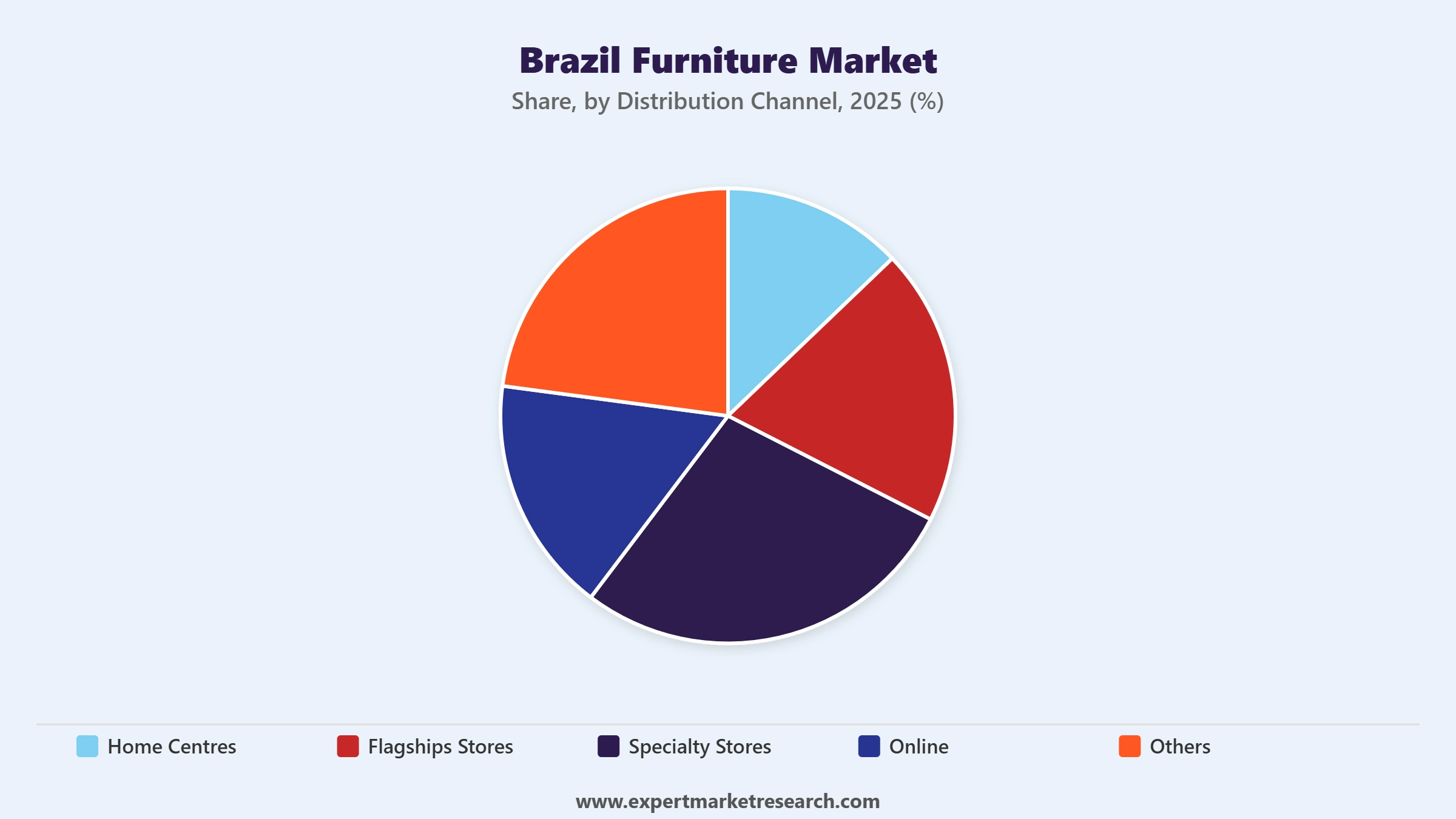
Key Insight: Specialty stores have historically been the primary distribution route for furniture in Brazil, offering curated selections and the tactile showroom experience that large-ticket purchases traditionally need. Tok and Stok's network and Saccaro's showrooms are the clearest cases. Home centres including Leroy Merlin and Casa e Construcao hold a meaningful share by combining furniture with broader renovation categories. Online is the structurally disruptive channel: Brazilian e-commerce growth is among the fastest in Latin America, and furniture specifically benefits from better logistics, AR-led product visualisation, and a generation of buyers comfortable closing large purchases digitally. Flagship stores serve a brand-building function but face rising rent pressure in Brazil's major cities.
Read more about this report - REQUEST FREE SAMPLE COPY IN PDF
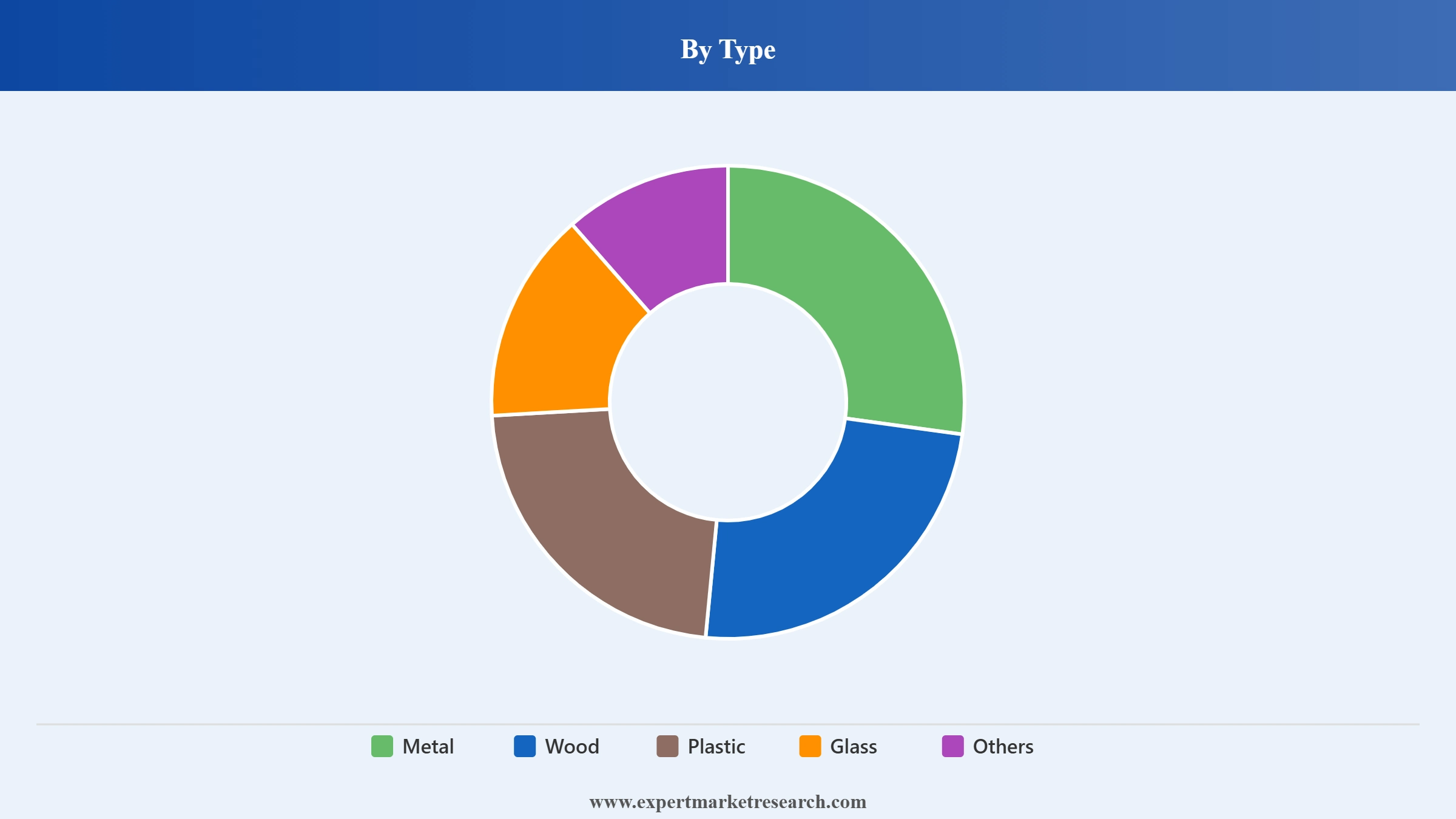
By Type, Wood dominates the market due to domestic timber abundance and cost-competitive manufacturing
Wood accounts for the largest share of the Brazil furniture market by type, with residential bedroom furniture, dining sets, and kitchen cabinetry consistently topping the revenue rankings. Local producers can offer quality wood furniture at price points that imported alternatives from Asia or Europe simply cannot match in the Brazilian retail environment, particularly given import duty structures and currency volatility that periodically widens the cost gap. The Bento Goncalves cluster in Rio Grande do Sul anchors much of the production base, and FSC-certified output is increasingly being positioned as an export differentiator rather than just a domestic supply story.
Read more about this report - REQUEST FREE SAMPLE COPY IN PDF
Metal furniture holds a meaningful but smaller share, concentrated in commercial and outdoor categories where durability, standardisation, and maintenance ease take priority over aesthetics. Plastic furniture continues to expand in outdoor and lower-price residential segments as middle class buyers invest in garden and balcony spaces, supported by raw material availability from Brazil's large petrochemical sector. Glass remains a niche but premium-priced category, particularly in decorative accent furniture, where it carries higher margins per unit across the Brazil furniture industry.
By End Use, Residential accounts for the dominant share due to housing programme activity and middle-class spending
Residential furniture commands the dominant revenue share of the Brazil furniture market, and its margin profile tends to run higher than commercial because residential buyers make more emotion-led decisions and are willing to pay for design quality and brand signalling. Within residential, bedroom and living room categories carry the highest revenue per transaction, while kitchen furniture, with its complex configuration and installation services, generates the most extended and profitable customer relationships for specialist retailers. The Minha Casa Minha Vida housing programme continues to provide a steady pipeline of new household furniture cycles, particularly across lower and middle income segments.
Read more about this report - REQUEST FREE SAMPLE COPY IN PDF
Commercial is the second-largest segment and is being reshaped by hybrid work redesigns combined with NR17 compliance requirements that mandate ergonomic standards in workplace seating and desk height. Hospitality, while smaller and more cyclical, remains strategically important because hotel and resort contracts involve large single-procurement decisions that disproportionately reward suppliers with logistics, customisation, and installation capability. In 2025, hospitality demand was lifted by post-pandemic travel recovery and continued hotel construction investment in Brazil's major cities and coastal destinations.
By Distribution Channel, Specialty Stores hold the dominant share, supported by curated selections and showroom-led purchase journeys
Specialty stores anchor the largest distribution share of the Brazil furniture market, supported by curated assortments, design guidance, and the showroom experience that large-ticket furniture buyers traditionally need before committing. Tok and Stok's national footprint and Saccaro's premium showrooms exemplify the format, drawing buyers with explicit design intent rather than impulse purchase motivation. Home centres including Leroy Merlin and Casa e Construcao capture a meaningful adjacent share by stacking furniture against broader renovation categories that attract project-led shoppers.
Read more about this report - REQUEST FREE SAMPLE COPY IN PDF
Online is the fastest-growing channel by some distance, and it is restructuring the entire Brazil furniture market trends rather than just adding a new path to purchase. Mercado Livre, Americanas, and Magazine Luiza have closed the historical gap on large-item logistics, delivery reliability, and assembly support that once kept furniture firmly anchored to physical retail. AR-led product visualisation, easier returns, and aggressive promotional cycles have all pulled high-ticket furniture sales decisively into the digital channel.
Brazil's furniture market is one of the more complex competitive environments in Latin American consumer goods. At the top sits a layer of well-known branded retailers and premium manufacturers competing on design, brand identity, and customer experience. Below that operates a vast ecosystem of regional manufacturers, many based in Rio Grande do Sul and Santa Catarina, that supply retailers and export globally while running with relatively low brand visibility in the domestic retail market.
Currency volatility and interest rate cycles create competitive dynamics that aren't present in more stable economies. When the BRL weakens, domestic manufacturers gain cost advantage over importers. When interest rates run high, as they often do, consumer credit becomes expensive and the affordable and mid-range segments get prioritised. Organised retail has increasingly moved toward own-brand and exclusive designer collections that capture margin and reduce direct price comparison with informal competitors, a structural shift that is reshaping how competitive positioning works in the Brazil furniture industry.
Founded in 1978 and headquartered in Sao Paulo, Tok and Stok is Brazil's most recognisable specialty furniture and decor retailer. The product range spans bedrooms, kitchens, living rooms, dining rooms, and garden spaces, covering mass-market price points alongside exclusive designer collaborations. Its February 2024 eco-friendly collection with Brazilian designers reinforced its sustainability positioning, and its retail network combined with strong e-commerce capability makes it one of the few domestic players operating across both physical and digital distribution at meaningful scale.
Established in 1946 and based in Rio Grande do Sul, Saccaro represents the premium and artisanal end of Brazilian furniture manufacturing. The company produces handcrafted, high-quality furniture for Brazil's premium residential market and exports through long-standing international relationships. Its competitive identity is built on design originality, material quality, and craftsmanship rather than volume. Saccaro benefits directly from ABIMOVEL export programmes, given its design credentials make it a natural ambassador for Brazilian furniture at international trade fairs.
Founded in 1965 and headquartered in Porto Alegre, Lojas Renner is primarily a fashion and apparel retailer, but its homeware and decor offering places it firmly within the furniture and interior goods market as a major distribution channel for accessory furniture and home decor items. Its relevance to the Brazil furniture market rests on its retail scale, middle-class customer base, and aggressive online expansion, which has brought furniture-adjacent decor products to a national audience well beyond traditional furniture buyers.
Dalla Costa is a Rio Grande do Sul-based manufacturer with a strong presence across the residential and commercial furniture segments. The company's competitive positioning rests on manufacturing depth, a broad product range, and its ability to service both domestic retailers and international export orders. Dalla Costa is among the manufacturers that have benefited materially from the Brazilian Furniture Project's international promotion programme, and its products have reached buyers across European and North American markets through coordinated trade fair participation.
Other key players in the market include Grupo Sierra, Via Varejo Group, RTA Products, LLC, and Others.
*Please note that this is only a partial list; the complete list of key players is available in the full report. Additionally, the list of key players can be customized to better suit your needs.*
Get the latest perspective on the Brazil furniture market with our 2026 report. Track the rise of e-commerce, the export expansion of Brazilian premium brands, and the segment-level shifts reshaping demand across residential, commercial, and hospitality. Whether you are a manufacturer planning a digital channel pivot, an investor evaluating retail consolidation, or an importer assessing supply opportunities, the report delivers the clarity you need. Download your free sample now and explore the opportunities reshaping the thriving Brazil furniture industry.
Vietnam Kitchen Furniture Market
United States Office Furniture Market
United States Outdoor Furniture Market
Latin America Baby Furniture Market
Colombia Furniture Market


Upto 15% Off
USD
$2499 $2249
$3999 $3599
$4999 $4249
$5999 $5099


*While we strive to always give you current and accurate information, the numbers depicted on the website are indicative and may differ from the actual numbers in the main report. At Expert Market Research, we aim to bring you the latest insights and trends in the market. Using our analyses and forecasts, stakeholders can understand the market dynamics, navigate challenges, and capitalize on opportunities to make data-driven strategic decisions.*
At 2025, the market reached an approximate value of USD 19.43 Billion.
The market is projected to grow at a CAGR of 4.20% between 2026 and 2035.
The market is estimated to witness a healthy growth in the forecast period of 2026-2035 to reach a value of USD 29.32 Billion by 2035.
The widespread usage of furniture in the commercial and residential sectors, growing knowledge about furniture options among the population, and increasing investments by companies towards incorporation of improved office furniture are the major drivers of the market.
The key trends in the market include the emerging e-commerce sector fuelling the sale of furniture, surging use of furniture for home decor purposes, and growing creativity and innovation by the local furniture manufacturers in Brazil.
Metal, wood, plastic, and glass, among others, are the different types of furniture in the market.
Residential, commercial, and hospitality, among others, are the significant end uses of the market.
Furniture is defined as movable or fixed components of a space which are used to bolster the comfort of the occupants. Table, chair, bed, sofa, and wardrobe, among others, are examples of furniture.
Furniture is considered as a long-term asset, owing to its reliability, durability, and low maintenance cost.
The key players in the market include Lojas Renner SA, Tok&Stok, Grupo Sierra, Saccaro, Via Varejo Group, RTA Products, LLC, Dalla Costa Ltda, and Others.
Explore our key highlights of the report and gain a concise overview of key findings, trends, and actionable insights that will empower your strategic decisions.
| REPORT FEATURES | DETAILS |
| Base Year | 2025 |
| Historical Period | 2019-2025 |
| Forecast Period | 2026-2035 |
| Scope of the Report |
Historical and Forecast Trends, Industry Drivers and Constraints, Historical and Forecast Market Analysis by Segment:
|
| Breakup by Type |
|
| Breakup by End Use |
|
| Breakup by Distribution Channel |
|
| Market Dynamics |
|
| Trade Data Analysis |
|
| Competitive Landscape |
|
| Companies Covered |
|
Datasheet
One User
USD 2,499
USD 2,249
tax inclusive*
Single User License
One User
USD 3,999
USD 3,599
tax inclusive*
Five User License
Five User
USD 4,999
USD 4,249
tax inclusive*
Corporate License
Unlimited Users
USD 5,999
USD 5,099
tax inclusive*
*Please note that the prices mentioned below are starting prices for each bundle type. Kindly contact our team for further details.*
Flash Bundle
Small Business Bundle
Growth Bundle
Enterprise Bundle
*Please note that the prices mentioned below are starting prices for each bundle type. Kindly contact our team for further details.*
Flash Bundle
Number of Reports: 3
20%
tax inclusive*
Small Business Bundle
Number of Reports: 5
25%
tax inclusive*
Growth Bundle
Number of Reports: 8
30%
tax inclusive*
Enterprise Bundle
Number of Reports: 10
35%
tax inclusive*
How To Order

Select License Type
Choose the right license for your needs and access rights.

Click on ‘Buy Now’
Add the report to your cart with one click and proceed to register.

Select Mode of Payment
Choose a payment option for a secure checkout. You will be redirected accordingly.
Strategic Solutions for Informed Decision-Making
Gain insights to stay ahead and seize opportunities.

Get insights & trends for a competitive edge.

Track prices with detailed trend reports.

Analyse trade data for supply chain insights.

Leverage cost reports for smart savings

Enhance supply chain with partnerships.

Connect For More Information
Our expert team of analysts will offer full support and resolve any queries regarding the report, before and after the purchase.
Our expert team of analysts will offer full support and resolve any queries regarding the report, before and after the purchase.
We employ meticulous research methods, blending advanced analytics and expert insights to deliver accurate, actionable industry intelligence, staying ahead of competitors.
Our skilled analysts offer unparalleled competitive advantage with detailed insights on current and emerging markets, ensuring your strategic edge.
We offer an in-depth yet simplified presentation of industry insights and analysis to meet your specific requirements effectively.




