

Consumer Insights
Uncover trends and behaviors shaping consumer choices today
Procurement Insights
Optimize your sourcing strategy with key market data
Industry Stats
Stay ahead with the latest trends and market analysis.
The global bricks market size reached around USD 1789.19 Billion in 2025. The market is projected to grow at a CAGR of 3.00% between 2026 and 2035 to reach nearly USD 2404.52 Billion by 2035.
Compound Annual Growth Rate
3%
Value in USD Billion
2026-2035
| Global Bricks Market Report Summary | Description | Value |
| Base Year | USD Billion | 2025 |
| Historical Period | USD Billion | 2019-2025 |
| Forecast Period | USD Billion | 2026-2035 |
| Market Size 2025 | USD Billion | 1789.19 |
| Market Size 2035 | USD Billion | 2404.52 |
| CAGR 2019-2025 | Percentage | XX% |
| CAGR 2026-2035 | Percentage | 3.00% |
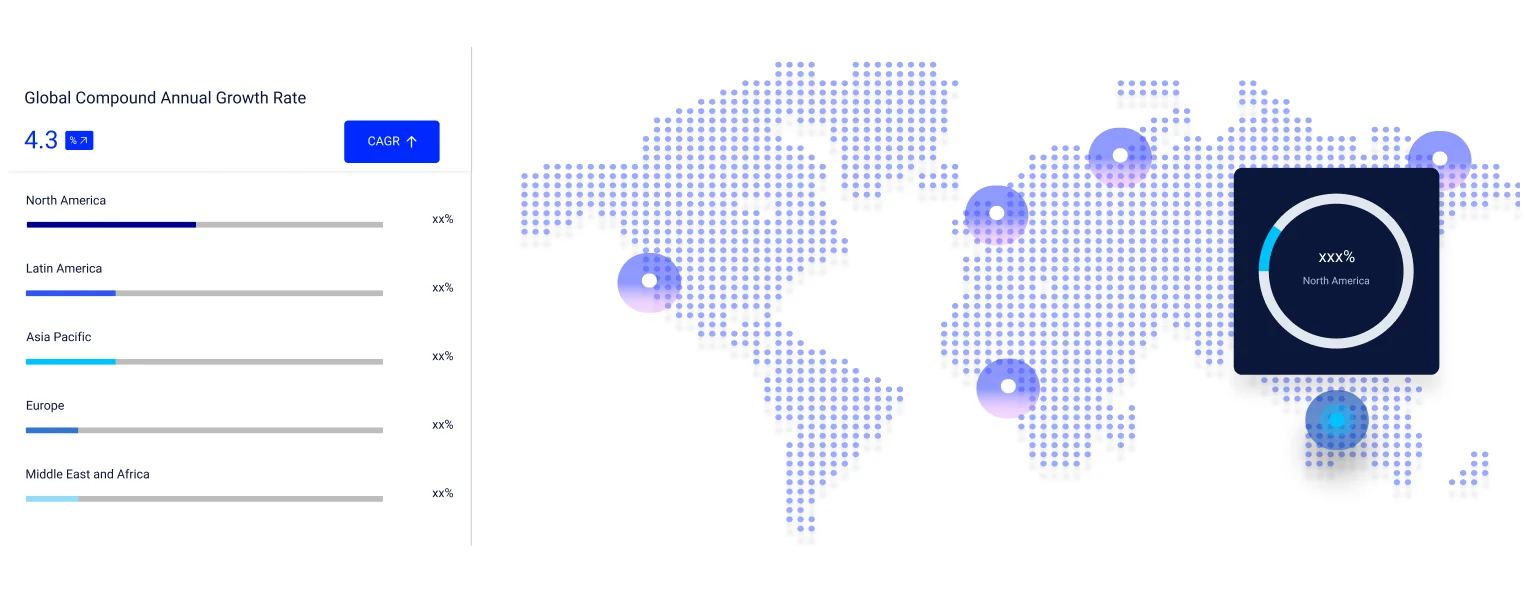
| CAGR 2026-2035 - Market by Region | Asia Pacific | 3.5% |
| CAGR 2026-2035 - Market by Country | India | 3.6% |
| CAGR 2026-2035 - Market by Country | China | 3.4% |
| CAGR 2026-2035 - Market by Size | Jumbo | 3.7% |
| CAGR 2026-2035 - Market by Application | Buildings | 3.8% |
| Market Share by Country 2025 | Mexico | 2.2% |
As per the United Nations Environment Programme, worldwide investments in making buildings more energy efficient surged by 14% in 2021 and reached USD 285 billion. Since 2021, 17 countries have either updated their national building codes or developed new guidelines for the construction of energy-efficient buildings, including the United Kingdom, Germany, Sweden, and France. As a part of global decarbonisation efforts, the UNEP suggests that all G20 nations and nearly 50% all remaining countries worldwide must establish new building energy codes which align with zero emission standards before 2030. It also suggests that countries should reduce their building energy intensity by 5% every year till 2030. This is expected to increase the bricks market revenue as bricks are energy-efficient and are considered as sustainable construction material in developing residential and commercial properties.
The implementation of large-scale infrastructure projects has also increased the demand for automated brick making machines, which is one of the major market trends. These machines are capable of self-producing large volumes of bricks, thereby reducing labour costs and enhancing the efficiency of construction operations. The integration of AI capabilities into brick making machines is expected to further enhance their productivity and reduce the risk of machine downtime by preventing sudden breakdowns. This is expected to fuel the bricks market development over the forecast period.
Technology and Action for Rural Advancement (TARA) and InnoCSR introduced the Good Bricks System to brick manufacturers in West Bengal, India, through a seminar in Howrah on August 26, 2026. Around 60 brick-kiln owners, operators and industry representatives participated. The technology produces non-fired bricks using soil stabilisation, eliminating the fossil-fuel firing stage associated with conventional bricks. The initiative highlights growing efforts to introduce lower-emission production methods into traditional brick manufacturing markets, particularly where kiln operators face increasing pressure to reduce fuel consumption and environmental impacts.
Forterra reported continued progress in expanding its brick-slip business during July 2026, with its Accrington facility supplying extruded brick slips to its first projects. The company is also investing approximately £2 million in a dedicated brick-slip cutting facility at its Measham site. The facility is expected to become operational in early 2027 and will complement extruded production with cut brick slips. The investment reflects manufacturers' expansion into lightweight façade and architectural brick-slip applications alongside conventional masonry products.
Wienerberger launched a circular-economy pilot in Vienna using soil excavated during the city's U2 subway extension as a raw material for brick production. The project is processing approximately 35,000 cubic metres of excavated material into around 2.8 million bricks, enough for approximately 1,000 single-family homes. The material is transported about nine kilometres to Wienerberger's Hennersdorf plant, where it undergoes quality testing before being processed and fired. The project reduces the need for newly extracted clay while diverting construction-excavation material from landfill.
Wienerberger secured UK government-backed funding for a £6 million conversion of its Denton brickworks in Greater Manchester to green-hydrogen firing. The project will retrofit two tunnel kilns, replacing 224 natural-gas burners and installing hydrogen supply and control infrastructure. One kiln is targeted for hydrogen operation by autumn 2027, with full conversion planned from autumn 2028. Wienerberger expects the completed transition to reduce emissions at the site by more than 11,600 tonnes of CO₂ annually, demonstrating the potential for hydrogen to decarbonise high-temperature brick firing.
Brick manufacturers are increasingly targeting kiln emissions through electrification, alternative fuels and hydrogen rather than relying solely on incremental efficiency improvements. This is particularly important because conventional clay bricks require firing at temperatures above 1,000°C. The UK Brick Development Association notes that around 95% of the sector’s electricity use was already sourced from certified renewable electricity or onsite generation, while almost 100% of production was covered by ISO 50001 energy-management systems in 2022. More recent projects are moving toward deeper fuel switching, including hydrogen-fired kilns, indicating that decarbonisation is shifting from operational optimisation toward fundamental changes in brick manufacturing technology.
Circular sourcing is emerging as an important strategy for reducing dependence on virgin clay and limiting construction waste. In 2026, Wienerberger demonstrated this approach in Vienna by processing approximately 35,000 cubic metres of excavated soil into around 2.8 million bricks, equivalent to material for roughly 1,000 single-family homes. The project uses clay-containing excavation material from subway construction as a substitute for newly extracted raw material. At the building level, attention is also shifting toward brick recovery and reuse, with industry guidance increasingly addressing deconstruction, testing and performance verification of reclaimed bricks.
Automation is moving beyond factory production into brick installation, particularly as construction companies face skilled-labour shortages and pressure to improve project productivity. Wienerberger’s WLTR masonry robot has progressed from a research project into commercial deployment across Europe. As of April 2026, 12 robots had been deployed, with the technology responsible for approximately 40,000 m² of masonry and supported by 13 Robot-Ready Blocks produced across six countries. Such systems automate repetitive and precision-intensive bricklaying activities while allowing workers to operate and supervise the equipment. This is creating a stronger connection between brick manufacturers, automated block formats and digitally enabled construction workflows, thereby boosting the bricks market dynamics and trends.
Sustainability requirements are increasingly extending from manufacturing into construction procurement, encouraging developers and architects to evaluate bricks through whole-life environmental performance. Environmental Product Declarations (EPDs) are becoming particularly relevant because they provide lifecycle information that can be incorporated into whole-life carbon assessments. The Brick Development Association identifies EPDs as a key source for construction-product environmental data and highlights EN 15804 as a methodology for consistent assessment. This is encouraging manufacturers to improve product-level environmental documentation while giving project teams greater visibility into embodied carbon, sourcing and lifecycle performance when comparing masonry materials.
Brick consumption remains strongly connected to housing and construction activity, making manufacturers increasingly sensitive to regional changes in building output. Recent UK data illustrates this volatility: seasonally adjusted brick deliveries fell 16.3% year-on-year in June 2026 and 11.1% from May to June. At the same time, the UK construction outlook shows divergent performance across end-use sectors, with new infrastructure expected to grow 2.3% in 2026, while private housing is forecast to contract by 10.0%. These differences are encouraging brick producers to monitor infrastructure, renovation and non-residential applications alongside traditional housebuilding demand.
The increasing preference for calcium silicate bricks among construction companies is expected to favourably shape the bricks market outlook. This is because the use of calcium silicate bricks can reduce the overall production costs by 40%, minimise the application of mortar, and lower wastage of products. Moreover, coloured calcium silicate bricks do not require wall finishing and they enhance the accessibility and comfort of designing buildings for architects. They are also soundproof and reduce the effect of solar radiation on exposed walls.
The EMR’s report titled “Global Bricks Market Report and Forecast 2026-2035” offers a detailed analysis of the market based on the following segments:
Market Breakup by Brick Type
Market Breakup by Size
Market Breakup by Application
Market Breakup by Region
| CAGR 2026-2035 - Market by | Country |
| India | 3.6% |
| China | 3.4% |
| Brazil | 3.3% |
| Saudi Arabia | 3.2% |
| USA | 2.7% |
| Canada | XX% |
| UK | 2.6% |
| Germany | XX% |
| France | XX% |
| Japan | XX% |
| Australia | XX% |
| Mexico | XX% |
| Italy | 2.3% |
Based on region, the market is segmented into North America, Europe, Asia Pacific, Latin America, and Middle East and Africa. Over the forecast period of 2026-2035, the Asia Pacific is expected to grow at a CAGR of 3.5% because of the expansion of the construction industry in countries like India, China, and Japan.
Major players in the bricks market are expected to adopt AI-based automated machines for ensuring high-quality brick production while preventing unforeseen losses due to machine breakdown.
Glen-Grey Corporation was established in 1890. Its primary headquarter is situated in Pennsylvania, United States. It renowned for brands like are Sioux City Brick, Lawrenceville Brick, and Cushwa Brick, and is engaged in manufacturing a wide range of construction materials.
Forterra Building Products Ltd. was established in 1960. Its primary headquarter is situated in Peterborough, United Kingdom. As per bricks market analysis, it is primarily engaged in manufacturing bricks and blocks, among other construction materials.
General Shale, Inc. was established in 1928. Its primary headquarter is situated in Tennessee, United States. It supplies various masonry products for residential buildings, commercial structures, and speciality architectural projects.
Taylor Clay Products Inc. was established in 1832. It primary headquarter is situated in North Carolina, United States. It is involved in the production of wholesale building materials, such as bricks and glazed tiles.
*Please note that this is only a partial list; the complete list of key players is available in the full report. Additionally, the list of key players can be customized to better suit your needs.*
Other key players included in the bricks market report are Wienerberger AG, Boral Ltd., Ibstock Brick Ltd., Acme Brick Company, Brickworks Limited, CRH plc, among others.


Upto 15% Off
USD
$2499 $2249
$3999 $3599
$4999 $4249
$5999 $5099


*While we strive to always give you current and accurate information, the numbers depicted on the website are indicative and may differ from the actual numbers in the main report. At Expert Market Research, we aim to bring you the latest insights and trends in the market. Using our analyses and forecasts, stakeholders can understand the market dynamics, navigate challenges, and capitalize on opportunities to make data-driven strategic decisions.*
In 2025, the market reached an approximate value of USD 1789.19 Billion.
The market is projected to grow at a CAGR of 3.00% between 2026 and 2035.
The market is estimated to witness healthy growth in the forecast period of 2026-2035 to reach a value of around USD 2404.52 Billion by 2035.
Key trends aiding the market expansion are the increasing construction of multi storied buildings, need to combat rising temperatures, reclamation of brick waste, and growth of additive manufacturing.
The different types of bricks in the market are clay, concrete, calcium silicate, fly ash, and stone.
The different applications of bricks in the market are buildings, path, and parterre, among others.
Key market players are Wienerberger AG, Glen-Gery Corporation, Forterra Building Products Ltd., Boral Ltd., Ibstock Brick Ltd., Acme Brick Company, Brickworks Limited, CRH plc, General Shale, Inc., and Taylor Clay Products Inc., among others.
Explore our key highlights of the report and gain a concise overview of key findings, trends, and actionable insights that will empower your strategic decisions.
| REPORT FEATURES | DETAILS |
| Base Year | 2025 |
| Historical Period | 2019-2025 |
| Forecast Period | 2026-2035 |
| Scope of the Report |
Historical and Forecast Trends, Industry Drivers and Constraints, Historical and Forecast Market Analysis by Segment:
|
| Breakup by Brick type |
|
| Breakup by Size |
|
| Breakup by Application |
|
| Breakup by Region |
|
| Market Dynamics |
|
| Competitive Landscape |
|
| Companies Covered |
|
Datasheet
One User
USD 2,499
USD 2,249
tax inclusive*
Single User License
One User
USD 3,999
USD 3,599
tax inclusive*
Five User License
Five User
USD 4,999
USD 4,249
tax inclusive*
Corporate License
Unlimited Users
USD 5,999
USD 5,099
tax inclusive*
*Please note that the prices mentioned below are starting prices for each bundle type. Kindly contact our team for further details.*
Flash Bundle
Small Business Bundle
Growth Bundle
Enterprise Bundle
*Please note that the prices mentioned below are starting prices for each bundle type. Kindly contact our team for further details.*
Flash Bundle
Number of Reports: 3
20%
tax inclusive*
Small Business Bundle
Number of Reports: 5
25%
tax inclusive*
Growth Bundle
Number of Reports: 8
30%
tax inclusive*
Enterprise Bundle
Number of Reports: 10
35%
tax inclusive*
How To Order

Select License Type
Choose the right license for your needs and access rights.

Click on ‘Buy Now’
Add the report to your cart with one click and proceed to register.

Select Mode of Payment
Choose a payment option for a secure checkout. You will be redirected accordingly.
Strategic Solutions for Informed Decision-Making
Gain insights to stay ahead and seize opportunities.

Get insights & trends for a competitive edge.

Track prices with detailed trend reports.

Analyse trade data for supply chain insights.

Leverage cost reports for smart savings

Enhance supply chain with partnerships.

Connect For More Information
Our expert team of analysts will offer full support and resolve any queries regarding the report, before and after the purchase.
Our expert team of analysts will offer full support and resolve any queries regarding the report, before and after the purchase.
We employ meticulous research methods, blending advanced analytics and expert insights to deliver accurate, actionable industry intelligence, staying ahead of competitors.
Our skilled analysts offer unparalleled competitive advantage with detailed insights on current and emerging markets, ensuring your strategic edge.
We offer an in-depth yet simplified presentation of industry insights and analysis to meet your specific requirements effectively.




