

Consumer Insights
Uncover trends and behaviors shaping consumer choices today
Procurement Insights
Optimize your sourcing strategy with key market data
Industry Stats
Stay ahead with the latest trends and market analysis.
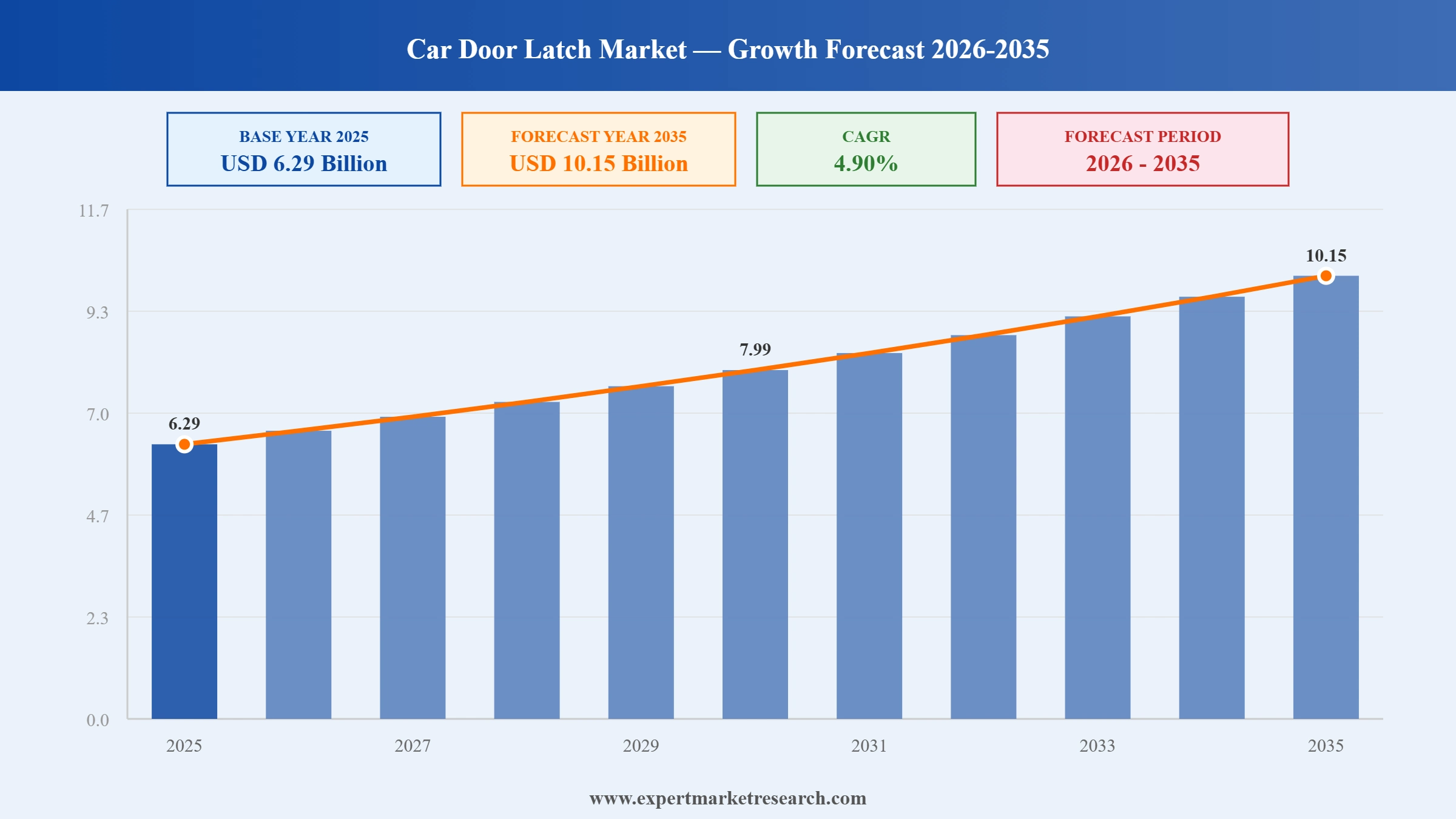
The global car door latch market attained a value of USD 6.29 Billion in 2025 and is projected to expand at a CAGR of 4.90% through 2035. The market is further expected to achieve USD 10.15 Billion by 2035. The increasing integration of electronic and smart latching systems in modern vehicles is supporting the global car door latch market. Automakers are adopting electronically controlled latches that integrate with keyless entry, central locking, vehicle security, and connected vehicle systems. The shift toward EVs and software-defined vehicle architectures is further accelerating demand for compact, intelligent latch assemblies.
Demand is being shaped by rising vehicle production, stricter safety expectations, electrification, keyless entry, powered closures, and the integration of sensors, actuators, and electronic control units. Magna notes that modern vehicle access is evolving from an individual hardware function into a coordinated system involving latches, handles, sensors, motor control, obstacle detection, and software, thereby boosting the car door latch market value.
A notable innovation is software-based obstacle detection during the latch cinching process, designed to improve safety in powered vehicle closures. In August 2026, Magna described its Cinch Obstacle Detection Algorithm (CODA), which analyses electrical and positional signals during cinching and compares actual movement with an expected travel profile. The system can identify abnormal resistance caused by potential obstructions while accounting for variables such as temperature, vehicle orientation, and door-seal characteristics. Integrated with Magna’s SmartLatch™ and Haptronik™ technologies, CODA represents a shift toward software-defined latch functionality, potentially improving powered-door safety and enabling more intelligent vehicle-access systems.
One of the major problems faced by the car door latch industry players is that of the safe operation of the latch in case of emergencies due to the increased use of electronic latches. There have been a number of recalls recently due to safety problems in using the electronic door handles in situations in case of electrical power loss. This problem can be countered through the use of redundant power supply, visible mechanical override, crash tests, waterproof and corrosion-resistant designs, and verification of the electronics systems continuously. Cybersecurity and functional safety engineering can be emphasized because of the use of software in latch systems, thus aiming more towards the car door latch market developments.
Read more about this report - REQUEST FREE SAMPLE COPY IN PDF
Magna highlighted software-driven advances in vehicle access, including intelligent control of powered doors and latch systems. The company described how software can enhance vehicle-access functionality and safety while working with existing electromechanical hardware. The development is relevant to the car door latch market because it supports the transition toward software-defined, electronically controlled closure systems
Minebea AccessSolutions France published a U.S. patent application for a vehicle door latch with an electrical release motor and gear mechanism. The design allows the opening lever to disengage from the electrical gear wheel, enabling independent movement for emergency operation. This development supports the market’s shift toward e-release latches with mechanical fail-safe functionality, addressing safety requirements as electronic door-latch adoption increases.
In July 2026, a Kiekert AG patent publication detailed a motor-vehicle door lock equipped with an electromotive drive and an integrated electrical emergency power source. The backup power source is designed to actuate the lock when the vehicle's primary electrical supply is unavailable. This directly addresses fail-safe operation and supports the development of safer electronic door-latching systems, boosting the trends in the car door latch market.
STRATTEC introduced a new brand identity highlighting its expanded positioning as a systems-level automotive access supplier. Its announcement specifically highlighted liftgate, decklid, and hood latches, alongside access technologies. The initiative reflects greater emphasis on engineered closure systems and stronger OEM relationships, supporting opportunities for latch suppliers across increasingly sophisticated vehicle platforms
Due to the software-defined vehicle trend, mechatronic latches capable of supporting ECU, actuator and sensor integration, and CAN/LIN connectivity have become increasingly popular. Magna's SmartLatch places the ECU inside the side-door latch which allows for fully electric access, detecting and responding to obstacles, and synchronized power closure. This kind of technology is mostly suited for high-end vehicles, electric cars, connected cars and even luxury SUVs, thus affecting the car door latch market dynamics and trends.
Electronic door systems are driving greater emphasis on mechanical redundancy and emergency access. China’s planned 2027 requirement for mechanically operated interior and exterior door releases illustrates regulatory influence on latch design. Recent electronic door-handle recalls have further highlighted egress risks, encouraging manufacturers to combine electronic convenience with reliable mechanical release mechanisms.
EV architectures are supporting compact, lightweight, and integrated latch systems as automakers adopt flush handles, powered closures, and centralized electronics. Magna identifies electrification and software-defined architectures as key forces reshaping vehicle access. Suppliers combining mechanical latching, electronic actuation, sensing, and control can capture higher component value while offering modular solutions across diverse EV platforms, thereby boosting the trends in the car door latch market.
Powered tailgates, liftgates, and trunk lids are making latches for vehicles suitable in varied application areas. Kiekert's trunk latch system for 2026 includes a fully automatic opening and tightening function, adjustable speeds by gear ratios, and more silent operation. An increasing number of vehicle models with power operated tail and trunk gates are SUVs crossovers luxury vehicles, and also EVs. This development is bringing in modular latch systems as a must-have for OEM automotive platforms of various types to be compatible with a new range of powered closure systems.
Automakers increasingly favor pre-validated door modules combining latches with windows, mirrors, theft protection, and electronic controls. Brose and Kiekert illustrate this shift through integrated and pre-assembled latch solutions. Such architectures reduce OEM integration requirements while increasing supplier responsibility for testing, electronics compatibility, durability, and assembly, creating stronger competitive advantages for technologically capable suppliers.
The Expert Market Research’s report titled "Car Door Latch Market Report and Forecast 2026-2035” offers a detailed analysis of the market based on the following segments:
Market Breakup by Lock Type
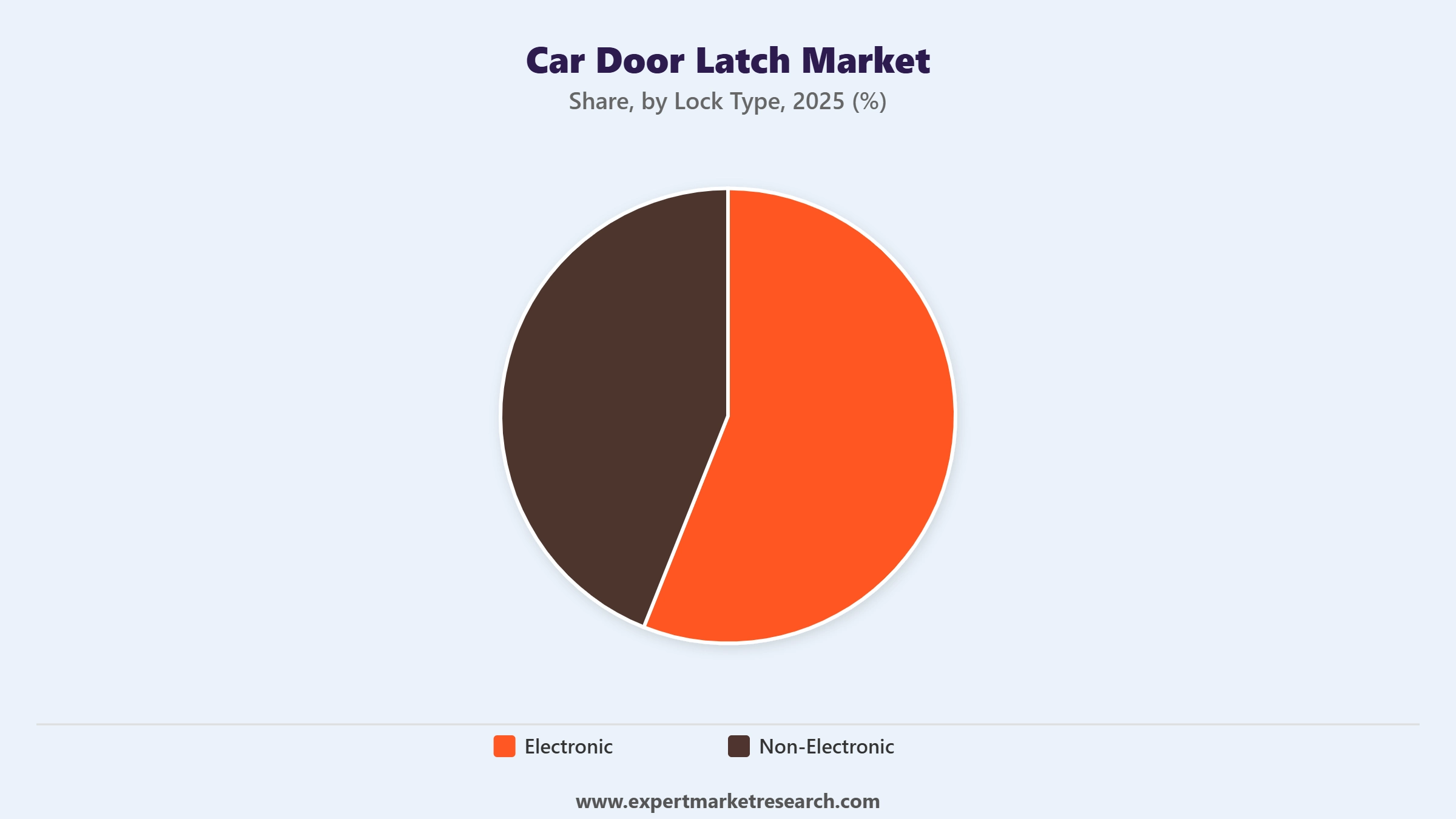
Key Insight: By lock type, electronic latches are gaining traction as integrated ECUs, sensors, power release, and obstacle detection become embedded in vehicle-access systems. Magna’s SmartLatch, for example, electronically controls side-door latch functions and supports integration with broader access architectures. Non-electronic latches remain relevant where mechanically dependable operation and emergency release are priorities, particularly as China’s 2027 requirements reinforce mechanical access provisions, thereby opening up new opportunities and boosting the growth of the car door latch market.
Market Breakup by Vehicle Type
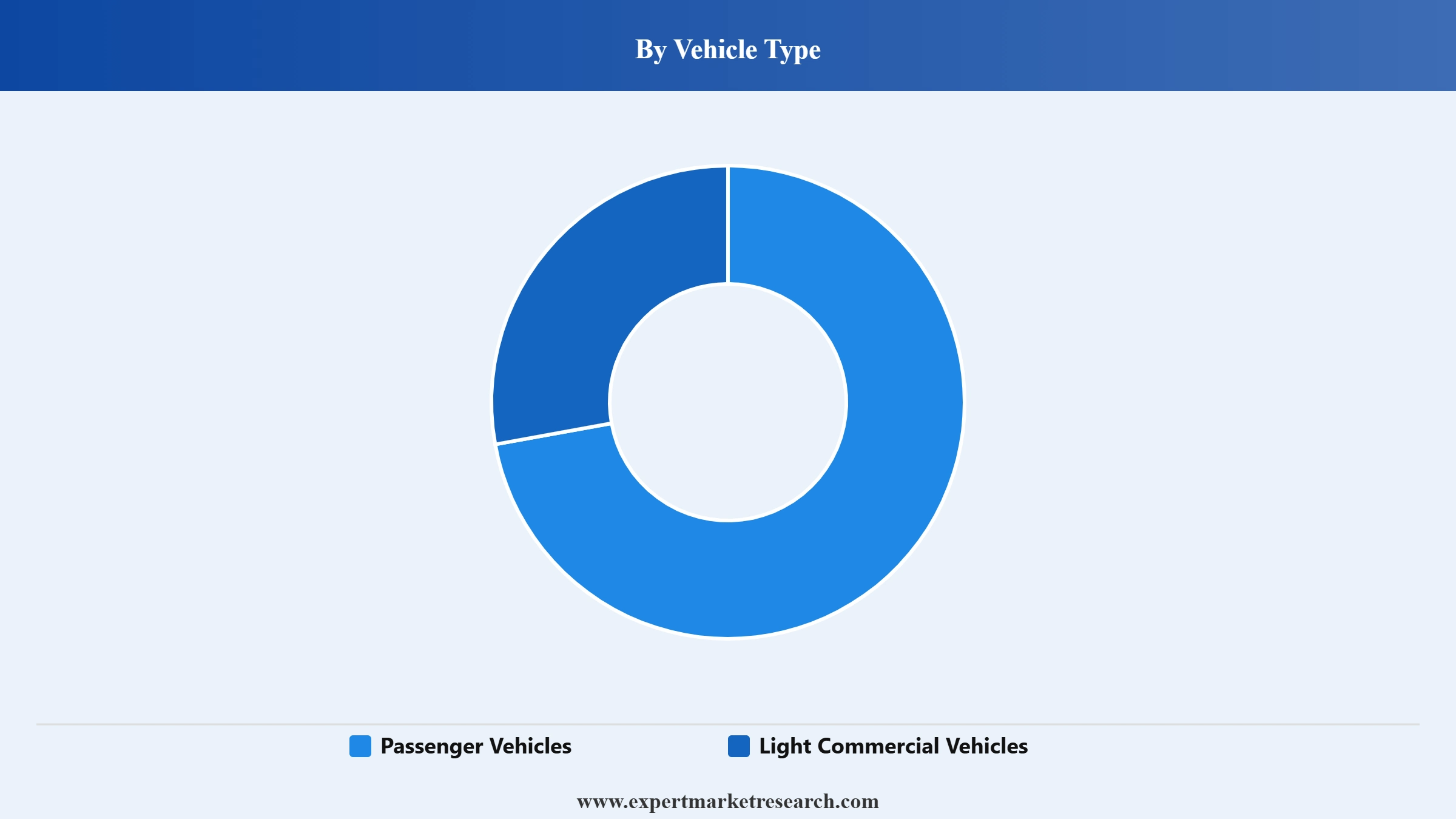
Key Insight: By vehicle type, passenger vehicles are gaining traction as SUVs, EVs, and premium models increasingly incorporate electronic latches, flush handles, powered closures, and integrated access systems. Recent safety scrutiny of electronic door handles across 4.3 million vehicles in China underscores the scale of passenger-car deployment. Light commercial vehicles are supporting demand for robust latch systems designed for frequent cargo access, fleet use, and demanding operating cycles.
Market Breakup by Application
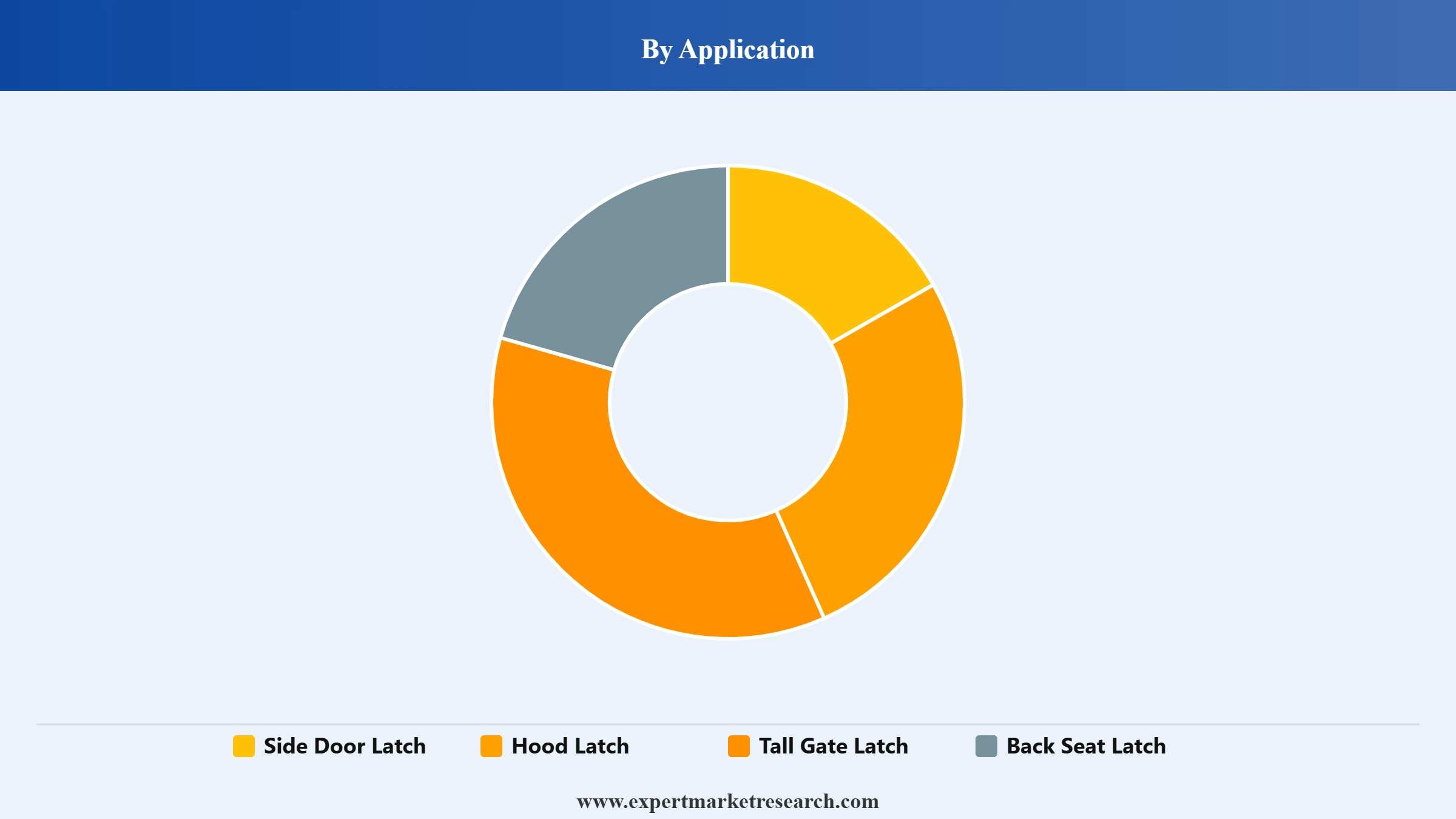
Key Insight: By application, side door latches are becoming popular with OEMs incorporating electronic control, power release, cinching, and object sensing at entry points. Magna has come up with the SmartLatch, which brings together the electronic control unit and side-door latching, with its overall product range covering electronic functionality and motors. The tailgate latches continue to develop in relation to their electronic opening and closing, where Kiekert has developed a modular family of trunk latches for the year 2026 with electric opening by motor.
Market Breakup by Sales Channel
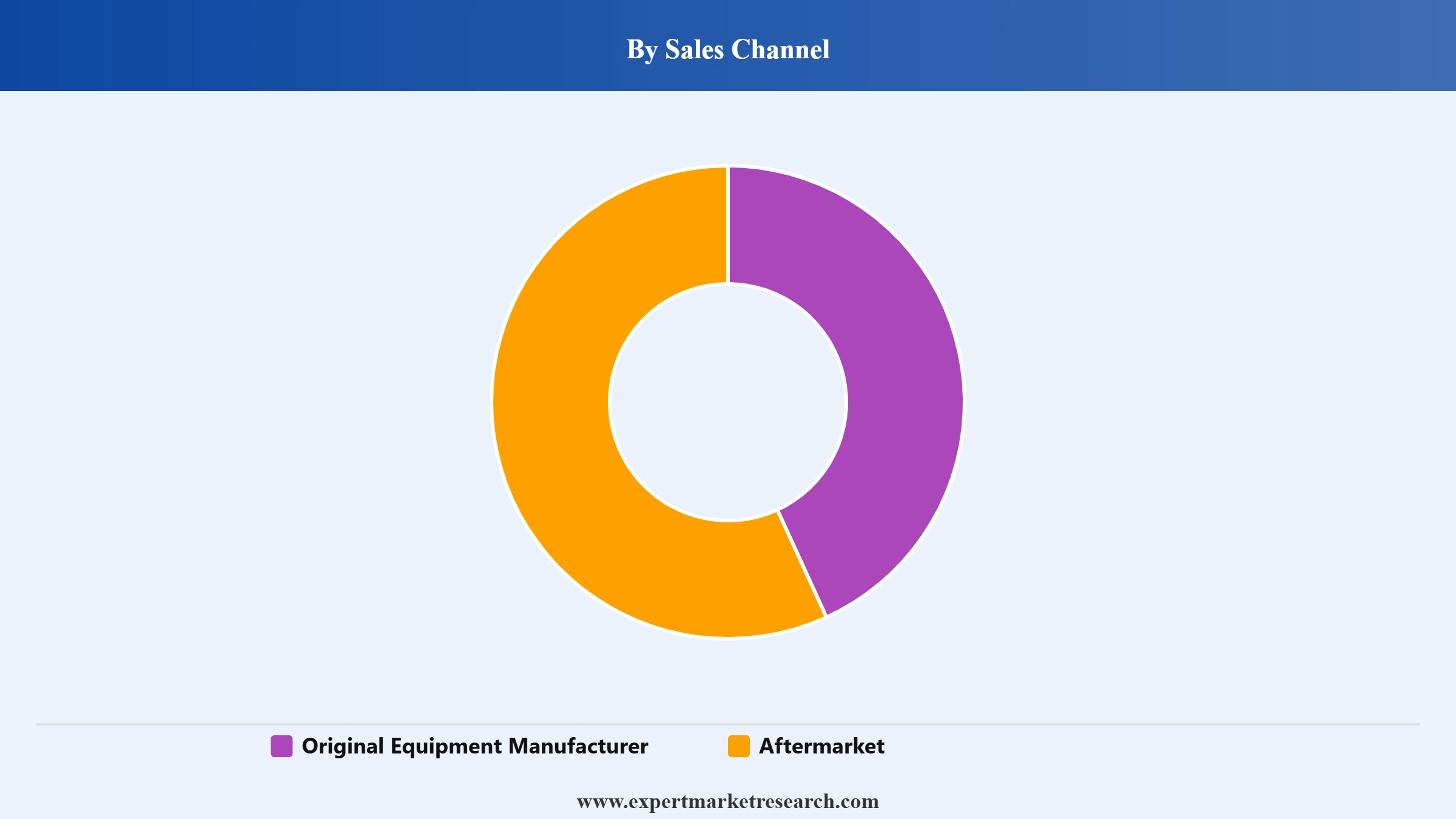
Key Insight: Based on the distribution channel, OEM requirements are becoming more popular since automobile manufacturers are sourcing latch modules that incorporate electronic actuation and sensors, as well as compatibility with the vehicle network, from Tier-1 manufacturers. For example, Brose and Magna are companies providing door system solutions to OEMs. On the other hand, aftermarket requirements are met through the requirement for replacement parts where Dorman provides vehicle-specific latch-and-actuator replacement kits.
Market Breakup by Region
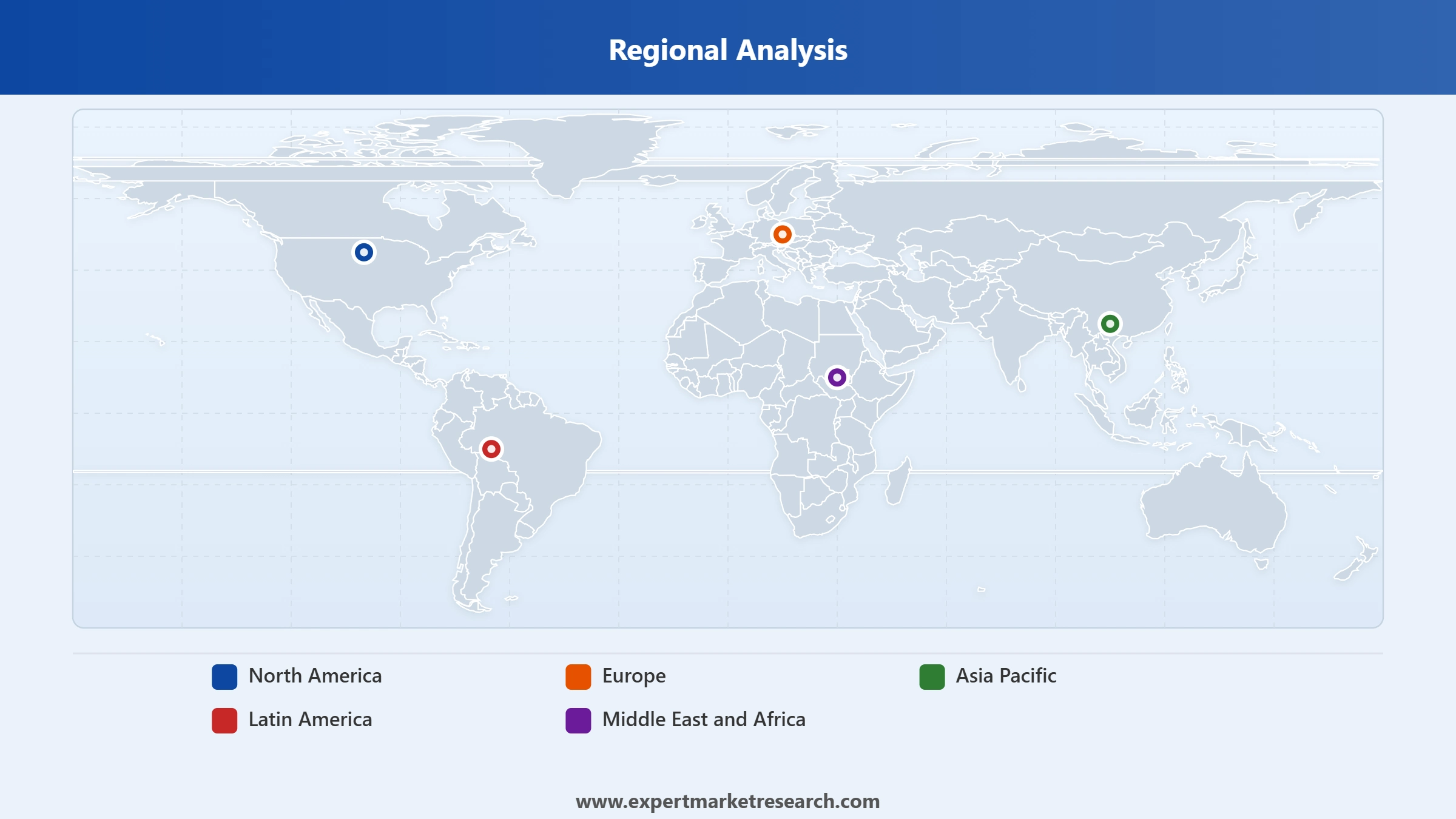
Key Insight: By region, Asia Pacific is gaining traction as China’s EV production base and India’s expanding automotive manufacturing ecosystem support adoption of electronic and mechatronic latches. North America benefits from strong SUV, pickup, and premium-vehicle penetration, while Europe is advancing through EV adoption and sophisticated vehicle-access architectures. Latin America is supported by vehicle assembly and replacement demand, whereas the Middle East and Africa present opportunities in premium SUVs and imported vehicles, where electronically controlled access is increasingly paired with durability and mechanical emergency-release requirements.
By lock type, electronic latches dominate as vehicles increasingly adopt connected, keyless access systems
Electronic latches remain the dominant lock type as automakers increasingly connect access hardware with vehicle electronics. The technology is particularly suited to keyless entry, powered opening, theft protection, and digital vehicle architecture. However, China’s 2026 recall of around 4.3 million vehicles over electronic door-handle emergency-release concerns is pushing suppliers to improve fail-safe mechanical overrides and clearly identifiable emergency mechanisms within electronically controlled systems. Such developments will thus boost the car door latch market dynamics and trends in the long run.
Read more about this report - REQUEST FREE SAMPLE COPY IN PDF
Electronic latches are advancing rapidly as automakers move beyond conventional central locking toward electronically managed access. The expansion is especially visible in Chinese EVs, where flush handles and electrically actuated access have become increasingly common. The recall involving Tesla, Xiaomi, Leapmotor, Xpeng, and Geely demonstrates how deeply electronic access has penetrated new-vehicle platforms while simultaneously creating demand for safer, more robust release architectures.
By vehicle type, passenger vehicles dominate due to higher door counts and advanced access requirements
Passenger vehicles dominate because latch content increases with the number of doors and closures incorporated into each vehicle. SUVs, sedans, hatchbacks, and luxury cars often need multiple side door assemblies along with the installation of hood and rear closure mechanisms. The market also offers more opportunities for exposure to electronically controlled access as compared to light commercial vehicles. Europe alone recorded more than 1.2 million new battery-electric passenger cars in H1 2026, strengthening the addressable base for advanced latch systems, thus boosting the overall car door latch market development.
Read more about this report - REQUEST FREE SAMPLE COPY IN PDF
Light commercial vehicles offer a distinct growth pathway as delivery vans increasingly require frequent, secure cargo access and higher-duty closure performance. Europe had approximately 31.1 million vans on its roads in 2024, with the fleet continuing to expand, while electrically chargeable vans represented 1.3% of the installed fleet. This combination creates opportunities for durable latch assemblies adapted to intensive opening cycles and emerging electric-van architectures.
By application, side door latches dominate because every vehicle requires reliable, frequently operated closures
Side door latches remain the dominant application because they must withstand repeated occupant entry and exit while maintaining secure closure throughout vehicle operation. Their integration is also becoming more sophisticated, with modern systems accommodating power release, child safety, theft protection, and electronic status monitoring. Unlike hood or rear closures, side-door systems are deployed across virtually every passenger vehicle configuration, creating consistently high component requirements per vehicle.
Read more about this report - REQUEST FREE SAMPLE COPY IN PDF
As more SUVs, crossovers, and EVs are being equipped with rear closures that are electrified, the tailgate latches are becoming a bigger attraction. The feature is shifting from mere holding on of the tailgate to automated opening, tightening, and regulated closing. The Kiekert 2026 trunk-latch lineup shows this very trend, by including electric opening and cinching with a modular set of different gear ratios. With this tailgate latch feature, the companies have not only a way to show their mechatronic capabilities but also to differentiate their products.
By sales channel, OEM sales dominate as latches are engineered directly into vehicle platforms
OEM sales dominate because latch systems are increasingly engineered into vehicle platforms rather than treated as interchangeable components. Automakers require validated assemblies matching door structures, electronic architectures, crash requirements, and manufacturing processes before production begins. These favors established Tier-1 suppliers capable of delivering complete access modules. The increasing integration of latch electronics with vehicle networks further strengthens the importance of factory-installed systems over independently sourced replacement components.
Read more about this report - REQUEST FREE SAMPLE COPY IN PDF
Aftermarket demand is supported by the replacement cycle for aging vehicle fleets and failures involving actuators, handles, and latch mechanisms. The opportunity is particularly relevant where electronic access assemblies combine several failure-prone elements within one unit. Europe had approximately 256 million cars on the road in 2024, creating a substantial installed base requiring ongoing maintenance and replacement as vehicles age.
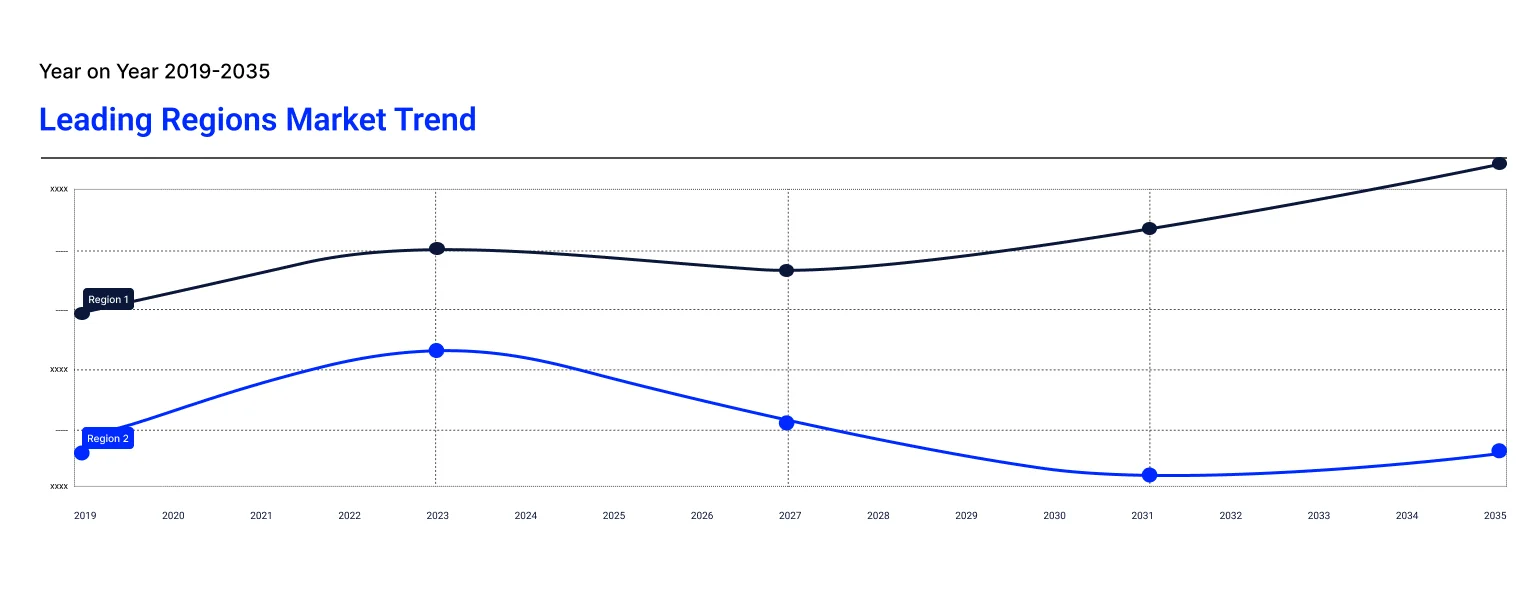
Read more about this report - REQUEST FREE SAMPLE COPY IN PDF
Asia Pacific dominates through massive vehicle production and rapid EV manufacturing expansion
Asia Pacific holds the strongest position as China has become the largest concentration of vehicle manufacturing and EV production. OICA reported approximately 59.2 million vehicles produced across Asia-Pacific in 2025, representing more than 61% of global output, while China alone produced 34.53 million vehicles. China’s 16.626 million new-energy vehicles further strengthen the region’s relevance for electronically controlled access and mechatronic latch systems. Such factors are directly boosting the car door latch market regional growth.
Europe remains a significant automotive latch market due to its established passenger-vehicle manufacturing base and high concentration of premium and technologically advanced vehicles. Germany produced approximately 4.15 million passenger cars in 2025, while Spain produced around 1.81 million, creating substantial OEM demand for door, hood, and rear-closure systems. The region’s strong focus on vehicle safety and sophisticated electronic architectures further supports higher-value latch adoption.
Read more about this report - REQUEST FREE SAMPLE COPY IN PDF
Car door latch market players are trying to speed up the use of electronic and smart latches through incorporating actuators, sensors, power closure as well as connected access features. Besides those, corporations are working on the production of compact and lightweight designs while not compromising crash strength and security, and simultaneously supporting EV and next-generation vehicle architectures. MinebeaMitsumi's U-Shin business is one of such companies and its latch portfolio is a good example. It offers small-sized, light-weighted parts with minimized noise and electronic release.
Car door latch companies are now looking for modular and scalable systems that would enable rapid prototyping and also provide flexibility, with closer OEM integration, that will speed development. A trend seen across several players is that they are focusing mainly on systems like latches with a power module, e.g. Strattec, or on intelligent closure and drive systems which connect the vehicle access with electronics and software, like in Kiekert' products. With this strategy, suppliers can anticipate a growing market demand for vehicle closures that are safer, simpler, and also more highly automated in nature.
Strattec Security Corporation, established in 1995 and headquartered in Milwaukee, Wisconsin, United States, develops automotive access and security solutions. Its portfolio includes door latches, liftgate and tailgate latches, locks, keys, handles, and electronic access systems. The company combines mechanical, electromechanical, and electronic technologies for vehicle access and closure applications.
Kiekert AG, established in 1857 and headquartered in Heiligenhaus, Germany, is an automotive access-systems specialist. Its offerings include side-door latches, power closure systems, locking systems, and intelligent closure and drive units. The company supplies safety and convenience technologies to automotive manufacturers globally, with its products supporting vehicle access, locking, and closure functions.
MinebeaMitsumi Inc., established in 1951 and headquartered in Tokyo, Japan, provides automotive components through its U-Shin business. Its portfolio includes door latches, hood latches, rear-gate latches, power rear-gate systems, and door handles. Its latch designs emphasise downsizing, weight optimisation, in-crash stiffness, and noise reduction for different vehicle requirements.
Shivani Locks Pvt. Ltd., established in 1988 and headquartered in Faridabad, Haryana, India, manufactures automotive locking systems and high-volume automotive locks. Its offerings include door locks, latches, latch assemblies, and customised locking components developed to customer specifications. The company has also undertaken technical collaborations with international automotive component manufacturers, supporting its capabilities in automotive closure systems.
Other car door latch market key players includeBrose Fahrzeugteile SE & Co Kommanditgesellschaft, Coburg, Inteva Products, LLC, WITTE Automotive GmbH, and Dorman Products, Inc, among others.
*Please note that this is only a partial list; the complete list of key players is available in the full report. Additionally, the list of key players can be customized to better suit your needs.*
Unlock opportunities in the global car door latch market with Expert Market Research. Leverage market forecasts, competitive insights, and industry trends to identify emerging opportunities, strengthen market positioning, and make informed business decisions.


Upto 15% Off
USD
$2499 $2249
$3999 $3599
$4999 $4249
$5999 $5099


*While we strive to always give you current and accurate information, the numbers depicted on the website are indicative and may differ from the actual numbers in the main report. At Expert Market Research, we aim to bring you the latest insights and trends in the market. Using our analyses and forecasts, stakeholders can understand the market dynamics, navigate challenges, and capitalize on opportunities to make data-driven strategic decisions.*
In 2025, the market reached an approximate value of USD 6.29 Billion.
The market is projected to grow at a CAGR of 4.90% between 2026 and 2035.
The market is estimated to witness a healthy growth in the forecast period of 2026-2035 to reach USD 10.15 Billion by 2035.
Key strategies include developing electronic and smart latches, integrating keyless and connected access, improving lightweight and compact designs, strengthening safety and cybersecurity, expanding EV applications, and regionalising production to reduce costs and supply-chain risks.
The key trends fuelling the growth of the market include increasing demand for personal vehicles, growing adoption of electric vehicles, and rising focus on enhancing traveller experience.
The major regions in the market are North America, Europe, the Asia Pacific, Latin America, and the Middle East and Africa.
The significant lock types in the market for car door latches are electronic and non-electronic.
The key players in the market include Strattec Security Corporation, Kiekert AG, MinebeaMitsumi Inc., Shivani Locks Pvt. Ltd., Brose Fahrzeugteile SE & Co Kommanditgesellschaft, Coburg, Inteva Products, LLC, WITTE Automotive GmbH, and Dorman Products, Inc, among others.
Key challenges include high electronic-latch costs, stringent safety requirements, raw-material price volatility, complex vehicle integration, durability concerns, cybersecurity risks, supply-chain disruptions, and balancing lightweight designs with reliable crash performance.
Explore our key highlights of the report and gain a concise overview of key findings, trends, and actionable insights that will empower your strategic decisions.
| REPORT FEATURES | DETAILS |
| Base Year | 2025 |
| Historical Period | 2019-2025 |
| Forecast Period | 2026-2035 |
| Scope of the Report |
Historical and Forecast Trends, Industry Drivers and Constraints, Historical and Forecast Market Analysis by Segment:
|
| Breakup by Lock Type |
|
| Breakup by Vehicle Type |
|
| Breakup by Application |
|
| Breakup by Sales Channel |
|
| Breakup by Region |
|
| Market Dynamics |
|
| Competitive Landscape |
|
| Companies Covered |
|
Datasheet
One User
USD 2,499
USD 2,249
tax inclusive*
Single User License
One User
USD 3,999
USD 3,599
tax inclusive*
Five User License
Five User
USD 4,999
USD 4,249
tax inclusive*
Corporate License
Unlimited Users
USD 5,999
USD 5,099
tax inclusive*
*Please note that the prices mentioned below are starting prices for each bundle type. Kindly contact our team for further details.*
Flash Bundle
Small Business Bundle
Growth Bundle
Enterprise Bundle
*Please note that the prices mentioned below are starting prices for each bundle type. Kindly contact our team for further details.*
Flash Bundle
Number of Reports: 3
20%
tax inclusive*
Small Business Bundle
Number of Reports: 5
25%
tax inclusive*
Growth Bundle
Number of Reports: 8
30%
tax inclusive*
Enterprise Bundle
Number of Reports: 10
35%
tax inclusive*
How To Order

Select License Type
Choose the right license for your needs and access rights.

Click on ‘Buy Now’
Add the report to your cart with one click and proceed to register.

Select Mode of Payment
Choose a payment option for a secure checkout. You will be redirected accordingly.
Strategic Solutions for Informed Decision-Making
Gain insights to stay ahead and seize opportunities.

Get insights & trends for a competitive edge.

Track prices with detailed trend reports.

Analyse trade data for supply chain insights.

Leverage cost reports for smart savings

Enhance supply chain with partnerships.

Connect For More Information
Our expert team of analysts will offer full support and resolve any queries regarding the report, before and after the purchase.
Our expert team of analysts will offer full support and resolve any queries regarding the report, before and after the purchase.
We employ meticulous research methods, blending advanced analytics and expert insights to deliver accurate, actionable industry intelligence, staying ahead of competitors.
Our skilled analysts offer unparalleled competitive advantage with detailed insights on current and emerging markets, ensuring your strategic edge.
We offer an in-depth yet simplified presentation of industry insights and analysis to meet your specific requirements effectively.




