

Consumer Insights
Uncover trends and behaviors shaping consumer choices today
Procurement Insights
Optimize your sourcing strategy with key market data
Industry Stats
Stay ahead with the latest trends and market analysis.
The global data center automation software market was valued at USD 10.81 Billion in 2025. The market is expected to grow at a CAGR of 20.20% during the forecast period of 2026-2035 to reach a value of USD 68.06 Billion by 2035. The increasing complexity of AI workloads, cloud-native applications, and hyperscale infrastructure is accelerating demand for intelligent orchestration and lifecycle management tools, thereby driving the market growth.
The growth of hybrid and multi-cloud environments and their complexities is one of the key demand driving factors in the data center automation software market, compelling organizations to use intelligent automation tools to enable seamless orchestration, monitoring, and workload optimization in these complex environments. One of the other critical factors fueling the uptake of automation technology is the rapid growth of workloads based on AI and edge computing, which require infrastructure automation to facilitate efficient operations. This necessitates the integration of AI-based analysis and automation policies within infrastructure management systems to reduce overheads.
Furthermore, the adoption of automation platforms that are able to control multi-vendor network systems and minimize human errors, as well as support dynamic workload scaling, is becoming a norm in the data center automation software market. Contemporary software solutions for automation rely on cloud-native technologies, intent-based networking, and real-time observability to provide automated deployment, configuration, and management in data centers. These advancements are becoming crucial for the companies that experience an increase in their operational complexity, shortages in skilled labor force, and continuous requirement to deliver services around the clock. Consequently, there is an emergence of highly sophisticated automation platforms based on artificial intelligence, digital twin modeling, and DevOps practices. For instance, Nokia introduced an event-driven automation (EDA) platform for AI-era data centers in September 2024. The system combines Kubernetes automation, digital twins, and GenAI technology to streamline the process of data center lifecycle management and save up to 40% of operational time and resources.
Compound Annual Growth Rate
20.2%
Value in USD Billion
2026-2035
Read more about this report - REQUEST FREE SAMPLE COPY IN PDF
At the Hannover Messe 2026, Siemens revealed the new generation of Industrial Automation DataCenter featuring NVIDIA accelerated computing, BlueField DPUs, and cybersecurity. The solution enables edge AI and automated infrastructure operations, which further stimulates innovation in the field of data center automation software.
Vendors presented their unifying approaches to DCIM software solutions at Data Centre World London 2026 that included SCADA, energy analysis, and cybersecurity components. Unifying control and automation features are seen as growing trends in view of increasing demands for control over data center automation operations.
NetBox Labs launched the new AI Data Center Acceleration Program, focusing on network automation with aims to support infrastructure for hyperscale applications. The initiative highlights increasing adoption of intelligent orchestration tools driving operational efficiency, thereby boosting demand in the data center automation software market.
Schneider Electric introduced new data center infrastructure solutions designed for handling highly dense AI and accelerated computing environments. The products are provided with advanced monitoring and automation functions, ensuring enhanced data center management and stimulating innovation in digital infrastructures.
The increasing deployment of software-defined networks is boosting the development of automated connectivity management in modern data centers. Companies are now using programmable infrastructures that make it easier for companies to manage their networks, ensuring that they scale well. It also allows them to have central management over their distributed systems. Automation tools help them reduce the process of provisioning while ensuring optimal performance in the network. Leveraging this trend, vendors are deploying software-based connectivity technologies. In March 2026, Tata Communications came up with software-defined connectivity, which supports the data center automation software market expansion.
The growing complexity of the data center environment is creating a need for a single observability and automation platform that can monitor the infrastructure in real-time. Companies are relying on tools that offer analytics, telemetry, and automation to improve visibility and minimize manual efforts. They help in the effective management of networks and compute infrastructure as well as predictive maintenance approaches. In this context, in May 2024, CloudFabrix showcased its unified network observability and automation platform in conjunction with Splunk, thereby fueling growth in the data center automation software market.
With the increase in the number of artificial intelligence projects, the market observes an increased demand for automated data centers that can sustain high-performance computing. The AI-powered data centers need an automation system to handle networking, cooling, and power distribution processes. This is prompting the vendors to come up with an intelligent infrastructure solution to support large-scale artificial intelligence computing systems. Automation solutions are thus becoming more prevalent in modern data centers. For example, in October 2025, ABB collaborated with NVIDIA to develop advanced AI data centers.
Increased energy consumption in high-density computing environments is prompting companies to utilize automation solutions to manage their IT infrastructure effectively, thereby accelerating the data center automation software market value. The use of intelligent energy management solutions and automated control systems allows data center operators to optimize energy usage and ensure system reliability. Integration of automation software into DCIM solutions assists in energy management and system reliability. Companies, hence, are forming partnerships to enhance their infrastructure solutions. One such partnership was announced in October 2025 between Honeywell and LS Electric, with the aim of enhancing data center automation software solutions.
Rapid increases in the complexity of hybrid and multicloud architectures are contributing immensely to the rising operational difficulties faced by enterprises with distributed IT infrastructure. In this context, automation technologies are needed to orchestrate workloads, standardize configurations, and ensure consistent operation in the on-premises, cloud, and edge infrastructure. With such increasing complexity, automation solutions minimize human intervention and enhance scalability and reliability of services. In line with this development, in December 2024, Red Hat rolled out the Red Hat Ansible Automation Platform Service on AWS, offering automation for hybrid cloud architectures, contributing to the growth of the data center automation software market.
The Expert Market Research’s report titled “Global Data Center Automation Software Market Report and Forecast 2026-2035” offers a detailed analysis of the market based on the following segments:
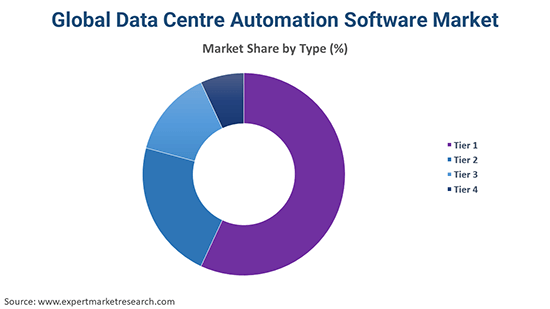
The industry can be broadly categorised based on type into:
Key Insight: Based on type, the data center automation software market scope comprises Tier 1, Tier 2, Tier 3, and Tier 4 data centers, where the adoption trends are gradually moving towards Tier 3 and Tier 4 categories owing to the need for high availability and redundancy. The adoption of Tier 1 and Tier 2 is ongoing in cost-effective projects, especially among small and medium-sized businesses. Organizations such as Schneider Electric and Vertiv are launching sophisticated DCIM and automation software to meet the complexities of higher-tier infrastructure. On the other hand, large-scale organizations like Microsoft and AWS are pushing automation needs at Tier 3 and Tier 4 data centers.
Based on deployment type, the industry can be divided into:
Key Insight: Considering the deployment mode, the data center automation software market is classified into on-premises and cloud-based solutions, where hybrid solutions are witnessing high popularity. On-premise solutions continue to be necessary for those organizations that need strict data handling for regulatory reasons, whereas cloud-based solutions are being developed fast due to their advantages related to scalability and flexibility. Leading players like VMware and IBM are concentrating on hybrid automation software that ensure infrastructure management within any environment. Similarly, Azure and Google Cloud are working on SaaS-based automation solutions to boost innovation.
The industry can be divided based on solutions as:
Key Insight: The data center automation software market consists of solutions for automating servers, databases, networks, and various other infrastructures. Network automation is positioned at the forefront owing to the growing complexity of multi-cloud environments, whereas server & database automation helps improve efficiency and performance optimization of workloads. Other solutions, including storage and application automation, are witnessing growth owing to growing demand for visibility of the entire infrastructure. Networking giants like Cisco Systems and Juniper Networks are ramping up their automation in networks, whereas companies like BMC Software & Broadcom are concentrating on servers & workloads orchestration.
The industry can be categorised based on services as:
Key Insight: The data center automation software market caters to services such as BFSI, healthcare, retail, manufacturing, IT & telecom, and others. The BFSI and IT & telecom sectors boast higher data processing requirements than other verticals and hence adopt automation extensively. Healthcare is increasingly adopting automation software owing to stringent data security and compliance needs. Retail and manufacturing are focused on optimizing their supply chains. Leading vendors in the BFSI sector include IBM and Oracle. On the other hand, Cisco and Hewlett Packard Enterprise offer industry-specific frameworks. Rapid digital transformation of enterprises across the globe is increasing demand for automation services in the market.
Looks into the regional markets of data centre automation software like:
Key Insight: Regionally, the data center automation software market landscape includes North America, Europe, APAC, Latin America, and MEA. North America holds the largest market share due to significant investments made by hyperscalers and adoption of cloud technologies such as Amazon Web Services and Microsoft. In Europe, vendors are developing energy-efficient and compliant data center automation software. In the Asia Pacific region, the market is experiencing rapid growth owing to investments made by Alibaba Cloud and Tencent in digitalization. Cisco and Huawei are expanding their infrastructure capabilities in the Latin America and MEA regions.
Read more about this report - REQUEST FREE SAMPLE COPY IN PDF
By type, Tier 3 data centers contribute substantially to the market growth attributed to scalable and reliable infrastructure driving automation adoption
The deployment of Tier 3 data centers is common among organizations because of the combination of high availability, high redundancy, and cost-effectiveness that characterizes the facilities. Automated solutions are used for load balancing, failover handling, and predictive maintenance at Tier 3 data centers. Automation orchestration capabilities are being increased to enhance reliability and efficiency at the data centers. Organizations like Schneider Electric with its EcoStruxure IT solution and Vertiv with its SmartAisle offering are working towards improving intelligent infrastructure management, hence boosting the adoption of automation at Tier 3 data centers, propelling the overall data center automation software market development.
Tier 4 data centers require redundancy and continuous uptime from the facility. This means there is high adoption of automated infrastructure solutions. Advanced automation solutions are needed in order to provide real-time orchestration and predictive recovery. Organizations like Huawei, with its CloudFabric solution, and IBM, with its automated infrastructure management solution, are developing automation capabilities, thus increasing adoption at Tier 4 data centers.
By deployment type, the on-premises category is picking up pace for secure and controlled automation infrastructure.
The growth of the on-premises deployment category is mainly attributed to the strict control over data, security, and compliance-driven infrastructure management. Companies use automation solutions that provide local orchestration, lifecycle management, and operations visibility without having to depend on any outside cloud infrastructure. Low-code automation solutions are being developed by vendors to cater to the needs of the enterprises further fueling demand in the data center automation software market. In March 2024, Itential upgraded its platform of automation and orchestration with enhanced capabilities of lifecycle management and compliance, which will help in making secure adoption through on-premise deployment.
Cloud-based deployment can be considered the most popular option that is accelerating the data center automation software market penetration, since it offers a highly scalable, flexible, and cost-effective solution to manage and deploy infrastructure across different locations. Companies are moving towards automation solutions based on the cloud that offer real-time orchestration and management. Microsoft Azure with Azure Automation, AWS with Systems Manager, and Google Cloud with Anthos are developing their portfolios to cater to multi-cloud and AI environments.
By solutions, network automation witnesses high demand for enhancing infrastructure efficiency.
There is immense momentum in network automation due to the increasing complexity in hybrid and multi-cloud infrastructures, which call for immediate configuration and intelligence. Enterprises are utilizing AI-based solutions for improved efficiency, minimal interference, and higher visibility. Companies are making efforts to add telemetry-based intelligence to network solutions. For example, in April 2024, Wyebot added its Wireless Intelligence Platform into the Cisco Catalyst Center to provide advanced automation with the help of telemetry and APIs, enhancing the network automation solutions, stimulating growth in the data center automation software market.
The growing demand for unified infrastructure automation is driving strong adoption of server-oriented platforms that integrate computing, storage, and networking solutions within a single AI-enabled ecosystem. This helps in better orchestration of AI workloads, ensuring scalable deployment and better use of infrastructure resources. Vendors are emphasizing the combination of hardware and software. In October 2024, VAST Data collaborated with Cisco to provide AI-enabled infrastructure on Cisco UCS servers, enhancing server-based automation.
By services, the IT and telecom sectors lead the market growth owing to large-scale infrastructure automation for network operations.
Automation technologies are being implemented by firms in the IT and telecommunication sector to enable efficient management of their extensive networks and infrastructure in data centers. The companies demand smart orchestration technology for better results. Companies are including observability and analysis in the ecosystem of automation. In June 2024, Cisco and Splunk unveiled an observability stack that facilitates automation of monitoring and problem resolution within enterprise IT landscapes, thus making the BFSI IT services sector of the data center automation software market more robust.
In the BFSI market, automation technologies are being widely adopted in order to enable secure, compliant, and uninterrupted operation of real-time financial processes through highly reliable infrastructure. Automation solutions help to automate processes, increase fraud detection capabilities, and enhance risk management. The IBM Watsonx, Oracle Autonomous Database, and ServiceNow ITOM solutions are helping banks adopt artificial intelligence-based automation, making the BFSI segment of the data center automation software market more efficient.
Read more about this report - REQUEST FREE SAMPLE COPY IN PDF
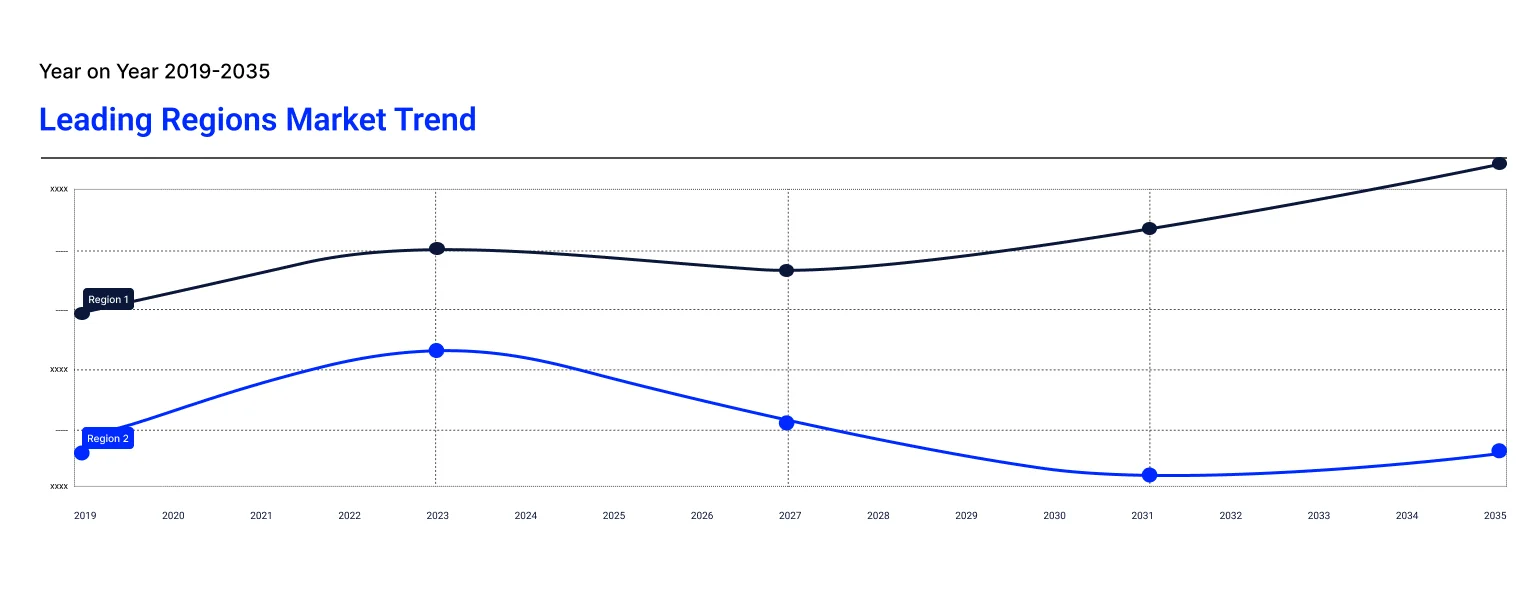
By region, North America dominates the market driven by AI-driven data center automation adoption
Factors like considerable investments by hyperscaler players, early adoption of AI, and high-level cloud infrastructure development make North America a frontrunner in the data center automation software market space. The adoption of automation platforms in enterprises is becoming common due to the need to accommodate complex AI workloads and systems. In June 2024, the introduction of the Nexus HyperFabric AI Cluster, developed jointly with NVIDIA by Cisco, helped the company assert itself as a key player in the North American market.
The Asia Pacific region is turning out to be the fastest-growing regional data center automation software market due to investment from hyperscalers, implementation of cloud technology, and quick deployment of artificial intelligence (AI) infrastructure in regions such as China, India, Singapore, and Southeast Asia. Automation platforms are increasingly being adopted to support autonomous operations and distributed cloud computing. Companies are making efforts to increase their footprint in the region. In July 2025, Alibaba Cloud announced expansion plans for their data centers in Malaysia and the Philippines.
Explore the latest trends shaping the global data center automation software market 2026-2035 with our in-depth report. Gain strategic insights, future forecasts, and key market developments that can help you stay competitive. Download a free sample report or contact our team for customized consultation on global data center automation software market trends 2026.


Upto 15% Off
USD
$2499 $2249
$3999 $3599
$4999 $4249
$5999 $5099


*While we strive to always give you current and accurate information, the numbers depicted on the website are indicative and may differ from the actual numbers in the main report. At Expert Market Research, we aim to bring you the latest insights and trends in the market. Using our analyses and forecasts, stakeholders can understand the market dynamics, navigate challenges, and capitalize on opportunities to make data-driven strategic decisions.*
In 2025, the global data center automation software market attained a value of nearly USD 10.81 Billion.
The market is projected to grow at a CAGR of 20.20% between 2026 and 2035.
The market is estimated to witness a healthy growth in the forecast period of 2026-2035 to reach about USD 68.06 Billion by 2035.
The major drivers expected to aid market growth are the increasing shift towards automation of data centres, and surging technological advancements.
The growing adoption of AI-based software and rising demand from developing regions with growing focus on digitalisation are the key trends guiding the growth of the market.
The major regions in the market are North America, Latin America, the Middle East and Africa, Europe, and the Asia Pacific.
Tier 1, tier 2, tier 3, and tier 4 are the leading types of products in the market.
On-Premises and cloud are the significant deployment modes in the market.
Server, database, and network, and among others, are the major solutions of the product in the market.
The leading services of the product in the market include BFSI, healthcare, retail, manufacturing, and IT and telecom, among others.
The major players in the market are Cisco Systems Inc., BMC Software Inc., EntIT Software LLC, ABB Limited, Hewlett Packard Enterprise Company, Oracle Corporation, Fujitsu Ltd, Microsoft Corporation, VMware Inc., and Brocade Communications Systems, among others.
Explore our key highlights of the report and gain a concise overview of key findings, trends, and actionable insights that will empower your strategic decisions.
| REPORT FEATURES | DETAILS |
| Base Year | 2025 |
| Historical Period | 2019-2025 |
| Forecast Period | 2026-2035 |
| Scope of the Report |
Historical and Forecast Trends, Industry Drivers and Constraints, Historical and Forecast Market Analysis by Segment:
|
| Breakup by Type |
|
| Breakup by Deployment Method |
|
| Breakup by Solutions |
|
| Breakup by Services |
|
| Breakup by Region |
|
| Market Dynamics |
|
| Competitive Landscape |
|
| Companies Covered |
|
| Report Price and Purchase Option | Explore our purchase options that are best suited to your resources and industry needs. |
| Delivery Format | Delivered as an attached PDF and Excel through email, with an option of receiving an editable PPT, according to the purchase option. |
Datasheet
One User
USD 2,499
USD 2,249
tax inclusive*
Single User License
One User
USD 3,999
USD 3,599
tax inclusive*
Five User License
Five User
USD 4,999
USD 4,249
tax inclusive*
Corporate License
Unlimited Users
USD 5,999
USD 5,099
tax inclusive*
*Please note that the prices mentioned below are starting prices for each bundle type. Kindly contact our team for further details.*
Flash Bundle
Small Business Bundle
Growth Bundle
Enterprise Bundle
*Please note that the prices mentioned below are starting prices for each bundle type. Kindly contact our team for further details.*
Flash Bundle
Number of Reports: 3
20%
tax inclusive*
Small Business Bundle
Number of Reports: 5
25%
tax inclusive*
Growth Bundle
Number of Reports: 8
30%
tax inclusive*
Enterprise Bundle
Number of Reports: 10
35%
tax inclusive*
How To Order

Select License Type
Choose the right license for your needs and access rights.

Click on ‘Buy Now’
Add the report to your cart with one click and proceed to register.

Select Mode of Payment
Choose a payment option for a secure checkout. You will be redirected accordingly.
Strategic Solutions for Informed Decision-Making
Gain insights to stay ahead and seize opportunities.

Get insights & trends for a competitive edge.

Track prices with detailed trend reports.

Analyse trade data for supply chain insights.

Leverage cost reports for smart savings

Enhance supply chain with partnerships.

Connect For More Information
Our expert team of analysts will offer full support and resolve any queries regarding the report, before and after the purchase.
Our expert team of analysts will offer full support and resolve any queries regarding the report, before and after the purchase.
We employ meticulous research methods, blending advanced analytics and expert insights to deliver accurate, actionable industry intelligence, staying ahead of competitors.
Our skilled analysts offer unparalleled competitive advantage with detailed insights on current and emerging markets, ensuring your strategic edge.
We offer an in-depth yet simplified presentation of industry insights and analysis to meet your specific requirements effectively.




