

Consumer Insights
Uncover trends and behaviors shaping consumer choices today
Procurement Insights
Optimize your sourcing strategy with key market data
Industry Stats
Stay ahead with the latest trends and market analysis.
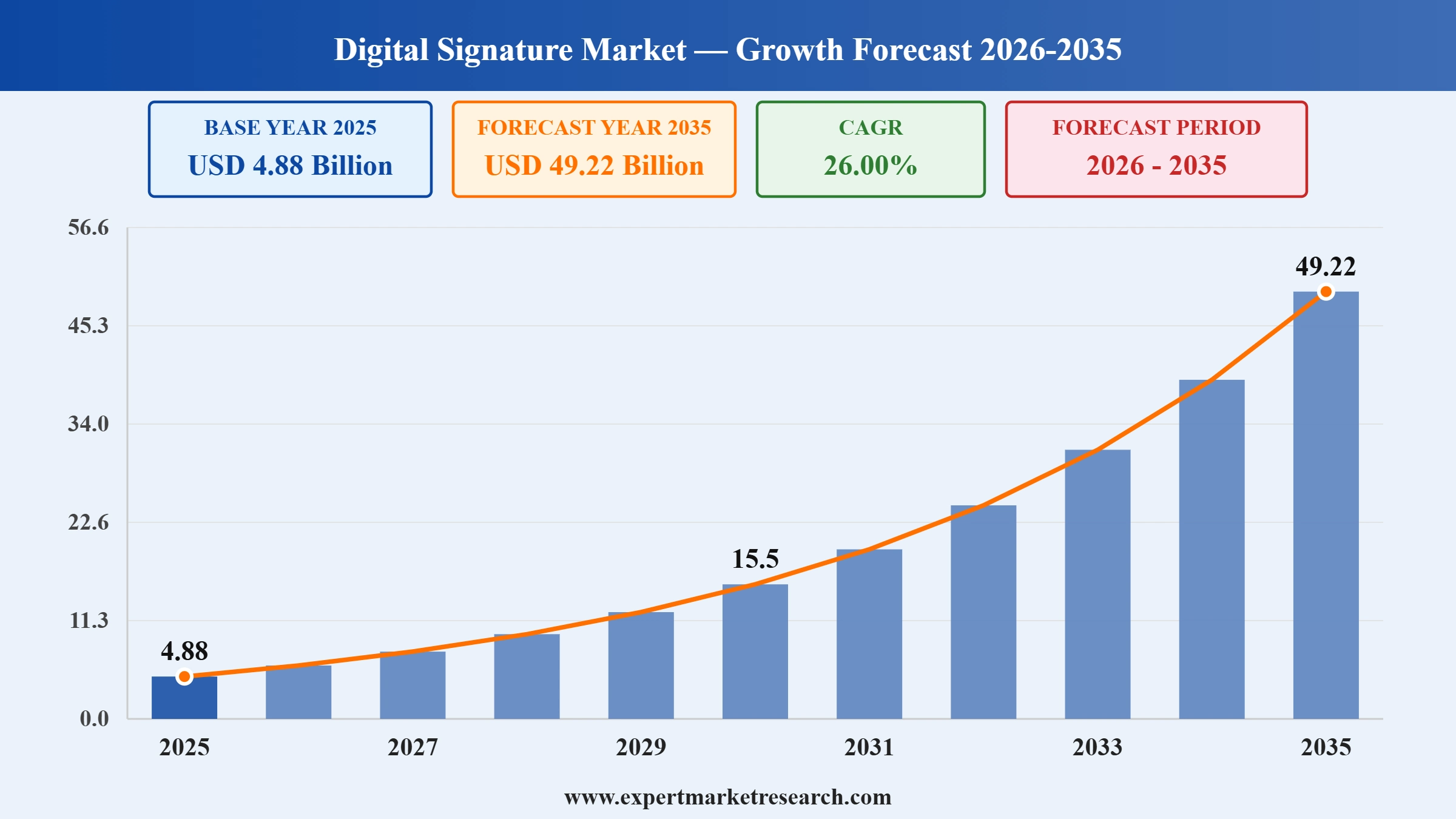
The digital signature market was valued at USD 4.88 Billion in 2025. The market is expected to grow at a CAGR of 26.00% during the forecast period of 2026-2035 to reach a value of USD 49.22 Billion by 2035. Growing regulatory compliance requirements and the need for secure identity verification are the major factors accelerating digital signature adoption.
The digital signature market covers technology that binds a verified identity to an electronic document through public key infrastructure, producing cryptographic evidence that the signer is who they claim to be and that the document has not been altered since signing. This distinguishes a digital signature from a simple electronic signature such as a typed name or scanned image, which records intent but proves nothing about identity or integrity. The market spans certificate authorities that issue credentials, trust service providers that validate identity, and the software platforms through which signing is performed and recorded.
What separates this market from general document software is that its output must hold up under legal and regulatory challenge. Whether a signature is enforceable depends on the identity proofing performed before issuance, the assurance level of the credential used, and the jurisdiction in which the document is contested, which makes regulatory framework rather than product feature the primary determinant of what a provider can sell and where.
Read more about this report - REQUEST FREE SAMPLE COPY IN PDF
| Digital Signature Market Report Summary | Description | Value |
| Base Year | USD Billion | 2025 |
| Historical Period | USD Billion | 2019-2025 |
| Forecast Period | USD Billion | 2026-2035 |
| Market Size 2025 | USD Billion | 4.88 |
| Market Size 2035 | USD Billion | 49.22 |
| CAGR 2019-2025 | Percentage | XX% |
| CAGR 2026-2035 | Percentage | 26.00% |
| CAGR 2026-2035 - Market by Region | Asia Pacific | 30.0% |
| CAGR 2026-2035 - Market by Country | India | 31.5% |
| CAGR 2026-2035 - Market by Country | China | 29.7% |
| CAGR 2026-2035 - Market by Deployment | Cloud | 28.6% |
| CAGR 2026-2035 - Market by Application | IT and Telecommunication | 30.2% |
| Market Share by Country 2025 | Germany | 4.6% |
Regulation Mandating Identity Infrastructure Rather Than Permitting It
European member states are obliged to make digital identity wallets available to citizens by the end of 2026, with issuance, authentication and electronic signature capability provided free of charge to natural persons, and remote onboarding standards in force under Commission Implementing Regulation 2026/798 from April 2026. This creates a credentialed population rather than merely a legal basis for signing, and establishes an assurance baseline that commercial platforms can build upon instead of duplicating.
Artificial Intelligence Making Cryptographic Proof the Only Reliable Defence
Forged documents that once demanded skill and time can now be produced quickly and cheaply, and they defeat visual inspection reliably enough that appearance-based verification no longer provides assurance. Signatures binding signer identity and document integrity to a verifiable certificate chain remain effective regardless of how convincing a forgery appears, which has moved cryptographic verification from a technical preference to a security requirement across regulated document workflows.
Expansion From Signature Execution Into Agreement Lifecycle
Vendors are extending beyond the moment of signing into contract generation, negotiation, obligation tracking and renewal. Docusign reported intelligent agreement management growing from 2.3 percent of annual recurring revenue in fiscal 2025 to 10.8 percent in fiscal 2026, exceeding USD 350 million, reflecting that signature execution is a brief commoditising step while the surrounding lifecycle carries materially higher contract value.
The growth of the digital signature market is fueled by the general move towards completely digitalized business environments where all the decisions and contract signing occur instantaneously and are fully legitimate from the legal point of view. As companies transform their operations to accommodate remote or hybrid work settings, the process of authentication is expected to become much simpler, faster, and even incorporated into workflows, which will still ensure regulatory compliance and accountability at the same time. However, the growing risks of frauds and document manipulation are prompting the development of encryption and other advanced technologies such as biometrics.
Organizations that span across various jurisdictions need to guarantee that transactions through the use of the internet adhere to the laws governing electronic identification and trust services. With increasing digitization of documents, business organizations need to employ highly sophisticated methods for identity verification and assurance, as well as non-repudiation technology to ensure security. Such technologies provide assurance, allow remote identity verification, and comply with all relevant laws. These also improve the trust in digital signature platforms and allow businesses to conduct safe digital transactions across borders, thereby positively influencing the digital signature market trends and dynamics.
For instance, in March 2026, DocuSign enhanced its identity assurance management services through the integration with qualified trust service providers of the EU and improved the remote identity verification workflow. This initiative is expected to assist multinational corporations in dealing with compliance issues related to the use of electronic signatures under regulations such as eIDAS, ESIGN, and UETA.
Commission Implementing Regulation (EU) 2026/798 addressing remote onboarding procedures for European Digital Identity Wallets entered into force on 7 April 2026, establishing the identity proofing standards member states must apply as they work towards the end of 2026 deadline for making wallets available to citizens, with issuance, authentication and electronic signature capability required to be free of charge for natural persons. Providers can build remote identity verification aligned to the specified onboarding standards.
Docusign published fiscal 2026 results on 17 March 2026 showing revenue of USD 3.2 billion, up 8 percent, with billings of USD 3.4 billion up 10 percent, and intelligent agreement management growing from 2.3 percent of annual recurring revenue in fiscal 2025 to 10.8 percent in fiscal 2026, representing over USD 350 million, alongside free cash flow of USD 1.06 billion. Vendors can expand from signature execution into agreement lifecycle management where contract value is materially higher.
DigiCert announced enhancements to Document Trust Manager on 25 March 2026 introducing unified workflow with enterprise-wide visibility to detect unauthorised signing, a secure certificate repository replacing physical USB tokens under multi-factor authentication, pre-integrated signing with major platforms, and online counter signing, supporting eIDAS 2, ZertES and Adobe Approved Trust List frameworks. Providers can position cryptographic identity proof as the response to fraud that visual inspection cannot detect.
The amended eIDAS Regulation requires European Union member states to make digital identity wallets available by the end of 2026, with mandatory cross-border recognition and interoperability through uniform technical standards, and with electronic signature capability provided without charge to natural persons. Commercial providers can reposition towards enterprise workflow, compliance orchestration and business signature use cases as basic consumer signing capability becomes a public service.
With an increasing requirement for the incorporation of e-signing into various enterprises, the application of digital signatures is emerging to be a key trend. Enterprises are now opting for integration through APIs such that the processes of digital signing can be incorporated into other document management systems, banking facilities, and enterprise software. This makes the process more automated and efficient while also ensuring regulatory compliance. In August 2025, the PDF Association made news by releasing pdfRest, which introduced its latest Sign PDF API tool to create legally compliant digital signatures.
One emerging trend in the digital signature market is the integration of blockchain technology into document authentication systems that is enhancing trust and transparency in the process of digital signing. The blockchain-based digital signature platform ensures an immutable record of transactions, non-repudiation through tamper-proof verification, and decentralization of the authentication process. This makes the platform highly useful in legal, financial, and enterprise documents. It helps in reducing the risk of fraud and ensures that the documents maintain integrity. Demonstrating this shift, nChain launched nChain Sign, which is a blockchain-based digital signature solution, in June 2024 within the Bitcoin SV ecosystem.
The rising complexity of artificial intelligence-based fraudulent activities and deepfakes is motivating companies to use more robust digital signature and verification methods. The digital document ecosystem, with its digital signatures and certification-based authentication systems, acts as an essential component that safeguards sensitive contractual and personal data. With companies moving towards complete digitization of their documentation procedures, the demand for such secure digital signing platforms increases further. In response to this trend, DigiCert unveiled its newest set of technologies for securing digital documents and mitigating risks posed by AI-enabled fraud in March 2026.
Modern firms are shifting towards the use of next-generation digital signing platforms with advanced functionality in terms of authentication, workflow management, and compliance management. These tools help enterprises optimize their document approvals, regulatory compliances, and operational efficiency as well. With more firms looking to digitize their document management practices, including contracts and documents, the need for advanced digital signing tools is expected to keep rising in the coming years, boosting the digital signature market development. For instance, Ascertia introduced SigningHub Next Generation, a next-generation digital signing tool for enterprise document signing, in November 2024.
The government programs that involve digitization of services and operations within their departments are significantly contributing to the advancement of e-signatures and verification solutions. This is because digital signatures and attestation enable quick document verification while minimizing paperwork and expenses involved in administrative processes. The development of digital governance in the government is also increasing the demand for the deployment of infrastructure in order to sign documents electronically. In April 2026, the UAE government introduced digital attestation for official documents, demonstrating how public sector digitization initiatives are actively contributing to the growth of the digital signature market.
The Expert Market Research's report titled “Digital Signature Market Report and Forecast 2026-2035” offers a detailed analysis of the market based on the following segments:
Market Breakup by Component
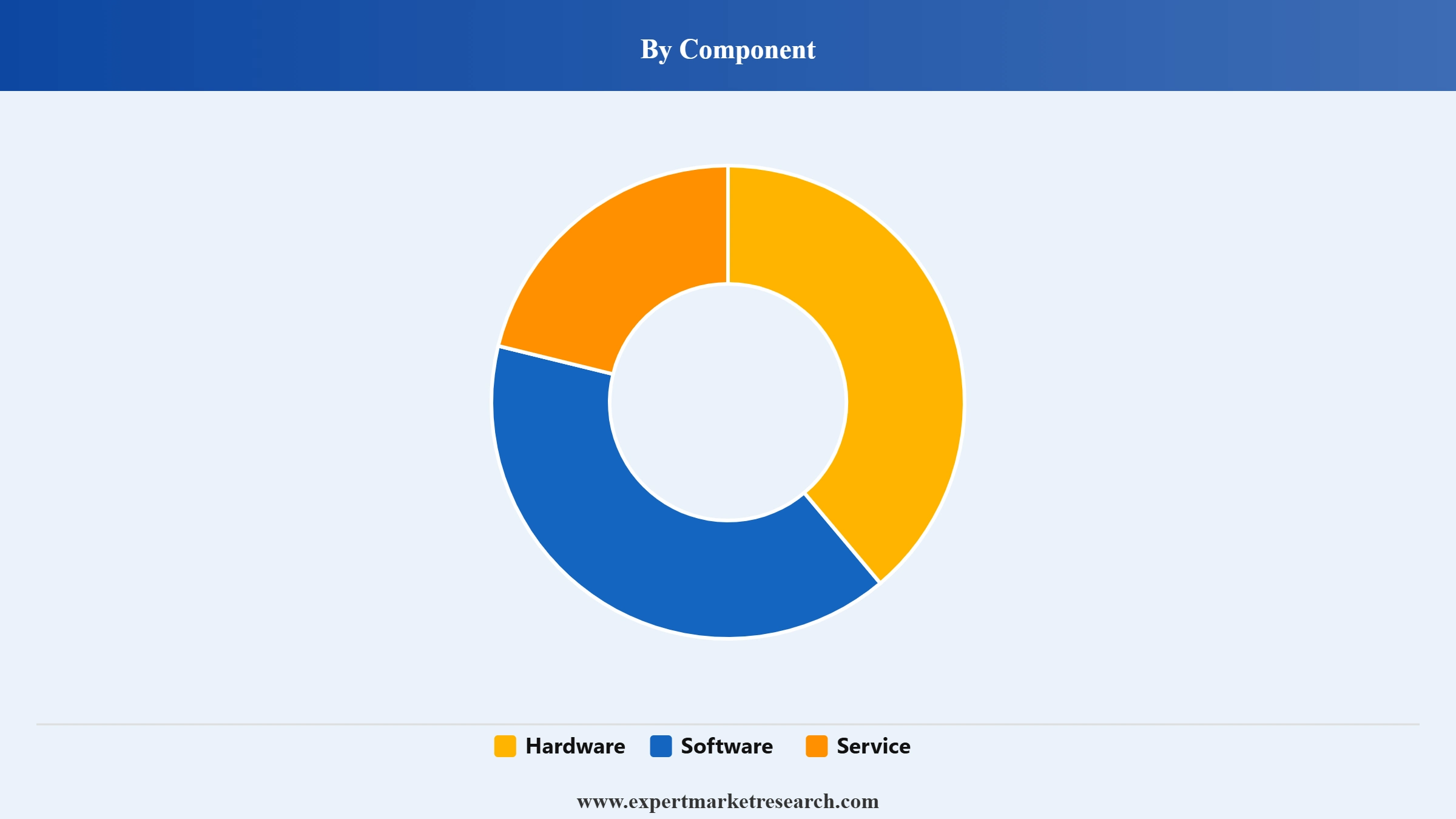
Key Insight: The digital signature market scope comprises components such as hardware, software, and service sectors, which are making the ecosystem of digital signatures more secure. The trend of using hardware technology for digital signatures is gaining momentum due to its use of biometric identification and secure identity devices, but it continues to fall behind the software category because of its scalability and cloud-based signing solutions. On the other hand, service providers are expanding their service portfolios by integrating identity management solutions. In April 2026, SLC Digital and IDECO rolled out a hardware-based biometric identity solution in South Africa.
Market Breakup by Deployment
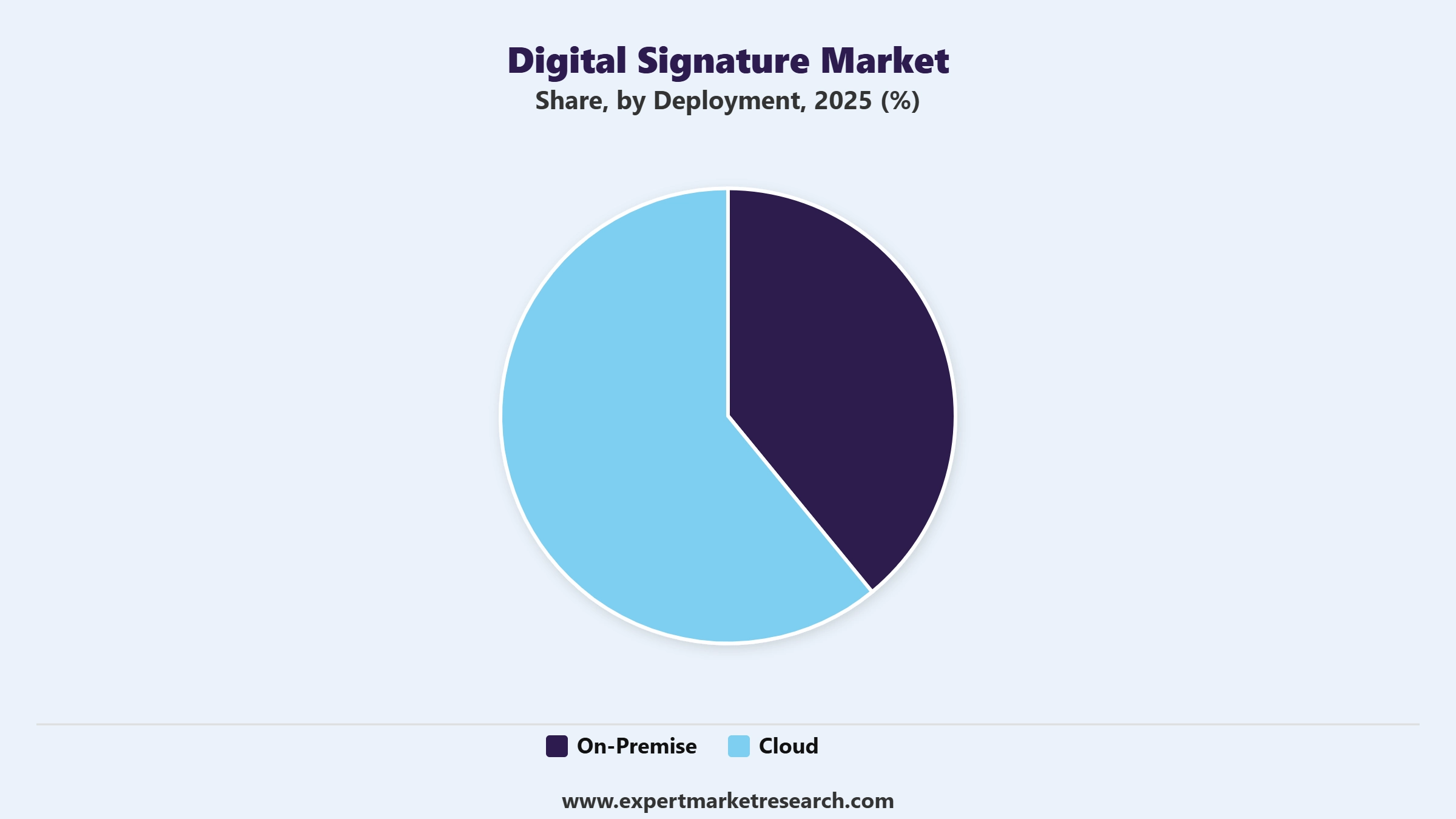
Key Insight: The digital signature market is categorized into on-premise and cloud deployment types, where the latter exhibits greater traction owing to benefits such as scalability, flexibility, and accessibility. On-premise deployment continues to be relevant across industries that are tightly controlled, as data security becomes an important concern there. Meanwhile, cloud digital signature solutions help businesses cope with hybrid working conditions and real-time electronic signing processes. The increasing popularity of cloud solutions allows companies to integrate digital signing tools with their enterprise software and conduct international transactions.
Market Breakup by Application
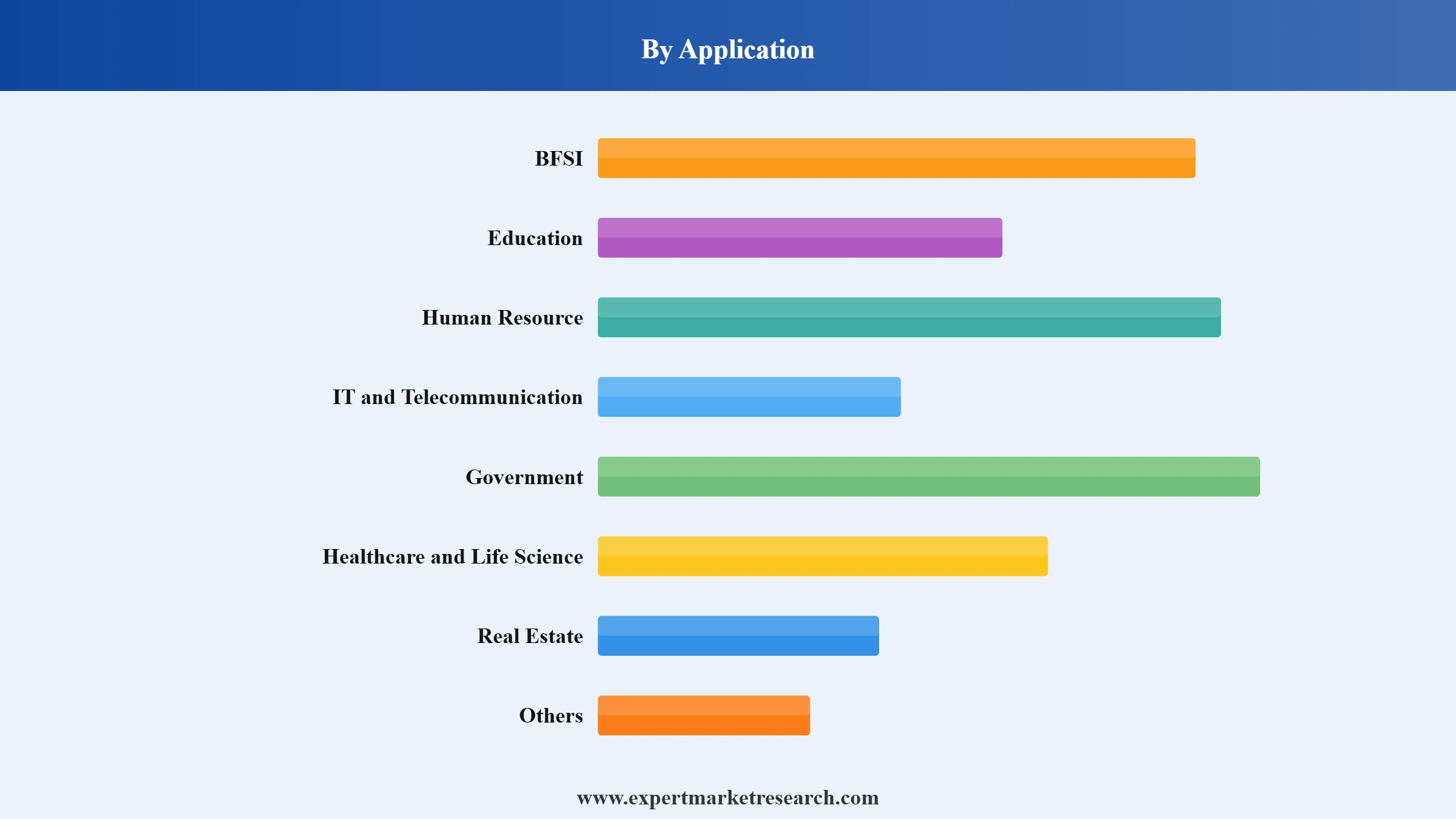
Key Insight: Digital signatures find applications in various industries such as banking, finance, and insurance (BFSI), education, human resources management, information technology and telecommunications, government, healthcare and life sciences, real estate; and others. BFSI continues to be one of the prominent adopters owing to its extensive requirement for secure transactions. For example, in December 2025, Al Salam Bank introduced an online signing solution with DocuSign to support digital banking activities. In addition, the government and healthcare organizations prefer using digital signatures to ensure compliance and data protection.
Market Breakup by Region
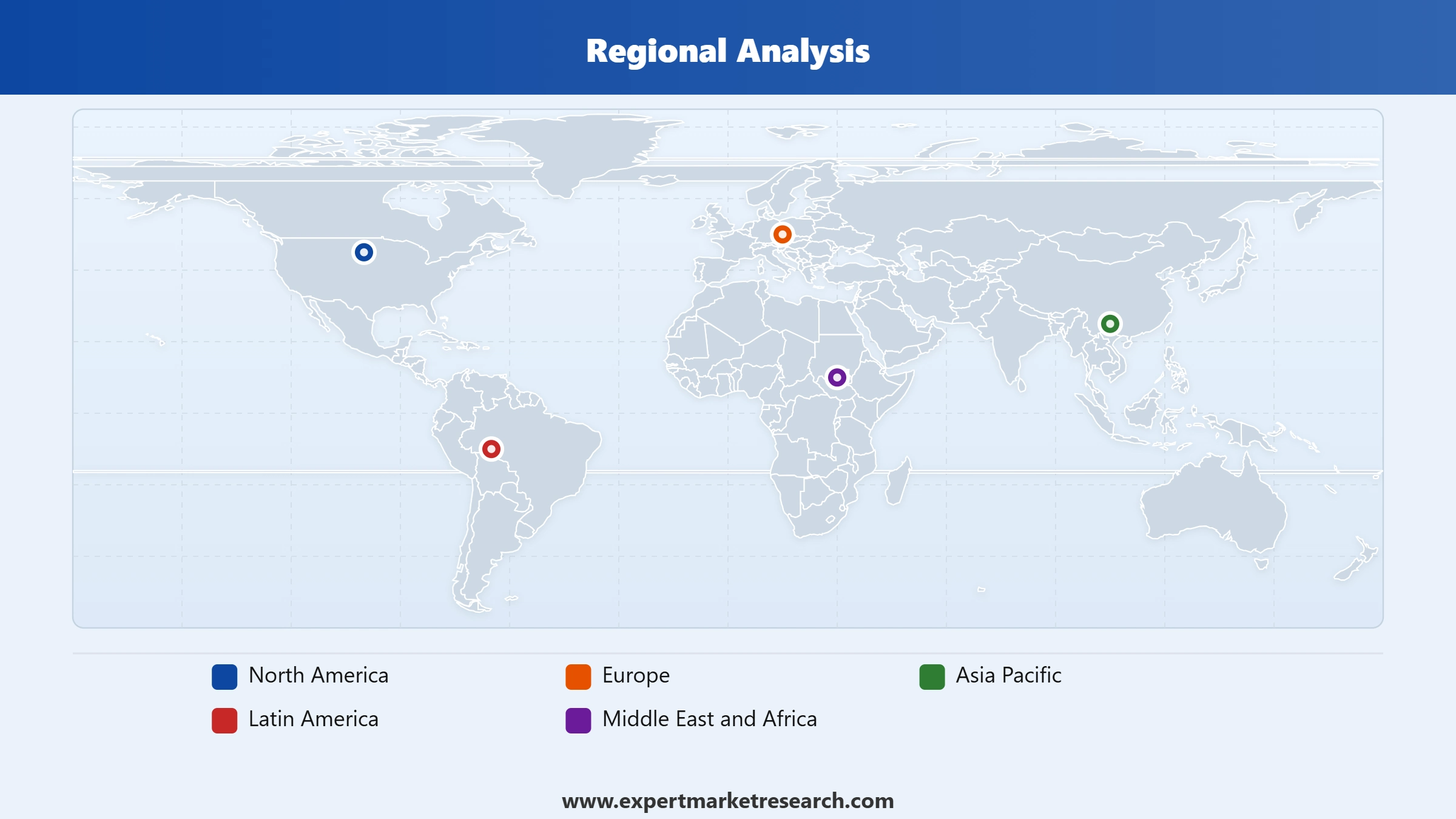
Key Insight: The digital signature market landscape covers North America, Europe, Asia Pacific, Latin America, and the Middle East & Africa. Each of these regions are influenced by different levels of digitalization and regulations. North America is at the forefront of the market because of its robust digital infrastructure, whereas Europe is driven by well-regulated systems such as eIDAS. Asia Pacific is witnessing fast growth owing to the efforts of digitalization. In November 2025, regulation trends in the Middle East, especially Kuwait showed that more government-support is being offered for secure digital trust solutions.
By component, digital signature software witnesses high demand, driven by the rising need for unified software platforms for seamless identity and signature workflows
The software segment is experiencing continuous demand in the digital signature market due to the increasing adoption of integrated software solutions, which is driving the fusion of identity verification and digital signatures. Enterprises are increasingly turning to platforms that integrate KYC functions with digital signatures to optimize operations and enhance compliance. This integration cuts down the time needed for the onboarding process while ensuring the security and legality of the transaction. For example, in July 2024, IDnow rolled out innovative KYC and digital signature software tools, enabling effective digital onboarding procedures.
On the other hand, there is a rise in the use of digital signature hardware based on the increased deployment of biometrics-hardware-based systems, which is contributing significantly to the adoption of secure identity verification within digital ecosystems. Companies are incorporating physical authentication technologies like biometric systems and identity modules to minimize fraud and instil confidence in transactions that are highly secured. This trend becomes especially significant when considering regulated sectors where the physical validation of identities continues to play a crucial role. One notable example is the introduction of a hardware-based biometric identity system by SLC Digital and IDECO in South Africa in April 2026.
Read more about this report - REQUEST FREE SAMPLE COPY IN PDF
By deployment, the on-premises category shows robust growth owing to the increasing availability of enterprise authentication solutions enhancing on-premise security control
Companies that require robust data governance are now making huge investments into the deployment of on-premises authentication technology to improve their on-site security, which, in turn, is significantly contributing to the digital signature market revenue. This helps businesses to have complete control over confidential information, the infrastructure, and other aspects related to compliance, along with having a safe process for digital signatures. Such technologies are especially useful for industries that have a need for confidential operations. For instance, in February 2025, NEC introduced a digital identity and authentication service for enterprise companies.
On the other hand, the cloud-based category shows notable growth in the digital signature market which is leading to extensive use of embedded e-signatures among companies. The ability of these systems to integrate with cloud environments helps in creating, distributing, and signing documents seamlessly, thereby promoting remote collaboration and increasing flexibility in operations. This makes it easier to work without relying on the company’s infrastructure while streamlining workflows as well. For instance, in August 2023, Google launched the beta version of e-signatures for Google Docs and Drive.
Read more about this report - REQUEST FREE SAMPLE COPY IN PDF
By application, BFSI leads the market growth attributed to digital banking transformation driving secure customer onboarding
As financial institutions become increasingly dependent on digital signing tools, the adoption of digital signatures continues to grow, thereby accelerating the expansion of the digital signature market. The use of electronic signature technologies allows operations to become more efficient and ensures customers to have an easy experience while creating an account. Such developments are proving to be beneficial, especially when dealing with mass retail banking operations, where efficiency and compliance are key issues. For instance, in February 2026, the State Bank of India adopted the use of e-signatures in their CSPs for account opening purposes.
The government sector is currently witnessing surging demand in the digital signature market, attributed to the increasing adoption of electronic signatures which has resulted in an increase in the efficiency associated with filing regulatory documents, processing paperwork, and conducting other administrative activities. Electronic signatures minimize paperwork, help speed up the approval process, and increase transparency in the government’s operations. The digitization of the government sector ensures that sensitive information is processed in a fast and secure manner. As an illustration, in March 2024, the USPTO decided to use e-signatures in digital filings.
Read more about this report - REQUEST FREE SAMPLE COPY IN PDF
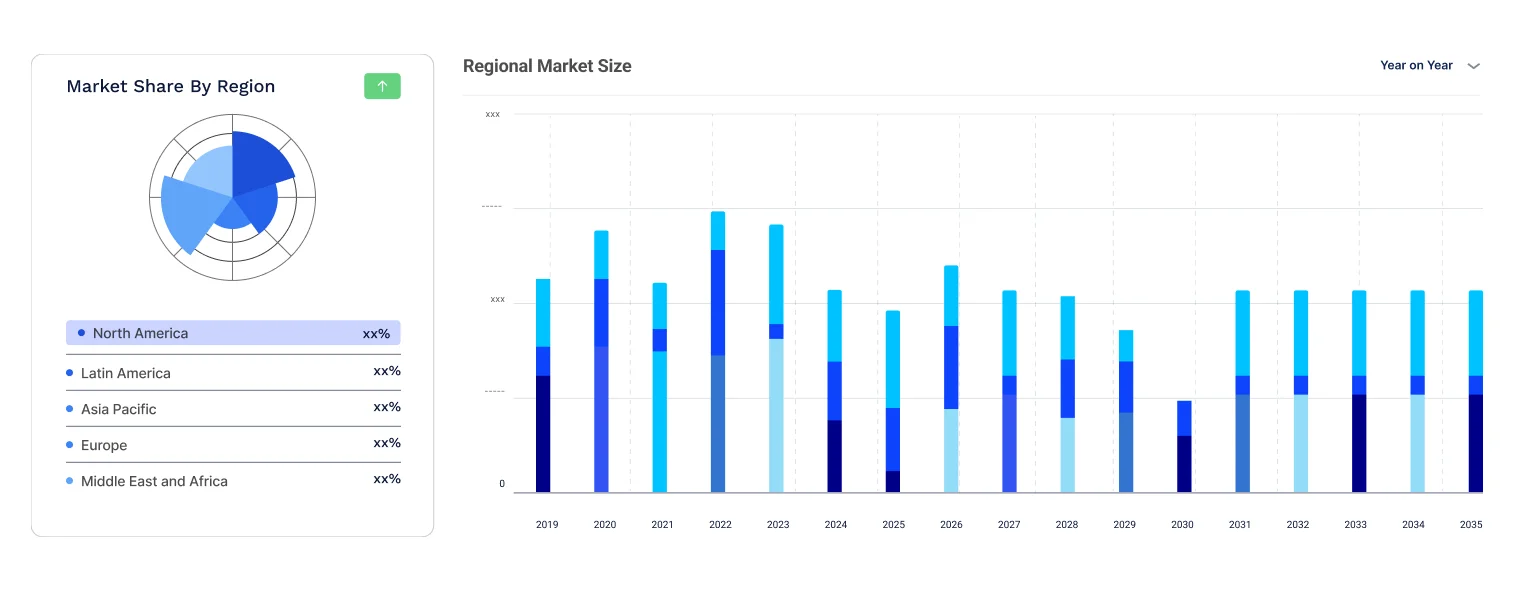
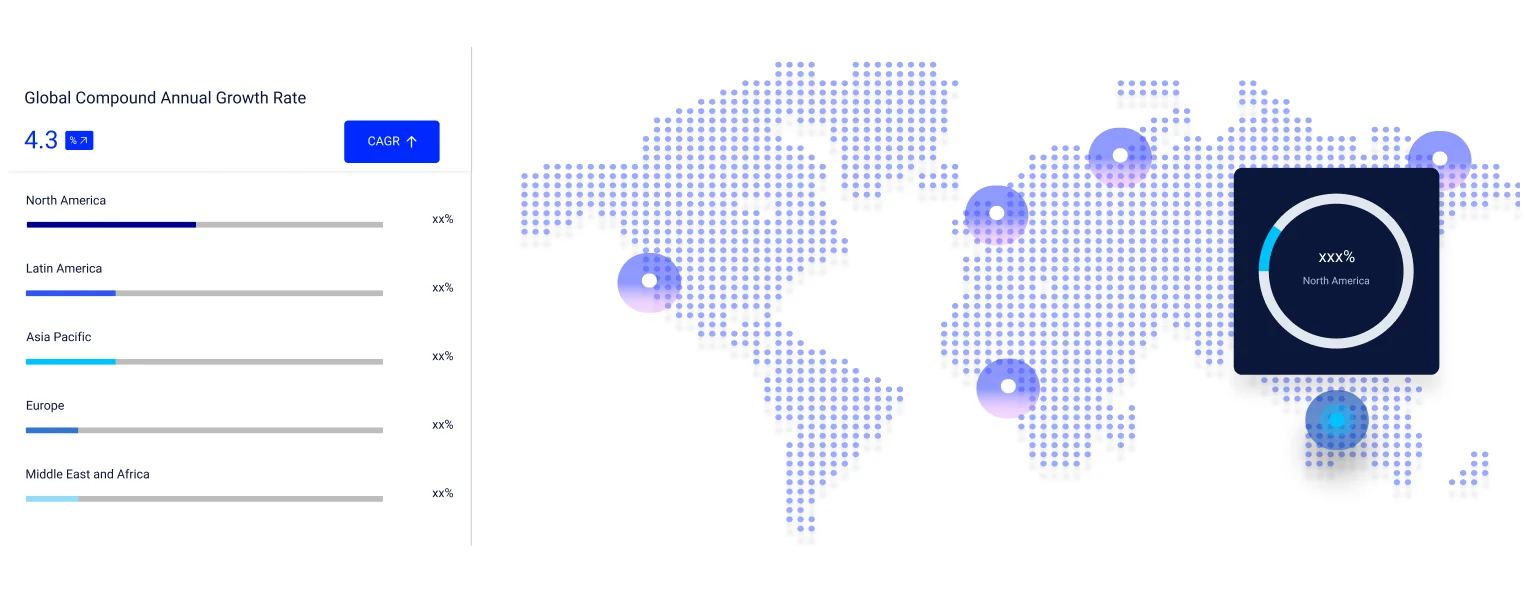
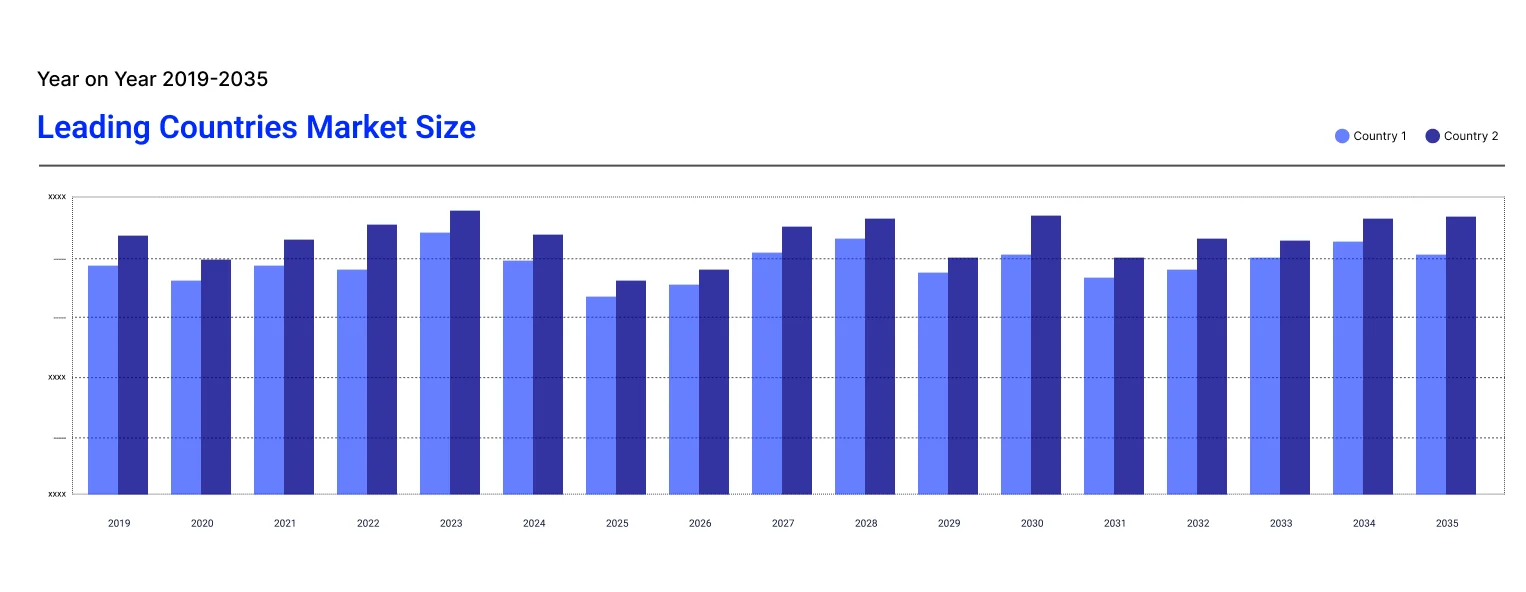
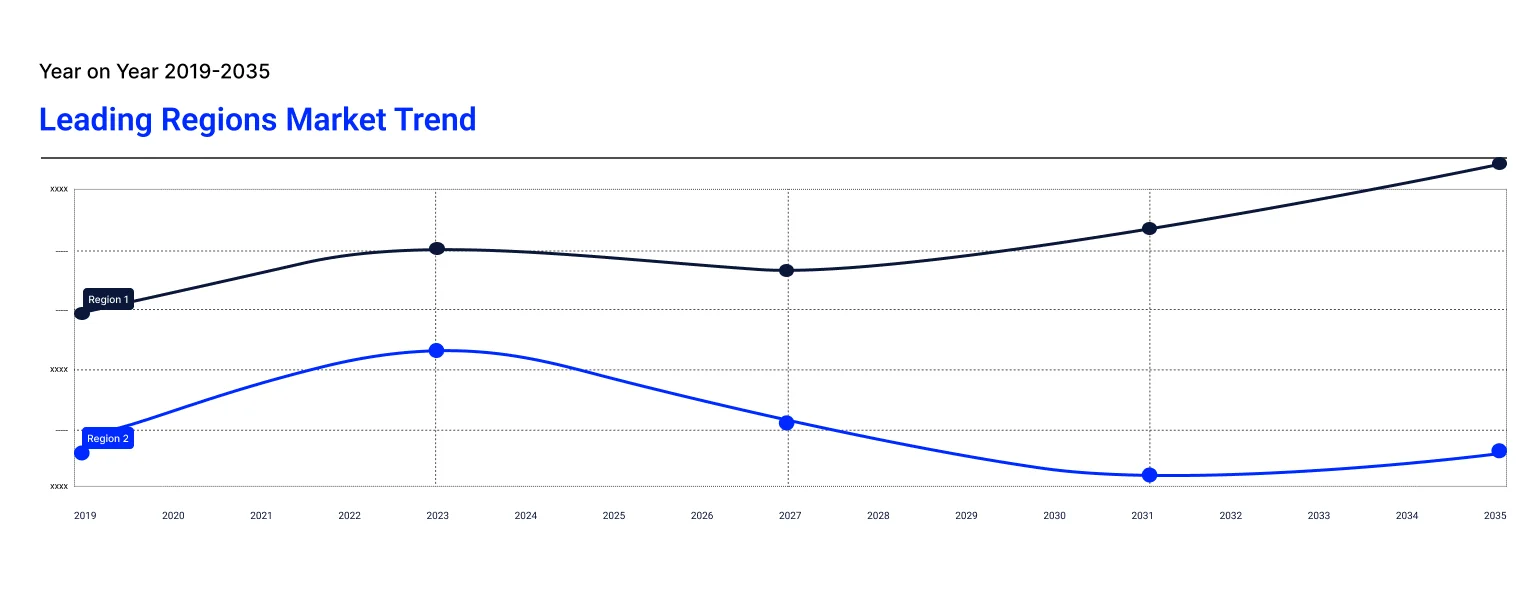
By region, Asia Pacific dominates the market driven by digital trust infrastructure expansion in emerging economies
The rapid digital transformation in the Asia Pacific region is contributing to the high demand for secure electronic authentication systems. Digital signatures are being widely adopted by governments and organizations to promote financial inclusion, governance through technology, and paperless operations. This improves the digital trust ecosystem, allowing more organizations to adopt secure document workflows. For instance, in February 2023, eMudhra unveiled the eSign solution in India, bolstering the growth of digital identity infrastructure in the Asia Pacific digital signature market.
In contrast, Europe is largely contributing to the global industry revenue since the development of digital identity regulations is promoting the use of secure electronic signatures in the region. The governments are concentrating on building an identity system that will facilitate easy verification within the European countries. These programs are widening the scope of qualified electronic signatures in regulated industries. For instance, in April 2026, the EU member countries introduced eIDAS 2.0 digital identity wallet pilots in support of wider deployment in the European digital signature industry.
Read more about this report - REQUEST FREE SAMPLE COPY IN PDF
Leading digital signature market players are now increasingly concentrating on the expansion of functionalities of the products through the use of modern technologies like artificial intelligence, blockchain, and cloud-based authentication solutions. The developments include provision for security features such as identity validation, automation of document workflow processing, and fraud prevention solutions. There is also an increase in solutions by vendors through the development of APIs that can be used to integrate digital signing into other enterprise applications like financial systems.
Another key strategy adopted by digital signature companies involves strengthening regulatory compliance and expanding geographically through partnerships with trust service providers, certificate authorities, and national digital identity initiatives. Companies are taking steps toward building a scalable cloud infrastructure and signing processes that can be done on mobile phones to enable safe and cross-border transactions. Through such initiatives, it is possible for businesses to adapt to changing security requirements and comply with different regulatory requirements in the market.
Ascertia Ltd is a tech company that provides services in the form of digital trust and electronic signature solutions, established in the year 2002. Ascertia Ltd focuses on delivering secure digital signature services, PKI (public key infrastructure), and digital identities. Ascertia Ltd is headquartered in London, United Kingdom.
Adobe Inc. is an internationally recognized software development company that was established in 1982, and it is known mostly for its software that helps people edit their text and pictures and even graphic material. The company was founded in the year 1982, and it is headquartered in San Jose, California, United States.
Gemalto NV is a business entity that offers security and identity management services, established in 2006. The company is a prominent player in the digital signature market and specializes in offering cybersecurity products aimed at securing electronic transactions and data protection. The company’s headquarters is based in Amsterdam, Netherlands, and it offers cybersecurity solutions to various corporations across the globe.
OneSpan Inc. is a company that provides digital identification and electronic signature solutions, founded in 1991. The company is based in Chicago, Illinois, United States of America, and offers secure authentication and electronic signing solutions to enterprises that require their digital banking, financial, and other enterprise-level transactions secured.
Other players in the market include Docusign Inc., Entrust Datacard, Signix, Secured Signing Limited, Identrust Inc., and Kofax Company, among others.
*Please note that this is only a partial list; the complete list of key players is available in the full report. Additionally, the list of key players can be customized to better suit your needs.*
The digital signature industry faces a jurisdictional challenge that complicates every multinational deployment. Identity proofing standards, assurance levels and the conditions under which a signature is enforceable differ materially between the European qualified framework, United States federal and state law, and national schemes elsewhere, so a single global product must satisfy several incompatible regimes simultaneously. Providers must also contend with integration burden, since signing capability delivers value only when embedded in the document management, banking and enterprise systems organisations already run, many of which are legacy platforms with limited interface support.
Several restraints temper growth. Free state-provided signature capability under the European framework compresses the consumer segment, removing a category that some providers currently monetise. Artificial intelligence simultaneously lowers the cost of identity spoofing during remote onboarding, which raises verification expense. Long procurement cycles in government and regulated sectors also delay revenue recognition well beyond the point at which a purchasing decision appears settled.
Opportunities remain substantial. State-issued credentials establish an assurance baseline that reduces onboarding friction for private platforms. Enterprise workflow orchestration, compliance documentation and multi-jurisdiction management remain firmly commercial as basic signing becomes a public service. Asia Pacific offers the fastest growth at a 30.0% CAGR through 2035, on national identity infrastructure rather than replacement of existing systems.
Explore the latest trends shaping the digital signature market 2026-2035 with our in-depth report. Gain strategic insights, future forecasts, and key market developments that can help you stay competitive. Download a free sample report or contact our team for customized consultation on global digital signature market trends 2026.


Upto 15% Off
USD
$2499 $2249
$3999 $3599
$4999 $4249
$5999 $5099


*While we strive to always give you current and accurate information, the numbers depicted on the website are indicative and may differ from the actual numbers in the main report. At Expert Market Research, we aim to bring you the latest insights and trends in the market. Using our analyses and forecasts, stakeholders can understand the market dynamics, navigate challenges, and capitalize on opportunities to make data-driven strategic decisions.*
In 2025, the global digital signature market reached an approximate value of USD 4.88 Billion.
The market is projected to grow at a CAGR of 26.00% between 2026 and 2035.
The market is estimated to witness a healthy growth in the forecast period of 2026-2035 to reach about USD 49.22 Billion by 2035.
Key strategies driving the market include adoption of AI, blockchain, and cloud-based platforms, expansion of API integrations for enterprise systems, and development of mobile-first remote signing solutions. Players are also focusing on regulatory compliance and partnerships with identity verification providers to enable secure digital transactions.
The key trends guiding the growth of the market include the increasing technological advancements, evolving protocols for remote digital signature, and development of new open standards for digital signatures to make them ubiquitous.
The major regions in the global digital signature market are North America, Latin America, the Middle East and Africa, Europe, and the Asia Pacific.
Hardware, software, and service are the major components of digital signature.
The significant deployment-types in the market are on-premise and cloud..
BFSI, education, human resource, IT and telecommunication, government, healthcare and life science, and real estate, among others, are the major applications of the product in the market.
The key players in the market include Ascertia Ltd, Adobe Inc., Gemalto N.V., Onespan Inc., Docusign Inc., Entrust Datacard, Signix, Secured Signing Limited, Identrust Inc., and Kofax Company, among others.
The major challenges include varying regulatory frameworks across regions, cybersecurity and data privacy risks, limited interoperability between platforms, and resistance to adoption in traditional industries. High implementation costs also restrict wider adoption among smaller enterprises.
Explore our key highlights of the report and gain a concise overview of key findings, trends, and actionable insights that will empower your strategic decisions.
| REPORT FEATURES | DETAILS |
| Base Year | 2025 |
| Historical Period | 2019-2025 |
| Forecast Period | 2026-2035 |
| Scope of the Report |
Historical and Forecast Trends, Industry Drivers and Constraints, Historical and Forecast Market Analysis by Segment:
|
| Breakup by Component |
|
| Breakup by Deployment |
|
| Breakup by Application |
|
| Breakup by Region |
|
| Market Dynamics |
|
| Competitive Landscape |
|
| Companies Covered |
|
| Report Price and Purchase Option | Explore our purchase options that are best suited to your resources and industry needs. |
| Delivery Format | Delivered as an attached PDF and Excel through email, with an option of receiving an editable PPT, according to the purchase option. |
Datasheet
One User
USD 2,499
USD 2,249
tax inclusive*
Single User License
One User
USD 3,999
USD 3,599
tax inclusive*
Five User License
Five User
USD 4,999
USD 4,249
tax inclusive*
Corporate License
Unlimited Users
USD 5,999
USD 5,099
tax inclusive*
*Please note that the prices mentioned below are starting prices for each bundle type. Kindly contact our team for further details.*
Flash Bundle
Small Business Bundle
Growth Bundle
Enterprise Bundle
*Please note that the prices mentioned below are starting prices for each bundle type. Kindly contact our team for further details.*
Flash Bundle
Number of Reports: 3
20%
tax inclusive*
Small Business Bundle
Number of Reports: 5
25%
tax inclusive*
Growth Bundle
Number of Reports: 8
30%
tax inclusive*
Enterprise Bundle
Number of Reports: 10
35%
tax inclusive*
How To Order

Select License Type
Choose the right license for your needs and access rights.

Click on ‘Buy Now’
Add the report to your cart with one click and proceed to register.

Select Mode of Payment
Choose a payment option for a secure checkout. You will be redirected accordingly.
Strategic Solutions for Informed Decision-Making
Gain insights to stay ahead and seize opportunities.

Get insights & trends for a competitive edge.

Track prices with detailed trend reports.

Analyse trade data for supply chain insights.

Leverage cost reports for smart savings

Enhance supply chain with partnerships.

Connect For More Information
Our expert team of analysts will offer full support and resolve any queries regarding the report, before and after the purchase.
Our expert team of analysts will offer full support and resolve any queries regarding the report, before and after the purchase.
We employ meticulous research methods, blending advanced analytics and expert insights to deliver accurate, actionable industry intelligence, staying ahead of competitors.
Our skilled analysts offer unparalleled competitive advantage with detailed insights on current and emerging markets, ensuring your strategic edge.
We offer an in-depth yet simplified presentation of industry insights and analysis to meet your specific requirements effectively.




