

Consumer Insights
Uncover trends and behaviors shaping consumer choices today
Procurement Insights
Optimize your sourcing strategy with key market data
Industry Stats
Stay ahead with the latest trends and market analysis.
The global electronic nose market attained a value of USD 28.36 Million in 2025 and is projected to grow at a CAGR of 9.50% through 2035. The market is further expected to reach USD 70.28 Million by 2035. Rising demand for rapid, non-invasive odour and gas detection across food safety, healthcare diagnostics, environmental monitoring, and defence applications, together with continued sensor miniaturisation, is helping manufacturers broaden downstream applications and integrate machine learning-based pattern recognition into next generation devices.
The electronic nose market spans embedded sensor and portable device formats built around metal oxide semiconductor, quartz crystal microbalance, and conducting polymer sensing arrays that mimic biological olfaction to identify, classify, and quantify volatile organic compounds and gas mixtures. Adoption spans quality control laboratories in food and beverage manufacturing, environmental agencies monitoring industrial emissions and odour complaints, defence and first response agencies screening for hazardous or chemical threats, and healthcare researchers exploring non-invasive breath-based diagnostics. North America and Europe host the most established manufacturer base, supported by decades of sensor development expertise, while demand in Asia Pacific is accelerating alongside growth in food processing and industrial safety compliance.
Manufacturers are increasingly pursuing acquisitions that combine specialised sensing technology with broader compliance and risk management software platforms, reflecting growing strategic interest from larger enterprise software providers in environmental intelligence capabilities. In August 2025, Envirosuite Limited, an Australian environmental intelligence company whose platform incorporates electronic nose style odour and emissions monitoring, entered a scheme implementation deed to be acquired by United Kingdom based Ideagen Limited in a deal valued at approximately AUD 132.2 million, with the transaction completed later that month following shareholder and regulatory approval, extending Ideagen's environmental, health, safety, and quality software portfolio with Envirosuite's aviation, mining, and industrial emissions monitoring capabilities.
Beyond consolidation, established manufacturers across the electronic nose market continue to invest in product development and analytical performance improvements to differentiate their offerings in a fragmented, application diverse market. Companies combining established manufacturing scale with continued investment in sensor miniaturisation and academic research partnerships are best positioned to capture growing demand across food safety, healthcare research, and defence applications. Continued integration of gas chromatography with metal oxide semiconductor detection is expected to shape the competitive direction of the market through the remainder of the forecast period.
Compound Annual Growth Rate
9.5%
Value in USD Million
2026-2035
Read more about this report - REQUEST FREE SAMPLE COPY IN PDF
Alpha MOS granted its Industrial Award at ISOEN 2026 in Chongqing, China, recognising a modular miniaturised gas chromatography and metal oxide semiconductor sensing platform developed by researchers from Saarland University and JLM Innovation GmbH for field deployable food quality and breath analysis applications. Companies across the electronic nose market can leverage academic conference engagement to identify emerging sensor research ahead of broader commercial adoption.
AIRSENSE Analytics published technical detail on vehicle integrated chemical, biological, radiological, and nuclear detection systems, describing continuous cabin air monitoring and external sampling points for protected vehicle platforms used by defence and first response agencies. Companies across the electronic nose market can leverage vehicle integrated sensing to extend detection capability into continuously monitored, mobile operational environments.
Chromatotec announced a key contract win in collaboration with its United Kingdom distributor We Care 4 Air, covering the replacement of gas analysis equipment for a regional customer, reinforcing its distributor network across the country. Companies across the electronic nose market can leverage established regional distributor partnerships to secure recurring replacement and upgrade contracts without direct local sales infrastructure.
AIRSENSE Analytics detailed the design considerations behind field capable chemical, biological, radiological, nuclear, and explosive detectors, highlighting the balance between sensitivity and specificity sought by military, first response, and public health agencies deploying portable detection arrays. Companies can leverage this sensitivity and specificity framework to guide sensor selection for demanding field deployment conditions.
Large, established analytical instrument manufacturers across the electronic nose market are increasingly acquiring specialised sensing and ionization technology startups rather than developing comparable capabilities internally, seeking to shorten development timelines and secure proprietary technology. This helps acquirers strengthen instrument platforms while giving startups access to global distribution and manufacturing scale. In March 2026, Shimadzu Corporation acquired a 75 percent stake in Plasmion GmbH, a German ionization technology developer, to integrate its SICRIT sensing technology into Shimadzu's next generation mass spectrometry platforms.
AI driven scent digitization companies across the electronic nose market are increasingly forming strategic alliances with established automation firms to reach manufacturing customers, rather than selling standalone sensing hardware directly. This helps developers access established distribution channels and customer relationships built by their partners, accelerating commercial reach without direct sales infrastructure. In June 2025, Ainos, Inc. formed a strategic partnership with Kenmec Mechanical Engineering, a Taiwanese automation provider, to scale its AI Nose technology into Kenmec's smart factory ecosystem across robotics and logistics.
Scent and gas sensing technology developers across the electronic nose market are increasingly partnering with established industrial edge computing providers to reach manufacturing customers, rather than selling standalone sensing hardware directly. This helps developers access established distribution channels and customer relationships built by their edge computing partners, accelerating commercial reach without direct sales infrastructure. In October 2025, Ainos, Inc. announced a strategic partnership with NEXCOM International, a global industrial computing and edge AI provider, to integrate its AI Nose technology into NEXCOM's automation systems.
Electronic nose and scent digitization companies are increasingly publishing peer reviewed clinical research to validate breath based diagnostic applications beyond their original industrial or environmental use cases, rather than confining research investment to core commercial applications alone. This is helping developers build the clinical evidence base needed to enter regulated healthcare diagnostic markets over time. In January 2026, Noze, formerly known as Stratuscent, published preliminary research evaluating a breath-based approach to breast cancer risk stratification using its digital odour perception platform.
Robotics manufacturers across the electronic nose market are increasingly integrating scent sensing into humanoid and service robot platforms rather than limiting perception to vision and audio alone, extending awareness into odour and gas detection. This helps companies differentiate platforms for safety monitoring, where scent gives an early warning signal vision and hearing cannot capture. In April 2025, Ainos, Inc. installed its AI Nose module on a humanoid robot from ugo, Inc., a leading Japanese robotics company, marking the first integration of scent sensing into a commercial humanoid robot.
The Expert Market Research's report titled “Global Electronic Nose Market Report and Forecast 2026-2035” offers a detailed analysis of the market based on the following segments:
Market Breakup by Type
Key Insight: Portable devices account for the largest type of share of the electronic nose market, reflecting their field deployable design and broad applicability across food inspection, environmental monitoring, and defence use cases where laboratory grade fixed instruments are impractical. Embedded sensors are growing quickly as manufacturers integrate olfactory sensing directly into industrial production lines and monitoring infrastructure, supporting continuous, automated quality control without requiring dedicated operator involvement.
Market Breakup by Technology
Key Insight: Metal oxide semiconductor sensors dominate the electronic nose market by technology, valued for their durability, affordability, and broad sensitivity across volatile organic compound classes, making them the default choice across food safety and environmental monitoring instrumentation. Quartz crystal microbalance sensors are growing quickly as their high mass sensitivity supports precise detection in research and pharmaceutical applications. Conducting polymer sensors offer fast response times suited to portable field applications, while other technologies including electrochemical and optical sensing methods serve specialised detection requirements across niche industrial and defence use cases.
Market Breakup by End Use Industry
Key Insight: Food and beverage are the largest end use industry for electronic nose instrumentation, driven by widespread adoption for quality control, freshness evaluation, and authenticity testing across processing and packaging operations. Healthcare is among the fastest growing end use segments as researchers explore non-invasive, breath based diagnostic applications. Military and defence applications rely on electronic nose and related chemical detection technology for chemical, biological, radiological, and nuclear threat screening. Waste management and environmental monitoring applications continue to expand as regulatory pressure around industrial odour and emissions compliance increases, while other end uses including cosmetics and packaging quality control serve specialised detection needs.
Market Breakup by Region
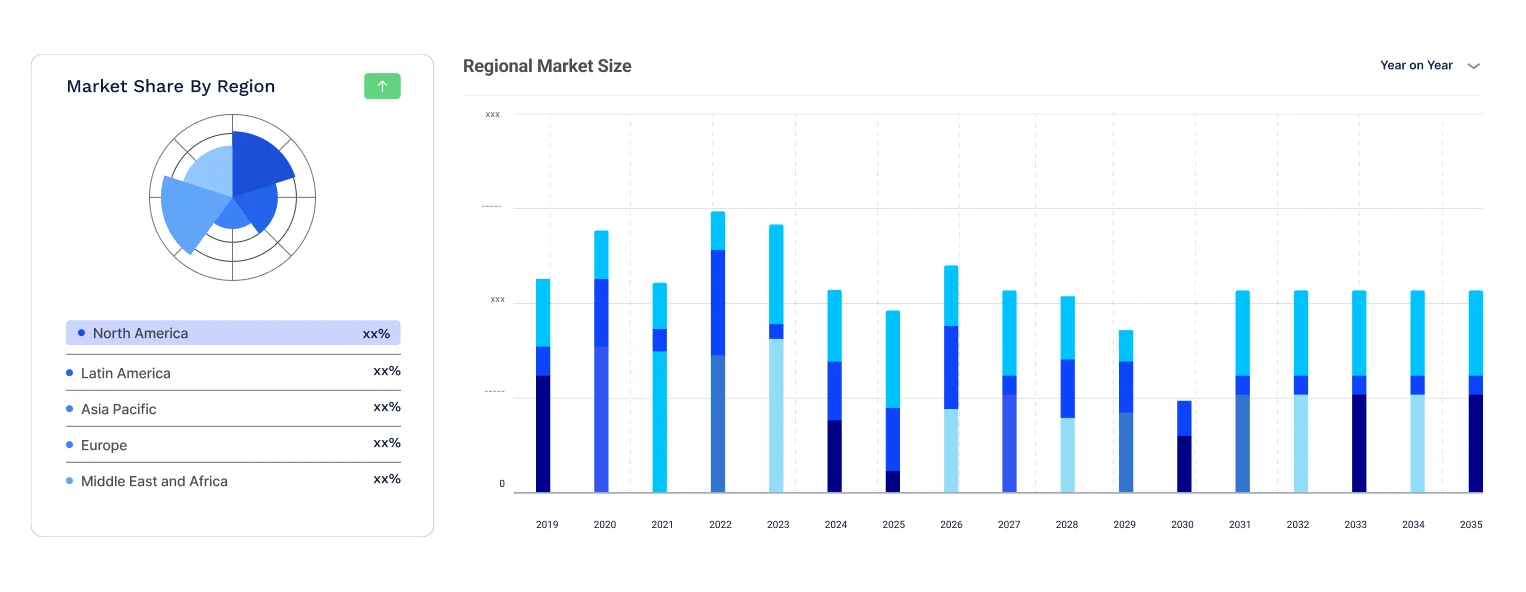
Key Insight: North America leads the electronic nose market, anchored by an established base of sensor manufacturers and strong demand across defence, healthcare research, and environmental monitoring applications. Europe follows closely, supported by manufacturers including Alpha MOS and AIRSENSE Analytics and a strong regulatory emphasis on industrial emissions and food safety compliance. Asia Pacific is registering the fastest growth as expanding food processing, industrial safety, and environmental monitoring activity across China, Japan, and India drive adoption. Latin America and the Middle East and Africa remain smaller markets gradually expanding through rising industrial and regulatory activity.
By type, portable devices dominate the market through field deployable design and broad application versatility
Portable devices hold the largest type of share of the electronic nose market, reflecting their field deployable design and applicability across food inspection, environmental monitoring, and defence screening where fixed laboratory instruments are impractical. In January 2025, Owlstone Medical, who’s portable ReCIVA Breath Sampler collects volatile organic compound samples at the point of care, secured USD 27 million in Series E financing to advance clinical trials, illustrating sustained investor confidence in portable sensing formats.
Embedded sensors are growing quickly as manufacturers integrate olfactory sensing directly into industrial production lines and monitoring infrastructure, supporting continuous, automated quality control without dedicated operator involvement. In August 2025, Ainos, Inc. secured a three-year subscription order valued at USD 2.1 million with ASE Technology Holding Co., Ltd. to deploy 1,400 AI Nose sensing units embedded directly across three semiconductor manufacturing sites in Taiwan, a significant illustration of this shift toward continuous, embedded sensing over standalone handheld instruments.
By technology, metal oxide semiconductor sensors dominate the market through durability and broad volatile compound sensitivity
Metal oxide semiconductor sensors account for the largest technology share of the electronic nose market, valued for their durability, affordability, and broad sensitivity across volatile organic compound classes, making them the default choice for food safety and environmental monitoring instrumentation. Continued investor confidence in AI enhanced olfaction technology was underscored in February 2026, when Osmo closed a USD 70 million Series B round led by Two Sigma Ventures to scale its platform across fragrance, healthcare, and public safety applications.
Quartz crystal microbalance sensors are the fastest growing technology category across the electronic nose market, as their high mass sensitivity supports precise detection needed in pharmaceutical and research applications demanding finer resolution than standard metal oxide sensors. Government funding for high precision chemical sensing research reinforces this trend, illustrated by Owlstone Medical's October 2025 award of up to USD 49.1 million from the Advanced Research Projects Agency for Health to develop at home, multi cancer early detection tests.
By end use industry, food and beverage dominates the market through widespread quality control adoption
Food and beverage are the largest end use industry for electronic nose instrumentation across the electronic nose market, driven by widespread adoption for quality control, freshness evaluation, and authenticity testing across processing and packaging operations. Broader gas sensor manufacturers continue expanding product lines serving this and adjacent quality control markets, illustrated by Interlink Electronics' May 2025 launch of new odour sensors and enhanced carbon monoxide detectors. Rising regulatory scrutiny of food fraud is reinforcing demand for authenticity testing instrumentation across processors seeking to verify ingredient origin.
Healthcare is the fastest growing end use segment across the electronic nose market, as researchers explore non-invasive, breath based diagnostic applications for respiratory and other conditions extending beyond the industry's traditional food safety and environmental monitoring base. Growing clinical trial activity evaluating breath-based screening approaches across multiple disease categories, alongside rising government and private research funding directed toward early disease detection technology, is expected to sustain above average healthcare segment growth through the forecast period, as regulatory pathways for non-invasive diagnostic devices continue to mature across major markets worldwide.

Read more about this report - REQUEST FREE SAMPLE COPY IN PDF
North America holds the largest share of the market through an established sensor manufacturer base and strong defence and healthcare research demand
North America leads the electronic nose market, supported by an established base of sensor manufacturers and strong demand across defence, healthcare research, and environmental monitoring applications. The region benefits from concentrated venture capital and government research funding directed toward chemical and biological detection technology, sustaining a pipeline of both established instrument makers and emerging AI driven scent digitization companies competing for defence, industrial, and healthcare diagnostic contracts, reinforcing its position as the most established, highest value market for electronic nose instrumentation globally.
Europe follows closely behind North America, anchored by France's Alpha MOS and Germany's AIRSENSE Analytics, alongside strong regulatory emphasis on emissions and food safety. European Union states must transpose Directive (EU) 2024/2881, the recast Ambient Air Quality Directive, into national law by December 2026, driving continued investment in emissions and odour monitoring instrumentation. Asia Pacific is the fastest-growing region, propelled by food processing and industrial safety activity across China, Japan, and India, while Latin America and the Middle East and Africa remain smaller, expanding markets.
The global industry is becoming increasingly innovation oriented as electronic nose companies compete by pursuing sensor miniaturisation, academic and research partnerships, and integration of gas chromatography with metal oxide semiconductor detection to differentiate their offerings. Manufacturers are enhancing analytical performance, field deployability, and application specific platform design to strengthen their appeal across food safety, healthcare research, environmental monitoring, and defence customers. Competitive positioning is increasingly shaped by pairing hardware sensitivity with software driven pattern recognition to improve detection accuracy.
Major electronic nose market players are focusing on sensor miniaturisation, expansion into healthcare diagnostic research, and academic engagement to broaden their addressable applications beyond traditional food safety and environmental monitoring use cases. Continued consolidation among adjacent environmental intelligence providers is also shaping the competitive landscape as manufacturers seek to strengthen their technology pipelines and market positioning. Established instrument makers are also pairing core sensing hardware with subscription-based software to build more recurring, higher margin revenue.
Founded in 2013 and headquartered in Baldwin Park, California, United States, Sensigent develops chemical detection and monitoring instrumentation including the Cyranose 320 handheld electronic nose platform, used across quality control, medical research, and odour monitoring applications, alongside chemometric analysis software and OEM sensor components.
Founded in 1992 and headquartered in Toulouse, France, Alpha MOS is a publicly traded sensory analysis instrument maker offering the HERACLES electronic nose, ASTREE electronic tongue, and IRIS visual analyzer product lines, serving food, beverage, and packaging industry clients worldwide with instrument sales, outsourced laboratory analysis, and leasing options.
Founded in 1996 and headquartered in Schwerin, Germany, AIRSENSE Analytics develops gas detector array systems and portable electronic nose instrumentation for detecting hazardous gases and chemical agents, serving aviation maintenance, first response, public security, and military sectors with both portable and vehicle integrated detection platforms.
Founded in 2013 and headquartered in Zutphen, Netherlands, The eNose Company specialises in exhaled breath analysis technology for non-invasive disease screening, applying electronic nose sensing to clinical and diagnostic research applications distinct from the food and industrial focus of many established competitors.
Other key players in the market include Comon Invent B.V., Plasmion GmbH, E-Nose Pty Ltd, Aernos Inc., Chromatotec Inc., Electronic Sensor Technology Inc., Envirosuite Limited, Odotech Inc., and Stratuscent Inc., among others.
*Please note that this is only a partial list; the complete list of key players is available in the full report. Additionally, the list of key players can be customized to better suit your needs.*
Unlock the latest insights with our electronic nose market trends 2026 report. Discover regional growth patterns, manufacturer strategies, and key industry players. Stay ahead of competition with trusted data and expert analysis. Download your free sample report today and drive informed decisions in the market.


Upto 15% Off
USD
$2499 $2249
$3999 $3599
$4999 $4249
$5999 $5099


*While we strive to always give you current and accurate information, the numbers depicted on the website are indicative and may differ from the actual numbers in the main report. At Expert Market Research, we aim to bring you the latest insights and trends in the market. Using our analyses and forecasts, stakeholders can understand the market dynamics, navigate challenges, and capitalize on opportunities to make data-driven strategic decisions.*
The market is projected to grow at a CAGR of 9.50% between 2026 and 2035.
Expanding sensor miniaturisation and gas chromatography integration, pursuing academic and research institution partnerships, investing in healthcare diagnostic research applications, growing vehicle integrated defence sensing platforms, and consolidating adjacent environmental intelligence capabilities.
The key trends in the market include the growing innovations to develop e-nose from sustainable sources and the rising investments by leading market players towards developing low-cost e-noses for biomedical applications.
Embedded sensors and portable devices are the different types of e-nose in the market.
Metal oxide semi-conductor sensors (MOS), quartz crystal microbalance (QCM), and conducting polymers (CP), among others, are the major segments based on the technology of e-nose considered in the market report.
The global electronic nose market is segmented by end use industry, including military and defense, healthcare, food and beverage, waste management (environmental monitoring), and others. Currently, waste management (environmental monitoring) dominates the whole market share.
The key players in the market include Sensigent LLC, Alpha MOS, AIRSENSE Analytics GmbH, The eNose Company, Comon Invent B.V., Plasmion GmbH, E-Nose Pty Ltd, Aernos Inc., Chromatotec Inc., Electronic Sensor Technology Inc., Envirosuite Limited, Odotech Inc., and Stratuscent Inc., among others.
The abrupt emergence of the COVID-19 pandemic prompted the imposition of draconian lockdown regulations in various countries, including the temporary shutdown of numerous end-use sectors for electronic noses.
The market is divided into North America, Asia-Pacific, Europe, Latin America, and the Middle East and Africa, with North America currently dominating the worldwide market.
In 2025, the market reached an approximate value of USD 28.36 Million.
The market is estimated to witness healthy growth in the forecast period of 2026-2035 to reach a value of around USD 70.28 Million by 2035.
Manufacturers face high development and instrumentation costs, limited sensor accuracy in complex volatile compound environments, the specialised technical expertise required for effective deployment, and competition from adjacent chemical detection technologies.
Explore our key highlights of the report and gain a concise overview of key findings, trends, and actionable insights that will empower your strategic decisions.
| REPORT FEATURES | DETAILS |
| Base Year | 2025 |
| Historical Period | 2019-2025 |
| Forecast Period | 2026-2035 |
| Scope of the Report |
Historical and Forecast Trends, Industry Drivers and Constraints, Historical and Forecast Market Analysis by Segment:
|
| Breakup by Type |
|
| Breakup by Technology |
|
| Breakup by End Use Industry |
|
| Breakup by Region |
|
| Market Dynamics |
|
| Competitive Landscape |
|
| Companies Covered |
|
Datasheet
One User
USD 2,499
USD 2,249
tax inclusive*
Single User License
One User
USD 3,999
USD 3,599
tax inclusive*
Five User License
Five User
USD 4,999
USD 4,249
tax inclusive*
Corporate License
Unlimited Users
USD 5,999
USD 5,099
tax inclusive*
*Please note that the prices mentioned below are starting prices for each bundle type. Kindly contact our team for further details.*
Flash Bundle
Small Business Bundle
Growth Bundle
Enterprise Bundle
*Please note that the prices mentioned below are starting prices for each bundle type. Kindly contact our team for further details.*
Flash Bundle
Number of Reports: 3
20%
tax inclusive*
Small Business Bundle
Number of Reports: 5
25%
tax inclusive*
Growth Bundle
Number of Reports: 8
30%
tax inclusive*
Enterprise Bundle
Number of Reports: 10
35%
tax inclusive*
How To Order

Select License Type
Choose the right license for your needs and access rights.

Click on ‘Buy Now’
Add the report to your cart with one click and proceed to register.

Select Mode of Payment
Choose a payment option for a secure checkout. You will be redirected accordingly.
Strategic Solutions for Informed Decision-Making
Gain insights to stay ahead and seize opportunities.

Get insights & trends for a competitive edge.

Track prices with detailed trend reports.

Analyse trade data for supply chain insights.

Leverage cost reports for smart savings

Enhance supply chain with partnerships.

Connect For More Information
Our expert team of analysts will offer full support and resolve any queries regarding the report, before and after the purchase.
Our expert team of analysts will offer full support and resolve any queries regarding the report, before and after the purchase.
We employ meticulous research methods, blending advanced analytics and expert insights to deliver accurate, actionable industry intelligence, staying ahead of competitors.
Our skilled analysts offer unparalleled competitive advantage with detailed insights on current and emerging markets, ensuring your strategic edge.
We offer an in-depth yet simplified presentation of industry insights and analysis to meet your specific requirements effectively.




