

Consumer Insights
Uncover trends and behaviors shaping consumer choices today
Procurement Insights
Optimize your sourcing strategy with key market data
Industry Stats
Stay ahead with the latest trends and market analysis.
The global electronic logging devices (ELDs) market reached a value of USD 14.81 Billion in 2025 and is projected to expand at a CAGR of 2.90% through 2035. The market is further expected to achieve USD 19.71 Billion by 2035. The rising adoption of video-integrated ELDs that merge hours-of-service (HOS) compliance with real-time driver safety monitoring to reduce insurance claims and unplanned fleet downtime, accelerates market growth.
Fleet operators are now under pressure to prove safety performance rather than just record driving hours. In June 2024, Trimble announced that TMC has selected Trimble's Instinct and Video Intelligence fleet management solutions to improve the overall safety, compliance and operational efficiency of its fleet. This product combines electronic logging capability with AI-powered fatigue prediction and automated violation alerts for dispatchers. Fleet managers are calling it a major step because HOS compliance is not enough anymore. Logistics operators want predictive risk scoring that helps avoid penalties before they happen, thereby propelling the electronic logging devices (ELDs) market value.
Major players like Samsara, Omnitracs, Geotab, Garmin Fleet and KeepTruckin are using their ELD platforms as the foundation to layer idling analytics, fuel optimization, driver scoring, dispatch scheduling, and maintenance prediction modules. In December 2025, the Federal Motor Carrier Safety Administration (FMCSA) unveiled a new system for evaluating electronic logging devices (ELDs). FMCSA states that the alteration is expected to lessen confusion, lower expenses, and assist drivers and carriers in utilizing more reliable tools. Firms can use this regulation as an electronic logging devices (ELDs) market opportunity that can unlock recurring SaaS revenue rather than one-time device sales.
Operators also want systems that reduce insurance premiums, automatically flag risky driving patterns, and turn legally required ELD data into outcome metrics like on-time delivery, fuel cost per mile, and asset life. Vendors that break the stereotype of ELD as a compliance tool and position it as a profit-protection tool are securing higher retention rates.
Approximately 600,000 light commercial vehicles were sold in India during the 2023 fiscal year.
In England, the number of bus passenger journeys rose by 19.3% in 2023.
Commercial trucks and buses must have an ELD, according to the 2015 ELD rule published by the Federal Motor Carrier Safety Administration (FMCSA).
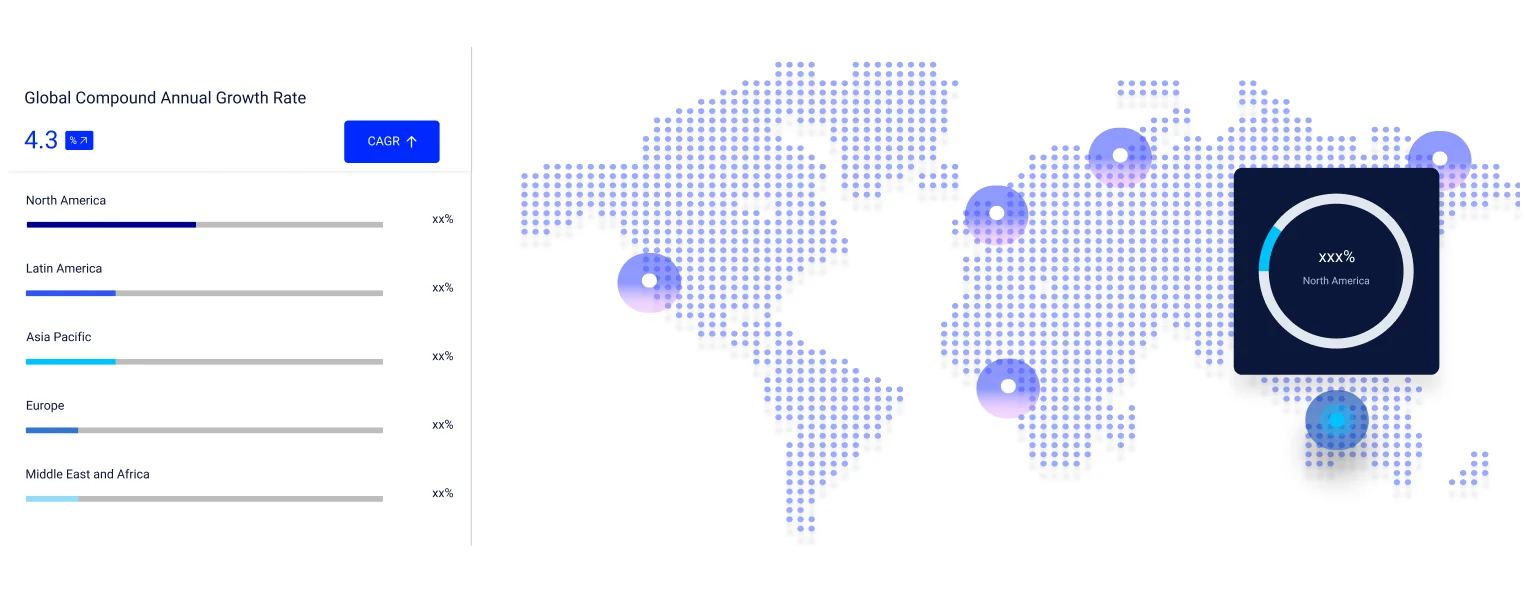
Compound Annual Growth Rate
2.9%
Value in USD Billion
2026-2035
Daimler Truck along with Torc Robotics selected Innoviz as the Short-Range LiDAR supplier for the mass production of SAE Level 4 autonomous Class 8 semi-trucks. This expands future electronic logging device (ELD) demand by accelerating autonomous Class 8 trucking, where logging, safety, and telematics will need to fuse into one compliance-plus-performance stack.
J. J. Keller & Associates introduced the VT100, a two-in-one vehicle telematics device that combines electronic logging device (ELD) functionality with 24/7 GPS tracking. This strengthens convergence of ELD and GPS telematics into a single device, making integrated platforms more attractive than standalone logging units.
Geotab and Daimler Truck North America (DTNA) teamed up to streamline fleet management. This electronic logging devices (ELDs) market development tightens OEM–telematics partnerships, allowing ELD platforms to plug directly into factory vehicle data for richer diagnostics and smoother fleet analytics.
Trimble and Sabanto announced the integration of Trimble BX992 Dual Antenna GNSS receivers along with Trimble CenterPoint RTX into Sabanto's autonomous solutions. Trimble will serve as Sabanto's primary provider of autonomous technology, supplying precise positioning for its fleet. This signals the shift toward high-precision automation in commercial fleets, positioning ELD vendors to support autonomous workflows and remote fleet oversight.
Governments are hardwiring ELDs into transport law, which keeps adoption patterns structural. In the United States, the FMCSA ELD rule requires most interstate commercial drivers to use engine-synced devices to record hours of service automatically, replacing paper logs and manual records. Canada is pointing towards the same direction with a federal ELD mandate for all federally regulated carriers, enforced nationally and supported by a formal technical standard. As these electronic logging devices (ELDs) market trends mature, fleets that previously bought the cheapest devices are standardizing enterprise-grade ELD platforms. For example, KeepTruckin offers a load-matching platform that uses data collected from its electronic logging devices.
Regulatory oversight is becoming a growth catalyst. FMCSA has removed multiple non-compliant products from its registered ELD list, giving carriers only 60 days to replace those units or temporarily revert to paper logs. At the same time, Canada’s CCMTA ELD Technical Standard was updated to version 1.3 in August 2024, sharpening performance and interoperability expectations. When a device fails an audit or gets delisted, fleets are pushed into urgent replacement programs and often treat that disruption as a chance to move onto more robust, analytics-ready ELD ecosystems. In December 2025, Louisiana introduced real-time sudden slowdown alerts and a virtual sign network for commercial drivers through Drivewyze by Fleetworthy’s Smart Roadways platform, reshaping the electronic logging devices (ELDs) market dynamics.
ELD data is being increasingly fused with AI telematics and video. Providers like Samsara and Motive combine log data with AI dash cams to detect harsh braking, distraction and speeding, triggering instant alerts and structured coaching workflows. In August 2025, Trucking Hub revealed the introduction of Dashcam One, the first dashcam in the industry featuring an integrated Electronic Logging Device (ELD), real-time telematics, diagnostics, and AI-driven systems all in one unit, accelerating the electronic logging devices (ELDs) market value. Industry research shows AI telematics helping fleets reduce the number of accidents, optimize routes and cut idle time, while compliance and risk modules simplify HOS management.
The broader telematics boom is pulling ELD demand forward because most modern fleet platforms treat logging as the anchor module inside a larger connected-truck stack. Vehicle telematics is gaining major momentum across the world owing to route optimization, fuel analytics, and predictive maintenance needs. In September 2025, Geotab announced that it became the first telematics company to certify its electronic logging device with Daimler Truck. Vendors now bundle ELD, GPS tracking, fuel dashboards, maintenance schedules and even cold-chain monitoring under one subscription, driving demand in the electronic logging devices (ELDs) market. For fleet owners, a single pane of glass that handles compliance plus efficiency is easier to justify than separate tools, so ELD suppliers with strong telematics portfolios are winning multi-year contracts.
Cross-border and multi-jurisdiction carriers are driving demand for sophisticated, rules-aware ELD platforms. Canada’s ELD mandate has been fully effective for federally regulated carriers since June 2021, with third-party device certification required. Such overlapping regimes make manual interpretation complicated, so fleet owners increasingly want configurable rule engines that automatically handle United States and Canadian HOS regulations, produce audit-ready reports and issue early alerts, accelerating the electronic logging devices (ELDs) market trends for innovations. In August 2023, Lytx announced new enhancements to its Driver Vehicle Inspection Report (DVIR) solution, which the company describes as a simplified electronic platform for vehicles beyond the ELD mandate.
-market-by-vehicle-type.png)
Read more about this report - REQUEST FREE SAMPLE COPY IN PDF
The EMR’s report titled “Global Electronic Logging Devices (ELDs) market Report and Forecast 2026-2035” offers a detailed analysis of the market based on the following segments:
Market Breakup by Vehicle Type
Key Insight: Across all vehicle types considered in the report, the logic behind electronic logging devices (ELDs) adoption matches the operating pressure that each fleet faces. Heavy-duty trucks invest in these platforms to avoid violation risks and delays in freight commitments. Light commercial vehicles adopt these platforms as delivery speed and route density demand tight performance control even on small fleets. Buses increasingly integrate ELDs for safety scoring and predictable duty rosters across long passenger routes.
Market Breakup by Form
Key Insight: Embedded solutions continue to lead the electronic logging devices (ELDs) market dynamics with compliance-first deployments, especially in heavy trucking and cross-border operations. Integrated solutions grow at a relatively faster pace because they streamline technology stacks and give operators analytics that go beyond regulation. Some of the fleets even deploy mixed environments, using embedded systems for long-haul routes and integrated telematics-first ELDs for short-haul or urban duty.
Market Breakup by Component
Key Insight: Each component in the electronic logging devices (ELDs) market exists for a different operational stress point. Telematics drives adoption because it promises efficiency gains alongside compliance. Engine modules guarantee accuracy, tying every log entry to real powertrain behaviour. External displays reduce distraction and standardize workflows, which matters during high-pressure delivery days. Companies combine these components into one frictionless experience so that the overall driver acceptance stays high and fleet managers get actionable information.
Market Breakup by Region
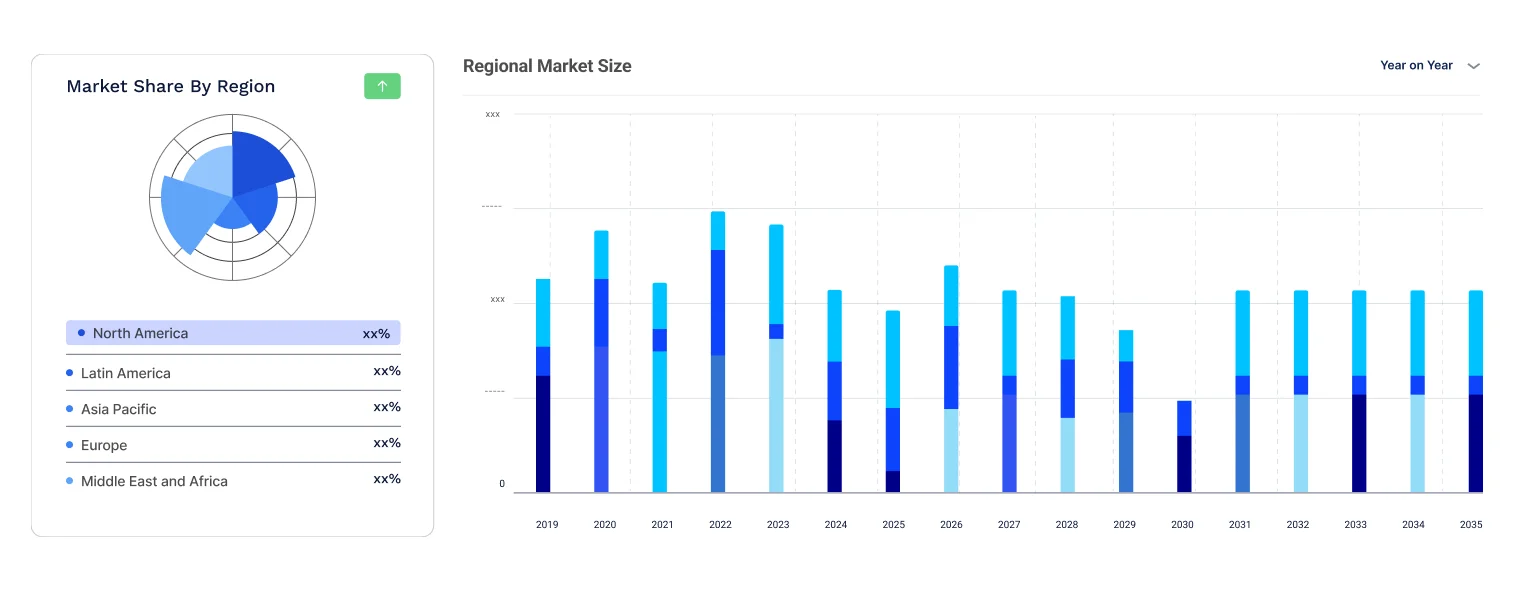
Key Insight: North America retains its dominance in the electronic logging devices (ELDs) market thanks to fully enforced regulations and high digital maturity. Europe grows steadily through safety-driven telematics adoption and compliance harmonization. Asia Pacific is expanding its shares at a considerable speed, fueled by organized logistics and cross-border freight scaling. Latin America gradually adapts with global trends as digital fleet tools replace paper processes. The Middle East and Africa show selective demand tied to economic corridors and smart transport zones.
By vehicle type, trucks secure the major market share due to strict long-haul compliance requirements
Trucks hold the largest share in the market because long-haul freight fleets face the highest audit exposure and therefore rely heavily on ELD-driven compliance automation, boosting the electronic logging devices (ELDs) market revenue. With multiple drivers swapping shifts across long distances, manual logs create too much liability, fleet owners standardize on certified logging platforms that sync directly with the engine control module and automate HOS reporting. In August 2025, Trucking Hub named 3MD ELD its preferred electronic logging device for integrated fleet compliance.
Light commercial vehicles are quickly expanding their shares in the electronic logging devices (ELDs) market scope. Urban logistics, e-commerce and field-service networks now depend on short-route fleets that run intense daily schedules. Previously, LCV operators skipped high-end telematics and compliance tools, but rising delivery density and performance-based customer contracts make real-time driver monitoring and accurate logging essential.
By form, embedded ELDs secure the bigger market share hare due to tamper-proof compliance needs
Embedded ELDs lead the market as regulators and large carriers prefer tamper-resistant hardware tied directly to the vehicle’s engine control module. Embedded units eliminate data manipulation risks and hold up better during audits because trip logs, duty cycles and diagnostics are captured automatically without relying on BYOD smartphones and inconsistent Bluetooth pairing. In October 2025, Trinetra Guard, powered by ELD Mandate, announced the launch of EM6000, which is an embedded anti-theft device for trailers and cargo. Embedded systems also integrate more smoothly with dispatch platforms, fuel performance dashboards and maintenance alerts since they are always powered and always connected, further stimulating the electronic logging devices (ELDs) market expansion.
Integrated ELDs, where logging functionality remains at the core of larger fleet management or telematics suite, are growing their market shares at the fastest rate. This is because fleets do not require separate vendors for safety, routing and compliance anymore. With integrated systems, ELD data feeds coaching tools, fuel benchmarking, dispatch scheduling and predictive maintenance. This turns the ELD from a regulatory burden into the core data engine of fleet performance, creating renewed demand in the electronic logging devices (ELDs) market.
By component, telematics account for a substantial share of the market with its operational intelligence
Telematics positions itself at the heart of premium ELD deployments because it transforms raw log entries into operational intelligence. Modern telematics modules combine GPS tracking, engine diagnostics, behavior analytics and routing into the same dataset that powers HOS logs, propelling the electronic logging devices (ELDs) market growth. Dispatchers can see which duty status patterns correlate with fuel waste or which delivery windows risk violation. Such a holistic visibility allows managers to coach drivers, optimize routes and justify safety incentives with hard evidence. In November 2022, ATrack Technology Inc. announced the launch of AX300 OBD tracker and AK500 telematics gateway that facilitate logistics operators improving management efficiency and reducing operating costs.
External displays observe fast growth in the electronic logging devices (ELDs) market because drivers need clearer, distraction-free guidance during busy schedules. Compact touchscreen displays mounted inside the cab show HOS countdowns, break alerts, routing instructions and safety warnings in a format that does not rely on personal smartphones. Fleets that struggle with app adoption now turn to purpose-built displays to enforce consistency and reduce support tickets.
North America dominates the global industry due to strict mandates and enforcement maturity
North America currently holds the leading position in the market as the United States and Canada have the most mature regulatory frameworks around ELD compliance and driver hours. Fleets here treat ELD systems as core business infrastructure and not optional add-ons. The competitive landscape also pushes adoption. Larger carriers standardize high-end platforms, pushing smaller fleets to follow suit to compete on safety records, insurance rates and service reliability. The region benefits from deep telematics innovation and strong venture investment which translates into product updates and fast integrations.
The electronic logging devices (ELDs) market in Asia Pacific experiences accelerated growth as e-commerce, regional freight corridors and organized logistics platforms are rapidly expanding. Fleet operators in India, Southeast Asia and Australia are shifting from manual recordkeeping to connected fleet dashboards as customer SLAs tighten and compliance expectations gradually increase.
Competition in the global market is no longer about simply capturing HOS compliance, it is about who can turn mandatory logging into operational profit. Key electronic logging devices (ELDs) market players are racing to convert ELD units into intelligent fleet-efficiency hubs by integrating AI telematics, video analytics, and automated violation forecasting. Platforms that help fleets reduce insurance claims, fuel waste, and downtime are gaining more contracts than those that only check compliance boxes.
The biggest opportunities for electronic logging device (ELD) companies are found in mid-sized trucking and LCV fleets that are transitioning from fragmented tools to unified dashboards. At the same time, product retention is being obtained through modular SaaS subscriptions, not just hardware. Companies that offer predictive maintenance, automated driver coaching, and risk-scoring layers on top of core ELD functions are building stronger customer retention and expanding per-vehicle revenue without raising acquisition costs.
Trimble Inc, established in 1978 and headquartered in the United States, delivers ELD solutions through a connected fleet intelligence model. Its platforms combine HOS compliance with dynamic routing, fuel performance benchmarks, and AI-linked driver coaching. Trimble integrates maintenance prediction and digital workflow tools, enabling fleets to simplify operations from a single interface.
Founded in 1988 and headquartered in the United States, Omnitracs, LLC targets enterprise-grade fleets with automated compliance and deep driver analytics. Its ELD technology links real-time log data with fatigue scoring, safety event triggers, and productivity dashboards for dispatchers.
Teletrac Navman Ltd., established in 1988, with its head office located in California, United States, provides ELD solutions centered on video-enhanced telematics and driver behavior analytics. The platform merges AI dash-cam data with HOS insights to identify real on-road risks and automate driver coaching.
Geotab Inc, established in 2000 and headquartered in Oakville, Canada, enables ELD compliance through a scalable open-platform model. Fleets use Geotab to combine logging, safety, routing, fuel tracking, and maintenance automation within one telematics ecosystem. The company’s strength lies in its marketplace of third-party integrations, allowing operators to add specialist tools without replacing core hardware.
*Please note that this is only a partial list; the complete list of key players is available in the full report. Additionally, the list of key players can be customized to better suit your needs.*
Other key players in the market include Donlen Corporation, Garmin Ltd., AT&T Inc., WorkWave LLC, and Verizon Communications Inc., among others.
Unlock the latest insights with our electronic logging devices (ELDs) market trends 2026 report. Discover regional growth patterns, consumer preferences, and key industry players. Stay ahead of competition with trusted data and expert analysis. Download your free sample report today and drive informed decisions in the market.


Upto 15% Off
USD
$2499 $2249
$3999 $3599
$4999 $4249
$5999 $5099


*While we strive to always give you current and accurate information, the numbers depicted on the website are indicative and may differ from the actual numbers in the main report. At Expert Market Research, we aim to bring you the latest insights and trends in the market. Using our analyses and forecasts, stakeholders can understand the market dynamics, navigate challenges, and capitalize on opportunities to make data-driven strategic decisions.*
In 2025, the market reached an approximate value of USD 14.81 Billion.
The market is projected to grow at a CAGR of 2.90% between 2026 and 2035.
The market is estimated to witness a healthy growth in the forecast period of 2026-2035 to reach USD 19.71 Billion by 2035.
Key strategies driving the market include merging ELD, telematics, and video into unified dashboards, improving driver-coaching automation, expanding insurance-data partnerships, offering modular SaaS pricing, and strengthening cross-border compliance engines for mixed fleet operations.
Key trends aiding market expansion include the integration of smartphones with electronic logging devices technology for monitoring vehicle behaviour, emergence of advanced ELD features, and increasing cases of data breach.
The major regions in the market are North America, Latin America, the Middle East and Africa, Europe, and the Asia Pacific.
Light commercial vehicles, trucks, and buses are the leading vehicle types that uses electronic logging devices (ELDs).
Embedded and integrated are the significant forms of ELDs.
The major components of ELDs include telematics, engine module, and external display.
The key players in the market include Trimble Inc, Omnitracs, LLC, Teletrac Navman Ltd., Geotab Inc., Donlen Corporation, Garmin Ltd., AT&T Inc., WorkWave LLC, and Verizon Communications Inc., among others.
Price pressure from low-cost vendors, driver resistance to new workflows, costly certification renewals, data privacy concerns, and the complexity of integrating ELD platforms into fragmented legacy fleet systems.
Explore our key highlights of the report and gain a concise overview of key findings, trends, and actionable insights that will empower your strategic decisions.
| REPORT FEATURES | DETAILS |
| Base Year | 2025 |
| Historical Period | 2019-2025 |
| Forecast Period | 2026-2035 |
| Scope of the Report |
Historical and Forecast Trends, Industry Drivers and Constraints, Historical and Forecast Market Analysis by Segment:
|
| Breakup by Vehicle Type |
|
| Breakup by Form |
|
| Breakup by Component |
|
| Breakup by Region |
|
| Market Dynamics |
|
| Competitive Landscape |
|
| Companies Covered |
|
| Report Price and Purchase Option | Explore our purchase options that are best suited to your resources and industry needs. |
| Delivery Format | Delivered as an attached PDF and Excel through email, with an option of receiving an editable PPT, according to the purchase option. |
Datasheet
One User
USD 2,499
USD 2,249
tax inclusive*
Single User License
One User
USD 3,999
USD 3,599
tax inclusive*
Five User License
Five User
USD 4,999
USD 4,249
tax inclusive*
Corporate License
Unlimited Users
USD 5,999
USD 5,099
tax inclusive*
*Please note that the prices mentioned below are starting prices for each bundle type. Kindly contact our team for further details.*
Flash Bundle
Small Business Bundle
Growth Bundle
Enterprise Bundle
*Please note that the prices mentioned below are starting prices for each bundle type. Kindly contact our team for further details.*
Flash Bundle
Number of Reports: 3
20%
tax inclusive*
Small Business Bundle
Number of Reports: 5
25%
tax inclusive*
Growth Bundle
Number of Reports: 8
30%
tax inclusive*
Enterprise Bundle
Number of Reports: 10
35%
tax inclusive*
How To Order

Select License Type
Choose the right license for your needs and access rights.

Click on ‘Buy Now’
Add the report to your cart with one click and proceed to register.

Select Mode of Payment
Choose a payment option for a secure checkout. You will be redirected accordingly.
Strategic Solutions for Informed Decision-Making
Gain insights to stay ahead and seize opportunities.

Get insights & trends for a competitive edge.

Track prices with detailed trend reports.

Analyse trade data for supply chain insights.

Leverage cost reports for smart savings

Enhance supply chain with partnerships.

Connect For More Information
Our expert team of analysts will offer full support and resolve any queries regarding the report, before and after the purchase.
Our expert team of analysts will offer full support and resolve any queries regarding the report, before and after the purchase.
We employ meticulous research methods, blending advanced analytics and expert insights to deliver accurate, actionable industry intelligence, staying ahead of competitors.
Our skilled analysts offer unparalleled competitive advantage with detailed insights on current and emerging markets, ensuring your strategic edge.
We offer an in-depth yet simplified presentation of industry insights and analysis to meet your specific requirements effectively.




