

Consumer Insights
Uncover trends and behaviors shaping consumer choices today
Procurement Insights
Optimize your sourcing strategy with key market data
Industry Stats
Stay ahead with the latest trends and market analysis.
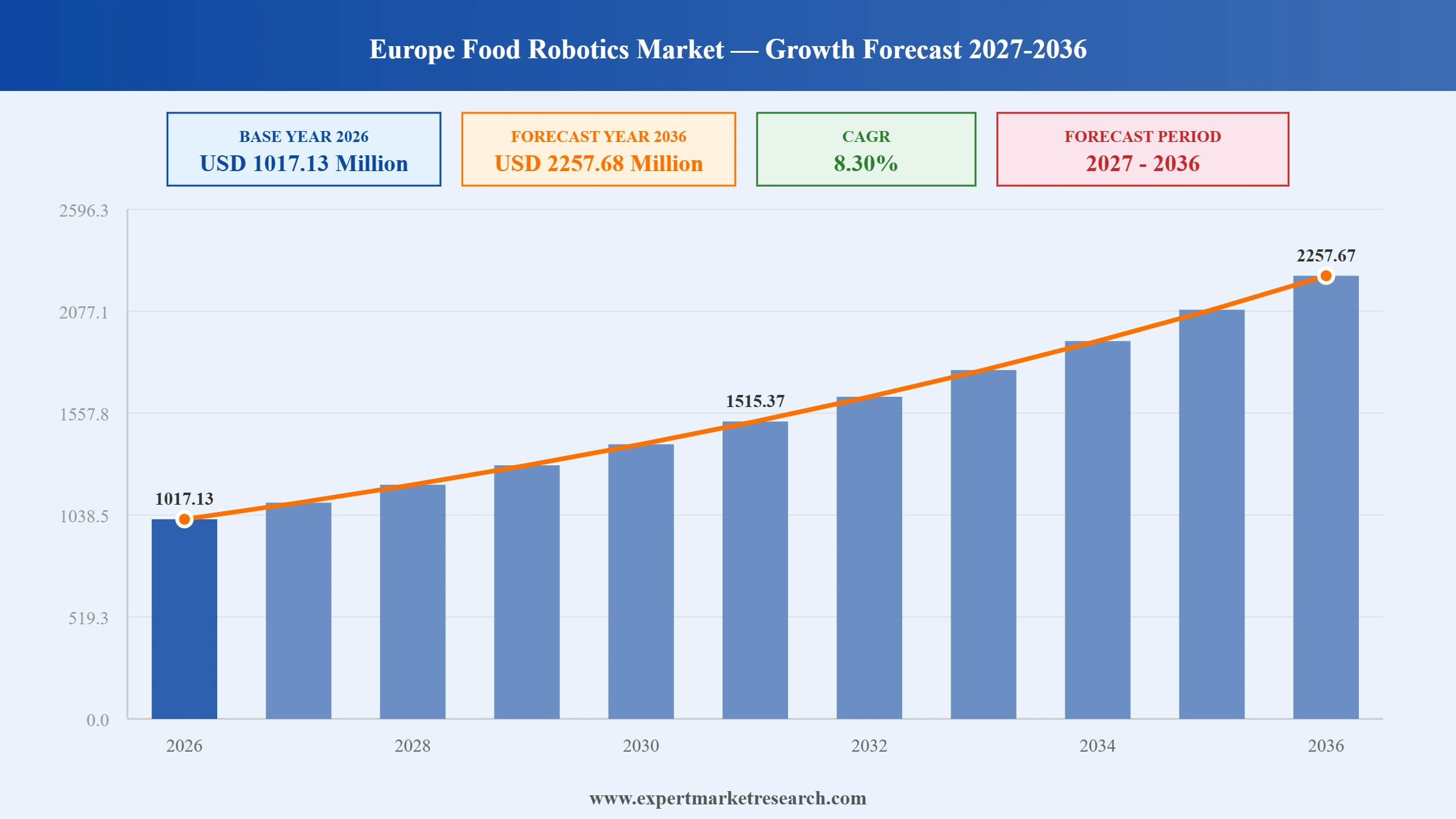
The Europe food robotics market attained a value of USD 939.18 Million in 2025 and is projected to expand at a CAGR of 8.30% through 2035. The market is further expected to achieve USD 2084.65 Million by 2035. Europe's food manufacturers are increasingly combining robotics with AI, vision, and digital tools: an EU-backed HIGHFIVE initiative funded 16 innovation projects with €1.4 million, including a bakery mobile-robotics application, creating practical routes from technology trials to scalable industrial deployment.
An unconventional growth catalyst is the increasing need for robot-compatible food formats and packaging architectures. European food companies are changing their tray design, carton design, pouch design, and food package layout to make it easier for robots to detect, orient, and handle items. This forms a cycle that links packaging design and investment in automation since standardized shapes mean fewer mistakes, faster changeover times, and faster speeds. For robotics companies, this means they can start working on food products even before production lines are set up by collaborating with food packaging material makers and food companies. The trend could accelerate demand for application-specific grippers, vision systems, and flexible robotic cells across high-SKU food operations, thereby boosting the Europe food robotics market value.
The development of adaptive robotic grippers is now considered to be a valuable innovation when it comes to manipulating different types of food products due to their diverse textures, weights, sizes, and conditions. Such innovative robotic grippers are capable of automatically adjusting the force of manipulation based on the features of each particular product by using machine vision and smart control systems that include force sensors. Adaptive robotic grippers are able to minimize deformations and manipulation-related damages when working with such sensitive food products as baked goods, fresh produce, candies, and other food products.
High integration complexity remains a constraint for food manufacturers adopting robotics, particularly when robots must interface with legacy conveyors, packaging machines, vision systems, and production-control software. Unlike standardized industrial environments, food lines frequently involve frequent product changes and specialized equipment, increasing commissioning requirements and downtime risks. The solution lies in modular, interoperable robotic cells that use standardized communication protocols, simulation, digital twins, and pre-engineered interfaces. Suppliers can also offer virtual commissioning and pilot cells before full-scale installation, allowing manufacturers to identify compatibility issues and optimize robot movements without interrupting live production. This approach can reduce deployment uncertainty while enabling phased automation across existing facilities, thereby boosting the Europe food robotics market developments.
Read more about this report - REQUEST FREE SAMPLE COPY IN PDF
ABB Robotics launched PickMaster Lite in May 2026 to simplify the development and deployment of vision-guided robotic picking systems for packaging OEMs and system integrators. The software is suited to food and beverage applications and provides conveyor tracking, motion control, and pre-configured workflows. ABB states that the platform can reduce engineering effort by 30% and commissioning and deployment time by 25%. Integration with RobotStudio also enables digital-twin simulation and robot-path optimisation before physical installation.
FANUC announced the DR/8-16B Stainless in May 2026 as a new parallel-link robot designed specifically for food-industry applications. The robot provides an 8-kg payload and 1,600-mm operating range, compared with 6 kg and 1,200 mm for the existing DR/6-12B Stainless. Its stainless-steel exterior, IP69K protection, simplified wiring, and washdown-oriented construction address demanding hygiene requirements. FANUC planned mass production for August 2026, expanding its high-speed robotic options for food handling and packaging applications.
Kawasaki Robotics presented new picking, packaging, and palletising solutions at interpack 2026 in Düsseldorf in May 2026. Its European showcase included the new CP110L palletising robot, offering a 110-kg payload, reach of up to 2,505 mm, and processing capability of more than 2,200 cartons per hour. Kawasaki also demonstrated an automated picking system developed with P.A.C. Robotics and CSB-System for a major German food retailer, targeting approximately 10–15 picks per minute during pilot operation, thus shaping the trends of the Europe food robotics market.
KUKA showcased advanced robotic packaging technologies at interpack 2026 in Düsseldorf, Germany, in April 2026, ahead of the exhibition held from May 7–13. Its demonstrations included fast pick-and-place systems, hygienic robots, palletising solutions, AMRs, and intelligent software for food and consumer-goods applications. KUKA demonstrated a multi-robot application using cameras and AI-controlled automation for food-related packaging scenarios, including chocolate, baby-food spoons, and hamburger patties, highlighting flexible automation within confined production spaces.
Food manufacturers increasingly require robots to identify products that differ in size, orientation, shape, and packaging format. The European Commission's 2025 food-technology assessment identifies AI, robotics, and automated technologies as tools for addressing process variability and improving quality assurance. In commercial terms, this favors suppliers capable of integrating cameras, machine learning, conveyor tracking, and robotic motion rather than selling standalone robot arms. For food processors, investment opportunities are therefore shifting toward vision-guided cells capable of changing recipes or product formats with limited manual intervention. This particularly benefits high-mix operations such as fresh foods, bakery products, confectionery, and prepared meals.
European digital-innovation initiatives are increasingly using collaborative robots to demonstrate automation in food-sector applications. In March 2025, the European Digital Innovation Hubs Network highlighted a collaborative robotic palletising feasibility study involving a poultry-distribution operation, where manual box palletising created productivity, safety, and quality constraints. The commercial implication is important for suppliers: food manufacturers do not always need fully enclosed high-throughput cells. Cobots can address constrained workspaces and repetitive end-of-line operations, creating opportunities among mid-sized processors that previously considered robotics too complex or capital intensive.
Europe's food-technology ecosystem is increasingly supporting companies with demonstration facilities, testing environments, and digital innovation hubs. In April 2026, the European Commission-backed DEDEP.eu initiative highlighted Testing and Experimentation Facilities and European Digital Innovation Hubs as mechanisms for moving AI, robotics, and data-driven solutions from validation into operational deployment. This structure reduces technical uncertainty for food manufacturers assessing robotic cells and creates opportunities for integrators that can provide pilot projects, feasibility studies, commissioning, training, and subsequent scale-up rather than simply supplying hardware.
Food plants require equipment capable of repeated cleaning, moisture exposure, and contamination-controlled operation. FANUC's European food-robot portfolio includes models with IP67 or IP69K protection, food-grade lubricants, corrosion-resistant finishes, and specialized designs for primary food handling. KUKA similarly provides stainless-steel hygienic-machine variants and food-grade lubrication options. This favors suppliers that design robotics around washdown procedures, sanitation protocols, cleanability, and food-contact risk instead of adapting general industrial robots after installation.
European food automation is expanding beyond individual picking or packing machines toward connected sequences involving material handling, processing, packaging, palletising, and logistics. KUKA's food portfolio, for example, covers raw-material handling, processing, primary and secondary packaging, palletising, autonomous transport, vision systems, simulation, and predictive maintenance. The opportunity for European manufacturers is therefore shifting toward integrated cells and software architectures capable of exchanging production data across multiple stages. Suppliers able to combine robotic hardware, conveyors, vision, software, and intralogistics can address larger automation budgets and recurring service requirements.
The Expert Market Research’s report titled "Europe Food Robotics Market Report and Forecast 2026-2035” offers a detailed analysis of the market based on the following segments:
Market Breakup by Type
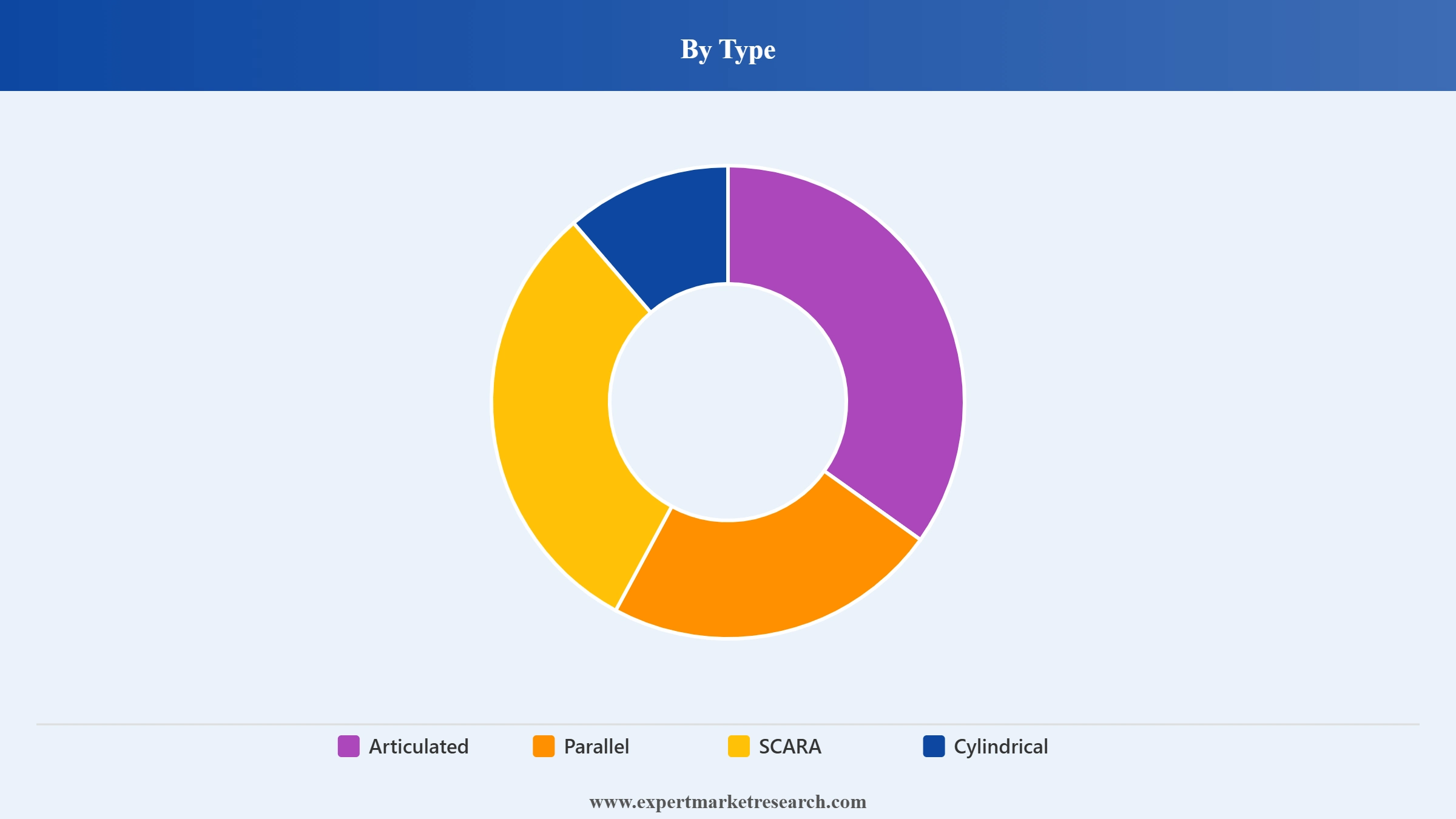
Key Insight: Articulated, parallel, SCARA, cylindrical, and other robotic configurations are gaining traction because European food factories have increasingly differentiated automation requirements rather than a single standardized workload. Articulated robots address flexible handling, processing, and palletising. Parallel robots suit high-speed lightweight picking. SCARA systems support compact repetitive movements, and cylindrical or specialized designs can address constrained material-handling requirements. FANUC's European portfolio illustrates this diversification by offering food-grade articulated and SCARA systems alongside delta robots, with food-oriented protection and lubrication specifications. The resulting market is becoming application-led, with robot geometry selected according to payload, cycle time, hygiene, reach, footprint, and product variability.
Market Breakup by Payload
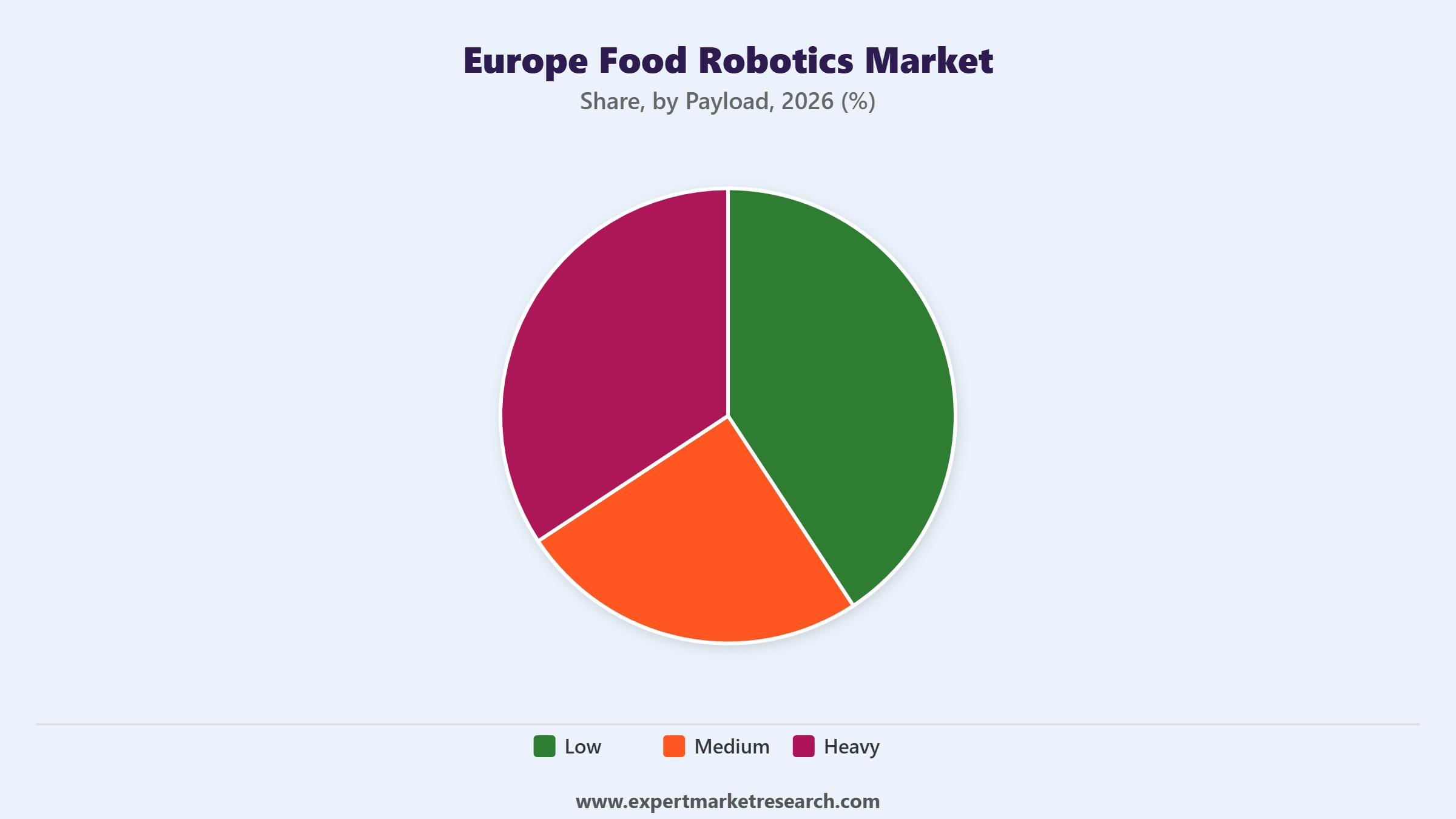
Key Insight: Low-, medium-, and heavy-payload robots collectively serve different points of the food production chain. Low-payload systems are suited to delicate picking, sorting, inspection, and lightweight packaging, medium-payload equipment bridges product handling and secondary packaging, while heavy-payload robots support palletising, bulk handling, and end-of-line logistics. The public product portfolios of major suppliers demonstrate the breadth of this range. KUKA's food portfolio includes robots from low single-digit payloads through palletising systems reaching up to 1,300 kg, illustrating the industry's move toward task-specific payload selection. Food manufacturers increasingly combine several payload classes within one facility rather than standardizing on a single robotic platform.
Market Breakup by Application
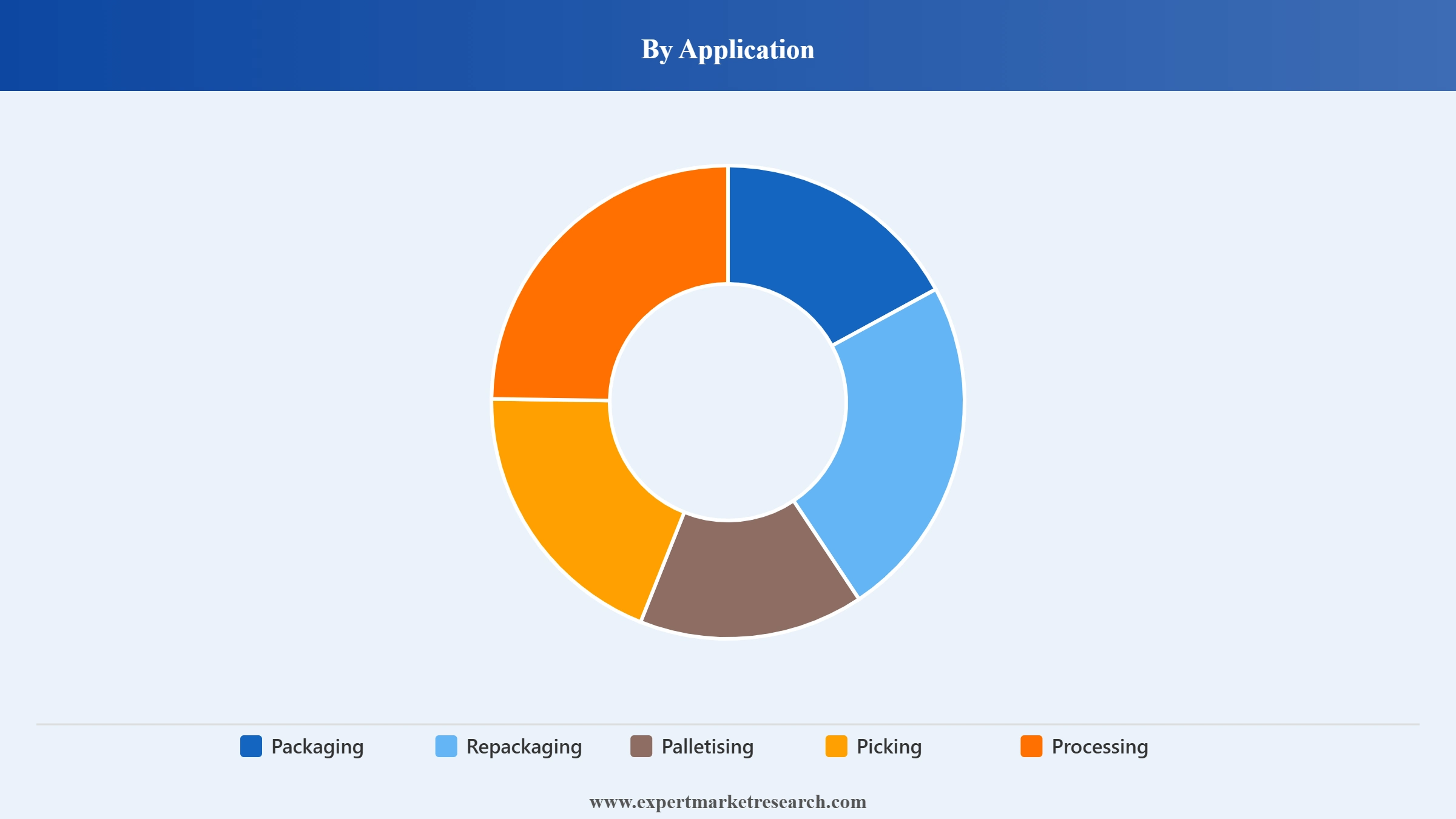
Key Insight: Packaging, repackaging, palletising, picking, processing, and other applications are increasingly interconnected within European food plants. Packaging remains closely linked to high-throughput robotic handling because product placement, sealing, case loading, and format changes can be standardized more readily than many primary-processing tasks. Picking and repackaging are also benefiting from vision systems that allow robots to identify changing product arrangements. Palletising is moving toward integrated end-of-line systems, while processing applications require greater attention to hygiene and food-contact conditions. The European Commission's food-robotics assessment specifically identifies production, processing, packaging, and shipment as areas in which robotics can be deployed.
Market Breakup by Country
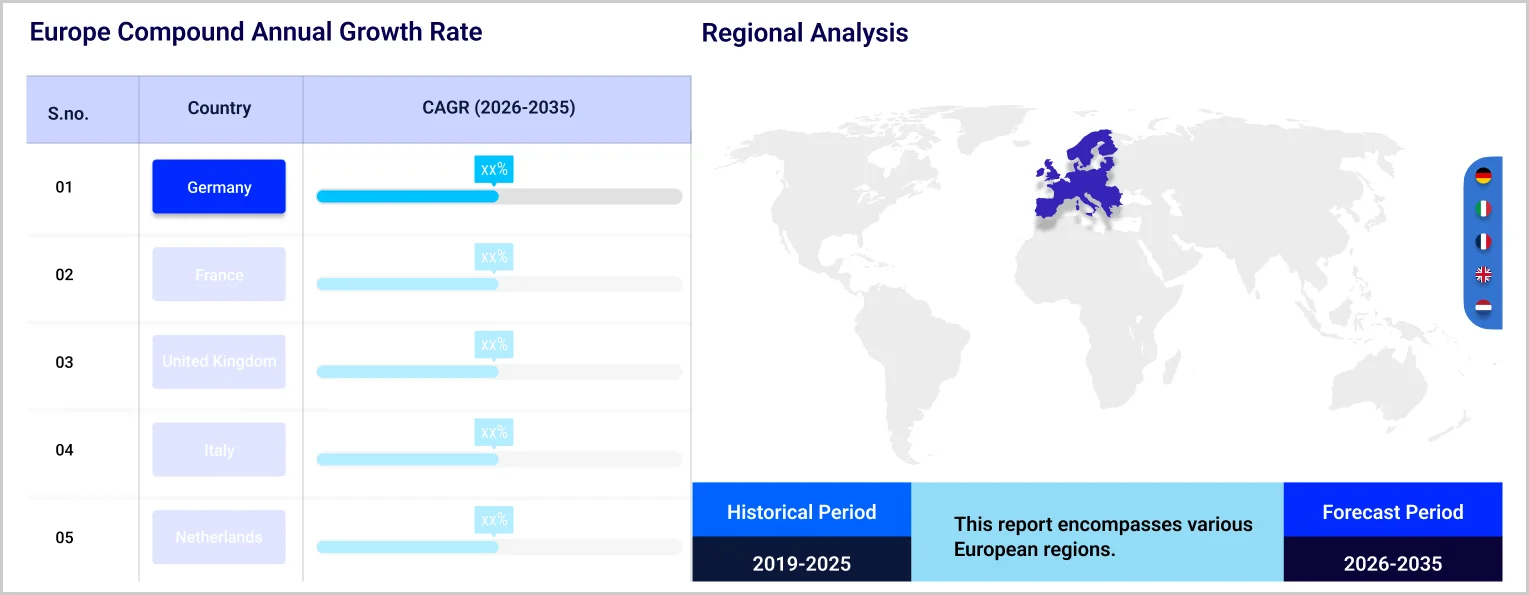
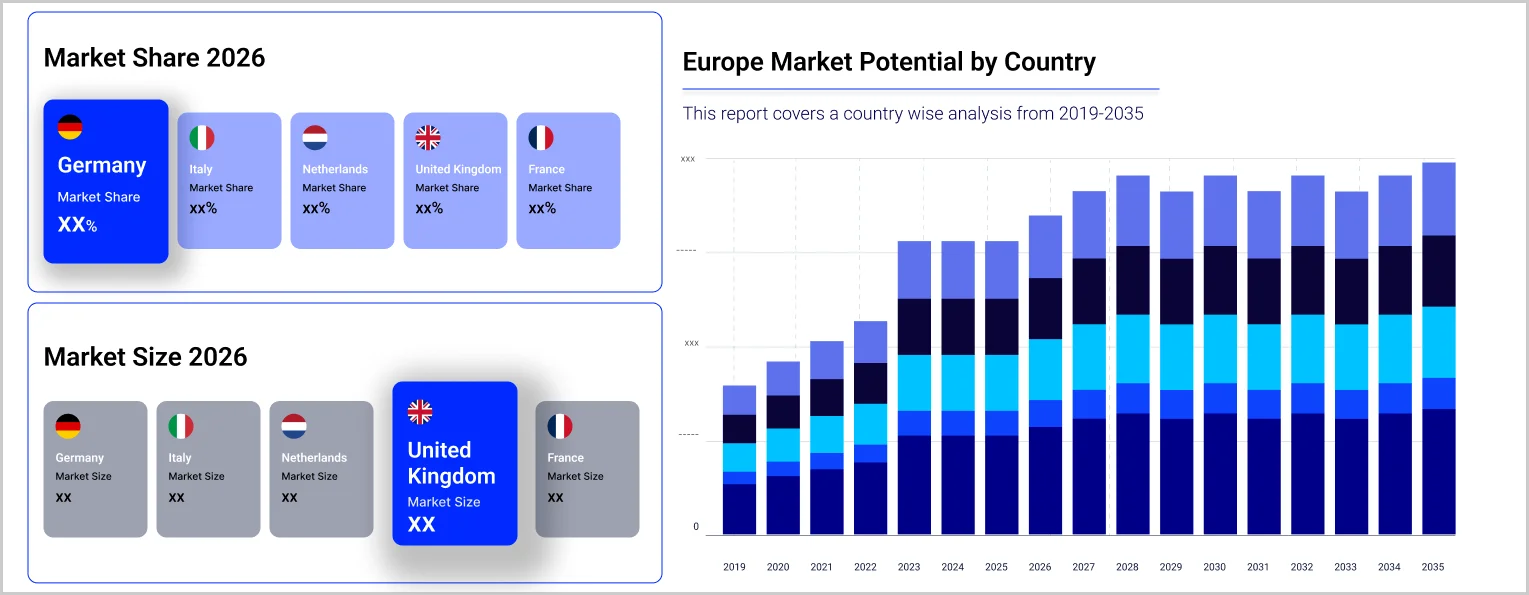
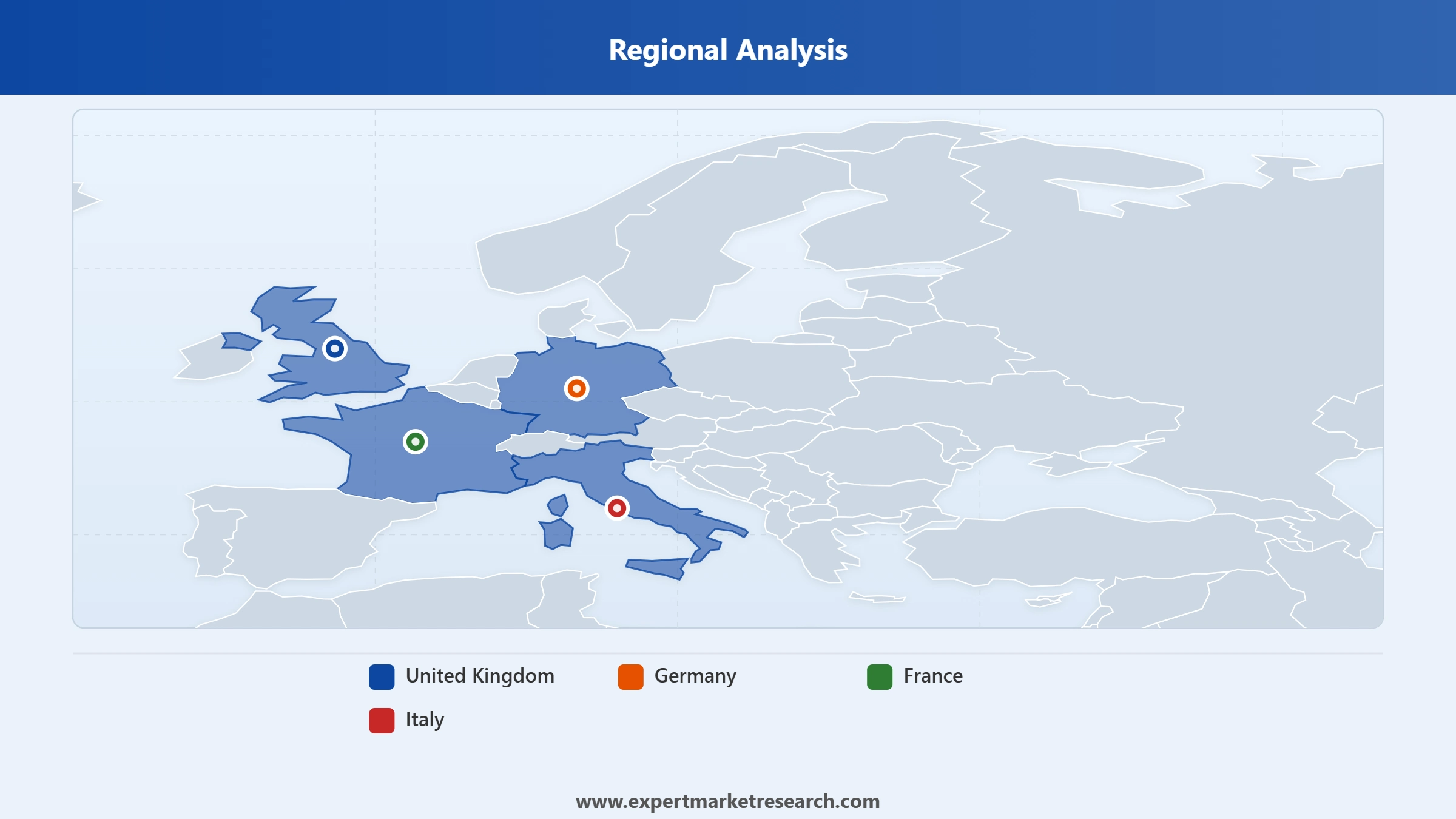
Key Insight: The United Kingdom, Germany, France, Italy, and other European markets are progressing at different automation intensities because of differences in industrial structure, food-processing concentration, labor availability, and existing robotics infrastructure. Germany has the strongest industrial robotics base among the named countries, while Italy also represents a substantial automation market. France combines significant industrial activity with a sizeable food-processing sector, and the UK has an established automation ecosystem despite lower recent industrial robot installations. The broader European market recorded 85,000 industrial robot installations in 2024, with 67,800 in the EU, demonstrating the depth of the supplier, integrator, and installed-equipment ecosystem supporting food robotics, thus driving the demand in the Europe food robotics market.
Read more about this report - REQUEST FREE SAMPLE COPY IN PDF
Articulated robots are expected to maintain the largest share of deployments in Europe because their 4-, 6-, and 7-axis configurations can cover multiple stages of food production with one robotic architecture. KUKA's food portfolio spans compact hygienic robots through palletising platforms, with payloads extending to 1,300 kg, allowing the same technology family to address product handling, packaging, case movement, and end-of-line palletising. FANUC also offers food-grade articulated robots in approximately 10-kg, 12-kg, and 25-kg classes, demonstrating their suitability for both lightweight and intermediate handling. Their ability to reach around machinery, work at different orientations, and accommodate varied tooling makes articulated systems particularly suitable for European plants running multiple products and production formats. Such developments will thus boost Europe food robotics market trends in the long run.
Read more about this report - REQUEST FREE SAMPLE COPY IN PDF
Parallel robots are expected to register the fastest growth as food manufacturers pursue very high pick rates without increasing the footprint of production cells. Delta-style configurations are particularly suited to conveyor-based operations where products arrive continuously and must be identified, picked, rotated, and placed within fractions of a second. ABB's IRB 360 FlexPicker and IRB 365 FlexPacker target high-speed picking and packing, while the IRB 365 can handle payloads of up to 1.5 kg at high cycle rates. Such characteristics create opportunities in confectionery, bakery, snacks, fruits, and other lightweight products where throughput and rapid product changeovers are critical.
Low-payload robots are expected to retain the largest deployment base in Europe because many food-automation tasks involve small packs, individual products, trays, and lightweight items rather than heavy loads. FANUC’s food-oriented portfolio illustrates this compact-robot opportunity, with SCARA systems available around 3 kg and 6 kg payloads, alongside articulated food robots in the approximately 10-kg class. These capacities suit high-cycle picking, sorting, inspection, labelling, and primary or secondary packaging. The segment also benefits from smaller footprints, enabling robots to be retrofitted into existing production lines where floor space is constrained. For European processors, compact payloads therefore provide a practical entry point for automating repetitive manual stations while maintaining flexibility across multiple SKUs and packaging formats.
Read more about this report - REQUEST FREE SAMPLE COPY IN PDF
Medium-payload robots are expected to register the fastest growth as European food manufacturers increasingly automate the material-transfer stages between product handling and heavy palletising. KUKA’s European portfolio includes the KR IONTEC HO with a 50-kg payload and palletising configurations reaching 70 kg, demonstrating the capacity available for carton handling, case movement, secondary packaging, and pallet preparation. This range can address heavier loads that exceed compact pick-and-place robots while avoiding the oversized infrastructure associated with high-payload systems. Growth is particularly relevant in facilities adopting multiple robotic cells, where medium-payload units can connect packaging lines with downstream logistics and reduce manual movement between production stages.
Packaging leads the Europe food robotics market because it offers one of the clearest routes to end-of-line automation, particularly where products already emerge from processing lines in predictable flows. Robots can be deployed for carton loading, tray packing, case packing, and palletising without extensively changing upstream food-processing equipment. A particularly important opportunity is mixed-SKU packaging, where retailers require different pack configurations from the same production line. Robotic systems can switch formats through programmable recipes rather than mechanical retooling for every product run. This is increasingly relevant to European processors facing shorter production batches, private-label proliferation, and frequent packaging-format changes. Hygienic robotic arms and washdown-compatible equipment further enable deployment around secondary packaging zones where food exposure and contamination-control requirements remain important.
Read more about this report - REQUEST FREE SAMPLE COPY IN PDF
Picking is gaining traction because European food manufacturers increasingly need robots to perform the irregular, high-frequency movements that conventional automation struggles to manage. Fresh bakery products, fruits, vegetables, confectionery, meat portions, and prepared foods can vary in orientation, size, and surface characteristics, creating a strong use case for machine vision combined with adaptive gripping. The opportunity is particularly distinctive in bin picking and conveyor-based random picking, where robots identify individual products and determine their position before placing them into trays or packs. AI-enabled vision can also support rapid SKU changes without completely redesigning the robotic cell. This makes picking especially relevant for processors moving towards smaller batches, greater product variety, and labour-intensive manual handling.
Germany represents the strongest national base within the Europe food robotics market, supported by its large installed robotics ecosystem and deep industrial automation capabilities. IFR recorded 26,982 industrial robot installations in Germany in 2024, equivalent to 32% of Europe's annual installations. Italy followed with 8,783 installations, while France recorded 4,900 and the UK 2,500. These figures are not food-specific, but they indicate the availability of robotic integrators, control specialists, engineering capabilities, and service infrastructure that food manufacturers can draw upon. Germany's role is further reinforced by the presence of major robotics developers and automation suppliers, thereby directly boosting the Europe food robotics market regional growth.
Read more about this report - REQUEST FREE SAMPLE COPY IN PDF
Italy is developing an increasingly relevant food-robotics opportunity through highly customized packaging automation. The 2026 PRL Tecnosoft project for La Linea Verde demonstrates how robotic delta systems can address large SKU portfolios, restricted production space, humidity, low temperatures, and demanding throughput requirements. France represents another important market where food processors can leverage Europe's established automation supply chain, while the United Kingdom provides opportunities in food manufacturing and foodservice automation. FANUC reported in May 2026 that a robotic kitchen assistant was operating at the Hella Globe Hotel in Lippstadt and noted a European hospitality staffing shortage equivalent to 10% of required workforce, illustrating how robotics is also expanding beyond conventional food factories into commercial food preparation.
Leading Europe food robotics market players are primarily aiming to increase automation across food processing, handling, packaging, and palletising operations while addressing labour shortages and rising production costs. Companies are developing robots with higher speed, precision, flexibility, and hygienic designs to handle diverse food products. Investments are increasingly directed towards AI, machine vision, sensors, collaborative robotics, and software that enable robots to adapt to variable product sizes, shapes, and production requirements. Players are also focusing on washdown-resistant and food-grade robotic systems that can meet stringent European food-safety and hygiene requirements.
Europe food robotics companies are aiming to expand integration and lifecycle value rather than supplying standalone robotic equipment. They are developing solutions that connect robots with conveyors, vision systems, manufacturing software, and smart-factory platforms, enabling real-time monitoring and predictive maintenance. Partnerships with food manufacturers, system integrators, and technology providers are helping companies customise automation for specific production lines. Expansion of after-sales support, technical training, robotics-as-a-service models, and energy-efficient automation is also supporting wider adoption among European food producers.
ABB Ltd., established in 1988 through the merger of ASEA and BBC, is headquartered in Zurich, Switzerland. In Europe, its food robotics portfolio includes high-speed IRB 360 FlexPicker, IRB 365 FlexPicker and IRB 390 FlexPacker delta robots for picking, sorting, packing and secondary packaging. ABB also offers the IRB 1200 Hygienic, designed for food handling and processing applications involving meat, poultry, fish, fruits, vegetables and dairy. Its solutions integrate vision, conveyor tracking, PickMaster software and hygienic designs for food production environments.
KUKA AG was founded in 1898 in Augsburg and is headquartered in Augsburg, Germany. Its European food robotics offering covers hygienic handling, picking, packaging and palletising. Key solutions include the KR DELTA HM for high-speed handling of unwrapped food, KR AGILUS HM for primary food processing, and KR SCARA for compact, precise operations. KUKA also provides KR QUANTEC PA palletising robots and food-grade HO variants using NSF H1 lubricants. Its portfolio addresses applications ranging from food picking and packaging to deep-freeze palletising.
FANUC Corporation was established in 1972 and is headquartered in Oshino-mura, Yamanashi Prefecture, Japan. In Europe, FANUC provides food-grade robots and cobots for primary processing, handling, picking, packing and palletising. Its portfolio includes the DR-3iB/6 Stainless delta robot, CRX-20iA/L Food and CRX-30iA Food collaborative robots, and LR Mate Food/Clean models. These systems feature food-grade lubricants, specialised coatings and high IP ratings for washdown environments. FANUC also combines robotic automation with iRVision and sensor technologies for flexible food handling and sorting.
Kawasaki Heavy Industries Ltd. was incorporated in 1896 and is headquartered in Tokyo, Japan. Through Kawasaki Robotics Europe, the company supplies food and beverage robots focused on hygienic handling, picking, packaging and high-speed automation. Its RF007L food-grade handling robot offers up to 7 kg payload and 930 mm reach, with washdown resistance and hygienic construction. The company also provides RS-series handling robots and Y-series high-speed robots for food applications. Kawasaki highlights food-safe designs, stainless components and European hygienic certifications, including EHEDG and Fraunhofer IPA.
Other key players in the Europe food robotics market include Mitsubishi Electric Corporation, Yaskawa Electric Corporation, Universal Robots A/S, Bastian Solutions, LLC, Seiko Epson Corporation, and Stäubli International AG, and others.
*Please note that this is only a partial list; the complete list of key players is available in the full report. Additionally, the list of key players can be customized to better suit your needs.*
Download the sample report to explore Europe food robotics market trends 2026, technology developments, competitive strategies, and country-level opportunities. The Europe food robotics market forecast 2026-2035 provides a structured view of evolving demand across articulated, parallel, SCARA, payload, packaging, picking, processing, and palletising applications, helping manufacturers, robotics suppliers, integrators, and investors identify actionable opportunities.


Upto 15% Off
USD
$2499 $2249
$3999 $3599
$4999 $4249
$5999 $5099


*While we strive to always give you current and accurate information, the numbers depicted on the website are indicative and may differ from the actual numbers in the main report. At Expert Market Research, we aim to bring you the latest insights and trends in the market. Using our analyses and forecasts, stakeholders can understand the market dynamics, navigate challenges, and capitalize on opportunities to make data-driven strategic decisions.*
The market is projected to grow at a CAGR of 8.30% between 2026 and 2035.
Based on type, the food robotics market is divided between articulated, parallel, SCARA, cylindrical and others.
Key players in the market are ABB Ltd., Kuka AG, Fanuc Corp., Kawasaki Heavy Industries Ltd., Mitsubishi Electric Corporation, Yaskawa Electric Corporation, Universal Robots A/S, Bastian Solutions, LLC, Seiko Epson Corporation, and Stäubli International AG, and others.
Based on the application, the market is divided between packaging, repackaging, palletising, picking, processing, and others.
Based on the country, the market is broken down into the United Kingdom, Germany, France, Italy, and others.
In 2025, the market reached an approximate value of USD 939.18 Million.
The market is estimated to witness a healthy growth in the forecast period of 2026-2035 to reach about USD 2084.65 Million by 2035.
Key challenges include high initial investment costs, integration with existing production systems, limited availability of skilled robotics technicians, complex food-safety requirements, equipment maintenance, interoperability issues, and difficulties handling diverse products, irregular shapes, delicate ingredients, and rapidly changing consumer demand.
Key strategies include investing in automation and AI-enabled robotics, developing flexible systems for diverse food products, integrating robots with smart manufacturing platforms, expanding collaborative robotics, improving machine vision and precision, forming technology partnerships, and enhancing after-sales services, training, and predictive maintenance capabilities.
Explore our key highlights of the report and gain a concise overview of key findings, trends, and actionable insights that will empower your strategic decisions.
| REPORT FEATURES | DETAILS |
| Base Year | 2025 |
| Historical Period | 2019-2025 |
| Forecast Period | 2026-2035 |
| Scope of the Report |
Historical and Forecast Trends, Industry Drivers and Constraints, Historical and Forecast Market Analysis by Segment:
|
| Breakup by Type |
|
| Breakup by Payload |
|
| Breakup by Application |
|
| Breakup by Region |
|
| Market Dynamics |
|
| Competitive Landscape |
|
| Companies Covered |
|
Datasheet
One User
USD 2,499
USD 2,249
tax inclusive*
Single User License
One User
USD 3,999
USD 3,599
tax inclusive*
Five User License
Five User
USD 4,999
USD 4,249
tax inclusive*
Corporate License
Unlimited Users
USD 5,999
USD 5,099
tax inclusive*
*Please note that the prices mentioned below are starting prices for each bundle type. Kindly contact our team for further details.*
Flash Bundle
Small Business Bundle
Growth Bundle
Enterprise Bundle
*Please note that the prices mentioned below are starting prices for each bundle type. Kindly contact our team for further details.*
Flash Bundle
Number of Reports: 3
20%
tax inclusive*
Small Business Bundle
Number of Reports: 5
25%
tax inclusive*
Growth Bundle
Number of Reports: 8
30%
tax inclusive*
Enterprise Bundle
Number of Reports: 10
35%
tax inclusive*
How To Order

Select License Type
Choose the right license for your needs and access rights.

Click on ‘Buy Now’
Add the report to your cart with one click and proceed to register.

Select Mode of Payment
Choose a payment option for a secure checkout. You will be redirected accordingly.
Strategic Solutions for Informed Decision-Making
Gain insights to stay ahead and seize opportunities.

Get insights & trends for a competitive edge.

Track prices with detailed trend reports.

Analyse trade data for supply chain insights.

Leverage cost reports for smart savings

Enhance supply chain with partnerships.

Connect For More Information
Our expert team of analysts will offer full support and resolve any queries regarding the report, before and after the purchase.
Our expert team of analysts will offer full support and resolve any queries regarding the report, before and after the purchase.
We employ meticulous research methods, blending advanced analytics and expert insights to deliver accurate, actionable industry intelligence, staying ahead of competitors.
Our skilled analysts offer unparalleled competitive advantage with detailed insights on current and emerging markets, ensuring your strategic edge.
We offer an in-depth yet simplified presentation of industry insights and analysis to meet your specific requirements effectively.




