

Consumer Insights
Uncover trends and behaviors shaping consumer choices today
Procurement Insights
Optimize your sourcing strategy with key market data
Industry Stats
Stay ahead with the latest trends and market analysis.
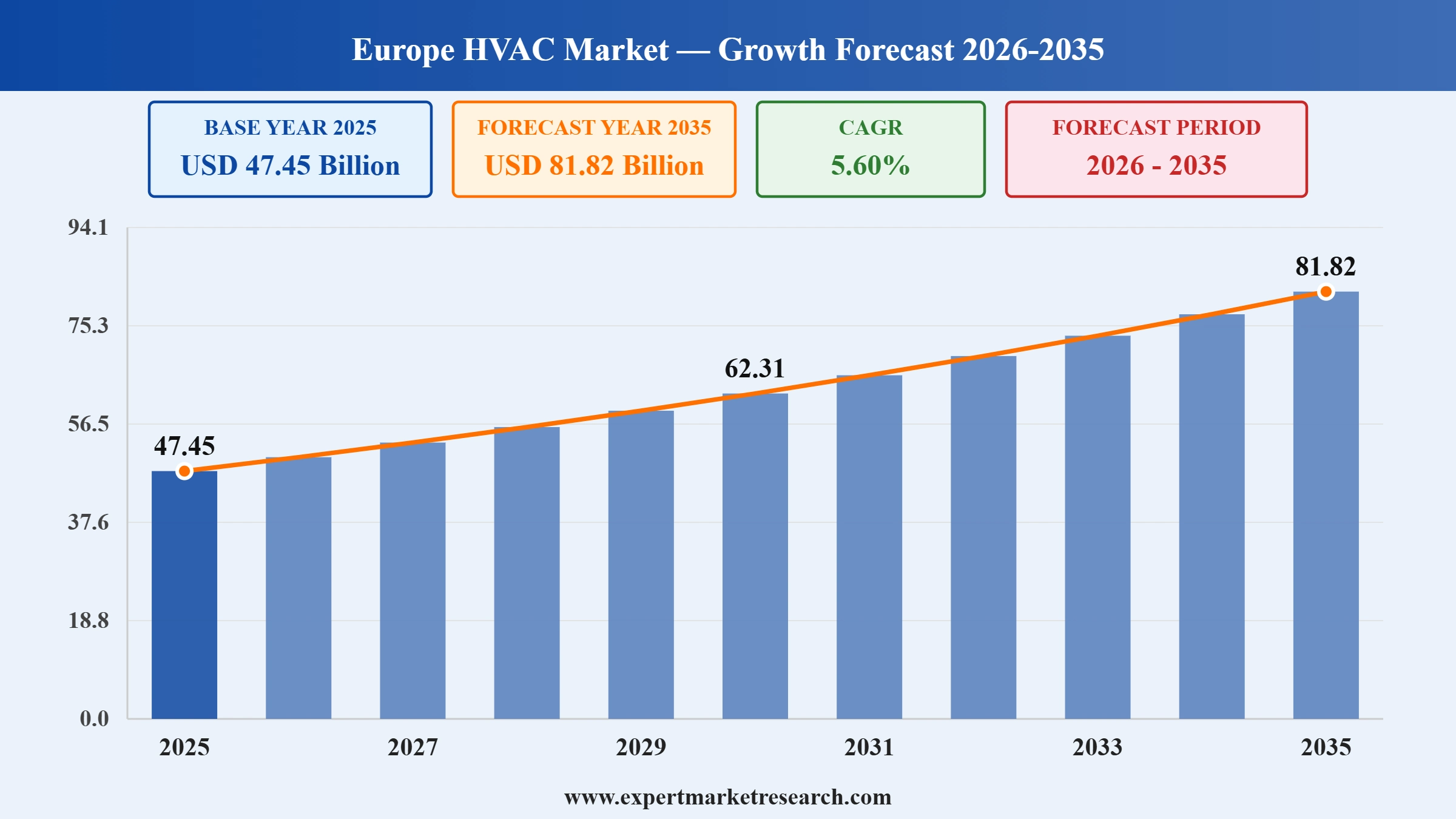
The Europe HVAC market attained a value of USD 47.45 Billion in 2025 and is projected to expand at a CAGR of 5.60% through 2035. The market is further expected to achieve USD 81.82 Billion by 2035. The industry is beginning to take shape as commercial building operators are installing digital control-based HVAC systems that conserve energy and make it easier to comply with new building performance criteria in place of their old boilers and chillers.
The Europe HVAC market is going through a major transformation as companies produce heat pumps, low-GWP refrigerants, and connected heating and cooling systems to adhere to the decarbonization regulations. The major change in the regulatory environment was brought about by the introduction of the revised F-gas Regulation by the European Commission that became effective from March 2024. The regulation expedites the phase-down of hydrofluorocarbons and put in place tighter controls on selected pieces of equipment. Following these developments, in May 2025, UL Solutions expanded its Italian HVAC testing laboratory to assess heat pump efficiency, safety, refrigerant performance, and European regulatory compliance.
Manufacturers in the Europe HVAC market are currently innovating in ways that can increase efficiency without affecting the installation flexibility and operation performance. Some of the companies leading the innovation include Daikin, Bosch Home Comfort, and Mitsubishi Electric in developing heat pump technologies to meet the needs of residential retrofits, multifamily housing, and commercial applications. Another major factor that is supporting the market is the revised directive on Energy Performance of Buildings in the European Union that became effective from May 2024.
There are two separate trends driving the evolution of the Europe HVAC market. First is an increasing need for climate control during the year due to rising temperatures during the summer and the upgrading of old commercial buildings that need to be retrofitted efficiently. Companies are responding to these needs through the development of reversible heat pumps, mini air conditioners, and controllers that can integrate the heating and cooling process in various parts of the buildings.
Read more about this report - REQUEST FREE SAMPLE COPY IN PDF
Panasonic Heating & Cooling launched a revamped European branding strategy to consolidate their positioning in the market for heating, cooling and sustainability-based climate control solutions. HVAC companies can work on their regional branding strategies and enhance their local product ranges by responding to the increasing demand in Europe for efficient heating and cooling systems.
The Netherlands announced plans to launch its smart hybrid heat pumps standard in 2029, promoting smarter combination of heat pumps and boilers. Companies can design and manufacture smart hybrid systems along with controls and installation services, accelerating demand in the Europe HVAC market.
Daikin introduced its X Series that integrates both the air-to-air and air-to-water heat pump technologies into one single outdoor unit for all-year-round comfort in residences. Manufacturers in the Europe HVAC market can design an integrated system that integrates heating, cooling, and hot water generation capabilities while saving installation space and energy efficiency.
Johnson Controls expanded its Danish factory and doubled the production capacity along with improved testing capability for large-scale industrial heat pumps designed for European customers. Suppliers can invest in regional manufacturing, testing, and industrial heat pump technology for serving European districts and industries.
HVAC producers create heat pump system platforms that integrate space heating, air conditioning, and water heating to facilitate installation. For instance, in October 2026, Siemens and Invertek Drives formalized a partnership combining controllers and variable-frequency drives to improve compressor efficiency and accelerate HVAC-R development. Such developments in the Europe HVAC market aim at overcoming the problem of lack of space and reducing the complexity of installation while renovating the house.
Companies in the Europe HVAC market redesign air conditioning units, chillers, and heat pumps for compatibility with low global warming potential refrigerants. This happens because of the revised F-gas regulation enacted in the European Union since March 11, 2024, that tightens the control of fluorinated gases and imposes limitations for selected types of HVAC equipment. Thus, manufacturers can invest in new refrigerants and design of compressors and heat exchangers. For example, in October 2026, Arkema launched Forane 516A, a low-GWP refrigerant replacing R-134a, supporting efficient HVAC systems, chillers, and commercial refrigeration.
The push for building decarbonization creates opportunities for Europe HVAC market companies to supply commercial construction and refurbishment projects. Under the new Energy Performance of Buildings Directive, public sector-owned buildings must reach zero-emission levels since 2028. The same applies to all new buildings from 2030 onwards, except where exemptions apply. Such requirements prompt manufacturers to focus on developing heat pumps with high efficiency and advanced ventilation systems that interact with renewable energy installations. In March 2026, Johnson Controls launched a 44-city European Innovation Studio tour showcasing advanced HVAC, decarbonization, and digital building technologies for energy efficiency.
Suppliers in the Europe HVAC market are rolling out digital solutions that combine equipment monitoring, failure detection, and process optimization. Siemens launched its Asset Performance Advanced, a new AI-driven service in the Building X solution, in May 2026. This type of technology may be helpful in minimizing downtime and managing equipment maintenance in commercial buildings. From the point of view of manufacturers, digital services are a tool for building long-lasting relationships with customers.
Increasing number of heat waves are motivating companies in the Europe HVAC market to enhance the efficiency of cooling, humidity control, and ventilation systems. Even areas that have historically emphasized heating rather than cooling are seeing developments in the HVAC sector. For example, in January 2026, Haier launched its R32-based MRV7S-H VRF system in Europe, improving energy efficiency, refrigerant safety, and installation flexibility.
The Expert Market Research's report titled “Europe HVAC Market Report and Forecast 2026-2035” offers a detailed analysis of the market based on the following segments:
Market Breakup by Equipment
Key Insight: The equipment type segment of the Europe HVAC market report includes various systems for heating, ventilation, and air conditioning, depending on the needs of the construction and operating conditions. Heating equipment is designed for buildings that need reliable operation during wintertime, whereas heat pumps will be useful for those who want to switch to electrical equipment and reverse air conditioning systems. Furnaces and unitary heaters provide needed heating in specific cases in already constructed buildings or industrial facilities.
Market Breakup by Implementation Type
Key Insight: New construction and retrofit projects have their own set of procurement needs within the Europe HVAC marketplace. In new construction, there is an opportunity to incorporate the use of fully integrated systems and proper equipment coordination along with digital controls installation prior to occupation. In residential construction, it is important to use compact heating and air conditioning systems, whereas commercial buildings usually need the use of centralized ventilation and zoned temperature control.
Market Breakup by End Use
Key Insight: The residential segment prefers durable equipment, affordable installation charges, silent running, and ease of regulating the temperatures, accelerating the overall Europe HVAC market expansion. On the other hand, commercial property owners require zone climate control, air circulation capabilities, and a system that is able to adjust to different occupancies without using more energy than necessary. The last one requires effective temperature control, process cooling, and equipment suited for tough conditions.
Market Breakup by Country
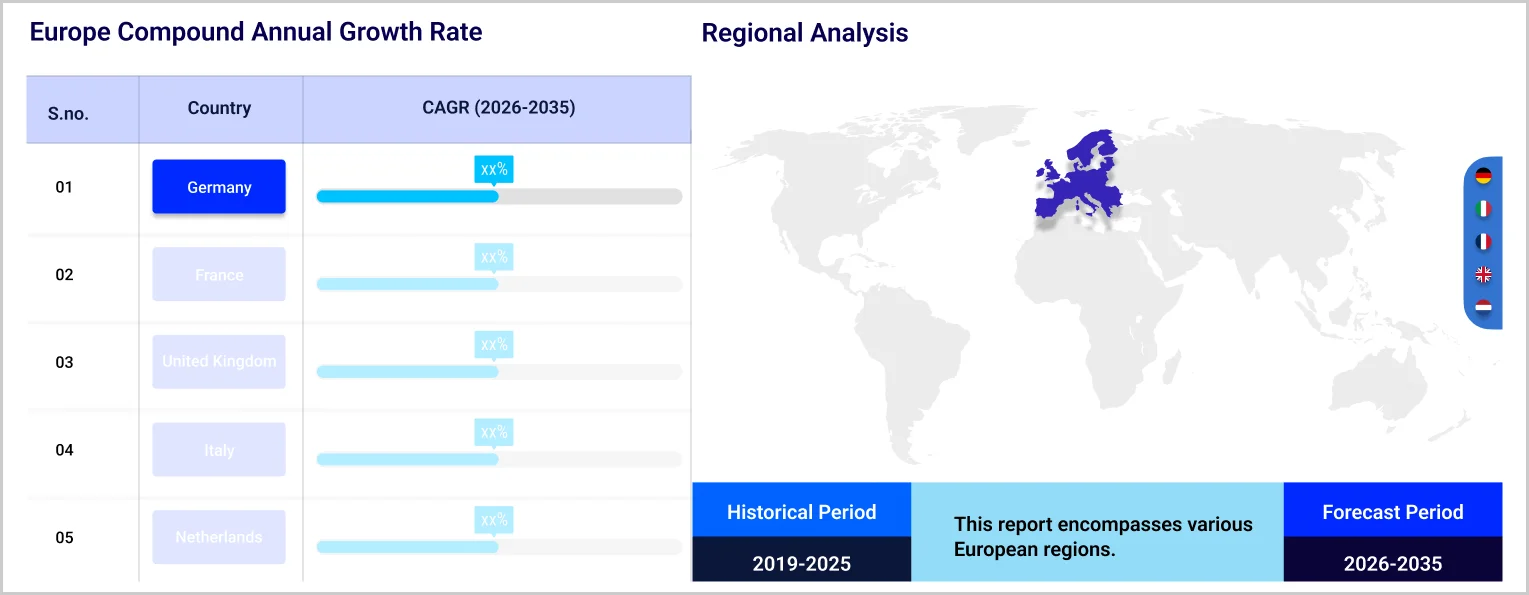
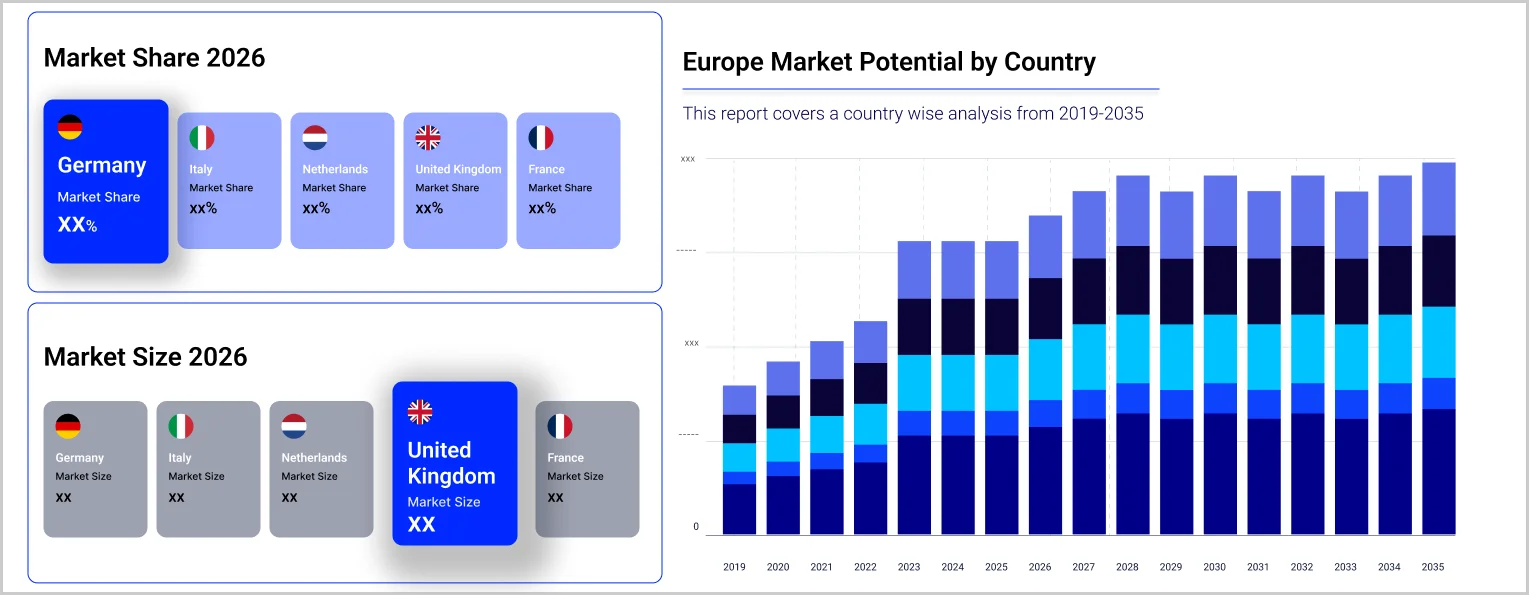
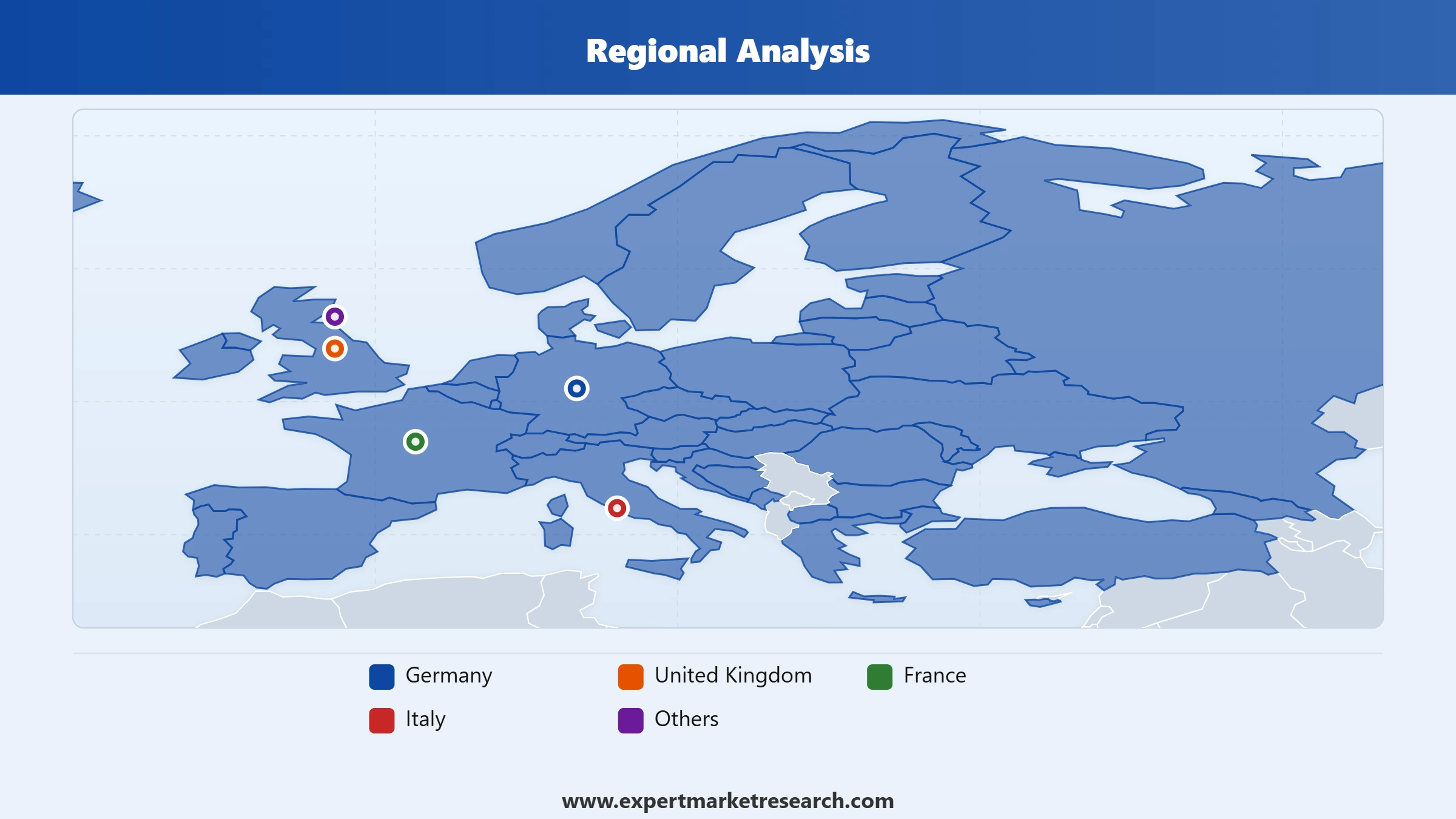
Key Insight: Germany has advantages of its substantial building stock, industry, and heating upgrade needs. The United Kingdom provides opportunities for residential heating replacements and efficiency measures for businesses. France has already well-developed market for heat pumps combined with building renovations and cooling needs, whereas Italy with its hot summers requires air conditioning, reversing systems, and hospitality systems. Other countries add their part to the Europe HVAC market with various combinations of heating electrification, ventilation upgrade, and cooling needs.
Read more about this report - REQUEST FREE SAMPLE COPY IN PDF
Heating appliances register the largest share of the market due to Europe's cold climate and established heating infrastructure
Heating appliances continue to contribute to the Europe HVAC market revenue since buildings, whether residential, commercial, or industrial, need proper indoor heating in winter times. The demand for replacements comes from older boilers, renovation needs, and building efficiency requirements. Companies manufacture condensing boilers, hybrid heating units, and controls that make it possible to use boilers together with heat pumps. In March 2026, Midea unveiled H-Pack, an indoor hybrid heat pump designed to overcome European restrictions on outdoor unit installations in residential buildings.
The increasing popularity of heat pumps is perceived due to the electrification of heating and cooling in Europe. Companies introduce a larger product range of air-source, ground-source, and hybrid heat pumps that can suit various buildings, depending on their size, climate, and needs related to renovations. The fact that they provide both heating and cooling services makes them an interesting choice for buildings in need of year-round climate control, thereby strengthening demand in the Europe HVAC market.
New constructions support HVAC demand through building development and the installation of integrated climate control systems
New building projects generate the maximum share in the market that are integrated within the building plans. Developers have the option of incorporating heat pumps, ventilation systems, variable refrigerant flow systems, and smart controls without the physical restrictions posed by the old buildings. Different kinds of commercial buildings such as offices, residential blocks, hospitals, and hotels need suitable equipment depending on the occupancy rate and building plan.
The renovation projects provide Europe HVAC market opportunities to replace the old boilers, old air conditioners, ineffective ventilation systems, and old controls. Unlike new constructions, renovations involve fitting small equipment and are carried out in phases without the need to rebuild the whole building. In May 2026, Carrier invested EUR 12 million in a French testing facility to validate high-capacity chillers and heat pumps under extreme operating conditions.
Residential end uses continue to lead growth in the market due to household heating requirements, equipment replacement cycles, and demand for improved indoor comfort
The residential sector is another key area that is adding to the Europe HVAC market value since people need constant heating, cooling, and ventilation in their homes during all seasons. The demand for such devices depends on boiler replacement, house renovation, increased summer temperatures, and customers' desire to control their energy expenses. Currently, manufacturers are working on developing new quiet heat pumps, small air conditioners, intelligent thermostats, and systems that are optimal for apartments and private houses. In April 2026, LG Electronics expanded its European heat pump presence, securing residential projects with efficient Therma V systems and integrated heating solutions.
The commercial sector provides additional potential since operators have to replace climate control installations in office premises, hotels, shops, medical centers, and educational establishments. Companies need efficient appliances that guarantee comfort irrespective of occupancy and control electricity consumption and indoor air quality, propelling growth in the Europe HVAC industry. Such equipment includes variable refrigerant flow (VRF), chillers, air handling units, and building controls. The use of digital monitoring helps to identify problems with equipment and optimize its operation schedule.
Germany clocks in the leading market position due to its extensive building stock, heating modernization needs, and strong industrial base
Germany represents an important HVAC market in Europe due to the high number of residential buildings as well as industries that need to improve their heating systems. Manufacturers aim to supply heat pumps, hybrid heating systems, efficient boilers, and controlled systems for the old constructions. Moreover, ventilation and cooling systems along with thermal management equipment for commercial and industrial companies are in demand. In July 2024, LG Electronics established a Frankfurt R&D laboratory developing high-efficiency heat pumps and HVAC systems tailored to Europe’s diverse climates.
Read more about this report - REQUEST FREE SAMPLE COPY IN PDF
The Europe HVAC market observes many possibilities for manufacturers in the United Kingdom due to property owners' necessity to renovate old heating systems and to satisfy the needs of growing cooling systems. The heat pumps, air conditioners, controls, and mechanical ventilation systems can be applied in both residential and commercial building renovation projects. The government's initiative, Boiler Upgrade Scheme, assisted in providing grants to eligible people for installing low-carbon heating systems.
Europe HVAC companies operating in the industry are competing using technologies for low-carbon heating, development of new refrigerants, connectivity of control systems, and building integrated systems. Firms are growing their portfolios of heat pumps, improving their system performance in harsh climatic conditions, and manufacturing systems that are compatible with existing buildings.
The trend of switching to lower-GWP refrigerants is opening up opportunities in compressor design, heat exchangers, and safety systems. Europe HVAC market players are also concentrating on data centers, healthcare buildings, and energy-efficient buildings which need precise thermal control systems.
Founded in 1886 and located in Germany, Robert Bosch GmbH addresses the HVAC industry in Europe via Bosch Home Comfort, providing heat pumps, boilers, air conditioning, and smart home heating control systems. The focus of this company includes electrification and low GWP refrigerants. Moreover, Bosch is growing its heating and cooling business in order to diversify its product range.
Founded in 1921 and headquartered in Tokyo, Japan, Mitsubishi Electric Corporation supplies Europe's HVAC market with air conditioners, heat pumps, VRF systems, and ventilation solutions. The company is developing high-efficiency products that accommodate refrigerant regulations and support decarbonization.
Founded in 1883, headquartered in Lund, Sweden, Alfa Laval AB provides the European HVAC industry with heat exchangers and thermal management technologies. Their products enable efficient transfer of heat in heating and cooling applications, including those in industrial settings. Alfa Laval is capable of providing services in heat pump systems and data center cooling, where thermal performance and energy efficiency become increasingly relevant.
Founded in 1924, headquartered in Osaka, Japan, Daikin Industries Ltd. provides Europe with heat pumps, air conditioning, chillers, ventilation, and refrigeration systems. Some of their innovations include R-290 heat pumps and modular systems for residential and commercial buildings.
Other key players in the market include Lennox International Inc., Carrier Global Corp., Ariston Holding N.V., Danfoss A/S, Vaillant GmbH, and BDR Thermea Group B.V., among others.
*Please note that this is only a partial list; the complete list of key players is available in the full report. Additionally, the list of key players can be customized to better suit your needs.*
Unlock the latest insights with our Europe HVAC market trends 2026 report. Discover regional growth patterns, consumer preferences, and key industry players. Stay ahead of competition with trusted data and expert analysis. Download your free sample report today and drive informed decisions in the market.


Upto 15% Off
USD
$2499 $2249
$3999 $3599
$4999 $4249
$5999 $5099


*While we strive to always give you current and accurate information, the numbers depicted on the website are indicative and may differ from the actual numbers in the main report. At Expert Market Research, we aim to bring you the latest insights and trends in the market. Using our analyses and forecasts, stakeholders can understand the market dynamics, navigate challenges, and capitalize on opportunities to make data-driven strategic decisions.*
The market is projected to grow at a CAGR of 5.60% between 2026 and 2035.
The different end uses of HVAC in the market include residential, commercial, and industrial.
The different types of implementations of HVAC include new constructions and retrofits.
The major regions in the market include Germany, the United Kingdom, France, and Italy, among others.
The key players in the market include Robert Bosch GmbH, Mitsubishi Electric Corporation, Alfa Laval AB, Daikin Industries Ltd., Lennox International Inc., Carrier Global Corp., Ariston Holding N.V., Danfoss A/S, Vaillant GmbH, and BDR Thermea Group B.V., among others.
In 2025, the market reached an approximate value of USD 47.45 Billion.
The market is estimated to witness a healthy growth in the forecast period of 2026-2035 to reach about USD 81.82 Billion by 2035.
Companies are managing high installation costs, uneven heat pump adoption, shortages of qualified technicians, refrigerant transition requirements, fluctuating energy prices, and inconsistent subsidy frameworks across European countries.
Stakeholders are expanding installer training, developing retrofit-compatible equipment, strengthening refrigerant compliance, integrating predictive analytics, and building regional partnerships to improve adoption, service quality, and customer retention.
Explore our key highlights of the report and gain a concise overview of key findings, trends, and actionable insights that will empower your strategic decisions.
| REPORT FEATURES | DETAILS |
| Base Year | 2025 |
| Historical Period | 2019-2025 |
| Forecast Period | 2026-2035 |
| Scope of the Report |
Historical and Forecast Trends, Industry Drivers and Constraints, Historical and Forecast Market Analysis by Segment:
|
| Breakup by Equipment |
|
| Breakup by Implementation Type |
|
| Breakup by End Use |
|
| Breakup by Region |
|
| Market Dynamics |
|
| Competitive Landscape |
|
| Companies Covered |
|
Datasheet
One User
USD 2,499
USD 2,249
tax inclusive*
Single User License
One User
USD 3,999
USD 3,599
tax inclusive*
Five User License
Five User
USD 4,999
USD 4,249
tax inclusive*
Corporate License
Unlimited Users
USD 5,999
USD 5,099
tax inclusive*
*Please note that the prices mentioned below are starting prices for each bundle type. Kindly contact our team for further details.*
Flash Bundle
Small Business Bundle
Growth Bundle
Enterprise Bundle
*Please note that the prices mentioned below are starting prices for each bundle type. Kindly contact our team for further details.*
Flash Bundle
Number of Reports: 3
20%
tax inclusive*
Small Business Bundle
Number of Reports: 5
25%
tax inclusive*
Growth Bundle
Number of Reports: 8
30%
tax inclusive*
Enterprise Bundle
Number of Reports: 10
35%
tax inclusive*
How To Order

Select License Type
Choose the right license for your needs and access rights.

Click on ‘Buy Now’
Add the report to your cart with one click and proceed to register.

Select Mode of Payment
Choose a payment option for a secure checkout. You will be redirected accordingly.
Strategic Solutions for Informed Decision-Making
Gain insights to stay ahead and seize opportunities.

Get insights & trends for a competitive edge.

Track prices with detailed trend reports.

Analyse trade data for supply chain insights.

Leverage cost reports for smart savings

Enhance supply chain with partnerships.

Connect For More Information
Our expert team of analysts will offer full support and resolve any queries regarding the report, before and after the purchase.
Our expert team of analysts will offer full support and resolve any queries regarding the report, before and after the purchase.
We employ meticulous research methods, blending advanced analytics and expert insights to deliver accurate, actionable industry intelligence, staying ahead of competitors.
Our skilled analysts offer unparalleled competitive advantage with detailed insights on current and emerging markets, ensuring your strategic edge.
We offer an in-depth yet simplified presentation of industry insights and analysis to meet your specific requirements effectively.




