

Consumer Insights
Uncover trends and behaviors shaping consumer choices today
Procurement Insights
Optimize your sourcing strategy with key market data
Industry Stats
Stay ahead with the latest trends and market analysis.
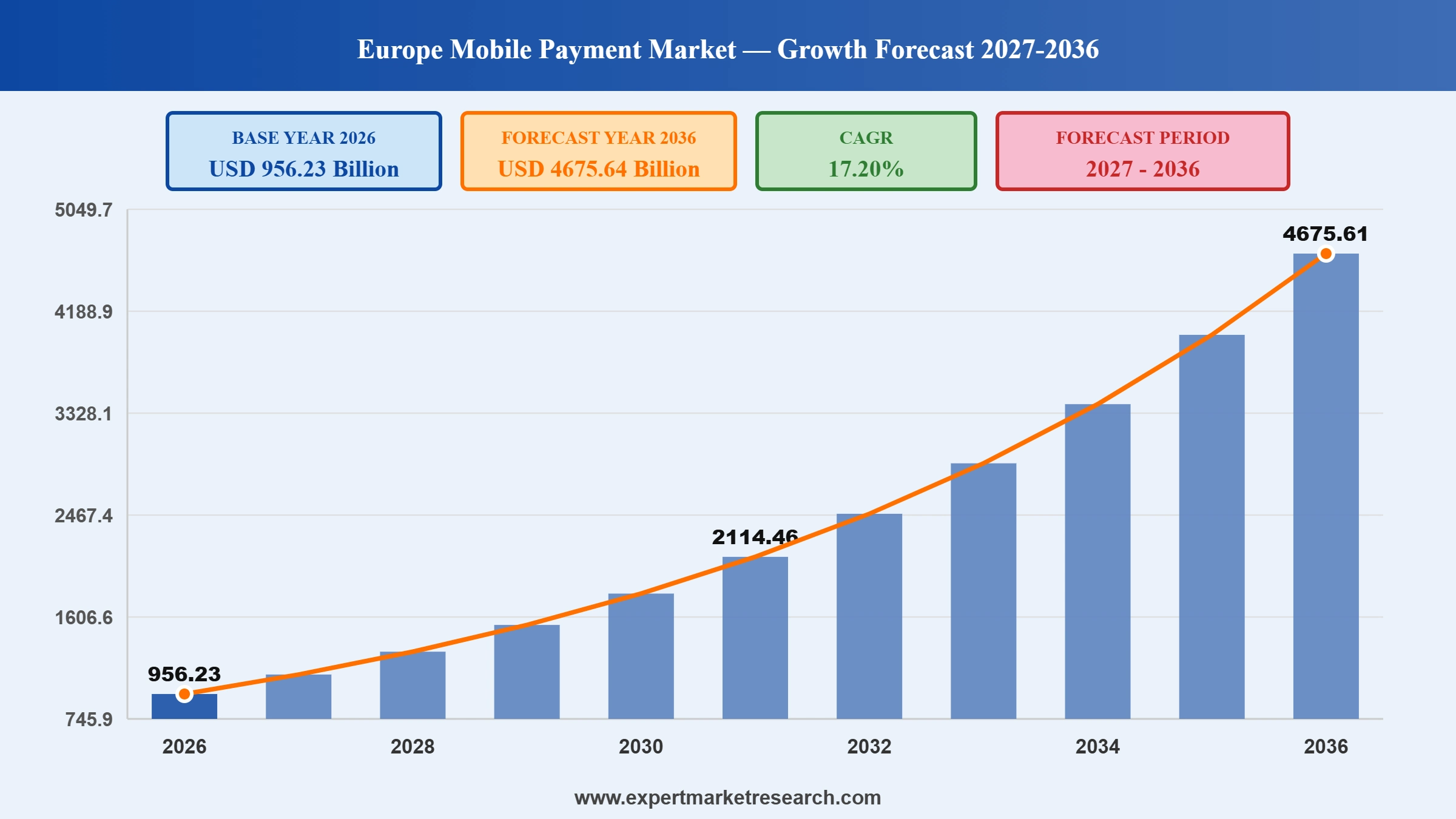
The Europe mobile payment market attained a value of USD 815.90 Billion in 2025 and is projected to expand at a CAGR of 17.20% through 2035. The market is further expected to achieve USD 3989.45 Billion by 2035. Interoperability between payments is becoming increasingly important, as European merchants look for a uniform mobile checkout process, and banks try to build scalable account-to-account rails, which minimize fragmentation and settlement processes across payment ecosystems and merchant platforms.
There are two specific reasons driving development in the Europe mobile payment market. On the one hand, merchants are implementing mobile wallets together with loyalty programs and subscriptions and one-click checkout processes for the sake of better conversion and retention. On the other hand, there is an urgent need for banks and payment institutions to improve their real-time fraud controls, beneficiary verification, and instant settlements due to the growing regulatory standards.
The Europe mobile payment market is currently evolving from basic wallets to more advanced options such as tokenized, interoperable and account-to-account services. Mastercard’s European checkout platform shows the development as three out of every five e-commerce transactions performed on Mastercard in Europe had been tokenized by June 2026, while Click to Pay was introduced to 26 European countries. Mastercard is developing payment passkeys and tokenization in order to decrease the use of card entry process and provide better authorization and fraud protection for the merchants. For B2B providers, it is important to understand that checkout infrastructures have become products themselves rather than backend solutions.
Payment infrastructure in Europe is being transformed by the emergence of regional alternatives. According to the Europe mobile payment market analysis, as of November 2024, 14 million people were enrolled in Wero which processed 8 million transactions demonstrating how regional payment platforms can grow using instant payments as a basis. The European Central Bank’s Instant Payments Regulation is further strengthening this trend as euro area payment service providers should enable instant payments and verification of payees.
Read more about this report - REQUEST FREE SAMPLE COPY IN PDF
The European payments association introduced ENP that integrated Bancomat, Bizum, Wero, MB WAY, and Vipps MobilePay in 13 European countries. Companies in the Europe mobile payment market can create technologies for interoperability, cross-border merchant payments, and APIs that connect separate European payment systems.
ECB chose 36 payment service providers to participate in the digital euro pilot project which will test online, offline, merchant, secure, and mobile payment functionalities. Europe mobile payment market companies can design digital euro-enabled wallets, merchant acceptance systems, compliance systems, and mobile payment systems for participating PSPs.
ACI Worldwide entered into an agreement with EPI for integrating Wero to its payment solution, which allows merchants and intermediaries to provide payments. Companies that manufacture payment technologies can create orchestration, checkout, fraud management, and merchant integrations solutions for Wero as it is adopted in Europe.
The European payment leaders signed an MoU for speeding up sovereign cross-border payments, aiming to have P2P launched in 2026 and commerce in 2027. PSPs and fintechs can focus on cross-border transactional infrastructure, merchant acceptance technologies, and interoperability services related to the sovereign payment network of Europe.
Tokenized checkouts are emerging as product priorities as merchants look for increased approval rates without increasing checkout friction, accelerating growth in the Europe mobile payment market. In October 2026, the ECB expanded digital euro testing, inviting online merchants into a 12-month pilot planned for 2027, advancing practical digital payment adoption across Europe. Additionally, payment passkeys are being used to extend biometric authentication to online checkouts. All these illustrate that providers are competing on security of credentials, conversion and recurring payment performance.
Account-to-account mobile wallets are gaining major momentum across the Europe mobile payment market scope because banks want payment products which will minimize their dependency on international card schemes. For example, in December 2025, Deutsche Bank launched Wero, enabling customers to make instant European P2P transfers and online payments while supporting a unified payment ecosystem. This model gives the banks a channel to provide their own customer interface while the merchants get an alternative to the payment rail. Payment technology vendors can therefore assist in achieving this goal via fraud protection, merchant acceptance, recurring payments, and cross-border connectivity capabilities.
Europe’s Instant Payments Regulation is making instant transfers and payee verification mandatory rather than optional features. In October 2026, MVB Bank partnered with DingoBlu to provide banking infrastructure for mobile-first financial products and Visa debit card services. This trend in the Europe mobile payment market results in the need for mobile applications able to validate beneficiaries prior to payment transactions, while banks should enhance their processing, compliance and anti-fraud capabilities. Opportunities arise for fintech vendors offering real-time risk assessment, transaction monitoring, API integrations, and automated reconciliation solutions.
Near Field Communication is one of the fastest growing technologies with the proliferation of tap-to-pay services through smartphones and wearables, redefining the Europe mobile payment market dynamics. The European Commission’s ruling regarding Apple’s NFC obligations is giving iPhone users the possibility to open tap-and-go functionality via third party wallet services, thus creating more competition. Moreover, in December 2025, Visa launched NFC and Host Card Emulation wallets with partners such as BBVA, Klarna, and Vipps MobilePay. Companies can differentiate by using tokenized credentials, loyalty integration and transit use cases, having at the same time contactless acceptance infrastructure at hand.
Payment systems are gearing up for transactions carried out via software agents, instead of those being carried out directly by consumers. In June 2026, Mastercard launched Agent Pay for Machines, enabling AI agents to execute high-frequency, low-value payments securely, automatically, and continuously across multiple payment rails. This innovation trend in the Europe mobile payment market builds upon the concept of tokenization to move from mobile checkout to programmable commerce, where software is programmed to pick up products, carry out payment and communicate intent of the transaction.
The Expert Market Research's report titled “Europe Mobile Payment Market Report and Forecast 2026-2035” offers a detailed analysis of the market based on the following segments:
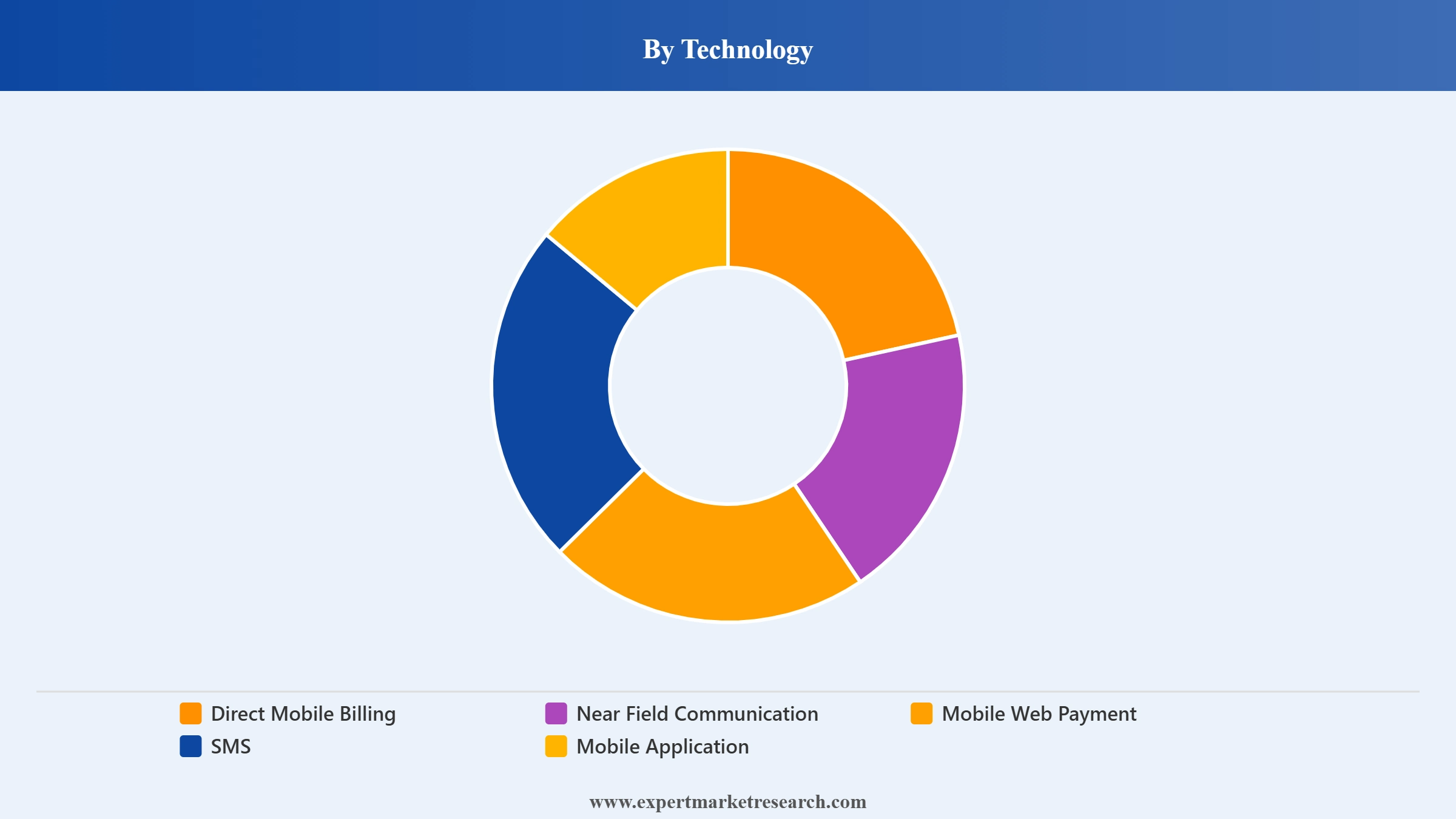
Market Breakup by Technology
Key Insight: The technology landscape in the Europe mobile payment market is defined by payment functions, rather than a single solution for all cases. DMB continues to be valid where fees can be debited from a telecom account, including digital goods and small-value transactions. NFC provides quick payment at physical points of sale and benefits from enhanced wallet interoperability. MWB helps in browser-based e-commerce when customers do not want to have yet another application. SMS is being used for notification, verification, and certain types of payment transaction, when access to an application is unavailable. Mobile application payments provide unified interfaces to pay through a wallet, bank account, loyalty account, and authentication.
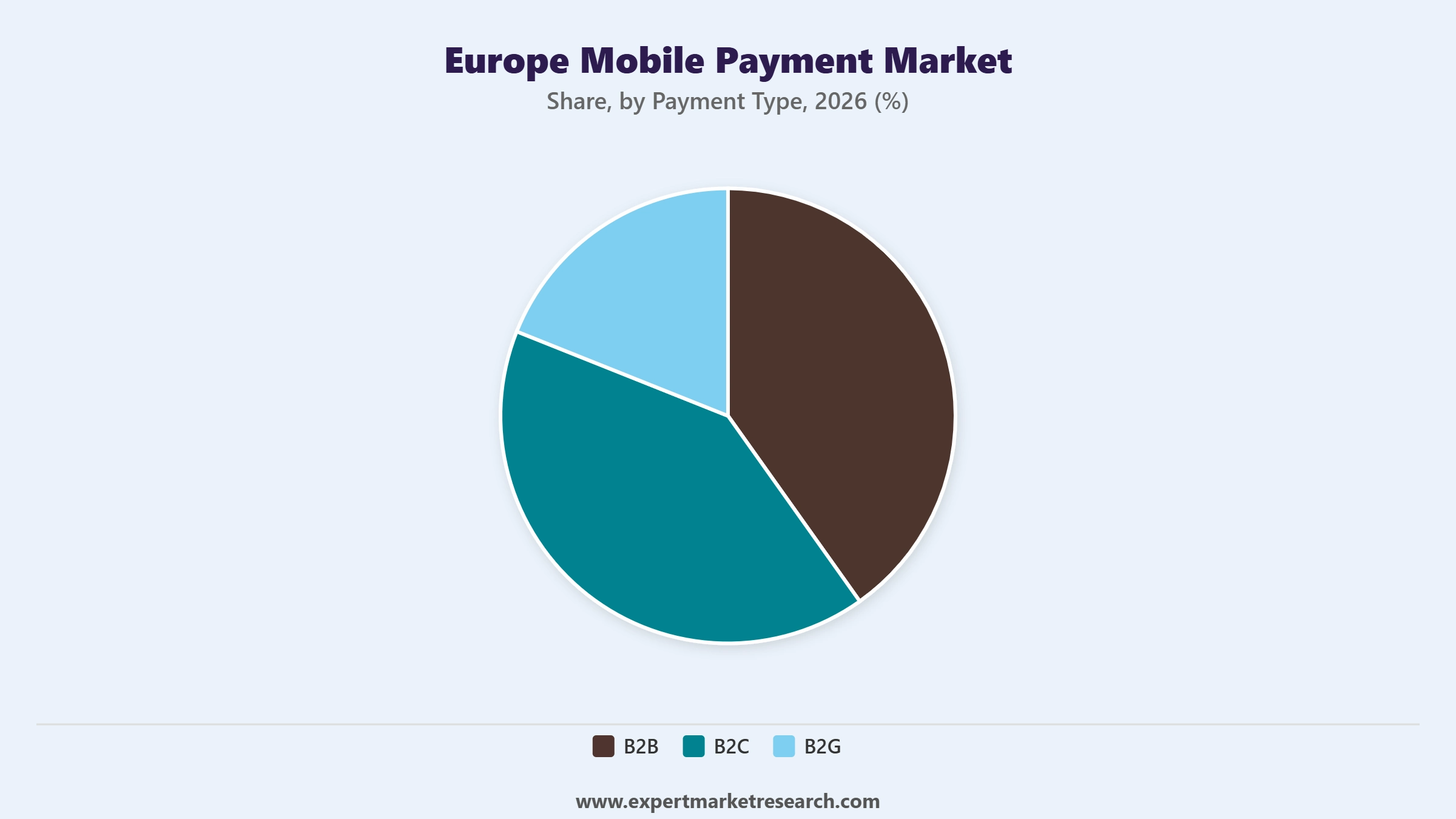
Market Breakup by Payment Type
Key Insight: Corporate automation, fast settlement processes, and mobile approvals are driving B2B payments, whereas B2C payments are driven by easy checkout, loyalty, and consumer authentication. B2G payments demand that payments be disbursed to and collected from governments, along with adequate controls over identities, ensuring security and auditability in the process. According to the Europe mobile payment market report, B2C companies are concentrating on increasing conversions and reducing frauds. B2B companies are focusing on reconciliation and cash flow management, and B2G companies emphasize compliance, ease-of-access, and transactions.
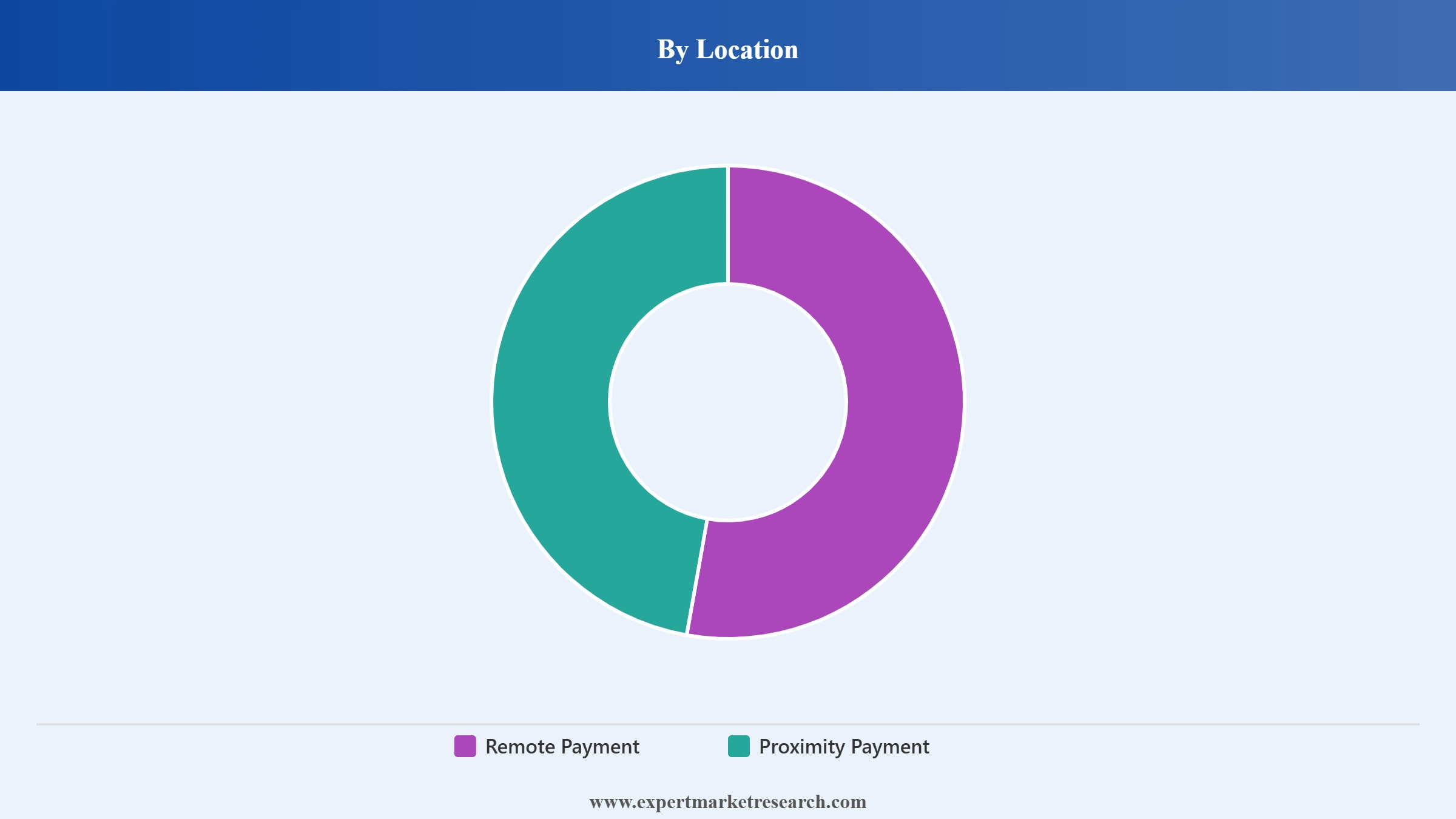
Market Breakup by Location
Key Insight: Remote payments are fueled by mobile commerce, subscription payments, digital goods, and cross-border transactions where a safe checkout process is needed, boosting the overall Europe mobile payment market value. Proximity payments are focused on face-to-face payments, with phones and wearables replacing traditional cards or cash at terminals. The two categories of solutions are becoming more similar in terms of underlying technology of tokenization, authentication, and fraud protection, yet business priorities are quite different. Remote solutions need to address the issues of authorization and recurring payments, as well as compatibility with browsers.
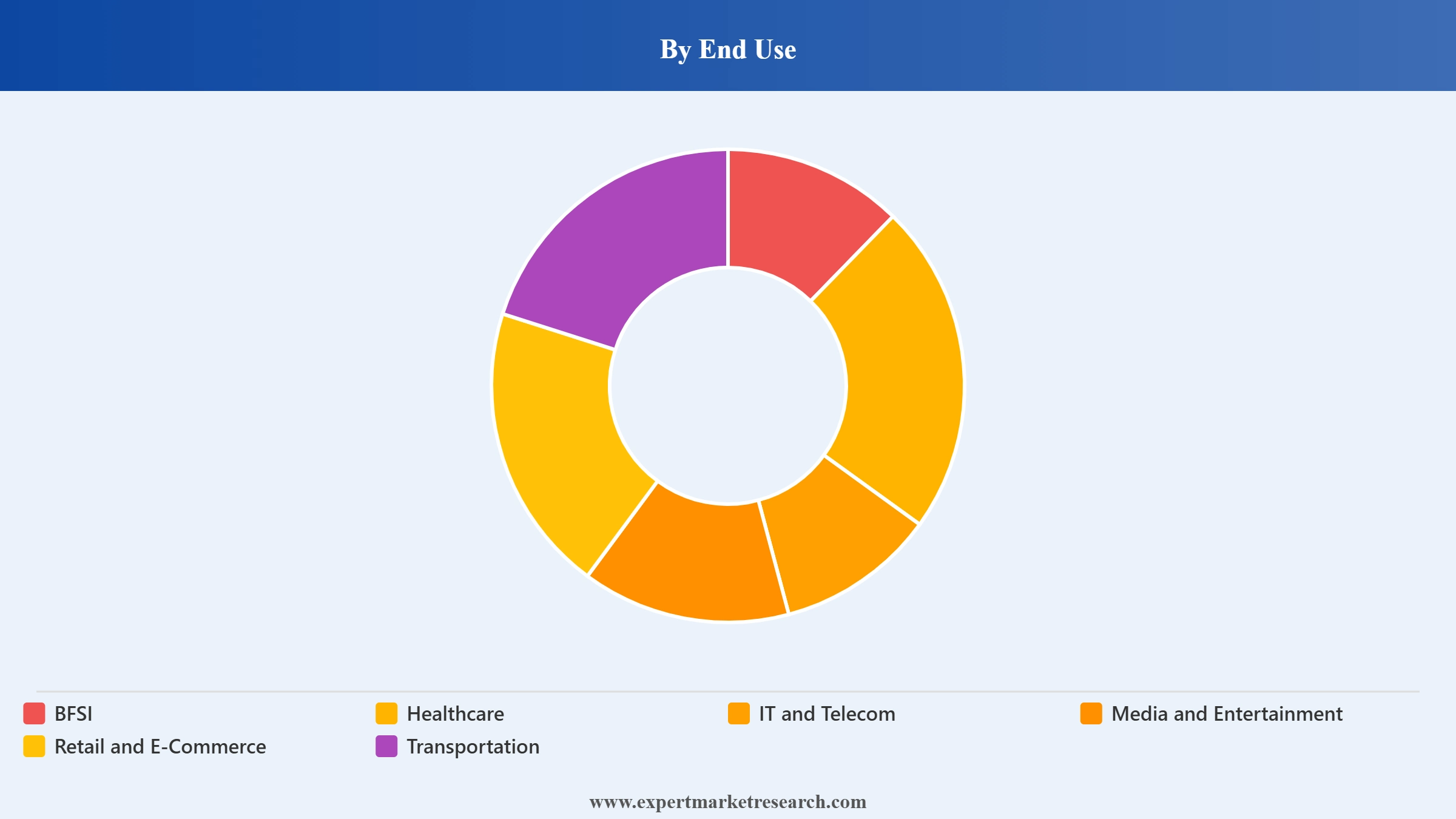
Market Breakup by End Use
Key Insight: BFSI is incorporating digital mobile payments into the banking journey process, and healthcare is using secure payments to make appointments, prescription and patient-related services, propelling the overall demand in the Europe mobile payment market. IT & Telecommunication companies use mobile payments to perform mobile billing, subscription management, and transfer for enterprises. Media and entertainment use frictionless payments for digital content, memberships, and in-app payments. In October 2026, MB WAY joined Europe’s new payments network, enabling future cross-border transactions while retaining its familiar brand and user experience. The retail and e-commerce industry continues to concentrate on converting customers into loyal ones through omnichannel checkout. The transportation industry is implementing mobile payments to pay for tickets, tolls, and to have access to public transport.
Market Breakup by Country
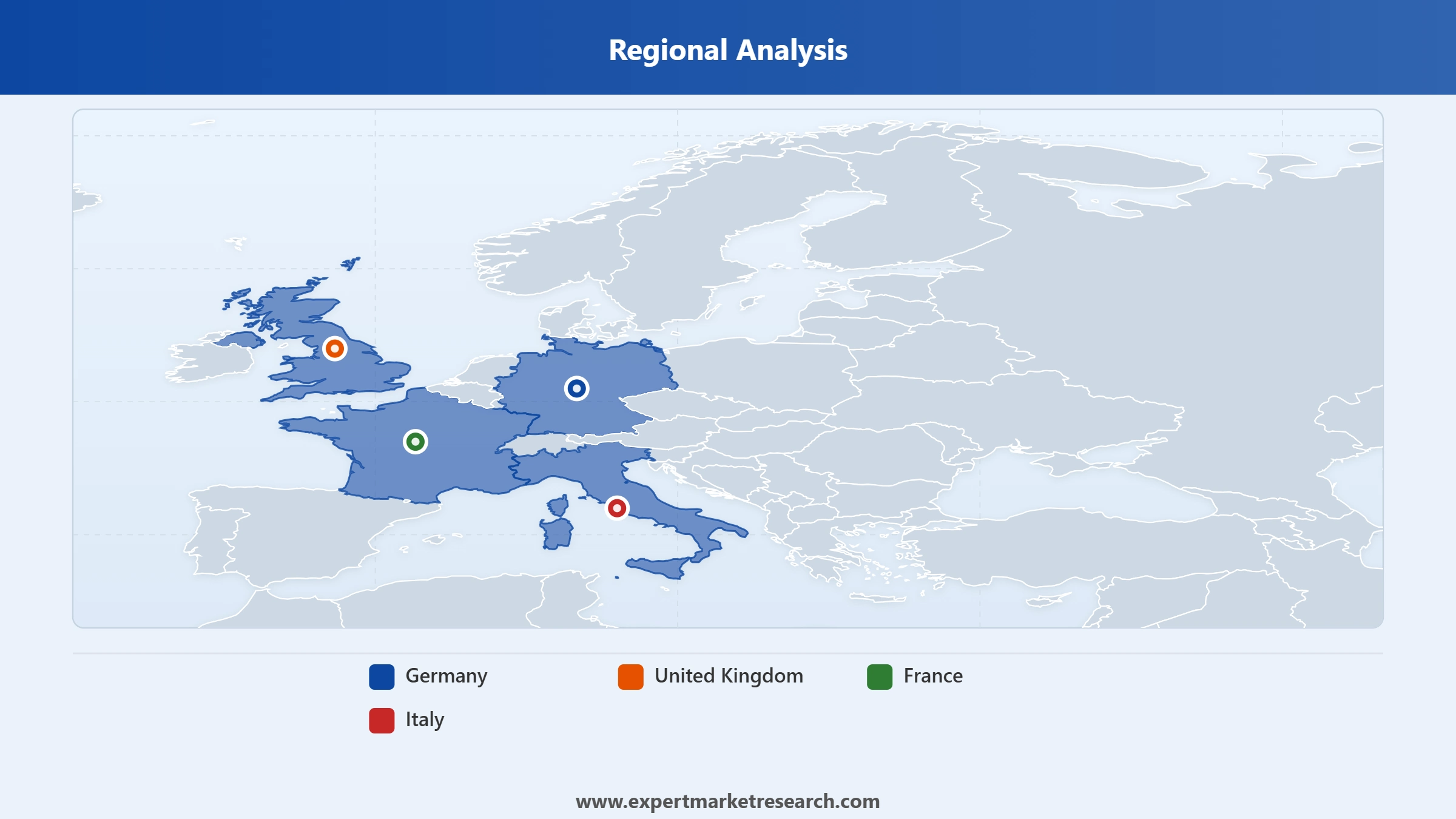
Key Insight: Germany is taking advantage of bank wallet development, payment infrastructure and Wero. In the United Kingdom, there is a robust fintech environment facilitating innovations and consumer demand for mobile banking solutions, cards, and merchant services. France is developing account-to-account payments and wallet functionality via banks’ participation in Wero. Italy is combining national payments systems with foreign network technology and acceptance of contactless transactions. Other countries offer opportunities for Europe mobile payment market growth through local wallet developments, open banking, and cross-border payments.
Read more about this report - REQUEST FREE SAMPLE COPY IN PDF
By technology, mobile application dominates the market as integrated wallets simplify merchant transactions
Mobile application leads growth in the Europe mobile payment market since consumers and retailers continue to favor payment processes inside familiar banking, retail and wallet applications. Providers can link credentials, loyalty, offers, transaction history and authentication in one interface to enable repeated purchases. Banks are employing mobile payments to retain their customers inside the bank-owned channel rather than directing them to third-party checkout screens. In October 2026, Bancomat, Bizum, Wero, MB WAY, and Vipps MobilePay formed a network enabling seamless cross-border payments through interoperable European platforms.
Read more about this report - REQUEST FREE SAMPLE COPY IN PDF
Near Field Communication emerges to be the fast-growing technology in the Europe mobile payment market as tap-to-pay is becoming a widespread process, through the use of smartphones and wearables. The European Commission’s ruling regarding NFC commitments by Apple is expanding the competition of iPhone tap-and-go access for third party wallet providers. Companies can compete based on tokenized credentials, loyalty, and transit use cases while employing contactless acceptance infrastructure.
By payment type, B2C dominates the market as consumer checkout increasingly shifts toward mobile interfaces
B2C continues to be the major contributor to the Europe mobile payment market growth as mobile checkout is tied to purchases, subscriptions, and services. Wallet acceptance, saved credentials and biometrics help retailers minimize abandonment and accelerate checkout. Mobile payments services can integrate loyalty accounts, offers, and refunds into the consumer experience, thus generating value for merchants. The best B2C payment opportunities include not only transaction processing but also conversion optimization, identification, and fraud detection. In September 2026, European payment groups established Madrid-based ENP, connecting national payment systems to enable interoperable cross-border transactions across Europe from 2027.
Read more about this report - REQUEST FREE SAMPLE COPY IN PDF
B2B is the fastest growing payment type as companies utilize mobile interfaces for settling bills, payments, collections, and business payments. Infrastructure for instant payment allows for easy account-to-account transfers, while verification services mitigate mistakes in payments. Fintech services can create mobile approval flows that can connect credit and debit cards, bank accounts, accounting systems, and treasuries. Best B2B payment opportunities in the Europe mobile payment market include reconciliation of payment data with invoices and purchase orders.
By location, proximity payment leads the market as retailers expand frictionless tap-and-go adoption regionwide
Proximity payment remains dominant in the Europe mobile payment industry due to the infrastructure that makes contactless transactions possible in retail and transit. Customers prefer tapping their phones and wearables, not holding physical cards. Businesses get the benefits of reduced lines and use of existing acceptance terminals. In June 2026, Bluecode launched NFC payments on iOS and Android, expanding contactless acceptance while strengthening European payment sovereignty and interoperability.
Read more about this report - REQUEST FREE SAMPLE COPY IN PDF
Remote payment is currently observing exponential growth in the Europe mobile payment market owing to mobile commerce's expansion into marketplaces, subscriptions, travel and other digital services. Their strategies involve providing tokenized card-on-file credentials, single-click checkout, and biometric security to enable fast transaction speeds without increasing fraud risks. Payment gateway and processor companies can capture their own opportunities by optimizing authorization, recurring payments, cross-border acceptance, and risk scoring.
By end use, the retail and e-commerce category accounts for the largest share of the market as merchants optimize conversion and checkout
The end-use segment with the largest share in the Europe mobile payment market is retail and e-commerce. This is because retailers tie mobile payments to conversions, loyalty, and retention. For retailers, the use of wallets would be possible to decrease the checkout time while integrating payment information with offers, memberships, and receipts. Mobile commerce enables retailers to gather data on customers for personalization purposes; however, considerations of privacy and consent should not be overlooked. In February 2026, Worldline launched One Commerce, integrating payments, data, and technology to enable seamless omnichannel retail experiences across Europe.
Read more about this report - REQUEST FREE SAMPLE COPY IN PDF
The BFSI segment experiences considerable growth in the Europe mobile payment market as banks and financial institutions are integrating mobile payments features in applications. Account-to-account transfer, digital wallets, biometric authentication, and fraud management are becoming an integrated part of the banking experience and not a payment solution on its own. The launch of Wero technology through participating European banks demonstrates an example of a bank-driven approach. Technology vendors can provide assistance in implementation of the wallet infrastructure, tokenization, identity verification, transaction monitoring, and API integration.
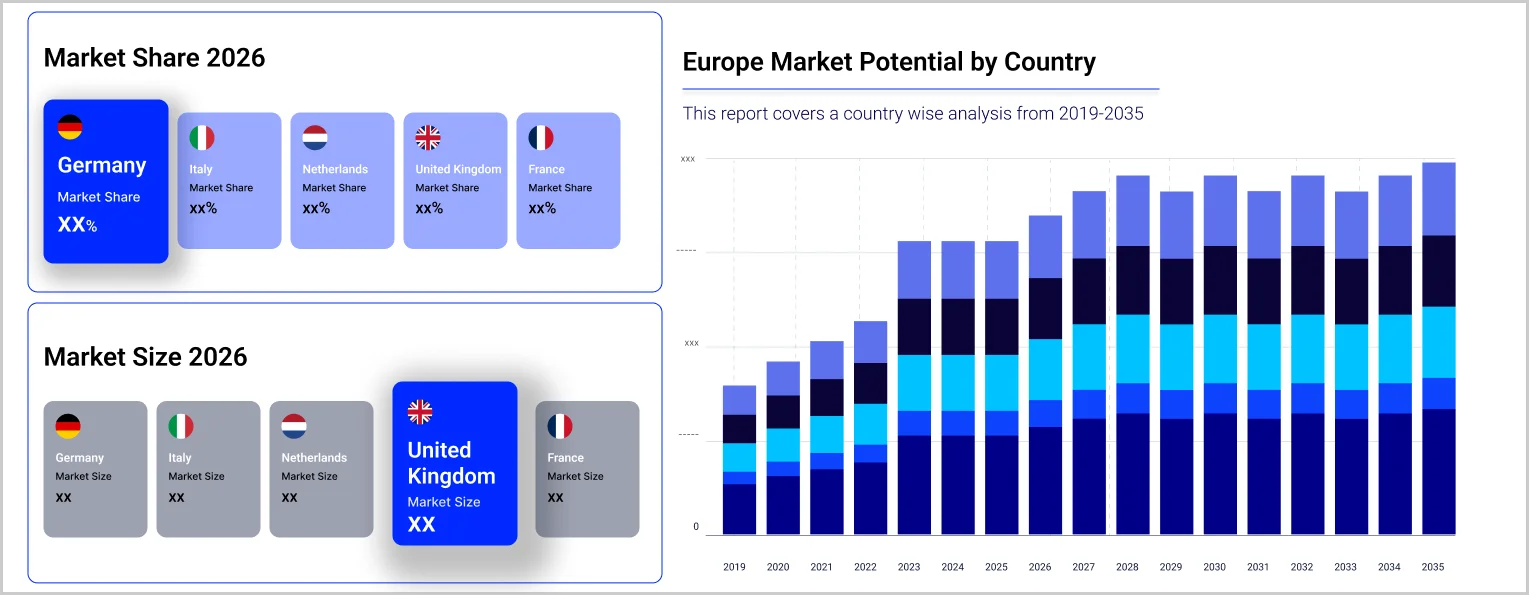
Germany clocks in the dominant market share through strong bank integration, wallets and payment innovation
Germany is the leading country in the Europe mobile payment market due to banking, cashless payments, and Wero introduction which provide conditions for development of mobile payments innovations. In November 2025, Wero launched e-commerce payments in Germany, enabling online transactions through banks and merchants while expanding Europe’s sovereign payment ecosystem. French payment providers can develop on top of that, adding services of acceptance, recurring payments, fraud prevention, and cross-border transactions. Competition encourages providers both locally and internationally to enhance their wallets' usability.
Read more about this report - REQUEST FREE SAMPLE COPY IN PDF
France is the most rapidly developing country in the Europe mobile payment market since banks, fintech, and payment networks are introducing account-to-account payments and mobile wallets. In September 206, Wero expanded account-to-account payments into France and Luxembourg, adding subscription billing and replacing Payconiq with cross-border payment capabilities. This trend gives opportunities for providers to build upon existing infrastructure such services as acceptance, recurring payments, and fraud management.
The nature of competition in the market is evolving from wallet distribution to the payment infrastructure that powers the mobile experience. Europe mobile payment companies are focusing on tokenization, biometrics, instant account-to-account connections, fraud analytics, and multi-rail orchestration. New possibilities arise where the payment technology enables higher authorization rates, reduces friction in the checkout process, and allows merchants to work across countries without the need to integrate each one separately.
Europe mobile payment market players can differentiate themselves through modular APIs, compliance controls, risk decisions in real time, and analytics allowing merchants to understand their payment performance. European regulation is driving the demand for interoperability and verification. Those who combine the knowledge of payments and scalable infrastructure would be well positioned to serve fragmented markets and enable mobile experiences over the forecast period.
Alphabet Inc., founded in 2015 and is based out of Mountain View, California, United States, helps facilitate Europe’s mobile payments network using Google Wallet and Google Pay. The capabilities of Android include contactless payments, stored credentials, and tokenized payments. The company's developer services allow banks and merchants to incorporate payment experiences, whereas interoperability increasingly influences the company’s wallet strategy for Europe.
Samsung Electronics Co. Ltd., founded in 1969 and headquartered in Suwon, South Korea, operates through Samsung Wallet and the company's Galaxy devices ecosystem. Payment credentials, biometrics, and contactless payments are integrated into smartphones and wearable devices by Samsung. The company provides a way to access users in Europe for merchants and financial institutions.
Amazon was founded in 1994, with its headquarters in Seattle, Washington, United States. It provides mobile payments solutions via Amazon Pay. The product enables merchants to use well-known checkout credentials through storefronts. Amazon can link payment transactions with authentication and merchant services through its presence in extending mobile checkout and embedded payment services for merchants.
PayPal Holdings Inc. was founded in 1998 and has its headquarters in San Jose, California, United States. PayPal serves consumers and merchants through PayPal products. The firm focuses on secure checkout, stored credentials, fraud management, and merchant acceptance.
Other key players in the market include Apple Inc., Block, Inc., Elavon Inc. (Opayo), Stripe Inc., MoneyGram International, Inc., Visa Inc., and Mastercard Inc., among others.
*Please note that this is only a partial list; the complete list of key players is available in the full report. Additionally, the list of key players can be customized to better suit your needs.*
Unlock the latest insights with our Europe mobile payment market trends 2026 report. Discover regional growth patterns, consumer preferences, and key industry players. Stay ahead of competition with trusted data and expert analysis. Download your free sample report today and drive informed decisions in the market.


Upto 15% Off
USD
$2499 $2249
$3999 $3599
$4999 $4249
$5999 $5099


*While we strive to always give you current and accurate information, the numbers depicted on the website are indicative and may differ from the actual numbers in the main report. At Expert Market Research, we aim to bring you the latest insights and trends in the market. Using our analyses and forecasts, stakeholders can understand the market dynamics, navigate challenges, and capitalize on opportunities to make data-driven strategic decisions.*
The market is projected to grow at a CAGR of 17.20% between 2026 and 2035.
The different technologies used for mobile payment include direct mobile billing, near field communication, mobile web payment, SMS, and mobile application, among others.
The different payment types in the market include B2B, B2C, and B2G.
The major countries in the market include Germany, the United Kingdom, France, and Italy, among others.
The key players in the market include Alphabet Inc., Samsung Electronics Co. Ltd., Amazon.com Inc., PayPal Holdings Inc., Apple Inc., Block, Inc., Elavon Inc. (Opayo), Stripe Inc., MoneyGram International, Inc., Visa Inc., and Mastercard Inc., among others.
In 2025, the market reached an approximate value of USD 815.90 Billion.
Companies face fragmented national payment rails, regulations, fraud, cyber threats, interoperability costs, privacy requirements, merchant integration complexity and competition from bank-led wallets and global platforms while maintaining seamless user experiences.
Stakeholders are expanding tokenized acceptance, integrating instant-payment rails, strengthening biometric fraud controls, developing interoperable APIs, targeting merchant partnerships and preparing infrastructure for agentic commerce while improving authorization, conversion and performance regionally.
Explore our key highlights of the report and gain a concise overview of key findings, trends, and actionable insights that will empower your strategic decisions.
| REPORT FEATURES | DETAILS |
| Base Year | 2025 |
| Historical Period | 2019-2025 |
| Forecast Period | 2026-2035 |
| Scope of the Report |
Historical and Forecast Trends, Industry Drivers and Constraints, Historical and Forecast Market Analysis by Segment:
|
| Breakup by Technology |
|
| Breakup by Payment Type |
|
| Breakup by Location |
|
| Breakup by End Use |
|
| Breakup by Region |
|
| Market Dynamics |
|
| Competitive Landscape |
|
| Companies Covered |
|
Datasheet
One User
USD 2,499
USD 2,249
tax inclusive*
Single User License
One User
USD 3,999
USD 3,599
tax inclusive*
Five User License
Five User
USD 4,999
USD 4,249
tax inclusive*
Corporate License
Unlimited Users
USD 5,999
USD 5,099
tax inclusive*
*Please note that the prices mentioned below are starting prices for each bundle type. Kindly contact our team for further details.*
Flash Bundle
Small Business Bundle
Growth Bundle
Enterprise Bundle
*Please note that the prices mentioned below are starting prices for each bundle type. Kindly contact our team for further details.*
Flash Bundle
Number of Reports: 3
20%
tax inclusive*
Small Business Bundle
Number of Reports: 5
25%
tax inclusive*
Growth Bundle
Number of Reports: 8
30%
tax inclusive*
Enterprise Bundle
Number of Reports: 10
35%
tax inclusive*
How To Order

Select License Type
Choose the right license for your needs and access rights.

Click on ‘Buy Now’
Add the report to your cart with one click and proceed to register.

Select Mode of Payment
Choose a payment option for a secure checkout. You will be redirected accordingly.
Strategic Solutions for Informed Decision-Making
Gain insights to stay ahead and seize opportunities.

Get insights & trends for a competitive edge.

Track prices with detailed trend reports.

Analyse trade data for supply chain insights.

Leverage cost reports for smart savings

Enhance supply chain with partnerships.

Connect For More Information
Our expert team of analysts will offer full support and resolve any queries regarding the report, before and after the purchase.
Our expert team of analysts will offer full support and resolve any queries regarding the report, before and after the purchase.
We employ meticulous research methods, blending advanced analytics and expert insights to deliver accurate, actionable industry intelligence, staying ahead of competitors.
Our skilled analysts offer unparalleled competitive advantage with detailed insights on current and emerging markets, ensuring your strategic edge.
We offer an in-depth yet simplified presentation of industry insights and analysis to meet your specific requirements effectively.




