

Consumer Insights
Uncover trends and behaviors shaping consumer choices today
Procurement Insights
Optimize your sourcing strategy with key market data
Industry Stats
Stay ahead with the latest trends and market analysis.
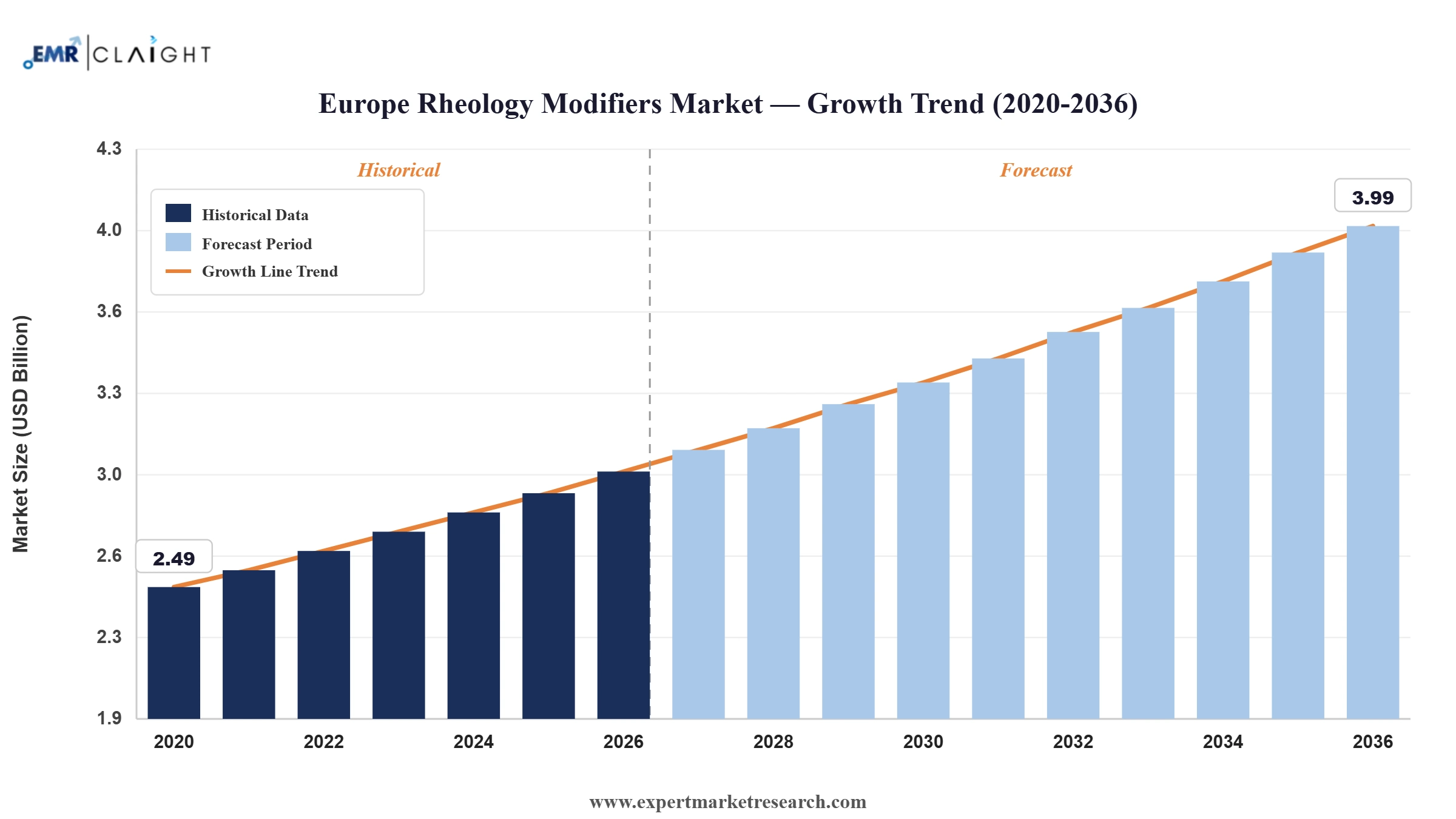
The Europe rheology modifiers market attained a value of USD 2.88 Billion in 2025 and is projected to expand at a CAGR of 3.00% through 2035. The market is further expected to achieve USD 3.87 Billion by 2035. Deep renovation of poorly performing buildings can reduce energy consumption by as much as 80%. This creates opportunities for advanced coatings, insulation compounds, sealants, and construction formulations requiring controlled viscosity, adhesion, application stability, and durability.
The increase in European construction activity in specialized applications is one of the major drivers that has contributed to the growth. The EU construction output recorded a 1.8% rise annually in May 2026, while specialized construction activities witnessed a 3.3% increase. Thus, there would be an increase in demand for mortars, waterproofing systems, construction adhesives, textured coatings, and protective formulations which need rheological control of the products. In addition to that, the increasing investments in industrial research and development. The R&D expenditure of the EU was EUR 403.1 billion in 2024, registering a rise by 3.6% from the previous year. While the businesses undertook the lion’s share in the expenditure by contributing 66.5%. Therefore, there will be an increase in demand for specialty chemicals, since formulators would prefer to improve their formulations with the help of specialty chemical suppliers instead of traditional additives.
One such innovation involves the development of rheology systems which incorporate multiple functions within a single raw material. Polymers available at the present can offer thickening, emulsification, suspension, texture alteration, and stabilization, while being suitable for use in cold-processing conditions. Ready to use dispersed polymer systems are minimizing the number of stages involved in the manufacture process for the formulator. Such rheology modifiers are particularly important for cosmetics products, where sensory properties have to be controlled alongside the viscosity. The trend in this field is thus shifting from one-dimensional thickening products towards formulations that assist consumers in streamlining ingredients list and obtaining more uniform end product properties, thereby boosting the Europe rheology modifiers market value.
The European chemical industry continues to face structural cost and production pressures. Eurostat reported that total EU chemical production in 2024 remained 15% below its 2014 level despite the year-on-year recovery. This suggests that the rheology modifiers manufacturers function in an environment of chemical manufacturing where energy expenses, feedstock availability, plant utilization, and international competition can affect the input economics. Another cost driver in terms of inputs is that of qualification, which increases for replacing existing chemistries since changing rheology modifier may affect viscosity profiles, application characteristics, stability, gloss, color formation, compatibility, and processing conditions. This problem can be solved by the manufacturers through developing drop-ins, application labs, alternate routes of raw material, and regulation documents before the customer undertakes reformulation work, thereby augmenting the Europe rheology modifiers market developments.
Read more about this report - REQUEST FREE SAMPLE COPY IN PDF
Clariant extended the range of its Aristoflex product line in August 2026 by introducing Aristoflex TAC, BLV, HMB, AVS, AVL, and Silk. The range includes formulations for suspending, thickening, texturizing, emulsifying, oil compatibility, electrolyte resistance, and cold processing in the cosmetic industry. Aristoflex AVL is offered in the form of a ready-to-use liquid dispersion of a polymer that contains 27 percent active substance. The innovation increases the need for multifunctional rheological systems capable of simplifying production processes in the cosmetic industry.
BASF introduced Rheovis PU 1333 MB and Rheovis HS 1169 MB alongside Dispex AA 4145 MB for architectural coatings in July 2026. The additives use certified biomass-balance technology and are designed to reduce product carbon footprints while maintaining established formulation performance. The Rheovis products provide controlled rheology and application behavior across architectural coating formulations. The launch strengthens the commercial availability of lower-carbon rheology technologies and gives European coating manufacturers a route toward sustainability improvements without changing established application systems.
ALTANA announced in June 2026 that a BYK interdisciplinary team received its Innovation Award for developing a more environmentally friendly generation of defoamers for paint and coating production. The technology deals with undesirable foam formation during the manufacturing process and is an embodiment of the company’s efforts to develop environmentally better additives. This development highlights the trend towards additive packages in which rheology, defoaming, wetting, dispersing, and surface control technologies are considered together.
Lubrizol launched Oilkemia 7S polymer in Paris in April 2026 as a biodegradable rheology modifier for oil-based formulations. The technology provides thickening, clarity, suspension, and stability while offering a non-tacky sensory profile. Applications include skin care, sun care, makeup, hair care, and cleansing products. The launch expands the addressable market for biodegradable rheology technologies into oil-based systems and gives personal care formulators another pathway toward sustainability-oriented product development.
The European Commission's chemical-industry agenda is increasingly focused on modernization, affordable energy, decarbonization, clean chemicals, and industrial resilience. The Critical Chemicals Alliance already brings together at least 12 Member States and 20 regions with industry stakeholders. This creates a more favorable environment for specialty additive suppliers that can demonstrate resource efficiency, lower-emission manufacturing, and reliable European supply. Rheology modifier producers can benefit by aligning product development with industrial decarbonization rather than positioning additives purely around viscosity performance. Suppliers with European production capacity and strong technical support can also improve resilience for customers concerned about imported specialty ingredients. The trend is particularly relevant for coatings, construction chemicals, adhesives, and industrial formulations where additive availability can directly affect production continuity.
The European construction sector is displaying improved performance in specialized construction compared to regular building construction. In May 2026, construction activity in the EU grew by 3.3% on a year-over-year basis in specialized construction, while civil engineering witnessed an increase of 2.3%. Such trends create business opportunities for rheology technology solutions in waterproofing products, repair materials, protection coatings, floorings, grouts, and other technically advanced construction products. The business opportunity is becoming more dependent on application performance and not only construction volumes. Suppliers can differentiate through additives that improve vertical application, sag control, water retention, open time, and storage stability. Technical collaboration with construction chemical formulators can therefore provide stronger customer retention than commodity additive sales.
Approximately 85% of European adhesive and sealants firms are SMEs, thus resulting in an increasingly fragmented customer base that is highly demanding when it comes to formulation aid. The companies have operations in the construction industry, packaging, health care, energy, mobility, and industrial manufacturing, among others, and therefore, need formulations that are tailored specifically to their application. The rheology modifiers can take advantage of this fragmentation to develop technical services models based on the customer’s production processes and substrates, the dispensing method, and drying conditions. Instead of giving out the thickening agents, they can sell out application packages for high speed coating, extrusion, spraying, bead stability, or automatic dispensing. This approach can create higher switching barriers since the supplier becomes integrated into the customer's formulation-development process.
EU exports of medicinal and pharmaceutical goods rose by EUR 50 billion in 2025 from EUR 25 billion in 2024 while imports increased by EUR 25 billion. This resulted in a pharmaceutical trade surplus of EUR 221 billion. The rising scope for pharmaceutical trade globally offers opportunities for formulation materials that ensure reproducibility, stability, and process control. Rheology modifiers could be used in formulation applications where flow is an important feature such as topical formulations, suspensions, gels, creams, etc. Companies selling their products in the pharmaceutical market should emphasize issues related to batch uniformity, traceability, purity, documentation, and change control. This gives products backed by solid technical documentation more value than regular industrial thickeners.
The European textile and clothing sector experienced continued pressure in early 2026, with textile production declining 4.2% year over year and clothing production falling 5.1% during the first quarter. This environment is encouraging manufacturers to focus on technical textiles and higher-value applications rather than relying entirely on conventional apparel production. Rheology modifiers can support textile printing pastes, coating formulations, finishing systems, functional treatments, and specialty technical fabrics. Suppliers should therefore target applications where rheological precision contributes to performance differentiation. Opportunities are particularly relevant for water-based textile coatings, functional finishes, digital printing systems, and formulations requiring consistent deposition on advanced substrates.
The Expert Market Research’s report titled "Europe Rheology Modifiers Market Report And Forecast 2026-2035” offers a detailed analysis of the market based on the following segments:
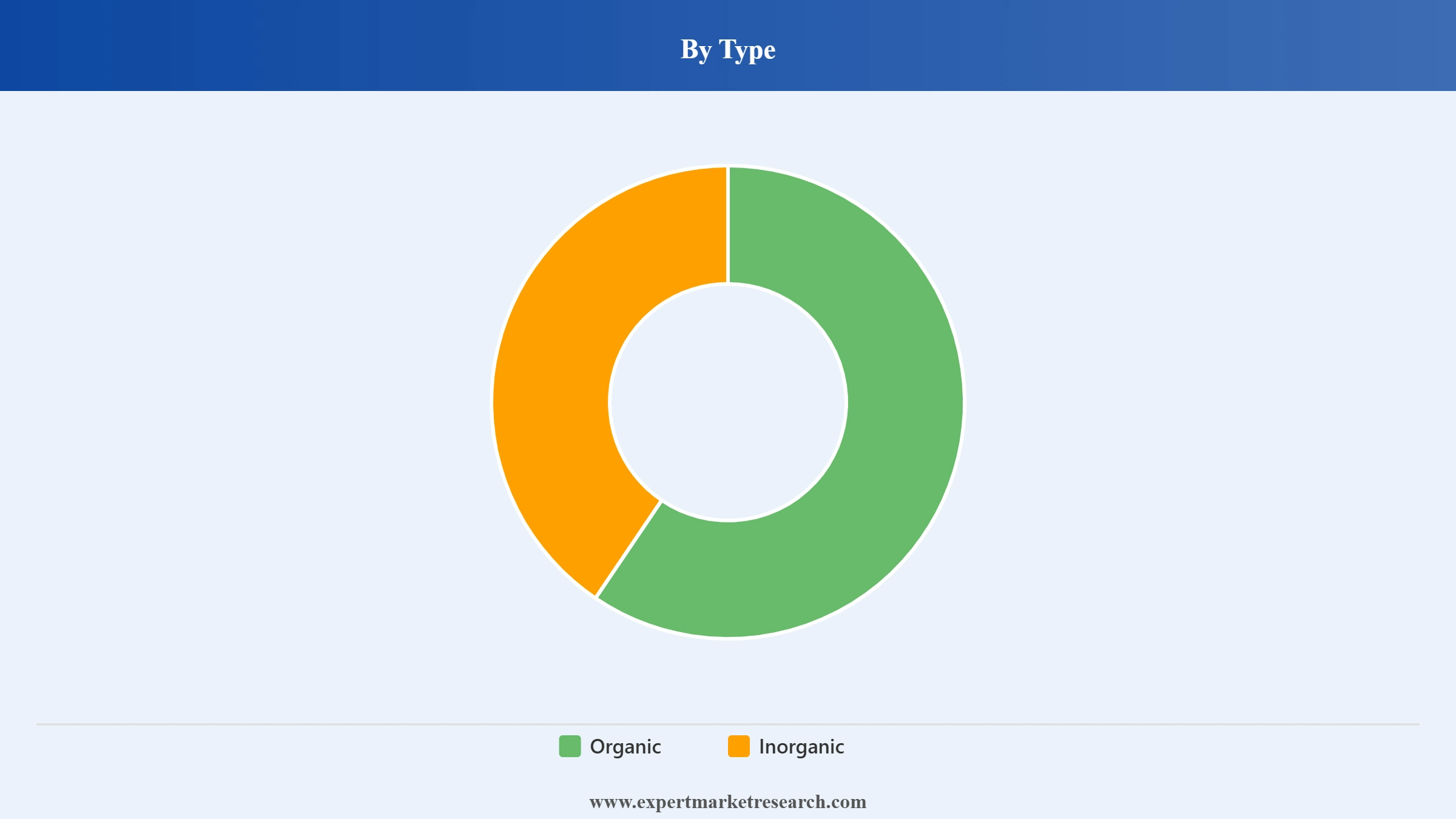
Market Breakup by Type
Key Insight: Organic rheology modifiers provide the widest scope for molecular customization because polymer architecture can be adjusted to achieve different shear responses, associative behavior, compatibility, and formulation stability. They are particularly important in waterborne coatings, personal care, pharmaceuticals, adhesives, and sealants. Inorganic technologies such as clay and silica remain valuable where suspension, thixotropy, structural recovery, and anti-settling properties are priorities. The two categories therefore serve different formulation requirements rather than competing solely on viscosity. European customers are increasingly selecting additives based on complete rheological profiles, compatibility with other ingredients, regulatory status, and sustainability credentials. Suppliers that maintain both organic and inorganic technologies can address a broader range of formulation problems and create cross-selling opportunities across industrial and consumer applications.
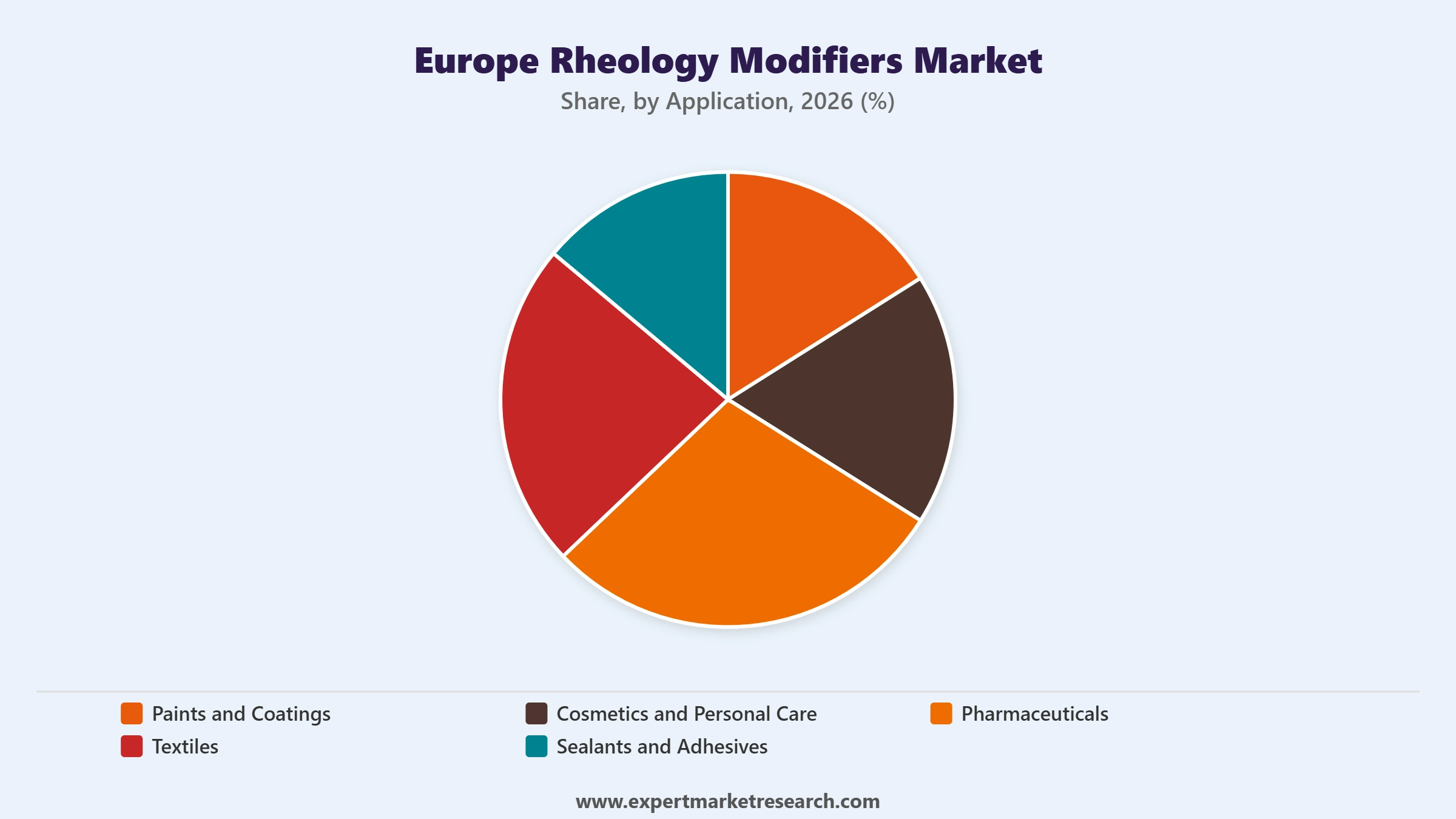
Market Breakup by Application
Key Insight: Paints and coatings account for a substantial share of rheology modifier demand because viscosity directly affects application, film formation, pigment suspension, leveling, and storage behavior. Cosmetics and personal care are expanding the value of specialty modifiers through demand for sensory control, clarity, suspension, and cold processing. Pharmaceuticals require reproducibility and controlled flow, while adhesives and sealants require bead stability, dispensing behavior, and sag resistance. Textiles provide a specialized opportunity through printing, coating, and finishing formulations. Other applications include paper coatings, construction chemicals, agricultural formulations, industrial fluids, and household products. The overall application structure is moving toward higher-value additives that perform several formulation functions rather than basic thickening alone, thus driving the demand in the Europe rheology modifiers market.
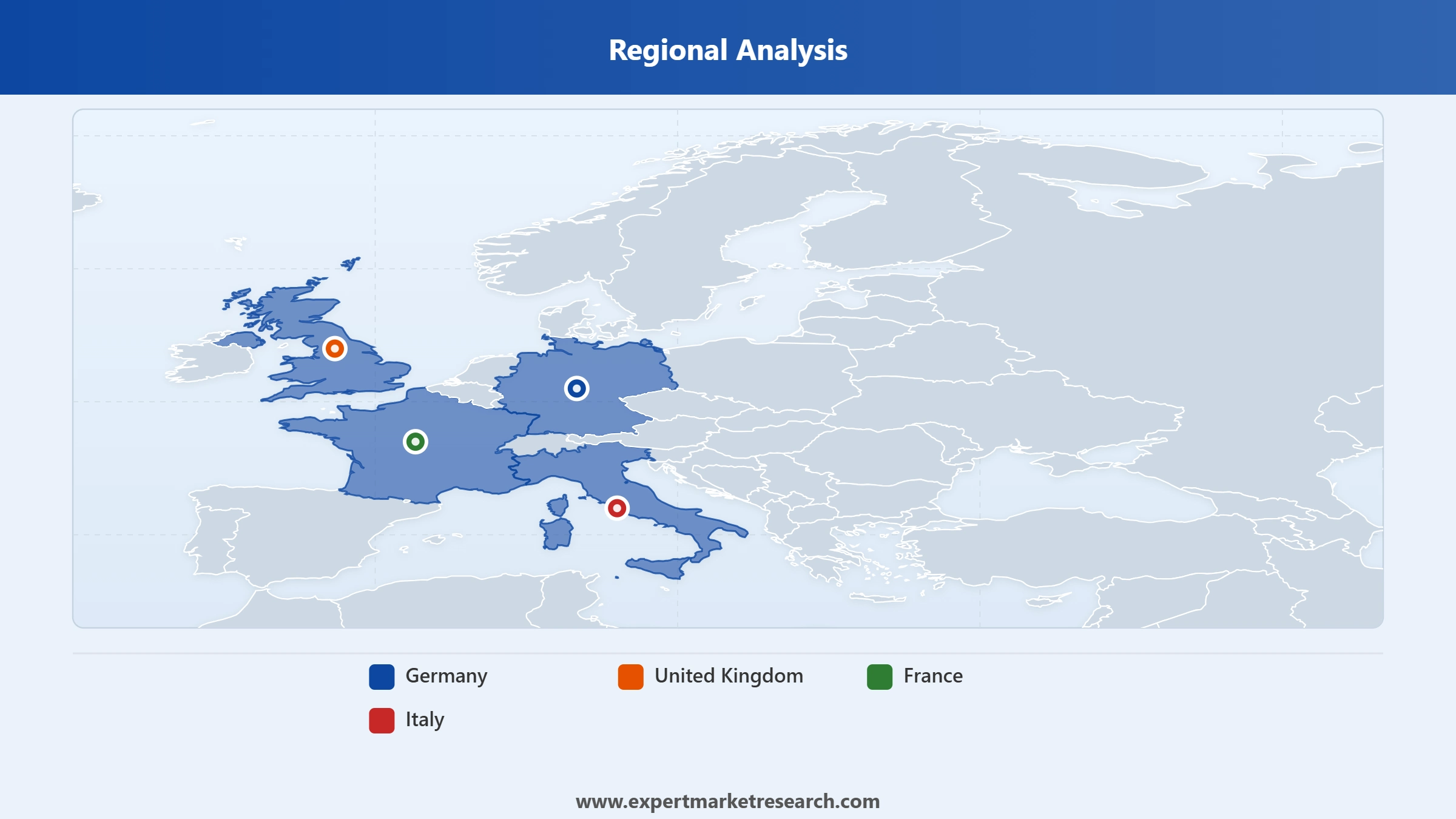
Market Breakup by Country
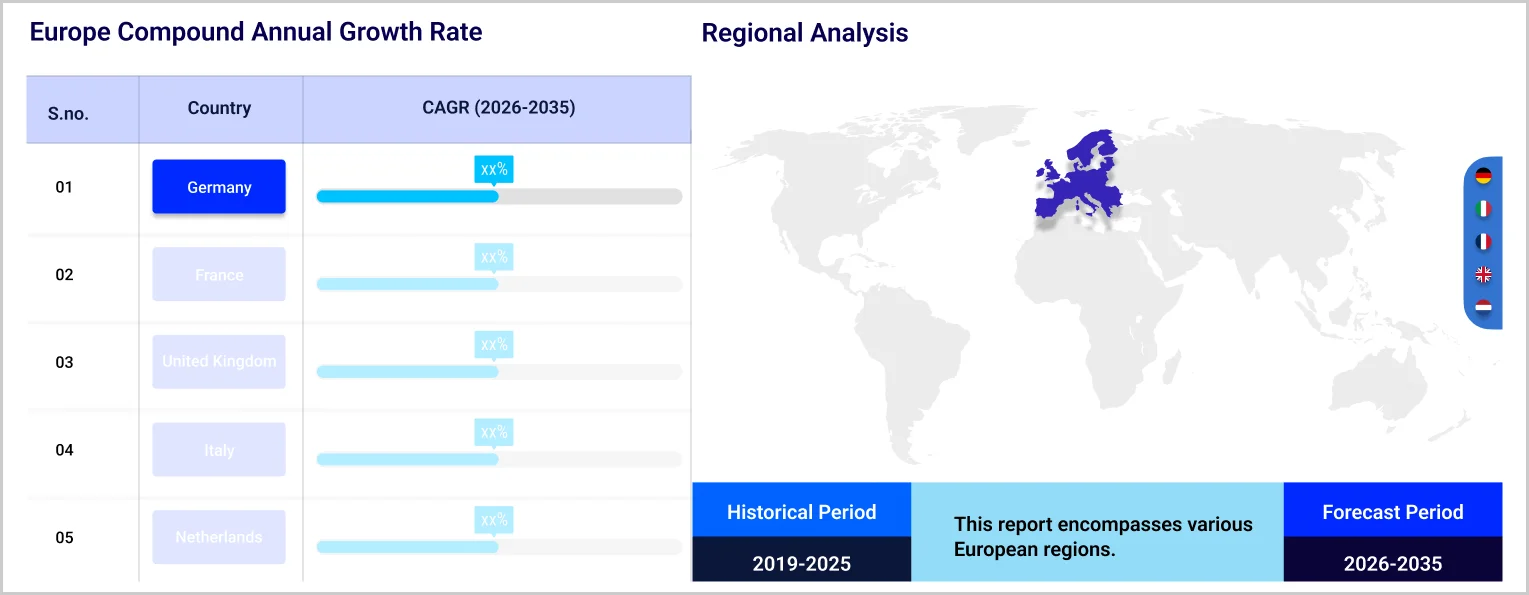
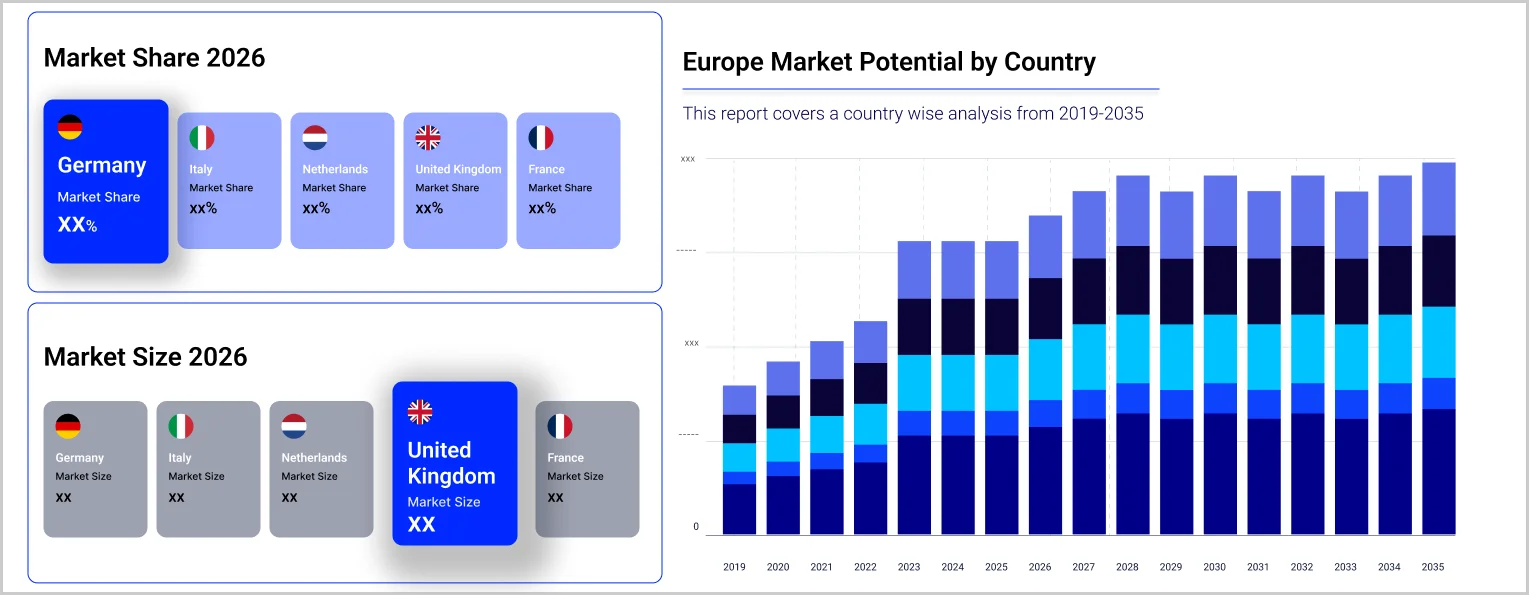
Key Insight: Germany, the United Kingdom, France, and Italy form the principal national opportunity centers, supported by their established chemical, industrial, pharmaceutical, beauty, coatings, and manufacturing ecosystems. Germany's cosmetics and personal care market alone generated EUR 18.0 billion in retail sales during 2025, demonstrating the scale of one downstream specialty formulation sector. France benefits from cosmetics and specialty chemical expertise, Italy from coatings, textiles, furniture, and industrial manufacturing, and the United Kingdom from pharmaceutical and specialty chemical capabilities. Other European countries provide targeted opportunities where local formulators are adopting sustainable additives, waterborne technologies, and higher-performance formulation systems.
Read more about this report - REQUEST FREE SAMPLE COPY IN PDF
By type, organic modifiers dominate through molecular flexibility and broad application compatibility
Organic rheology modifiers will have an advantage over their synthetic counterparts since they offer greater potential in terms of molecular design and formulation-dependent properties. In terms of polymeric mechanisms used in organic rheology modifiers, there is BASF's aqueous Rheovis series that encompasses ASE, HASE, HEUR and HMPE technologies. The fact that organic rheology modifiers offer formulation-independent advantages to the formulation of coatings, construction, personal care, pharmaceuticals, and adhesive products gives a lot of confidence in the commercial viability of these products.
Read more about this report - REQUEST FREE SAMPLE COPY IN PDF
Rheology modifiers based on inorganic materials are anticipated to witness rapid growth within specific formulations where there is a need for high levels of structure recovery and suspension. Cargill’s Anova 1000 is an environmentally friendly rheology modifier for asphalt binders, which can be used in small doses but helps increase flexibility at lower temperatures and improves polymer compatibility. Availability of the product in Europe shows how rheology technology is moving outside traditional paints and personal care to formulation systems related to infrastructure. Growth is expected to be the most rapid in areas where inorganic or specialized structuring technologies are needed to solve performance issues.
By application, paints and coatings lead while personal care offers high-value specialty expansion
Paints and coatings are anticipated to dominate by application because rheology affects virtually every stage between formulation and final film performance. BASF's Rheovis range addresses architectural, automotive, construction, flooring, furniture, industrial, printing, and packaging coatings, illustrating the breadth of downstream use. Demand is supported by the need to balance low-shear storage stability with high-shear application performance. Suppliers that can improve sag resistance, leveling, anti-settling behavior, wet-scrub resistance, and incorporation efficiency can gain preference among professional coating manufacturers. This breadth gives coatings a wider addressable base than individual niche applications. Such developments will thus boost Europe rheology modifiers market trends in the long run.
Read more about this report - REQUEST FREE SAMPLE COPY IN PDF
Cosmetics and personal care are expected to record strong growth as formulators increasingly use rheology modifiers to engineer texture rather than simply increase viscosity. Skin care alone generated EUR 32.3 billion in European retail sales in 2025, creating a large formulation base for creams, lotions, sunscreens, and other products. New polymer systems are being designed around lightweight sensory profiles, emulsifier-free formulations, electrolyte compatibility, suspension, and cold processing. This allows rheology suppliers to participate in premium product development where formulation feel and processing efficiency can influence commercial positioning.
By country, Germany leads through industrial depth while France offers attractive specialty formulation opportunities
Germany leads the Europe rheology modifiers market because of its scale across chemicals, industrial coatings, automotive manufacturing, construction materials, pharmaceuticals, and specialty formulations. Eurostat data show that Germany accounted for 26% of EU value of sold industrial production in 2025, ahead of Italy at 14% and France at 12%. Germany’s importance is reinforced by the presence of major specialty chemical manufacturers and extensive formulation expertise. The country is particularly important for industrial coatings, construction products, automotive finishes, adhesives, sealants, and other technically demanding applications where rheology modifiers influence processing and end-product performance, thereby directly boosting the Europe rheology modifiers market regional growth.
Read more about this report - REQUEST FREE SAMPLE COPY IN PDF
France and the United Kingdom provide significant opportunities in higher-value formulation applications, particularly cosmetics, pharmaceuticals, specialty coatings, and adhesives. France benefits from a major cosmetics ecosystem, while the United Kingdom combines specialty chemicals with established pharmaceutical and personal care manufacturing. Italy remains important through industrial production, coatings, adhesives, furniture, fashion, and textile applications. However, the European textile sector continues to face pressure. EURATEX reported that textile production fell 4.2% year over year in the first quarter of 2026, while clothing production declined 5.1%. This means suppliers should focus textile opportunities on technical textiles, specialty finishing, performance coatings, and higher-value applications rather than relying solely on conventional apparel manufacturing. Across the region, sustainable chemistry, waterborne formulations, construction renovation, and multifunctional personal care ingredients provide the most attractive cross-country opportunities.
Leading Europe rheology modifiers market players are aiming to gain growth by developing high-performance, application-specific solutions for paints and coatings, adhesives, personal care, pharmaceuticals, food, and construction materials. Companies are investing in research and development to improve viscosity control, stability, texture, processing efficiency, and compatibility while reducing dependence on petrochemical inputs. Greater emphasis is also being placed on bio-based, biodegradable, and low-VOC technologies to align product portfolios with Europe’s sustainability objectives and evolving regulatory requirements.
Europe rheology modifiers companies are also pursuing portfolio expansion, strategic partnerships, production optimisation, and stronger distribution networks to improve scalability across European markets. Manufacturers are targeting specialised formulations that address customer requirements while supporting premium pricing and differentiation. Expanding manufacturing capabilities, strengthening technical support, and improving supply-chain resilience can help companies serve diverse end-use industries more efficiently. In addition, players are focusing on customized solutions and collaborative formulation development, enabling deeper relationships with industrial customers and creating opportunities for recurring demand across established and emerging applications.
Established in 1865, BASF SE is headquartered in Ludwigshafen, Germany. The company supplies Rheovis, Attagel, Attaflow, and Efka rheology modifiers for water-based, solvent-based, and solvent-free systems. Its portfolio includes ASE, HASE, HEUR, HMPE, attapulgite, castor-oil, wax-based, and other technologies serving architectural, automotive, construction, flooring, furniture, industrial coatings, printing, packaging, and adhesive applications. BASF’s Ludwigshafen site remains a major global chemical production and research location.
Established in 2004, Arkema SA is headquartered in Colombes, France. Through its Coatex business, the company supplies rheology modifiers including Rheotech, Coapur, and related acrylic and polyurethane technologies for waterborne formulations. Its solutions address viscosity, leveling, film build, sag resistance, color acceptance, and application control. Arkema positions rheology technologies within broader coating solutions serving green building, mobility, electronics, energy, and other high-growth sectors.
Established in 1996, Clariant AG is headquartered in Muttenz, Switzerland. The company supplies specialty rheology technologies for coatings, personal care, pharmaceutical, cleaning, and other formulation applications. Its portfolio includes Hostagel products and Aristoflex polymers, with technologies designed around viscosity control, stabilization, cold processing, texture, salt tolerance, and formulation compatibility. Clariant also supplies intermediates used in the production of HEUR rheology modifiers, strengthening its position across the additive value chain.
Elementis PLC, established in 1988 and headquartered in London, United Kingdom, has a long history in specialty chemicals. The company focuses strongly on rheology, surface modification, and formulation technologies for coatings, personal care, construction, adhesives, pharmaceuticals, plastics, and specialty applications. Its portfolio includes RHEOLATE associative thickeners and BENTONE technologies. Elementis serves customers through specialized chemistry designed to improve viscosity, suspension, stability, texture, application properties, and formulation efficiency.
Other key players in the Europe rheology modifiers market include Croda International Plc, The Lubrizol Corporation, The Dow Chemical Company, PPG Industries, Inc., Ashland Inc., ALTANA AG (BYK-Chemie GmbH), Elementis PLC, and Wacker Chemie AG among others.
*Please note that this is only a partial list; the complete list of key players is available in the full report. Additionally, the list of key players can be customized to better suit your needs.*
Explore the Europe rheology modifiers market outlook through detailed segmentation, competitive analysis, recent developments, and application-specific opportunities. Download the sample report to understand Europe rheology modifiers market trends 2026, emerging formulation technologies, country-level opportunities, and the Europe rheology modifiers market forecast 2026-2035. The analysis can support suppliers, formulators, investors, and procurement teams in identifying high-value growth opportunities.


Upto 15% Off
USD
$2499 $2249
$3999 $3599
$4999 $4249
$5999 $5099


*While we strive to always give you current and accurate information, the numbers depicted on the website are indicative and may differ from the actual numbers in the main report. At Expert Market Research, we aim to bring you the latest insights and trends in the market. Using our analyses and forecasts, stakeholders can understand the market dynamics, navigate challenges, and capitalize on opportunities to make data-driven strategic decisions.*
The market is projected to grow at a CAGR of 3.00% between 2026 and 2035.
Based on type, the rheology modifiers market is categorised according to organic and Inorganic which consist of clay and silica rheology modifiers.
Key players in the market are BASF SE, Cargill, Incorporated, Arkema SA, Clariant AG, Croda International Plc, The Lubrizol Corporation, The Dow Chemical Company, PPG Industries, Inc., Ashland Inc., ALTANA AG (BYK-Chemie GmbH), Elementis PLC, and Wacker Chemie AG among others.
Based on the end use, the market is divided into paints and coatings, cosmetics and personal care, pharmaceuticals, textiles, sealants and adhesives and others.
The market is broken down into Germany, the United Kingdom, France, and Italy among others.
In 2025, the market reached an approximate value of USD 2.88 Billion.
The market is estimated to witness a healthy growth in the forecast period of 2026-2035 to reach about USD 3.87 Billion by 2035.
Key challenges in the Europe rheology modifiers market include stringent regulatory requirements, fluctuating raw material costs, environmental concerns surrounding synthetic additives, formulation complexity, and growing demand for sustainable alternatives. Manufacturers must balance performance, cost efficiency, regulatory compliance, and sustainability across diverse applications.
Key strategies driving the Europe rheology modifiers market include developing bio-based and sustainable formulations, expanding application-specific product portfolios, investing in research and development, improving formulation performance, strengthening regional supply chains, and pursuing strategic partnerships to address evolving regulatory requirements and customer preferences.
Explore our key highlights of the report and gain a concise overview of key findings, trends, and actionable insights that will empower your strategic decisions.
| REPORT FEATURES | DETAILS |
| Base Year | 2025 |
| Historical Period | 2019-2025 |
| Forecast Period | 2026-2035 |
| Scope of the Report |
Historical and Forecast Trends, Industry Drivers and Constraints, Historical and Forecast Market Analysis by Segment:
|
| Breakup by Type |
|
| Breakup by Application |
|
| Breakup by Region |
|
| Market Dynamics |
|
| Competitive Landscape |
|
| Companies Covered |
|
Datasheet
One User
USD 2,499
USD 2,249
tax inclusive*
Single User License
One User
USD 3,999
USD 3,599
tax inclusive*
Five User License
Five User
USD 4,999
USD 4,249
tax inclusive*
Corporate License
Unlimited Users
USD 5,999
USD 5,099
tax inclusive*
*Please note that the prices mentioned below are starting prices for each bundle type. Kindly contact our team for further details.*
Flash Bundle
Small Business Bundle
Growth Bundle
Enterprise Bundle
*Please note that the prices mentioned below are starting prices for each bundle type. Kindly contact our team for further details.*
Flash Bundle
Number of Reports: 3
20%
tax inclusive*
Small Business Bundle
Number of Reports: 5
25%
tax inclusive*
Growth Bundle
Number of Reports: 8
30%
tax inclusive*
Enterprise Bundle
Number of Reports: 10
35%
tax inclusive*
How To Order

Select License Type
Choose the right license for your needs and access rights.

Click on ‘Buy Now’
Add the report to your cart with one click and proceed to register.

Select Mode of Payment
Choose a payment option for a secure checkout. You will be redirected accordingly.
Strategic Solutions for Informed Decision-Making
Gain insights to stay ahead and seize opportunities.

Get insights & trends for a competitive edge.

Track prices with detailed trend reports.

Analyse trade data for supply chain insights.

Leverage cost reports for smart savings

Enhance supply chain with partnerships.

Connect For More Information
Our expert team of analysts will offer full support and resolve any queries regarding the report, before and after the purchase.
Our expert team of analysts will offer full support and resolve any queries regarding the report, before and after the purchase.
We employ meticulous research methods, blending advanced analytics and expert insights to deliver accurate, actionable industry intelligence, staying ahead of competitors.
Our skilled analysts offer unparalleled competitive advantage with detailed insights on current and emerging markets, ensuring your strategic edge.
We offer an in-depth yet simplified presentation of industry insights and analysis to meet your specific requirements effectively.




