

Consumer Insights
Uncover trends and behaviors shaping consumer choices today
Procurement Insights
Optimize your sourcing strategy with key market data
Industry Stats
Stay ahead with the latest trends and market analysis.
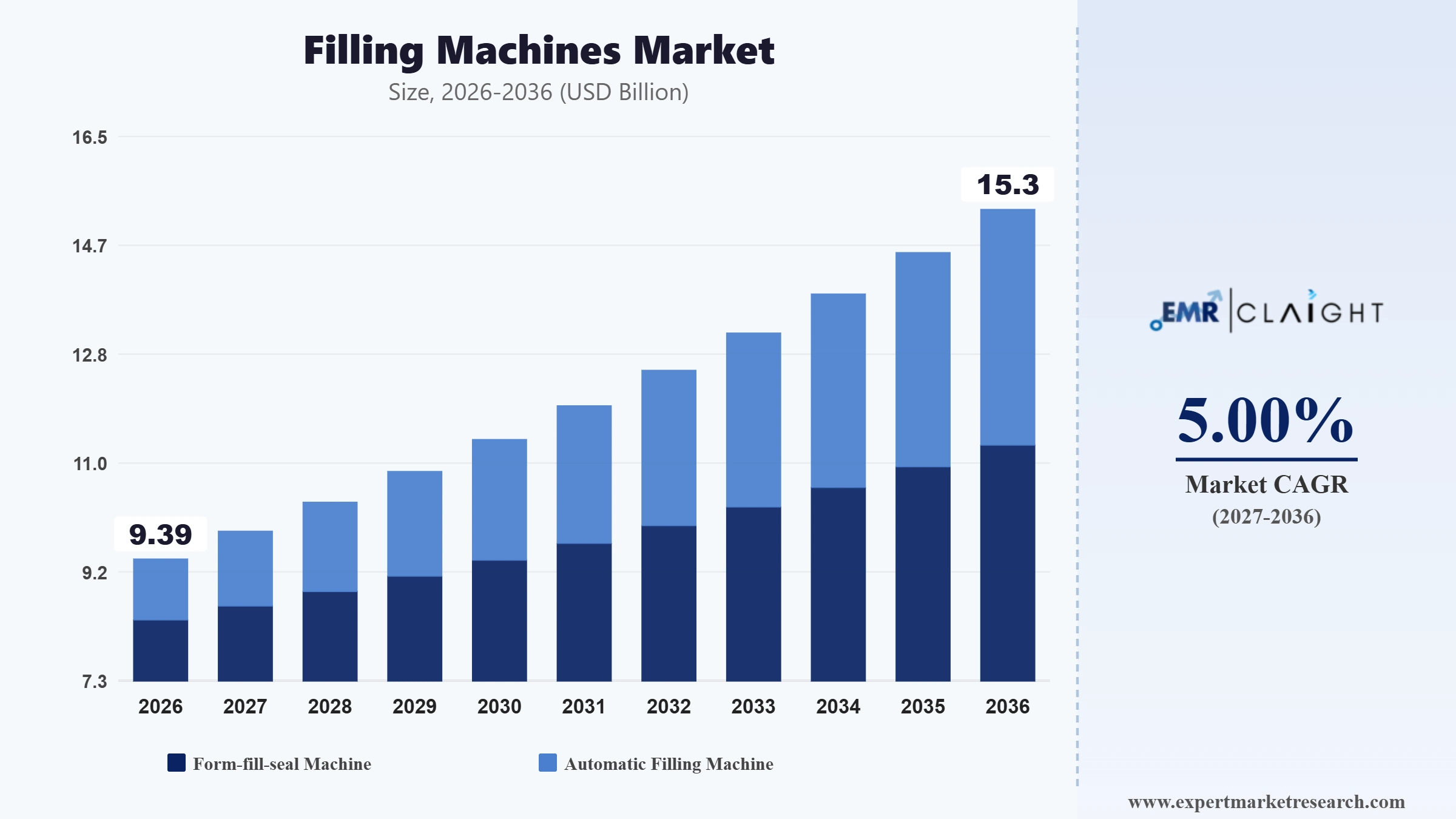
The global filling machines market attained a value of USD 8.94 Billion in 2025 and is projected to grow at a CAGR of 5.00% through 2035. The market is further expected to reach USD 14.56 Billion by 2035. Rising packaged food consumption, growing injectable drug output, and the shift to flexible pouches are supporting growth in the market.
Filling machines place measured quantities of liquids, powders, pastes, and granules into bottles, pouches, cups, tubes, and blister packs. Food and beverage producers buy most machines, while pharmaceutical, cosmetic, and homecare makers add steady orders for specialised lines. Demand rises with packaged food consumption, online retail, and rules on dosing accuracy and hygiene. Machine makers sell complete lines through direct sales teams and distributors, and recurring revenue comes from spare parts, format changes, upgrades, and service contracts over many years.
Order books at leading machine builders show how healthy demand has become. In July 2026, a German line builder reported first half order intake up 4.5% to EUR 2,852.5 million, with a 10.8% EBITDA margin, and confirmed its 2026 guidance. Beverage, food, and pharmaceutical customers worldwide continue to place orders for filling and packaging lines despite currency swings. Machine builders benefit from large order backlogs, and shorter delivery times are becoming a clear selling point in the filling machines market.
Leading suppliers across the filling machines market are directing investment toward modular platforms, digital service, and regional assembly and service sites, while acquisitions of component and tooling firms deepen their complete line offering. In July 2026, a German process group reported second quarter order intake of EUR 1.49 billion, up 14.2%, and raised organic revenue growth guidance to 6% to 8%. Competitive positioning increasingly rests online integration, hygiene design, changeover speed, and the ability to support customers locally with parts, training, and software updates.
Read more about this report - REQUEST FREE SAMPLE COPY IN PDF
| Global Filling Machines Market Report Summary | Description | Value |
| Base Year | USD Billion | 2025 |
| Historical Period | USD Billion | 2019-2025 |
| Forecast Period | USD Billion | 2026-2035 |
| Market Size 2025 | USD Billion | 8.94 |
| Market Size 2035 | USD Billion | 14.56 |
| CAGR 2019-2025 | Percentage | XX% |
| CAGR 2026-2035 | Percentage | 5.00% |
| CAGR 2026-2035 - Market by Region | Asia Pacific | 5.6% |
| CAGR 2026-2035 - Market by Country | India | 6.5% |
| CAGR 2026-2035 - Market by Country | Brazil | 5.9% |
| CAGR 2026-2035 - Market by End Use | Homecare | 5.8% |
| CAGR 2026-2035 - Market by Packaging Type | Blisters | 5.5% |
| Market Share by Country 2025 | Australia | 2.7% |
The company opened a new plant in Vemagal near Bangalore, India, where it will preassemble filling and packaging lines, including ErgoBloc L and Compact Class products, and produce blow moulds and spare parts. Placing assembly near customers is a move others can copy, since it shortens delivery times, supports service teams, and reduces freight and import costs across the filling machines market.
The company showed the ORBITA-L first, a modular machine for filling and capping non injectable liquids with a magnetic transport system for full in process weight control and servo driven tightening. Builders across the filling machines market of modular, weight controlled liquid lines can meet pharmaceutical quality needs and win repeat format change orders from drug makers and many other buyers worldwide.
The company launched SynTiso, a fully integrated aseptic filling line with robotic handling system for high throughput pharmaceutical manufacturing, described as a gloveless solution for liquid drug products. Combining isolators, robots, and filling in one line cuts contamination risk, saves floor space, and shortens validation work for drug makers and regulators, a design others may well copy.
ProMach acquired Lako Tool and Manufacturing, a maker of sealing, cutting, and punching solutions for flexible film packaging machines, bringing its 59 employees into its Systems and Process business unit. Buying component specialists lets packaging machine groups across the filling machines market secure key parts for form fill seal lines and add aftermarket sales to a single common customer base over time.
Food producers across the filling machines market want machines that handle several pack types without long stoppages. Suppliers are responding with platforms that combine vacuum, modified atmosphere, and skin packaging in a single design. In May 2026, GEA launched the PowerPak 5000 thermoforming packaging machine for midsize food producers, with tool free changeovers and a service friendly layout that replaces its previous midsize models. Operators gain easier cleaning. Processors gain shorter transitions between batches, and competitors may match these features in their own mid-range machines.
Injectable drugs and prefilled syringes across the filling machines market need more sterile filling capacity than many sites can supply. Contract manufacturers are adding lines to serve drug developers that lack their own plants. In April 2026, Grand River Aseptic Manufacturing announced a USD 100 million investment in a fifth sterile filling line and GMP facility, built around a groninger line with a SKAN isolator rated at 50 million units a year. Machine suppliers gain new orders, and more outsourcing is likely in coming years.
Packaging machinery groups across the filling machines market with strong service income are attracting financial investors that expect steady growth. Such deals give owners capital for acquisitions and regions. In March 2026, investors led by Apollo funds agreed to buy about 37% of a German packaging maker from CVC Capital Partners, which keeps 63%, as it reported record 2025 revenue of EUR 1.75 billion. Management plans to expand in North America and in aftermarket service, and more stake sales across the sector may soon follow.
Regulation is pushing brands toward lighter, recyclable, and mono material packs that run differently on filling lines. In August 2026, the EU Packaging and Packaging Waste Regulation began to apply in all member states, requiring declarations of conformity, technical documentation, and limits on substances of concern, with labeling and recycled content duties phasing in through 2030. Lines must also handle thinner mono material films and lighter caps. Machine makers gain demand for flexible lines, while brands must requalify their packs.
Order intake is a useful early sign of equipment spending, and large groups are reporting growth. Food and beverage processing remains the largest single source of demand. In May 2026, JBT Marel Corporation reported first quarter revenue of USD 936 million, up 10%, and inbound orders of USD 1.07 billion, with a book to bill ratio of 1.14 and a backlog of USD 1.49 billion. Customers may face longer waits for new equipment, and suppliers may add more capacity soon.
The Expert Market Research's report titled "Global Filling Machines Market Report and Forecast 2026-2035" offers a detailed analysis of the market based on the following segments:
Market Breakup by Machine
Key Insight: Automatic filling machines lead the machine segment of the filling machines market, since plants handling bottles, vials, cans, and tubes in drinks, drugs, beauty, and household care favor equipment that doses and caps with little supervision. Form fill seal machines are expected to grow fastest, as they make a pouch or cup from film, fill it, and seal it in a single step, which suits snacks, sauces, powders, and single serve items sold in flexible packs. Plants often buy both machine types together on large projects.
Market Breakup by Product Type
Key Insight: Liquid leads the product type segment of the filling machines market, as drinks, dairy, oils, sauces, medicines, beauty products, and cleaners are all filled by volume and need precise dosing. Powder and granules are expected to grow fastest, as instant drink mixes, spices, supplements, and detergents shift toward sachets, pouches, and jars handled by sealed, dust-controlled dosing units. In April 2026, Sidel launched EvoFILL PET, a filler for water and still beverages that runs up to 20% faster, at up to 90,000 bottles per hour.
Market Breakup by Packaging Type
Key Insight: Bottles lead the packaging type segment of the filling machines market, as water, juice, milk, cooking oil, syrups, and cleaning liquids reach shoppers in glass and plastic containers filled at high speed. Blisters are expected to grow fastest, as pills and health products need protective single dose cards. Pouches are widening in food and homecare, cups serve yogurt and desserts, and tubes serve creams and pastes. Each packaging type needs its own sealing, forming, and handling tools, so many plants buy several fillers for different formats across their sites and lines.
Market Breakup by End Use
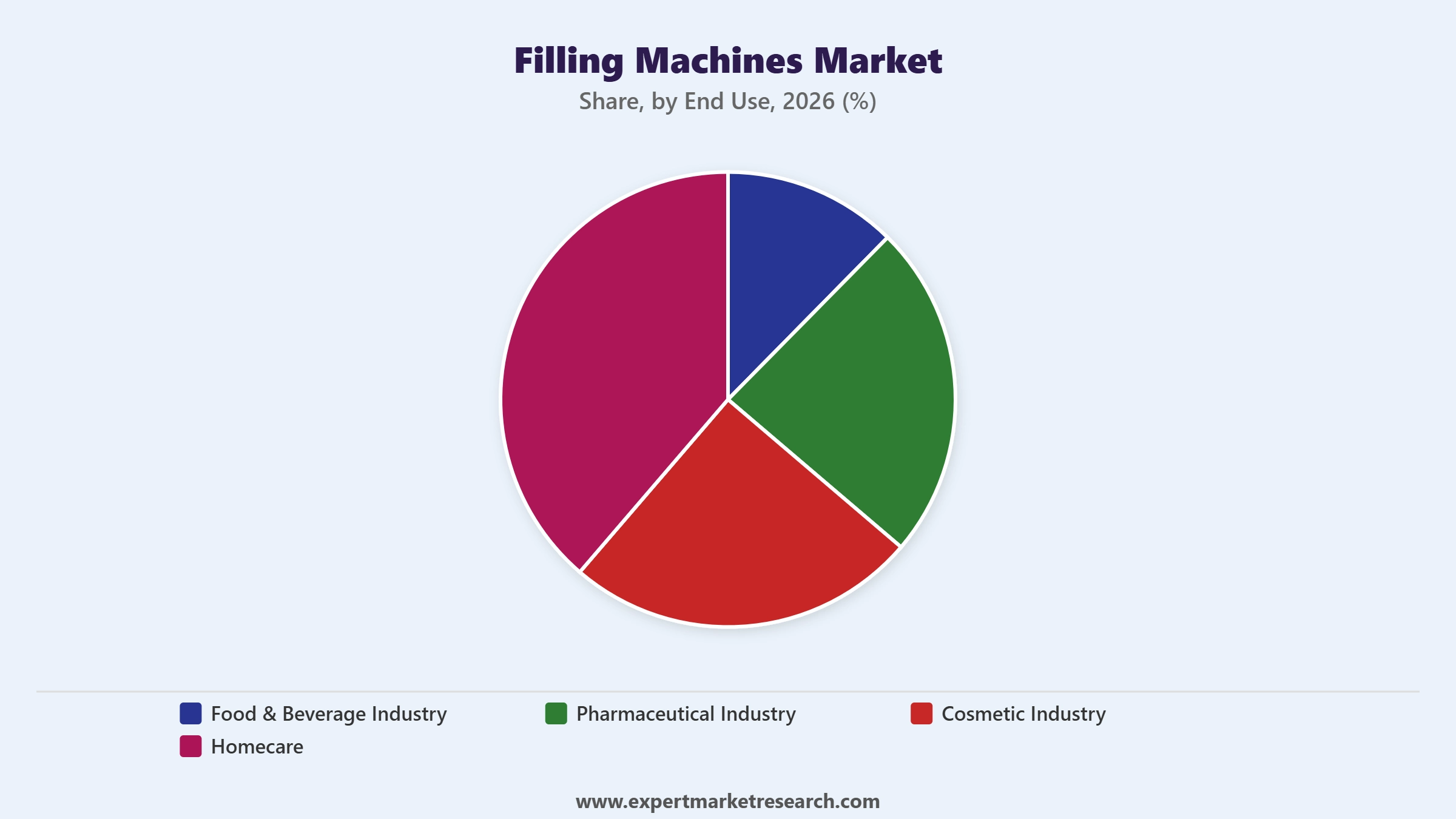
Key Insight: Food and beverage lead the end use segment of the filling machines market, as drinks, dairy, snacks, sauces, and ready meals are produced in very large volumes. Cosmetic makers are expected to grow fastest, as skin, sun, and hair care brands widen ranges and fill creams, perfumes, and lotions in small batches. Pharmaceutical makers buy aseptic and weight-controlled lines for vials, syringes, and syrups, homecare brands fill detergents and cleaners in bottles and refill pouches, and others include chemicals, paints, and lubricants that need rugged units. Each end use sets its own hygiene rules.
Market Breakup by Region
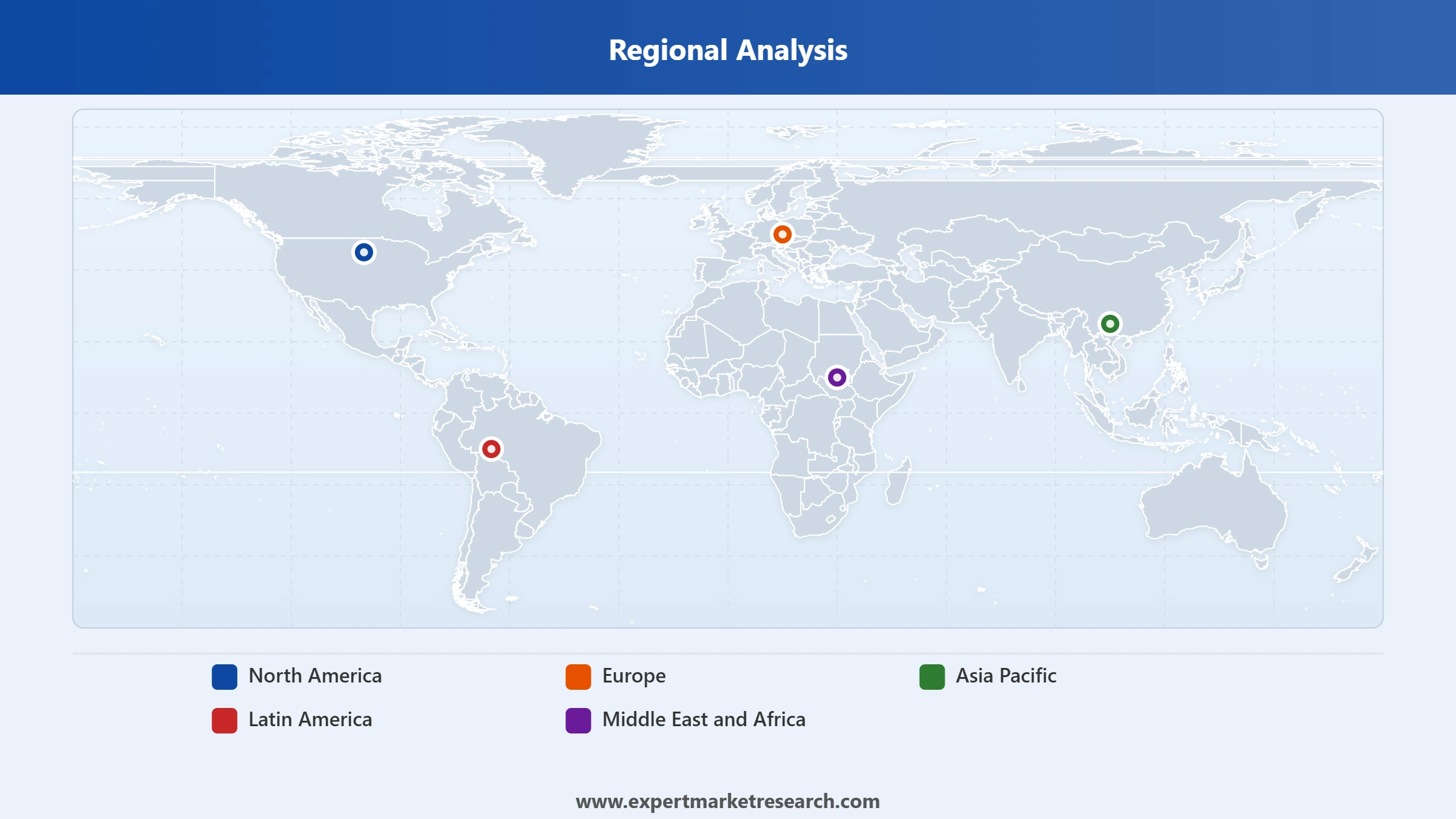
Key Insight: Europe leads the regional landscape of the filling machines market, backed by machine builders clustered in Germany and Italy, large food, beverage, and drug industries, and tough packaging rules. Asia Pacific is expected to grow fastest, as higher incomes, rising packaged food use, and domestic plants lift demand in China, India, and ASEAN. North America adds demand through beverage, drug, and automation spending. Latin America grows with food processing in Brazil and Mexico, and Middle East and Africa benefits from new beverage and consumer goods plants.
Read more about this report - REQUEST FREE SAMPLE COPY IN PDF
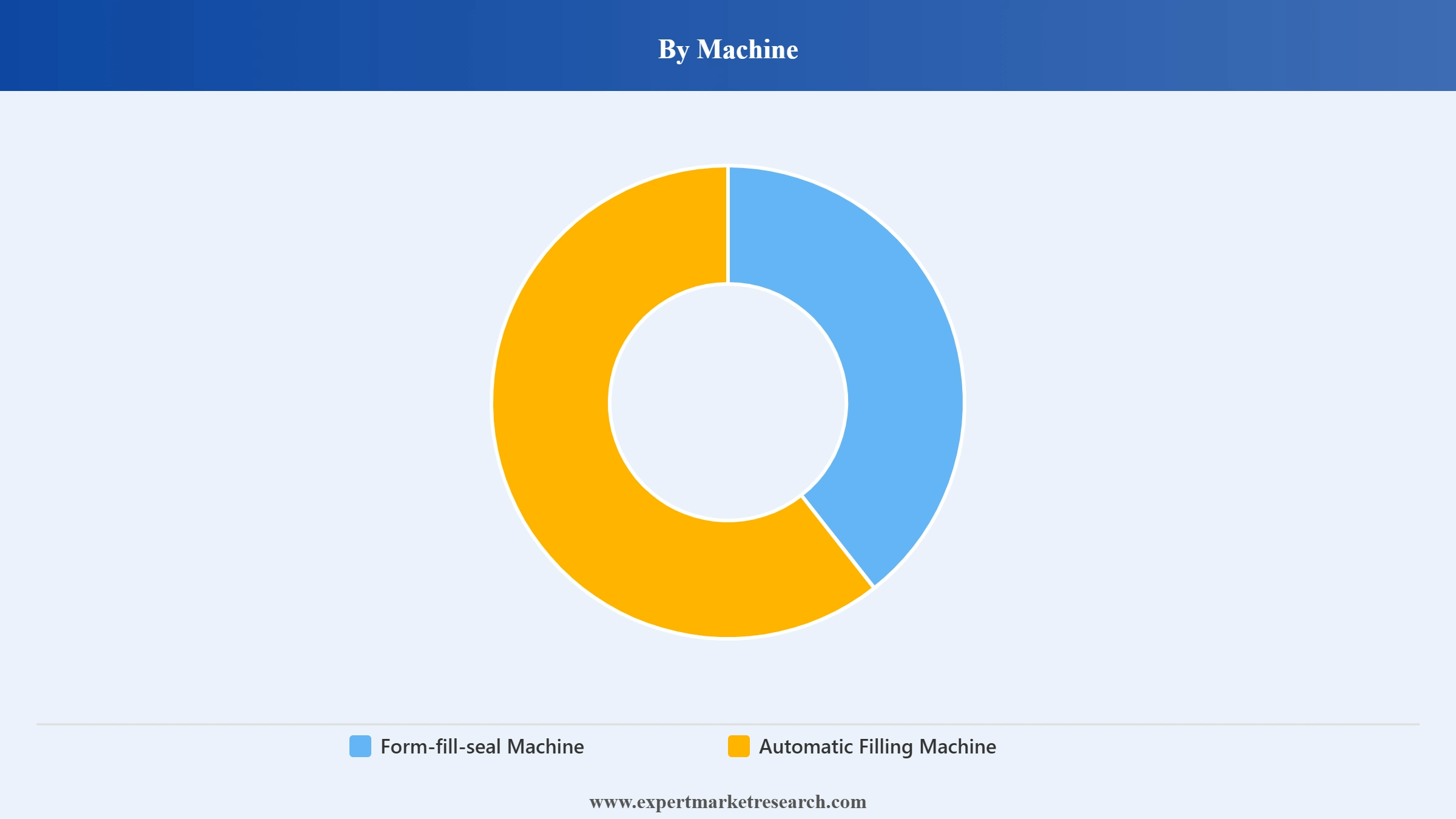
By machine, automatic filling machines dominate the filling machines market owing to high speed, low labor operation across industries
Automatic filling machines hold the largest share of the machine segment, because bottle, vial, can, and tube lines in beverage, pharmaceutical, cosmetic, and homecare plants depend on dosing, capping, and conveying units that run with little operator input. Buyers value accurate volumes, fast changeovers, and clean design that meets food and drug rules. Plants add automatic units as labor costs rise, and suppliers earn repeat income from spare parts, retrofits, and format kits across the long life of each machine.
Read more about this report - REQUEST FREE SAMPLE COPY IN PDF
Form fill seal machines are registering the fastest growth within the machine segment in the filling machines market, as brands shift to flexible packs that are formed, filled, and sealed in one step. In November 2025, a builder inaugurated a new assembly hall in Remshalden, Germany, for its food horizontal packaging business, adding 1,200 square meters of assembly space for end-to-end line projects after rising packaged food demand. Snack, sauce, and powder producers gain faster delivery of complete lines and much shorter startups.
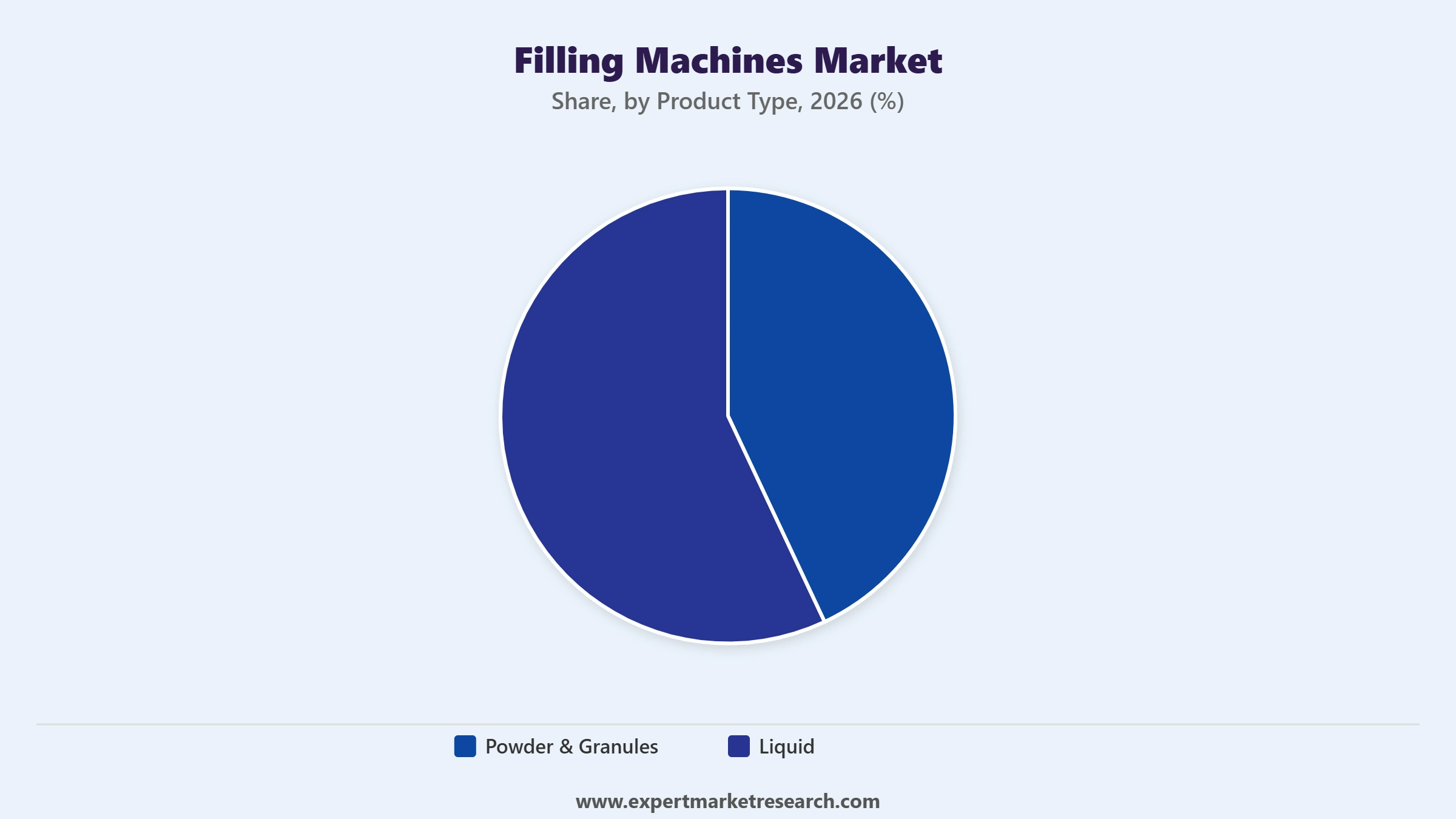
By product type, liquid dominates the filling machines market owing to the wide use of bottled drinks, medicines, and household products
Liquid holds the largest share of the product type segment, because beverages, dairy drinks, oils, medicines, cosmetics, and household cleaners are filled as liquids and need accurate volume control. Dosing accuracy matters because small errors across millions of units add up to real cost, so buyers favor piston, flow meter, and level fillers with very fast cleaning cycles and sanitary design for food and drug plants. Beverage makers gain output from the same floor space and much shorter cleaning cycles.
Read more about this report - REQUEST FREE SAMPLE COPY IN PDF
Powder and granules are registering the fastest growth within the product type segment, as instant drinks, nutrition mixes, seasonings, and refill detergents reach shoppers in small packs. These products need sealed dosing units that control dust, protect operators, and keep weights accurate. Faster changeovers between product recipes are also highly valued. In January 2025, WeighPack added the Swifty Bagger S-3600 Duplex Servo, which handles liquids, solids, and powders and fills up to 70 premade pouches per minute for retail packs.
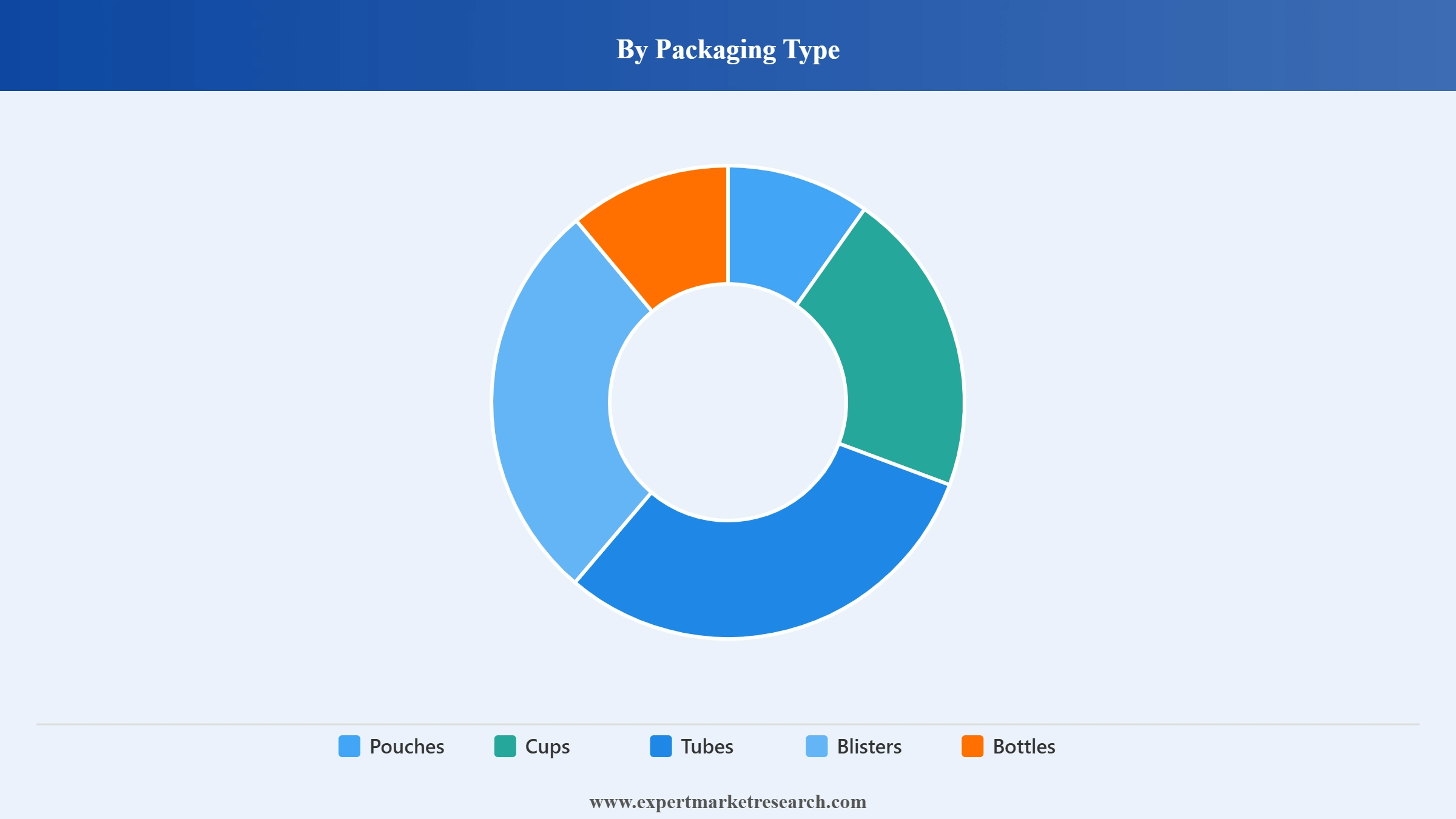
By packaging type, bottles dominate the filling machines market owing to wide use in beverages, medicines, and household liquids
Bottles hold the largest share of the packaging type segment, because drinking water, juices, dairy, cooking oils, medicines, and household liquids are sold in bottles that fill quickly on rotary lines. Filling, capping, and labeling units are usually bought together as one complete line, which lifts the worth of each order placed. Lightweight bottles, recycled plastics, and refill formats push suppliers to upgrade valves, cappers, and handling parts, and buyers renew older lines to cut waste, energy use, and downtime.
Read more about this report - REQUEST FREE SAMPLE COPY IN PDF
Blisters are registering the fastest growth within the packaging type segment, as tablets, capsules, and consumer health and nutrition products need protective unit dose packs. In May 2026, an Italian packaging group showed a robotised packaging line for all polypropylene blister packs with a cartoner fitted with a new automatic carton magazine, supporting the move away from PVC. Drug makers gain recyclable packs, and machine builders gain demand for new forming, sealing, and cutting tools along with upgraded cartoning units.
By end use, the food and beverage industry dominates the filling machines market owing to high volume packaged food and drink production
Food and beverage hold the largest share of the end use segment, because packaged beverages, yogurt, snacks, soups, and frozen meals run-on high-volume lines that need fast, hygienic filling. Producers add capacity as urban populations grow, incomes rise, and retailers expand chilled and shelf stable ranges. Frequent new product launches call for flexible machines with quick format changeovers, and food safety rules push buyers toward washdown designs, which adds to the value of each machine sold to processors.
Read more about this report - REQUEST FREE SAMPLE COPY IN PDF
Cosmetic industry is registering the fastest growth within the end use segment, as skin, sun, and hair care brands widen ranges and launch more variants in tubes, jars, and bottles. In April 2026, Coesia presented a cosmetics line at Interpack in Dusseldorf covering tube filling, cartoning, case packing, and palletizing, aimed at premium products with strict hygiene needs. High variety and small batches raise demand for flexible machines with quick format changes. Contract fillers are adding capacity for such lines.
Europe commands the largest regional share of the filling machines market, supported by its dense base of machine builders
Europe commands the largest regional share of the filling machines market, supported by a dense base of machine builders across Germany, Italy, and neighboring countries, strong food, beverage, and pharmaceutical industries, and strict packaging rules. Local customers buy advanced lines for aseptic, hygienic, and recyclable packaging formats, and builders export a large share of their output worldwide. Skilled engineers, nearby component suppliers, and established service networks help European firms keep leadership, while upcoming packaging rules encourage replacement of older equipment.
Read more about this report - REQUEST FREE SAMPLE COPY IN PDF
Asia Pacific is registering the fastest growth among the regional markets, driven by rising incomes, packaged food consumption, and growing local manufacturing across large Asian economies. In August 2026, UFlex posted first quarter sales of INR 53,972 million, up 38%, with capital spending of INR 4,782 million across four projects, including an aseptic facility in Egypt and a BOPP line in Dharwad. Growing packaging capacity across the region supports steady demand for filling machines in food, beverage, and household plants.
The competitive landscape is moderately fragmented, with global filling machines companies competing alongside many regional machine builders. Established filling machines companies differentiate through speed, dosing accuracy, hygiene design, changeover time, line integration, and service networks. Large groups offer complete lines that combine filling, capping, sealing, inspection, and cartoning, while smaller builders focus on specific formats such as pouches, tubes, or cups. Compliance with food contact, pharmaceutical, and safety standards acts as a barrier for new entrants.
Leading filling machines market players are pursuing acquisitions, regional plants, and modular product launches to widen their reach. Several filling machines players are also adding digital monitoring, remote support, and spare part programs to earn recurring service revenue. Investment in aseptic technology, flexible pouch lines, and equipment for recyclable materials is increasing as customers prepare for new packaging rules. Partnerships with film suppliers, brand owners, and contract manufacturers help builders win projects in Asia Pacific and Europe.
Founded in 1908 and headquartered in Tokyo, Japan, the company supplies the market through automatic packaging machinery, including high speed overwrapping and vertical form fill seal systems, cartoners, and specialty equipment for food packing. It serves confectionery and food producers and builds production machinery for other industries.
Founded in 1985 and headquartered in Noida, India, the company supplies the market through its engineering business, including form fill seal machines, flow wrap and over wrap machines, and auger, volumetric cup, and weigh fillers. It sells these machines alongside its flexible packaging films and aseptic packaging solutions.
Founded in 1992 and headquartered in Barcelona, Spain, the company supplies the market through horizontal form fill seal and pick fill seal machines for flexible packaging. It also supplies fitments, bag in box products, and edge packaging technology, and it runs a manufacturing plant in Chakan, near Pune, India.
Founded in 1989 and headquartered in Vista, California, United States, the company supplies the market through timed flow, piston, overflow, vacuum, pump, auger, net weight, and tablet counter filling machines. It serves customers through offices in California, Texas, and Florida.
Other key players in the market include Coesia S.p.A., GEA Group, JBT Corporation, I.M.A. Industria Macchine Automatiche SpA, Robert Bosch GmbH, and Matrix Packaging Machinery, among others.
*Please note that this is only a partial list; the complete list of key players is available in the full report. Additionally, the list of key players can be customized to better suit your needs.*
Unlock the latest insights with our global filling machines market trends 2026 report. Discover regional growth patterns, machine types, packaging formats, and key industry players. Stay ahead of competition with trusted data and expert analysis. Download your free sample report today and drive informed decisions in the market. Request a customised quote to align the findings with your own business planning.


Upto 15% Off
USD
$2499 $2249
$3999 $3599
$4999 $4249
$5999 $5099


*While we strive to always give you current and accurate information, the numbers depicted on the website are indicative and may differ from the actual numbers in the main report. At Expert Market Research, we aim to bring you the latest insights and trends in the market. Using our analyses and forecasts, stakeholders can understand the market dynamics, navigate challenges, and capitalize on opportunities to make data-driven strategic decisions.*
The market reached a value of USD 8.94 Billion in 2025.
The market is projected to grow at a CAGR of 5.00% between 2026 and 2035.
Key strategies driving the market include automation adoption, development of high-speed and precision filling systems, product innovation, strategic partnerships, and expansion of manufacturing capacities.
The growing technological advancements is the key market trend guiding the growth of the filling machines industry.
The major regions in the industry are North America, Latin America, the Middle East and Africa, Europe, and the Asia Pacific.
Form-fill-seal and automatic filling machines are the major machine segments in the industry.
The significant product types available in the industry include powder and granules, and liquid.
The leading segments based on packaging type include pouches, cups, tubes, blisters, and bottles.
Food and beverage industry, pharmaceutical industry, cosmetic industry, and homecare, among others, are the major end use segments of the product in the industry.
The key players in the market include Tokyo Automatic Machinery Works, Ltd., UFlex Limited, Bossar Packaging, S.A., Accutek Packaging Equipment Companies, Inc., Coesia S.p.A., GEA Group, JBT Corporation, I.M.A. Industria Macchine Automatiche SpA, Robert Bosch GmbH, and Matrix Packaging Machinery, among others.
The market is estimated to witness a healthy growth in the forecast period of 2026-2035 to reach a value of USD 14.56 Billion by 2035.
Major challenges that the filling machines market players face includes high equipment costs, maintenance complexity, integration with existing production lines, regulatory compliance requirements, and fluctuations in raw material prices.
Automatic filling machines lead the market by machine, while form fill seal machines are expected to grow fastest.
Europe leads the market by region, while Asia Pacific is registering the fastest growth.
Explore our key highlights of the report and gain a concise overview of key findings, trends, and actionable insights that will empower your strategic decisions.
| REPORT FEATURES | DETAILS |
| Base Year | 2025 |
| Historical Period | 2019-2025 |
| Forecast Period | 2026-2035 |
| Scope of the Report |
Historical and Forecast Trends, Industry Drivers and Constraints, Historical and Forecast Market Analysis by Segment:
|
| Breakup by Machine |
|
| Breakup by Product Type |
|
| Breakup by Packaging Type |
|
| Breakup by End Use |
|
| Breakup by Region |
|
| Market Dynamics |
|
| Competitive Landscape |
|
| Companies Covered |
|
| Report Price and Purchase Option | Explore our purchase options that are best suited to your resources and industry needs. |
| Delivery Format | Delivered as an attached PDF and Excel through email, with an option of receiving an editable PPT, according to the purchase option. |
Datasheet
One User
USD 2,499
USD 2,249
tax inclusive*
Single User License
One User
USD 3,999
USD 3,599
tax inclusive*
Five User License
Five User
USD 4,999
USD 4,249
tax inclusive*
Corporate License
Unlimited Users
USD 5,999
USD 5,099
tax inclusive*
*Please note that the prices mentioned below are starting prices for each bundle type. Kindly contact our team for further details.*
Flash Bundle
Small Business Bundle
Growth Bundle
Enterprise Bundle
*Please note that the prices mentioned below are starting prices for each bundle type. Kindly contact our team for further details.*
Flash Bundle
Number of Reports: 3
20%
tax inclusive*
Small Business Bundle
Number of Reports: 5
25%
tax inclusive*
Growth Bundle
Number of Reports: 8
30%
tax inclusive*
Enterprise Bundle
Number of Reports: 10
35%
tax inclusive*
How To Order

Select License Type
Choose the right license for your needs and access rights.

Click on ‘Buy Now’
Add the report to your cart with one click and proceed to register.

Select Mode of Payment
Choose a payment option for a secure checkout. You will be redirected accordingly.
Strategic Solutions for Informed Decision-Making
Gain insights to stay ahead and seize opportunities.

Get insights & trends for a competitive edge.

Track prices with detailed trend reports.

Analyse trade data for supply chain insights.

Leverage cost reports for smart savings

Enhance supply chain with partnerships.

Connect For More Information
Our expert team of analysts will offer full support and resolve any queries regarding the report, before and after the purchase.
Our expert team of analysts will offer full support and resolve any queries regarding the report, before and after the purchase.
We employ meticulous research methods, blending advanced analytics and expert insights to deliver accurate, actionable industry intelligence, staying ahead of competitors.
Our skilled analysts offer unparalleled competitive advantage with detailed insights on current and emerging markets, ensuring your strategic edge.
We offer an in-depth yet simplified presentation of industry insights and analysis to meet your specific requirements effectively.




