

Consumer Insights
Uncover trends and behaviors shaping consumer choices today
Procurement Insights
Optimize your sourcing strategy with key market data
Industry Stats
Stay ahead with the latest trends and market analysis.
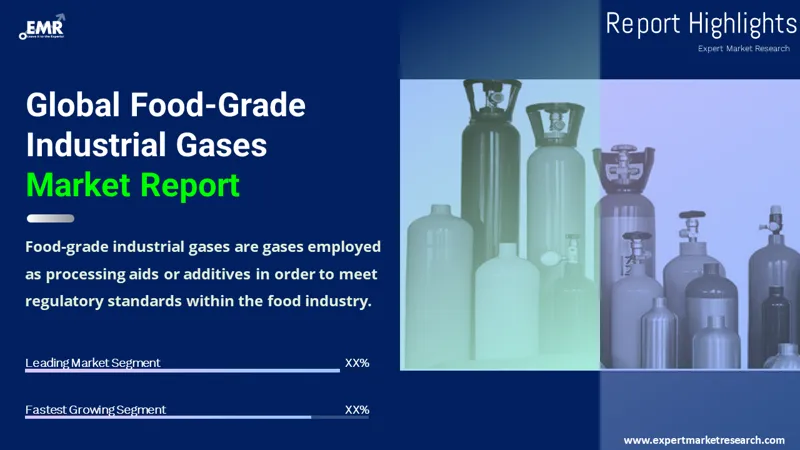
The global food-grade industrial gases market was valued at USD 9.13 Billion in 2025. The market is expected to grow at a CAGR of 5.80% during the forecast period of 2026-2035 to reach a value of USD 16.04 Billion by 2035. The market is witnessing sustained growth driven by rising demand for high-purity nitrogen, oxygen, and argon across food processing, packaging, and preservation applications.
According to the Linde Gas, persistent carbon dioxide supply disruptions linked to upstream ammonia and ethanol plant shutdowns continued reshaping carbonation-dependent food and beverage operations in 2026. Long-term contracts increasingly include pass-through pricing clauses to insulate margins against volatile energy inputs, accelerating diversification into biogenic CO2 and reinforcing competitive innovation across the global food grade industrial gases market.
According to Linde US, Linde commissioned a new air separation unit in China in early 2026, expanding capacity for high-purity nitrogen, oxygen, and food-grade industrial gases supply across Asia-Pacific. The expansion reinforces continued global capacity investment by major players including Linde, Air Liquide, and Air Products, supporting steady demand growth across the global food grade industrial gases market amid expanding cryogenic freezing applications.
The food-grade industrial gases market is steadily expanding owing to the increased demand for preservation systems that are capable of improving the quality of the food products as well as reducing the loss of perishable food products such as meat, fish, and bakery goods. The use of industrial gases, including nitrogen and carbon dioxide, is gaining popularity as a means of improving the shelf life of food items as well as preserving their quality. Moreover, the use of cryogenic freezing aids in quick cooling of food items without changing their structure. Therefore, food-grade industrial gas manufacturers are being compelled to increase production and secure supply.
The rising popularity of MAP technology is contributing to the growing importance of nitrogen and carbon dioxide in extending shelf life and maintaining quality for products in the meat, dairy, and baked goods categories. Along with this development, the growing penetration of cryogenic freezing equipment is increasing demand for the utilization of liquid nitrogen and oxygen, especially for bulk freezing of food products for exports. There is also an increasing need for companies to invest in plants for separating gases from air to ensure consistent production of high-purity gas.
Further, rising concern about food safety and purity standards of gases is driving the demand for modern manufacturing facilities and purification processes. In keeping with these trends, ongoing capacity addition by major industrial gas suppliers is improving worldwide availability of supplies, as exemplified by the commissioning of a new air separation unit by Linde in Wisconsin, United States, in March 2026 to enhance the production of high-purity nitrogen and oxygen for various industrial and food-grade purposes in North America, thereby contributing to the growth of the food-grade industrial gases market.
Compound Annual Growth Rate
5.8%
Value in USD Billion
2026-2035
Messer Group played a crucial role in introducing the idea of nitrogen, carbon dioxide, oxygen, and argon in MAP, which aids in preserving food items for a more extended period of time and hence minimizes food waste. The introduction of innovative products resulted in a rise in the demand for blending systems from food manufacturers.
Linde upgraded a 65,000 Nm3/h air separation unit from steam to electric operations, improving energy efficiency and supporting sustainable food-grade industrial gas production. Such developments create food-grade industrial gases market opportunities for companies to invest in electrified gas processing technologies, low-emission production systems, and advanced industrial gas infrastructure.
LanzaTech Global Inc. advanced plans to produce sustainable protein using captured carbon dioxide through gas fermentation technology. The development highlights expanding carbon utilization pathways, encouraging industrial gas producers to explore CO₂-based innovations that support long-term growth across food-related industrial gas applications.
Air Liquide launched their collection of low-carbon gases that include food-grade carbon dioxide, nitrogen, oxygen, and argon gases in the industrial applications. The objective of such an initiative was to facilitate the development of sustainable processes involving carbonation, packaging, and preservation activities, thus motivating the other companies to hasten the process of creating new products with lower levels of greenhouse gas emissions.
The gas fermentation technology, which uses carbon dioxide emissions, is creating more alternative processes to convert CO₂ into value-added materials, making contributions to the industrial decarbonization ecosystem. This trend is fostering synergies among biotech companies and industrial gases players in enhancing carbon conversion facilities and optimizing the feedstock process. Moreover, these emerging trends in the food-grade industrial gases market are positioning carbon dioxide as an important industrial material for a longer time period, driving innovations in the supply chain and carbon capture systems. For example, the collaboration in May 2026 by LanzaTech in gas fermentation demonstrated the impact of emission-to-value conversion technologies in developing adjacent possibilities in the global industry.
Industrial gas suppliers are developing extended contracts for nitrogen and oxygen delivery facilitated by better air separation technology infrastructure to ensure reliable supplies of high-purity industrial gases in large-scale industrial hubs. These improvements often result in improved reliability of deliveries, increased operational effectiveness, and improved access to industrial gases in regions with such facilities. The trend towards decentralized production is also contributing to the growing resilience of industrial gases' distribution systems. For example, in January 2024, the decision by Linde to extend an agreement with the Steel Authority of India Limited shows the way in which large-scale air separation units facilitate industrial gas supplies, thereby stabilizing demand in the food-grade gases market.
The air gas producers are increasingly broadening their portfolio of sustainable low-carbon gases because of rising demand for traceable and sustainable material inputs during processing and packaging by customers. This trend is creating more incentive for adopting sustainable gas production processes in gases such as carbon dioxide, nitrogen, oxygen, and argon while at the same time affecting procurement operations aimed at lowering emission levels. Similarly, air gas producers operating in the competitive landscape of the food-grade industrial gases market are focusing on securing certifications of sustainable gases to ensure they maintain their competitive edge amidst the evolving regulatory landscape. An instance where Air Liquide expanded its portfolio of sustainable gases called ECO ORIGIN in April 2025 illustrates the influence of sustainability-based certification schemes in the global industry.
The market observes an increased investment by industrial gas companies in air separation unit capacity, which helps improve the production capacity for oxygen, nitrogen, and argon to ensure that there is a steady supply in different industries. This growth is ensuring steady supply and improving efficiency in the supply process through local production, thereby strengthening the food-grade industrial gases market growth. This development is also playing a significant role in the improvement of the reliability of high-purity gas supplies in the long run. An example of this trend was witnessed in October 2024, when Linde entered into agreements to increase air separation unit capacity.
CO₂ recovery and recycling processes are being employed as part of the gas generation network to create circular supplies that help increase efficiency. Such efforts are facilitating other approaches of obtaining highly purified CO₂ that can be employed in the process of carbonation, freezing, and food preservation. In addition, they are contributing to the increased popularity of carbon capture and utilization methods. For example, in March 2025, Air Liquide advanced CO₂ circular economy initiatives, enabling carbon reuse in industrial processes and supporting growth in the food-grade industrial gases market.
Read more about this report - REQUEST FREE SAMPLE COPY IN PDF
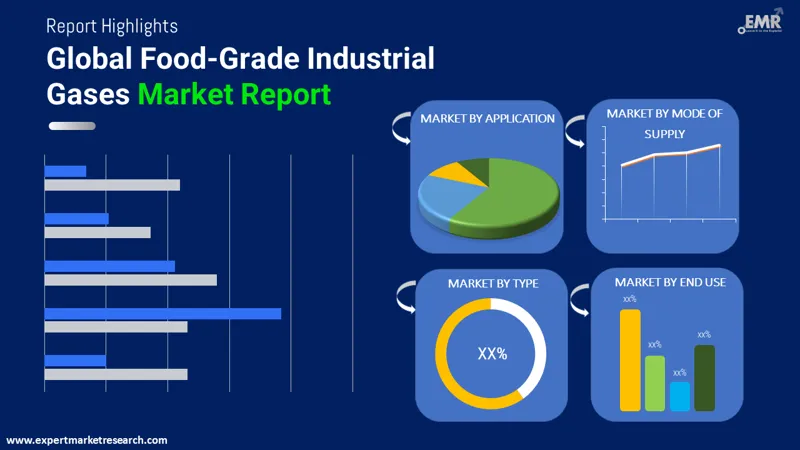
The Expert Market Research's report titled “Global Food-Grade Industrial Gases Market Report and Forecast 2026-2035” offers a detailed analysis of the market based on the following segments:
Market Breakup by Type
Key Insight: The food-grade industrial gases market scope comprises dioxide, nitrogen, oxygen, and other segments. The usage pattern of carbon dioxide is quite large in carbonation and cooling applications, but nitrogen is highly utilized in modified atmosphere packaging applications, helping extend the shelf life of foods. Oxygen is vital to the process of fermentation, and argon is another type of gas used in specialty packaging applications. The players in the industry are focusing on increasing their production capabilities and are also developing low-carbon products.
Market Breakup by Application
Key Insight: On the basis of applications, the food-grade industrial gases market is segmented into freezing and chilling, packaging, carbonation, and others. The use of liquid nitrogen is playing an important role in freezing and chilling applications, whereas in the case of packaging applications, nitrogen and carbon dioxide are being widely utilized. Carbonation continues to play an important role in ensuring efficient beverage manufacturing processes. Industrial companies are developing their cryogenic and packaging gas capacities with projects like ASU expansion by Linde.
Market Breakup by End Use
Key Insight: The food-grade industrial gases market caters to end-use sectors including beverages, meat and poultry products, fish and seafood, dairy products and frozen food products, fruits and vegetables, convenience foods, bakery and confectionery products, and others. The beverage industry boasts high usage of carbon dioxide for carbonation, meat and fish products use nitrogen-based modified atmosphere packaging systems, dairy and frozen food products need cryogenic freezing methods, whereas bakery products are preserved with the help of inert gases. Food-grade gas manufacturers are investing in the development of resilient supply chains to ensure a reliable supply of gases with the help of contractual arrangements and infrastructural development.
Market Breakup by Mode of Supply
Key Insight: The food-grade industrial gases market is divided into bulk and cylinder supply formats to cater to the needs of high-volume as well as small-volume food producers. The bulk supply format is being adopted by leading beverage manufacturers and frozen food producers because of the efficiency of the supply mode, whereas the cylinder supply method caters to small-scale manufacturing companies. Leading industrial gas companies are initiating the establishment of bulk supply systems and on-site gas generation plants to provide a reliable supply of food-grade gases.
Market Breakup by Region
Key Insight: The food-grade industrial gases market landscape covers growth trends across North America, Europe, Asia Pacific, Latin America, and the Middle East & Africa. The North American and European markets are positioned at the forefront owing to their highly developed food processing processes and the extensive application of MAP technology. On the other hand, Asia Pacific is experiencing fast growth due to increasing consumption of packaged foods as well as investments in industrial gases.
Read more about this report - REQUEST FREE SAMPLE COPY IN PDF
By type, oxygen witnesses high demand driven by advancements in production modernization and supply efficiency
The oxygen category in the food-grade industrial gases market is growing consistently owing to its significance in the food manufacturing process. The suppliers of industrial gases are concentrating on upgrading their oxygen production facilities to increase efficiency, purity, and supply security for the food industry. Innovations in advanced air separation technology are being made to ensure a steady oxygen supply in applications that require sensitivity. For example, Air Liquide’s oxygen upgrade program, announced in March 2023, shows how the firm is increasing production efficiency to improve food-grade oxygen supply chains.
The demand for nitrogen is increasing at an alarming rate because of its application in modified atmosphere packaging that helps in extending the shelf life of meat, bakery, and snack foods. The growth of the air separation industry can be attributed to the need to provide consistent nitrogen to the food industry for preserving and packaging food items. This growth is not only ensuring the stability of the supply chain but also helping in minimizing dependency on long-haul transportation. Linde's expansion of air separation facilities announced in October 2023 serves as an example in this context.
By application, the freezing and chilling category shows robust growth owing to cryogenic freezing innovations for food preservation
The freezing and chilling application segment within the food-grade industrial gases market dynamics is expected to grow steadily owing to increasing use of cryogenic technology in meat, seafood, and ready-to-eat food processing. Cryogenic freezing using liquid nitrogen and carbon dioxide solutions is gaining popularity because of its ability to freeze quickly, retain better texture quality, and offer prolonged shelf life. Leading players in the industry are focusing on efficient equipment designs and offering advanced freezing solutions as part of their offerings. This can be seen from the launch of new cryogenic freezing solutions by Air Products in January 2024.
The packaging application segment within the food-grade industrial gases market is estimated to expand due to the increasing use of high-performance thermoforming and modified atmosphere packaging systems among processed food types. Equipment manufacturers are now focused on efficient sealing and improved food safety while increasing the shelf life of meat, dairy, and ready-to-eat food products. These packaging systems work with nitrogen and carbon dioxide as part of controlled atmosphere packaging applications. This can be exemplified from the launch of high-performance TFX thermoformers by ULMA Packaging in March 2025.
By end use, beverages show robust demand driven by advanced gas measurement technologies strengthening precision in beverage production
Beverages contribute the highest to the rising demand in the food-grade industrial gases market because of high demand for precise control of carbonation and gas content in soft drinks, beer, and sparkling water. Advanced equipment to monitor and measure the levels of dissolved gas in beverages helps to control their quality and achieve better taste consistency in products. For example, Anton Paar introduced dissolved gas measuring technology in January 2025, highlighting rising demand for advanced beverage manufacturing processes.
On the other hand, the food-grade industrial gases market experiences consistent demand for applications in meat, poultry, and seafood for nitrogen-based MAP and cryogenics since such gases help to preserve food items effectively and prevent the development of microorganisms in such food products. The companies that produce industrial gases are increasing the capacity of nitrogen-based packaging and freezing processes to meet growing demand for proteins. For instance, the packaging solutions offered by Air Liquide based on nitrogen reflect the rising demand for MAP systems in perishable foods.
By mode of supply, cylinder type is picking up pace owing to the ongoing expansion of cylinder-based CO₂ supply models
The cylinder supply category accounts for a considerable share in the food-grade industrial gases market and is expected to witness substantial growth driven by the increasing requirement for a convenient and flexible supply of carbon dioxide gas for carbonation applications in beverages. Refillable and portable cylinders are being used by foodservice companies and individuals owing to convenience, cost-effectiveness, and constant availability. Sustainable refill and return system solutions are being adopted by market players to increase lifecycle and eliminate waste. The Gas-Up premium CO₂ cylinder introduced in June 2025 reflects how reusable and refilled carbon dioxide cylinders are playing an instrumental role in enhancing decentralized supply systems and driving the growth of the segment.
Bulk supply solutions are gaining significance in the food-grade industrial gases market as large-scale food processors require seamless and cost-effective delivery of high-purity gases. High-capacity manufacturing and distribution infrastructure are being developed by industrial gas companies to facilitate bulk supply to meet the requirements of industries using gases in their industrial food processes. It is expected to improve efficiency and maintain purity during the distribution process. In June 2024, Air Liquide’s investment in manufacturing and infrastructure of high-purity gases in the industrial gas business reflects its efforts toward the development of bulk supply systems.




Europe dominates the market growth driven by expansion of carbon capture infrastructure, strengthening sustainable CO₂ supply in the region
In the Europe food-grade industrial gases market, high growth potential is being observed due to strict decarbonization laws and rising demand for low-carbon industrial ingredients in the processes of food production and packing. Players in the market are making efforts towards CCUS technology to ensure sustainable sources of carbon dioxide required for the carbonation process and preservation of beverages. Moreover, industrial gas providers are developing synergies between emissions sources and merchant carbon dioxide distribution systems. For example, in April 2023, the agreement reached by Linde and Heidelberg Materials for implementing a carbon capture solution emphasizes that Europe is developing carbon dioxide recovery systems, thus promoting growth in the industry.
Meanwhile, North America continues to contribute significantly to the global food-grade industrial gases market revenue as a major region on account of efficient food processing facilities and widespread application of modified atmosphere packaging technologies in the meat, dairy, and ready-to-eat food industries. The steady consumption of carbon dioxide from carbonated beverages is another reason for the steady demand, whereas cryogenic freezing processes are growing in the frozen food transportation sector. Efforts are being made to increase capacities and improve supply chain efficiencies. The recent investments being made by Air Products in the North American gas distribution network indicate such a trend.
The market observes growing investments by food-grade industrial gas companies into decentralized systems of production and air separation plants to enhance the provision of pure grades of nitrogen, oxygen, and argon for food applications. The emphasis on the investments centers on minimizing dependence on far-off supply chain logistics and guaranteeing a consistent flow of the gases to processors, packers, and preservers in the food industry. The investments in capacity increases around areas where the gases will be consumed ensure efficient operations, reliable supplies, and better control over costs and purity levels.
Moreover, there is an increasing tendency among food-grade industrial gases market players to adopt practices that involve lower carbon emissions and circular supply of resources in order to cope with emerging sustainable practices in the food and beverage industry. Some of the ways in which such sustainable practices are adopted by these firms include increasing reliance on biogenic carbon dioxide, adopting carbon-capturing and recycling practices, and launching low-emissions gas solutions. Additionally, companies are adopting better processing technologies so as to reduce their environmental impact while ensuring the production of highly purified gases in carbonation and preservation processes.
Linde plc is a multinational corporation specializing in the provision of industrial gases and engineering. Linde plc came into existence through the merger of Linde AG and Praxair and was incorporated in 1879. The corporation has its headquarters in Woking, United Kingdom, and its range of products and services covers a diverse set of industries globally.
Air Products and Chemicals Inc. is one of the leading companies specializing in the global industry and was incorporated in 1940. Air Products and Chemicals Inc.'s headquarters are in Allentown, Pennsylvania, United States of America.
Air Liquide S.A. is a global company involved in the manufacture of industrial gases. Air Liquide S.A. was established in 1902, and its headquarters are in Paris, France. Air Liquide plays a significant role in the global industrial gases market through its food-grade oxygen, nitrogen, and carbon dioxide production capabilities.
Messer Group GmbH is an industrial gas firm that was established in 1898. It is a privately owned company headquartered in Germany. The company is regarded as one of the leading producers of food-grade industrial gases.
Other key players in the market include Taiyo Nippon Sanso Corporation, and SOL Group, among others.
*Please note that this is only a partial list; the complete list of key players is available in the full report. Additionally, the list of key players can be customized to better suit your needs.*
Explore the latest trends shaping the global food-grade industrial gases market 2026-2035 with our in-depth report. Gain strategic insights, future forecasts, and key market developments that can help you stay competitive. Download a free sample report or contact our team for customized consultation on global food-grade industrial gases market trends 2026.


Upto 15% Off
USD
$2499 $2249
$3999 $3599
$4999 $4249
$5999 $5099


*While we strive to always give you current and accurate information, the numbers depicted on the website are indicative and may differ from the actual numbers in the main report. At Expert Market Research, we aim to bring you the latest insights and trends in the market. Using our analyses and forecasts, stakeholders can understand the market dynamics, navigate challenges, and capitalize on opportunities to make data-driven strategic decisions.*
In 2025, the global food-grade industrial gases market reached an approximate value of USD 9.13 Billion.
The market is projected to grow at a CAGR of 5.80% between 2026 and 2035.
The market is estimated to witness a healthy growth in the forecast period of 2026-2035 to reach USD 16.04 Billion by 2035.
Key strategies driving the market include expansion of air separation capacity to ensure stable supply of nitrogen, oxygen, and argon for food applications. Players are focusing on long-term contracts, on-site gas generation, and investments in low-carbon CO₂ solutions. Partnerships with food manufacturers for modified atmosphere packaging are also strengthening market adoption.
The key trends in the market are introduction of new products in the food industry and the advancements in packaging technology.
The major regions in the market are North America, Latin America, the Middle East and Africa, Europe, and the Asia Pacific.
The major types of food-grade industrial gases are carbon dioxide, nitrogen, and oxygen, among others.
The several applications of food-grade industrial gases in the market are freezing and chilling, packaging, and carbonation, among others.
The various end uses of food-grade industrial gases are beverages, meat, poultry, and seafood products, dairy and frozen products, fruits and vegetables, convenience food products, and bakery and confectionery products, among others.
The significant modes of supply considered in the market report include bulk and cylinder.
The key players in the market include Linde Plc, Air Products and Chemicals, Inc., Air Liquide S.A., Messer Group GmbH, Taiyo Nippon Sanso Corporation, and SOL Group, among others.
The major challenges include volatility in energy and raw material costs impacting pricing stability. CO₂ supply disruptions from upstream industries also affect reliability. High capital investment for production infrastructure and strict food safety regulations further constrain market growth and operational flexibility.
Explore our key highlights of the report and gain a concise overview of key findings, trends, and actionable insights that will empower your strategic decisions.
| REPORT FEATURES | DETAILS |
| Base Year | 2025 |
| Historical Period | 2019-2025 |
| Forecast Period | 2026-2035 |
| Scope of the Report |
Historical and Forecast Trends, Industry Drivers and Constraints, Historical and Forecast Market Analysis by Segment:
|
| Breakup by Type |
|
| Breakup by Application |
|
| Breakup by End Use |
|
| Breakup by Mode of Supply |
|
| Breakup by Region |
|
| Market Dynamics |
|
| Competitive Landscape |
|
| Companies Covered |
|
| Report Price and Purchase Option | Explore our purchase options that are best suited to your resources and industry needs. |
| Delivery Format | Delivered as an attached PDF and Excel through email, with an option of receiving an editable PPT, according to the purchase option. |
Datasheet
One User
USD 2,499
USD 2,249
tax inclusive*
Single User License
One User
USD 3,999
USD 3,599
tax inclusive*
Five User License
Five User
USD 4,999
USD 4,249
tax inclusive*
Corporate License
Unlimited Users
USD 5,999
USD 5,099
tax inclusive*
*Please note that the prices mentioned below are starting prices for each bundle type. Kindly contact our team for further details.*
Flash Bundle
Small Business Bundle
Growth Bundle
Enterprise Bundle
*Please note that the prices mentioned below are starting prices for each bundle type. Kindly contact our team for further details.*
Flash Bundle
Number of Reports: 3
20%
tax inclusive*
Small Business Bundle
Number of Reports: 5
25%
tax inclusive*
Growth Bundle
Number of Reports: 8
30%
tax inclusive*
Enterprise Bundle
Number of Reports: 10
35%
tax inclusive*
How To Order

Select License Type
Choose the right license for your needs and access rights.

Click on ‘Buy Now’
Add the report to your cart with one click and proceed to register.

Select Mode of Payment
Choose a payment option for a secure checkout. You will be redirected accordingly.
Strategic Solutions for Informed Decision-Making
Gain insights to stay ahead and seize opportunities.

Get insights & trends for a competitive edge.

Track prices with detailed trend reports.

Analyse trade data for supply chain insights.

Leverage cost reports for smart savings

Enhance supply chain with partnerships.

Connect For More Information
Our expert team of analysts will offer full support and resolve any queries regarding the report, before and after the purchase.
Our expert team of analysts will offer full support and resolve any queries regarding the report, before and after the purchase.
We employ meticulous research methods, blending advanced analytics and expert insights to deliver accurate, actionable industry intelligence, staying ahead of competitors.
Our skilled analysts offer unparalleled competitive advantage with detailed insights on current and emerging markets, ensuring your strategic edge.
We offer an in-depth yet simplified presentation of industry insights and analysis to meet your specific requirements effectively.




