

Consumer Insights
Uncover trends and behaviors shaping consumer choices today
Procurement Insights
Optimize your sourcing strategy with key market data
Industry Stats
Stay ahead with the latest trends and market analysis.
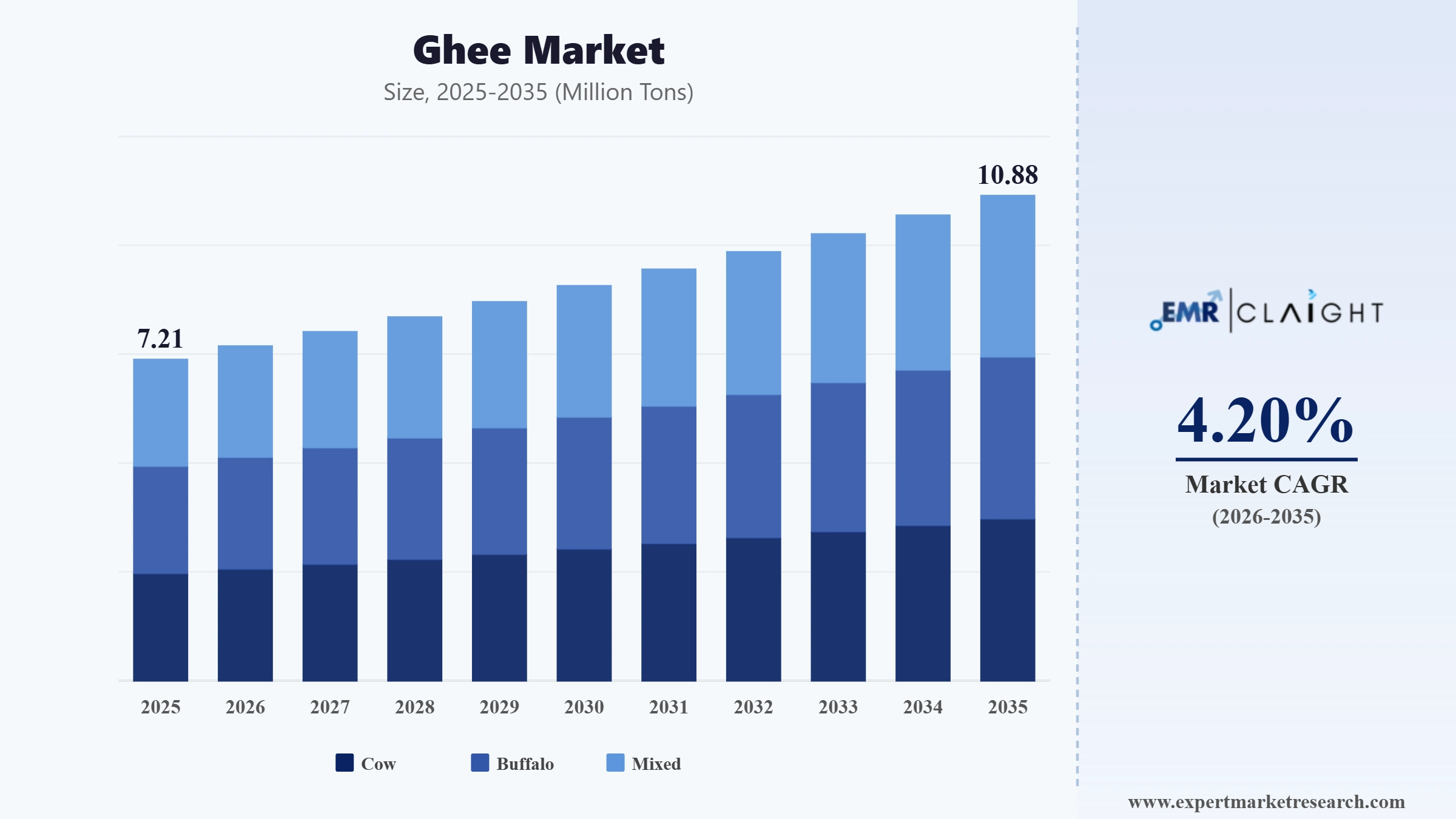
The global ghee market was volumed at 7.21 Million Tons in 2025. The market is expected to grow at a CAGR of 4.20% during the forecast period of 2026-2035 to reach a volume of 10.88 Million Tons by 2035. A significant driving factor boosting growth in the market is product portfolio diversification through innovative and differentiated offerings, where companies are expanding traditional ghee lines to meet the evolving needs of modern consumers across health, convenience, and culinary use cases.
The need to consume natural and traditional fats rather than processed fat products is majorly influencing the global ghee market growth due to the increasing number of consumers expressing a health-conscious trend. In addition, with rising penetration of e-commerce and quick commerce, premium and artisanal ghee are being widely available, helping brands to expand among niche urban and international consumers to increase the overall market growth.
With the growing popularity of functional foods and premium dairy fats among consumers around the world, manufacturers are launching products with both authenticity and nutritional or usage value, positioning ghee as a staple product and entering mainstream and luxury food product marketing. Such innovations encourage premiumization, increase category appeal, and improve competitive positioning within international retail and e-commerce channels. They also imply a greater consideration of health-oriented modifications and innovative uses in circumstances that can lead to incremental consumption and recurrent buying. For instance, in March 2024, Nova Dairy introduced a high-quality A2 cow ghee produced using the traditional bilona technique as a product that would be healthier and higher quality. Similarly, in July of 2024, Aashirvaad Svasti, an ITC dairy product, launched a low-cholesterol cow ghee, the first of its kind, targeting health-conscious consumers. Such launches represent the way the product innovation is growing the functional and premium ghee market.
Read more about this report - REQUEST FREE SAMPLE COPY IN PDF
| Global Ghee Market Report Summary | Description | Value |
| Base Year | Million Tons | 2025 |
| Historical Period | Million Tons | 2019-2025 |
| Forecast Period | Million Tons | 2026-2035 |
| Market Size 2025 | Million Tons | 7.21 |
| Market Size 2035 | Million Tons | 10.88 |
| CAGR 2019-2025 | Percentage | XX% |
| CAGR 2026-2035 | Percentage | 4.20% |
| CAGR 2026-2035 - Market by Region | Asia Pacific | 5.1% |
| CAGR 2026-2035 - Market by Country | India | 5.9% |
| CAGR 2026-2035 - Market by Country | Canada | 4.3% |
| CAGR 2026-2035 - Market by Distribution Channel | Online | 9.4% |
| CAGR 2026-2035 - Market by End Use | Institutional | 3.7% |
| Market Share by Country 2025 | Canada | 2.3% |
The Milkio Foods Limited, New Zealand announced its plans to present its High Aroma and specialty ghee range at Gulfood 2026, Dubai. The new product offerings within the brand such as Goat and Sheep Ghee focus on the B2B consumer and private label clients, which play a role in serving the growing global ghee market and increased demand of high-quality and export-ready dairy alternatives.
Vedic Farm launched its A2 Gir Cow Ghee, which is made following the bilona technique with the help of the milk of native Gir cows. The product, which is chemical-free and rich in nutrients, will reinforce the perception of people in the pure and original ghee, which will be instrumental in the expansion of the branded A2 ghee segment, capitalizing on the health-conscious and quality-sensitive families.
Khyber Agro introduced its new Khyber Ghee in Kashmir with superior packaging that builds quality and freshness. The high quality and contemporary product will increase consumer confidence and prompt testing, which will aid in the expansion of the branded cow ghee segment, serving health-conscious and quality conscious households.
Indian YouTuber Gaurav Taneja launched Rosier Foods, a luxury brand of ghee prepared with Gir cows in the traditional bilona preparation. The organic offering has a retail price of INR 1,350 per 500 ml, which is aimed at consumers who are health conscious and are experiencing an increasing demand and shift towards niche and high-quality cow ghee products that is increasing the segment.
Export-based approaches are driving the ghee market growth in the global market with local dairy cooperatives and producers aiming at the global market. Expanding the geographies, in addition to expansion of revenues, companies gain brand awareness and supply chain strengths. Quality enhancement, packaging, and meeting international expectations also come as incentives with export programs, which generates a growth opportunity in the long run. For instance, in March 2025, Bihar State Milk Cooperative Federation (COMFED) exported its first international shipment of ghee, gulab jamun, and makhana to the United States and Canada.
The ghee market globally is growing with the innovations of the premium and gourmet products, as more consumers are demanding more luxury, flavorful and health-conscious products as substitutes for the conventional fats. Brands are using special ingredients, functional advantages, and culinary trends to brand and market offerings and attract both amateur and professional cooks. In September 2025, United States-based 4th & Heart introduced Truffle Ghee, flavored with black truffle and black truffle salt, which is sold by Whole Foods Market in the entire country.
Sustainable and high-end packaging is also a rising trend in the global ghee market as brands seek to merge functionality, looks, and sustainability to appeal to the modern consumer. New packaging makes the product more attractive and gift-friendly and strengthens the brand differentiation within competitive markets. As one example, in October 2025, Bharat Vedica released the first stainless-steel jar coated with PVD A2 Gir Cow Ghee that would be sold in a container that is reusable, airtight, and designed beautifully as part of its Back to the Roots campaign.
The global growth of the ghee market is being fueled by brands that are targeting both the diaspora and new consuming markets in Europe and other markets. International expansion increases brand awareness, boosts higher-quality sales, and promotes compliance with the international quality standards. As an example, in November 2024, Stripe has been smart in its efforts to expand its European presence with Amul, announcing that it will begin selling milk and dairy goods in Spain after establishing itself in the United States market.
Ghee market development through international trade exhibitions such as Gulfood has been prominent in helping brands to present their products to the global market, attract export business, and tighten cross-border distribution channels in one of the most powerful food sourcing markets in the world. Such displays assist corporations to plug domestic traditions into international demand and boost brand recognition as well as expedite export transactions into new markets. For instance, Vastu AGMARK Ghee stated that it will be present at Gulfood 2026 to present its certified ghee products made in Indian kitchens to the global markets at the biggest food trade show in Dubai.
The EMR’s report titled “Global Ghee Market Report and Forecast 2026-2035” offers a detailed analysis of the market based on the following segments:
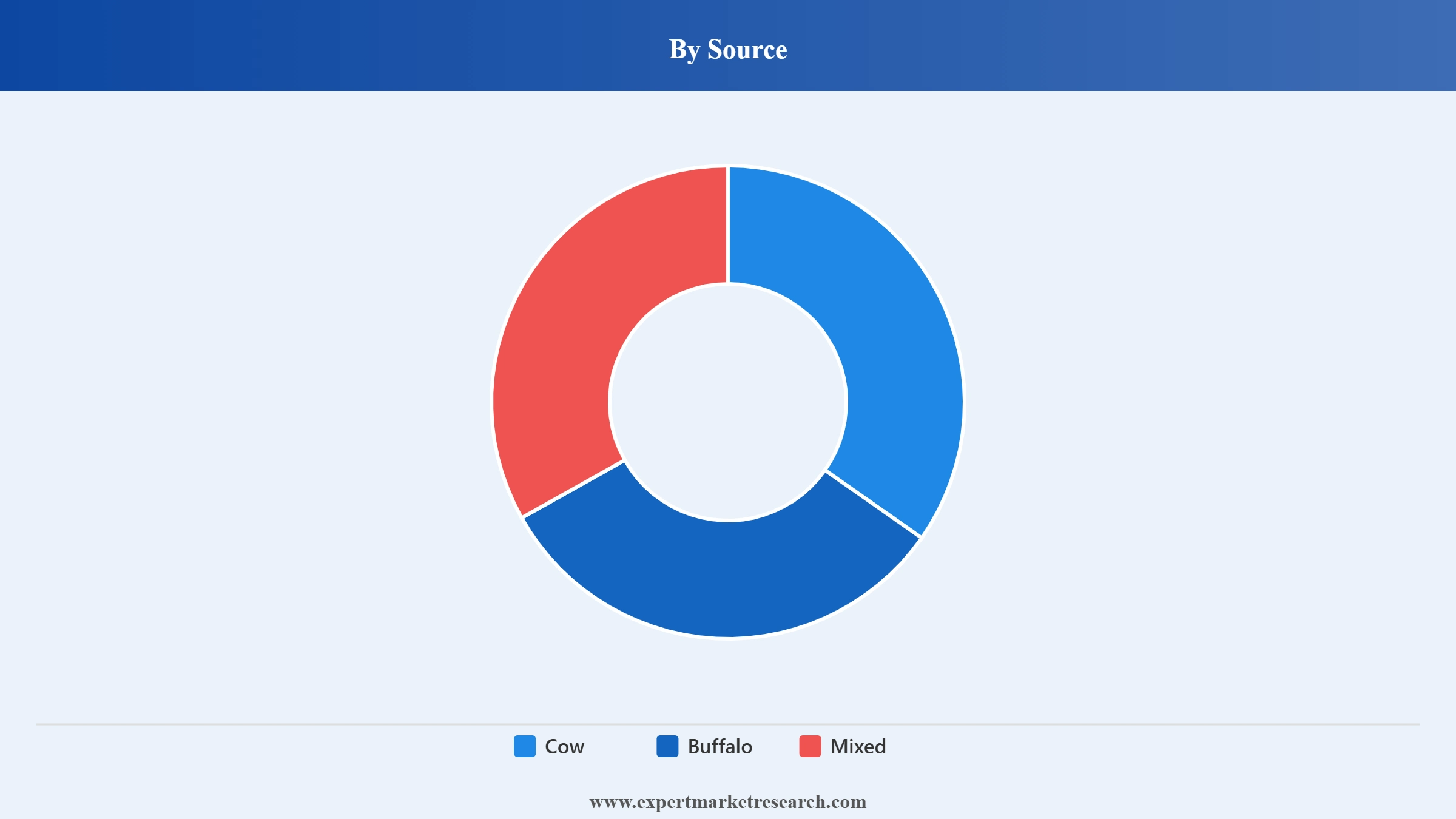
Market Breakup by Source
Key Insight: The source segmentation of the global ghee market includes cow, buffalo and mixed that reflect the cultural choice and the product targeting strategies. Amul and Vedic Farm are targeting cow/A2 ghee to attract health-conscious and high-end sections whereas Milkfood Limited advertises buffalo ghee as healthier than cow ghee and richer in fat. Companies such as Britannia Industries and own brands use mixed ghee variants which compromise cost and taste to serve mass markets. Brands distinguish themselves and increase the world presence by source-specific launches and quality certification.
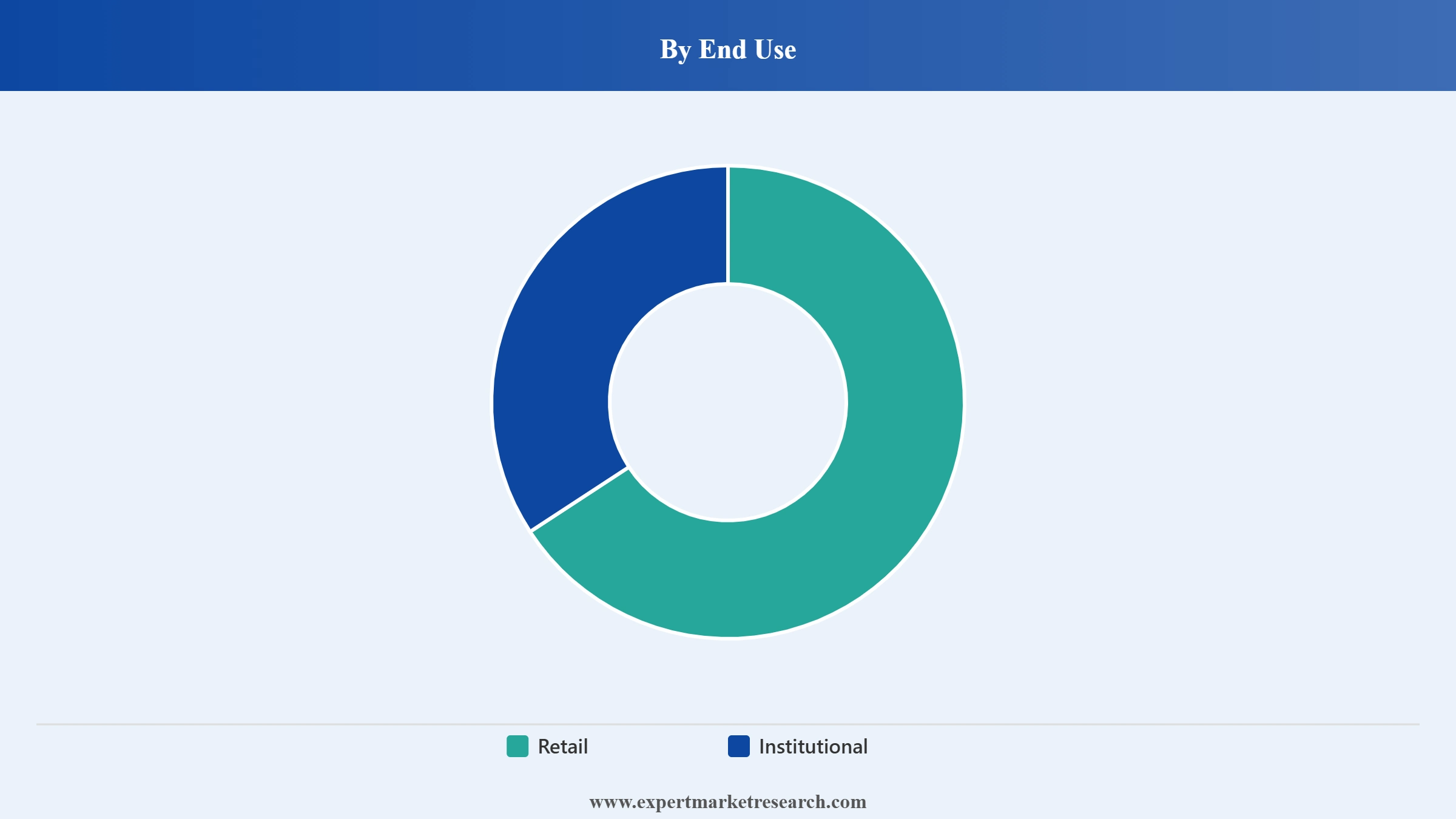
Market Breakup by End Use
Key Insight: The retail and institutional end-use channels are the most important growth levers to producers of ghee. The retail industry has Nestlé S.A. and Amul that have leveraged the premium segments, fortified versions, and online presence. Ghee is also increasing as an institutional demand when foodservice providers and QSRs switch to cooking with high smoke, although Milkio Foods provides wholesale and bulk packaging formats to meet the needs of chefs and distributors. Household and business consumption patterns are strengthened by strategic HoReCa partnerships and promotions of the festival.
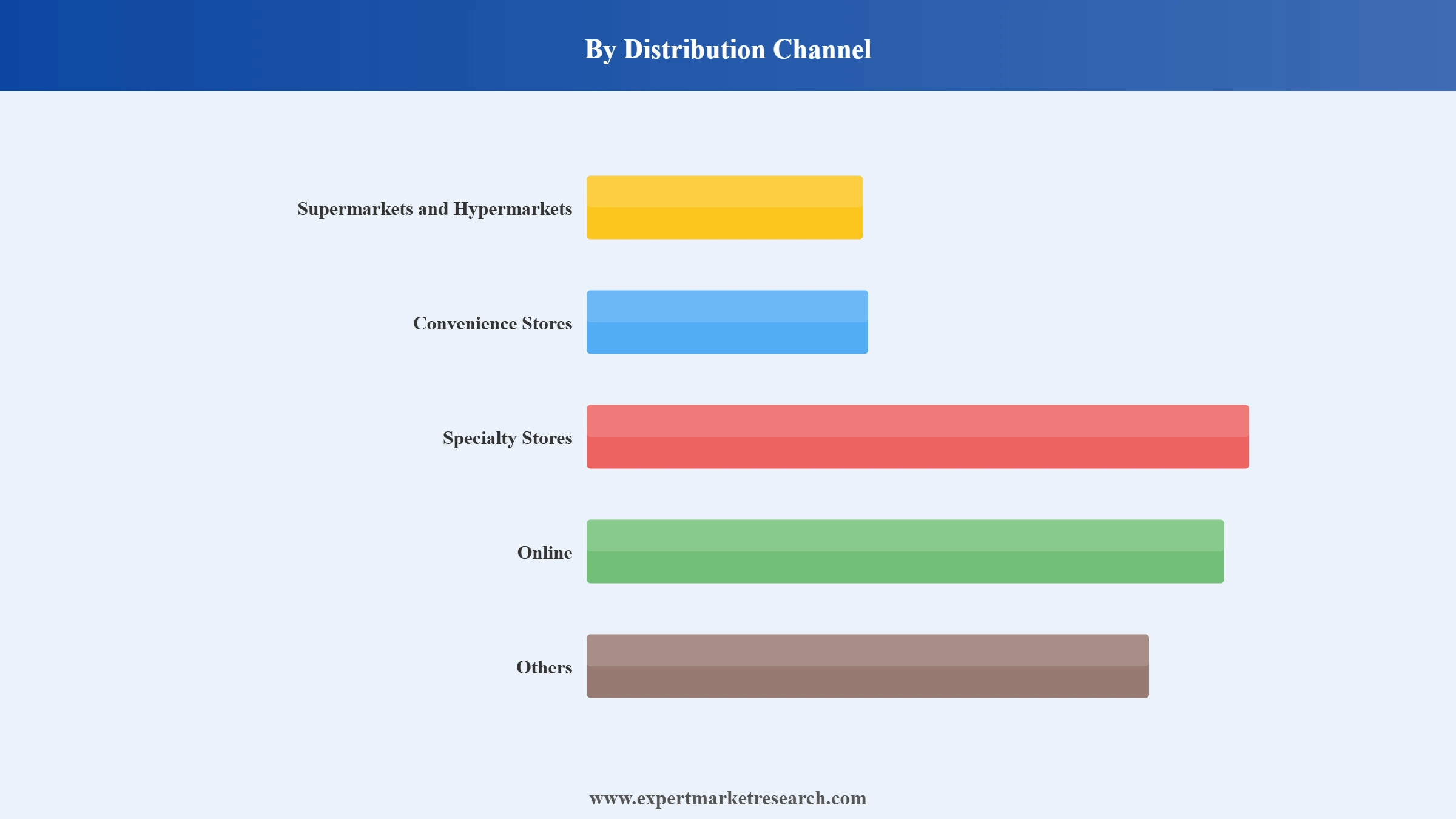
Market Breakup by Distribution Channel
Key Insight: Ghee brands are using a multi-channel distribution strategy to increase their footprint. Walmart and Tesco, among global retailers, carry branded ghee of companies such as Nestle S.A. and Britannia, which promote supermarkets/hypermarkets. Impulse buying is supported by convenience stores, and specialty stores encourage artisanal and organic lines, which are niche brands such as Earth Story Farms. Drugs sold directly to consumers via online channels or through integrated platforms with quick commerce players can do that through Amazon, Flipkart, or integration with other platforms, like JioMart.
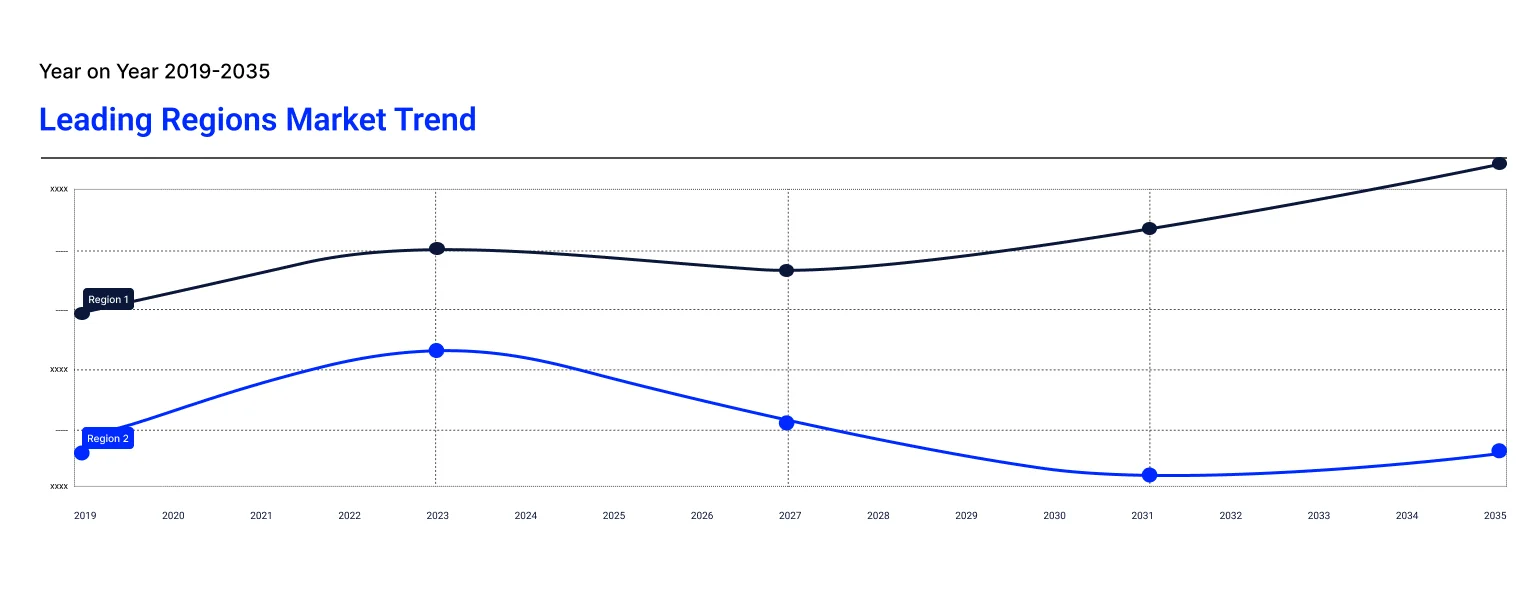
Market Breakup by Region
Key Insight: The global ghee market exhibits different strategic growth patterns across regions. The Asia Pacific leads the market growth with its Amul and Milkio Foods in New Zealand, using cultural demand and export expansion into the United States and Middle East markets. Such brands as Pure Indian Foods and 4th & Heart focus on high-quality, grass-fed, and gourmet versions in North America. Europe is experiencing a growing market of health-oriented ghee, whereby Nestlé S.A. has launched retail outlets and specialty imports. Diaspora and increasing retail penetration drive Latin America and MEA demand.
Read more about this report - REQUEST FREE SAMPLE COPY IN PDF
By source, cow ghee continues to observe high demand amid rising shift towards premium and functional products
The cow ghee segment is experiencing healthy growth due to the increase in health-conscious consumption and the growing popularity of traditional and authentic dairy products. Consumers are demanding high-quality ghee of pure content for both household and specialty applications, which are gaining demand in the culinary and functional domains. The attractiveness and the growing need for a health-based benefit to consumers, like the 2024 Pure Cow Ghee Range introduced by Himalaya as baby food, point to the growing popularity of the segment and the changing demands of consumers.
The popularity of buffalo ghee is increasing because of its richer flavor, higher fat content, and use in some local foods. Increasing disposable income and interest in traditional food preparation promote the growth of the market. Manufacturers are meeting high-quality packaging and sanitary requirements in foreign markets. In the case of Sudha (COMFED) exporting the buffalo ghee to the United States in March 2025, the ghee met regulatory standards and had a long shelf life around the world.
Read more about this report - REQUEST FREE SAMPLE COPY IN PDF
By end-use, retail category to show robust growth owing to rising demand for health-focused ghee
Retail consumers are increasingly seeking genuine, health-conscious ghee due to the need to be convenient and have guaranteed quality. Direct-to-consumer launches serve families who desire the healthy benefits of traditional flavors. For instance, the introduction of Cow and Buffalo Ghee by Farmery in September 2024 as a product with an organic source, lactose-free production, and nutritionally balanced profiles will attract the attention of health-conscious families and promote the needs of the retail segment towards buying high-quality ghee products.
Large-volume sales of ghee are due to institutional demand, which consists of hotels, restaurants, and religious establishments. Quality-certified ghee is guaranteed to maintain uniformity in cooking and traditional rites. Strategic contracts are used to stabilize revenue streams. As an example, in September 2025, KMF provided Nandini ghee to Tirumala Tirupati Devasthanams in 5,000 tons, which strengthens the quality and confidence of large-scale institutional clients.
Read more about this report - REQUEST FREE SAMPLE COPY IN PDF
By distribution channel, online channels amass significant product sales attributed to the rapid growth of quick commerce networks
The online channels account for a major share of the global ghee market as the e-commerce expansion is increasing the access of markets to packaged foods, such as premium ghee. With the support of more than 3,000 stores and 1,000+ cities served, JioMart has grown and undertaken quick commerce of grocery deliveries, which reach Indians more rapidly and widely. Such a combination of online infrastructure and physical networks enables consumers to get ghee and other necessities without problems, facilitating the growth of sales and enhancing the penetration of the market throughout India.
Through the supermarkets and hypermarkets distribution channel, the ghee market have been making considerable sales, based on their extensive retail platform and brand loyalty. International competitors such as Walmart, Tesco, Carrefour, and Reliance Fresh market premium and own-label ghee strategically using in-store promotions, festive campaigns, and bulk packaging. The retailers emphasize their visibility of products, loyalty programs, and localized products, assuring the presence of constant consumer contact and enhancing growth in the market.
Read more about this report - REQUEST FREE SAMPLE COPY IN PDF
By region, Asia Pacific dominates the market growth attributed to the growing income and culinary traditions
Asia Pacific continues to be the major contributor to the global ghee market revenue. India and Australia are the leading countries in growing ghee consumption by retail and export markets. Increased earnings, institutional demand, and interest in traditional cooking enhance growth. For instance, the Nandini ghee exports between India and Australia, the United States, and Saudi Arabia were flagged in November 2025, which demonstrated the global readiness of supply chains.
The ghee market in Europe is steadily growing, with growing consumer demand for traditional, clean-label, and lactose-free cooking fats. The United Kingdom, France, and Germany are also experiencing rising demand among health-conscious households and the gourmet food segments. Particularly, Milkio Foods (New Zealand) and Pure Indian Foods (United States) are building regional presence via retail alliances, specialty stores, and e-commerce in favor of local consumption as well as imports in Europe.
Read more about this report - REQUEST FREE SAMPLE COPY IN PDF
The major ghee companies are expanding the market by introducing strategic innovations in products, manufacturing products of superior quality, and venturing into new geographical locations. Firms such as Amul, Britannia, Milkfood Limited, and Nestle have been investing in high-end and specialty versions of ghee, using the fortified and flavored versions to tailor the products to suit emerging consumer needs. They have strong distribution networks based on retail, online, and institutional distribution channels that help spread their products to a broader demand, both in the domestic market and in international markets.
Furthermore, ghee market players are also increasing brand awareness via focused marketing programs, trade partnerships with foodservice providers, and trade show attendance. Modern processing technologies, cold chain infrastructure, and the presence of own-labeled products contribute to an even stronger level of competitiveness. All these efforts contribute to the enhanced level of production, the quality of products, and the enhanced integration of the supply chains, which contribute to the overall growth and sustainability of the global ghee market.
Amul, a dairy cooperative based in Anand, Gujarat, India, was founded in 1946 and is known to produce milk, ghee, and value-added dairy products. The abundance of distribution channels and the co-op system of the farmers, which is the structure of the brand, reinforce the local market and the international market.
Britannia Industries is a top food company with headquarters in Bengaluru, India, that deals with bakery and dairy products, such as ghee and cheese. Retail presence and the launching of innovative products are ways through which the company is using growth to expand the market both locally and internationally.
Milkfood Limited is a company that deals with the production of high-quality ghee, milk powders, and dairy products, with its headquarters based in Mumbai, India, and was started in 1996. The company concentrates on the manufacturing and exports that are quality-centric, strengthening its presence in retail and industrial markets.
Nestlé is a prominent worldwide food and beverage group based in Vevey, Switzerland, and it was founded in 1866 and has a powerful dairy portfolio, including milk-based products and ghee. It has a wide research and development base and distribution, which helps it expand to Europe and other global market areas.
*Please note that this is only a partial list; the complete list of key players is available in the full report. Additionally, the list of key players can be customized to better suit your needs.*
Explore the latest trends shaping the global ghee market 2026-2035 with our in-depth report. Gain strategic insights, future forecasts, and key market developments that can help you stay competitive. Download a free sample report or contact our team for customized consultation on global ghee market trends 2026.


Upto 15% Off
USD
$2499 $2249
$3999 $3599
$4999 $4249
$5999 $5099


*While we strive to always give you current and accurate information, the numbers depicted on the website are indicative and may differ from the actual numbers in the main report. At Expert Market Research, we aim to bring you the latest insights and trends in the market. Using our analyses and forecasts, stakeholders can understand the market dynamics, navigate challenges, and capitalize on opportunities to make data-driven strategic decisions.*
In 2025, the global ghee market reached an approximate volume of 7.21 Million Tons.
The market is projected to grow at a CAGR of 4.20% between 2026 and 2035.
The market is estimated to reach a volume of over 10.88 Million Tons by 2035.
Key strategies driving the market include product innovation, expansion of distribution channels, strategic partnerships, private-label manufacturing, and targeted regional and export market growth.
The growing use of ghee as a medicine to improve digestion, treat wounds, and boost the immune system, expanding production capabilities by key manufacturers, and the introduction of favourble government initiatives aimed at encouraging healthy food habits among consumers are the key trends guiding the market.
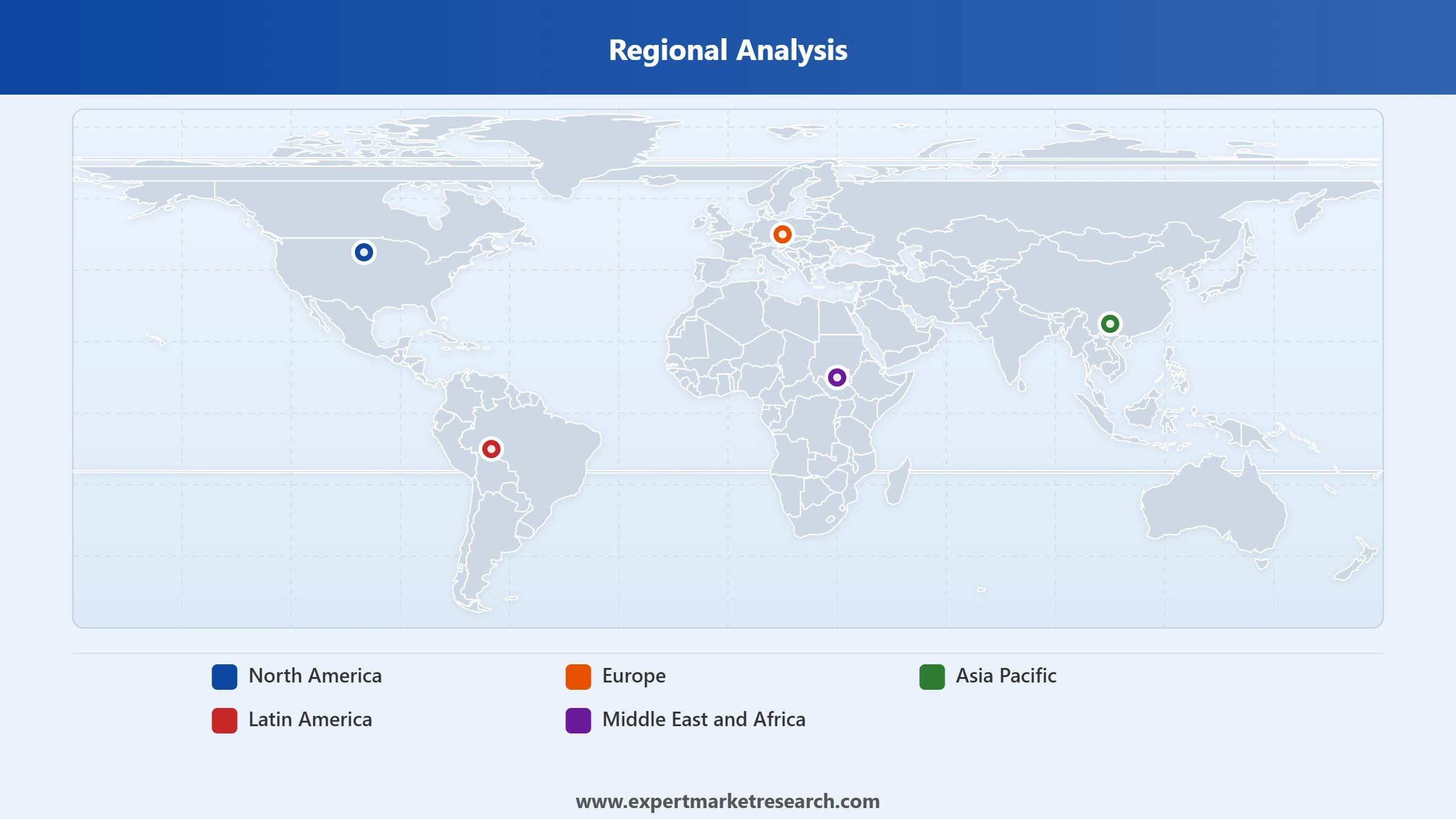
North America, Europe, the Asia Pacific, Latin America, and the Middle East and Africa are the leading regions in the market.
The major sources of ghee are cow, buffalo, and mixed.
The significant end uses of ghee include retail and institutional.
The various distribution channels of ghee in the market are supermarkets/hypermarkets, convenience stores, speciality stores, and online, among others.
The key players in the market include Gujarat Cooperative Milk Marketing Federation Ltd. (Amul), Britannia Industries, Milkfood Limited, and Nestlé S.A., among others.
The major challenges that the global ghee market players face include supply chain disruptions, fluctuating raw material prices, regulatory compliance, competition from alternative oils, and consumer awareness of quality and authenticity.
Explore our key highlights of the report and gain a concise overview of key findings, trends, and actionable insights that will empower your strategic decisions.
| REPORT FEATURES | DETAILS |
| Base Year | 2025 |
| Historical Period | 2019-2025 |
| Forecast Period | 2026-2035 |
| Scope of the Report |
Historical and Forecast Trends, Industry Drivers and Constraints, Historical and Forecast Market Analysis by Segment:
|
| Breakup by Source |
|
| Breakup by End Use |
|
| Breakup by Distribution Channel |
|
| Breakup by Region |
|
| Market Dynamics |
|
| Competitive Landscape |
|
| Companies Covered |
|
| Report Price and Purchase Option | Explore our purchase options that are best suited to your resources and industry needs. |
| Delivery Format | Delivered as an attached PDF and Excel through email, with an option of receiving an editable PPT, according to the purchase option. |
Datasheet
One User
USD 2,499
USD 2,249
tax inclusive*
Single User License
One User
USD 3,999
USD 3,599
tax inclusive*
Five User License
Five User
USD 4,999
USD 4,249
tax inclusive*
Corporate License
Unlimited Users
USD 5,999
USD 5,099
tax inclusive*
*Please note that the prices mentioned below are starting prices for each bundle type. Kindly contact our team for further details.*
Flash Bundle
Small Business Bundle
Growth Bundle
Enterprise Bundle
*Please note that the prices mentioned below are starting prices for each bundle type. Kindly contact our team for further details.*
Flash Bundle
Number of Reports: 3
20%
tax inclusive*
Small Business Bundle
Number of Reports: 5
25%
tax inclusive*
Growth Bundle
Number of Reports: 8
30%
tax inclusive*
Enterprise Bundle
Number of Reports: 10
35%
tax inclusive*
How To Order

Select License Type
Choose the right license for your needs and access rights.

Click on ‘Buy Now’
Add the report to your cart with one click and proceed to register.

Select Mode of Payment
Choose a payment option for a secure checkout. You will be redirected accordingly.
Strategic Solutions for Informed Decision-Making
Gain insights to stay ahead and seize opportunities.

Get insights & trends for a competitive edge.

Track prices with detailed trend reports.

Analyse trade data for supply chain insights.

Leverage cost reports for smart savings

Enhance supply chain with partnerships.

Connect For More Information
Our expert team of analysts will offer full support and resolve any queries regarding the report, before and after the purchase.
Our expert team of analysts will offer full support and resolve any queries regarding the report, before and after the purchase.
We employ meticulous research methods, blending advanced analytics and expert insights to deliver accurate, actionable industry intelligence, staying ahead of competitors.
Our skilled analysts offer unparalleled competitive advantage with detailed insights on current and emerging markets, ensuring your strategic edge.
We offer an in-depth yet simplified presentation of industry insights and analysis to meet your specific requirements effectively.




