

Consumer Insights
Uncover trends and behaviors shaping consumer choices today
Procurement Insights
Optimize your sourcing strategy with key market data
Industry Stats
Stay ahead with the latest trends and market analysis.

The India air conditioner market was valued at USD 3.40 Billion in 2025. The industry is expected to grow at a CAGR of 7.78% during the forecast period of 2026-2035 to reach a value of USD 7.19 Billion by 2035. The market growth is attributed to the growing demand for inverter compatible window ACs owing to their convenience for residential purposes, consume less energy, and can be fitted into window panels without much hassle.
Window AC units provide great convenience and are also a lower-expense choice for residential and commercial buildings. They facilitate easy installation, energy efficiency, and portability, with the added advantage of installing them without ducts to save space. This makes them ideal for older buildings and apartments, providing a cool and comfortable environment with absolutely no hassle.
In February 2024, Panasonic introduced their latest range of air conditioners in India, with their new range of air conditioners sporting advanced technology like Matter-enabled Room ACs powered by Miraie. The launch also included 7-in-1 convertible Room ACs and a range of 2024 inverter ACs. Panasonic also introduced 60 new models across its AC range.
Central ACs provide cooling centrally, hence distributing it uniformly to provide comfort everywhere. They enhance indoor quality by filtering the air, reducing indoor noise, and increasing property value. Central ACs can be used with smart thermostats for more precise control; it does offer long-term cost savings despite the initial investment.
Base Year
Historical Period
Forecast Period
The demand for air conditioners in India is driven by growing number of commercial office space in the country.
In 2019, data from the Central Bureau of Health Intelligence (CBHI) indicated a total of 23,581 Government Hospitals and 22 Central Government Hospitals.
The proliferation of new products with energy-saving technologies is pushing the market.
Compound Annual Growth Rate
7.78%
Value in USD Billion
2026-2035
*this image is indicative*
Strategic collaborations among global and domestic players help AC brands localize production, transfer technology, and scale operations efficiently. These partnerships strengthen supply chains and widen market reach. For instance, in October 2024, Hisense India partnered with EPACK Durable Limited to manufacture ACs and other appliances in Andhra Pradesh, starting production in June 2025. This collaboration helps roll out products faster, enhances operational efficiency, and supports growth in the domestic market.
Global brands of ACs are once again entering India with local climate-suiting products and consumer preference options, accelerating the pace of competition and choice. Sharp Corporation, with confidence in India's fast-growing demand for ACs, has re-entered the market with three series-Opera Reiryou, Opera Seiryo, and Plasma Chill-designed to operate under extreme temperatures in March 2025. This move calls for consumer upgrades and pushes other brands toward creating more innovative and diverse product portfolios to capture both mass-market and premium segments.
Influencer or strategic collaborations apply to the AC brands to help them increase visibility and improve consumer engagement. In April 2025, Carrier Midea India inked Rashmika Mandanna as its brand ambassador for promoting HVAC products and reaching out to the urban consumer segment. Such partnerships not only improve marketing outcomes but also increase brand recall and the adoption of energy, efficient and intelligent AC solutions. These alliances allow companies to reach more people, deepen customer loyalty, and set themselves apart in the competitive Indian AC market.
The introduction of smart and connected ACs is the main driver of premiumisation, which is leading to an increase in consumer upgrades. In March 2025, Panasonic Life Solutions India further expanded its Matter, enabled smart AC portfolio by providing both residential and commercial units that can operate in extreme heat and be controlled through its Miraie app. This allows the brand to meet the ever, changing energy, efficient requirements, consolidate its market position, serve the tech, savvy audience, and facilitate more adoptions in urban and semi, urban areas for connected cooling solutions.
Allowing brands to access new revenue sources and meet demand at the business level, diversification into commercial ACs and IoT, enabled systems is the way forward. Voltas Ltd. in February 2024 at ACREX India launched new inverter, based and IoT, ready commercial and residential ACs, seamlessly integrating energy efficiency with intelligent HVAC management. These offerings not only address the cooling needs of educational institutions and corporates but also enhance brand leadership, thereby contributing to the holistic growth and competitiveness of the rapidly changing AC market in India.
The EMR’s report titled “India Air Conditioner Market Report and Forecast 2026-2035” offers a detailed analysis of the market based on the following segments:
Market Breakup by Type
Key Insights: The AC market of India has a mix of window, central, and split ACs to serve different sets of cooling needs. The share of Split ACs is oriented towards energy efficiency and varied installation feasibility in houses and offices. Window ACs are still a draw in the low-budget and rental segments, with brands like Voltas and Blue Star continuing to offer 3–5 Star window options to attract value buyers. Central ACs, however, see traction in commercial and institutional buildings, with players like Samsung and Carrier Midea launching new and improved VRF and cassette offerings. An example is Samsung’s WindFree Cassette AC launched for commercial settings. All these put together help meet the changing residential and commercial demands for cooling with appropriate technologies and coverage.
Market Breakup by Size
Key Insights: The segments included in the capacity-wise India AC market are <12K BTU, 12K 36K BTU, 36K 60K BTU, and 60K+ BTU. 12K 36K BTU units are the core of residential demand. Value offerings by leading brands such as Godrej, Midea, and Carrier in 1–1.5 ton split inverter models are attractive for typical Indian homes. <12K BTU ACs attract small spaces for tier II/III cities. Larger capacity units, 36K–60K and 60K+ BUT, are applied at commercial and industrial sites. Voltas and Carrier Midea India have been working on high-capacity chillers and VRF systems. Increasing capacities are making custom cooling solutions a possibility across diverse applications.
Market Breakup by End Use
Key Insights: India's AC demand splits into Commercial and Residential segments. Volume growth is led by Residential end use, with brands like Haier Appliances India and Voltas aggressively expanding smart inverter and AI-led product lines suited for urban homes. Offices, retail outlets, and hospitality spaces are increasingly adopting advanced HVAC solutions for commercial applications. Products such as Samsung’s WindFree Cassette ACs and Carrier Midea’s integrated commercial portfolios offer enhanced energy efficiency, smart controls, and IoT enabled connectivity. These are abetted by service contracts and smart building integrations that allow both sectors to benefit from modern performance and efficiency features.
Market Breakup by Distribution Channel
Key Insights: Distribution of ACs in India is Hypermarkets/Supermarkets, Specialty Stores, Online Channels, and Others. Hypermarkets/Supermarkets provide wide display and comparison opportunities for brands like Blue Star and Voltas, reinforcing offline presence. Specialty stores in turn offer split, window, and VRF units through specialized consultation. Online channels enhance the reach and convenience as evident from widespread promotions of 5 Star split ACs by Godrej, Midea, Hitachi, and Carrier at year-end sales. Other channels include traditional dealers who play a crucial role in tier II/III cities by building a wider base, increasing penetration, and offering after-sales support across segments.
Market Breakup by Region
Key Insights: The AC market in North India, East and Central India, West India, and South India shows regional demand. North India is leading the front due to extreme summer heat and growing urbanization, encouraging split and inverter sales massively. South India envisions a strong demand owing to high temperatures and humidity throughout the year, with companies such as Haier and Samsung launching AI-enhanced models oriented toward tropical climatic conditions. West India enjoys robust commercial uptake across metros, while East & Central India are upcoming markets with increasing electrification and AC adoption, resulting in expanded dealer networks by brands such as Voltas, Blue Star, and Panasonic.
By type, split AC continues to gain preference
The Split AC market continues to be the largest portion of the overall AC market in India, with key players launching smart and premium models catering to the demands of customers in the urban sector. Samsung recently announced the forthcoming introduction of over a dozen models of the latest premium inverter ACs with an internet connection in the coming 2025 lineup in a move to re-enter the market with Bespoke AI technology to meet the rising demands for smart cooling solutions.
Window AC, on the other hand, enjoys the growing localization of components essential to their manufacturing, bringing down costs and increasing supply. In March 2023, LG Electronics India launched a dual inverter AC compressor manufacturing unit in their plant in Greater Noida, which invests INR 100 crore, thus even further cementing their ability to manufacture efficient window as well as split air conditioners in the country.
By size, <12K BTU witness notable growth
The <12K BTU segment, which is very important for small rooms and apartments, is sustained by the developing AC manufacturing environment in India, which reduces costs and improves the quality of supply. The Sri City in the state of Andhra Pradesh is recognized as the main hub for manufacturing AC units and is estimated to contribute towards 60% of overall AC manufacturing in the country by 2027.
The 36K-60K BTU segment serves larger spaces and commercial applications, which may require heavy-duty technology and localisation of components. Daikin India established a joint venture between itself and Rechi Precision, which would produce AC compressors in Andhra Pradesh, thus improving local capacities of the region and reducing import dependencies for larger capacities.
By end use, residential sector demonstrates significant uptake
The residential category is showing growth with brands increasing customer interaction and awareness. Haier Appliances India partnered with ISHRAE COOL Conclave 2025 as "Healthy Air Partner," exhibiting 'AIoT led AC innovation,' keeping its priority on indoor air quality and 'future-ready cooling solutions.' The event helps increase awareness about its products and its prominence in cooling homes.
Within the Commercial end-use segment, acquisition strategies enhance product lines and market strength. Robert Bosch GmbH acquired a majority stake in Johnson Controls Hitachi Air Conditioning India (JCHAI) in August 2025, giving it the potential for expansion in the commercial and industrial range of air conditioners. Others, including Bosch, are pursuing strategies that enhance product lines in line with market trends, hence increasing growth in segments like Commercial end-use.
By distribution channel, Hypermarkets/Supermarkets amass substantial revenue
The Hypermarkets/Supermarkets distribution channel is responsible for promoting and selling mainstream models of ACs, particularly in terms of seasonal offers. Voltas introduced their new line, ‘2025 SmartAir Inverter AC,’ with Internet of Things functionality and integration with Alexa and Google Home assistants, thereby making these models available in the market through large distribution channels. Thus, these models will appeal to those individuals in search of ‘smart' and ‘buyable' cooling solutions.
The Online Channels segment has the advantage of brand strength and incentives on the Internet. Warburg Pincus and Bharti Enterprises jointly acquired a 49% stake in Haier India. This shows the confidence that investors have in the company and its chances of expanding its reach, including the Internet, to sell air conditioners.
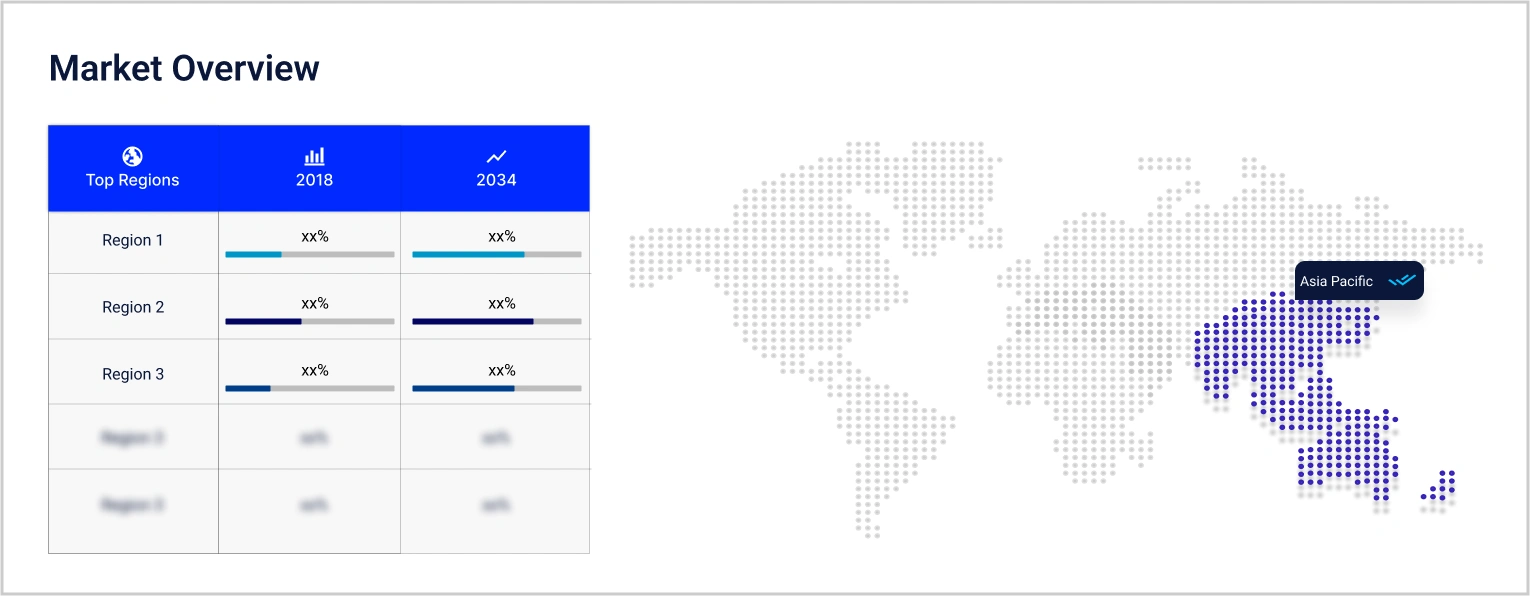
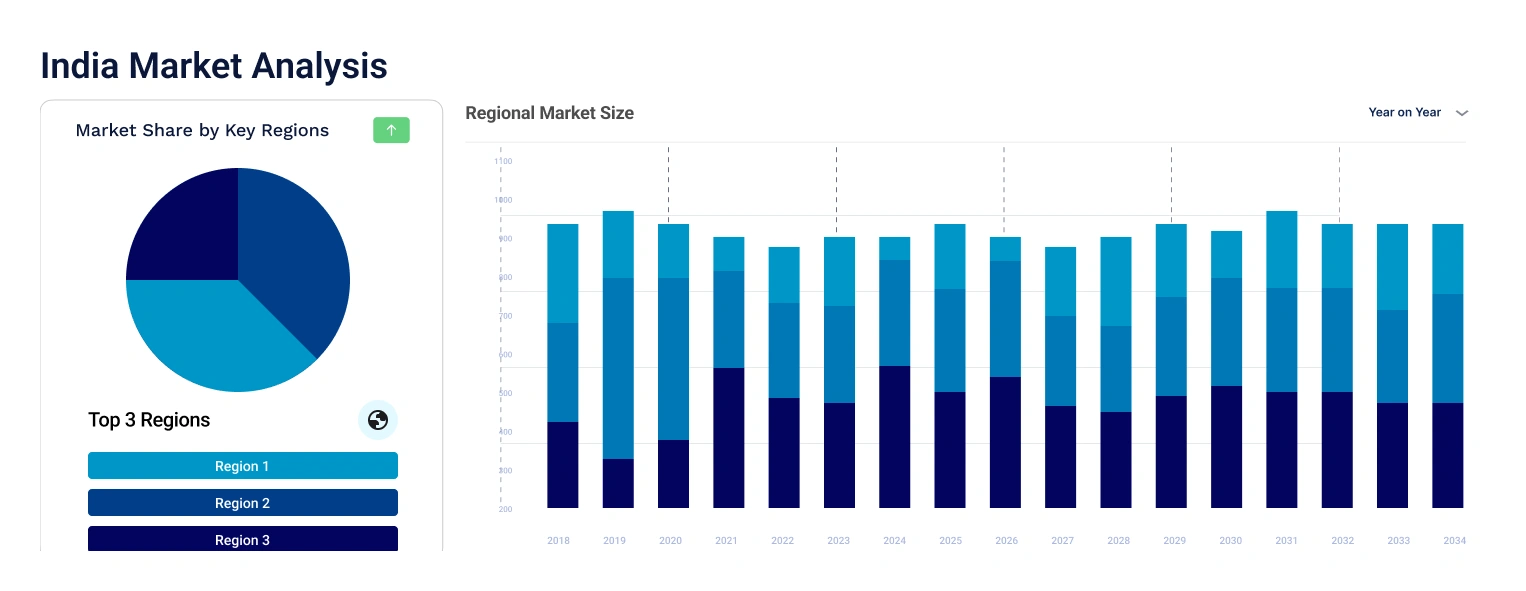
North India has extreme summers, which require diverse acoustic air conditioner solutions. Voltas has unveiled an enlarged lineup of SmartAir ACs in 2025, with inverter and IoT technology in North India. This is to improve consumer comfort and energy efficiency. This product lineup also ensures healthy sales in North India.
In West India, there is a rising demand for cooling in the commercial and residential sector, for which improvements in supply chain services are complementing demands. Daikin India’s partnership with Rechi Precision to produce AC compressors will improve part availability, allowing for better distribution of quality ACs in the western metros and industrial sites.
Product innovation and localized manufacturing by players drive India's AC market growth. Voltas, Godrej, Daikin, and other brands are rapidly expanding their smart inverter and IoT-enabled AC portfolios while increasing capacities at local hubs such as Sri City and Greater Noida. These strategic partnerships and joint ventures help in technology transfer, operational efficiency improvement, and quicker rollout of energy-efficient solutions that can address both residential and commercial customers.
The participants in the market are using brand partnerships, marketing collaborations, and acquisitions to strengthen presence and grab the urban and semi-urban consumers. Firms such as Haier, Hitachi JCI, and Bosch re-entered or expanded India operations through AI-enabled VRF and premium AC lines. Equipping the production facilities with high-capacity plants along with VRF systems and connected solutions facilitates competitive differentiation, expansion of channels of distribution, and increases the demand for energy-efficient cooling technologies in diverse end-use sectors.
Carrier Global Corporation, founded in 1915, is headquartered in Palm Beach Gardens, Florida, and is known globally for heating, ventilation, and air conditioning. The company offers innovative residential and commercial air conditioning systems, focusing on energy efficiency and smart cooling technologies worldwide.
Tata Sons Private Limited was founded in 1868 and is headquartered in Mumbai, India. It acts as the main holding company for the Tata Group. From its diverse portfolio, it has two major subsidiaries: Voltas for air conditioning and HVAC solutions, and Tata Projects, with a focus on the sustainability and technological innovation of the solutions offered.
LG Corporation was established in 1947 and has its headquarters in Seoul, South Korea. It is a multinational conglomerate corporation that manufactures electronics, home appliances, and air conditioning solutions, among other products. The AC business is about energy, efficient, inverter, and smart, connected units that are sold to residential and commercial applications worldwide.
AB Electrolux, a company based in Stockholm and founded in 1919, is a one, stop provider of consumer household appliances and professional HVAC products. The company is committed to delivering innovative, energy, efficient, and sustainable air conditioning solutions to versatile and rapidly moving markets worldwide.
*Please note that this is only a partial list; the complete list of key players is available in the full report. Additionally, the list of key players can be customized to better suit your needs.*
Other players in the market include Daikin Industries, Ltd., Haier Group Corp., Samsung Electronics Co. Ltd., Panasonic Holdings Corporation, Johnson Controls International Plc, Mitsubishi Electric Corp., and several other regional and international manufacturers.
Explore the latest trends shaping the India Air Conditioner Market 2026-2035 with our in-depth report. Gain strategic insights, future forecasts, and key market developments that can help you stay competitive. Download a free sample report or contact our team for customized consultation on India Air conditioner market trends 2026.
Commercial Air Conditioner (AC) Market


Upto 15% Off
USD
$2499 $2249
$3999 $3599
$4999 $4249
$5999 $5099


*While we strive to always give you current and accurate information, the numbers depicted on the website are indicative and may differ from the actual numbers in the main report. At Expert Market Research, we aim to bring you the latest insights and trends in the market. Using our analyses and forecasts, stakeholders can understand the market dynamics, navigate challenges, and capitalize on opportunities to make data-driven strategic decisions.*
Get in touch with us for a customized solution tailored to your unique requirements and save upto 35%!
In 2025, the India air conditioner market reached an approximate value of USD 3.40 Billion.
The market is projected to grow at a CAGR of 7.78% between 2026 and 2035.
The revenue generated from the air conditioner market is expected to reach USD 7.19 Billion in 2035.
The air conditioner market is categorised according to the type, which includes window AC, central AC, and split AC.
The key players in the market include Carrier Global Corporation, Tata Sons Private Limited, LG Corporation, AB Electrolux, Daikin Industries, Ltd., Haier Group Corp., Samsung Electronics Co. Ltd., Panasonic Holdings Corporation, Johnson Controls International Plc, Mitsubishi Electric Corp., and several other regional and international manufacturers.
Based on the end use, the market is divided into commercial and residential.
The market is broken down into North India, East and Central India, West India and South India.
Key strategies driving the market include expansion of energy-efficient and smart AC portfolios, localisation of manufacturing, strategic partnerships and joint ventures, brand collaborations for market outreach, and investments in commercial HVAC and IoT-enabled solutions.
The major challenges that the India air conditioner market face include high upfront costs, price sensitivity in mass segments, dependence on seasonal demand, supply chain and component cost fluctuations, and the need to comply with evolving energy efficiency and sustainability regulations.
Explore our key highlights of the report and gain a concise overview of key findings, trends, and actionable insights that will empower your strategic decisions.
| REPORT FEATURES | DETAILS |
| Base Year | 2025 |
| Historical Period | 2019-2025 |
| Forecast Period | 2026-2035 |
| Scope of the Report |
Historical and Forecast Trends, Industry Drivers and Constraints, Historical and Forecast Market Analysis by Segment:
|
| Breakup by Type |
|
| Breakup by Size |
|
| Breakup by End Use |
|
| Breakup by Distribution Channel |
|
| Breakup by Region |
|
| Market Dynamics |
|
| Competitive Landscape |
|
| Companies Covered |
|
Datasheet
One User
USD 2,499
USD 2,249
tax inclusive*
Single User License
One User
USD 3,999
USD 3,599
tax inclusive*
Five User License
Five User
USD 4,999
USD 4,249
tax inclusive*
Corporate License
Unlimited Users
USD 5,999
USD 5,099
tax inclusive*
*Please note that the prices mentioned below are starting prices for each bundle type. Kindly contact our team for further details.*
Flash Bundle
Small Business Bundle
Growth Bundle
Enterprise Bundle
*Please note that the prices mentioned below are starting prices for each bundle type. Kindly contact our team for further details.*
Flash Bundle
Number of Reports: 3
20%
tax inclusive*
Small Business Bundle
Number of Reports: 5
25%
tax inclusive*
Growth Bundle
Number of Reports: 8
30%
tax inclusive*
Enterprise Bundle
Number of Reports: 10
35%
tax inclusive*
How To Order

Select License Type
Choose the right license for your needs and access rights.

Click on ‘Buy Now’
Add the report to your cart with one click and proceed to register.

Select Mode of Payment
Choose a payment option for a secure checkout. You will be redirected accordingly.
Gain insights to stay ahead and seize opportunities.

Get insights & trends for a competitive edge.

Track prices with detailed trend reports.

Analyse trade data for supply chain insights.

Leverage cost reports for smart savings

Enhance supply chain with partnerships.

Connect For More Information
Our expert team of analysts will offer full support and resolve any queries regarding the report, before and after the purchase.
Our expert team of analysts will offer full support and resolve any queries regarding the report, before and after the purchase.
We employ meticulous research methods, blending advanced analytics and expert insights to deliver accurate, actionable industry intelligence, staying ahead of competitors.
Our skilled analysts offer unparalleled competitive advantage with detailed insights on current and emerging markets, ensuring your strategic edge.
We offer an in-depth yet simplified presentation of industry insights and analysis to meet your specific requirements effectively.





Share