

Consumer Insights
Uncover trends and behaviors shaping consumer choices today
Procurement Insights
Optimize your sourcing strategy with key market data
Industry Stats
Stay ahead with the latest trends and market analysis.
The global industrial hose market was valued at USD 14.56 Billion in 2025. The market is expected to grow at a CAGR of 3.90% during the forecast period of 2026-2035 to reach a value of USD 21.35 Billion by 2035. Industrial hoses are flexible and reinforced conduits designed to transfer fluids including chemicals, food products, beverages, air, water, steam, mineral oils, fuels, gases, and abrasive bulk materials from one location to another across a wide range of industrial, agricultural, automotive, and infrastructure applications. The primary driver of industrial hose market growth is the increasing use of hoses to carry chemical media in the chemical processing industry, where hoses must demonstrate high resistance to chemicals and abrasion, as well as the ability to withstand extreme temperatures and pressures that would compromise less engineered fluid transfer solutions.
The Asia Pacific region leads the global industrial hose market, with India, China, and Japan collectively holding a significant position driven by strong activity within construction, chemical processing, oil and gas, and automotive manufacturing sectors. China's position as the world's foremost manufacturer of construction equipment directly supports demand for high-performance hydraulic and industrial hoses across heavy machinery applications. India's rapidly expanding chemical industry, automotive manufacturing base, and infrastructure investment pipeline are sustaining consistent demand growth for domestic and imported industrial hose products. The North America industrial hose market, valued at USD 2.74 Billion in 2025 and projected to reach USD 3.90 Billion by 2035, is driven by the robust presence of the oil and gas industry in the United States, growing automotive and transportation sector demand, and expanding construction and mining activity supported by significant infrastructure investment.
Industrial hoses are engineered to meet multiple performance standards across the applications they serve, including EN/ISO specifications for hydraulic hoses, food-grade certifications for beverage and pharmaceutical transfer hoses, and API standards for oil and gas hose assemblies. The development of advanced materials including rubber-resin polymer alloys which combine flexibility, heat resistance, and lightweight properties is expanding the performance envelope of industrial hose products and supporting adoption in higher-value, higher-margin applications across chemical processing, semiconductor manufacturing, and life sciences where product purity and temperature stability are critical requirements.
The industrial hose market encompasses the design, manufacture, distribution, and end-use application of flexible and semi-rigid hose products engineered to transfer a broad spectrum of media including gases, liquids, chemicals, fuels, steam, bulk materials, and food-grade substances across industrial, commercial, agricultural, and infrastructure environments. An industrial hose is a hollow cylindrical conduit constructed from one or more layers of elastomeric, thermoplastic, or composite material reinforced with textile, wire, or fabric braiding or spiralling that provides structural integrity under internal pressure, external mechanical stress, and thermal or chemical exposure conditions specific to its application.
Industrial hoses differ from domestic or general-purpose hoses in their engineering precision, material certification, pressure rating, media compatibility, and compliance with international standards including ISO, EN, SAE, API, and MSHA specifications relevant to specific end-use industries. The market is broadly segmented by hose material synthetic rubber, PVC, silicone, polyurethane, PTFE, and composite constructions by the media being conveyed, by the end-use industry, and by regional market geography, with each segment exhibiting distinct demand drivers, competitive dynamics, and growth trajectories.
Compound Annual Growth Rate
3.9%
Value in USD Billion
2026-2035
Parker Hannifin Corporation maintained its leadership in high-pressure hydraulic hose applications across construction, agriculture, and oil field service equipment, with its Hose Products Division expanding its certified distributor network across Southeast Asia and the Middle East to capture growing infrastructure project demand in emerging markets seeking MSHA and ISO-certified hose assembly solutions.
The EU Pressure Equipment Directive (2014/68/EU) harmonised standards update Commission Implementing Decision 2026/79 introduced revised conformity requirements for industrial pressure hose systems, affecting manufacturers and distributors of high-pressure industrial hoses across European markets and driving demand for compliance-certified hose products.
Eaton Corporation's fluid power division expanded its industrial hose product portfolio with next-generation thermoplastic hose constructions targeting semiconductor manufacturing and clean energy applications, where high-purity fluid transfer requirements and compatibility with hydrogen and ammonia media are creating demand for specialised hose compounds beyond conventional rubber-based formulations.
Transfer Oil S.p.A. strengthened its position in the high-pressure thermoplastic hose segment targeting European oil and gas, offshore, and heavy industry applications, with its reinforced constructions capable of handling working pressures above 700 bar gaining certification from major European and North American oil and gas operators.
Alfaflex NV expanded its distribution agreements across North Africa and the Middle East for its industrial rubber hose product lines targeting oil and gas, chemical, and water infrastructure applications, leveraging growing infrastructure investment across GCC and North African markets to extend commercial reach beyond its established European customer base.
The industrial hose market dynamics is being largely reshaped by global industrialization and infrastructure expansion. In 2024, industrial sectors like manufacturing, mining, and water supply grew by 2.3%, with manufacturing leading at 3.2% growth globally. India's manufacturing sector indicates strong performance, including a 5.5% growth in January 2025. On the other hand, United States construction spending in manufacturing hit a record USD 238 billion in June 2024, boosting demand for hoses in new facilities. Despite regional challenges like rising costs and supply chain disruptions, continued investments in infrastructure and industrial capacity ensure sustained demand for high-performance hoses in fluid transfer, material handling, and process automation.
The industrial hose market is gaining significant momentum from the oil & gas and chemical sectors, which require high-performance hoses for the safe transfer of fluids under high pressure and challenging conditions. Over the past four years, capital expenditure in the oil & gas industry has increased by 53%, with net profits rising nearly 16%. Oilfield services achieved their best performance in over three decades during 2023–2024, reflecting strong investment and operational growth. This increased activity, alongside the focus on LNG infrastructure, is driving a steady demand for durable, high-performance hoses that meet the strict safety and operational requirements of these industries.
The industrial hose market growth is being driven by significant advancements in material science, resulting in hoses with enhanced durability, flexibility, and resistance to extreme temperatures and chemicals. Manufacturers are increasingly focusing on developing specialized metal hoses and high-performance composites to meet the demanding needs of modern industrial and automotive applications. A notable example is the March 2025 collaboration between Proventia and Westfalia Metal Hoses, aimed at delivering advanced metal hose solutions that ensure gas-tightness and comply with evolving emissions standards. These innovations are enabling industries to operate with greater safety and efficiency, supporting the shift towards stricter regulatory compliance and improved operational reliability.
Massive investment in water infrastructure is a significant driving factor for the industrial hose market value. The United States alone needs USD 625 billion over the next 20 years for drinking water infrastructure, with USD 421 billion (67%) allocated specifically to water distribution and transmission lines. The gap between investment and need is projected to reach USD 620 billion by 2043, underscoring the immense scale of upcoming projects. Globally, similar initiatives are underway as governments prioritize upgrades to water supply and wastewater systems. These developments are fueling demand for high-quality industrial hoses that ensure reliable, efficient water transfer and support the modernization of critical water infrastructure worldwide.
The drive for sustainable agriculture and efficient water management is boosting the demand in the industrial hose market. Modern farming increasingly depends on high-quality hoses for drip and sprinkler irrigation, fertigation, and water transfer to optimize yields and adapt to climate variability. Governments and private stakeholders are investing heavily in irrigation infrastructure to ensure food security and resource efficiency. For example, India’s Pradhan Mantri Krishi Sinchayee Yojana (PMKSY) has allocated over USD 11 billion for irrigation improvements between 2021 and 2026, benefiting millions of farmers. Such initiatives highlight the growing reliance on advanced hose solutions to support productivity and resilience in the agricultural sector.
Read more about this report - REQUEST FREE SAMPLE COPY IN PDF
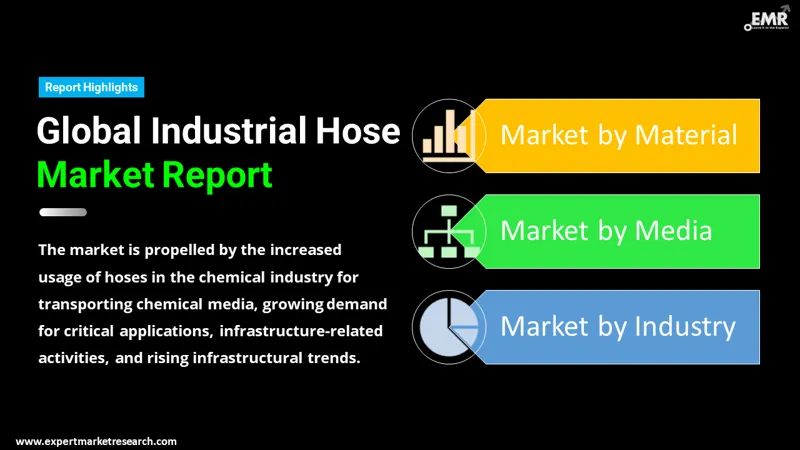
The EMR’s report titled “Global Industrial Hose Market Report and Forecast 2026-2035” offers a detailed analysis of the market based on the following segments:
Market Breakup by Material
Key Insight: The synthetic rubber material dominates the industrial hose market revenue, owing to its durability, flexibility, and resistance to high temperatures and abrasion. Synthetic rubber hoses are used extensively in a variety of applications, including automotive, chemical, and oil and gas industries, due to their strength and longevity. Polyvinyl chloride (PVC) is also widely adopted, especially in water and wastewater applications, due to its corrosion resistance and low cost. Silicone and polyurethane hoses are gaining popularity in industries requiring high-performance materials for food processing, pharmaceuticals, and high-temperature environments.
Market Breakup by Media
Key Insight: The air and gas category holds the largest share in the industrial hose market, as hoses are integral to a wide range of applications involving air and gas transmission across industries. This is followed by the oil media, where hoses are essential for transferring various types of oils, including crude, refined, and lubricants in the oil and gas industry. Water and steam hoses are vital in industries such as construction, utilities, and manufacturing, while chemical and food and beverage applications require specialized hoses for handling hazardous or sensitive materials.
Market Breakup by Industry
Key Insight: The automotive and chemical and pharmaceuticals industries largely contribute to the industrial hose consumption, driven by the need for durable and flexible materials in fluid transfer systems. In the automotive sector, hoses have become essential for fuel, coolant, and hydraulic systems. The chemical and pharmaceuticals industries demand hoses for transporting chemicals, gases, and pharmaceutical liquids, requiring high resistance to corrosion and extreme temperatures. The food and beverages, oil and gas, and infrastructure sectors also represent significant markets, with increasing demand for high-quality hoses that meet safety, hygiene, and operational efficiency requirements.
Market Breakup by Region
Key Insight: Asia Pacific is the largest regional market for industrial hoses, driven by rapid industrialization, infrastructure development, and the expansion of manufacturing hubs in China, India, and Southeast Asia. While Asia Pacific leads in market size, North America is the fastest-growing region, propelled by infrastructure investments and the adoption of advanced hose technologies in sectors like construction, automotive, and oil & gas.
Read more about this report - REQUEST FREE SAMPLE COPY IN PDF
By material, synthetic rubber holds the largest market share due to its durability, flexibility, and resistance to abrasion
By material, synthetic rubber holds the largest share in the industrial hose market due to its durability, flexibility, and resistance to abrasion, making it the preferred material in automotive, oil & gas, and chemical industries. Its versatility and ability to withstand harsh operating conditions across a wide range of applications continue to drive demand. Synthetic rubber's strong market position is expected to remain intact as industries continue to rely on its resilience for critical operations.
Polyurethane experiences fast-paced growth in the industrial hose market, driven by its superior abrasion resistance and flexibility. With applications in industries such as mining, construction, and material handling, polyurethane hoses are increasingly being adopted for high-demand environments. Its ability to withstand high wear and tear and resist chemicals and weathering makes it ideal for harsh operating conditions.
By media, air and gas dominates the market with the widespread use in various industries
Air and gas applications dominate the industry, driven by widespread use in various industries such as manufacturing, automotive, and energy. These hoses are critical for transferring compressed air and gases used in pneumatic systems, which are vital for many industrial processes.
Oil hoses are the fastest-growing media as per the industrial hose market report. The category’s growth is spurred by the increasing need for safe and efficient transportation of crude oil, refined products, and lubricants in the oil and gas industry. The demand is growing with the expansion of global exploration and production activities. The performance and durability of oil hoses are critical, and innovations in hose technology are enhancing their capabilities.
By industry, the automotive sector clocks in the biggest share of the market revenue
The automotive sector is a major consumer of industrial hoses, as they are integral to fuel systems, hydraulic systems, and air conditioning units. The increasing production of vehicles, including electric vehicles, is further fueling the demand for high-quality hoses that meet modern automotive industry standards. With advancements in vehicle technologies and growing emphasis on energy efficiency, the automotive sector is expected to drive the demand for industrial hoses, experiencing steady growth throughout the forecast period.
The food and beverage sector is the fastest-growing industrial hose industry. This growth is driven by the increasing need for food safety, hygiene, and compliance with stringent regulatory standards. Hoses used in food processing must meet health and safety requirements, prompting manufacturers to invest in high-quality, easy-to-clean hoses. The growing trend toward clean-label foods, plant-based products, and sustainable practices further fuels the demand for food-grade hoses.
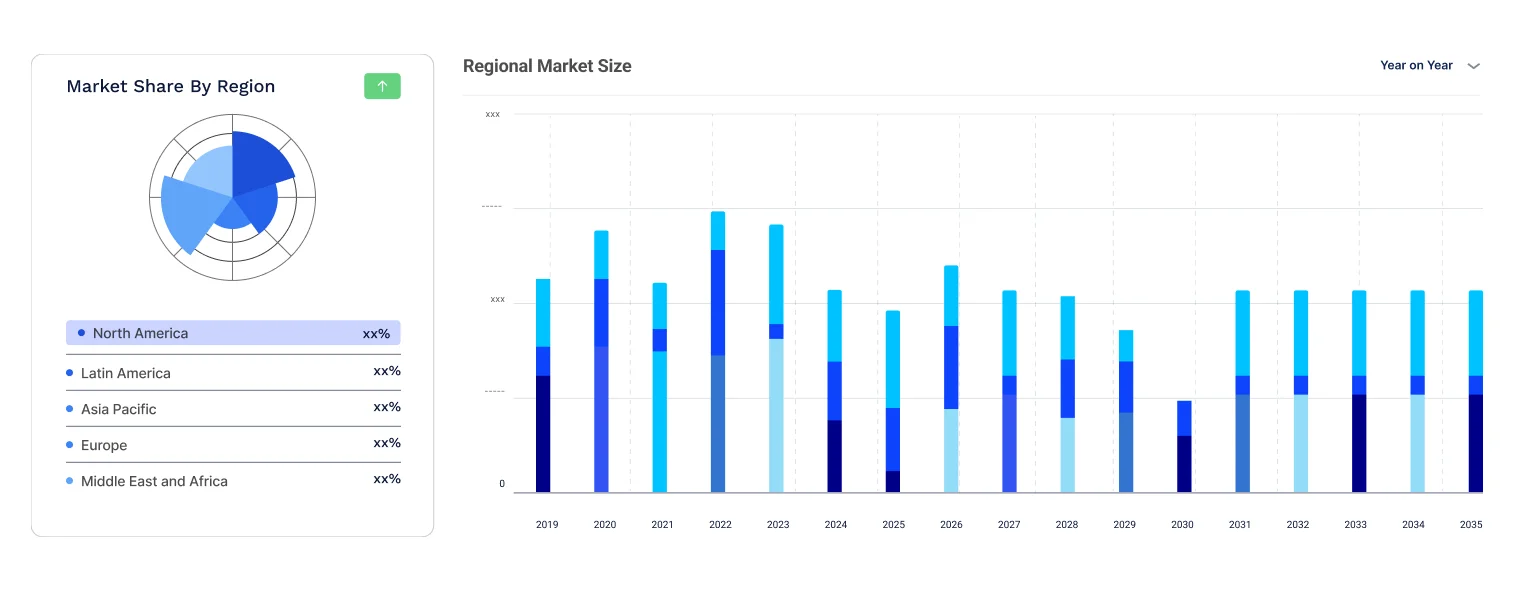
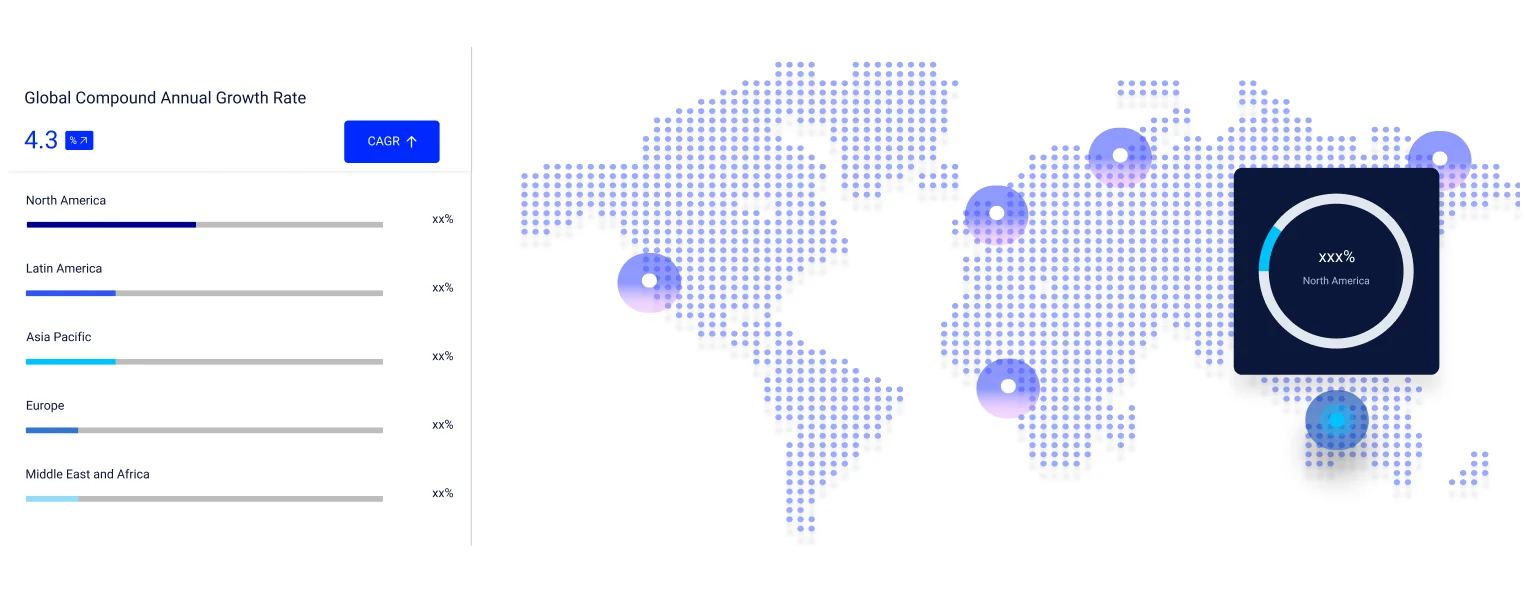
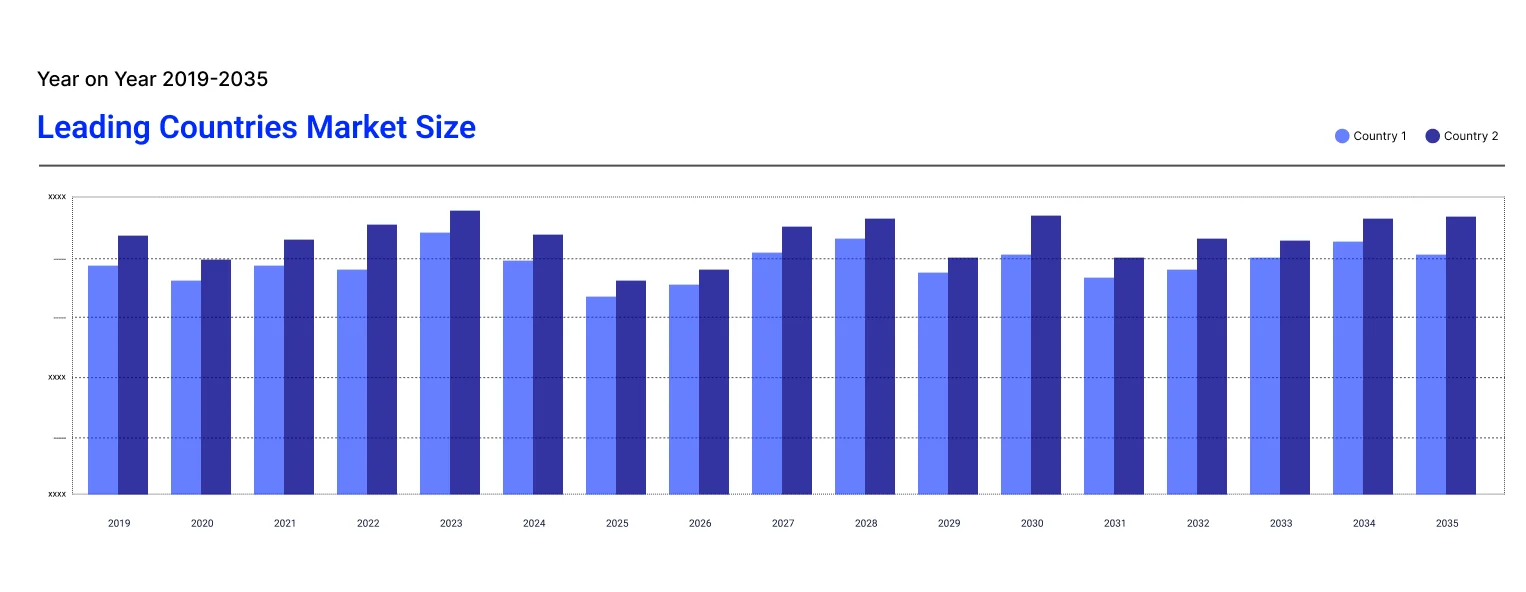
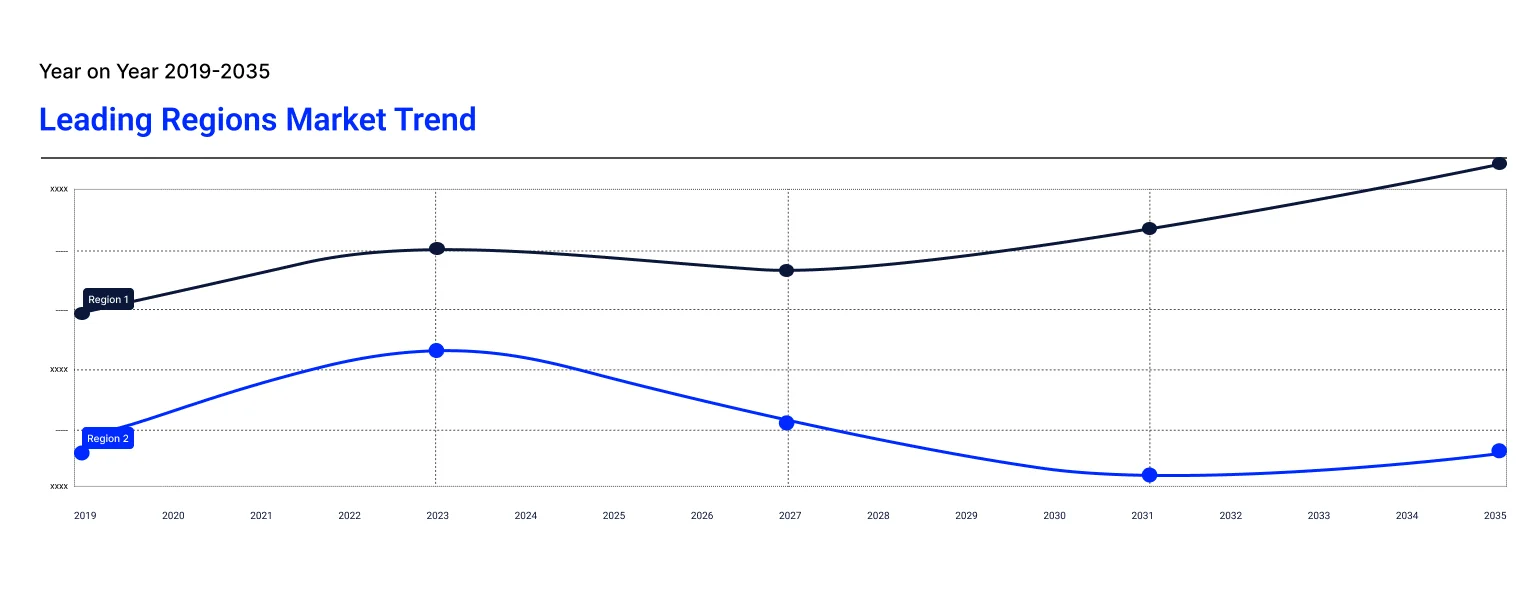
Asia Pacific is the dominant regional market for industrial hoses, with India, China, and Japan collectively driving regional leadership through strong activity in construction, chemical processing, oil and gas, and automotive manufacturing sectors. India is the fastest-growing national market within Asia Pacific, supported by large-scale infrastructure investment under the National Infrastructure Pipeline, rapid expansion of the domestic chemical and pharmaceutical industry, growing automotive production across Pune, Chennai, and Gujarat manufacturing corridors, and expanding LPG distribution infrastructure supporting demand across both industrial and consumer segments. China's position as the world's largest manufacturer of construction and agricultural equipment sustains exceptionally high demand for hydraulic and pneumatic hoses, while Japan's precision manufacturing and automotive industries drive sustained demand for high-specification hose products across thermal management and precision fluid transfer applications.
North America is the second-largest regional industrial hose market, valued at USD 2.74 Billion in 2025 and projected to reach USD 3.90 Billion by 2035 at a CAGR of 3.60%. The United States leads the regional market, driven by the robust presence of the oil and gas industry particularly in the Permian Basin, Gulf of Mexico, and Eagle Ford shale plays growing construction and infrastructure investment under federal infrastructure programs, and a large and sophisticated automotive and heavy vehicle manufacturing base. Kuriyama Holdings, Gates Corporation, Parker Hannifin, and Eaton Corporation are among the dominant industrial hose suppliers in the North American market, serving both OEM and aftermarket distribution channels across the full range of industrial hose applications.
Europe is a mature and technically sophisticated industrial hose market, characterised by rigorous regulatory compliance requirements under Pressure Equipment Directive 2014/68/EU, ATEX Directive 2014/34/EU, and food contact materials regulations EC 1935/2004. The European market favours high-specification, certified hose products from established manufacturers including Norres Schlauchtechnik, Transfer Oil, and Continental ContiTech, with premium pricing for products carrying CE marking, TÜV certification, and Lloyd's Register or DNV approval for marine and offshore applications. Germany, France, Italy, and the United Kingdom are the largest national markets within Europe, supported by strong chemical, automotive, food processing, and oil refinery sectors.
Latin America is an emerging growth region for industrial hoses, with Mexico and Brazil as the dominant national markets. Mexico's industrial hose market benefits from its large automotive manufacturing base hosting facilities for General Motors, Ford, Stellantis, BMW, and Audi among others and its oil and gas sector centred on PEMEX operations in the Gulf of Mexico. Brazilian demand is supported by petroleum industry infrastructure, agricultural equipment manufacturing, and a large mining sector. Spanish-language search queries for industrial hoses in Latin America confirm growing organic demand for market intelligence from regional industrial buyers, distributors, and investors across the LATAM market.
The Middle East industrial hose market is driven primarily by the oil and gas sector, with Saudi Aramco, ADNOC, QatarEnergy, and Kuwait Oil Company representing anchor customers for certified oil field service hoses, marine loading arm hoses, and process utility hoses across their upstream, midstream, and downstream operations. The GCC's ongoing investment in petrochemical complex expansion particularly under Saudi Vision 2030 and Abu Dhabi's industrial diversification programs is creating sustained demand for chemical-resistant hose products across new refinery and petrochemical plant installations. South Africa leads the sub-Saharan African industrial hose market through its large mining sector driving demand for mine dewatering, slurry transfer, and compressed air hose applications.
Australia's industrial hose market is supported by its large and globally significant mining sector encompassing iron ore, coal, copper, gold, and lithium operations which drives substantial demand for slurry, dewatering, and compressed air hoses across open-cut and underground mine sites. The agriculture sector, including grain, fruit, and livestock operations, creates consistent demand for milking hoses, irrigation hose assemblies, and chemical application hoses across Australia's extensive agricultural landscape. The oil and gas industry in Western Australia and the Northern Territory sustains demand for high-pressure oil field service hoses and LNG facility utility hose applications.
Leading industrial hose market players focusing on innovation, product diversification, and strategic partnerships to strengthen their market position. Companies are investing in advanced materials, such as high-performance polymers and eco-friendly composites, to meet the evolving demands of sectors like oil & gas, construction, automotive, and chemicals.
The market’s robust growth is propelled by rapid industrialization, infrastructure expansion, and the increasing adoption of automation and smart technologies. Key strategies for industrial hose companies include expanding manufacturing capabilities, enhancing product portfolios, and targeting emerging markets with tailored solutions. As environmental regulations tighten, sustainability and compliance are also becoming central to competitive differentiation.
Founded in 1911 and headquartered in the United States, Eaton Corporation plc is a diversified power management company offering advanced industrial hoses for hydraulic, chemical, and material handling applications. With a global footprint, strong R&D, and certifications like ISO 9001, Eaton ensures high-performance, sustainable solutions trusted across industries worldwide.
Established in 1911 and headquartered in Denver, Colorado, United States, Gates Industrial Corporation plc is a leading manufacturer of fluid power and power transmission solutions. Its industrial hose portfolio serves construction, agriculture, and energy sectors. With operations in over 30 countries and ISO-certified quality standards, Gates remains a global innovation leader.
Founded in 1917 and headquartered in Cleveland, Ohio, United States, Parker-Hannifin Corporation is a global leader in motion and control technologies. Its industrial hose division delivers solutions for hydraulics, fluid transfer, and extreme environments. Holding ISO and industry-specific certifications, Parker serves customers in more than 50 countries with proven engineering excellence.
Established in 1979 and headquartered in Parma, Italy, Transfer Oil S.p.A. specializes in high-pressure thermoplastic hoses for hydraulic, industrial, and refrigeration applications. Renowned for precision engineering and innovation, the company exports to over 70 countries. With ISO 9001 certification, Transfer Oil maintains a strong reputation for quality, safety, and reliability.
*Please note that this is only a partial list; the complete list of key players is available in the full report. Additionally, the list of key players can be customized to better suit your needs.*
Other key players in the market include Kurt Manufacturing Company, Piranha Hose Products Inc., NORRES Schlauchtechnik GmbH, Colex International Ltd., Kuriyama Holdings Corporation, ALMAPlast S.r.l., Griflex Limited, REHAU Industries SE & Co. KG, Danfoss A/S, RR Italia SPA, and Alfaflex NV, among others.
The global industrial hose market faces significant operational challenges rooted in raw material cost volatility, counterfeit product proliferation, and technical specification complexity. Natural rubber, synthetic rubber, and specialty polymer prices are subject to cyclical volatility tied to petroleum feedstock pricing and supply chain disruptions, creating margin pressure for manufacturers on fixed-price contracts. The proliferation of substandard and counterfeit hose products in emerging market channels creates safety risks for end users and commercial pressure on legitimate manufacturers who cannot compete on price with non-compliant products.
Structural restraints moderate the pace of market expansion across key segments and geographies. The technical complexity of industrial hose selection where working pressure, temperature range, media compatibility, and applicable standards must be simultaneously optimised creates a knowledge-cost barrier that slows adoption of new hose technologies. Regulatory fragmentation across major markets, with differing national standards for pressure equipment, food contact materials, and explosive atmosphere applications, increases compliance complexity for globally distributed product portfolios. The capital intensity of hose manufacturing creates barriers to entry that protect established players but limit agility in rapidly evolving application segments.
Despite these challenges, the market presents compelling growth opportunities. Accelerating silicone hose adoption in pharmaceutical, biotechnology, and food processing applications driven by tightening extractables and leachables compliance requirements is creating a premium-priced segment commanding significantly higher margins than commodity rubber products. Expanding LPG distribution infrastructure in India, sub-Saharan Africa, and Southeast Asia is generating consistent volume demand for certified LPG hose products. The industrial hose assemblies segment is growing faster than the loose hose market as process industry maintenance organisations standardise on certified assembly procurement to reduce installation risk and documentation burden.
Explore the latest trends shaping the industrial hose market 2026-2035 with our in-depth report. Gain strategic insights, future forecasts, and key market developments that can help you stay competitive. Download a free sample report or contact our team for customized consultation on industrial hose market trends 2026.


Upto 15% Off
USD
$2499 $2249
$3999 $3599
$4999 $4249
$5999 $5099


*While we strive to always give you current and accurate information, the numbers depicted on the website are indicative and may differ from the actual numbers in the main report. At Expert Market Research, we aim to bring you the latest insights and trends in the market. Using our analyses and forecasts, stakeholders can understand the market dynamics, navigate challenges, and capitalize on opportunities to make data-driven strategic decisions.*
In 2025, the industrial hose market reached an approximate value of USD 14.56 Billion.
The market is projected to grow at a CAGR of 3.90% between 2026 and 2035.
The market is estimated to witness a healthy growth in the forecast period of 2026-2035 to reach USD 21.35 Billion by 2035.
Key strategies driving the market include continuous product innovation with advanced materials for durability, strengthening distribution networks, leveraging digital monitoring technologies, and forming strategic partnerships to enhance global reach and meet diverse industrial requirements.
The growing global demand for automobiles and the increasing modernisation of farming methods acts as a key trend for the market.
The major regions in the market include North America, Latin America, Europe, the Middle East and Africa, and the Asia Pacific, with the Asia Pacific expected to occupy a substantial share of the market.
The material types in the market include synthetic rubber, polyvinyl chloride (PVC), natural rubber, silicone, and polyurethane.
The various segments according to media are air and gas, oil, water and steam, chemical, food and beverage.
Automotive, chemical and pharmaceuticals, infrastructure, oil and gas, food and beverages, water and wastewater, mining, and agriculture, among others are the various segments on the basis of industries.
The key players in the market include Eaton Corporation plc, Gates Industrial Corporation plc, Parker-Hannifin Corporation, Transfer Oil S.p.A., Kurt Manufacturing Company, Piranha Hose Products Inc., NORRES Schlauchtechnik GmbH, Colex International Ltd., Kuriyama Holdings Corporation, ALMAPlast S.r.l., Griflex Limited, REHAU Industries SE & Co. KG, Danfoss A/S, RR Italia SPA, and Alfaflex NV, among others.
The key challenges in the industrial hose market are raw material price volatility, compliance with stringent safety and environmental standards, high competition among global and regional players, technical complexities in designing hoses for extreme environments, and fluctuating demand influenced by cyclical industries like oil & gas and construction.
Explore our key highlights of the report and gain a concise overview of key findings, trends, and actionable insights that will empower your strategic decisions.
| REPORT FEATURES | DETAILS |
| Base Year | 2025 |
| Historical Period | 2019-2025 |
| Forecast Period | 2026-2035 |
| Scope of the Report |
Historical and Forecast Trends, Industry Drivers and Constraints, Historical and Forecast Market Analysis by Segment:
|
| Breakup by Material |
|
| Breakup by Media |
|
| Breakup by Industry |
|
| Breakup by Region |
|
| Market Dynamics |
|
| Competitive Landscape |
|
| Companies Covered |
|
| Report Price and Purchase Option | Explore our purchase options that are best suited to your resources and industry needs. |
| Delivery Format | Delivered as an attached PDF and Excel through email, with an option of receiving an editable PPT, according to the purchase option. |
Datasheet
One User
USD 2,499
USD 2,249
tax inclusive*
Single User License
One User
USD 3,999
USD 3,599
tax inclusive*
Five User License
Five User
USD 4,999
USD 4,249
tax inclusive*
Corporate License
Unlimited Users
USD 5,999
USD 5,099
tax inclusive*
*Please note that the prices mentioned below are starting prices for each bundle type. Kindly contact our team for further details.*
Flash Bundle
Small Business Bundle
Growth Bundle
Enterprise Bundle
*Please note that the prices mentioned below are starting prices for each bundle type. Kindly contact our team for further details.*
Flash Bundle
Number of Reports: 3
20%
tax inclusive*
Small Business Bundle
Number of Reports: 5
25%
tax inclusive*
Growth Bundle
Number of Reports: 8
30%
tax inclusive*
Enterprise Bundle
Number of Reports: 10
35%
tax inclusive*
How To Order

Select License Type
Choose the right license for your needs and access rights.

Click on ‘Buy Now’
Add the report to your cart with one click and proceed to register.

Select Mode of Payment
Choose a payment option for a secure checkout. You will be redirected accordingly.
Strategic Solutions for Informed Decision-Making
Gain insights to stay ahead and seize opportunities.

Get insights & trends for a competitive edge.

Track prices with detailed trend reports.

Analyse trade data for supply chain insights.

Leverage cost reports for smart savings

Enhance supply chain with partnerships.

Connect For More Information
Our expert team of analysts will offer full support and resolve any queries regarding the report, before and after the purchase.
Our expert team of analysts will offer full support and resolve any queries regarding the report, before and after the purchase.
We employ meticulous research methods, blending advanced analytics and expert insights to deliver accurate, actionable industry intelligence, staying ahead of competitors.
Our skilled analysts offer unparalleled competitive advantage with detailed insights on current and emerging markets, ensuring your strategic edge.
We offer an in-depth yet simplified presentation of industry insights and analysis to meet your specific requirements effectively.




