

Consumer Insights
Uncover trends and behaviors shaping consumer choices today
Procurement Insights
Optimize your sourcing strategy with key market data
Industry Stats
Stay ahead with the latest trends and market analysis.
The Japan Gasoline Market was valued at USD 25.80 Billion in 2025. The market is projected at a CAGR of 1.80% during the forecast period of 2026–2035, reaching a value of USD 30.84 Billion by 2035. Japan's ongoing energy transition, accelerating electric vehicle adoption, and structural demographic contraction are reshaping the domestic gasoline landscape as the country advances toward its 2050 carbon neutrality objectives.
The Japan gasoline market analysis reveals a structural contraction driven by compounding demand-side pressures. The Agency for Natural Resources and Energy has recorded a sustained multi-year decline in domestic gasoline consumption, attributable to Japan's rapidly ageing and shrinking population, the proliferation of hybrid powertrains across the automotive fleet, and the progressive uptake of electric vehicles supported by government incentives. The U.S. Energy Information Administration projects Japan's petroleum product consumption to continue declining, having already reduced by over 1.1 million barrels per day between 2013 and 2022. METI specifically forecasts gasoline consumption to decrease by 2.4 to 2.6 per cent annually through 2027, placing sustained pressure on domestic refiners and retail station networks.
Japan gasoline market dynamics are being reshaped by significant refinery rationalisation and strategic diversification by leading domestic producers. ENEOS Holdings, Japan's largest oil refiner, announced a JPY 1.56 trillion three-year business plan in May 2025, committing 740 billion yen to energy transition initiatives including sustainable aviation fuel development. ENEOS previously closed a 120,000-barrel-per-day refinery in 2023, while Idemitsu Kosan closed a similar-capacity facility in March 2024, collectively reducing Japan's refining capacity by approximately 7%. These structural changes directly align domestic supply capacity with falling gasoline consumption trends and reflect the broader Japan gasoline market dynamics in transition.
Compound Annual Growth Rate
1.8%
Value in USD Billion
2026-2035
Read more about this report - REQUEST FREE SAMPLE COPY IN PDF
|
Japan Gasoline Market Report Summary |
Description |
Value |
|
Base Year |
USD Billion |
2025 |
|
Historical Period |
USD Billion |
2019-2025 |
|
Forecast Period |
USD Billion |
2026-2035 |
|
Market Size 2025 |
USD Billion |
25.80 |
|
Market Size 2035 |
USD Billion |
30.84 |
|
CAGR 2019-2025 |
Percentage |
XX% |
|
CAGR 2026-2035 |
Percentage |
1.80% |
|
CAGR 2026-2035 - Market by Region |
Kyushu and Okinawa |
1.8% |
|
CAGR 2026-2035 - Market by Product Type |
Ethanol-Blended Gasoline |
0.8% |
|
CAGR 2026-2035 - Market by End-Use |
Commercial Transport |
1.5% |
|
2025 Market Share by Region |
Kanto |
32.5% |
The Japan gasoline market is contracting structurally as high hybrid vehicle penetration, Japan's commitment to a 73% GHG reduction by 2040, and refiners' pivot toward sustainable aviation fuel and renewables curb demand. Government price subsidies provide near-term stability but cannot reverse the long-term decline driven by fleet electrification.
ENEOS Holdings unveiled a JPY 1.56 trillion three-year business plan through March 2028 in May 2025, committing 740 billion yen to energy transition and low-carbon initiatives including expanded LNG operations and sustainable aviation fuel development. The company simultaneously revised its 2040 hydrogen supply target downward, citing higher-than-anticipated production costs. The plan signals Japan's largest oil refiner pivoting investment away from conventional gasoline infrastructure toward alternative energy portfolios, directly reflecting the Japan gasoline market trend toward strategic refiner diversification.
Japan extended its gasoline price subsidy programme indefinitely in April 2025, cushioning consumer retail prices against crude oil volatility and yen depreciation. Administered through the Agency for Natural Resources and Energy, the subsidies reduce pump price pressures across retail station networks. Despite this support, structural demand decline persists as consumer preferences continue shifting toward hybrid and electric vehicles, illustrating the Japan gasoline market dynamics where policy tools provide near-term price stability but do not reverse long-term volumetric contraction.
Japan's domestic gasoline consumption continues declining as hybrid and electric vehicles capture rising share of new registrations. Government incentive programmes and tightening fuel efficiency standards accelerate fleet electrification, while METI forecasts a 2.4 to 2.6% annual reduction in on-road gasoline consumption. The Japan gasoline market analysis identifies fleet electrification as the single most consequential structural driver of demand contraction across all fuel distribution segments.
Japan submitted an updated Nationally Determined Contribution in February 2025 targeting a 73% reduction in greenhouse gas emissions by 2040 versus 2013 levels, ahead of its prior 60% interim target. The revised commitment signals accelerated decarbonisation across transport and energy sectors, intensifying structural pressure on domestic gasoline consumption, refinery utilisation rates, and long-term investment strategies of major Japanese fuel distribution companies operating within the Japan gasoline market.
Japan's exceptionally high hybrid vehicle penetration rate, with hybrids accounting for over 40% of new vehicle registrations, is the primary structural driver of annual gasoline demand contraction. Battery electric vehicle registrations are additionally accelerating in response to government purchase incentives and expanding charging infrastructure. Per-vehicle fuel consumption is declining steadily as fuel efficiency standards tighten, reducing aggregate gasoline volumes even in fleet segments with stable vehicle counts.
Japan's domestic refining capacity contracted following the permanent closure of a 120,000-barrel-per-day ENEOS refinery in western Japan in October 2023 and an Idemitsu Kosan refinery closure in March 2024, representing approximately 7% of Japan's total refinery capacity. The rationalisations reflect the industry's strategic response to sustained structural declines in domestic petroleum demand driven by demographic contraction and vehicle electrification within the Japan gasoline market.
Cosmo Oil's Sakai Refinery completed Japan's first large-scale sustainable aviation fuel production facility in December 2024, obtaining ISCC CORSIA and ISCC EU certifications and commencing commercial supply in April 2025. The facility supports Japan's national SAF mandate targeting 10% aviation fuel blend rates by 2030, illustrating the accelerating strategic shift by major Japanese fuel refiners from conventional gasoline toward alternative and sustainable fuel portfolios.
Japan's gasoline retail price subsidy programme has been a consistent government policy tool, reducing the direct impact of global crude oil price volatility on domestic pump prices and supporting consumer spending capacity in Japan's price-sensitive retail fuel market. The programme's indefinite extension reflects government recognition of gasoline's continuing role in the transport needs of rural populations and commercial vehicle operators where electrification alternatives remain limited.
Japan's crude oil imports declined by approximately 7% in 2024, reflecting the sustained structural drop in domestic petroleum product demand. Japan's crude intake averaged 124 million tonnes annually from 2020 to 2023, already 15% below 2019 levels, before further contracting in 2024. This contraction directly constrains gasoline production volumes across Japan's remaining active refineries and underlines the long-term direction of the Japan gasoline market.
The Expert Market Research's report titled "Japan Gasoline Market Report and Forecast 2026-2035" offers a detailed analysis of the market based on the following segments:
Market Breakup by Product Type
Key Insight: Regular gasoline dominates the Japan gasoline market by product type, accounting for over 80% of domestic sales volume in 2024, driven by its broad compatibility with Japan's large hybrid vehicle fleet and its significant price advantage over premium-grade products at retail service stations. Premium gasoline commands a smaller but stable share, favoured by high-performance vehicle owners in urban markets. The Japan gasoline market analysis shows reformulated and blended gasoline products gaining incremental regulatory attention as Japan pursues fuel efficiency and emissions reduction targets.
Market Breakup by End-Use Application
Key Insight: Passenger vehicles represent the dominant end-use application in the Japan gasoline market, reflecting Japan's large national vehicle fleet of approximately 62 million registered passenger cars. However, this segment is also recording the steepest volumetric decline as hybrid penetration reduces per-vehicle fuel consumption and electric vehicles begin displacing conventional internal combustion engine models. Commercial transport and construction machinery represent more structurally stable demand segments as electrification solutions for heavy-duty applications lag the passenger vehicle transition timeline.
Market Breakup by Distribution Channel
Key Insight: Retail service stations dominate the Japan gasoline market by distribution channel, representing the primary point of purchase for passenger vehicle and light commercial vehicle operators. Japan's service station network has been consolidating as declining demand volumes erode profitability at marginal locations, with ENEOS, Idemitsu, and Cosmo Energy each implementing network rationalisation programmes. Direct commercial sales to logistics operators and industrial consumers represent a structurally resilient demand segment, as commercial vehicle operators maintain higher fuel consumption rates per unit than electrifying passenger vehicle fleets.
Market Breakup by Region
Key Insight: Kanto leads the Japan gasoline market by regional consumption volume, reflecting the Tokyo metropolitan area's concentration of Japan's largest vehicle fleet, commercial logistics activity, and industrial fuel demand. Kansai, anchored by Osaka and Kobe, represents the second-largest regional market driven by its substantial manufacturing and commercial vehicle base. Chubu's automotive manufacturing concentration in Nagoya and Toyota City supports meaningful commercial fuel demand. Rural regions including Tohoku and Hokkaido display higher per-capita gasoline dependency given limited public transportation alternatives, resulting in slower demand contraction rates versus metropolitan regions.
Read more about this report - REQUEST FREE SAMPLE COPY IN PDF
By Product Type, Regular Gasoline dominates the market due to broad vehicle compatibility and significant price advantage over premium fuel grades
Regular gasoline commands the overwhelming majority of Japan's domestic gasoline market by sales volume, reflecting its universal compatibility across Japan's large hybrid vehicle fleet and its 15 to 25 yen per litre price advantage over premium-grade products at retail service stations. The price differential remains a critical purchasing factor for both individual consumers and fleet operators in a market characterised by sustained cost-of-living pressures and price sensitivity in the retail fuel segment.
Premium gasoline holds a stable niche share within the Japan gasoline market analysis, favoured by owners of high-performance imported European vehicles and select domestic performance models requiring higher octane ratings. Reformulated and ultra-low-sulphur gasoline variants are gaining marginal attention as Japan's fuel quality standards evolve, though the dominant market dynamic remains the price-led preference for regular-grade product across the majority of Japan's passenger and commercial vehicle segments.
By End-Use Application, Passenger Vehicles lead due to Japan's large national vehicle fleet and ongoing conventional engine penetration despite electrification trends
Passenger vehicles represent the largest end-use application within the Japan gasoline market scope, supported by Japan's national fleet of approximately 62 million registered passenger cars, the majority of which remain hybrid or conventional internal combustion engine models requiring gasoline. Despite accelerating fleet electrification, the transition timeline ensures significant ongoing passenger vehicle gasoline demand across the forecast period, as battery electric vehicle penetration in Japan remains below 3% of total vehicle registrations.
Commercial transport and logistics vehicles represent the second-largest end-use segment and are exhibiting a slower demand contraction trajectory than passenger vehicles, as commercially viable electrification solutions for heavy commercial vehicles lag the passenger vehicle segment by several years. Construction and industrial machinery gasoline demand is structurally stable in the medium term, supporting residual demand in the Japan gasoline market from sectors where electrification alternatives remain economically or technically infeasible.
By Distribution Channel, Retail Service Stations dominate due to Japan's extensive national service station network serving passenger and light commercial vehicle operators
Retail service stations account for the dominant share of Japan gasoline market volumes, reflecting the Japanese consumer's traditional dependence on a dense national network of branded service station outlets for passenger vehicle refuelling. Japan's service station network of approximately 28,000 active outlets, while consolidating from a peak of over 60,000 in the 1990s, continues to provide the primary fuel distribution channel for individual and fleet operators across urban, suburban, and rural regions.
Direct commercial sales represent a structurally resilient distribution channel in the Japan gasoline market dynamics, serving logistics operators, construction companies, and industrial users under long-term supply contracts that insulate volumes from retail market fluctuations. Government and military fuel procurement represents a smaller but contractually stable demand segment. The shift toward full-service premium station concepts by ENEOS, Idemitsu, and Cosmo reflects an industry strategy to maintain profitability per-litre in a volumetrically declining retail market.
Read more about this report - REQUEST FREE SAMPLE COPY IN PDF
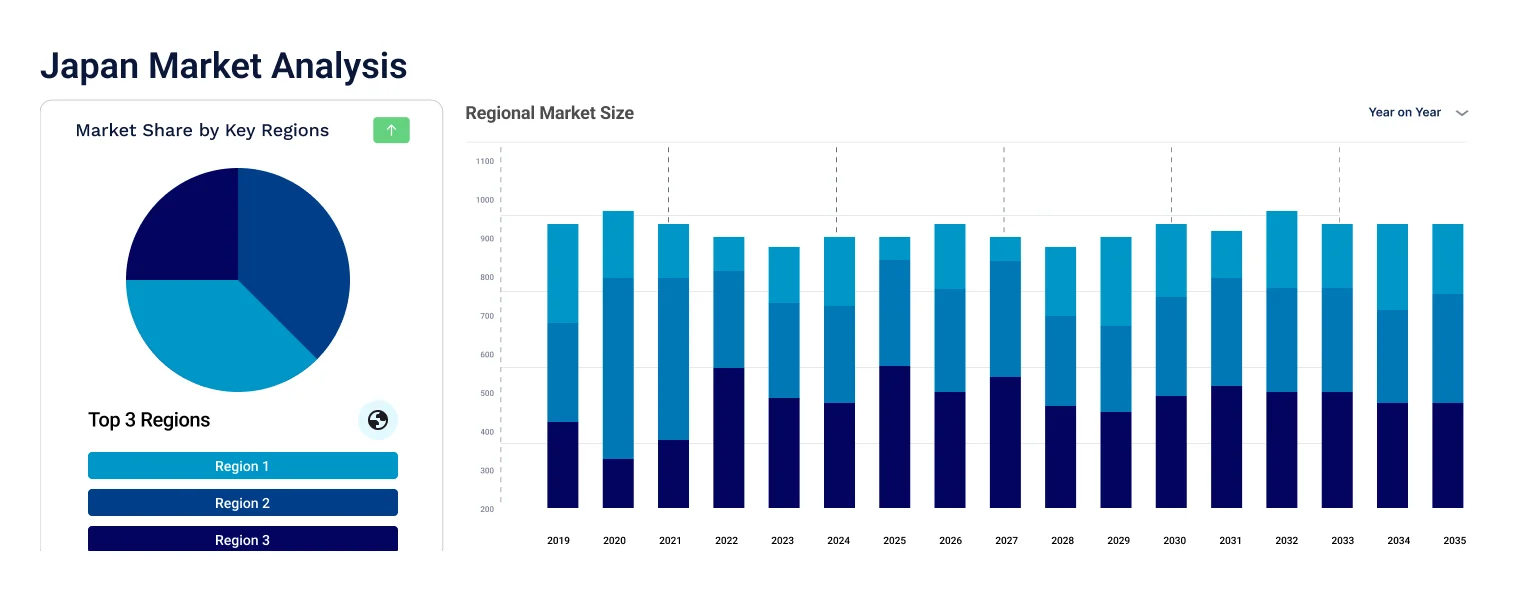
Kanto dominates the market due to Japan's largest metropolitan vehicle fleet, highest industrial fuel demand concentration, and extensive commercial logistics activity centred on the Tokyo metropolitan area
Kanto represents the largest regional market for gasoline consumption in Japan, anchored by Tokyo and its surrounding prefectures of Kanagawa, Saitama, Chiba, and Ibaraki. The region hosts Japan's highest concentration of passenger vehicles, commercial logistics centres, and industrial manufacturing facilities, sustaining significant fuel demand despite accelerating urban fleet electrification. ENEOS and Idemitsu maintain their densest service station networks within the Kanto region, reflecting its strategic commercial importance within the Japan gasoline market.
Kansai, anchored by Osaka, Hyogo, and Kyoto prefectures, represents the second-largest regional gasoline consumption centre, driven by its substantial manufacturing base, port logistics activity, and commercial transport networks. Chubu, centred on Nagoya's automotive manufacturing cluster, sustains meaningful commercial vehicle and logistics fuel demand. Rural regions including Tohoku, Hokuriku, and Shikoku display higher per-capita gasoline dependency given limited mass transit alternatives, resulting in slower demand contraction rates relative to metropolitan regions within the Japan gasoline market analysis.
|
CAGR 2026-2035 - Market by |
Region |
|
Kanto |
2.1% |
|
Kansai |
2.3% |
|
Chubu |
2.0% |
|
Kyushu and Okinawa |
1.8% |
|
Others |
1.9% |
The Japan gasoline market players landscape is highly concentrated, dominated by three integrated energy companies, ENEOS Holdings, Idemitsu Kosan, and Cosmo Energy Holdings, that together account for the majority of Japan's domestic refining capacity and retail service station network. Competition is primarily conducted through network scale, brand loyalty, pricing strategies, and the pace of strategic transition toward renewable energy and alternative fuel products.
Japan gasoline market companies are navigating an existential transition period, balancing the management of declining core fuel revenues with investment in sustainable aviation fuel, hydrogen, and renewable energy businesses. Competitive differentiation is increasingly driven by the speed and credibility of energy transition strategies, digital loyalty programme capabilities, and service station network rationalisation efficiency rather than conventional fuel margin management.
Founded in 1888 and headquartered in Tokyo, Japan, ENEOS Holdings is Japan's largest integrated energy company and the dominant player in the Japan gasoline market, operating approximately 12,000 service stations under the ENEOS brand and managing Japan's largest oil refining capacity. ENEOS is pivoting toward LNG, hydrogen, and sustainable aviation fuel through its JPY 1.56 trillion three-year business plan. Key strength: its unrivalled retail service station network scale and integrated refining-to-distribution value chain provide structural competitive advantages in fuel distribution efficiency and brand penetration across Japan.
Founded in 1911 and headquartered in Tokyo, Japan, Idemitsu Kosan is Japan's second-largest oil refiner and fuel distributor, operating approximately 6,400 service stations across Japan under the Idemitsu and Apollo Station brands following its merger with Showa Shell Sekiyu. The company has been restructuring refinery capacity and investing in EV charging infrastructure at its service stations. Key strength: Idemitsu's diversified product portfolio, encompassing lubricants, petrochemicals, and functional materials, provides revenue resilience as conventional gasoline volumes contract within the Japan gasoline market.
Founded in 1939 and headquartered in Tokyo, Japan, Cosmo Energy Holdings operates Japan's third-largest service station network under the Cosmo brand, with approximately 3,000 stations nationwide. Cosmo has been a first-mover in sustainable aviation fuel production in Japan, having commissioned its Sakai Refinery SAF facility in 2024. Key strength: Cosmo Energy's first-mover position in commercial SAF production and its strategic investment in renewable energy and EV charging infrastructure position it competitively for Japan's accelerating energy transition, differentiating its service station proposition from conventional fuel-only operators.
Shell Japan Ltd. is the Japanese subsidiary of Shell plc, operating within Japan's gasoline market primarily through its interest in the Showa Shell network (now integrated into Idemitsu following the 2019 merger completion). Shell maintains a presence in lubricants, chemicals, and aviation fuel supply chains in Japan. Key strength: Shell's global LNG supply relationships and advanced biofuel technology portfolio provide strategic value to its Japan market operations as Japanese energy companies increasingly seek international partnerships for sustainable fuel supply chains and low-carbon energy technology transfer.
Other key players in the Japan Gasoline Market report include Fuji Oil Co., Ltd., Taiyo Oil Co., Ltd., Nansei Sekiyu K.K., Kyokuto Petroleum Industries Ltd., TonenGeneral Sekiyu K.K. (ExxonMobil), Kyushu Oil, regional petroleum distributors, and import-dependent fuel suppliers, among others.
*Please note that this is only a partial list; the complete list of key players is available in the full report. Additionally, the list of key players can be customized to better suit your needs.*
Explore the latest trends shaping the Japan Gasoline Market 2026–2035 with our in-depth report. Gain strategic insights, future forecasts, and key market developments that can help you stay competitive. Download a free sample report or contact our team for customised consultation on Japan Gasoline Market trends 2026.


Upto 15% Off
USD
$2499 $2249
$3999 $3599
$4999 $4249
$5999 $5099


*While we strive to always give you current and accurate information, the numbers depicted on the website are indicative and may differ from the actual numbers in the main report. At Expert Market Research, we aim to bring you the latest insights and trends in the market. Using our analyses and forecasts, stakeholders can understand the market dynamics, navigate challenges, and capitalize on opportunities to make data-driven strategic decisions.*
In 2025, the Japan Gasoline Market reached an approximate value of USD 25.80 Billion.
The market is projected at a CAGR of 1.80% between 2026 and 2035, reflecting structural contraction driven by EV adoption and demographic decline.
The key players in the market include ENEOS Holdings Inc., Idemitsu Kosan Co., Ltd., Cosmo Energy Holdings Co., Ltd., Shell Japan Ltd., Fuji Oil Co., Ltd., TonenGeneral Sekiyu K.K. (ExxonMobil), Taiyo Oil Co., Ltd., Nansei Sekiyu K.K., Kyokuto Petroleum Industries Ltd., and Kyushu Oil.
Key strategies include refinery rationalisation, sustainable aviation fuel diversification, energy transition investment, and government gasoline subsidy programmes to manage retail price impacts.
Primary challenges include structural gasoline demand decline from EV adoption, ageing population, tightening carbon targets, refinery capacity rationalisation, and rising crude oil price and yen depreciation pressures.
Explore our key highlights of the report and gain a concise overview of key findings, trends, and actionable insights that will empower your strategic decisions.
|
Report Features |
Details |
|
Base Year |
2025 |
|
Historical Period |
2019-2025 |
|
Forecast Period |
2026-2035 |
|
Scope of the Report |
Historical and Forecast Trends, Industry Drivers and Constraints, Historical and Forecast Market Analysis by Segment:
|
|
Breakup by Product Type |
|
|
Breakup by End-Use Application |
|
|
Breakup by Distribution Channel |
|
|
Breakup by Region |
|
|
Market Dynamics |
|
|
Competitive Landscape |
|
|
Companies Covered |
|
Datasheet
One User
USD 2,499
USD 2,249
tax inclusive*
Single User License
One User
USD 3,999
USD 3,599
tax inclusive*
Five User License
Five User
USD 4,999
USD 4,249
tax inclusive*
Corporate License
Unlimited Users
USD 5,999
USD 5,099
tax inclusive*
*Please note that the prices mentioned below are starting prices for each bundle type. Kindly contact our team for further details.*
Flash Bundle
Small Business Bundle
Growth Bundle
Enterprise Bundle
*Please note that the prices mentioned below are starting prices for each bundle type. Kindly contact our team for further details.*
Flash Bundle
Number of Reports: 3
20%
tax inclusive*
Small Business Bundle
Number of Reports: 5
25%
tax inclusive*
Growth Bundle
Number of Reports: 8
30%
tax inclusive*
Enterprise Bundle
Number of Reports: 10
35%
tax inclusive*
How To Order

Select License Type
Choose the right license for your needs and access rights.

Click on ‘Buy Now’
Add the report to your cart with one click and proceed to register.

Select Mode of Payment
Choose a payment option for a secure checkout. You will be redirected accordingly.
Strategic Solutions for Informed Decision-Making
Gain insights to stay ahead and seize opportunities.

Get insights & trends for a competitive edge.

Track prices with detailed trend reports.

Analyse trade data for supply chain insights.

Leverage cost reports for smart savings

Enhance supply chain with partnerships.

Connect For More Information
Our expert team of analysts will offer full support and resolve any queries regarding the report, before and after the purchase.
Our expert team of analysts will offer full support and resolve any queries regarding the report, before and after the purchase.
We employ meticulous research methods, blending advanced analytics and expert insights to deliver accurate, actionable industry intelligence, staying ahead of competitors.
Our skilled analysts offer unparalleled competitive advantage with detailed insights on current and emerging markets, ensuring your strategic edge.
We offer an in-depth yet simplified presentation of industry insights and analysis to meet your specific requirements effectively.




