

Consumer Insights
Uncover trends and behaviors shaping consumer choices today
Procurement Insights
Optimize your sourcing strategy with key market data
Industry Stats
Stay ahead with the latest trends and market analysis.
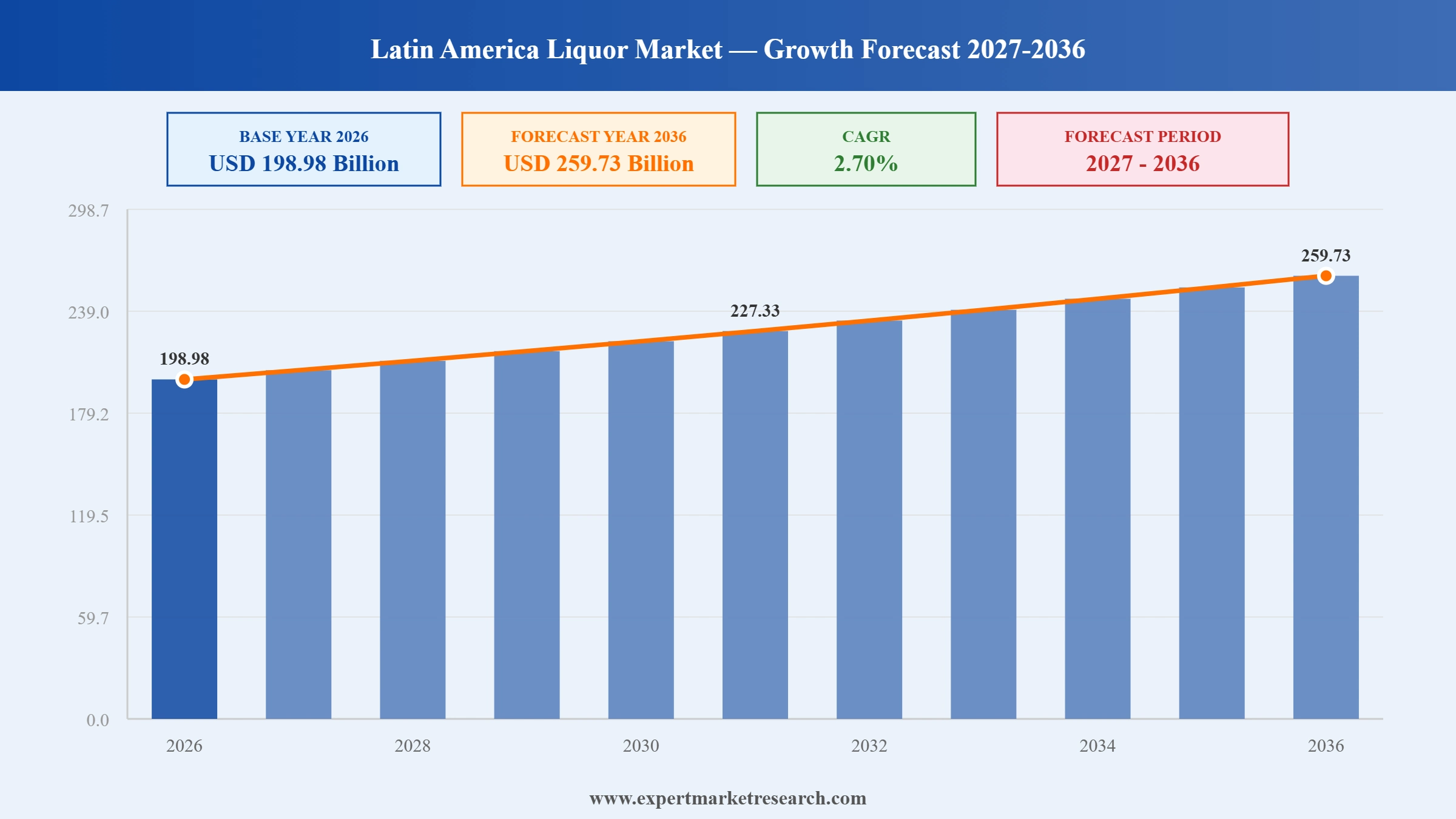
The Latin America liquor market attained a value of USD 193.75 Billion in 2025 and is projected to expand at a CAGR of 2.70% through 2035. The market is further expected to achieve USD 252.90 Billion by 2035. The growth in consumer interest in superior cocktail experiences is pushing producers to create localized flavors, pack sizes and spirits that are suited to particular occasions.
The shift towards premium alcohol, local flavors and convenience is an emerging trend in the Latin America liquor market. Bacardi obtained the Hecho en Mexico stamp of approval by Mexico for its PATRÓN and CAZADORES tequila products in September 2025. This development is important for Bacardi, since the company has more than 200 brands that are present in over 160 countries.
In relation to product development, the Latin America liquor market observes an increasing focus on local occasions than extension of liquor range for brands. For example, Diageo is looking at the expansion of tequila, gin, rum, vodka, liqueurs and local spirits across Latin America and the Caribbean, while producing locally in Brazil, Guatemala and Mexico.
Premiumization is pushing Latin America liquor market companies into aged tequila, premium whisky, craft rum and cocktails and at the same time making consumers keen on distinctive origins and production processes. This, alongside other factors, involves pack sizing and creating flavor profiles that work for local occasions. The importance of digital retail also cannot be overlooked since brands have the opportunity to communicate the whole story of the products, cocktail recipes and credentials. This is making both distributors and retailers look to expand their specialized selections instead of just stocking mainstream products.
Read more about this report - Request a Free Sample
Brown-Forman returned to India through its brands el Jimador Silver and Reposado, which featured genuine Mexican tequila and promoted premium spirits distribution. Latin American liquor manufacturers can promote their international expansion by offering genuine regional products, developing local relationships, and featuring premium tequila.
Ready-to-drink beverages became Latin America’s fastest growing alcohol category, with the demand for such beverages in Brazil, Mexico, and Colombia led by convenience. Flavored and portable RTDs can be developed by companies in the Latin America liquor market targeting casual drinkers.
Corona partnered with Vista Corona to launch its drinks, micheladas, food, and beverages at Guadalajara Airport and plan further launches at other Mexican locations. Beverage companies can develop a hospitality concept for airport venues, capitalizing on the captive consumption of passengers during their wait times.
Pocho Fino launched three new tequilas called Blanco, Mexican Candy, and Grilled Pineapple tequilas. Companies can blend Mexican-American cultural influences to develop distinctive flavors, creating new product opportunities and supporting growth in the Latin America liquor market.
Tequila is becoming an innovative platform for the Latin America liquor market. Diageo is innovating tequilas via Don Julio, Casamigos, among others with a variety of formats including aged tequilas and RTD margaritas. The strategy for tequila innovation at Diageo includes innovations in casks, limited edition and cultural partnerships to reach consumers that previously would prefer whisky or cocktails. In Mexico, Diageo has two distilleries in Jalisco and has made significant investments in capacity creation. In September 2021, it made a USD 500 million investment in Mexican manufacturing that included capacity expansion and additional facilities. On the other hand, in September 2026, PATRÓN Tequila launched Agave Masters, a global program offering WSET accreditation and education for bar professionals worldwide.
Companies in the Latin America liquor market are making global brands adaptable based on the taste preferences of the region. Diageo Mexico mentions products such as Smirnoff Tamarind, Don Julio Chile Serrano and Buchanan's Pineapple as localized innovation. Such a strategy helps multinational companies in preserving their brand value while providing innovative flavoring that is associated with regional cuisine. Pernod Ricard is innovating products as per changing preferences in Brazil. In March 2025, the company launched Ramazzotti Rosato in Brazil flavored with hibiscus and orange blossoms, a less bitter aperitif for spritz occasions.
Ready-to-drink beverages are offering another avenue for producers in the Latin America liquor market to increase occasions of use. Bacardi and Coca-Cola made an announcement for launching a BACARDÍ & Coca-Cola RTD, with Mexico being one of the first markets in September 2024. Casamigos ready-to-drink margaritas by Diageo is also aiming at utilizing the same strategy of going to a more convenient format using a premium tequila brand. Moreover, RTD has been showing promising results in Brazil as Pernod Ricard is showing strong performance of RTD in its overall international portfolio.
The major manufacturers in the Latin America liquor market are taking advantage of the local cultural events to make their premium spirits more relevant within the Latin American region. The FY2025 Brazil activities of Pernod Ricard include activation of the Beefeater spirits during the Rio de Janeiro carnival event and also the luxury experiences from the Royal Salute for establishing itself among wealthy individuals. Diageo has similarly associated its Scotch brands with the social occasions of Colombians during its Moment Is Now campaign. In September 2026, Buchanan’s launched Coconut whisky, combining tropical flavor with Latin-inspired music and culture through Nina Sky’s campaign.
Regulatory mandates are having an impact on the product formulation, packaging, and distribution processes by liquor manufacturers throughout Latin America. The COFEPRIS of Mexico laid down certain guidelines regarding alcohol beverage regulations, labeling and advertising in May 2025. On the other hand, Brazil requires that alcohol be clearly labeled, and that this label be indestructible and contain information such as name of the product, type, alcoholic content and safety information. The new beverage regime in Brazil classifies liquor and mixed alcoholic drinks depending on their alcoholic content. For companies in the Latin America liquor market, this trend is resulting in certain operational mandates regarding packaging and product registrations. In March 2026, HEINEKEN expanded its Central American presence through FIFCO’s beverage and retail businesses, strengthening regional beer and beyond-beer operations.
The Expert Market Research's report titled “Latin America Liquor Market Report and Forecast 2026-2035” offers a detailed analysis of the market based on the following segments:
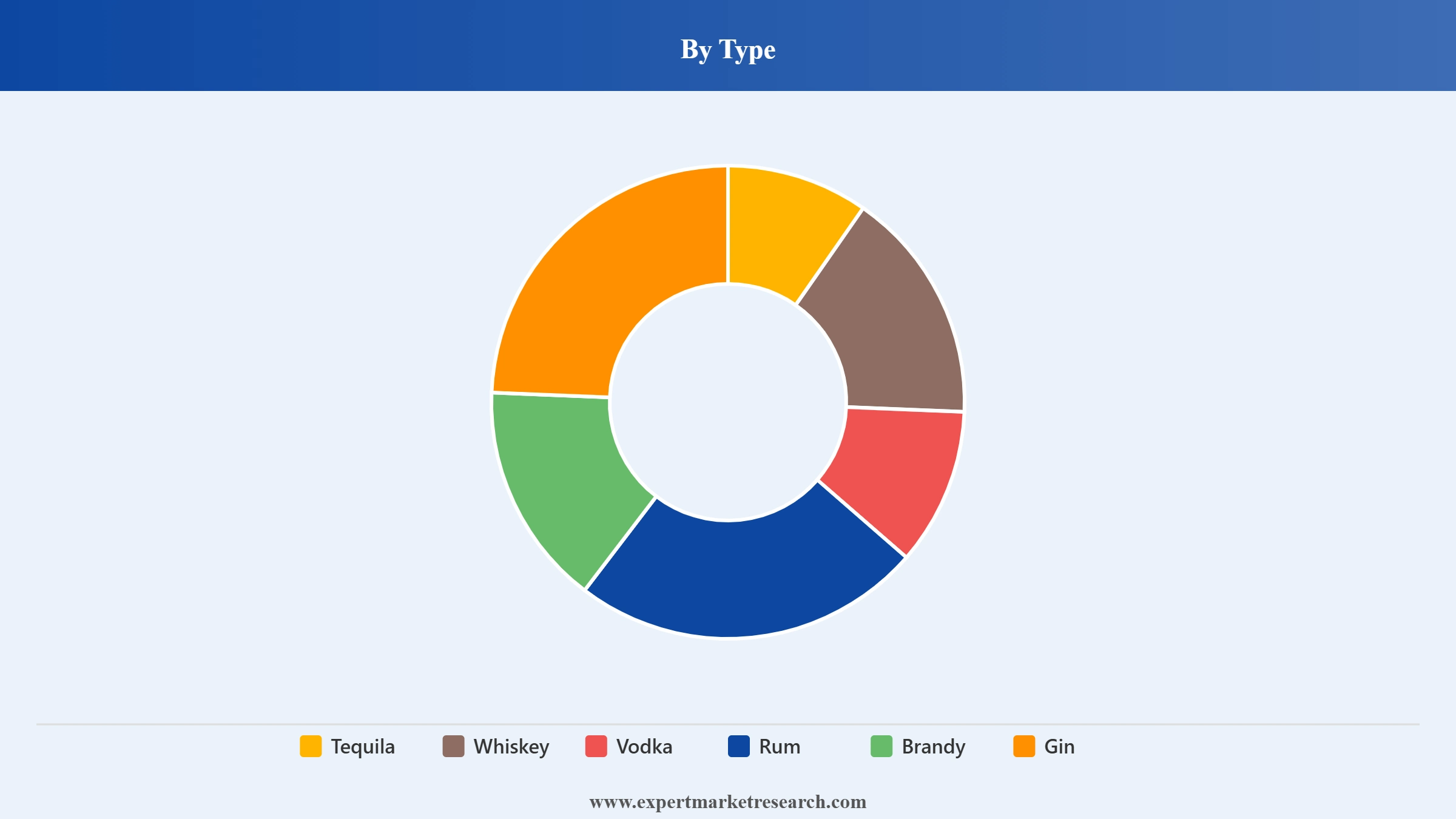
Market Breakup by Type
Key Insight: Whiskey continues to be relevant in the Latin America liquor market through its premium aged categories and renowned brands such as Scotch and bourbon. Tequila is enjoying the influence of agave origins, aging techniques and Mexican heritage. Vodka is supported by flavor extensions and versatility with cocktails. Rum enjoys an association with Caribbean and Latin American heritage, opening up an opportunity for premium aged rum. Brandy has a market in traditional regions based on regional consumption habits, while gin is benefiting from cocktails and botanical innovation.
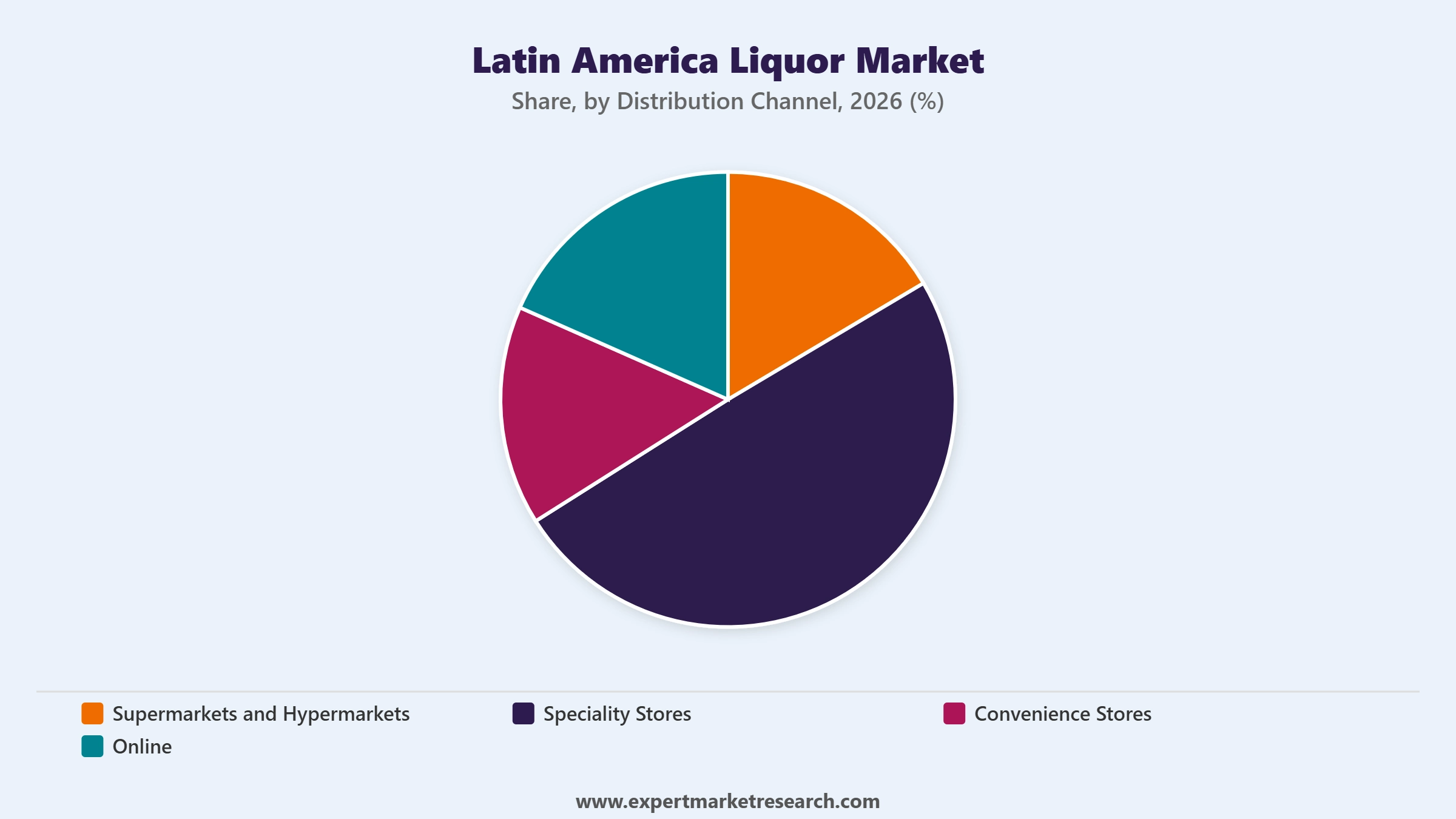
Market Breakup by Distribution Channel
Key Insight: As per the Latin America liquor market report, supermarkets and hypermarkets offer the advantages of scale and extensive exposure, while specialty stores are promoting premium whiskies, tequilas, rums and craft products. The convenience store category continues to have significance for small packs and impulse buying, especially during social occasions. The online medium is offering more space to premium and specialist products without the need for physical expansion at the retail end. All other mediums like bars, restaurants, hotels and distribution networks continue to hold significance in that they enable the supplier to shape the cocktail menu and trial.
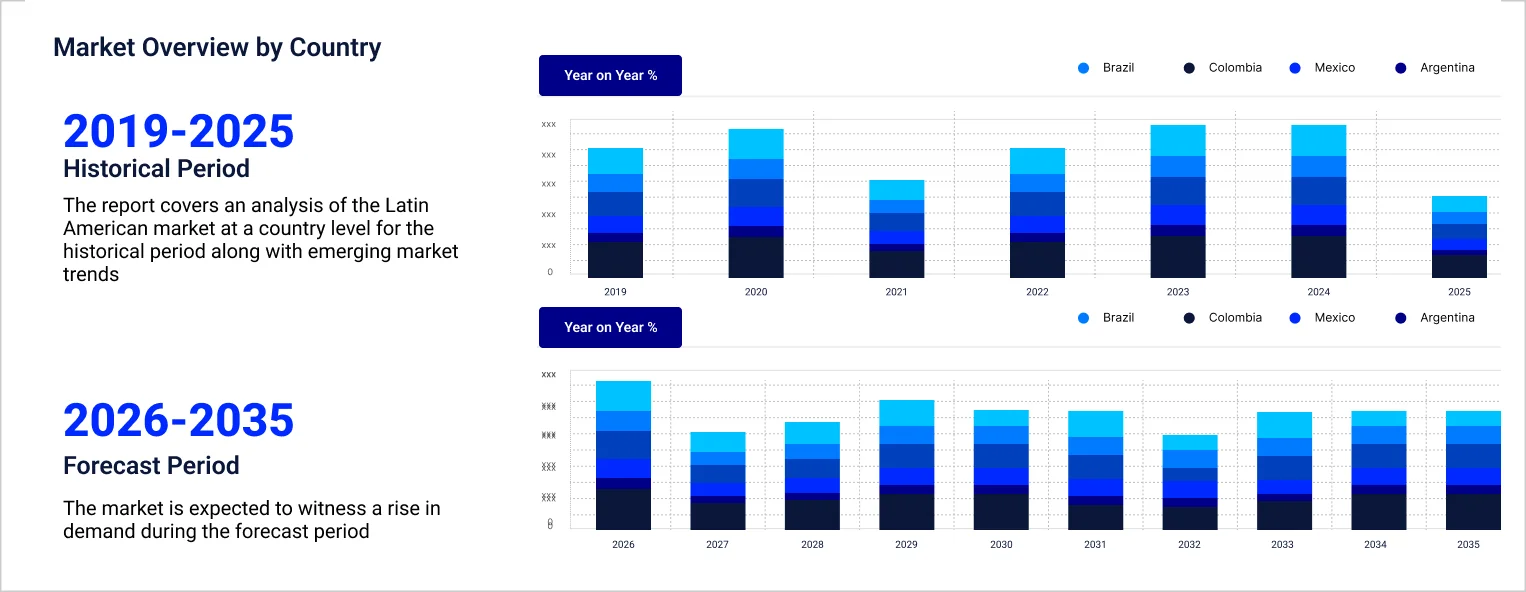
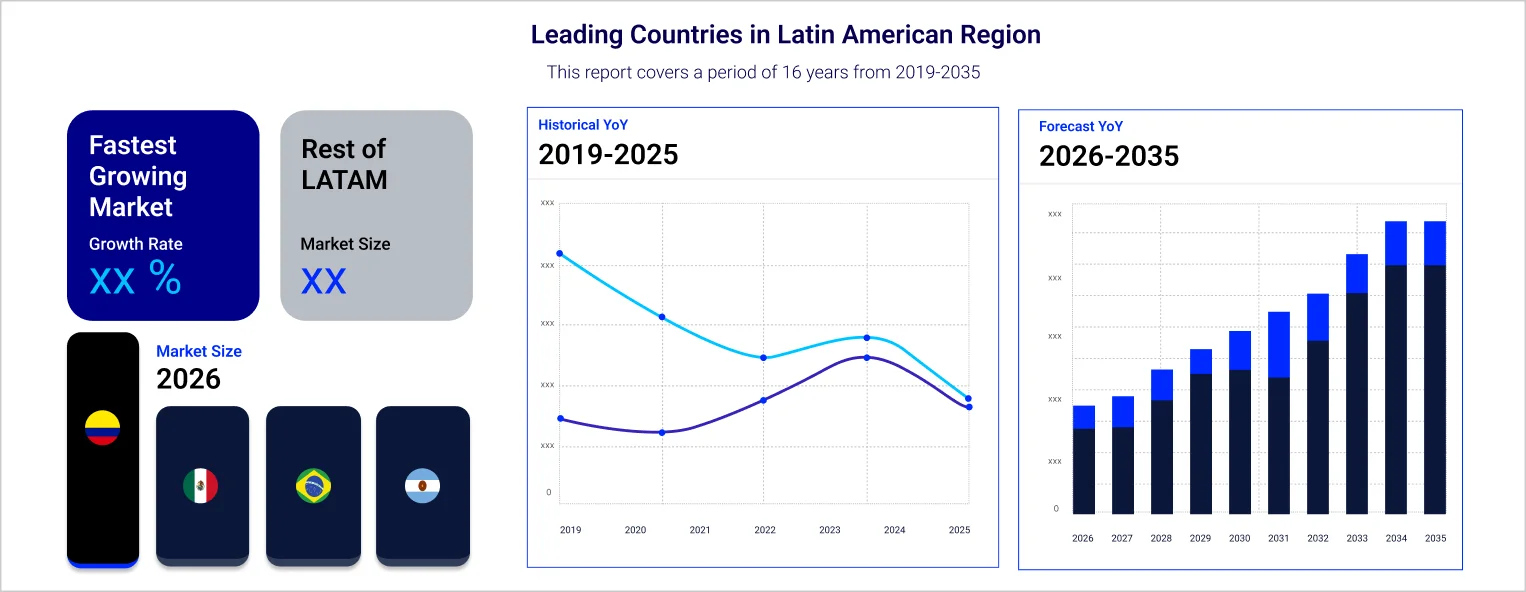
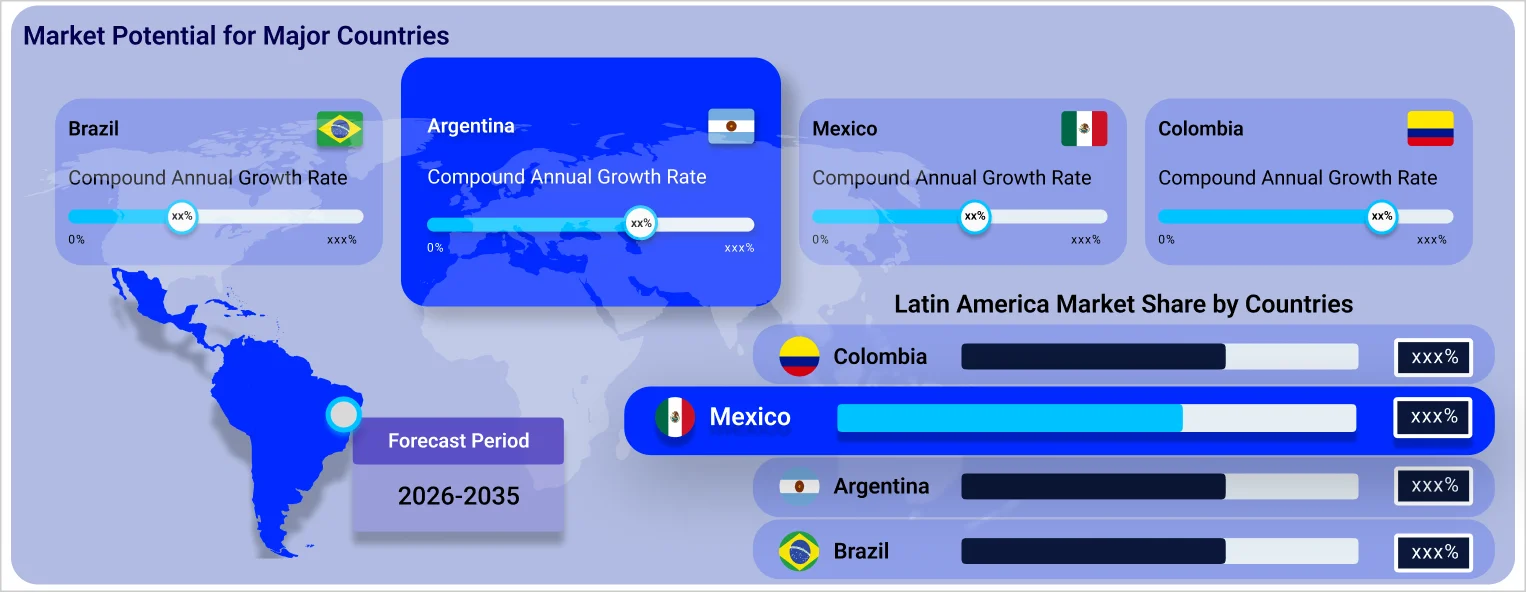
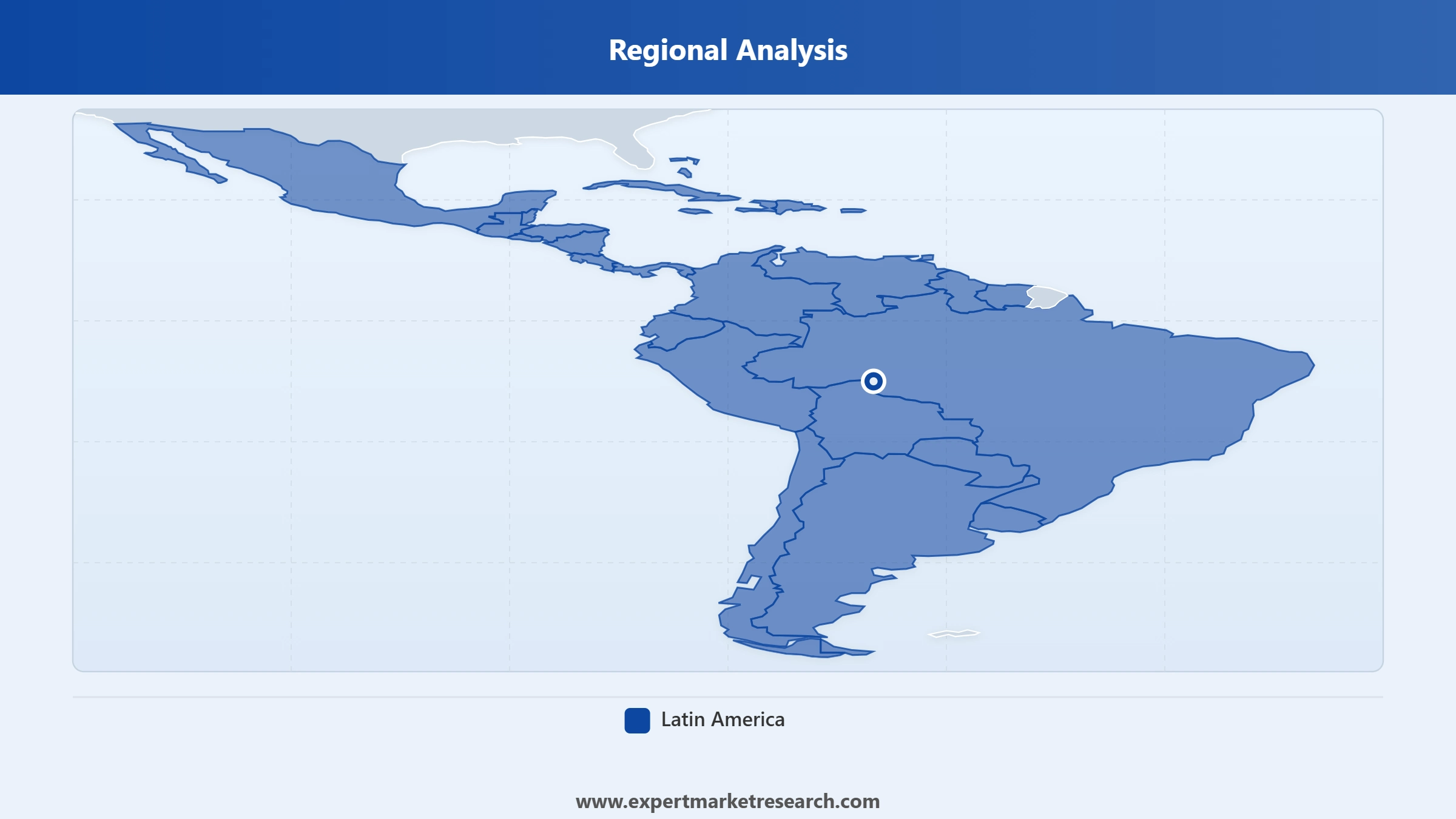
Market Breakup by Country
Key Insight: Mexico plays a crucial role in tequila and mezcal production as well as providing innovation and export base to international brands. Argentina helps in whisky production, production of spirits based on wine, and premium imported spirit categories, stabilizing the overall demand in the Latin America liquor market. Colombia is building up Scotch and premium spirits with experiential marketing. Chile has a developed retail structure as well as demand for international brands, while Peru has a market opportunity for whisky, rum, and cocktail driven products. Bolivia and Paraguay present smaller yet strategically important markets via distributor channels. Uruguay has a market that is more into premium consumption, while Guatemala is an important market for premium rum production.
Read more about this report - Request a Free Sample
Tequila is identified as a dominant segment in the Latin America liquor market due to major suppliers focusing on premium aged varieties, localized varieties, and easy cocktail variety. Tequila product lines include Don Julio, Casamigos, DeLeón from Diageo among others, with Mexico remaining a main production hub for export purposes. Moreover, the tequila segment is strengthened by portfolios of Bacardi including PATRÓN and CAZADORES. Development of tequila products is shifting focus from blanco tequila towards aged products, limited editions, and RTD margaritas. In August 2026, 1800 Tequila launched a limited-edition Extra Añejo decanter celebrating Mexican artist Pedro Friedeberg and cultural heritage.
Read more about this report - Request a Free Sample
Vodka observes rapid growth in the Latin America liquor market as suppliers leverage on flavored versions and cocktail variety to attract consumers. Regional portfolio from Diageo includes Smirnoff and Smirnoff Tamarind in Mexico. Furthermore, vodka suits bars, restaurants, and home cocktail consumption since it has a neutral base which can take many flavors. Suppliers of vodka products therefore leverage fruit flavors, spices, and other culturally identifiable varieties to distinguish their mainstream versions.
The supermarket and hypermarket distribution segments continue to drive the overall Latin America liquor market revenue growth owing to the wide geographic reach and the provision of space for both regular and premium liquor portfolio. Major retailers are able to allocate shelf space for tequila, whisky, rum, and vodka while providing opportunities for the promotion of seasons and premium displays. Pernod Ricard boasts of significant presence in the off-trade channel in Mexico, whereas Diageo has large networks of retailers in Brazil and Mexico. As for the suppliers, it offers opportunities to launch new pack sizes and flavors on this channel before rolling out to smaller independent outlets. In February 2025, Bacardi unveiled a refreshed MARTINI brand with contemporary packaging, marketing, signature drinks, and enhanced consumer experiences.
Read more about this report - Request a Free Sample
The e-commerce channel is the fastest growing one as distributors and retailers leverage technology to increase consumer product discovery and sell premium products. The online platform allows offering tasting notes, provenance data, and cocktail recipes, which is beneficial for premium spirits. Diageo's Latin American route-to-consumer model already includes online and off-premise sales in Mexico and Brazil. In April 2026, Bottle Nexus powered Three Hearts Rum’s e-commerce launch, enabling compliant direct-to-consumer sales, age verification, and nationwide fulfilment.
Brazil is considered to be dominant across the Latin America liquor market scope, as the suppliers already have manufacturing, distribution and branding infrastructure built up in Brazil. Diageo manufactures its cachaça and vodka brands locally in Brazil, having invested more than USD 500 million into the company’s Ypióca cachaça portfolio. Pernod Ricard, in its turn, recorded excellent results for FY2025 in Brazil, driven by brands such as Beefeater, Royal Salute, Chivas Regal and Absolut. In September 2026, Avolta secured two 11-year F&B contracts at Brasília Airport, introducing Vista Corona and Brazil’s first hybrid retail-food concept.
Read more about this report - Request a Free Sample
Colombia is seen as the fastest-growing country in the Latin America liquor market, owing to growing popularity of premium whiskies and other spirits ranges, driven by social occasions and brand experiences. Moreover, the country’s market structure allows implementing a mixed distribution approach, consisting of the sale of selected key accounts directly, and wider physical distribution through distributors.
Leading Latin America liquor market players are increasingly moving towards premiumization, localization, taste adjustment, RTD, and increased consumer occasion control. The potential for success is seen in the combination of international brand equity with the production of products tailor-made for Latin American tastes. Tequila, rum, and cachaça have a solid local legacy, while whisky, gin, and vodka provide opportunities for international players to innovate at a premium level.
Latin America liquor companies are also investing more into experiential marketing, hospitality, and e-commerce. Local production enables firms to streamline their supply chain and facilitate product adjustment. In addition, compliance, sustainability, and water management are becoming key operational issues.
Diageo plc was incorporated as part of the 1997 merger that formed Diageo, and its headquarters are located in London, United Kingdom. The company caters to Latin American market with Scotch, tequila, vodka, gin, rum and native spirits. Its region-specific strategy is focused on local production as well as international brands. Casamigos, Don Julio, Johnnie Walker and Smirnoff help in premium and mass occasion offerings.
Bacardi Limited was established in 1862 in Santiago de Cuba and its headquarters are located in Hamilton, Bermuda. It has the brands BACARDÍ, PATRÓN and CAZADORES in its portfolio. The company is blending tequila expertise with RTD innovation in Latin America, which includes the new launch of BACARDÍ & Coca-Cola in Mexico.
Suntory Global Spirits was founded in 1923, and the company has its international headquarters in New York City, United States. The company's product line comprises Jim Beam, Maker’s Mark, Roku, and other premium spirits. Jim Beam Pineapple is a good example of the company's flavor innovation initiative that makes its whiskey brands available for new occasions.
Pernod Ricard was founded in 1975 by combining the efforts of Pernod and Ricard and has its headquarters in Paris, France. The company's Latin American product line includes Absolut, Beefeater, Chivas Regal, Royal Salute, Kahlúa, and tequila. In Brazil, the company is integrating brand activations with product innovation and execution.
Other key players in the market include Constellation Brands, Inc., Proximo Spirits, Inc., Dictador, Industria Licorera de Caldas, Hotaling & Co., Pisco Capurro, and Cartavio Rum Company, among others.
*Please note that this is only a partial list; the complete list of key players is available in the full report. Additionally, the list of key players can be customized to better suit your needs.*
Unlock the latest insights with our Latin America liquor market trends 2026 report. Discover regional growth patterns, consumer preferences, and key industry players. Stay ahead of competition with trusted data and expert analysis. Download your free sample report today and drive informed decisions in the market.


Upto 15% Off
USD
$2499 $2249
$3999 $3599
$4999 $4249
$5999 $5099


*While we strive to always give you current and accurate information, the numbers depicted on the website are indicative and may differ from the actual numbers in the main report. At Expert Market Research, we aim to bring you the latest insights and trends in the market. Using our analyses and forecasts, stakeholders can understand the market dynamics, navigate challenges, and capitalize on opportunities to make data-driven strategic decisions.*
The market is projected to grow at a CAGR of 2.70% between 2026 and 2035.
The different distribution channels in the market include supermarkets and hypermarkets, speciality stores, convenience stores, and online, among others.
The different liquor types considered in the market report are tequila, whiskey, vodka, rum, brandy, and gin.
The major countries in the market include Brazil, Mexico, Argentina, Colombia, Chile, Peru, Bolivia, Uruguay, Paraguay, Guatemala, and Panama, among others.
The key players in the market include Diageo Plc (Casamigos), Bacardi Limited, Beam Suntory Inc., Pernod Ricard S.A., Constellation Brands, Inc., Proximo Spirits, Inc., Dictador, Industria Licorera de Caldas, Hotaling & Co., Pisco Capurro, and Cartavio Rum Company, among others.
In 2025, the market reached an approximate value of USD 193.75 Billion.
The market is estimated to witness a healthy growth in the forecast period of 2026-2035 to reach about USD 252.90 Billion by 2035.
Companies face complex alcohol regulations, currency volatility, taxation, counterfeit products, uneven distribution infrastructure, changing consumer affordability and the need to balance premium pricing with accessible product formats.
Companies are expanding localized portfolios, developing RTD formats, strengthening digital channels, improving premium experiences, increasing local production, and using cultural partnerships to build stronger market relevance.
Explore our key highlights of the report and gain a concise overview of key findings, trends, and actionable insights that will empower your strategic decisions.
| REPORT FEATURES | DETAILS |
| Base Year | 2025 |
| Historical Period | 2019-2025 |
| Forecast Period | 2026-2035 |
| Scope of the Report |
Historical and Forecast Trends, Industry Drivers and Constraints, Historical and Forecast Market Analysis by Segment:
|
| Breakup by Type |
|
| Breakup by Distribution Channel |
|
| Breakup by Region |
|
| Market Dynamics |
|
| Competitive Landscape |
|
| Companies Covered |
|
Datasheet
One User
USD 2,499
USD 2,249
tax inclusive*
Single User License
One User
USD 3,999
USD 3,599
tax inclusive*
Five User License
Five User
USD 4,999
USD 4,249
tax inclusive*
Corporate License
Unlimited Users
USD 5,999
USD 5,099
tax inclusive*
*Please note that the prices mentioned below are starting prices for each bundle type. Kindly contact our team for further details.*
Flash Bundle
Small Business Bundle
Growth Bundle
Enterprise Bundle
*Please note that the prices mentioned below are starting prices for each bundle type. Kindly contact our team for further details.*
Flash Bundle
Number of Reports: 3
20%
tax inclusive*
Small Business Bundle
Number of Reports: 5
25%
tax inclusive*
Growth Bundle
Number of Reports: 8
30%
tax inclusive*
Enterprise Bundle
Number of Reports: 10
35%
tax inclusive*
How To Order

Select License Type
Choose the right license for your needs and access rights.

Click on ‘Buy Now’
Add the report to your cart with one click and proceed to register.

Select Mode of Payment
Choose a payment option for a secure checkout. You will be redirected accordingly.
Strategic Solutions for Informed Decision-Making
Gain insights to stay ahead and seize opportunities.

Get insights & trends for a competitive edge.

Track prices with detailed trend reports.

Analyse trade data for supply chain insights.

Leverage cost reports for smart savings

Enhance supply chain with partnerships.

Connect For More Information
Our expert team of analysts will offer full support and resolve any queries regarding the report, before and after the purchase.
Our expert team of analysts will offer full support and resolve any queries regarding the report, before and after the purchase.
We employ meticulous research methods, blending advanced analytics and expert insights to deliver accurate, actionable industry intelligence, staying ahead of competitors.
Our skilled analysts offer unparalleled competitive advantage with detailed insights on current and emerging markets, ensuring your strategic edge.
We offer an in-depth yet simplified presentation of industry insights and analysis to meet your specific requirements effectively.




