

Consumer Insights
Uncover trends and behaviors shaping consumer choices today
Procurement Insights
Optimize your sourcing strategy with key market data
Industry Stats
Stay ahead with the latest trends and market analysis.
The low-cost attritable aircraft (LCAA) market was valued at USD 2.35 Billion in 2025. The market is expected to grow at a CAGR of 20.00% during the forecast period of 2026-2035 to reach a value of USD 14.55 Billion by 2035. Accelerating government investment in collaborative combat aircraft programs and a broader shift toward mass produced, expendable unmanned platforms designed to operate alongside crewed fighters are the most significant structural drivers of this expansion.
The low-cost attritable aircraft market analysis reflects a sector transitioning from experimental demonstrators toward serial production, anchored by the United States Air Force's Collaborative Combat Aircraft program. Congressional budget documents show the program received roughly USD 804 million in combined discretionary and mandatory funding for fiscal 2026, before the Air Force requested USD 996.5 million in procurement funding alongside USD 1.37 billion in research and development for fiscal 2027, a combined request of approximately USD 2.37 billion. In September 2025, GE Aerospace and Merlin announced a joint Autonomy Core initiative to bring AI-enabled, pilot-assist capabilities to existing and future military aircraft, underscoring how quickly autonomy investment is scaling across the broader market.
Company development within the low-cost attritable aircraft market is broadening beyond first-generation designs, with the manufacturer base now extending well beyond the two Increment 1 winners to more than 20 companies sitting in the Air Force's industry vendor pool for future competition rounds. In February 2026, L3Harris Technologies integrated its new Red Wolf launched effects munition onto the OA-1K Skyraider II, extending an existing low-cost airframe's strike reach as manufacturers increasingly pair attritable platforms with expendable weapons rather than developing both from a clean sheet.
Compound Annual Growth Rate
20%
Value in USD Billion
2026-2035
Read more about this report - REQUEST FREE SAMPLE COPY IN PDF
|
Low-Cost Attritable Aircraft (LCAA) Market Report Summary |
Description |
Value |
|
Base Year |
USD Billion |
2025 |
|
Historical Period |
USD Billion |
2019-2025 |
|
Forecast Period |
USD Billion |
2026-2035 |
|
Market Size 2025 |
USD Billion |
2.35 |
|
Market Size 2035 |
USD Billion |
14.55 |
|
CAGR 2019-2025 |
Percentage |
XX% |
|
CAGR 2026-2035 |
Percentage |
20.00% |
|
CAGR 2026-2035 - Market by Region |
Asia Pacific |
24.0% |
|
CAGR 2026-2035 - Market by Weight Class |
Large |
23.0% |
|
CAGR 2026-2035 - Market by Application |
Strike and Offensive Effects |
22.5% |
|
2025 Market Share by Region |
Europe |
23.5% |
The low-cost attritable aircraft market is being reshaped by the transition from prototype testing to serial production among United States Air Force Collaborative Combat Aircraft vendors, expanding international interest from allied air forces and navies, and rapid progress in autonomous mission software. Manufacturer capacity investment, live weapons testing, and new carrier-based and Marine Corps requirements are further reshaping the competitive landscape.
Anduril Industries conducted the first live air-to-air missile launch from a Collaborative Combat Aircraft in July 2026, firing an AIM-120 missile from its YFQ-44A Fury drone at a target over California's Mojave Desert, with a human operator retaining sole release authority throughout the engagement. This milestone signals attritable platforms across the low-cost attritable aircraft (LCAA) market are approaching genuine combat readiness rather than remaining demonstrators.
Italy's Leonardo and Turkey's Baykar completed the first live flight trials of their joint K-SWARM programme in June 2026, with a crewed Leonardo M-346 jet taking full in-flight control of Baykar's KIZILELMA unmanned fighter after it autonomously taxied, took off, and joined formation. Manufacturers across the low-cost attritable aircraft (LCAA) market can look to this cross-border teaming model as a template for pairing crewed platforms with attritable wingmen.
Boeing and the Royal Australian Air Force completed the MQ-28 Ghost Bat's first flights outside Australia in May 2026, conducting three test missions from Naval Base Ventura County, California. The deployment demonstrated the collaborative combat aircraft can operate from allied bases, offering programmes seeking allied buy-in a playbook for proving deployability before formal export discussions begin.
Lockheed Martin's Skunk Works division unveiled Vectis in September 2025, a Group 5 collaborative combat aircraft emphasizing stealth, survivability, and open mission systems for precision strike, reconnaissance, and electronic warfare missions alongside crewed fighters. Primes weighing a later market entry can treat Vectis as a reminder that a strong stealth pedigree remains a viable route to differentiation.
Naval aviation services across the low-cost attritable aircraft (LCAA) market are increasingly selecting proven attritable strike aircraft rather than waiting for clean-sheet designs, treating rapid, low-cost fielding as the preferred acquisition path for closing capability gaps without lengthy development cycles. The U.S. Marine Corps officially selected the Kratos XQ-58A Valkyrie for its Collaborative Combat Aircraft requirement in January 2026, positioning the runway-independent aircraft as the service's first production attritable strike platform and validating low-cost attritable aircraft market readiness for naval and expeditionary deployment beyond Air Force programs.
Allied navies beyond the United States are pursuing their own carrier-capable attritable aircraft to complement crewed fighter fleets, with interest spreading from land-based collaborative combat aircraft toward maritime variants able to launch and recover without catapults or arresting gear. The U.K. Ministry of Defence issued a Request for Information for Project VANQUISH in October 2025, seeking an attritable platform for Queen Elizabeth-class carriers, with a GBP 12 million demonstrator targeting sea trials by end of 2026.
Autonomy software is emerging as a distinct value driver across the low-cost attritable aircraft (LCAA) market within the low-cost attritable aircraft market, separate from the airframes themselves, as programs increasingly separate the software stack from the physical aircraft so autonomous behaviours can be upgraded independently of production cycles. General Atomics Aeronautical Systems achieved a semi-autonomous flight milestone in February 2026 when its YFQ-42A completed more than four hours of mission autonomy testing using Collins Aerospace's Sidekick software, with a ground operator issuing commands.
Confidence in sustained government demand is prompting manufacturers across the low-cost attritable aircraft (LCAA) market to invest ahead of firm orders, expanding tooling and supply chains before contracts are finalised, a shift from prototype-rate to production-rate manufacturing that defines the low-cost attritable aircraft market's current phase. In September 2025, Performance Drone Works opened Drone Factory 01, a 90,000 square foot manufacturing facility near the U.S. Army's Redstone Arsenal in Huntsville, Alabama, purpose-built to support full-rate production of its attritable munition and multi-mission unmanned aircraft systems today.
Competition within the low-cost attritable aircraft market is widening beyond the first generation of selected vendors as additional contractor’s self-fund new designs, with prime contractors not chosen for initial production contracts continuing development in pursuit of later rounds. Northrop Grumman, together with subsidiary Scaled Composites, had its Project Talon prototype designated YFQ-48A Talon Blue by the U.S. Air Force in December 2025 as a strong contender for a future increment, alongside nine other companies awarded concept refinement contracts.
The Expert Market Research's report titled "Low-Cost Attritable Aircraft (LCAA) Market Report and Forecast 2026-2035" offers a detailed analysis of the market based on the following segments:
Market Breakup by Weight Class
Key Insight: Medium platforms in the 1,500-to-4,500-kilogram maximum takeoff weight range dominate the low-cost attritable aircraft market, offering the balance of payload, range, and production scalability needed for most fielded collaborative combat aircraft roles. Small platforms under 1,500 kilograms serve shorter-range reconnaissance and decoy missions at lower unit cost, prioritising affordability and mass over endurance. Large platforms above 4,500 kilograms are the fastest-growing weight class, supporting extended-range strike and aerial refuelling missions as manufacturers pursue heavier, longer-endurance variants. In July 2026, Portuguese-UK manufacturer Tekever unveiled its AR6 heavy-lift UAV prototype at the Farnborough International Airshow, the company's first entry into the heavy-lift category, using a hydraulic propulsion system for its four-rotor vertical takeoff and landing design.
Market Breakup by Application
Key Insight: Intelligence, surveillance and reconnaissance (ISR) currently account for the largest share of the low-cost attritable aircraft market by application, reflecting the sensor-focused lineage of many collaborative combat aircraft demonstrators before weapons integration matures. In July 2026, Ukrainian manufacturer Skyeton announced its first flagship United States manufacturing facility in Fayetteville, North Carolina, investing more than 3.1 million dollars to produce its long-endurance Raybird ISR platform closer to American defense customers. Strike and offensive effects are the fastest-growing application as platforms progress from captive-carry weapons trials to live employment. Electronic warfare payloads extend the reach of jamming and signals-collection missions into contested airspace without risking crewed aircraft, while decoy and saturation operations exploit the low unit cost of attritable airframes to overwhelm adversary air defences. Others include emerging roles such as aerial refuelling and communications relay.
Market Breakup by Autonomy Level
Key Insight: Remote piloted systems currently hold the largest share of the low-cost attritable aircraft market by autonomy level, reflecting regulatory requirements that a human operator retain sole authority over weapons release and other safety-critical decisions. Mission autonomy, in which the aircraft executes complex tasking from a human-defined objective with reduced moment-to-moment control input, is the fastest-growing category as open architecture software matures. In July 2025, Airbus announced a partnership to integrate Europe's MARS autonomous control system into a German Air Force attritable aircraft derivative. High autonomy platforms remain earlier in development but are shaping longer-term programme roadmaps across the market.
Market Breakup by Range
Key Insight: Medium range platforms of 2,500 to 3,500 kilometres currently account for the largest share of the low-cost attritable aircraft market by range, matching the operating radius of most fielded collaborative combat aircraft demonstrators. Long range platforms exceeding 3,500 kilometres are the fastest-growing range category as manufacturers pursue designs able to escort strike packages or loiter over contested theatres without refuelling. In June 2026, the U.S. Army awarded AeroVironment a 117.3-million-dollar contract for 82 P550 long-range reconnaissance drones, providing battalion commanders with organic surveillance and target acquisition capability previously reserved for brigade level formations. Short range platforms of 1,500 to 2,500 kilometres remain relevant for tactical, forward-deployed missions where rapid, low-cost replacement outweighs extended reach.
Market Breakup by End User
Key Insight: Airforce is the dominant end user of the low-cost attritable aircraft market, reflecting the scale of the United States Air Force's Collaborative Combat Aircraft programme and comparable allied fighter-wingman efforts. Army is the fastest-growing end user as ground forces field small, launched attritable systems for reconnaissance and strike from division and Multi-Domain Task Force formations. Navy demand is also rising as carrier-based and expeditionary requirements push allied maritime services toward their own attritable aircraft concepts.
Market Breakup by Region
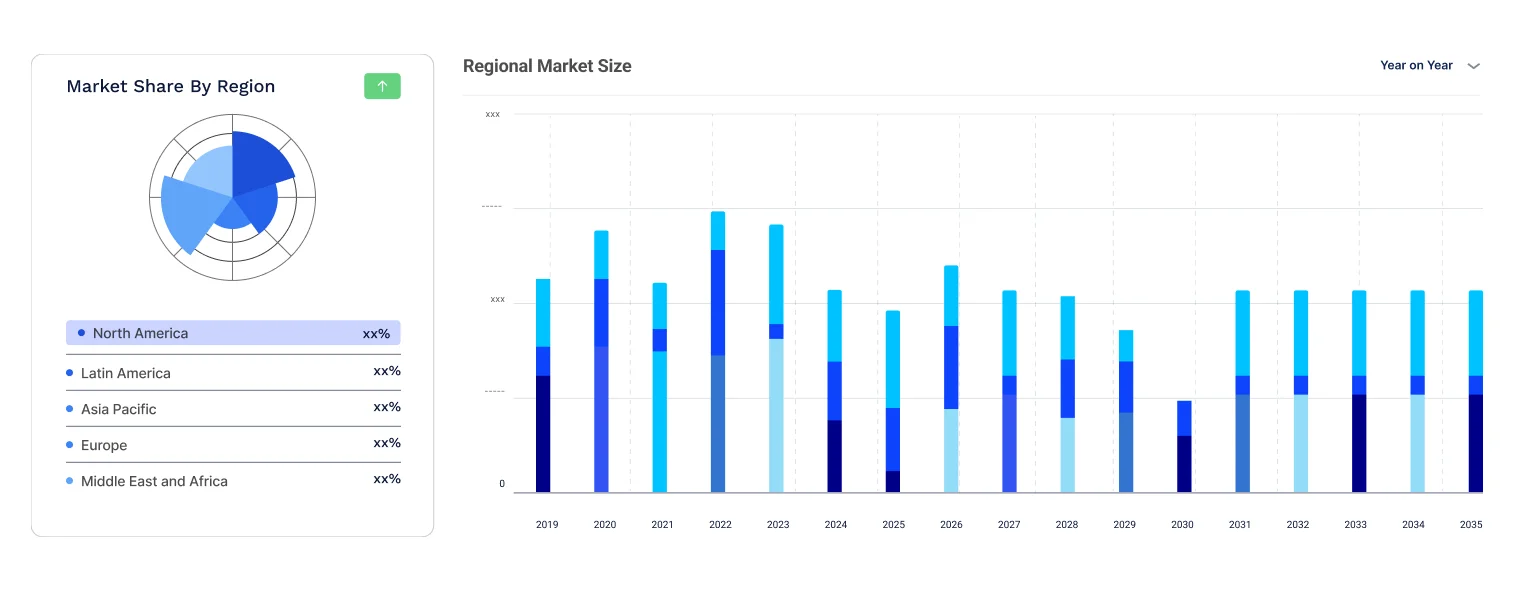
Key Insight: North America dominates the low-cost attritable aircraft market, anchored by the scale of the United States Air Force and Marine Corps Collaborative Combat Aircraft efforts and the concentration of leading manufacturers. Asia Pacific is the fastest-growing region as regional military modernisation programmes accelerate investment in comparable collaborative combat aircraft concepts. Europe is expanding around national and multinational attritable aircraft initiatives, while Latin America and the Middle East and Africa remain smaller markets tied to broader defence modernisation budgets.
By weight class, medium (1,500-4,500 kg MTOW) dominates the market due to its balance of payload, range, and production scalability
Medium platforms dominate the low-cost attritable aircraft market by weight class, offering manufacturers a workable balance of payload capacity, mission range, and manufacturing scalability without the cost penalties associated with larger airframes and heavier propulsion systems. In July 2026, the U.S. Air Force awarded Tandem Defense a contract worth up to 90 million dollars to expand its fleet of smaller Group 1 aerial denial drones, illustrating how the smallest weight class continues to serve a distinct, lower-cost niche alongside the medium platforms that currently dominate most fielded programmes worldwide.
Large platforms above 4,500 kg MTOW are the fastest-growing weight class as manufacturers pursue heavier, longer-range designs for strike and aerial refuelling missions across increasingly contested operational theatres and extended mission profiles. In September 2025, Pratt and Whitney completed critical testing on its small turbofan engine family for collaborative combat aircraft applications, confirming an up to 20 percent increase in qualified thrust capability that supports heavier payload and longer-range variants entering this weight class today across multiple allied programmes.
By application, intelligence, surveillance and reconnaissance (ISR) leads the market due to the sensor-focused lineage of most fielded platforms
ISR holds the largest application share of the low-cost attritable aircraft market, reflecting the sensor and reconnaissance origins of many collaborative combat aircraft demonstrators before weapons integration matures across most fielded programmes and demonstrator platforms currently in testing. In September 2026, Elbit Systems secured contracts worth approximately 270 million dollars to supply advanced ISR and targeting payloads from its SPECTRO family of multi-spectral electro-optic systems to an international customer over a six-year performance period spanning multiple delivery phases.
Strike and offensive effects are the fastest-growing application as attritable platforms progress from captive-carry weapons trials to live employment across multiple allied and domestic test programmes now entering later development stages. In February 2026, Singapore's ST Engineering unveiled its EagleStrike tactical loitering munition at the Singapore Airshow, the company's first entry into this weapon category, reaching Technology Readiness Level 7 ahead of planned production in early 2027 for regional and export customers.
By autonomy level, remote piloted systems dominate the market due to human-in-the-loop weapons release requirements
Remote piloted systems account for the largest share of the low-cost attritable aircraft market by autonomy level, driven by policy requirements that a human operator retain authority over weapons release across current programmes and test campaigns worldwide. Recent training exercises have demonstrated single pilots simultaneously controlling multiple attritable aircraft from crewed fighter cockpits, showcasing real-time human-machine integration under direct pilot control ahead of broader autonomy adoption across the fleet in coming years.
Mission autonomy is the fastest-growing category as open systems architectures mature and separate software from the airframe itself, allowing independent upgrade cycles across different manufacturer platforms and generations. The U.S. Air Force awarded Shield AI a production contract in June 2026 to deploy its Hivemind mission autonomy software across the Collaborative Combat Aircraft programme under its Autonomy Government Reference Architecture, enabling multiple aircraft to operate collaboratively under human supervision and letting autonomy upgrades reach the market independently.
By range, medium range (2,500-3,500 km) accounts for the dominant share of the market, matching the operating radius of most fielded platforms
Medium range platforms hold the largest range-based share of the low-cost attritable aircraft market, aligning with the operating radius most current demonstrators are designed around for typical fighter escort mission profiles today. Formal fighter-series designations assigned to the leading collaborative combat aircraft programmes have reinforced medium range as the reference profile built to escort crewed fighters on typical mission profiles without requiring dedicated aerial refuelling support across most current operational scenarios.
Long range platforms exceeding 3,500 km are the fastest-growing range category as manufacturers extend endurance for contested-theatre operations, pursuing designs able to escort strike packages or loiter over distant objectives without refuelling support for extended periods. In April 2026, India's indigenously developed Sheshnaag-150 demonstrated a strike range of over 700 kilometres during trials at the Pokhran Test Range, validating coordinated swarm attacks and reliable long-distance flight performance without carrying a live warhead.
By end user, airforce accounts for the dominant share of the market due to the scale of national collaborative combat aircraft programmes
Airforce is the dominant end user of the low-cost attritable aircraft market, reflecting the scale of the United States Air Force's Collaborative Combat Aircraft programme and comparable allied fighter-wingman efforts underway across partner nations. Air Force Chief of Staff General David Allvin announced in May 2025 that ground testing was officially underway for the programme's Increment 1 aircraft, a milestone he described as bridging the gap between design and flight ahead of that year's flight trials.
Army is the fastest-growing end user as ground forces field small, launched attritable systems for reconnaissance and strike missions across division and Multi-Domain Task Force formations nationwide. The U.S. Army selected AEVEX Aerospace's Atlas 600 for its Launched Effects-Short Range requirement in October 2025, targeting fielding to every active-duty division and Multi-Domain Task Force by the end of 2026, extending market demand well beyond fixed-wing fighter-escort roles into new mission sets.

Read more about this report - REQUEST FREE SAMPLE COPY IN PDF
North America dominates the market due to the scale of United States Air Force and Marine Corps collaborative combat aircraft investment
North America dominates the low-cost attritable aircraft market, anchored by the United States Air Force's Collaborative Combat Aircraft programme and the concentration of leading manufacturers and specialist subcontractors across the region. Budget documents reported in July 2025 showed the U.S. Marine Corps separately requesting USD 58 million in fiscal 2026 to advance its own collaborative combat aircraft effort, reinforcing the multi-service demand that keeps the region the market's largest by value and installed manufacturing base.
Asia Pacific is the fastest-growing region as allied air forces expand collaborative combat aircraft cooperation, supported by multinational exercises that increasingly incorporate attritable platforms alongside crewed fighters from multiple participating nations across the region. This growing integration into allied Indo-Pacific operations supports above-average regional growth relative to the more mature North American and European markets as manufacturing and export interest continues to broaden across the region through the forecast period ahead.
|
CAGR 2026-2035 - Market by |
Region |
|
North America |
19.0% |
|
Europe |
20.5% |
|
Asia Pacific |
24.0% |
|
Latin America |
15.5% |
|
Middle East and Africa |
17.0% |
The low-cost attritable aircraft companies features a moderately consolidated group of low-cost attritable aircraft companies led by two United States Air Force production winners, alongside established prime contractors and specialist manufacturers pursuing later competition rounds and allied export opportunities. Competition is increasingly defined by manufacturing scale, autonomy software maturity, and demonstrated live weapons or carrier-based test results rather than airframe design alone.
Leading low-cost attritable aircraft market players are focusing on production capacity expansion, open architecture autonomy software, and international partnerships to strengthen competitive position. Growing emphasis on carrier-based operations, Marine Corps and Army fielding, and live weapons validation is enabling manufacturers and their government customers to widen the market's addressable mission set while supporting long-term market share growth.
Established in 1993 and headquartered in Poway, California, United States, General Atomics Aeronautical Systems is the world's leading builder of unmanned aircraft, having delivered more than 1,200 units and logged nearly 9 million flight hours across its Predator, Reaper, and Gray Eagle lines. Within the low-cost attritable aircraft market, the company develops the YFQ-42A Dark Merlin under a modular genus and species design philosophy that lets a common core airframe be rapidly adapted to different collaborative combat aircraft missions.
Founded in 2017 by Palmer Luckey, Trae Stephens, and colleagues, and headquartered in Costa Mesa, California, United States, Anduril Industries is a defence technology company built around its Lattice autonomy software and a hyperscale manufacturing approach to weapons systems. The company's YFQ-44A Fury collaborative combat aircraft is one of two designs the U.S. Air Force has ordered into production, and Anduril reported roughly USD 2 billion in 2025 revenue with a valuation near USD 61 billion by May 2026.
Founded in 1916 and headquartered in Arlington, Virginia, United States, Boeing develops the MQ-28 Ghost Bat, the first military aircraft designed and manufactured in Australia in more than fifty years, through its Boeing Defence Australia unit. The programme continues expanding autonomous teaming with crewed fighters and airborne early warning aircraft, positioning Boeing among the low-cost attritable aircraft market's most internationally established manufacturers.
Founded in 1994 as Wireless Facilities Incorporated and headquartered in San Diego, California, United States, Kratos Defense and Security Solutions manufactures the XQ-58A Valkyrie, a runway-independent, jet-powered attritable strike aircraft produced at its Oklahoma City facility. Kratos prices Valkyrie variants in the USD 2 million to USD 6 million range depending on production volume, positioning the company as one of the low-cost attritable aircraft market's most mature suppliers of production-ready, expendable strike platforms.
Other key players in the Low-Cost Attritable Aircraft (LCAA) Market report include Northrop Grumman, Lockheed Martin Corporation, Scaled Composites LLC, Skyeton, Yates Electrospace Corporation, among others.
*Please note that this is only a partial list; the complete list of key players is available in the full report. Additionally, the list of key players can be customized to better suit your needs.*
Explore the latest trends shaping the Low-Cost Attritable Aircraft (LCAA) Market 2026-2035 with our in-depth report. Gain strategic insights, future forecasts, and key market developments that can help you stay competitive. Download a free sample report or contact our team for customised consultation on Low-Cost Attritable Aircraft (LCAA) Market trends 2026.


Upto 15% Off
USD
$2499 $2249
$3999 $3599
$4999 $4249
$5999 $5099


*While we strive to always give you current and accurate information, the numbers depicted on the website are indicative and may differ from the actual numbers in the main report. At Expert Market Research, we aim to bring you the latest insights and trends in the market. Using our analyses and forecasts, stakeholders can understand the market dynamics, navigate challenges, and capitalize on opportunities to make data-driven strategic decisions.*
In 2025, the Low-Cost Attritable Aircraft (LCAA) Market reached an approximate value of USD 2.35 Billion.
The market is projected to grow at a CAGR of 20.00% between 2026 and 2035.
The key players in the market include General Atomics Aeronautical Systems, Anduril Industries, The Boeing Company, Kratos Defense and Security Solutions, Northrop Grumman, Lockheed Martin Corporation, Scaled Composites LLC, Skyeton, Yates Electrospace Corporation, among others.
Leading companies are pursuing production capacity expansion, open architecture autonomy software, live weapons validation, and allied export partnerships to capture demand.
Key challenges include flight test setbacks such as General Atomics' April 2026 YFQ-42A mishap, export control restrictions, and supply chain constraints on specialised components.
Explore our key highlights of the report and gain a concise overview of key findings, trends, and actionable insights that will empower your strategic decisions.
|
Report Features |
Details |
|
Base Year |
2025 |
|
Historical Period |
2019-2025 |
|
Forecast Period |
2026-2035 |
|
Scope of the Report |
Historical and Forecast Trends, Industry Drivers and Constraints, Historical and Forecast Market Analysis by Segment:
|
|
Breakup by Weight Class |
|
|
Breakup by Application |
|
|
Breakup by Autonomy Level |
|
|
Breakup by Range |
|
|
Breakup by End User |
|
|
Breakup by Region |
|
|
Market Dynamics |
|
|
Competitive Landscape |
|
|
Companies Covered |
|
Datasheet
One User
USD 2,499
USD 2,249
tax inclusive*
Single User License
One User
USD 3,999
USD 3,599
tax inclusive*
Five User License
Five User
USD 4,999
USD 4,249
tax inclusive*
Corporate License
Unlimited Users
USD 5,999
USD 5,099
tax inclusive*
*Please note that the prices mentioned below are starting prices for each bundle type. Kindly contact our team for further details.*
Flash Bundle
Small Business Bundle
Growth Bundle
Enterprise Bundle
*Please note that the prices mentioned below are starting prices for each bundle type. Kindly contact our team for further details.*
Flash Bundle
Number of Reports: 3
20%
tax inclusive*
Small Business Bundle
Number of Reports: 5
25%
tax inclusive*
Growth Bundle
Number of Reports: 8
30%
tax inclusive*
Enterprise Bundle
Number of Reports: 10
35%
tax inclusive*
How To Order

Select License Type
Choose the right license for your needs and access rights.

Click on ‘Buy Now’
Add the report to your cart with one click and proceed to register.

Select Mode of Payment
Choose a payment option for a secure checkout. You will be redirected accordingly.
Strategic Solutions for Informed Decision-Making
Gain insights to stay ahead and seize opportunities.

Get insights & trends for a competitive edge.

Track prices with detailed trend reports.

Analyse trade data for supply chain insights.

Leverage cost reports for smart savings

Enhance supply chain with partnerships.

Connect For More Information
Our expert team of analysts will offer full support and resolve any queries regarding the report, before and after the purchase.
Our expert team of analysts will offer full support and resolve any queries regarding the report, before and after the purchase.
We employ meticulous research methods, blending advanced analytics and expert insights to deliver accurate, actionable industry intelligence, staying ahead of competitors.
Our skilled analysts offer unparalleled competitive advantage with detailed insights on current and emerging markets, ensuring your strategic edge.
We offer an in-depth yet simplified presentation of industry insights and analysis to meet your specific requirements effectively.




