

Consumer Insights
Uncover trends and behaviors shaping consumer choices today
Procurement Insights
Optimize your sourcing strategy with key market data
Industry Stats
Stay ahead with the latest trends and market analysis.
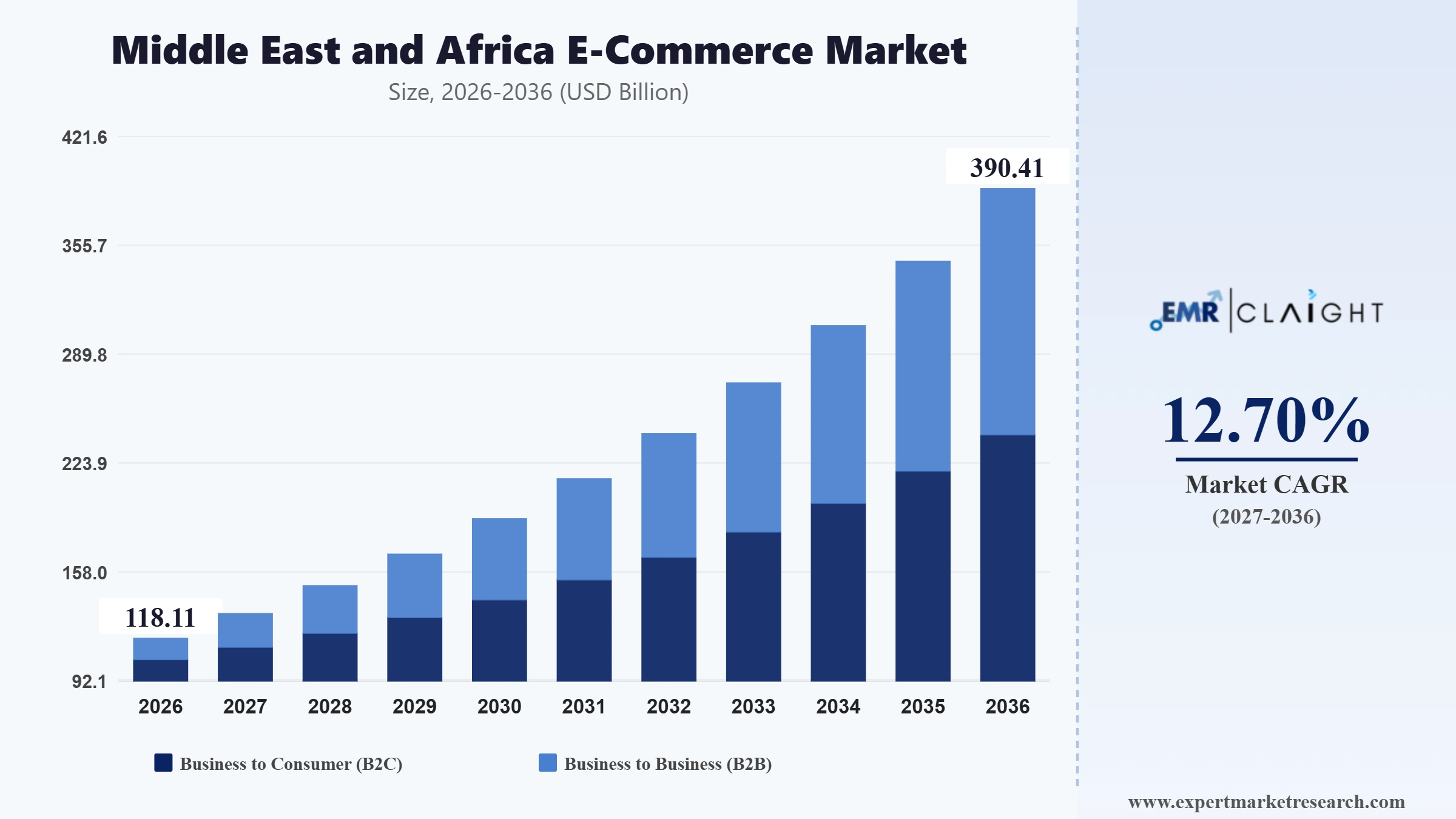
The Middle East and Africa e-commerce market attained a value of USD 104.80 Billion in 2025 and is projected to expand at a CAGR of 12.70% through 2035. The market is further expected to achieve USD 346.42 Billion by 2035. As smartphones proliferate and localized digital storefronts become more common, businesses are connecting with scattered consumers without relying on physical retail networks.
Growth in the Middle East and Africa e-commerce market is mainly led by integrated commerce infrastructure with payment security, mobile discovery, localized logistics, and cross-border trade. In September 2026, Thunes expanded cross-border payouts into six Middle Eastern markets, improving access to bank accounts, mobile wallets, and cash pickup services. Such maturity is pushing platforms, retailers, payment providers, and logistics providers to move to higher conversion digital journeys rather than expanding stores alone.
The payment infrastructure of Saudi Arabia is also bolstering the Middle East and Africa e-commerce market. Saudi Central Bank announced in July 2025 an e-commerce payments interface which integrates mada with international payment systems, centralized registration, innovative financing solutions, and card tokenization. This initiative would be of interest to merchants who wish to accelerate checkouts and improve transaction security.
In addition to this, the development of the Middle East and Africa e-commerce market is influenced by the growing demands of merchants concerning order fulfilment and customer experience. Retail companies are allocating resources into regional distribution networks and inventory management solutions in order to provide faster deliveries to consumers in different regions. In Africa, Jumia's online marketplace, logistic services, and payment gateways demonstrate the way in which commerce features are increasingly integrated into platforms rather than being outsourced to third parties. In the Gulf, logistics parks such as EZDubai offer fulfillment and warehousing solutions to merchants.
Read more about this report - REQUEST FREE SAMPLE COPY IN PDF
Jio Hotstar ventured into the Middle East and North Africa regions by way of a strategic collaboration with Starzplay. Players in the Middle East and Africa e-commerce market can collaborate with regional streaming sites to offer bundled subscription plans as well as entertain customers via marketing campaigns.
The Gole Cloud website was officially launched, making it easier for businesses in the African region to enhance their online activities. Online retail firms can collaborate with cloud-based companies to enhance their digital infrastructure including payment processes.
Shorages introduced Q-Com with noon Send for Business, which allows e-commerce brands to provide 30-minute delivery services from their own sales platforms. Retailers may collaborate with logistics companies to provide fast delivery services, enhance customer loyalty, and compete without developing costly logistics infrastructures, accelerating the Middle East and Africa e-commerce market value.
Fincart raised USD 2.8 million in seed investment to expand its shipping technology services, AI-driven retention capabilities, and merchant services into regional markets. Logistics companies may work with multiple carriers, automate cash on delivery services, and provide financing options for under-served online merchants in Africa and the Middle East.
AI is progressing from the customer-service chatbots to product discovery, pricing comparisons, and shopping experience customization across the region. According to the Middle East and Africa e-commerce market analysis, in December 2025, 80% of the UAE consumers used AI for improved shopping experience, with 41% having used it for researching products and 40% having used it for comparing prices. These trends are driving retailers and marketplaces to better their product data, recommendation engines, and conversational commerce capabilities. For example, in September 2026, Mastercard introduced Agent Connect, enabling merchants to integrate AI shopping agents, improve product discovery, and support secure, authorized transactions.
Mobile commerce is fast becoming a fundamental element of the design, rather than an additional sales channel especially in the digitally mature markets of the Gulf region. Mobile storefront effectiveness, one-click payments, and enhanced identification control are, therefore, priorities for Middle East and Africa e-commerce market players. In April 2026, Kanaa launched a mobile-first Saudi e-commerce platform featuring curated products, same-day delivery, extended warranties, and streamlined shopping experiences.
Opportunities are growing in relation to cross-border, interoperable infrastructure that resolves fragmentation in payment, logistics, and trade systems. In August 2026, the AfCFTA Secretariat and Quest Ghana launched a Digital Trade Corridor that includes a digital marketplace, interoperable payments, logistics, and trade, tracking, and settlement services. This Middle East and Africa e-commerce market trend is in line with the AfCFTA Digital Trade Protocol that aims to establish common standards for secure and inclusive digital trade. For B2B platforms, there is an opportunity to develop solutions for supplier discovery, digital documentation, settlement, and logistics services in several markets.
The competition for trust among Middle East and Africa e-commerce market players is becoming intense, as governments set higher standards in terms of transparency in their policies and data protection, cybersecurity, and merchant verification. In October 2025, Saudi Arabia’s Ministry of Commerce evaluated 100 e-commerce stores against ten compliance standards, strengthening consumer protection and service quality. The stores scored a perfect score in relation to having safe and quality websites; they had 99 percent compliance with customer communication and return policy standards. On the other hand, in January 2026, Jeel partnered with Ripple to test blockchain-based cross-border payments, digital asset custody, and tokenization under Saudi regulatory oversight.
The government-sponsored platforms are becoming more active in using e-commerce to link local producers with more buyers through greater business-to-business capability within regional digital commerce. In July 2025, South Africa launched Proudly SA’s e-commerce platforms, connecting local suppliers with consumers and businesses through retail and wholesale purchasing channels. Key opportunities in the Middle East and Africa e-commerce market therefore lie in export capabilities that will help local manufacturers and MSMEs take advantage of AfCFTA.
The Expert Market Research's report titled “Middle East and Africa E-Commerce Market Report and Forecast 2026-2035” offers a detailed analysis of the market based on the following segments:
Market Breakup by Type
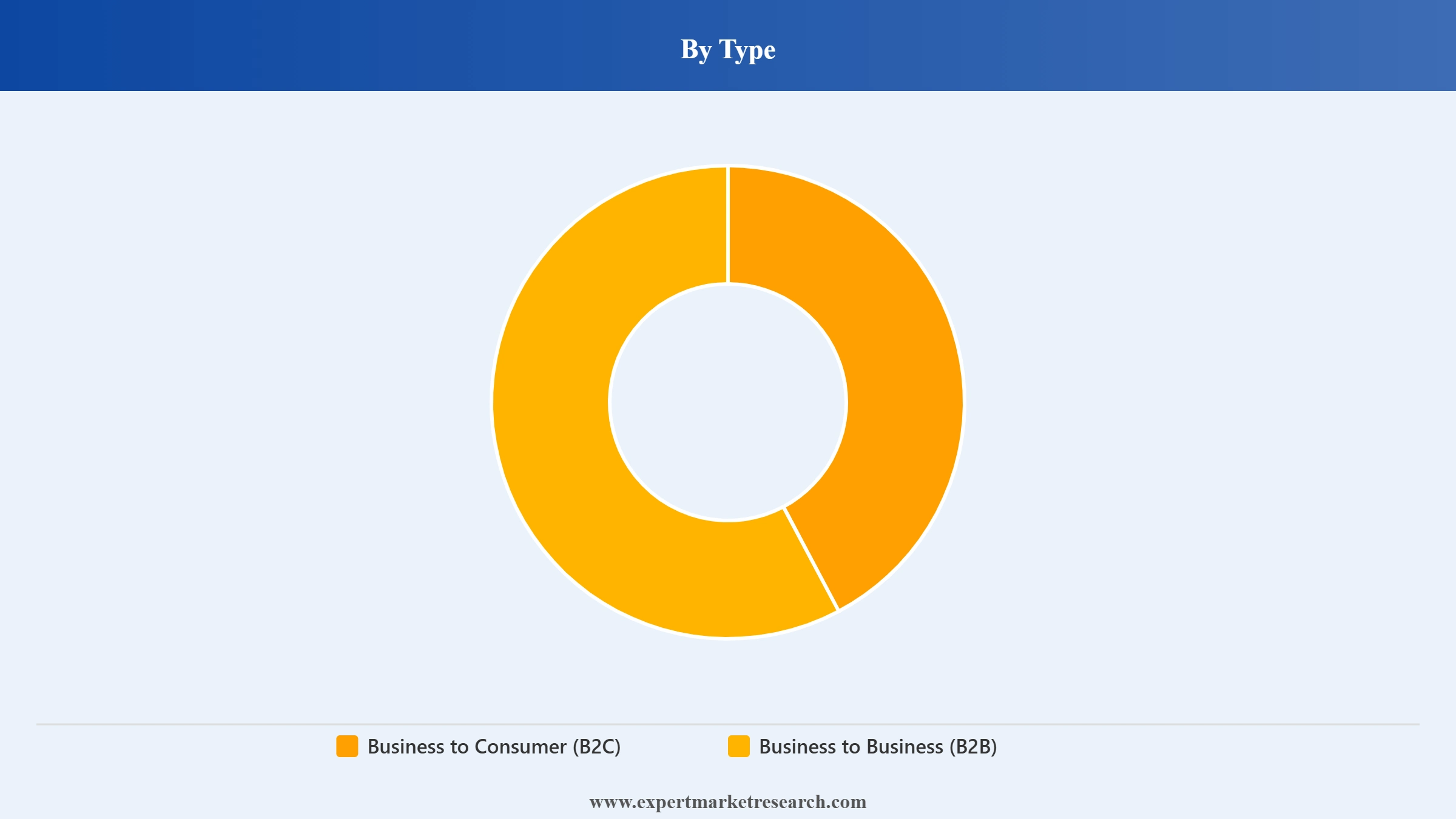
Key Insight: Business-to-consumer e-commerce continues to dominate due to the direct consumer approach, mobile shopping, recommendations, and extensive marketplaces. B2B commerce is becoming prominent through the means of digital procurement, finding suppliers, bulk purchasing, and international sourcing. B2C providers enhance their loyalty and fulfillment solutions for more recurring purchases, whereas B2B service providers develop integrated processes covering product catalogs, payments, stock management, and logistics. This trend encourages technology providers to create adaptable commerce architecture that would cater to the needs of individuals and organizations alike in the complex Middle East and Africa e-commerce market.
Market Breakup by Industry
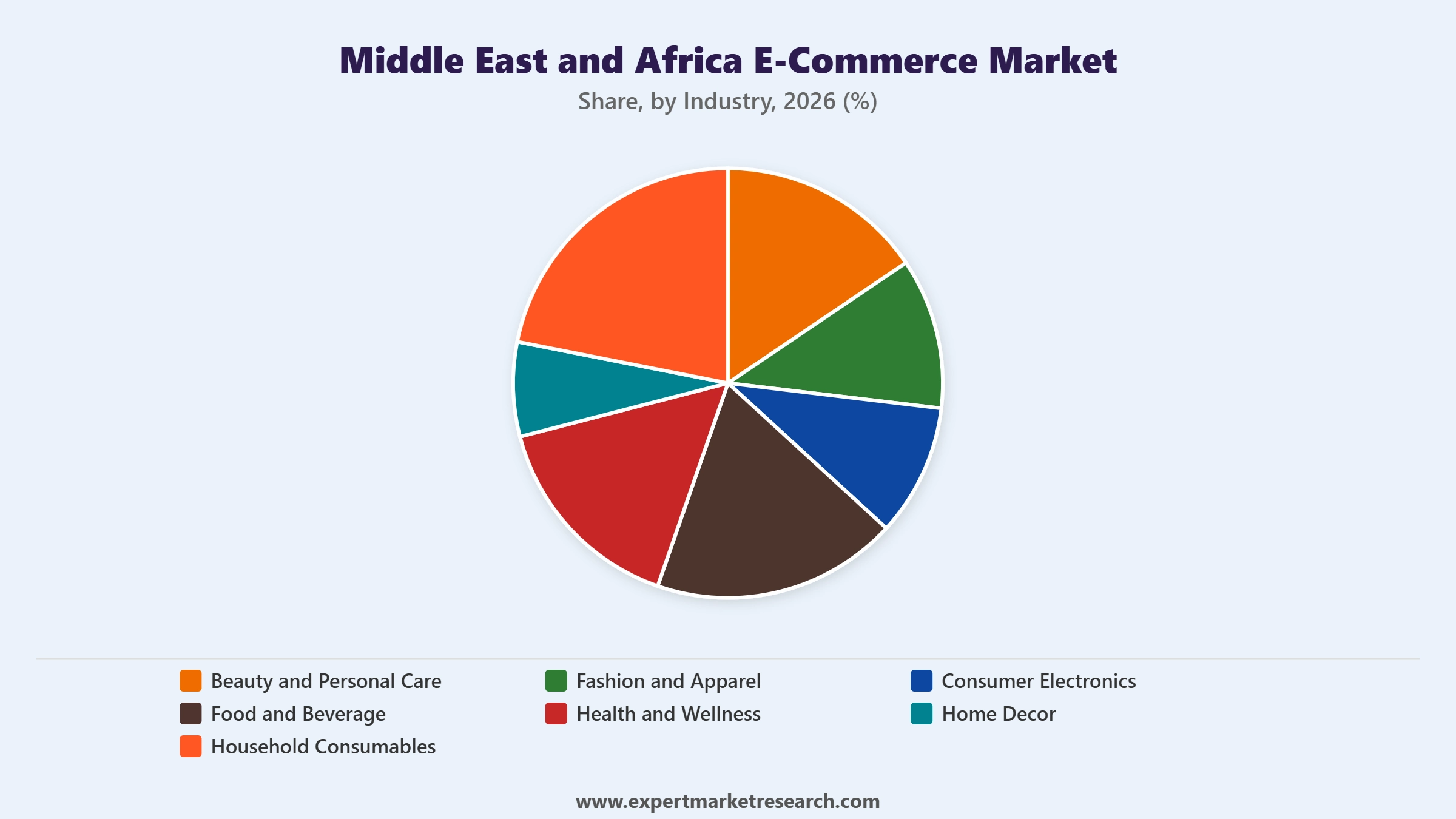
Key Insight: The category of beauty and personal care is being influenced by social discovery, product education, and personalization. The fashion and apparel category is gaining from visual commerce, creator influence, and extensive digital assortment. As per the Middle East and Africa e-commerce market report, the consumer electronics category is supported by rich listing specifications, comparisons, and warranties. Food and beverages benefit from subscription ordering and fast fulfillment. The health and wellness sectors are increasingly using trusted product information and discreet delivery for e-commerce. Home decor benefits from visual inspiration, customization, and room planning. Household consumables require subscription service, bundling, and reminders for re-ordering, while other categories are benefitting from niche marketplaces and specialized catalogs.
Market Breakup by Country
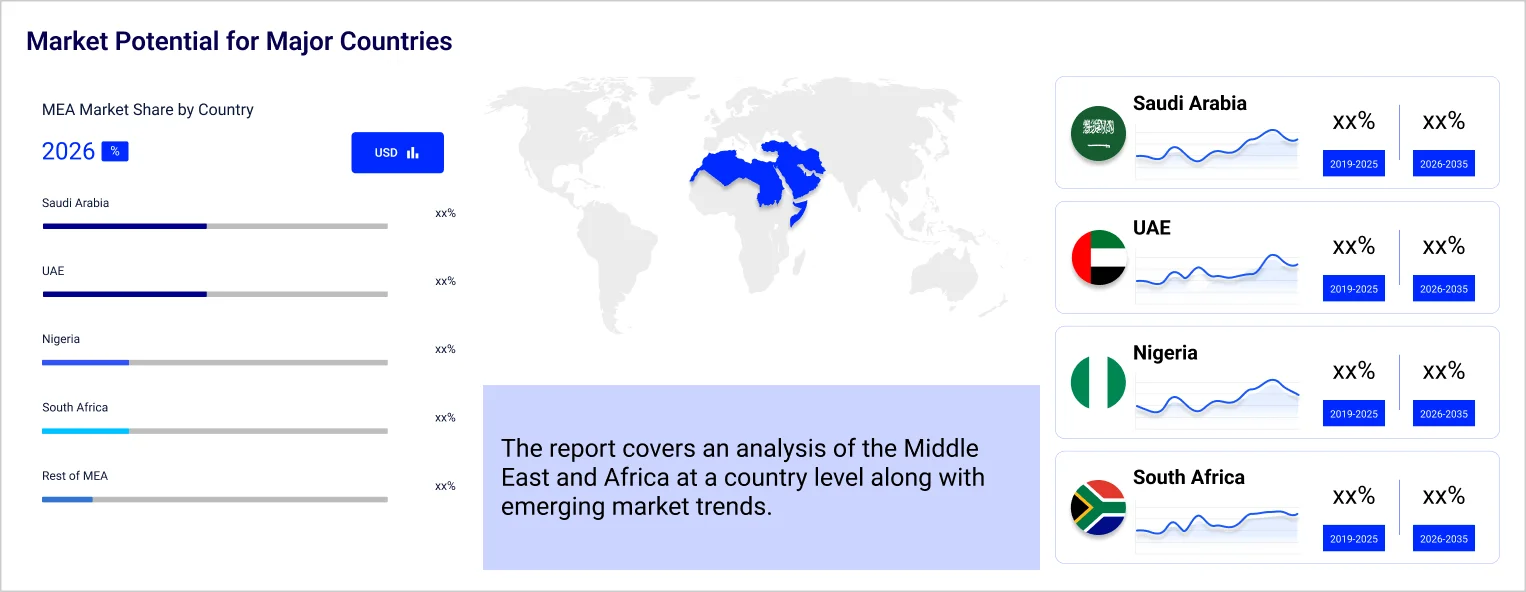
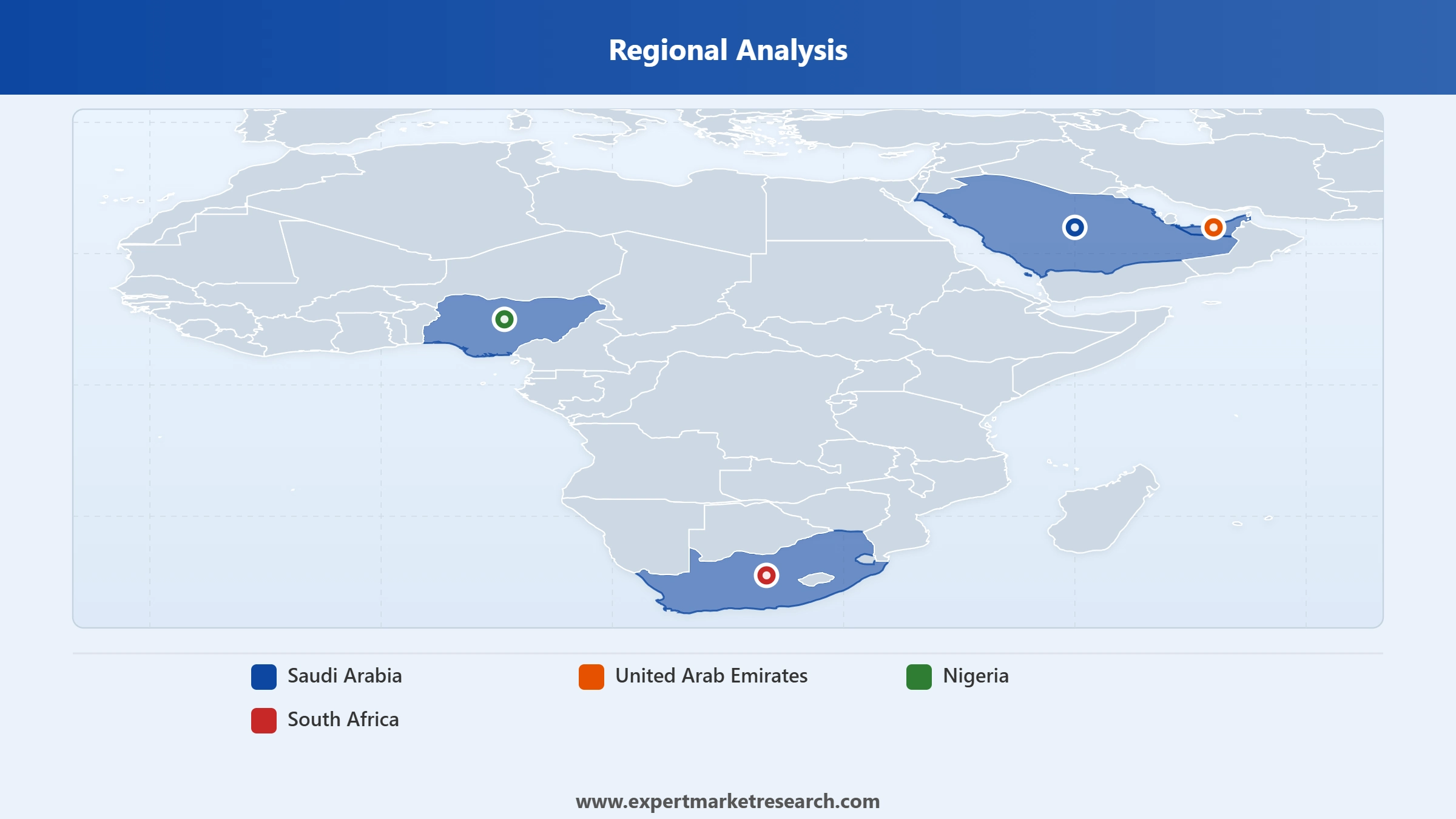
Key Insight: Saudi Arabia’s leadership in the Middle East and Africa e-commerce market includes digital payments, smart phone driven purchasing, marketplace development, and government digital transformation. The market in UAE is growing as a result of logistics leadership, urban demand, foreign customers, and innovation in AI-based retailing. Nigeria has advantage because of its extensive customer base, mobile purchases, and growing fintech penetration; South Africa provides good infrastructure for traditional retail, strong experience of online shopping, and delivery expertise.
Read more about this report - REQUEST FREE SAMPLE COPY IN PDF
By type, B2C dominates the market through mobile reach, payments, and personalized shopping journeys
Business-to-consumer e-commerce continues to dominate the Middle East and Africa e-commerce market owing to its ability to turn mobile web traffic into sales through localized catalogs, digital wallets, flexible payments, and discovery features. Retail players are enhancing their search, recommendations, and delivery offerings to boost repurchase of goods such as fashion items, electronics, groceries, and personal care products. Marketplace players are leveraging analytics and loyalty programs among sellers to drive basket frequency. In October 2026, DHL Group announced over EUR 400 million investment across Central and Eastern Europe, expanding warehousing, transportation, and e-commerce logistics through 2030.
Read more about this report - REQUEST FREE SAMPLE COPY IN PDF
The business-to-business e-commerce category observes fast paced growth in the Middle East and Africa e-commerce market with companies trying to acquire procurement solutions that eliminate sourcing challenges. Players are incorporating bulk buying, vendor verification, digital catalogs, finance offerings, and inventory management to facilitate business purchases. Cross-border trade is giving rise to the demand for marketplaces that connect African suppliers with buyers along with dealing with all aspects from documentations, payments, to logistics.
By industry, the fashion and apparel category accounts for the dominant market position through social commerce, discovery, and assortments
The fashion and apparel industry leads the overall Middle East and Africa e-commerce market revenue growth as online marketplaces are leveraging fashion discovery, brand choice, and fashion-driven merchandising on social media for discerning fashion shoppers. Online marketplaces are leveraging content marketing, recommendation engines, virtual styling, and localized collections to make the process of inspiration-to-purchase shorter. Retailers are enhancing sizing data, returns handling, and delivery tracking to reduce hurdles for online apparel sales. In June 2026, Max Fashion partnered with Google Cloud to launch AI-powered virtual try-ons in the UAE, improving fit visualization and online shopping confidence.
Read more about this report - REQUEST FREE SAMPLE COPY IN PDF
The fast-growing industry is represented by the food and beverage sector since digital ordering is becoming a necessity for groceries, meals, and specialty products. The investments of platforms into dark stores, temperature-controlled fulfillment, scheduled delivery, and demand prediction protect the quality and lower delivery expenses. Subscription ordering and customized grocery recommendations allow creating recurring demand in the Middle East and Africa e-commerce market. Suppliers can utilize digital shelf optimization, smaller pack sizes, private label collaborations, and localized collections which react quickly to consumption trends in cities and digitizing African countries.
By country, Saudi Arabia clocks in the largest market share through payments, smartphones, and digital transformation initiatives
Saudi Arabia contributes to the Middle East and Africa e-commerce market value by a significant margin, owing to strong infrastructure, high smartphone penetration, adoption of payments and digital transformations. Retailers are focusing on personalization, speed of fulfillment, marketplace, and payments. Local platforms and international players are competing with localized product catalogs, support of the Arabic language, flexible payment solutions, and last-mile delivery coverage. In September 2025, Majid Al Futtaim launched Abercrombie & Fitch and Hollister e-commerce stores in Saudi Arabia, advancing omnichannel retail expansion across regional markets.
Read more about this report - REQUEST FREE SAMPLE COPY IN PDF
The United Arab Emirates is the most rapidly growing Middle East and Africa e-commerce market owing to digital maturity, consumer needs and logistic capabilities, enabling new retail commerce formats. Retailers are trying out AI-based discovery, mobile checkout, social commerce, delivery and assortment expansion. Technology vendors have great opportunities to offer solutions such as multilingual storefronts, payment orchestration, inventory management, and fulfillment services suitable for convenience-oriented shoppers in UAE cities.
Competition in the market is becoming more focused on ecosystem depth rather than physical store size. Leading Middle East and Africa e-commerce market players are developing local marketplaces, intelligent search, payment orchestration and logistics that are able to adapt to varying levels of infrastructure across different countries. There are opportunities arising in the field of cross-border commerce, particularly with respect to linking together supply, merchant and consumer sides while enabling customs clearing, settlement and delivery coordination.
Other areas of differentiation for Middle East and Africa e-commerce companies are seller enablement, private label creation, loyalty programs, social commerce and finance. AI is fast becoming another level of competition in the field of recommendation engines, demand prediction, fraud prevention, customer service and catalog enrichment. For Africa, interoperability and merchant digitization provide scope for infrastructure-oriented firms, whereas the Gulf region-based players focus on premium delivery and personalization. Firms that integrate their operational expertise with scalable technology can develop regional ecosystems, improve their economics of scale and serve new customers.
Formed in 1994 and headquartered in Seattle, Washington, United States, Amazon caters to consumers in the Middle East using its websites Amazon.ae and Amazon.sa by offering a wide range of products and localized services including payment. Amazon’s regional strategy covers third-party sellers, speedy delivery, digital marketing, and product categories expansion, while its logistics infrastructure allows merchants to efficiently serve consumers.
Founded in 1962 and headquartered in Bentonville, Arkansas, United States, Walmart operates its African businesses via Massmart, offering both physical retail infrastructure and online shopping platforms. The regional companies include general merchandise, groceries, wholesale, and home improvement retailers, providing the opportunity for omnichannel shopping, digital suppliers, and expanded marketplaces.
ebay was established in 1995, and is based in San Jose, California, United States, enabling customers from the Middle East and Africa to buy products from foreign sellers using a cross-border business model. With the wide range of categories offered by ebay, the seller tools, the artificial intelligence discovery process, and a focus on collectibles, fashion, motors, and pre-owned items, sellers can reach specialized demand internationally.
Shopify was founded in 2006, and is based in Ottawa, Canada. Shopify empowers merchants from the Middle East and Africa to create direct-to-consumer storefronts without building their own commerce infrastructures.
Other key players in the market include Dubizzle Group Holdings Limited, Mumzworld FZ LLC, Noon AD Holdings One Person Company LLC, Majid Al Futtaim Holding LLC (Carrefour), and Sharaf DG LLC, Namshi, among others.
*Please note that this is only a partial list; the complete list of key players is available in the full report. Additionally, the list of key players can be customized to better suit your needs.*
Unlock the latest insights with our Middle East and Africa e-commerce market trends 2026 report. Discover regional growth patterns, consumer preferences, and key industry players. Stay ahead of competition with trusted data and expert analysis. Download your free sample report today and drive informed decisions in the market.


Upto 15% Off
USD
$2499 $2249
$3999 $3599
$4999 $4249
$5999 $5099


*While we strive to always give you current and accurate information, the numbers depicted on the website are indicative and may differ from the actual numbers in the main report. At Expert Market Research, we aim to bring you the latest insights and trends in the market. Using our analyses and forecasts, stakeholders can understand the market dynamics, navigate challenges, and capitalize on opportunities to make data-driven strategic decisions.*
In 2025, the market reached an approximate value of USD 104.80 Billion.
The market is projected to grow at a CAGR of 12.70% between 2026 and 2035.
The market is estimated to witness a healthy growth during 2026-2035 to reach around USD 346.42 Billion by 2035.
Stakeholders are localizing catalogs, strengthening payment orchestration, expanding fulfillment partnerships, deploying AI personalization, improving seller tools, integrating compliance controls, and developing cross-border solutions for underserved markets while improving customer retention.
Saudi Arabia, United Arab Emirates, Nigeria, and South Africa are the key countries considered in the market report.
Business-to-consumer (B2C) and business-to-business (B2B) are the two types of e-commerce.
The major industries include beauty and personal care, fashion and apparel, consumer electronics, food and beverage, health and wellness, home décor, and household consumables, among others.
The key players in the market include Amazon.com, Inc., Walmart Inc., eBay Inc., Shopify Inc., Dubizzle Group Holdings Limited, Mumzworld FZ LLC, Noon AD Holdings One Person Company LLC, Majid Al Futtaim Holding LLC (Carrefour), and Sharaf DG LLC, Namshi, among others.
Companies face fragmented regulations, uneven logistics, payment interoperability gaps, cybersecurity risks, costly last-mile delivery, limited rural infrastructure, consumer trust concerns, and complex cross-border customs and taxation requirements across markets regionally.
Explore our key highlights of the report and gain a concise overview of key findings, trends, and actionable insights that will empower your strategic decisions.
| REPORT FEATURES | DETAILS |
| Base Year | 2025 |
| Historical Period | 2019-2025 |
| Forecast Period | 2026-2035 |
| Scope of the Report |
Historical and Forecast Trends, Industry Drivers and Constraints, Historical and Forecast Market Analysis by Segment:
|
| Breakup by Type |
|
| Breakup by Industry |
|
| Breakup by Region |
|
| Market Dynamics |
|
| Competitive Landscape |
|
| Companies Covered |
|
Datasheet
One User
USD 2,499
USD 2,249
tax inclusive*
Single User License
One User
USD 3,999
USD 3,599
tax inclusive*
Five User License
Five User
USD 4,999
USD 4,249
tax inclusive*
Corporate License
Unlimited Users
USD 5,999
USD 5,099
tax inclusive*
*Please note that the prices mentioned below are starting prices for each bundle type. Kindly contact our team for further details.*
Flash Bundle
Small Business Bundle
Growth Bundle
Enterprise Bundle
*Please note that the prices mentioned below are starting prices for each bundle type. Kindly contact our team for further details.*
Flash Bundle
Number of Reports: 3
20%
tax inclusive*
Small Business Bundle
Number of Reports: 5
25%
tax inclusive*
Growth Bundle
Number of Reports: 8
30%
tax inclusive*
Enterprise Bundle
Number of Reports: 10
35%
tax inclusive*
How To Order

Select License Type
Choose the right license for your needs and access rights.

Click on ‘Buy Now’
Add the report to your cart with one click and proceed to register.

Select Mode of Payment
Choose a payment option for a secure checkout. You will be redirected accordingly.
Strategic Solutions for Informed Decision-Making
Gain insights to stay ahead and seize opportunities.

Get insights & trends for a competitive edge.

Track prices with detailed trend reports.

Analyse trade data for supply chain insights.

Leverage cost reports for smart savings

Enhance supply chain with partnerships.

Connect For More Information
Our expert team of analysts will offer full support and resolve any queries regarding the report, before and after the purchase.
Our expert team of analysts will offer full support and resolve any queries regarding the report, before and after the purchase.
We employ meticulous research methods, blending advanced analytics and expert insights to deliver accurate, actionable industry intelligence, staying ahead of competitors.
Our skilled analysts offer unparalleled competitive advantage with detailed insights on current and emerging markets, ensuring your strategic edge.
We offer an in-depth yet simplified presentation of industry insights and analysis to meet your specific requirements effectively.




