

Consumer Insights
Uncover trends and behaviors shaping consumer choices today
Procurement Insights
Optimize your sourcing strategy with key market data
Industry Stats
Stay ahead with the latest trends and market analysis.
The Middle East and Africa mobile payment market attained a value of USD 7.50 Billion in 2025 and is projected to expand at a CAGR of 32.40% through 2035. The market is further expected to achieve USD 124.15 Billion by 2035. Growth in small retail outlets, e-commerce platforms, and informal enterprises is contributing to the rising need for mobile payment acceptance at lower costs, effective reconciliation of transactions, and monitoring.
Increasing usage of smartphones and rise of digital payments are driving businesses to add mobile payment capabilities in their checkout systems, apps, and delivery systems. Similarly, government-led payment infrastructure upgrade initiatives are enhancing transaction convenience and helping achieve interoperability between banks, wallets, and merchants. This trend in the Middle East and Africa mobile payment market can lead to the development of integrated solutions for cashless transactions, effective collections, and better transaction monitoring. Organizations that provide merchant-based solutions and secure payment verification systems are expected to enhance business associations.
The Middle East and Africa mobile payment market is changing as payment firms shift from just having digital wallets to an ecosystem of financial services, interoperability in payment networks, and mobile phone transactions. For example, the Saudi Central Bank launched Google Pay using the country's mobile payment network mada in September 2025. This move will help Saudi Arabia further its plans for digital payments as part of Vision 2030.
In Africa, mobile payment players are gaining the upper hand through integrating money transfer, merchant payment, bill settlement, and financial services into their telecommunications network. The growing consumer base creates new Middle East and Africa mobile payment market opportunities to come up with merchant acquisition programs, enhance transaction interoperability, and provide wallet usage services. For example, in October 2026, Flutterwave became Africa’s first fintech unicorn to offer techdollar equity-backed solutions, strengthening financial inclusion and digital payment infrastructure.
Compound Annual Growth Rate
32.4%
Value in USD Billion
2026-2035
Read more about this report - REQUEST FREE SAMPLE COPY IN PDF
EdfaPay and GoPravo launched SDPay in Sudan, enhancing digital payment capabilities and offering chances for businesses to create secure and local payment solutions. Companies in the Middle East and Africa mobile payment market can create interoperable mobile wallet services, merchant payment services, and digital payment services to cater to the growing digital economy.
Thunes expanded its cross-border payout network in six Middle Eastern countries, ensuring better international money transfers and improved payment networks in the region for businesses. Fintech firms can launch more efficient remittance services, business payments, and cross-border money transfer services.
PhonePe received its first go-ahead to provide digital payment solutions in the UAE, indicating increasing possibilities for mobile payment solution providers venturing into the region. Providers can consider regulatory cooperation, local wallet solutions, and merchant networks to cater to the needs of citizens, tourists, and businesses.
Google Pay and Mastercard advanced contactless payments in Saudi Arabia facilitated convenient payments through their digital channels, facilitating faster adoption of mobile wallets by retailers. Companies can design NFC-powered wallets, contactless merchant networks, and loyalty-based payments to foster adoption in retail and hospitality sectors, widening the Middle East and Africa mobile payment market scope.
Governments are influencing the competitive environment as the payment companies develop services built on top of standardized national payment systems, accelerating the overall Middle East and Africa mobile payment market penetration. For example, in July 2026, Guinea launched NimbaPay, enabling secure, instant, interoperable payments between banks, mobile money providers, and microfinance institutions across the nation. The mada payment network in Saudi Arabia covers physical retail, ATMs, and ecommerce payments, and the Saudi Central Bank is further developing wallet compatibility by launching services like Samsung Pay and Google Pay. In the United Arab Emirates, Al Etihad Payments created Aani for performing instant transfers using simple recipient identifiers, in October 2023. Such projects incentivize payment companies to focus on the integration with national payment infrastructure rather than creating standalone wallets.
Providers of mobile money solutions on the African continent are developing services which can be used by customers who have difficulties in accessing traditional banking because of lack of access to bank branches or regular use of formal financial products. GSMA reported mobile money surpassed two billion registered accounts and 514 million monthly active accounts globally in 2024, which constitutes a significant share of global registration numbers. Aligning with this trend in the Middle East and Africa mobile payment market, in November 2025, FNB Zambia and Airtel Mobile Commerce launched POS-integrated mobile money payments, enabling secure, instant, cardless transactions across the nation.
Contactless mobile wallets are emerging as a key priority for product development in the Middle East and Africa mobile payment market as companies aim to remove check-out hassles and enhance the customer experience. In September 2026, Saudi Central Bank announced Tap to Pay on iPhone’s upcoming launch, enabling contactless payments and expanding merchant acceptance across Saudi Arabia. Such solutions will enable users to load their cards, which are eligible, on such solutions to pay via these devices providing additional marketing channels for banks and wallet providers. Payment processing firms can leverage such trends by equipping merchant terminals for capturing QR codes, enhancing tokenization processes, and ensuring compliance with domestic payment network rules.
QR payment solutions present payment providers an opportunity to reach small businesses that may not have been willing to invest in POS solutions yet. Meeza's mobile wallet solution in Egypt enables QR payment services at certain shops along with transferring money and purchasing online, accelerating the Middle East and Africa mobile payment market expansion. In April 2026, barq partnered with Alipay+ to enable cross-border QR payments for over 12 million Saudi users across 220-plus global markets. Such features present fintech firms with an opportunity to create easy merchant acceptance solutions and enable digital collections from independent stores and businesses. Payment processors can further distinguish themselves through transactions history, automatic transactions, and simplified reconciliation for business owners.
With the help of instant transactions and simplified payment codes, it is becoming increasingly common for companies to adopt competition based on interoperability and not only on isolated wallet ecosystems. For example, in September 2025, Alipay+ announced its Saudi Arabia launch, enabling local merchants to accept cross-border mobile payments from international digital wallets. This Middle East and Africa mobile payment market trend can provide an easier experience for the users and increase the number of transactions for payment service providers.
The Expert Market Research's report titled “Middle East and Africa Mobile Payment Market Report and Forecast 2026-2035” offers a detailed analysis of the market based on the following segments:
Market Breakup by Technology
Key Insight: Mobile payments include payments, bill payments, merchant payments, and account management, which makes them highly useful for providers looking to engage their customers in regular use. Near field communication is used for contactless retail payments where compatible mobile phones and payment terminal exist, propelling growth in the Middle East and Africa mobile payment market. Mobile web payments facilitate online purchases using browsers, and they enable e-commerce merchants to access customers without using specific applications. Direct mobile billing allows digital merchants to make charges from purchases made on their telecommunication accounts, especially in content and subscription services.
Market Breakup by Payment Type
Key Insight: As per the Middle East and Africa mobile payment market report, growth of the B2C payments are facilitated by the expenditure of consumers on e-commerce, retail, subscriptions, and utility payments, which will motivate payment companies to improve checkout and digital wallets. B2B payments include supplier payments, distribution transactions, collections, and cash flows, with the adoption being driven by accounting software integration and automated reconciliation. B2G payments are for government transactions such as taxes, licensing, public services, and administrative payments.
Market Breakup by Location
Key Insight: Remote payments enable transactions for e-commerce purchases, subscription-based services, transfers, and bill payments. Demand in the Middle East and Africa mobile payment market is being motivated by convenience and the need of the business owners to access customers who may be out of the physical store premises. Proximity payments make it easy to complete purchases in-person using contactless phones, wearables, and terminals, thus being useful for retailers, hotels, and transport service providers. Remote payments are supported by payment links, online checkouts, and recurring billing.
Market Breakup by End Use
Key Insight: Mobile payments help retailers and online sellers make the checkout process easier and provide the means to conduct refunds. The BFSI industry uses mobile transactions for money transfers, accounts services, and digital banking. Mobile payments can be used in healthcare due to the necessity of using digital patient bills, purchasing drugs from pharmacies, and collecting money for telemedicine. Leveraging this trend in the Middle East and Africa mobile payment market, in September 2026, QubeHealth Pay expanded into MENA through Dubai-based Qube MENA, extending digital healthcare payments. IT/Telecom companies need mobile payments for subscription payments, airtime payments, data payments, and services payments. Media and entertainment companies use mobile payments for subscription payments and gaming. Transportation companies need mobile transactions because of quick fare collection.
Market Breakup by Country
Key Insight: Opportunities that Saudi Arabia possesses are due to the country’s payment infrastructure, regulatory reform, and increased merchant acceptance, which makes opportunity for integrated wallets and contactless payments. In UAE, there is support for mobile payments via advanced banking systems, partnerships with fintechs, and instant payment systems. The Middle East and Africa mobile payment market observes several growth opportunities in Nigeria in terms of mobile money, agent banking, merchant collections, and increased fintech activity. South Africa has growth opportunities because of banking networks, e-commerce, and the need for electronic payments, despite the importance of cash.
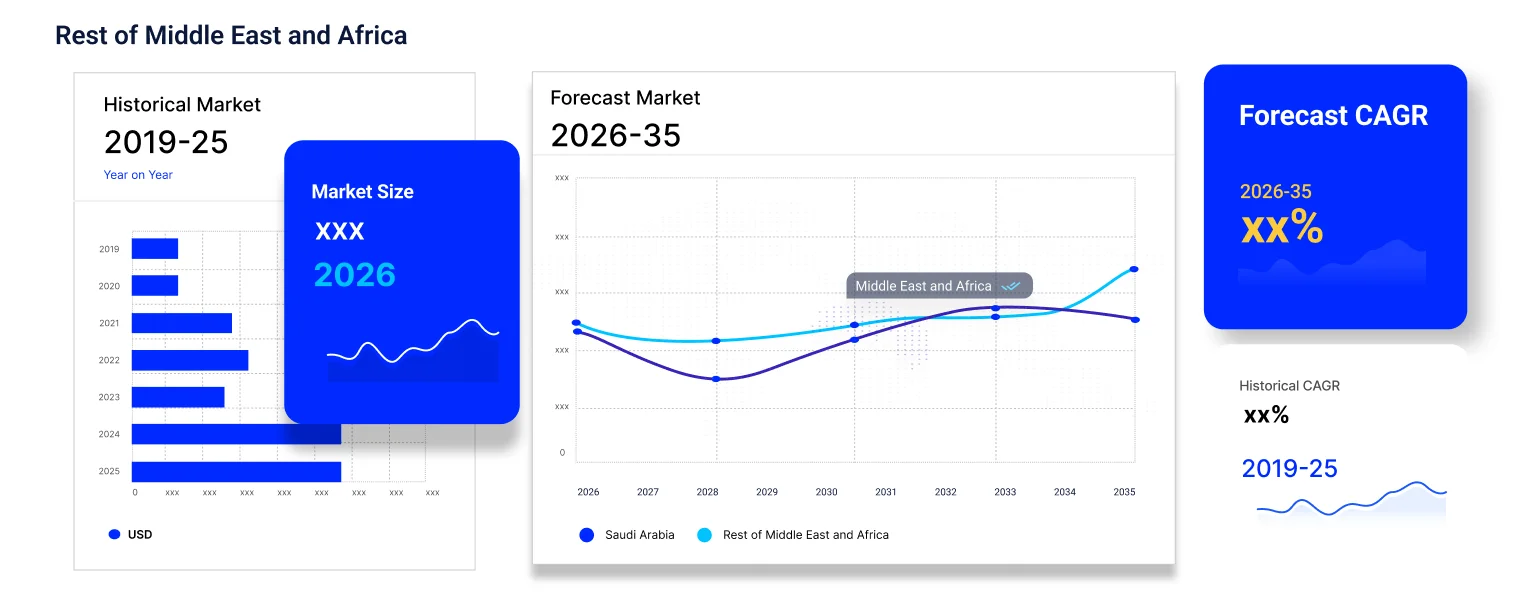
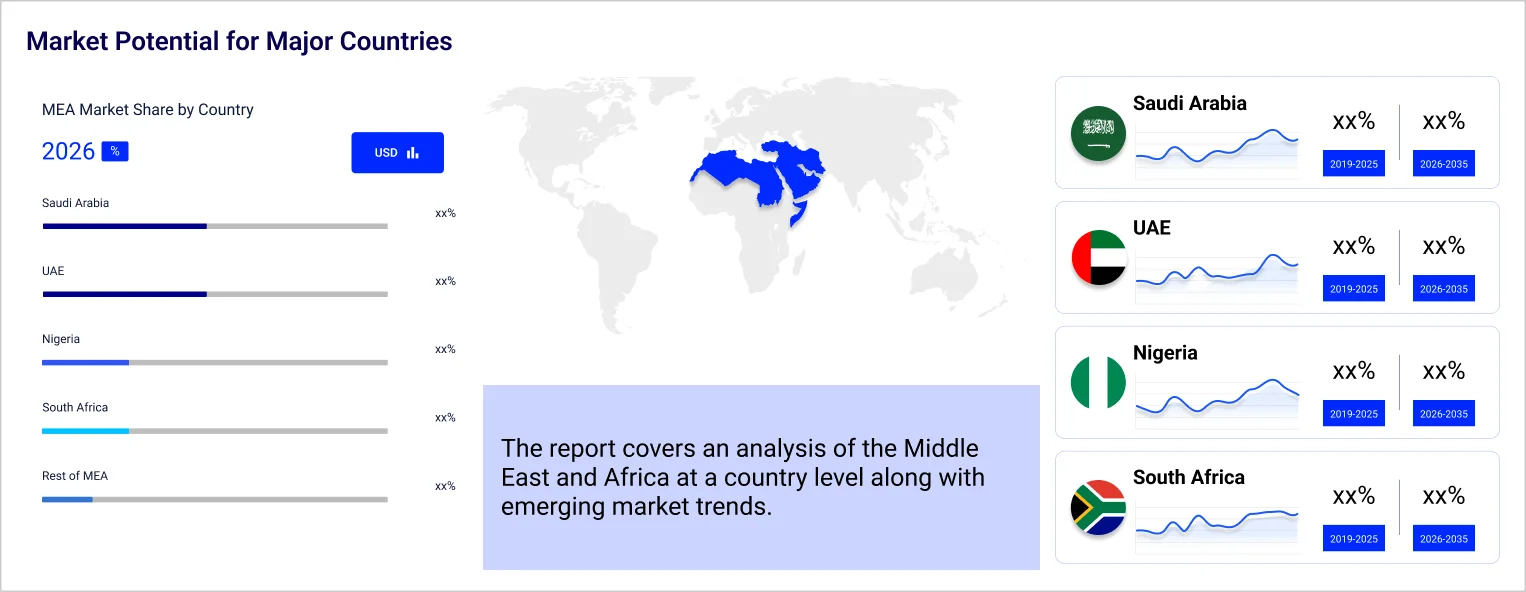
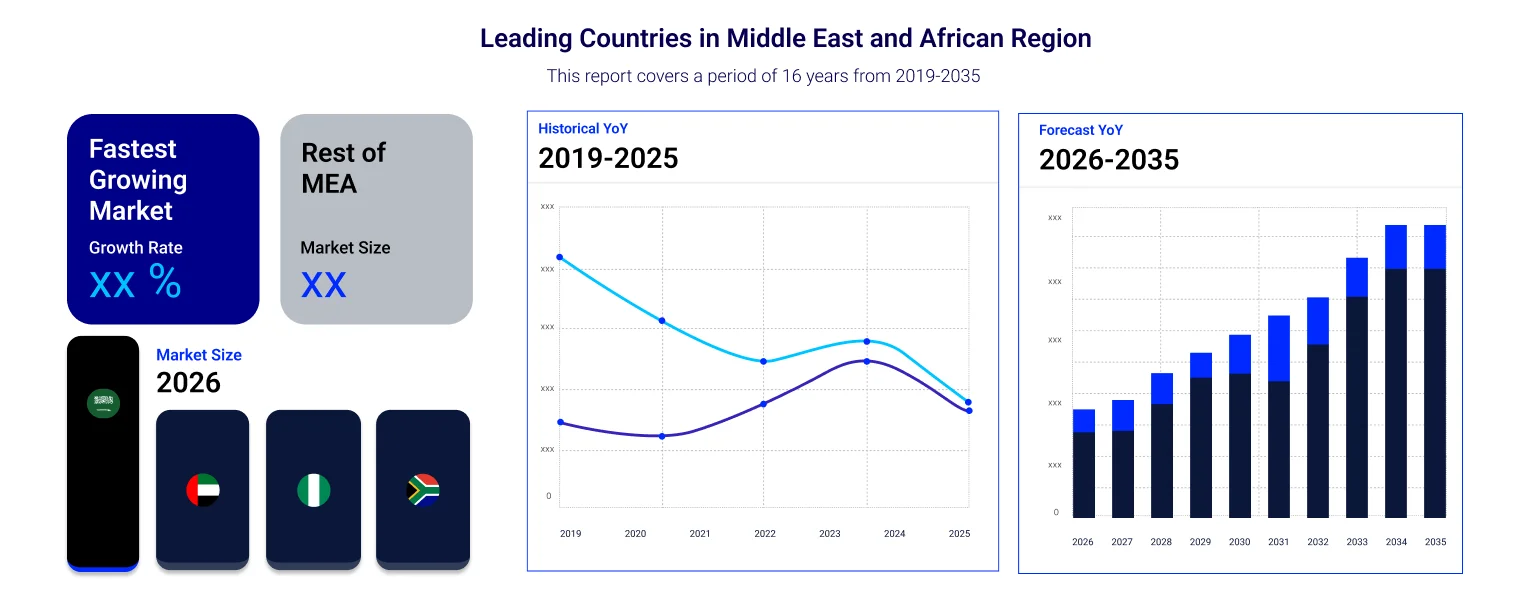
Read more about this report - REQUEST FREE SAMPLE COPY IN PDF
By technology, mobile applications dominate the market through integrated wallets, account management, transfers, and merchant payment capabilities
Mobile applications form the core of the Middle East and Africa mobile payment market as they are used in mobile payments, and they offer numerous financial services in one interface. With business applications, there are chances for increased customer retention using personalized services, transaction notifications, and loyalty programs. In January 2026, Global Money Exchange launched its Global Pay mobile app, powered by Comviva, enhancing digital remittances and international money transfers.
Near field communication is gaining momentum across the Middle East and Africa mobile payment market scope as banks, smartphone wallets, and retailers adopt the acceptance of payments in a contactless manner. This technology involves customers making payments by putting their devices close to the payment terminals in stores. The adoption of Samsung Pay by mada in December 2024 in Saudi Arabia created opportunities for more people to make mobile payments.
By payment type, consumer transactions lead growth in the market through retail purchases, digital commerce, bill payments, and person-to-person transfers
Business-to-consumer mobile payments constitute a significant segment in the Middle East and Africa mobile payment market since consumers are increasingly adopting mobile channels for shopping, paying utility bills, subscribing, commuting, and even transferring money among peers. Mobile payment platforms like M-Pesa and e& money facilitate daily financial operations through linking people with merchants and service providers. For businesses, mobile payment capabilities will make it easier to process payments, be less reliant on physical cash collection, and offer a chance for loyalty schemes. In October 2026, EBANX introduced recurring payments through OPay in Nigeria, enabling international businesses to streamline subscriptions and improve payment accessibility.
Business-to-business mobile payments are becoming increasingly significant since businesses look for quicker supplier settlements and improved cash flow visibility. Companies in the Middle East and Africa mobile payment market can offer digital payments services to small businesses, distributors, retail organizations, and service firms via mobile payments, payment links, and transaction management solutions. This will save businesses the time to manually reconcile their transactions and offer them payment capabilities without being solely dependent on branch banking facilities.
By location, remote payments account for the dominant market share through e-commerce, digital transfers, bill settlement, and online service transactions
Remote payments contribute to the overall Middle East and Africa mobile payment market revenue by a significant margin, since such payments are possible due to the ability to conduct transactions without the presence of customers and the merchant at the same place. Mobile apps, payment gateways, digital wallets, and mobile banking solutions help to shop, transfer funds, renew subscriptions, and settle bills. Service providers are able to take advantage of remote payments through increased number of customers and improved payments processing. In August 2026, Mastercard partnered with AFS to launch corporate credit and prepaid cards in the UAE and Egypt, expanding business payment options.
As merchants, hospitality, transportation companies, and other businesses are enhancing contactless acceptance infrastructure, proximity payments are gaining significance across the Middle East and Africa mobile payment market scope. Near field communication allows customers to make payments using compatible mobile phones or wearables at certain terminals. Companies can increase their business presence by partnering with banks, payment processors, and merchants to streamline device registration and transaction verification. The mada-compatible mobile wallet solution in Saudi Arabia is an example of the domestic payment infrastructure being used in smartphones.
By end use, the retail and e-commerce segment secures the dominant market share owing to digital checkout, consumer convenience, and expanding merchant acceptance
The retail and e-commerce industry constitutes a major end use segment in the Middle East and Africa mobile payment market as there is a need for merchant solutions offering various payment methods within brick-and-mortar establishments, websites, and mobile applications. Mobile wallets and payment gateways help merchants streamline checkout processes, refund customers, and run promotional campaigns without being fully reliant on cash and cards. The payment companies can reinforce the ties between themselves and the retail sector using loyalty, transactional analysis, and settlement reporting capabilities. In November 2025, Common Market for Eastern and Southern Africa (COMESA) launched a new Digital Retail Payments Platform (DRPP) to facilitate cross‑border trade and lower transaction costs using local currencies.
Another area where Middle East and Africa mobile payment market companies will be able to generate revenue is healthcare since there is a growing trend towards digitization of healthcare payments. Mobile wallets and payment systems can be used for collecting payment for consultations, buying prescriptions, diagnostics, and installment-based billing, thereby decreasing paperwork. Additionally, healthcare companies can take advantage of receipt and transaction information to reconcile payments across different establishments. Companies can create specialized integrations with appointment platforms, hospital management software, and pharmacy applications.
By country, Saudi Arabia leads through national payment infrastructure, regulatory support, and widespread digital payment adoption
In the Middle East and Africa mobile payment market, Saudi Arabia has proven to be a top destination market for companies, driven by national payment system, financial sector digitization, and rise in digital transactions. Further developments include the integration of international smartphone wallets with mada, thus offering additional options for contactless payments. For payment processors, there are opportunities in merchant acceptance, wallet integration, secure transactions, and embedded finance.
Nigeria offers ample opportunities for Middle East and Africa mobile payment market companies as fintechs and telcos offer digital payment products to both consumers and businesses. Payment firms including OPay, PalmPay, and Paga enable transfers, collections by merchants, payment of bills, and other financial transactions via digital means. Regulatory framework from the Central Bank of Nigeria regarding mobile money and payment service providers encourages the creation of formal digital payment platforms. Companies can utilize demand in this market through building efficient transaction systems, increasing merchant networks, and providing payment services to unbanked clients. In September 2026, Remita launched a super mobile app integrating banking, payments, and money management, simplifying financial transactions through one digital platform.
The market is experiencing stiff competition in terms of integrated payment ecosystems that are being developed by telecommunication firms, fintech organizations, payment gateways, and digital platforms. Wallet interoperability, merchant acceptance, cross-border transactions, and secure digital transactions are some of the ways through which Middle East and Africa mobile payment market players are working to increase customer retention and revenue streams. While mobile money providers in Africa are utilizing telecom networks and agent networks to serve marginalized regions, their counterparts in the Middle East are focusing on contactless payments, instant money transfers, and business payment processing.
There is an opportunity for mobile payment providers to integrate disparate payment systems to ensure that transactions for enterprises that operate in different regions are simplified. Application programming interfaces, automatic reconciliation services, and fraud detection tools are among the features that firms are developing to cater for their business clients. Middle East and Africa mobile payment companies should note that differences in regulations, cyber-attacks, and poor digital infrastructure necessitate localized approaches.
Founded in 1988 as France Telecom, Orange S.A. is based in Issy-les-Moulineaux, France. It provides Orange Money through which mobile money transfers, bill payments, merchant payments, and financial inclusion are enabled in Africa. Orange Company is providing more digital financial services by integrating telecommunications and mobile wallets and also by integrating banking and other supplementary services.
Uber Technologies Inc., founded in 2009 and based in San Francisco, United States. Careem, operates as an independent organization after the acquisition, which was founded in 2012 and is based in UAE. It provides services through Careem Pay that enable domestic money transfers, international remittance, bill payments, and wallet transactions.
HyperPay INC was founded in 2014 and is based in Riyadh, Saudi Arabia. The firm offers payment gateway solutions to businesses in the Middle Eastern region by linking businesses to regional and international payment channels. Services offered by the firm include recurring billing, tokenization, fraud management, smart routing, and transaction reporting services.
PalmPay Limited is a fintech firm that was founded in 2019 and is active in Nigeria and other regions, including Ghana and Tanzania. Its operations in Nigeria are based in Lagos. The firm offers mobile payments and transfers, bill payments, airtime purchases, merchant services, and business payment solutions.
Other key players in the market include Fawry for Banking Technology and Electronic Payments S.A.E (MyFawry), MTN Group Ltd. (MoMoPay), SADAD, Payit, Saudi Digital Payment Company, and Klip, among others.
*Please note that this is only a partial list; the complete list of key players is available in the full report. Additionally, the list of key players can be customized to better suit your needs.*
Unlock the latest insights with our Middle East and Africa mobile payment market trends 2026 report. Discover regional growth patterns, consumer preferences, and key industry players. Stay ahead of competition with trusted data and expert analysis. Download your free sample report today and drive informed decisions in the market.


Upto 15% Off
USD
$2499 $2249
$3999 $3599
$4999 $4249
$5999 $5099


*While we strive to always give you current and accurate information, the numbers depicted on the website are indicative and may differ from the actual numbers in the main report. At Expert Market Research, we aim to bring you the latest insights and trends in the market. Using our analyses and forecasts, stakeholders can understand the market dynamics, navigate challenges, and capitalize on opportunities to make data-driven strategic decisions.*
The market is projected to grow at a CAGR of 32.40% between 2026 and 2035.
The different technologies used for mobile payment include direct mobile billing, near field communication, mobile web payment, SMS, and mobile application, among others.
The different payment types in the market include B2B, B2C, and B2G.
The major countries in the market include Saudi Arabia, the United Arab Emirates, Nigeria, and South Africa, among others.
The key players in the market include Orange S.A., Uber Technologies Inc. (CareemPay), HyperPay INC, PalmPay Limited, Fawry for Banking Technology and Electronic Payments S.A.E (MyFawry), MTN Group Ltd. (MoMoPay), SADAD, Payit, Saudi Digital Payment Company, and Klip, among others.
In 2025, the market reached an approximate value of USD 7.50 Billion.
Companies face fragmented regulations, cybersecurity threats, fraud, inconsistent network connectivity, and limited interoperability. High merchant acquisition costs, customer trust concerns, and cash-dependent purchasing habits also constrain adoption and profitability across regional markets.
Stakeholders are strengthening fraud detection, integrating interoperable payment APIs, expanding merchant networks, developing affordable cross-border transfers, and improving transaction analytics while ta iloring services to local regulations and customer needs.
Explore our key highlights of the report and gain a concise overview of key findings, trends, and actionable insights that will empower your strategic decisions.
| REPORT FEATURES | DETAILS |
| Base Year | 2025 |
| Historical Period | 2019-2025 |
| Forecast Period | 2026-2035 |
| Scope of the Report |
Historical and Forecast Trends, Industry Drivers and Constraints, Historical and Forecast Market Analysis by Segment:
|
| Breakup by Technology |
|
| Breakup by Payment Type |
|
| Breakup by Location |
|
| Breakup by End Use |
|
| Breakup by Region |
|
| Market Dynamics |
|
| Competitive Landscape |
|
| Companies Covered |
|
Datasheet
One User
USD 2,499
USD 2,249
tax inclusive*
Single User License
One User
USD 3,999
USD 3,599
tax inclusive*
Five User License
Five User
USD 4,999
USD 4,249
tax inclusive*
Corporate License
Unlimited Users
USD 5,999
USD 5,099
tax inclusive*
*Please note that the prices mentioned below are starting prices for each bundle type. Kindly contact our team for further details.*
Flash Bundle
Small Business Bundle
Growth Bundle
Enterprise Bundle
*Please note that the prices mentioned below are starting prices for each bundle type. Kindly contact our team for further details.*
Flash Bundle
Number of Reports: 3
20%
tax inclusive*
Small Business Bundle
Number of Reports: 5
25%
tax inclusive*
Growth Bundle
Number of Reports: 8
30%
tax inclusive*
Enterprise Bundle
Number of Reports: 10
35%
tax inclusive*
How To Order

Select License Type
Choose the right license for your needs and access rights.

Click on ‘Buy Now’
Add the report to your cart with one click and proceed to register.

Select Mode of Payment
Choose a payment option for a secure checkout. You will be redirected accordingly.
Strategic Solutions for Informed Decision-Making
Gain insights to stay ahead and seize opportunities.

Get insights & trends for a competitive edge.

Track prices with detailed trend reports.

Analyse trade data for supply chain insights.

Leverage cost reports for smart savings

Enhance supply chain with partnerships.

Connect For More Information
Our expert team of analysts will offer full support and resolve any queries regarding the report, before and after the purchase.
Our expert team of analysts will offer full support and resolve any queries regarding the report, before and after the purchase.
We employ meticulous research methods, blending advanced analytics and expert insights to deliver accurate, actionable industry intelligence, staying ahead of competitors.
Our skilled analysts offer unparalleled competitive advantage with detailed insights on current and emerging markets, ensuring your strategic edge.
We offer an in-depth yet simplified presentation of industry insights and analysis to meet your specific requirements effectively.




