

Consumer Insights
Uncover trends and behaviors shaping consumer choices today
Procurement Insights
Optimize your sourcing strategy with key market data
Industry Stats
Stay ahead with the latest trends and market analysis.
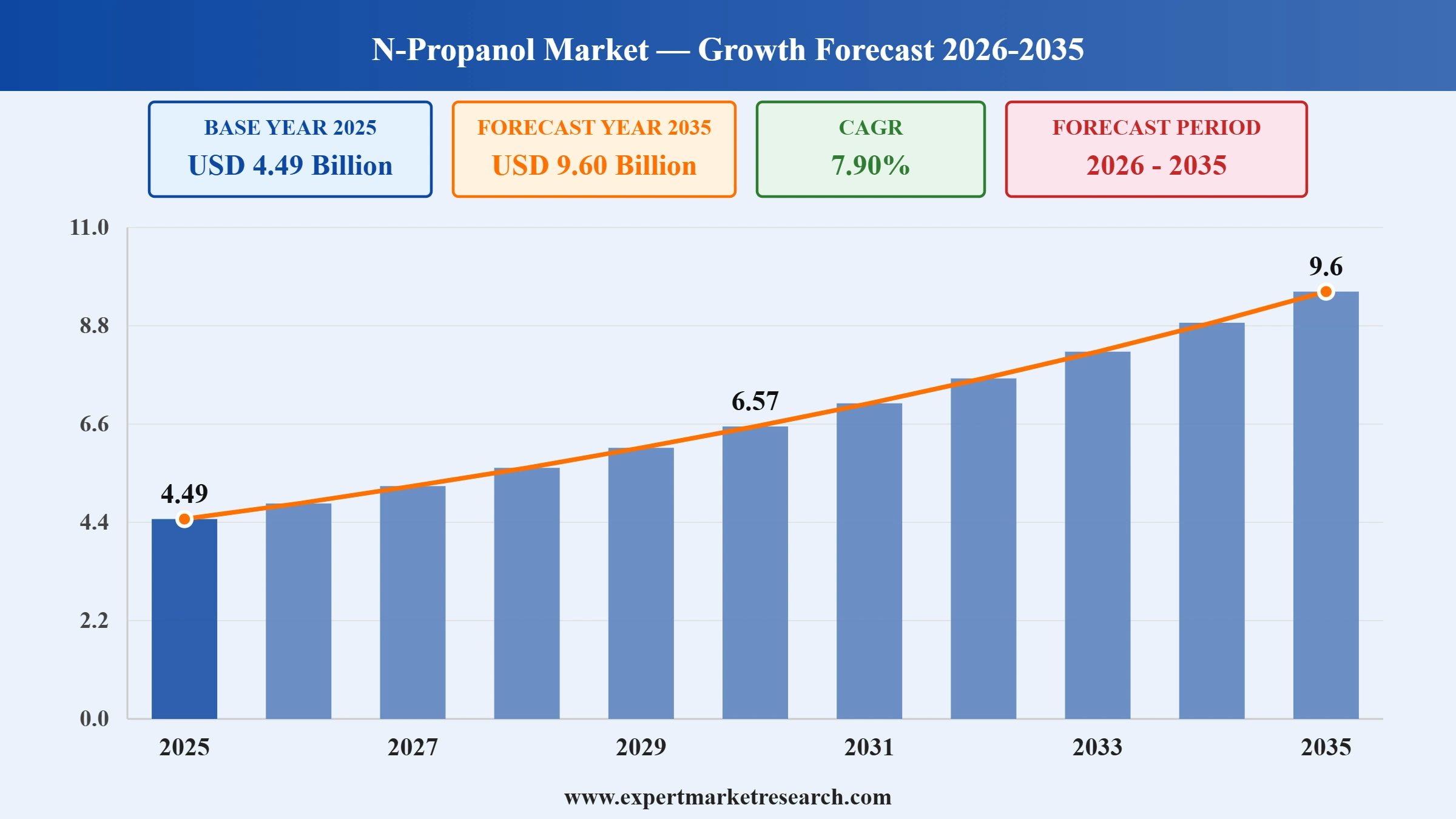
The global n-propanol market attained a value of USD 4.49 Billion in 2025 and is projected to expand at a CAGR of 7.90% through 2035. The market is further expected to reach USD 9.60 Billion by 2035. Rising demand for coatings, agrochemical intermediates, and pharmaceutical grade solvents, together with capacity additions among ethylene hydrogenation producers, is helping manufacturers differentiate their product portfolios and broaden downstream applications. Growing emphasis on feedstock flexibility, regional supply security, and lower-emission production routes is further encouraging established players to expand capacity across Asia Pacific, Europe, and the Middle East and Africa.
Rising infrastructure and automotive output across developing economies continues to lift consumption of paints, coatings, and adhesives that rely on n-propanol as a solvent and drying agent. Manufacturers are expanding ethylene hydrogenation capacity and exploring allyl alcohol hydrogenation routes to secure feedstock flexibility, while downstream formulators increasingly specify n-propanol for its favorable evaporation profile and comparatively low toxicity relative to competing solvents. Growing investment in debottlenecking and incremental capacity expansion is helping established producers respond to regional demand shifts without committing to large-scale greenfield projects. Underlining this momentum, n-propanol spot prices across Asia Pacific climbed sharply in the second quarter of 2026, with China, South Korea, and Japan registering quarter-on-quarter gains of up to roughly 28 percent as feedstock tightness, plant turnarounds, and firmer export demand constrained available supply.
The n-propanol market is also benefiting from expanding pharmaceutical and personal care applications, as drugmakers and cosmetic formulators seek reliable, high-purity solvents for active ingredient synthesis, skin and hair preparations, and fragrance carriers. Regulatory emphasis on volatile organic compound reduction is prompting several producers to invest in cleaner catalytic processes and lower-emission plants, while rising contract manufacturing activity in Asia Pacific and Europe is further supporting demand for pharmaceutical-grade material.
Regionally, integrated petrochemical complexes in Asia Pacific continue to anchor global supply, while Gulf economies are diversifying downstream portfolios to include specialty solvents such as n-propanol alongside their core olefins and polymer operations, supporting new capacity growth for the n-propanol market in the Middle East and Africa. North America and Europe, meanwhile, are focusing on higher-value pharmaceutical and specialty chemical grades rather than competing purely on production scale.
Read more about this report - REQUEST FREE SAMPLE COPY IN PDF
OXEA confirmed a final investment decision to expand its Bay City, Texas complex, raising propionaldehyde production and enabling full production capabilities for propanol and butanol, alongside expanded feedstock availability for its carboxylic acids portfolio. Air Liquide will design, build, and operate a new on-site syngas unit featuring carbon dioxide recycling to lower site emissions, with completion targeted by the end of 2028. Companies can use targeted debottlenecking and feedstock integration investments to secure long-term capacity growth across the n-propanol market
Spot n-propanol prices in China fell nearly 5 percent week-on-week as subdued downstream demand from paints, coatings, pharmaceutical, and agrochemical buyers combined with elevated domestic inventories and cautious procurement. Stable production rates further compounded the oversupply, even as upstream propylene feedstock costs stayed firm on tight availability. Companies can use closer inventory and demand-signal monitoring to time procurement and production decisions amid such price volatility affecting the n-propanol market.
Sadara Chemical Company, a large integrated petrochemical joint venture based in Jubail, Saudi Arabia, temporarily shut down production at its complex following supply chain disruption linked to the regional conflict and restricted transit through the Strait of Hormuz. The facility produces a range of specialty and performance chemicals, including propylene oxide and propylene glycol derivatives relevant to solvent and intermediate supply chains that intersect with n-propanol end uses. Companies can use diversified, multi-region sourcing strategies to mitigate similar feedstock and logistics disruptions affecting the n-propanol market.
Spectrum Chemical announced a new distribution agreement with Greenfield Global, a producer of high-purity and specialty alcohols and solvents, expanding Spectrum's access to premium solvent grades for its pharmaceutical, biopharma, and laboratory customers. Companies can use such distribution partnerships to broaden their high-purity solvent portfolios without investing directly in new production capacity, capitalizing on such n-propanol market supply chain development.
Chemical producers are increasingly converting energy- and emissions-intensive intermediate processes to renewable power sources as customers and regulators demand greater transparency on product carbon footprints. BASF is advancing its sustainability strategy across its Intermediates division, which supplies many of the building-block chemicals used alongside n-propanol in coatings, pharmaceutical, and crop protection applications. In March 2026, BASF converted its entire portfolio of acid chlorides and chloroformates manufactured at its Ludwigshafen site to production using 100 percent renewable electricity credits, reducing the average product carbon footprint of the affected portfolio by close to a fifth. The initiative reflects a broader push across integrated chemical producers to decarbonize precursor chemistries without altering product specifications, giving downstream formulators in the n-propanol market a lower-carbon sourcing option as regulatory pressure on emissions intensifies across Europe.
Producers across the specialty solvents and intermediates value chain are scaling molecular recycling technologies to recover feedstock value from hard-to-recycle plastic waste and strengthen circular-economy credentials. Eastman is expanding its molecular recycling capabilities within its Chemical Intermediates and Advanced Materials segments; an area closely linked to the broader specialty solvents and intermediates space that includes n-propanol. In its fourth-quarter and full-year 2025 results reported in January 2026, Eastman disclosed that its Kingsport methanolysis facility achieved production levels approximately two and a half times those of 2024, delivering close to USD 60 million of incremental earnings. The facility converts hard-to-recycle plastic waste into high-clarity, food-grade polymer feedstocks at a yield of roughly 94 percent. The company is applying similar circular-economy principles across its broader intermediateportfolio, reinforcing sustainability credentials that increasingly influence procurement decisions among coatings and personal care manufacturers active in the n-propanol market.
Amid a prolonged downturn in global commodity chemical margins, several diversified producers are executing multi-year cost and portfolio reset programmes to restore profitability. Sasol continues to progress its International Chemicals reset strategy, a multi-year initiative aimed at restoring margins across its chemical portfolio, which includes alcohols and solvents produced through its proprietary synthesis routes. In its results for the six months ended December 2025, reported in February 2026, Sasol confirmed that Adjusted EBITDA in its International Chemicals business improved despite a prolonged downturn in the broader chemicals market, supported by disciplined cost management and more favorable pricing. The company has also highlighted progress toward the targets outlined at its Capital Markets Day in May 2025, which include restoring reliability across its Southern Africa value chain alongside the chemicals margin recovery. The reset strategy underscores how established producers are recalibrating cost structures to protect profitability in a competitive n-propanol market environment.
Softer European demand and persistently high energy costs are prompting global chemical manufacturers to consolidate output at their most cost-competitive, integrated sites. Dow is restructuring parts of its European manufacturing footprint as part of a broader profitability initiative first announced in April 2025, resulting in the planned closure of select sites in Germany and the United Kingdom. The rationalization is intended to concentrate production at Dow's most cost-competitive and integrated sites, including its intermediates and solvents operations, as the company adapts to softer European demand and higher energy costs. Such footprint adjustments illustrate how global producers active in the n-propanol market are reshaping their manufacturing base to remain competitive as regional cost structures diverge.
Specialty chemical producers are streamlining product lines and reallocating capital toward higher-growth platforms to protect margins through an extended industry downturn. Solvay is realigning parts of its European manufacturing footprint to strengthen long-term competitiveness in a challenging specialty chemicals market. In September 2025, the company announced it would discontinue selected product lines at its Bad Wimpfen site in Germany, including trifluoroacetic acid related organics, while consolidating expertise and investing in the site as a global hub for automotive brazing technologies. The realignment, backed by around EUR 25 million in restructuring and strategic investment, is expected to result in a net reduction of roughly 140 positions across the affected sites. The initiative illustrates how specialty producers are reshaping their European asset base to protect margins amid a prolonged industry downturn affecting the wider n-propanol market and adjacent specialty chemical segments.
The EMR's report titled "Global N-Propanol Market Report and Forecast 2026-2035" offers a detailed analysis of the market based on the following segments:
Market Breakup by Preparation Method
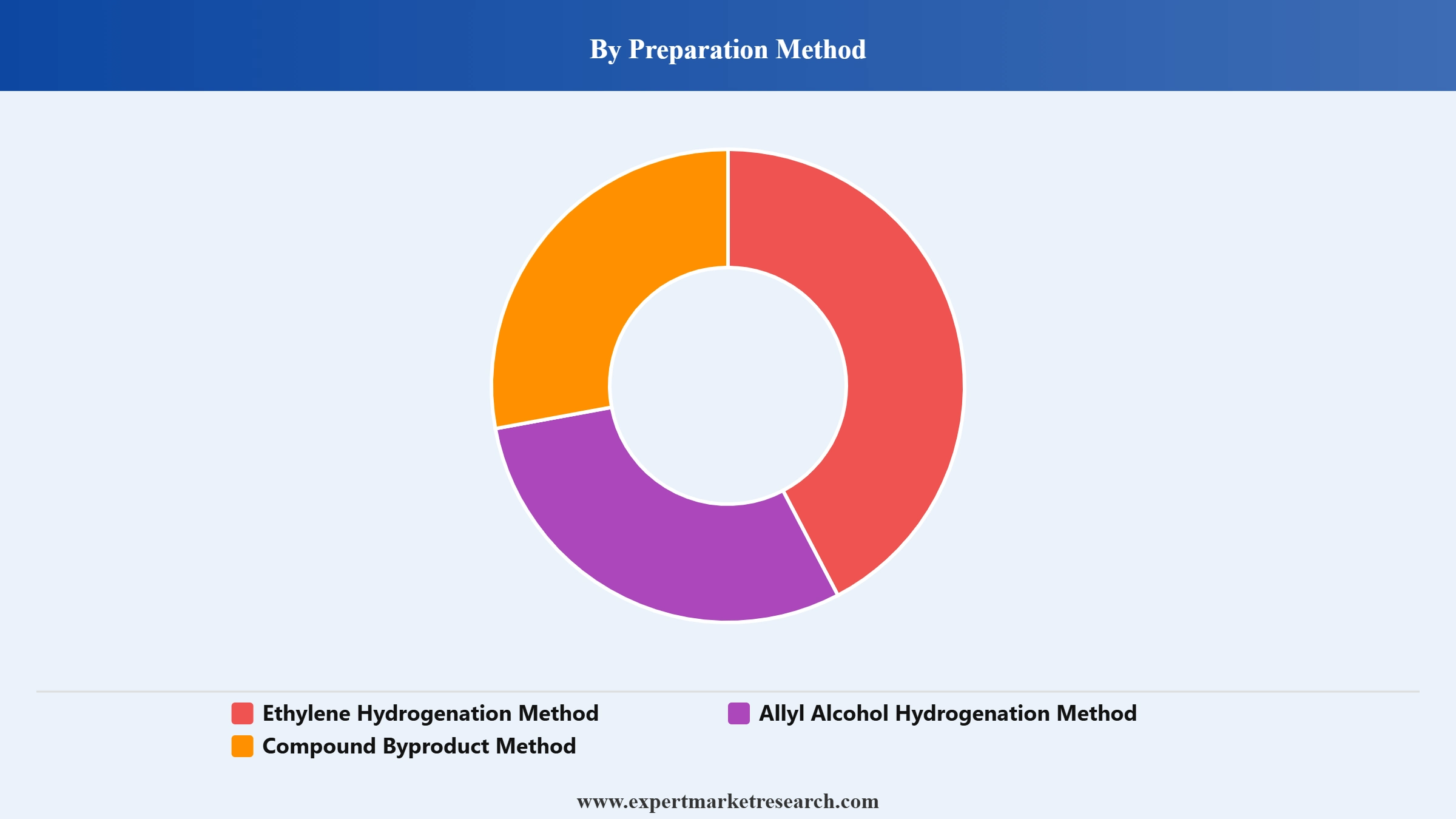
Key Insight: The ethylene hydrogenation method dominates the n-propanol market due to its higher process efficiency, superior yield, and well-established catalytic infrastructure across major production hubs. The allyl alcohol hydrogenation method serves niche applications requiring specific solvent properties; in April 2024, Dairen Chemical Corporation's Mailiao facility, a leading allyl alcohol producer, obtained a DNV-verified carbon footprint assessment covering its allyl alcohol and related derivative products, reinforcing sustainability credentials within this preparation route. The compound byproduct method is gaining traction as producers seek to valorize byproduct streams from adjacent petrochemical operations, supporting incremental capacity growth without large new investments.
Market Breakup by Application
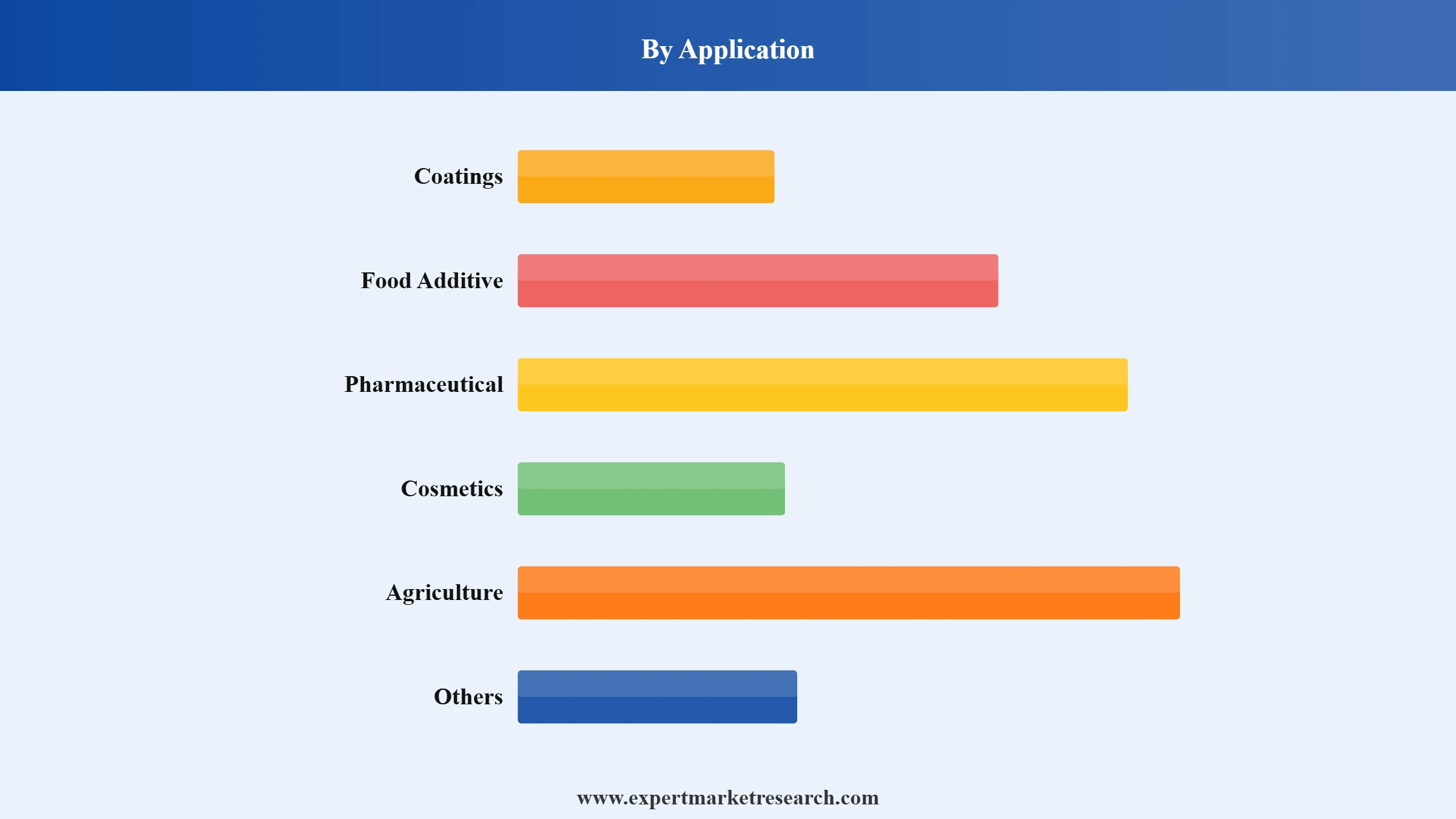
Key Insight: Coatings dominate the n-propanol market owing to widespread use as a solvent and drying agent in paints, inks, and industrial finishes tied to construction and automotive output. The pharmaceutical segment is registering the fastest growth as drug manufacturers scale high-purity solvent use in active ingredient synthesis and formulation, while cosmetics and food additive applications benefit from rising demand for personal care products and flavoring agents respectively. Agricultural applications, including use as an intermediate in herbicide and insecticide production, continue to provide a stable, if smaller, source of demand for the n-propanol market across mature and emerging markets alike.
Market Breakup by Region
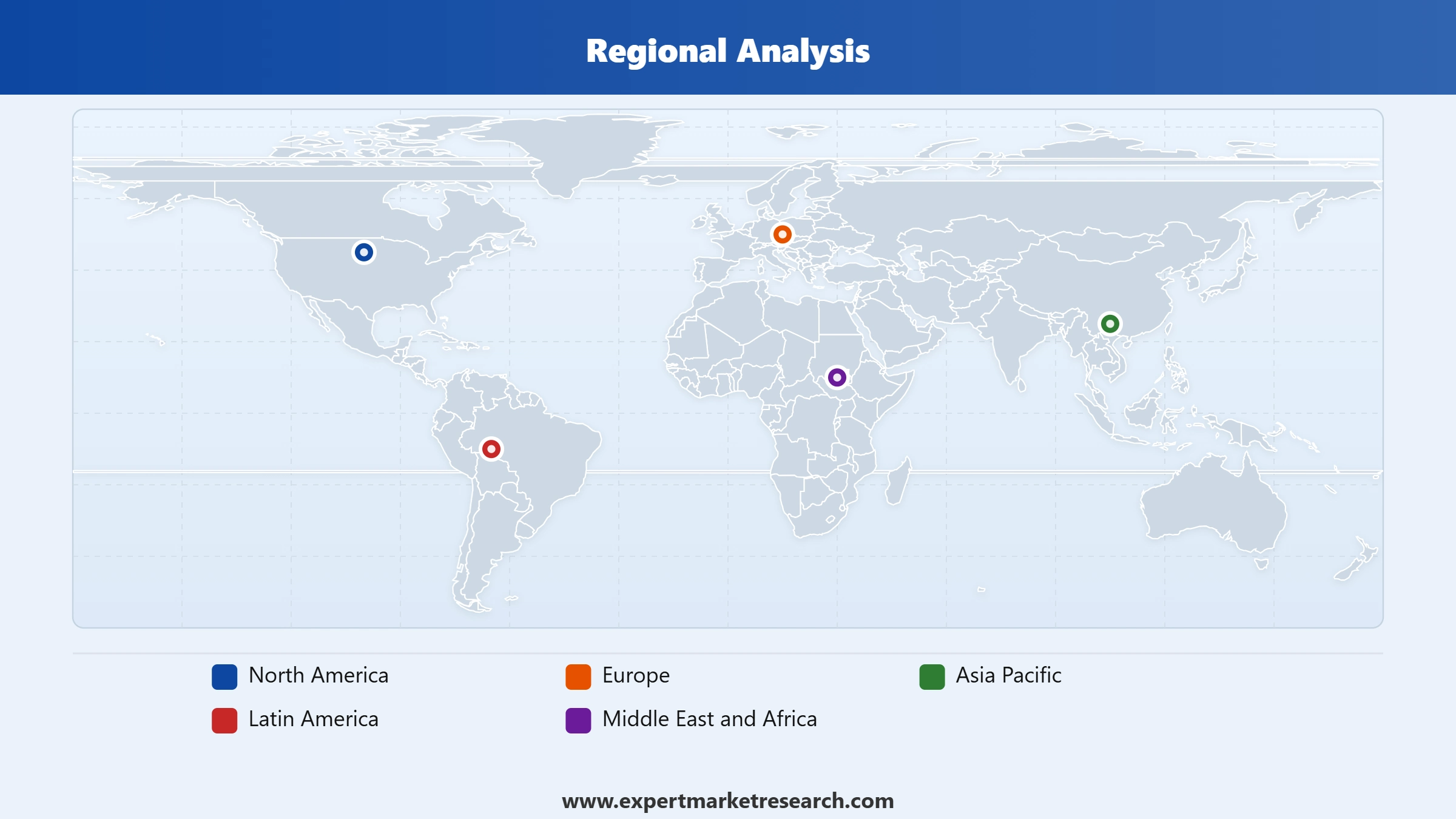
Key Insight: Regional dynamics in the n-propanol market continue to shape competitive strategies. Asia Pacific leads the market on the back of large-scale, integrated petrochemical manufacturing and strong downstream demand from coatings and automotive industries in China, India, and South Korea. North America and Europe sustain steady demand from pharmaceutical and specialty chemical applications, while the Middle East and Africa region is registering the fastest growth as Gulf petrochemical producers diversify into specialty solvents alongside their core olefins operations. Latin America remains a smaller but steadily growing market for n-propanol, supported by expanding coatings and agrochemical demand in Brazil and Mexico.
Read more about this report - REQUEST FREE SAMPLE COPY IN PDF
By preparation method, the ethylene hydrogenation method dominates the market owing to its superior process efficiency and well-established catalytic infrastructure
Ethylene hydrogenation accounts for the largest share of the n-propanol market owing to its superior process efficiency, higher yields, and well-established catalytic infrastructure across major production hubs. Producers favor this route for its lower byproduct formation and its compatibility with existing large-scale petrochemical infrastructure, allowing integrated players to benefit from feedstock security through their broader olefins and syngas operations. In October 2024, Evonik Industries AG expanded plasticizer alcohol capacity at its Marl, Germany site, reflecting continued investment in ethylene-based oxo-alcohol production across the industry. This scale advantage has allowed leading producers to maintain cost leadership even as energy and feedstock prices fluctuate.
Read more about this report - REQUEST FREE SAMPLE COPY IN PDF
The compound byproduct method is registering the fastest growth in the n-propanol market as producers increasingly look to valorize byproduct streams from adjacent chemical processes rather than invest in dedicated capacity. Chinese producers such as Ningbo Juhua Chemical & Science Co., Ltd. continue to operate integrated byproduct-linked capacity exceeding 100,000 tonnes annually, illustrating the segment's appeal for regional players seeking to diversify their product slates without committing to large standalone n-propanol units. This lower-capital approach is particularly attractive to mid-sized regional producers looking to expand output incrementally alongside their existing chemical operations.
By application, the coatings segment dominates the market owing to widespread use as a solvent in paints and industrial finishes
Coatings represent the largest application segment for n-propanol, supported by continuous demand from construction, automotive, and industrial finishing markets. Producers are formulating advanced coating systems that balance drying speed, regulatory compliance, and finish quality, positioning n-propanol as a preferred solvent for both decorative and protective coatings. Underlining the scale of this segment, BASF completed the divestiture of its automotive OEM coatings, automotive refinish coatings, and surface treatment businesses to Carlyle and the Qatar Investment Authority in June 2026, forming an independent coatings company valued at approximately EUR 7.7 billion. The transaction highlights the scale and strategic importance of the coatings industry that anchors demand within the n-propanol market.
Read more about this report - REQUEST FREE SAMPLE COPY IN PDF
The pharmaceutical segment is the fastest-growing application in the n-propanol market as drug manufacturers expand use of high-purity solvent grades in active pharmaceutical ingredient synthesis, excipient processing, and cleaning validation. In March 2025, Avantor Inc. expanded its hydration solutions capacity to support biologics and buffer applications, reflecting the broader wave of investment among solvent and reagent suppliers serving pharmaceutical manufacturing. Rising outsourcing of drug production to contract development and manufacturing organizations across Asia Pacific and Europe is further reinforcing demand for consistently high-purity, pharmacopeia-grade n-propanol.
Asia Pacific leads the market through large-scale petrochemical manufacturing and strong downstream demand from coatings and automotive industries
Asia Pacific commands the largest share of the n-propanol market, underpinned by expansive integrated petrochemical complexes in China, India, South Korea, and Japan. Rapid industrialization, rising vehicle production, and continued urbanization are driving robust demand for coatings, adhesives, and pharmaceutical intermediates across the region. At the same time, producers are navigating cyclical pressure, as illustrated by LG Chem's decision in June 2025 to curtail production at its solvents plant in Daesan, South Korea, amid a prolonged regional petrochemical downturn. Even so, the region's integration and scale advantages continue to reinforce its cost leadership over other producing hubs, with continued investment in downstream integration expected to sustain its lead through the forecast period.
Read more about this report - REQUEST FREE SAMPLE COPY IN PDF
The Middle East and Africa region is registering the fastest growth in the n-propanol market as Gulf petrochemical producers diversify their downstream portfolios beyond commodity olefins into specialty solvents and intermediates. In January 2025, Basic Chemical Industries Company signed a EUR 15 million expansion deal for its chlor-alkali plant in Jubail, Saudi Arabia, illustrating the wider wave of downstream diversification investment across the Gulf Cooperation Council. Growing construction and industrial activity across the wider region is further lifting demand for coatings and cleaning formulations that rely on n-propanol, while access to competitively priced feedstock continues to support new capacity announcements across the region.
The global industry is becoming increasingly consolidated as major n-propanol market players invest in capacity expansion, feedstock integration, and cleaner production technologies to defend their cost positions. Producers are prioritizing catalyst efficiency improvements, energy optimization, and downstream application development to differentiate their offerings in a market where product specifications are largely standardized. Strategic emphasis on regional manufacturing footprints is allowing companies to serve growing Asia Pacific and Middle Eastern demand while managing logistics costs and supply reliability, with several producers also restructuring underperforming European assets to protect margins amid softer regional demand.
Major n-propanol companies are also focusing on sustainability credentials, pursuing renewable electricity sourcing, byproduct valorization, and emissions reduction initiatives to align with tightening environmental regulation in Europe and North America. Opportunities are emerging in pharmaceutical-grade and bio-based production, as well as in expanding capacity across the Middle East and Africa. Producers that successfully combine cost-competitive scale with cleaner production processes and reliable regional supply are expected to strengthen their competitive position over the coming years, particularly as downstream customers place greater weight on supply chain resilience and carbon footprint disclosure.
Founded in 1865 and headquartered in Ludwigshafen, Germany, BASF SE supports the n-propanol market through its extensive Intermediates division, which supplies chemical building blocks used across coatings, pharmaceutical, and crop protection applications. The company continues to invest in cleaner production technologies and expanded capacity across its global Verbund production network, strengthening its position as one of the world's largest integrated chemical producers. BASF's integrated production model allows it to combine feedstock security with continuous process improvements across its major manufacturing sites in Europe, North America, and Asia Pacific.
Founded in 1920 and headquartered in Kingsport, Tennessee, United States, Eastman Chemical Company advances the n-propanol market through its Chemical Intermediates segment, which supports downstream coatings, solvent, and specialty chemical applications. The company maintains a broad global manufacturing and distribution network serving customers across pharmaceuticals, personal care, and industrial end markets.
Founded in 1950 and headquartered in Sandton, South Africa, Sasol Limited contributes to the n-propanol market through its integrated chemicals business, which converts coal and gas-based feedstocks into a wide range of alcohols, solvents, and chemical intermediates. The company draws on proprietary synthesis technologies developed over more than seven decades of operation, supplying customers across Africa, Europe, and other international markets.
Founded in 1897 and headquartered in Midland, Michigan, United States, The Dow Chemical Company supports the n-propanol market through its diversified intermediates and solvents portfolio serving coatings, industrial, and consumer applications. The company operates an extensive global manufacturing network and continues to invest in process technology upgrades across its core chemical intermediates businesses, reinforcing its long-standing position as one of the world's largest diversified chemical manufacturers.
Other key players in the market include LG Chem, Solvay S.A., and Dairen Chemical Corporation, among others.
*Please note that this is only a partial list; the complete list of key players is available in the full report. Additionally, the list of key players can be customized to better suit your needs.*
Unlock the latest insights with our n-propanol market trends 2026 report. Discover regional growth patterns, preparation method economics, and key industry players. Stay ahead of competition with trusted data and expert analysis. Download your free sample report today and drive informed decisions in the market.


Upto 15% Off
USD
$2499 $2249
$3999 $3599
$4999 $4249
$5999 $5099


*While we strive to always give you current and accurate information, the numbers depicted on the website are indicative and may differ from the actual numbers in the main report. At Expert Market Research, we aim to bring you the latest insights and trends in the market. Using our analyses and forecasts, stakeholders can understand the market dynamics, navigate challenges, and capitalize on opportunities to make data-driven strategic decisions.*
The market is projected to grow at a CAGR of 7.90% between 2026 and 2035.
Expanding ethylene hydrogenation capacity, investing in pharmaceutical-grade and bio-based production, pursuing renewable energy sourcing, diversifying into the Middle East and Africa, and strengthening downstream application development across coatings and specialty chemicals.
Surge in the use of N-Propanol as a solvent and intermediary for chemical synthesis in pharmaceutical production, environmental concerns encouraging shift towards cleaner fuels by adding n-propanol, and applications in household cleaning products are key trends in the n-propanol market.
The key players in the market include BASF SE, Eastman Chemical Company, Sasol Limited, The Dow Chemical Company, LG Chem, Solvay S.A., and Dairen Chemical Corporation, among others.
The major regional markets for N-Propanol are North America, Europe, Asia Pacific, Latin America, and the Middle East and Africa.
The primary preparation methods for N-Propanol are the ethylene hydrogenation method, ally alcohol hydrogenation method, and compound by product method.
The various applications of n-propanol include coatings, food additive, pharmaceutical, cosmetics, and agriculture, among others.
Exposure to N-Propanol in high concentrations can result in drowsiness, headaches, dizziness, nausea, vomiting, and confusion.
Yes, N-Propanol is soluble in water due to the presence of a hydroxyl group at the end of its molecule chain.
N-Propanol is also known as propyl alcohol, n-propanol alcohol, 1-propanol, and propan-1-ol.
In 2025, the market reached an approximate value of USD 4.49 Billion.
The market is anticipated to achieve a value of USD 9.60 Billion by 2035, driven by expanding industrial applications.
Companies face volatile feedstock and energy costs, tightening environmental regulations, competition from substitute solvents, and the capital intensity of expanding ethylene hydrogenation capacity while maintaining consistent product quality and reliable regional supply.
Explore our key highlights of the report and gain a concise overview of key findings, trends, and actionable insights that will empower your strategic decisions.
| REPORT FEATURES | DETAILS |
| Base Year | 2025 |
| Historical Period | 2019-2025 |
| Forecast Period | 2026-2035 |
| Scope of the Report |
Historical and Forecast Trends, Industry Drivers and Constraints, Historical and Forecast Market Analysis by Segment:
|
| Breakup by Preparation Method |
|
| Breakup by Application |
|
| Breakup by Region |
|
| Market Dynamics |
|
| Competitive Landscape |
|
| Companies Covered |
|
Datasheet
One User
USD 2,499
USD 2,249
tax inclusive*
Single User License
One User
USD 3,999
USD 3,599
tax inclusive*
Five User License
Five User
USD 4,999
USD 4,249
tax inclusive*
Corporate License
Unlimited Users
USD 5,999
USD 5,099
tax inclusive*
*Please note that the prices mentioned below are starting prices for each bundle type. Kindly contact our team for further details.*
Flash Bundle
Small Business Bundle
Growth Bundle
Enterprise Bundle
*Please note that the prices mentioned below are starting prices for each bundle type. Kindly contact our team for further details.*
Flash Bundle
Number of Reports: 3
20%
tax inclusive*
Small Business Bundle
Number of Reports: 5
25%
tax inclusive*
Growth Bundle
Number of Reports: 8
30%
tax inclusive*
Enterprise Bundle
Number of Reports: 10
35%
tax inclusive*
How To Order

Select License Type
Choose the right license for your needs and access rights.

Click on ‘Buy Now’
Add the report to your cart with one click and proceed to register.

Select Mode of Payment
Choose a payment option for a secure checkout. You will be redirected accordingly.
Strategic Solutions for Informed Decision-Making
Gain insights to stay ahead and seize opportunities.

Get insights & trends for a competitive edge.

Track prices with detailed trend reports.

Analyse trade data for supply chain insights.

Leverage cost reports for smart savings

Enhance supply chain with partnerships.

Connect For More Information
Our expert team of analysts will offer full support and resolve any queries regarding the report, before and after the purchase.
Our expert team of analysts will offer full support and resolve any queries regarding the report, before and after the purchase.
We employ meticulous research methods, blending advanced analytics and expert insights to deliver accurate, actionable industry intelligence, staying ahead of competitors.
Our skilled analysts offer unparalleled competitive advantage with detailed insights on current and emerging markets, ensuring your strategic edge.
We offer an in-depth yet simplified presentation of industry insights and analysis to meet your specific requirements effectively.




