

Consumer Insights
Uncover trends and behaviors shaping consumer choices today
Procurement Insights
Optimize your sourcing strategy with key market data
Industry Stats
Stay ahead with the latest trends and market analysis.
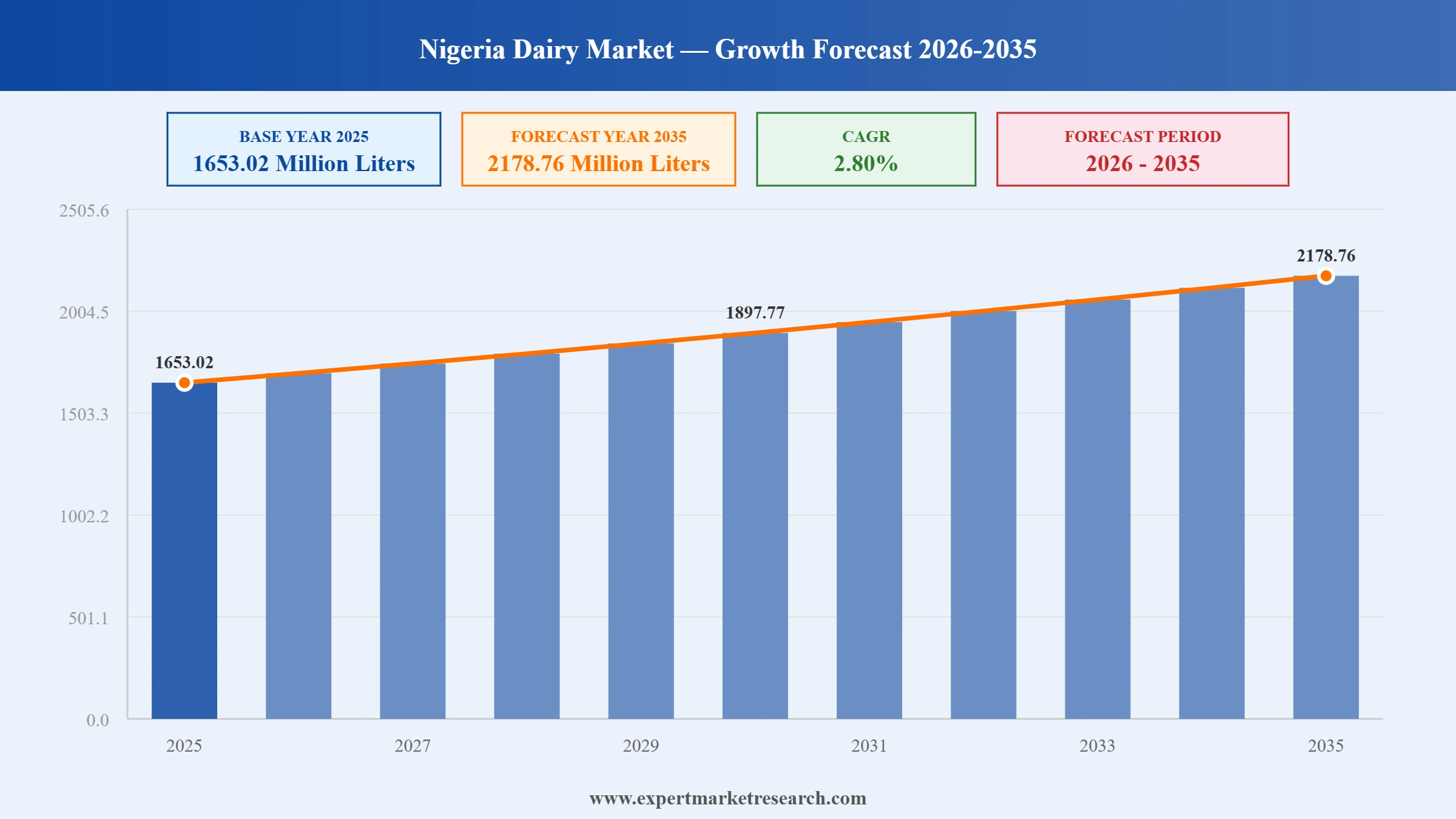
The Nigeria Dairy Market reached a volume of 1653.02 Million Liters at 2025 and is projected to expand at a CAGR of around 2.80% during the forecast period of 2026-2035. With rising nutrition awareness, steady urbanisation, a growing appetite for value-added products like functional yoghurts and fortified milk powder, and increasing public-private partnerships aimed at strengthening the local supply chain, the market is expected to reach 2178.76 Million Liters by 2035.
Read more about this report - REQUEST FREE SAMPLE COPY IN PDF
|
Nigeria Dairy Market Report Summary |
Description |
Value |
|
Base Year |
Million Liters |
2025 |
|
Historical Period |
Million Liters |
2019-2025 |
|
Forecast Period |
Million Liters |
2026-2035 |
|
Market Size 2025 |
Million Liters |
1653.02 |
|
Market Size 2035 |
Million Liters |
2178.76 |
|
CAGR 2019-2025 |
Percentage |
XX% |
|
CAGR 2026-2035 |
Percentage |
2.80% |
|
CAGR 2026-2035 - Market by Product Type |
Cheese |
3.4% |
|
CAGR 2026-2035 - Market by Distribution Channel |
Online |
5.4% |
The Nigeria Dairy Market is undergoing meaningful structural change, driven by rising nutritional awareness, a supportive policy environment, product innovation, and the rapid growth of online retail. Together, these forces are reshaping both the demand landscape and the competitive dynamics of the sector.
Nigeria's Federal Government signed a Memorandum of Understanding with Nestlé Nigeria PLC in April 2026 to establish the Nestlé Dairy Technical Skills Development Centre in Abuja. The centre aims to bridge a critical gap in practical dairy farming expertise by delivering a curriculum that is 70% hands-on farm experience. With Nestlé having already invested over USD 1.2 million in dairy development since 2019, this initiative is expected to modernise husbandry practices, improve milk quality, and reduce Nigeria's annual dairy import bill of approximately USD 1.5 billion.
Nigeria's Ministry of Livestock Development unveiled the National Livestock Growth Acceleration Strategy (NL-GAS) in 2025, targeting a doubling of domestic milk production to 1.4 million tonnes annually by 2030. The six-pillar strategy focuses on improved animal nutrition, genetic upgrading of livestock, dairy value chain transformation, and expanded animal health services. The government also announced plans to scale up national vaccine production from 120 million to 850 million doses annually, signalling a more systematic push to lift productivity among the country's vast but underperforming cattle population.
Nestlé Nigeria launched a Dairy Demonstration Farm in 2025 to showcase modern breeding, feeding, and herd management techniques to local farmers. The farm illustrates how milk yield can be raised from roughly one litre per cow per day to as many as ten litres under improved systems. It builds directly on the Nestlé Livestock Development Project that has been active since 2019, having established 83 dairy cooperatives, trained over 2,000 pastoralists, and aggregated more than one million litres of raw milk.
Fan Milk PLC and Obasanjo Farms Nigeria Limited announced a partnership in 2024 to develop a 2,500-hectare dairy farm in Oyo State, specifically to increase local raw milk production. The move reflects a broader trend of backward integration, where major players are investing directly in upstream farming to secure supply and reduce reliance on imports. This model of local sourcing is gaining traction across Nigeria as companies seek to insulate themselves from currency-related cost pressures on imported dairy ingredients.
In 2024, the Federal Government of Nigeria and Nestlé Nigeria jointly launched a demonstration dairy farm at the Paikon Kore Grazing Reserve in Abuja. The project, backed by over NGN 1.8 billion in investment since 2019, incorporates semi-automated milking systems, sustainable waste management, and artificial insemination. Daily milk collection at the site grew from 200 litres in 2021 to 6,000 litres by 2024, with a target of 30,000 litres per day set for 2027, a milestone that could meaningfully ease local supply constraints.
The Nigerian government's National Dairy Policy (2023-2028) is one of the most consequential forces shaping the Nigeria Dairy Market growth trajectory, introducing targeted interventions in animal genetics, feed systems, finance access, and farmer training. The policy is actively reducing the country's dependence on imported dairy, which historically accounted for roughly 60-70% of annual consumption. In January 2025, the government further formalised its commitment by launching NL-GAS and setting a 2030 production target of 1.4 million tonnes of milk annually. The tangible policy support is creating a more investable environment and encouraging domestic production investments across the value chain.
Nigerian consumers are increasingly reaching for dairy products that offer more than basic nutrition, fuelling demand for probiotic yoghurts, fortified milk powders, and dairy blends enriched with vitamins and minerals. This trend is partly rooted in public health urgency: UNICEF data from June 2024 flagged that around 11 million Nigerian children are living in severe food poverty, highlighting how critical nutrient-dense dairy products have become for household nutrition strategies. Manufacturers are responding with tailored product lines that balance affordability with functional benefits, and this combination is proving especially effective in reaching low-to-middle income consumers who represent a vast and underserved segment of the market.
The online distribution channel is the fastest-growing segment in Nigeria's dairy sector, expanding at a CAGR of 5.8% through the forecast period. Nigeria's digital economy has seen rapid growth, with internet data consumption surpassing one million terabytes in January 2025 as broadband and smartphone access spread to smaller cities and peri-urban areas. As more consumers shop for groceries online, dairy brands are investing in e-commerce partnerships, digital payment integration, and last-mile logistics to capture this growing segment. The shift is particularly pronounced among urban households seeking the convenience of home delivery for perishable products like fresh milk and yoghurt.
Manufacturers in Nigeria are increasingly launching dairy-plant blend products that combine the nutritional value of dairy with the cost efficiency of locally available plant ingredients such as soy. These hybrid products allow companies to price competitively while still delivering key proteins and micronutrients, a balancing act that has become important as currency depreciation drives up the cost of imported dairy inputs. In June 2024, awareness of these blended product innovations was highlighted in national nutrition discussions, where they were noted as a practical tool to address protein-energy malnutrition in vulnerable populations while maintaining commercial viability for manufacturers.
The Expert Market Research's report of Expert Market Research titled "Nigeria Dairy Market Report and Forecast 2026-2035" offers a detailed analysis of the market based on the following segments:
Market Breakup by Product
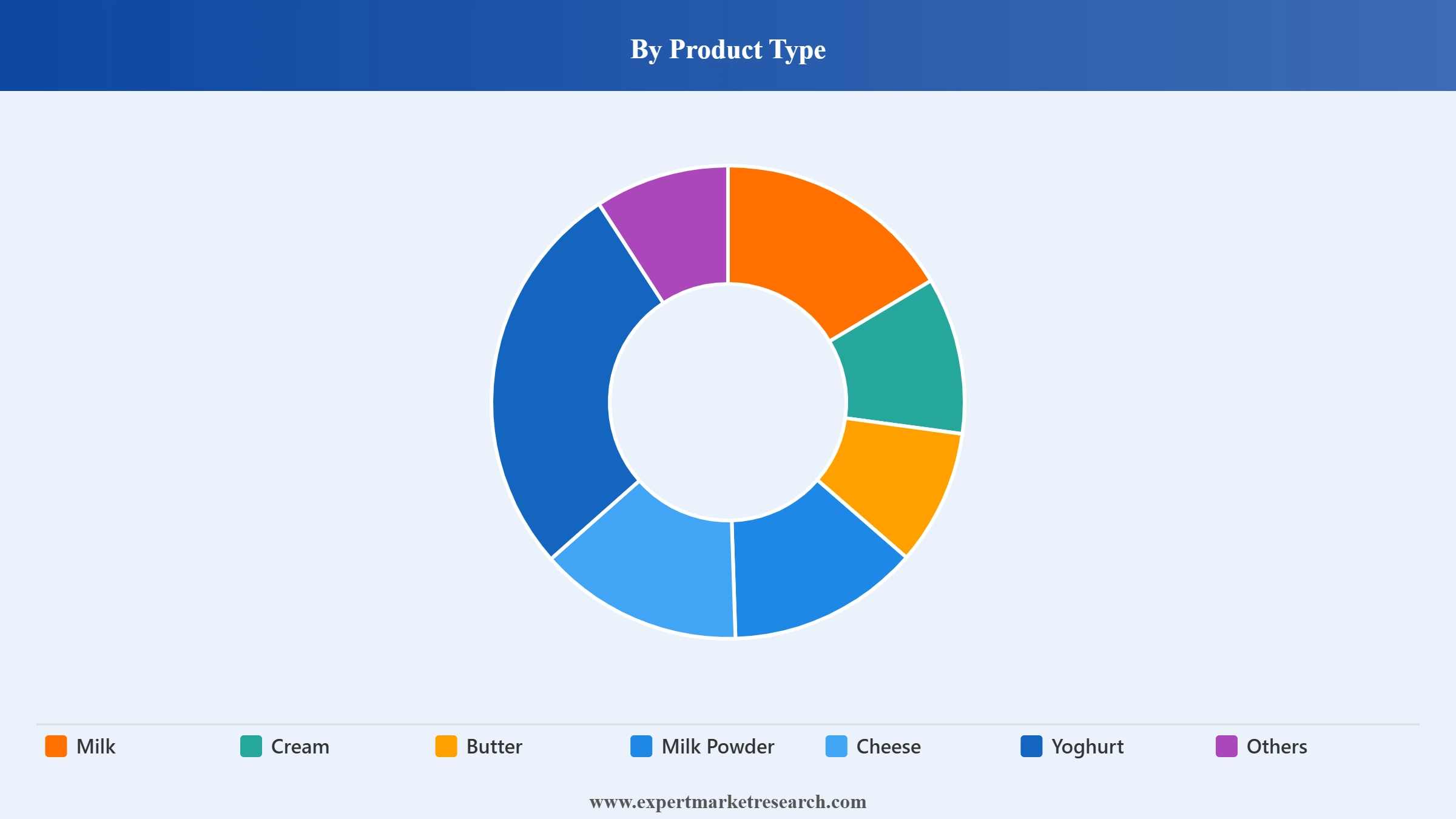
Key Insight: Milk holds the leading share in Nigeria's dairy market, driven by its foundational role in household nutrition and growing consumption linked to urbanisation, rising health awareness, and improvements in cold chain logistics that have made fresh and packaged milk more accessible. Cheese is the fastest-growing product type at a CAGR of 3.4%, reflecting the spreading influence of Western dining culture and the expansion of quick-service restaurants in Nigerian cities. Milk powder remains essential in rural and semi-urban areas due to its affordability and extended shelf life. Meanwhile, yoghurt is gaining steady traction among younger, health-conscious consumers, and dairy-plant blends are emerging as an affordable innovation segment that broadens the market's reach.
Market Breakup by Distribution Channel
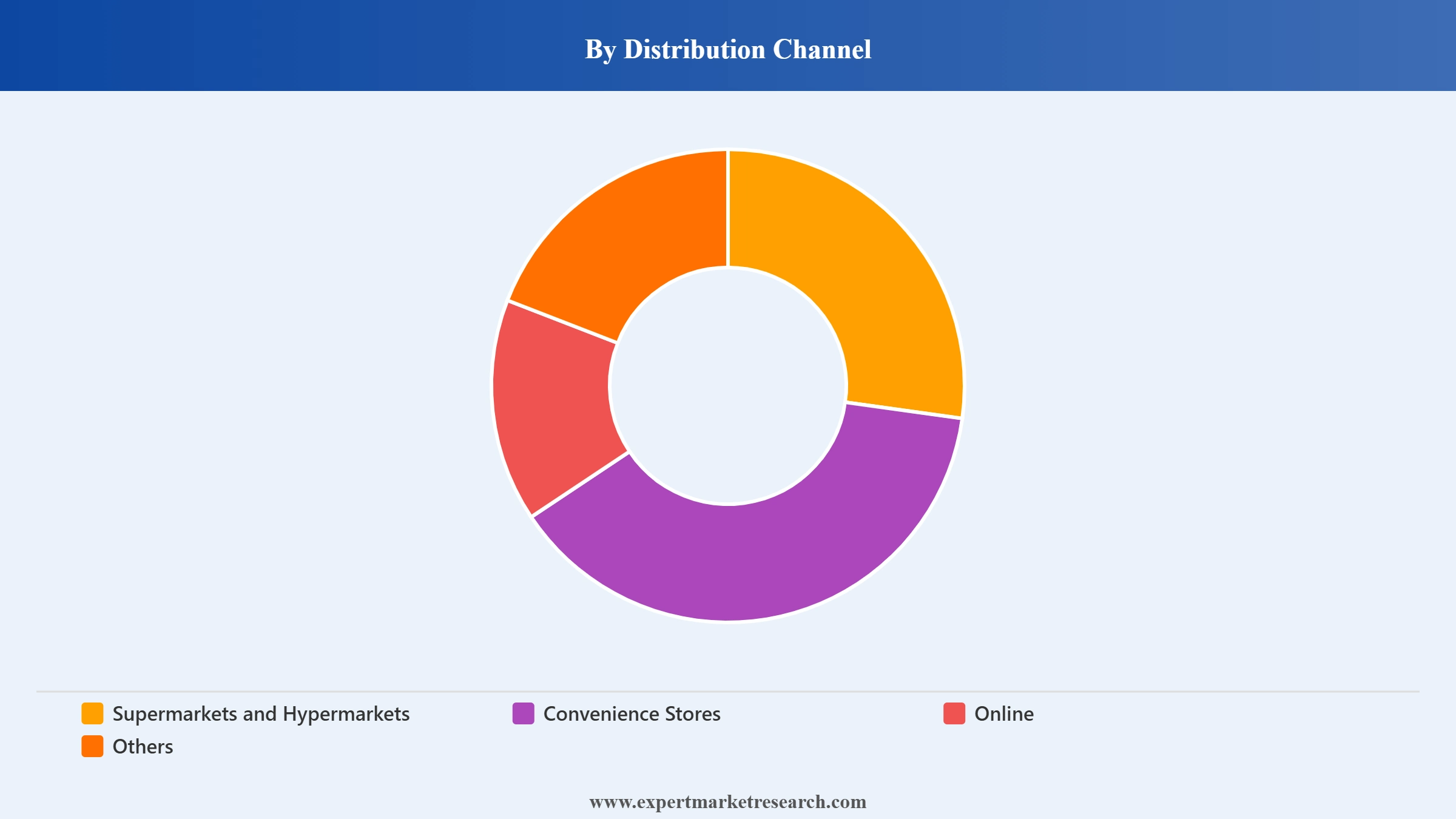
Key Insight: Supermarkets and hypermarkets are the dominant distribution channel for dairy in Nigeria, largely because they can maintain the cold chain environment that fresh dairy products require, something traditional wet markets struggle to guarantee. The modernisation of retail infrastructure, including planned commercial developments like the MKH Shopping Mall in Ibadan, is extending the footprint of formal retail to new geographic areas. The online channel, however, is the fastest-growing segment at a CAGR of 5.8%, fuelled by rising smartphone ownership and growing consumer comfort with digital grocery platforms. Convenience stores continue to serve impulse and top-up purchase occasions, particularly in dense urban settings.
Read more about this report - REQUEST FREE SAMPLE COPY IN PDF
Product Type: Milk commands the largest share among product types, reflecting its deep integration into daily household diets across both urban and rural Nigeria. The segment's dominance is reinforced by the relatively affordable nature of packaged milk compared to other dairy products, as well as the ongoing government and private-sector efforts to increase raw milk output. Cheese is emerging as a high-growth segment due to rapid westernisation of food culture, particularly among younger consumers and the food service sector, with companies like FrieslandCampina and Arla Foods actively expanding their cheese offerings in the market.
Read more about this report - REQUEST FREE SAMPLE COPY IN PDF
Distribution Channel: Supermarkets and hypermarkets account for the dominant share of dairy distribution in Nigeria due to their ability to maintain cold storage, offer diverse product ranges, and ensure product quality and hygiene standards that traditional markets cannot match. Key retailers are expanding to new cities and suburban areas, pulling more consumers into the organised retail ecosystem. In July 2024, the partnership between MKH Properties and the Oyo State Government to develop a major shopping mall in Ibadan highlighted the momentum behind retail infrastructure growth in Nigeria.
Read more about this report - REQUEST FREE SAMPLE COPY IN PDF
Nigeria's dairy market is characterised by a blend of international heavyweights and locally embedded players, each pursuing distinct strategies to capture share in a market that remains underpenetrated relative to its demographic size. The competitive structure reflects two divergent priorities: global brands are leveraging product breadth, technological capability, and supply chain know-how, while local players are competing on affordability, distribution proximity, and community relationships.
Key competitive activities centre on backward integration, where companies invest directly in dairy farming to secure raw milk supply; product innovation, particularly around fortified and functional variants; and distribution expansion, with online and organised retail becoming the main battlegrounds for growth. The entry of public-private partnerships and development-finance-backed programmes has added a further dimension, with some international players partnering with the Nigerian government to build long-term market foundations rather than pursuing short-term volume alone.
Alongside product development, several dairy companies are investing in long-term strategies to strengthen local value chains and ensure sustainable supply. Initiatives include farmer training programmes, local sourcing of ingredients such as soy, and the establishment of processing facilities to enhance dairy productivity. Many reputed Nigeria dairy companies are also deepening retail penetration through modern trade, digital platforms, and on-ground activations, thereby supporting market growth.
Founded in 2000 through a merger of Danish and Swedish dairy cooperatives, Arla Foods is headquartered in Viby J, Denmark. In Nigeria, Arla operates through a combination of imported products and active local development programmes. The company renewed its partnership with the Nigerian government through a new five-year MoU, committing to cooperative development, sustainability, and farmer training. Arla is part of the Milky Way Partnership, which provides boreholes, grazing pastures, and skills development to smallholder farmers in northern Nigeria, combining commercial operations with a genuine development mandate.
Founded in 1919 and headquartered in Paris, France, Danone operates globally across dairy, plant-based, and specialised nutrition segments. In the Nigerian context, Danone's presence spans value-added dairy categories including fortified products and yoghurts. The company's global focus on health and nutritional science gives it a strategic edge in Nigeria's growing functional dairy segment, where consumers are increasingly seeking products that address specific nutritional needs. Danone's established expertise in cold chain management and retail partnerships makes it a formidable competitor across both urban and semi-urban Nigerian markets.
FrieslandCampina WAMCO Nigeria PLC is a publicly listed subsidiary of Dutch dairy giant Royal FrieslandCampina, and one of the most recognisable dairy brands in Nigeria through products like Peak Milk. The company combines global R&D strength with deep local market knowledge built over decades of Nigerian operations. FrieslandCampina WAMCO has made notable investments in local sourcing and farmer development, reinforcing its supply chain while improving quality standards. Its wide retail distribution and strong brand equity across income segments make it a category leader in fluid milk and milk powder in the Nigerian market.
AMAL Food and Beverages Limited is a Nigeria-based dairy company with a focused presence in the domestic market. The company operates in key dairy product categories with an emphasis on serving price-sensitive segments, making it particularly relevant in semi-urban and emerging retail areas. AMAL's local production capabilities and proximity to Nigerian consumers give it supply chain advantages over purely import-dependent competitors. Its ability to adapt product formulations and pricing to local affordability thresholds positions it well in a market where cost remains a primary purchase driver for a significant share of consumers.
Other key players in the market are Zayith Foods, Chi Limited, Promasidor Holdings Limited, Nestlé Nigeria PLC, and Others.
*Please note that this is only a partial list; the complete list of key players is available in the full report. Additionally, the list of key players can be customized to better suit your needs.*
Discover the opportunities shaping Nigeria's dairy sector with our detailed 2026 to 2035 market report. Whether you are a multinational assessing your Africa strategy, a local player planning a capacity expansion, or an investor evaluating the sector's fundamentals, this report gives you the data and context you need to act with confidence. From product type trends and distribution channel dynamics to competitive intelligence and demand forecasts, the insights are all in one place. Download your free sample today and take the first step toward understanding one of Africa's most dynamic dairy markets.


Upto 15% Off
USD
$2499 $2249
$3999 $3599
$4999 $4249
$5999 $5099


*While we strive to always give you current and accurate information, the numbers depicted on the website are indicative and may differ from the actual numbers in the main report. At Expert Market Research, we aim to bring you the latest insights and trends in the market. Using our analyses and forecasts, stakeholders can understand the market dynamics, navigate challenges, and capitalize on opportunities to make data-driven strategic decisions.*
In 2025, the Nigeria Dairy Market reached an approximate volume of 1653.02 Million Liters.
The market is projected to grow at a CAGR of 2.80% between 2026 and 2035.
The key players in the market include Arla Foods, FrieslandCampina WAMCO Nigeria PLC, Danone SA, AMAL Food & Beverages Limited, CHI Limited, Fan Milk Nigeria (a Danone Company), and Nestlé Nigeria.
Key strategies include local sourcing and backward integration, launch of affordable and nutritious product variants, capacity building for dairy farmers, expansion of cold chain and retail infrastructure, and leveraging e-commerce and digital marketing to boost reach and accessibility.
The largest product segment in the market is milk, due to its widespread consumption driven by Nigeria’s rapidly growing population, urbanisation, and increasing health awareness. Milk is a staple in many households, providing essential nutrients and forming the base for other dairy products, which supports its dominant market share.
Explore our key highlights of the report and gain a concise overview of key findings, trends, and actionable insights that will empower your strategic decisions.
| REPORT FEATURES | DETAILS |
| Base Year | 2025 |
| Historical Period | 2019-2025 |
| Forecast Period | 2026-2035 |
| Scope of the Report |
Historical and Forecast Trends, Industry Drivers and Constraints, Historical and Forecast Market Analysis by Segment:
|
| Breakup by Product Type |
|
| Breakup by Distribution Channel |
|
| Market Dynamics |
|
| Competitive Landscape |
|
| Companies Covered |
|
Datasheet
One User
USD 2,499
USD 2,249
tax inclusive*
Single User License
One User
USD 3,999
USD 3,599
tax inclusive*
Five User License
Five User
USD 4,999
USD 4,249
tax inclusive*
Corporate License
Unlimited Users
USD 5,999
USD 5,099
tax inclusive*
*Please note that the prices mentioned below are starting prices for each bundle type. Kindly contact our team for further details.*
Flash Bundle
Small Business Bundle
Growth Bundle
Enterprise Bundle
*Please note that the prices mentioned below are starting prices for each bundle type. Kindly contact our team for further details.*
Flash Bundle
Number of Reports: 3
20%
tax inclusive*
Small Business Bundle
Number of Reports: 5
25%
tax inclusive*
Growth Bundle
Number of Reports: 8
30%
tax inclusive*
Enterprise Bundle
Number of Reports: 10
35%
tax inclusive*
How To Order

Select License Type
Choose the right license for your needs and access rights.

Click on ‘Buy Now’
Add the report to your cart with one click and proceed to register.

Select Mode of Payment
Choose a payment option for a secure checkout. You will be redirected accordingly.
Strategic Solutions for Informed Decision-Making
Gain insights to stay ahead and seize opportunities.

Get insights & trends for a competitive edge.

Track prices with detailed trend reports.

Analyse trade data for supply chain insights.

Leverage cost reports for smart savings

Enhance supply chain with partnerships.

Connect For More Information
Our expert team of analysts will offer full support and resolve any queries regarding the report, before and after the purchase.
Our expert team of analysts will offer full support and resolve any queries regarding the report, before and after the purchase.
We employ meticulous research methods, blending advanced analytics and expert insights to deliver accurate, actionable industry intelligence, staying ahead of competitors.
Our skilled analysts offer unparalleled competitive advantage with detailed insights on current and emerging markets, ensuring your strategic edge.
We offer an in-depth yet simplified presentation of industry insights and analysis to meet your specific requirements effectively.




