

Consumer Insights
Uncover trends and behaviors shaping consumer choices today
Procurement Insights
Optimize your sourcing strategy with key market data
Industry Stats
Stay ahead with the latest trends and market analysis.
The Nigeria electric vehicle charging station market was valued at USD 1.24 Billion in 2025. The market is expected to grow at a CAGR of 27.40% during the forecast period of 2026-2035 to reach a value of USD 13.97 Billion by 2035. The gradual removal of fuel subsidies in Nigeria and the increase in diesel prices are pushing logistics and ride-hailing fleets to consider electrification, thereby speeding up the demand for reliable charging hubs that are integrated with solar backup and smart load management systems.
The energy transition plan of the Federal Government, which is targeted at achieving net-zero emissions by 2060, highlights the electrification of transport as a key lever. Furthermore, state-level transport authorities in Lagos are testing electric buses, supporting the surging, supporting the surging demand in the Nigeria electric vehicle charging station market, and justifying investments in semi-public charging stations. These measures not only lower the risk of early-stage infrastructure investments but also give fleet operators more assurance when it comes to charging cycles as well as operating costs.
According to the Nigeria electric vehicle charging station market analysis, in 2023, the country spent USD 25 billion on petroleum imports, a structural vulnerability that has intensified interest in electrified transport and localized energy solutions. In response, companies are introducing bundled solutions, where OEM-linked charging networks are expected to drive early commercial adoption. In February 2026, Nigeria’s first locally assembled electric SUV, the Hyundai Kona, was inaugurated by the Lagos State Governor at Stallion Group’s VON plant, marking a green automotive milestone.
The Nigeria electric vehicle charging station market is developing in clusters. The majority of electric vehicle charging station installations continue to center around Lagos and Abuja. For example, in July 2025, Qoray and Sheraton Lagos Hotel launched a new fast EV charging station in Ikeja, boosting Nigeria’s electric vehicle infrastructure and accessibility. However, there has been a shift in conversation from single chargers to energy-integrated sites that combine solar-battery storage, and smart metering. Despite the fact that power availability varies from one distribution company to another, operators are being compelled to come up with hybridized station designs rather than units that are dependent on the grid. This design preference is influencing procurement strategies, technology partnerships, as well as capital allocation models across the value chain.
Compound Annual Growth Rate
27.4%
Value in USD Billion
2026-2035
|
Nigeria Electric Vehicle Charging Station Market Report Summary |
Description |
Value |
|
Base Year |
USD Billion |
2025 |
|
Historical Period |
USD Billion |
2019-2025 |
|
Forecast Period |
USD Billion |
2026-2035 |
|
Market Size 2025 |
USD Billion |
1.24 |
|
Market Size 2035 |
USD Billion |
13.97 |
|
CAGR 2019-2025 |
Percentage |
XX% |
|
CAGR 2026-2035 |
Percentage |
27.40% |
|
CAGR 2026-2035 - Market by Power Output |
Fast Chargers |
30.2% |
|
CAGR 2026-2035 - Market by Application |
Three Phase |
29.3% |
LOXEA Nigeria launched BYD electric vehicles and associated services including charging and maintenance, advancing EV adoption in West Africa. Independent operators can develop branded multi-OEM charging stations, aftersales service centers, and mobile charging solutions to complement growing EV dealership networks, capitalizing on these trends in the Nigeria electric vehicle charging station market.
Nigeria inaugurated Africa’s largest locally assembled EV charging station in Abuja to boost EV infrastructure and reduce fossil fuel reliance. Energy companies can invest in solar-hybrid mega charging hubs, battery storage facilities, and public-private partnerships to replicate high-capacity charging models across major cities.
Nigeria’s Saglev and Kenya’s Rideence begin locally assembling electric vans from Chinese EV kits, expanding Africa’s clean transport and reducing emissions. Firms can therefore partner with local assemblers to deploy fleet-focused depot charging hubs and route-based fast-charging corridors for commercial vans, leveraging such developments in the Nigeria electric vehicle charging station market.
LUG West Africa announced plans to install 250 EV charging points across Lagos, scaling Nigeria’s public charging infrastructure for e-mobility. Technology providers can supply smart charging software, payment integration systems, grid-balancing solutions, and renewable energy storage to support scalable nationwide charging networks.
Nigeria’s grid instability is compelling developers of charging stations to rethink traditional AC installations. Companies are now combining photovoltaic panels and lithium-ion storage for stabilizing supply. The Rural Electrification Agency has installed solar mini-grids in deprived areas, thus, it is already creating a model of modular power architecture, boosting demand in the Nigeria electric vehicle charging station market. Such dependability is turning into a differentiator when negotiating contracts with fleet managers. In July 2025, Nigerian electric mobility startup MAX introduced West Africa’s first solar-powered EV battery swap station, enabling reliable, 24/7 clean energy mobility.
Instead of concentrating on public highway charging stations, developers are giving priority to depot-based infrastructure for buses and delivery vans. Lagos Metropolitan Area Transport Authority has been moving along with electric bus pilots under its Bus Reform Initiative, thus private partners are being encouraged to invest in charging yards. Charging of a fleet guarantees the usage of charging points therefore revenue becomes more predictable. Operators can structure long-term service agreements instead of depending on sporadic consumer traffic. This Nigeria electric vehicle charging station market trend is influencing hardware specifications as well. Higher-capacity DC fast chargers are being procured to support turnaround efficiency, particularly for commercial fleets operating on fixed urban routes. In October 2023, a United States-based electric vehicle manufacturer partnered with petrol stations across Nigeria to roll out charging stations.
Companies like Oando Plc are indicating interest in clean energy investments, positioning themselves to diversify beyond traditional fuel retail. Partnerships between OEM importers and energy firms are emerging as a preferred model. This alignment allows shared capital expenditure and access to existing forecourt networks, accelerating the Nigeria electric vehicle charging station market penetration. Fuel retail sites that install charging stations can easily leverage their existing real estate and benefit from the traffic that comes with it. In December 2025, Nigeria’s government rolled out 240 solar-powered electric tricycles and 12 campus solar charging stations to enhance clean, affordable student mobility across the nation.
Technology providers are coming up with software that can analyze and monitor the consumption, the times when the power is off, and the moments of the highest consumption. Fintech adoption in Nigeria is growing rapidly while prompting EV charging providers to integrate digital wallets and QR code payment systems. This reduces cash handling risks and improves data capture. Advanced analytics allow operators to forecast demand windows and adjust tariffs dynamically. Such intelligence strengthens investor confidence because asset performance can be measured in real time, thereby redefining the entire Nigeria electric vehicle charging station market dynamics. In March 2024, Egoras Technology announced plans to flag off a blockchain-powered “Egostation” fast EV charging hub in Port Harcourt this June, enhancing Nigeria’s charging ecosystem.
Nigeria’s automotive policy encourages local assembly to reduce import dependency. Importing every component exposes operators to currency volatility. One of the ways that companies can reduce costs and accelerate deployment is by looking into the possibility of partial local manufacture of mounting structures, enclosures, and wiring systems, accelerating the Nigeria electric vehicle charging station market value. In November 2024, Nigerian automaker Innoson Vehicles Manufacturing introduced its first line of locally produced EVs.
The EMR’s report titled “Nigeria Electric Vehicle Charging Station Market Report and Forecast 2026-2035” offers a detailed analysis of the market based on the following segments:
Market Breakup by Power Output
Key Insight: Rapid chargers are leading the overall Nigeria electric vehicle charging station market growth because fleets demand speed and utilization certainty. Fast chargers are expanding their shares in the market due to balanced capital exposure and scalability. Slow chargers remain relevant in gated facilities, corporate campuses, and residential estates where vehicles park overnight. Developers are aligning charger type with revenue model, grid access, and land use profile.
Market Breakup by Application
Key Insight: As per the Nigeria electric vehicle charging station market report, three phase systems continue to lead the industry because commercial electrification requires stability and load efficiency. Single phase installations are growing as developers and private operators future-proof properties with manageable infrastructure upgrades. Industrial deployments demand robust electrical architecture, while residential and small commercial users prefer adaptable solutions with lower entry barriers. Shafa Energy, NNPC New Energies and Nigus opened Nigeria’s first EV charging station in Abuja and signed MoU for nationwide rollout in May 2024. Developers are increasingly planning dual-compatibility layouts to avoid costly electrical redesign later.
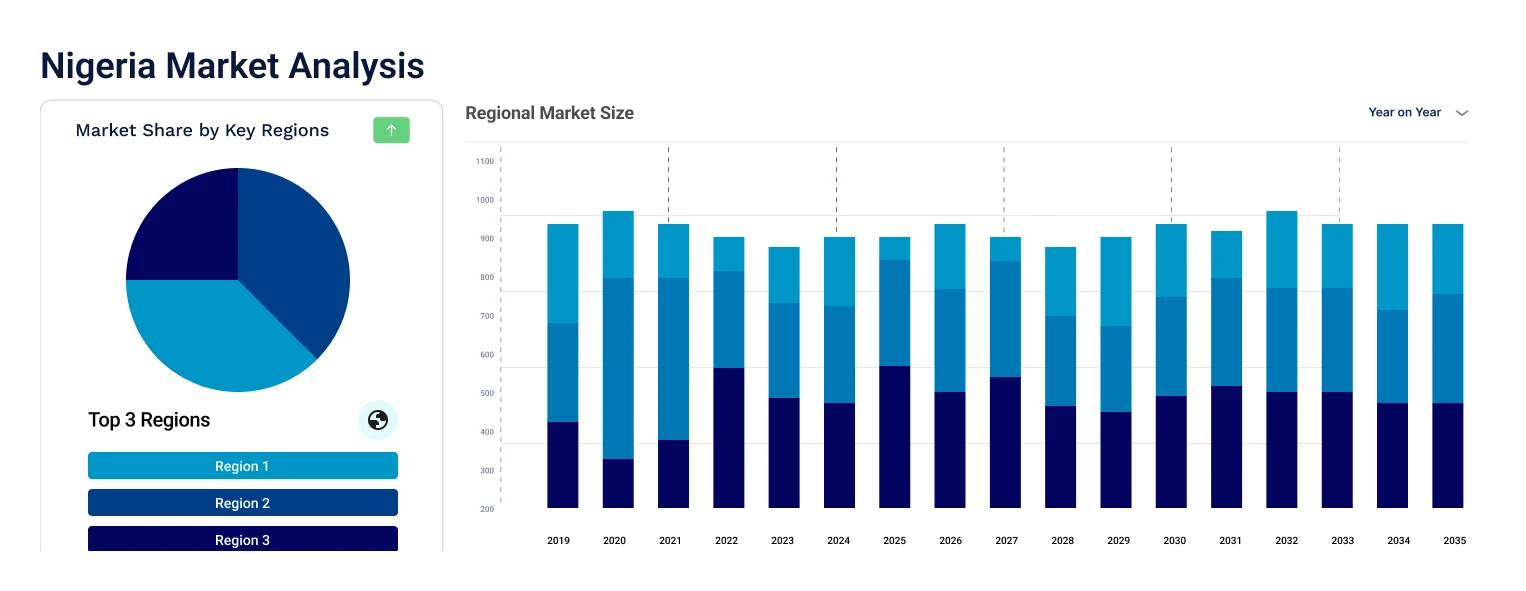
By power output, rapid chargers lead the overall market revenue growth through fleet utilization focus
Rapid chargers are currently dominating strategic deployments across Nigeria’s commercial corridors. Operators are prioritizing high-capacity DC systems because fleet operators cannot afford long idle time. Depot-based bus operators and logistics fleets require predictable turnaround windows. Energy companies entering the charging segment are also favoring these systems since higher output improves revenue per site. In Lagos, early pilot hubs are being designed with future upgrade capacity, meaning civil works already accommodate additional high-voltage equipment.
Fast chargers, powered by their balanced cost and flexibility, largely contribute to the Nigeria electric vehicle charging station market revenue. These systems require lower upfront capital than rapid units while still supporting impactful turnaround efficiency. Commercial property developers are showing preference for fast chargers in mixed-use complexes where dwell time averages one to three hours. This category also aligns well with hybrid solar integration because power draw is more manageable under Nigeria’s grid constraints. Installers are marketing modular fast-charging cabinets that can be expanded as vehicle penetration increases. For example, Possible EVS offers “Charging Hubs” with ultra-fast public EV stations in Abuja.
By application, three phase systems dominate commercial fleet electrification projects
As per the Nigeria electric vehicle charging station market report, three phase charging systems account for the largest number of commercial installations due to higher power handling and stability. Fleet depots, logistics warehouses, and transport terminals require consistent load distribution across multiple vehicles. Three phase infrastructure supports rapid and fast chargers without excessive voltage imbalance. Energy partners are structuring projects around industrial-grade transformers and dedicated substations. This setup reduces operational interruptions that would otherwise erode fleet confidence. In urban centers like Lagos, developers are negotiating direct supply agreements with distribution companies to stabilize three phase access. In May 2023, Chinese manufacturer Yutong and Oando Clean Energy announced plans to supply 12,000 electric buses and charging infrastructure to Lagos over seven years
Single phase charging is gaining momentum across the Nigeria electric vehicle charging station market dynamics through residential estates and controlled commercial environments. Real estate developers are embedding single phase conduits into parking layouts for futureproofing. These systems are less complex to install and align with lower-capacity slow or moderate fast chargers. Private companies testing EV fleets are also installing single phase units at office compounds to support daytime top-ups. Though not ideal for heavy fleet cycles, single phase solutions support gradual market transition.
Competition in the market is centering around energy integration, fleet contracts, and real estate partnerships. Oil and gas companies are leveraging forecourt networks to test charging add-ons. Nigeria electric vehicle charging station market players are differentiating through technology customization and solar hybridization. International technical partners are entering the market via equipment supply agreements.
Players are competing less on hardware price and more on uptime assurance and energy management capability. Software platforms that monitor performance remotely are becoming strategic assets. Access to land in Lagos and Abuja remains a competitive advantage. Nigeria electric vehicle charging station companies that secure high-traffic corridors early are positioning themselves for long-term dominance. Investors are focused on building replicable site models that can withstand grid volatility and currency fluctuations.
NEV Electric is a Nigerian-owned EV company, founded in 2012, that assembles EVs and installs charging infrastructure. NEV Electric assembles electric buses and cars with growing Nigerian content while developing fast-charging stations in Abuja and Lagos to support the electrification of fleets and alleviate range anxiety. The company also provides innovative financing solutions and skill development initiatives to promote EVs and the development of the Nigerian industry.
NNPC Ltd., established in 1977 and headquartered in Abuja, Nigeria, is repositioning from traditional fuel retail toward energy diversification. The company is exploring EV charging pilots within selected retail outlets. Its advantage lies in nationwide station networks and regulatory alignment. NNPC is focusing on hybrid power integration models before large-scale rollout.
SAGLEV Inc., founded in 2017 and headquartered in Lagos, Nigeria, operates EV assembly and charging initiatives in Nigeria. The company focuses on locally assembled electric vehicles paired with charging infrastructure deployment. SAGLEV promotes integrated ecosystems, combining vehicle importation, assembly, and station installation to accelerate structured electrification adoption.
Founded in the year 1982 and based in Nigeria, Nigus International is a clean energy and technology company based in Abuja, led by HRH Prince Malik Ado-Ibrahim, with a focus on renewable energy technologies and EV charging infrastructure. The company develops smart micro-grid, solar, and battery energy storage solutions while implementing EV charging stations across Nigeria.
*Please note that this is only a partial list; the complete list of key players is available in the full report. Additionally, the list of key players can be customized to better suit your needs.*
Other key players in the market include Electromaps (A wall Box Company), among others.
Explore the latest trends shaping the Nigeria electric vehicle charging station Market 2026-2035 with our in-depth report. Gain strategic insights, future forecasts, and key market developments that can help you stay competitive. Download a free sample report or contact our team for customized consultation on Nigeria electric vehicle charging station market trends 2026.


Upto 15% Off
USD
$2499 $2249
$3999 $3599
$4999 $4249
$5999 $5099


*While we strive to always give you current and accurate information, the numbers depicted on the website are indicative and may differ from the actual numbers in the main report. At Expert Market Research, we aim to bring you the latest insights and trends in the market. Using our analyses and forecasts, stakeholders can understand the market dynamics, navigate challenges, and capitalize on opportunities to make data-driven strategic decisions.*
In 2025, the Nigeria electric vehicle charging station market reached an approximate value of USD 1.24 Billion.
The market is projected to grow at a CAGR of 27.40% between 2026 and 2035.
The key players in the market include NEV Electric, NNPC Ltd., SAGLEV Inc., Nigus International, and Electromaps (A wall Box Company), among others.
Forming fleet partnerships, integrating solar storage, securing premium urban land, developing modular charging hubs, and negotiating power stability agreements are strengthening long-term positioning while managing deployment risk.
Grid instability, high capital costs, foreign exchange volatility, limited EV penetration, unclear regulatory incentives, and land acquisition constraints continue slowing infrastructure scale-up across Nigeria’s emerging charging ecosystem.
Explore our key highlights of the report and gain a concise overview of key findings, trends, and actionable insights that will empower your strategic decisions.
| REPORT FEATURES | DETAILS |
| Base Year | 2025 |
| Historical Period | 2019-2025 |
| Forecast Period | 2026-2035 |
| Scope of the Report |
Historical and Forecast Trends, Industry Drivers and Constraints, Historical and Forecast Market Analysis by Segment:
|
| Breakup by Power Output |
|
| Breakup by Application |
|
| Market Dynamics |
|
| Competitive Landscape |
|
| Companies Covered |
|
Datasheet
One User
USD 2,499
USD 2,249
tax inclusive*
Single User License
One User
USD 3,999
USD 3,599
tax inclusive*
Five User License
Five User
USD 4,999
USD 4,249
tax inclusive*
Corporate License
Unlimited Users
USD 5,999
USD 5,099
tax inclusive*
*Please note that the prices mentioned below are starting prices for each bundle type. Kindly contact our team for further details.*
Flash Bundle
Small Business Bundle
Growth Bundle
Enterprise Bundle
*Please note that the prices mentioned below are starting prices for each bundle type. Kindly contact our team for further details.*
Flash Bundle
Number of Reports: 3
20%
tax inclusive*
Small Business Bundle
Number of Reports: 5
25%
tax inclusive*
Growth Bundle
Number of Reports: 8
30%
tax inclusive*
Enterprise Bundle
Number of Reports: 10
35%
tax inclusive*
How To Order

Select License Type
Choose the right license for your needs and access rights.

Click on ‘Buy Now’
Add the report to your cart with one click and proceed to register.

Select Mode of Payment
Choose a payment option for a secure checkout. You will be redirected accordingly.
Strategic Solutions for Informed Decision-Making
Gain insights to stay ahead and seize opportunities.

Get insights & trends for a competitive edge.

Track prices with detailed trend reports.

Analyse trade data for supply chain insights.

Leverage cost reports for smart savings

Enhance supply chain with partnerships.

Connect For More Information
Our expert team of analysts will offer full support and resolve any queries regarding the report, before and after the purchase.
Our expert team of analysts will offer full support and resolve any queries regarding the report, before and after the purchase.
We employ meticulous research methods, blending advanced analytics and expert insights to deliver accurate, actionable industry intelligence, staying ahead of competitors.
Our skilled analysts offer unparalleled competitive advantage with detailed insights on current and emerging markets, ensuring your strategic edge.
We offer an in-depth yet simplified presentation of industry insights and analysis to meet your specific requirements effectively.




