

Consumer Insights
Uncover trends and behaviors shaping consumer choices today
Procurement Insights
Optimize your sourcing strategy with key market data
Industry Stats
Stay ahead with the latest trends and market analysis.
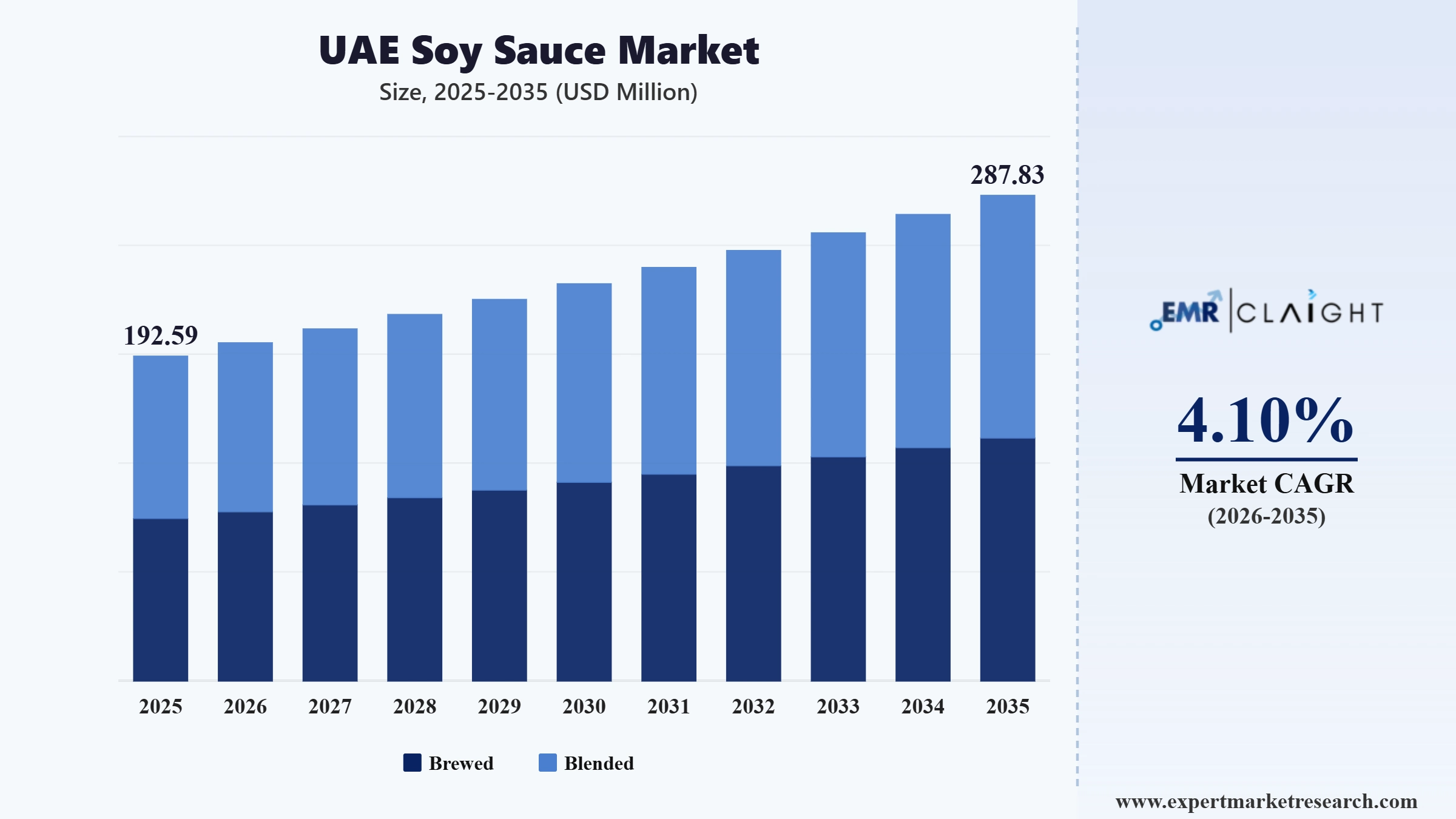
The UAE soy sauce market was valued at USD 192.59 Million in 2025. The market is expected to grow at a CAGR of 4.10% during the forecast period of 2026-2035 to reach a value of USD 287.83 Million by 2035. Rapid expansion of Asian fine-dining concepts across Dubai and Abu Dhabi is rapidly increasing the need for high-quality brewed soy sauces specifically made for professional kitchens and high-volume hospitality environments.
According to the UAE soy sauce market analysis, Korean spicy ramen and sauce exports jumped 43% into Middle Eastern markets, reflecting rising regional demand for culturally tailored food products. This expansion coincided well with the arrival of over 17 million tourists from around the world in 2025, the figure released by Dubai's Department of Economy and Tourism, which further intensifies the demand for diverse Asian cuisine offerings in the city's hotels and quick service restaurants. Companies are aiming to place their premium naturally brewed soy sauce flavors in the kitchens of upscale hospitality establishments where authenticity, thus the ability to charge a higher price, is expected.
The UAE soy sauce market is shifting beyond traditional dark and light variants, embracing premium, flavored, and specialty offerings. Importers are bringing in reduced-sodium, organic, and gluten-free options that are specifically designed to meet the needs of health-conscious urban consumers. In January 2025, Lee Kum Kee introduced a reduced-sodium soy sauce to cater to rising health-conscious consumer demand. Meanwhile, foodservice distributors are locking down the supply of Japanese and Korean restaurant chains that are expanding their presence in Dubai and Abu Dhabi through exclusive agreements. Differentiating products is becoming essential as suppliers are also channeling their resources into packaging innovation, such as portion-controlled sachets for cloud kitchens and bulk dispenser systems for hotel buffets.
Regional trade infrastructure is one major factor that contributes to the overall UAE soy sauce market growth. Jebel Ali Port continues to be one of the largest container hubs in the world, thus allowing the continuous flow of imports from East Asia. Distributors have been taking advantage of this to keep their inventory cycles stable. Premiumization, private labeling, and chef-driven branding have become the major strategies in procurement negotiations between retail and hospitality sectors. In June 2024, Shimlared launched a variety of ready-to-eat Chinese sauces targeting convenient cooking trends and expanding international retail penetration. One more aspect that influences the market is the UAE’s powerful re-export system. Food importers usually re-export these packaged sauces to the neighboring Gulf countries. Meanwhile, supermarket chains are growing their private label condiment lines and thus are able to offer competitively priced soy sauce variants to their targeted mid-income expatriate households.
Read more about this report - REQUEST FREE SAMPLE COPY IN PDF
|
UAE Soy Sauce Market Report Summary |
Description |
Value |
|
Base Year |
USD Million |
2025 |
|
Historical Period |
USD Million |
2019-2025 |
|
Forecast Period |
USD Million |
2026-2035 |
|
Market Size 2025 |
USD Million |
192.59 |
|
Market Size 2035 |
USD Million |
287.83 |
|
CAGR 2019-2025 |
Percentage |
XX% |
|
CAGR 2026-2035 |
Percentage |
4.10% |
|
CAGR 2026-2035 - Market by Region |
Dubai |
4.7% |
|
CAGR 2026-2035 - Market by Application |
Food Processing and Food Service Industry |
4.6% |
|
CAGR 2026-2035 - Market by Type |
Brewed |
4.5% |
Yumart promoted top-selling Chinese soy sauce brands to global buyers, emphasizing export-ready packaging, bulk formats, and competitive OEM supply capabilities. Such export-oriented positioning creates opportunity for importers to secure private-label contracts and diversify Asian condiment portfolios for retail and HORECA channels, accelerating the UAE soy sauce market growth.
Singapore’s 133-year-old sauce maker Kwong Cheong Thye inaugurated a modern production facility to increase capacity and accelerate overseas shipments. UAE distributors can partner with heritage Asian brands scaling production, ensuring premium, authentic soy sauce supply for gourmet retail and foodservice expansion.
Shandong Seasir strengthened its international distribution network, reinforcing its role as a large-scale soy sauce and vinegar OEM supplier. Such developments in the UAE soy sauce market present opportunity for region-based private labels to collaborate with high-volume manufacturers for customized halal-certified soy sauce production.
Thai brand Deksomboon launched soy sauce-infused candy, demonstrating flavor diversification beyond traditional liquid condiments. UAE food innovators can experiment with fusion snacks and soy-based flavor formats, targeting younger consumers seeking novel Asian-inspired taste experiences.
Halal certification cannot be ignored anymore in the United Arab Emirates. In order to deepen retail penetration, international soy sauce brands are obtaining recognized halal accreditation. Companies like Lee Kum Kee have extended halal-certified products to other Gulf markets for foodservice and retail compliance. Premium naturally brewed soy sauces are being positioned as clean- label products. This UAE soy sauce market trend enables companies to charge relatively higher prices. Retailers are dedicating more store space to imported premium condiments. The emphasis is on authenticity together with regulatory assurance. The combination is resulting in higher value transactions in the soy sauce category. In October 2025, K-food brands broaden UAE footprint via halal-certified Hanwoo processing and faster delivery services, boosting Korean culinary demand locally.
The region’s hospitality scenario is impacting packaging strategy, redefining the entire UAE soy sauce market dynamics. Representative Asian restaurant groups and large-scale hotel chains necessitate bulk packaging with dispensing equipment that is easy to use. Certain distributors are experimenting with refill models aimed at lowering packaging waste. Cloud kitchens are also buying portion-controlled sachets to keep the cost per order in check. Packaging affects contract discussions with hotel procurement managers who value consistency and storage efficiency. In December 2025, Heliograf and Vert Design launched a plant-fiber, plastic-free soy sauce dropper, replacing single-use plastic fish sachets with home-compostable alternatives.
Urban buyers are becoming increasingly interested in low sodium and gluten-free variants. Retailers have witnessed better sales of health-positioned SKUs. Producers are changing the recipe of their dishes without lowering the intensity of flavor. Organic soy sauce varieties are making their way into the top supermarket chains in Dubai. Clean-label selling points are winning over the younger generation as well as wellness-focused families. Importers are elaborating on the length of the fermentation process and non-GMO soybean sourcing in their product descriptions, accelerating the overall demand in the UAE soy sauce market. The health-driven reformulation of products gives the opportunity to brands for higher shelf pricing while at the same time it allows them to tap into a niche yet rapidly growing consumer segments. In October 2024, Dubai-based Lily Hoa Nguyen partnered with Vietnamese masters to highlight authentic Vietnamese flavors and elevate regional fine-dining experiences.
Leading supermarket chains in the UAE are aggressively expanding their private label condiment portfolios. By placing competitively priced alternatives next to premium imports, supermarkets are able to attract a larger consumer base. Distributors of private-label products usually enter into long-term agreements, which lead to steady volume flows, propelling the UAE soy sauce market penetration. In July 2025, Unilever Food Solutions’ Knorr Professional soy sauce line achieved significant innovation recognition, boosting flavor consistency and culinary performance for chefs.
Importers take advantage of bonded warehousing facilities to re-export soy sauce in packages to Oman, Bahrain, and East Africa. Suppliers are able to secure larger shipment volumes as a result of the combined domestic and re-export demand, leveraging this particular trend in the UAE soy sauce market. Trade-friendly policies and smooth customs processes work to enhance this role. Firms opening distribution centers in Dubai get a logistical edge. In November 2025, The UAE rolled out a trade-attraction initiative aiming to boost Emirati exports and draw international companies for expanded market access.
The EMR’s report titled “UAE Soy Sauce Market Report and Forecast 2026-2035” offers a detailed analysis of the market based on the following segments:
Market Breakup by Type
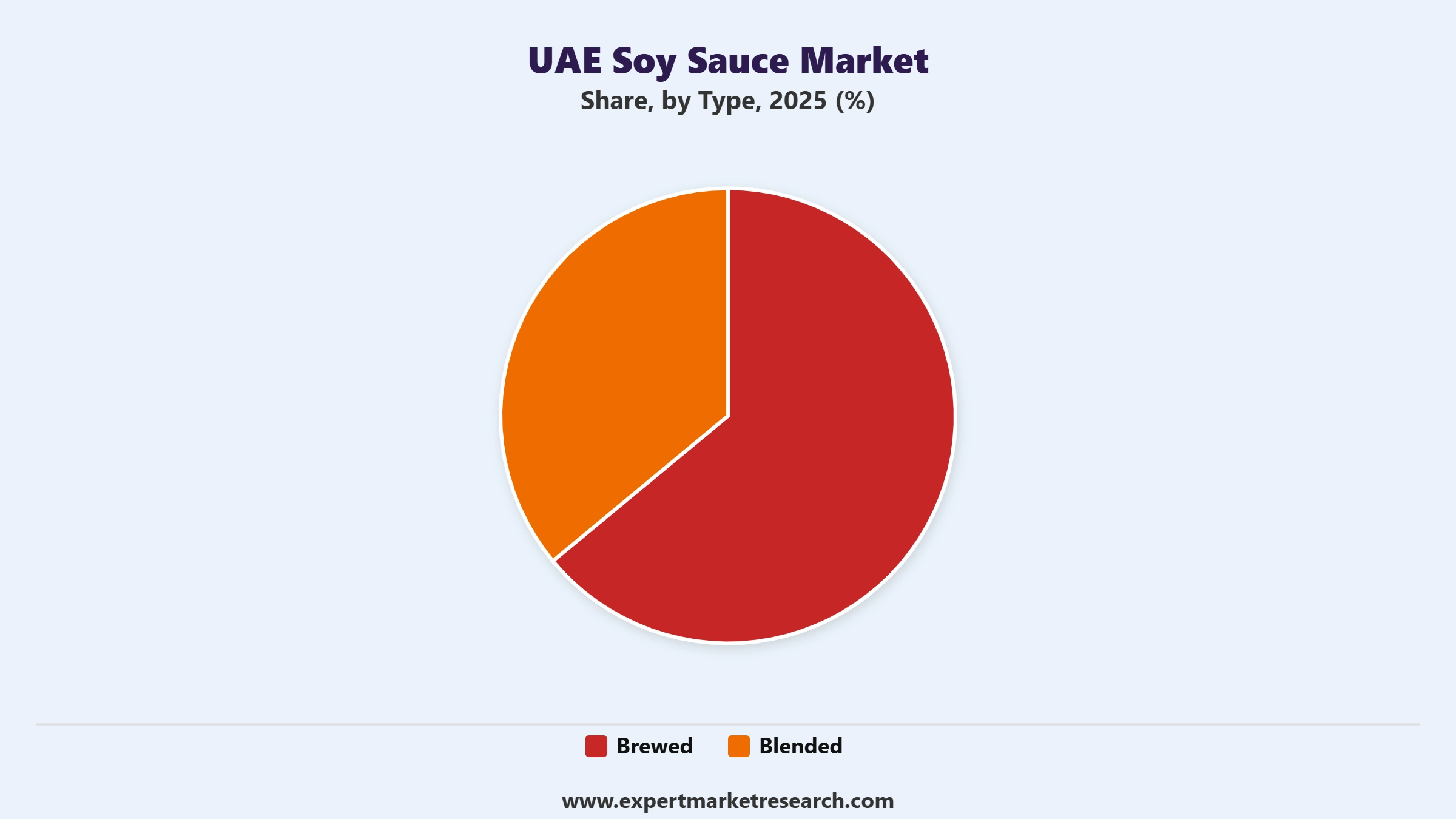
Key Insight: Brewed soy sauce continues to sustain its dominance in the UAE soy sauce market mainly because premium buyers value authenticity and flavor depth resulting from fermentation. Blended soy sauce sales rise mainly due to the fact that they are more affordable and hence get wider distribution through mass retail channels. Brewed brands help to showcase brand value mainly in the hospitality and gourmet retail segments. On the other hand, blended products give the consumers the most competitive prices in supermarkets, and they also supply food processing units.
Market Breakup by Application
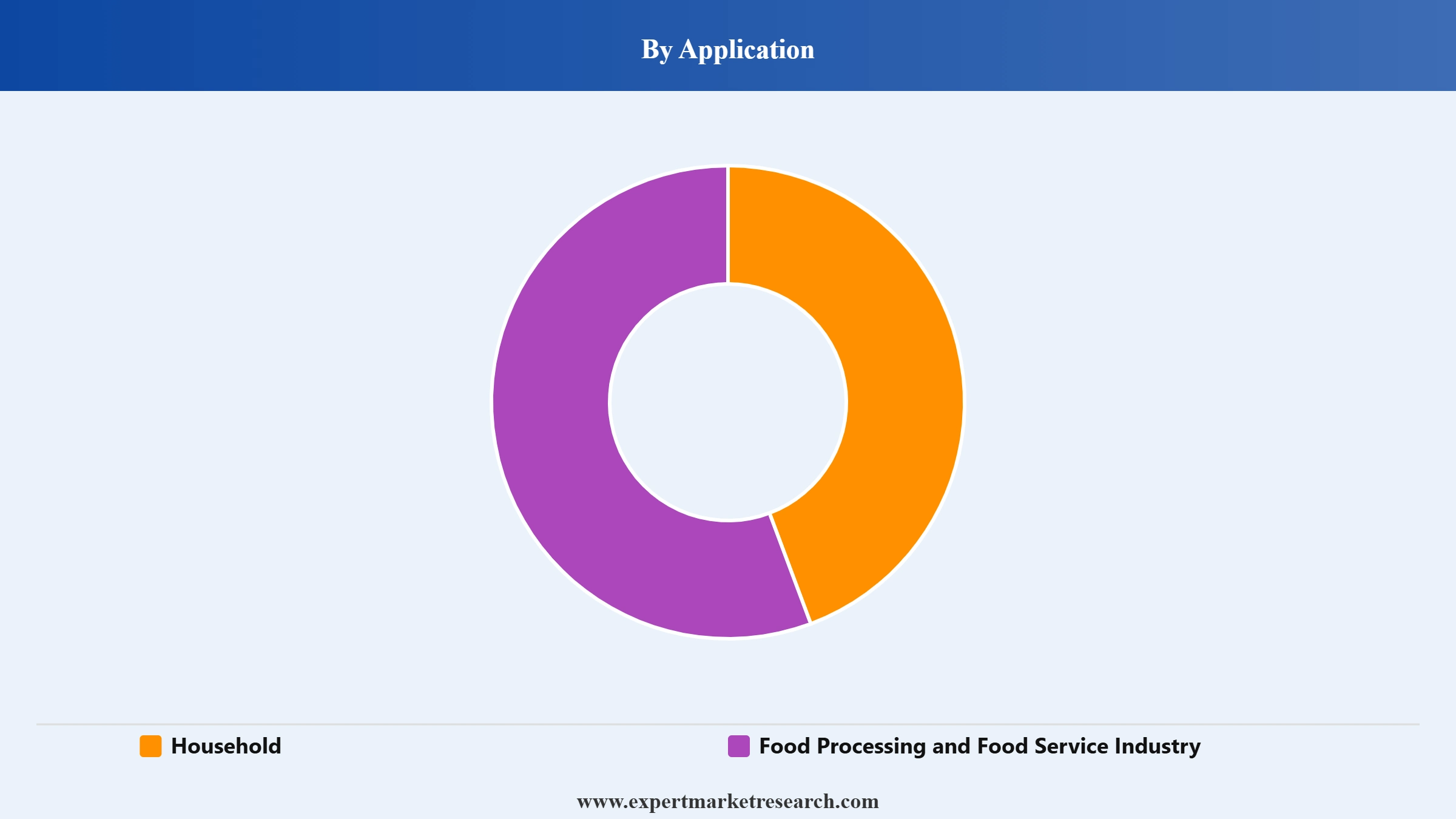
Key Insight: As per the UAE soy sauce market report, the surging foodservice sales are driven by hotel, restaurant, and catering demand. Household consumption is on the rise as Asian cuisine is becoming more popular in urban homes. Professional buyers mainly look at bulk prices and quality assurance, whereas retail consumers focus on packaging attractiveness and price. The application segmentation mirrors lifestyle changes and tourism growth. Suppliers are changing the packaging size, distribution routes, and branding strategies in line with the end-user behavior of these channels.
Market Breakup by Region
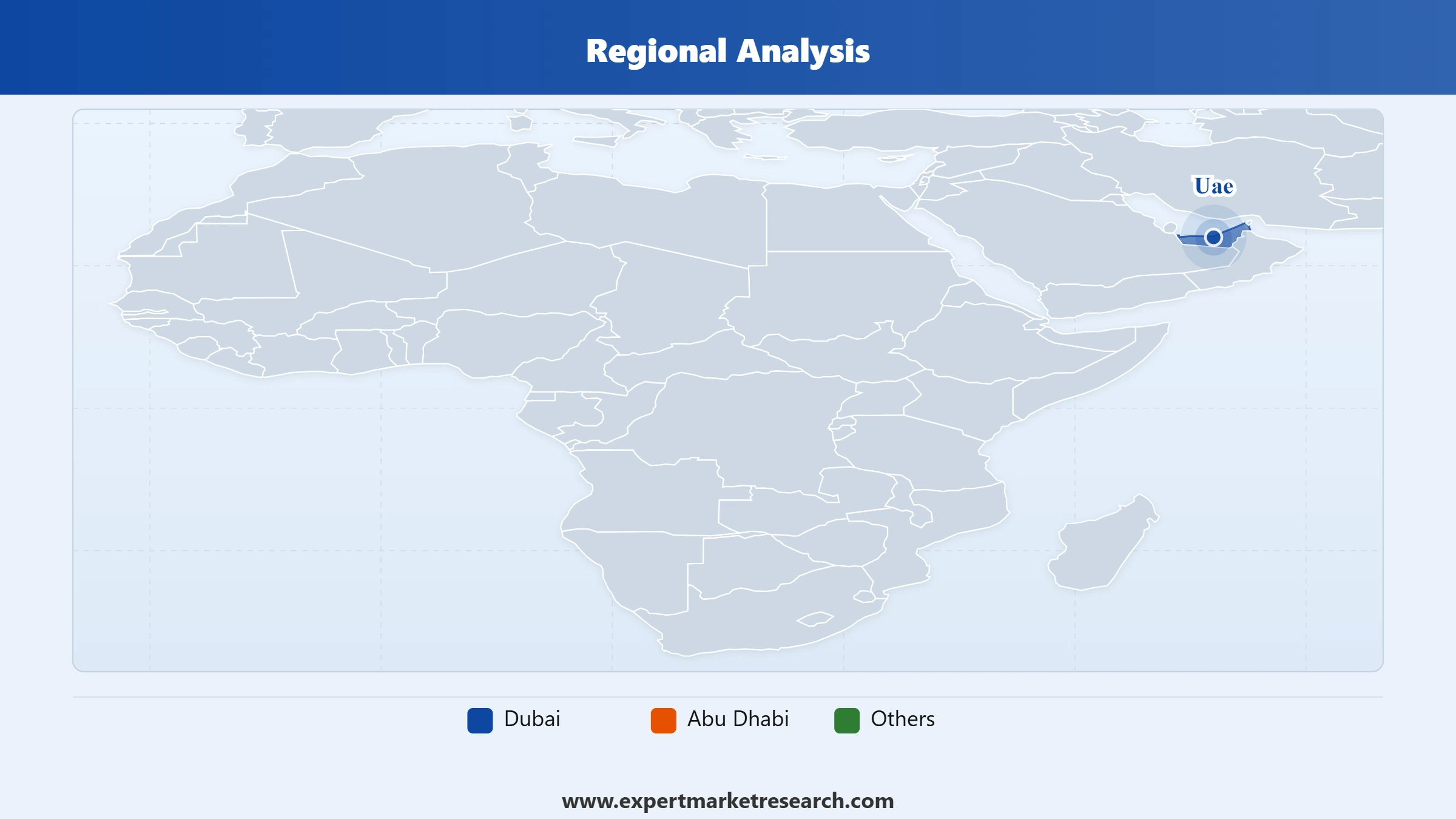
Key Insight: Dubai largely contributes to the overall UAE soy sauce market growth due to tourism density and import infrastructure. Abu Dhabi is picking up pace through hospitality investment and retail upgrades. Other emirates contribute through re-export and localized supermarket demand. Regional segmentation reflects economic concentration, for example, Dubai acts as testing ground and distribution anchor while Abu Dhabi builds structured growth. Geographic strategy is central to maintaining supply continuity and capturing new restaurant openings. In November 2024, Brooklyn Chop House debuted in Abu Dhabi’s W Yas Island in November 2024, bringing New York–style Asian-fusion steakhouse dining.
Read more about this report - REQUEST FREE SAMPLE COPY IN PDF
By type, brewed soy sauce leads the market growth through authenticity and premium positioning
Brewed soy sauce remains the dominant product in the UAE. Naturally fermented variants are preferred by hotels, Japanese fine dining outlets, and premium supermarkets as the depth of taste is a major consideration in professional kitchens. Chefs sometimes mention brewing time and origin when ordering supply contracts. This makes imported brewed brands have stronger pricing power. Retailers also locate brewed products within the premium condiment shelves, thereby emphasizing quality. Distributers use traditional fermentation techniques in their marketing material to set their product apart from mass-produced alternatives.
Read more about this report - REQUEST FREE SAMPLE COPY IN PDF
Blended soy sauce is rapidly picking up pace within the UAE soy sauce market dynamics through mid-income retail channels. Supermarkets are stocking affordable blended soy sauce variants under private labels and regional brands to attract price-conscious consumers. These products meet the needs of large expatriate communities that are value oriented. Food processing units also use blended variants in marinades and ready meal production where cost efficiency is critical. The expansion of this segment is a reflection of the pricing strategy rather than the premium positioning. In January 2024, Kerry Foodservice announced a new addition to its product range, called the Chef’s Palette x Tabasco.
By application, the foodservice sector propels majority of the demand through hospitality and restaurant expansion
The food processing and food service industry is the main contributor to the UAE soy sauce market revenue growth. A huge number of Asian restaurants and hotel chains based in Dubai and Abu Dhabi constantly need a supply of soy sauce in bulk packaging formats. Distributors close long term contracts with restaurant groups for uninterrupted delivery cycles. Airline catering services are another source of large volume purchase for in-flight meals. Professional kitchens give priority to flavor stability and halal certification. It is through that requirement that they strengthen their partnerships with recognized international brands. SHI Hospitality Group announced plans to open MEI at Jumeirah Mina A’Salam in September 2025, blending Chinese-Japanese cuisine with design-led dining and late-night entertainment.
Read more about this report - REQUEST FREE SAMPLE COPY IN PDF
Household soy sauce consumption in the UAE is on the rise as expatriate communities from East and Southeast Asia are dictating the retail purchasing patterns. Supermarkets are coming up with smaller packaging formats and premium glass bottles meant for home cooking. Cooking shows and social media content promoting Asian cuisine are influencing consumer behavior. Retailers notice that soy sauce is more often found in the shopping basket along with noodles and stir-fry kits. Private label brands are appealing to price-sensitive family households.
Dubai clocks in the leading position in the market through tourism-driven culinary expansion
Dubai is at the forefront of the soy sauce market in the UAE. Procurement on such a large scale is mainly driven by the hospitality sector of the city. A high influx of tourists supports restaurant diversity and premium dining concepts. Distributors often establish their distribution centers in Dubai because of the logistical advantages at Jebel Ali Port. Retail chains whose headquarters are in Dubai have an impact on shelf allocation decisions throughout the country. Suppliers first try out new SKUs in Dubai prior to a more extensive launch. Acceptance of the market trends usually originates here and then spreads across the other emirates. In November 2024, Pure Harvest Smart Farms unveiled 100% natural sauces made from its award-winning, locally grown vegetables in four vegan-friendly flavors.
Read more about this report - REQUEST FREE SAMPLE COPY IN PDF
Abu Dhabi is currently demonstrating vigorous growth in the UAE soy sauce market. Restaurant expansion is being stimulated by the government's investment in tourism and cultural districts. Modernization of retail infrastructure has resulted in an increased visibility of premium products. In order to satisfy the rising demand from hotels and residential communities, distributors are enhancing supply chains. Food festivals and culinary events serve as a means for the promotion of Asian flavors.
Competition among brands in the market is largely determined by brand legacy and the reach of their distribution networks. UAE soy sauce companies usually place emphasis on their premium brewed variants, and these are further supported by a halal certification. On the other hand, regional brands are demonstrating their competitiveness mainly in the blended categories. Retailers, on the other hand, are increasingly allowing private label products to widen their margins. Innovation in packaging and securing foodservice contracts are the main factors determining the competitive edge.
UAE soy sauce market players are going for investments into chef partnerships and culinary demonstrations as these enhance brand credibility. Re-export logistics is another strategic lever. Firms that secure warehousing near major ports gain operational efficiency. The market rewards suppliers who combine authenticity with supply reliability. Innovation is less about flavor experimentation and more about packaging, certification, and channel alignment.
ABC Sauces was established in 1975, and its main office is located in Jakarta, Indonesia. The company provides a range of both blended and brewed soy sauce variants for export markets. In the UAE, ABC focuses on retail channels that are cost conscious and the expatriate communities. Their competitive pricing along with the extensive partnerships with distributors helps them to maintain a strong presence in supermarkets.
Founded in 1975 and based in Karachi, Pakistan, Mehran is offering blended soy sauce products catered for South Asian consumers residing in the UAE. The firm takes advantage of ethnic grocery networks and uses a competitive pricing strategy to maintain a steady demand for its products in the retail outlets of the middle market tier.
Kikkoman, a company which was started in 1917 and has its main office in Noda, Japan, is a supplier of premium quality, naturally brewed soy sauce to the UAE hospitality and retail sectors. The company focusses on halal certification and the culinary authenticity of its products. The company’s brand image helps to obtain premium shelf space and food service contracts.
Nestle, a company established in 1866 with its headquarters in Vevey, Switzerland, distributes soy-based condiments via diversified product portfolios to selected markets. In the UAE, the firm is capitalizing on an extensive distribution network and strong retailer relationships to ensure a steady supply of its products.
*Please note that this is only a partial list; the complete list of key players is available in the full report. Additionally, the list of key players can be customized to better suit your needs.*
Explore the latest trends shaping the UAE soy sauce Market 2026-2035 with our in-depth report. Gain strategic insights, future forecasts, and key market developments that can help you stay competitive. Download a free sample report or contact our team for customized consultation on UAE soy sauce market trends 2026.


Upto 15% Off
USD
$2499 $2249
$3999 $3599
$4999 $4249
$5999 $5099


*While we strive to always give you current and accurate information, the numbers depicted on the website are indicative and may differ from the actual numbers in the main report. At Expert Market Research, we aim to bring you the latest insights and trends in the market. Using our analyses and forecasts, stakeholders can understand the market dynamics, navigate challenges, and capitalize on opportunities to make data-driven strategic decisions.*
In 2025, the UAE soy sauce market reached an approximate value of USD 192.59 Million.
The market is projected to grow at a CAGR of 4.10% between 2026 and 2035.
The key players in the market include ABC Sauces, Mehran Spice & Food Industries, Kikkoman Corporation, and Nestlé SA, among others.
Strengthening foodservice contracts, expanding halal-certified portfolios, optimizing port-based warehousing, developing private label partnerships, and introducing innovative packaging formats are enhancing supplier competitiveness across UAE distribution channels.
Intense price competition, import dependency, private label pressure, fluctuating freight costs, and evolving halal certification standards create operational complexity for suppliers across the UAE soy sauce market.
Explore our key highlights of the report and gain a concise overview of key findings, trends, and actionable insights that will empower your strategic decisions.
| REPORT FEATURES | DETAILS |
| Base Year | 2025 |
| Historical Period | 2019-2025 |
| Forecast Period | 2026-2035 |
| Scope of the Report |
Historical and Forecast Trends, Industry Drivers and Constraints, Historical and Forecast Market Analysis by Segment:
|
| Breakup by Type |
|
| Breakup by Application |
|
| Breakup by Region |
|
| Market Dynamics |
|
| Competitive Landscape |
|
| Companies Covered |
|
Datasheet
One User
USD 2,499
USD 2,249
tax inclusive*
Single User License
One User
USD 3,999
USD 3,599
tax inclusive*
Five User License
Five User
USD 4,999
USD 4,249
tax inclusive*
Corporate License
Unlimited Users
USD 5,999
USD 5,099
tax inclusive*
*Please note that the prices mentioned below are starting prices for each bundle type. Kindly contact our team for further details.*
Flash Bundle
Small Business Bundle
Growth Bundle
Enterprise Bundle
*Please note that the prices mentioned below are starting prices for each bundle type. Kindly contact our team for further details.*
Flash Bundle
Number of Reports: 3
20%
tax inclusive*
Small Business Bundle
Number of Reports: 5
25%
tax inclusive*
Growth Bundle
Number of Reports: 8
30%
tax inclusive*
Enterprise Bundle
Number of Reports: 10
35%
tax inclusive*
How To Order

Select License Type
Choose the right license for your needs and access rights.

Click on ‘Buy Now’
Add the report to your cart with one click and proceed to register.

Select Mode of Payment
Choose a payment option for a secure checkout. You will be redirected accordingly.
Strategic Solutions for Informed Decision-Making
Gain insights to stay ahead and seize opportunities.

Get insights & trends for a competitive edge.

Track prices with detailed trend reports.

Analyse trade data for supply chain insights.

Leverage cost reports for smart savings

Enhance supply chain with partnerships.

Connect For More Information
Our expert team of analysts will offer full support and resolve any queries regarding the report, before and after the purchase.
Our expert team of analysts will offer full support and resolve any queries regarding the report, before and after the purchase.
We employ meticulous research methods, blending advanced analytics and expert insights to deliver accurate, actionable industry intelligence, staying ahead of competitors.
Our skilled analysts offer unparalleled competitive advantage with detailed insights on current and emerging markets, ensuring your strategic edge.
We offer an in-depth yet simplified presentation of industry insights and analysis to meet your specific requirements effectively.




