

Consumer Insights
Uncover trends and behaviors shaping consumer choices today
Procurement Insights
Optimize your sourcing strategy with key market data
Industry Stats
Stay ahead with the latest trends and market analysis.
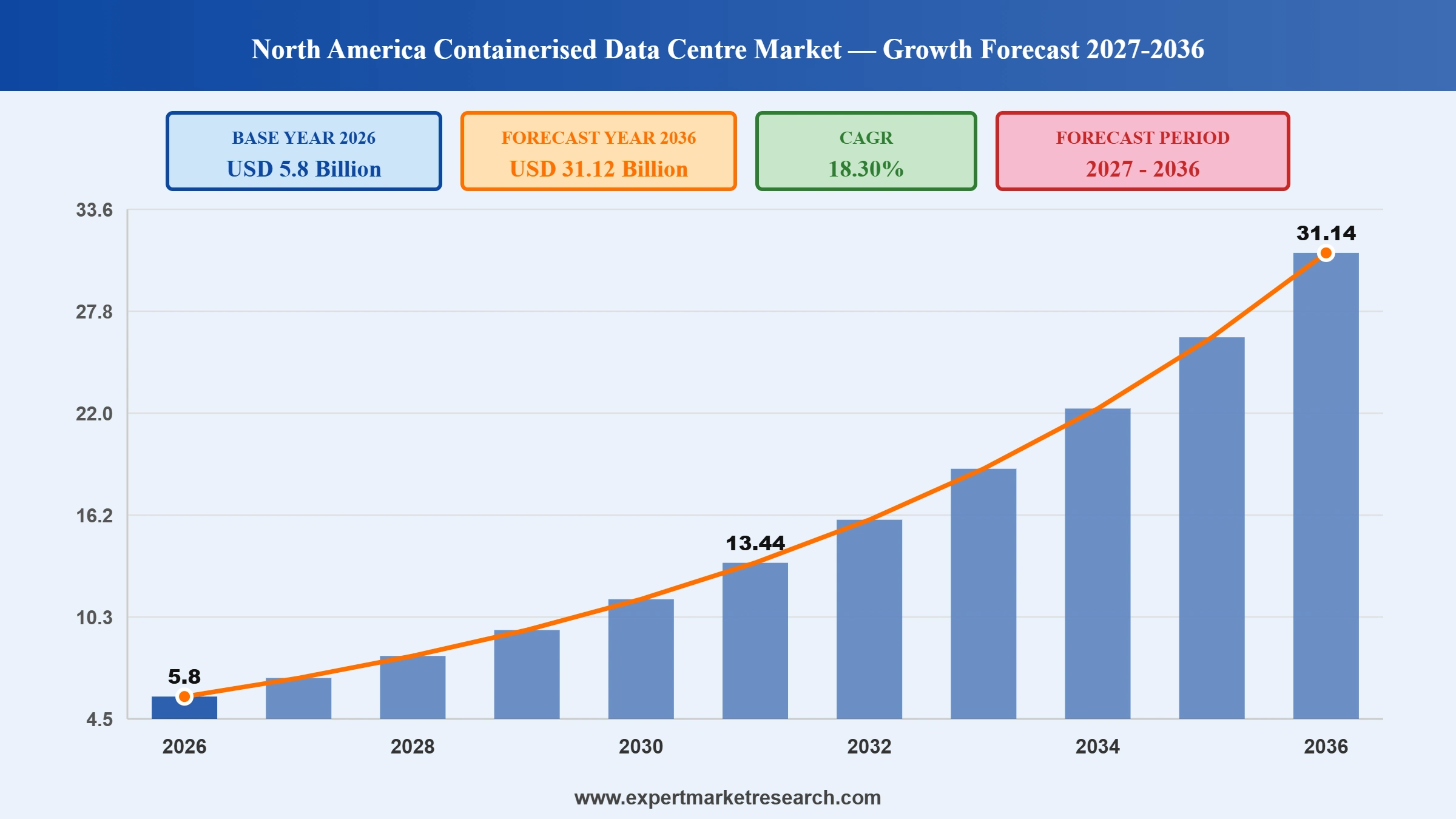
The North America containerised data centre market attained a value of USD 4.90 Billion in 2025 and is projected to expand at a CAGR of 18.30% through 2035. The market is further expected to achieve USD 26.31 Billion by 2035. Containerised infrastructure can help operators align computing capacity with the availability of electricity and suitable sites. Instead of committing to a large building before demand is fully established, buyers can deploy prefabricated modules in stages, coordinate equipment procurement with grid connections, and expand as workloads increase. This approach is particularly relevant when US data centre electricity use is projected to reach as much as 580 terawatt-hours by 2028.
Government-sponsored AI capabilities, cybersecurity needs, and the requirement to keep sensitive information in the jurisdiction of respective nations have made it essential to have locally deployable computing systems. The government of Canada has initiated a 2025 AI Compute Access fund which promises up to CAD 300 million toward facilitating access to computer resources at economical rates for SMEs. The government of Canada’s budget for 2025 has also included CAD 925.6 million over a period of five years for developing sovereign public AI infrastructure. These initiatives create potential opportunities for modular infrastructure suppliers serving research institutions, public agencies, regional cloud operators, and businesses that need scalable computing capacity without relying exclusively on large centralized facilities.
One important technological innovation is the inclusion of liquid cooling, high-density rack architecture, and prefabricated power distribution inside factory-made modules. The advantage of this system is that it helps to avoid having multiple independent installations on-site and makes replication of infrastructure easier. An example of such a module is the EcoStruxure Pod of Schneider Electric, which includes the capacity for liquid cooling, high-power busway, racks, and cooling architectures. These technologies can be applied to AI clusters with higher thermal loads than typical server rooms of enterprises. For buyers, the commercial value lies in predictable installation, repeatable engineering, and a clearer pathway to capacity expansion, thereby boosting the North America containerised data centre market value.
The principal challenge is securing sufficient electrical capacity and suitable deployment sites while maintaining acceptable lifecycle costs. A containerised facility can shorten the physical construction process, but it cannot eliminate utility interconnection delays, permitting requirements, fuel or backup-power constraints, network connectivity limitations, or local environmental approvals. Cooling design also becomes more demanding as rack density increases. Buyers should therefore assess power availability, cooling performance, service access, cybersecurity, and future expansion requirements before selecting a module. Vendors can improve project outcomes through early utility engagement, standardized engineering, transparent energy-performance data, and modular designs that permit upgrades without replacing the entire installation, thereby augmenting the North America containerised data centre market developments.
Read more about this report - REQUEST FREE SAMPLE COPY IN PDF
Schneider Electric announced new prefabricated power modules and power skids, with standardized designs intended for hyperscale, neocloud, and colocation environments. The systems offer configurations from 2 MW to 2.5 MW and are designed to support faster deployment of AI infrastructure. The initial launch was in Europe, with North American availability planned for later in 2026. Although these products are power modules rather than complete containerised data centres, they strengthen the surrounding modular infrastructure ecosystem. Their North American introduction could improve the availability of integrated power solutions for large-scale modular deployments.
The Government of Canada introduced national Responsible Data Centre Development Principles. The framework emphasizes local benefits, electricity affordability, reduced water and environmental impacts, transparency, and strategic value. It provides a common reference for discussions between developers, communities, and public authorities. While it is not a containerised data centre procurement program, the framework may influence how modular projects are assessed, particularly when developers seek rapid deployment without overlooking local infrastructure constraints. Suppliers with documented energy performance, water-management strategies, and clear community engagement plans may be better positioned to support projects seeking approvals.
Hewlett Packard Enterprise reported, that it had secured a USD 1.2 billion order from AI cloud provider Vultr for AMD-powered server racks. HPE also raised its longer-term growth outlook for networking as demand for AI infrastructure strengthened. The transaction concerns server and networking infrastructure rather than a complete containerised facility. However, it illustrates the scale of equipment procurement associated with AI deployments and the importance of designing modular environments around high-performance compute and networking requirements. The development could benefit containerised data centre suppliers that can accommodate dense server racks, robust power distribution, and scalable cooling systems.
Dell Technologies announced a new generation of storage, compute, cyber-resilience, and automation capabilities. The portfolio included PowerStore Elite storage and 18th-generation PowerEdge servers, with designs emphasizing performance, density, cooling, and modernization. The announcement was broader than containerised data centres, but the technologies are relevant to the IT payload deployed inside modular facilities. Higher computing density and improved cooling options can help operators use available enclosure space more effectively. The development could support demand for modular infrastructure packages that combine compact server systems with compatible power, cooling, and management components.
Telecommunications operators, industrial companies, and logistics providers are deploying computing resources closer to data generation and consumption. Containerised facilities can help in carrying out the local computation required for industrial automation, machine connectivity, video analytics, and low latency applications where all the workloads are not necessarily located within a central cloud environment. The business case is especially pertinent for companies that manufacture container solutions that can be easily managed from a distance and have their own power and networking capabilities. The strongest proposals will demonstrate how local computing reduces operational complexity while retaining compatibility with enterprise infrastructure and security policies.
AI workloads are changing the engineering requirements of modular computing facilities. Operators need cooling systems capable of handling greater heat loads without excessive energy consumption or inefficient use of floor space. Manufacturers are responding with integrated cooling distribution, liquid-cooling support, and rack architectures designed for accelerated computing. Vertiv's April 2025 launch of SmartRun combined overhead power distribution, liquid-cooling piping, hot-aisle containment, and network infrastructure into a prefabricated system. For containerised data centre suppliers, this creates an opportunity to sell engineered infrastructure packages rather than basic enclosures. Buyers should compare thermal capacity, redundancy, maintenance access, and compatibility with successive generations of server hardware.
Governments and businesses are placing greater emphasis on computing capacity that supports domestic research, sensitive workloads, and strategic industries. Canada's sovereign AI infrastructure initiatives demonstrate how public investment can create opportunities for regional computing providers and equipment suppliers. The federal government proposed CAD 925.6 million over five years in Budget 2025 for large-scale sovereign public AI infrastructure. Modular deployments could suit projects requiring staged capacity additions or computing resources close to research facilities and industrial users. Suppliers should prepare solutions that support secure administration, documented supply chains, data governance, and local maintenance. These capabilities can strengthen bids where procurement requirements extend beyond hardware price.
Prefabrication is increasingly being applied to the internal fit-out of data centres, not simply to their external enclosures. Standardized designs allow suppliers to assemble power, cooling, cabling, containment, and IT infrastructure under controlled factory conditions. In September 2025, Compass Datacenters and Schneider Electric announced a prefabricated white-space module designed to simplify installation and accelerate the preparation of operational data centre space. This approach can reduce the number of site-level installation interfaces and make project schedules more predictable. Buyers should assess factory testing, transportation requirements, commissioning procedures, and the availability of repeatable configurations before selecting suppliers.
Electricity and water considerations are becoming more prominent in data centre planning. Operators face pressure to demonstrate that new computing capacity will not impose disproportionate costs on communities or place excessive demands on local resources. Canada's September 2026 Responsible Data Centre Development Principles formalized expectations concerning electricity affordability, water use, environmental impact, and local benefits. For containerised infrastructure providers, the opportunity is to supply efficient power conversion, workload-aware cooling, remote energy monitoring, and designs suited to site-specific conditions. Buyers should request measurable performance information, operating assumptions, maintenance requirements, and resource-consumption estimates rather than relying on general claims about sustainability.
The Expert Market Research’s report titled "North America Containerised Data Centre Market Report And Forecast 2026-2035” offers a detailed analysis of the market based on the following segments:
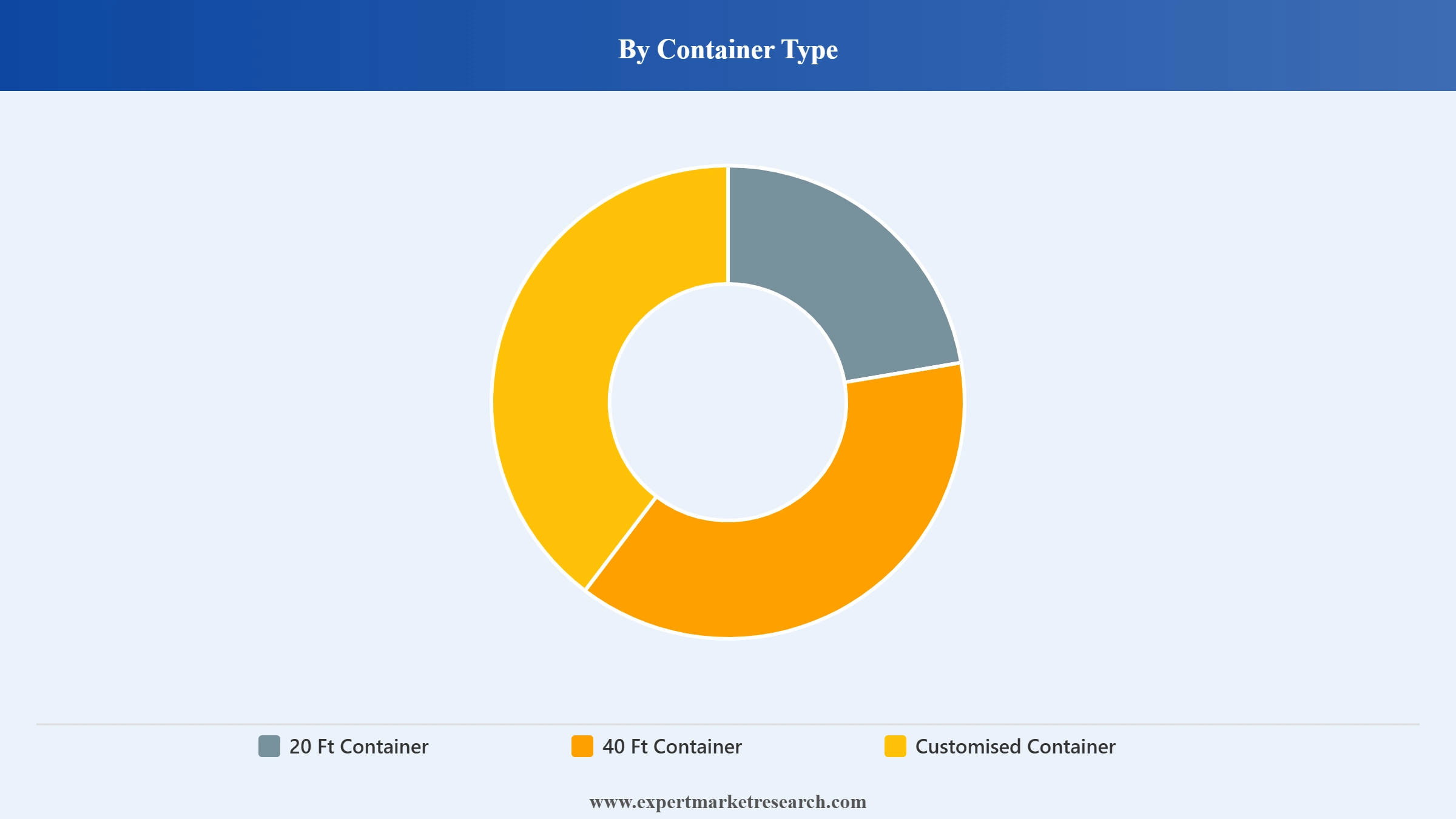
Market Breakup by Container Type
Key Insight: The 20 ft, 40 ft, and customised container segments are gaining traction as North American data centre power demand rises. The International Energy Agency projects US data centre electricity consumption to increase by nearly 2% annually through 2030, supporting demand for rapidly deployable capacity. Compact 20 ft units suit edge applications, while 40 ft containers accommodate higher rack densities and larger power systems. Customised containers are gaining preference for AI workloads, which are expected to drive rapid growth in data centre electricity consumption.
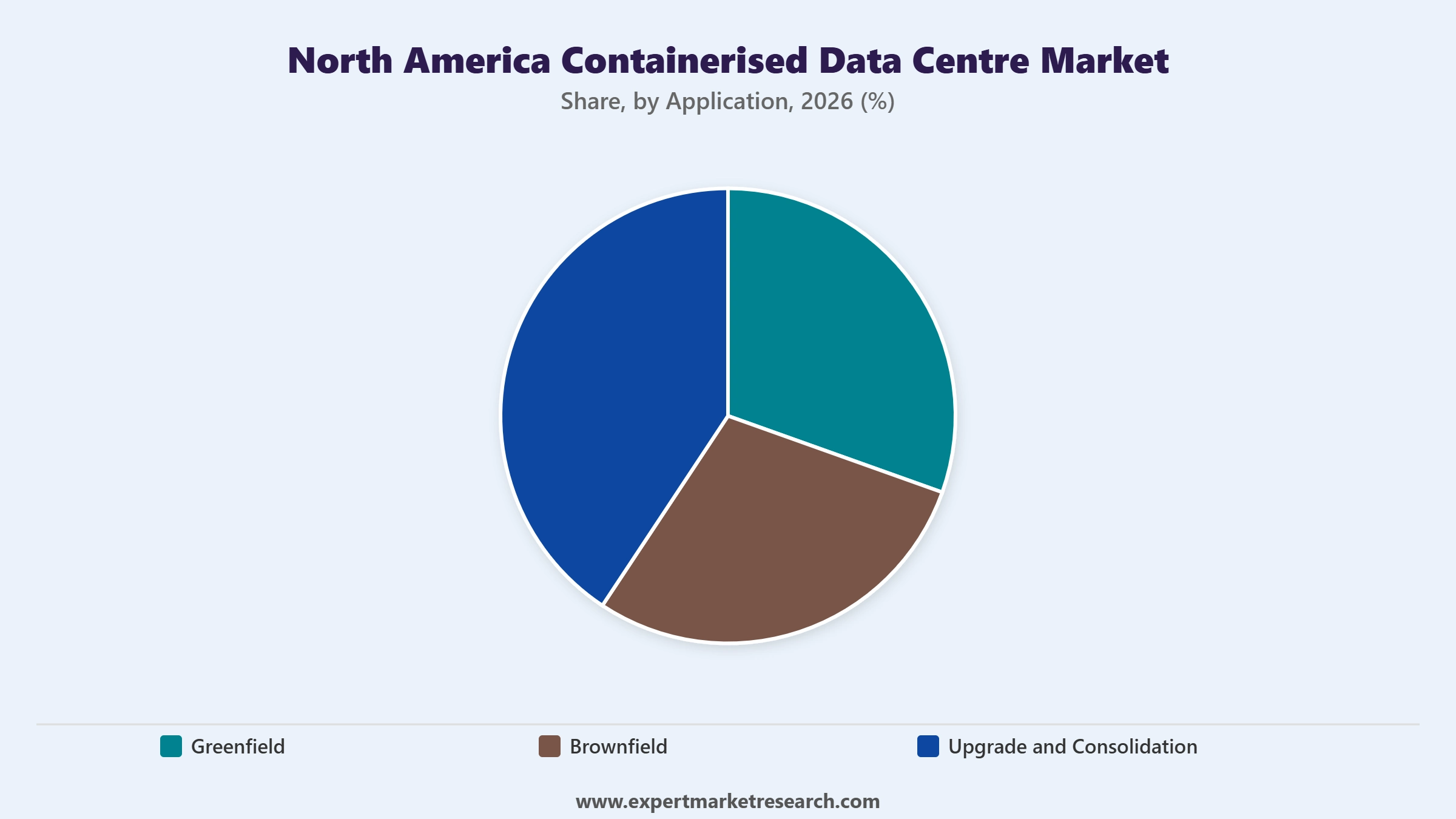
Market Breakup by Application
Key Insight: Greenfield, brownfield, and upgrade/consolidation segments are beginning to gain more popularity as North American companies increase their capacity under the power and construction restrictions. The advantage of the greenfield segment is that it is supported by the increased demand for artificial intelligence and cloud infrastructure, especially given the forecasts for the growth of data centre electricity usage in the USA that is expected to grow by almost 2% each year until 2030.
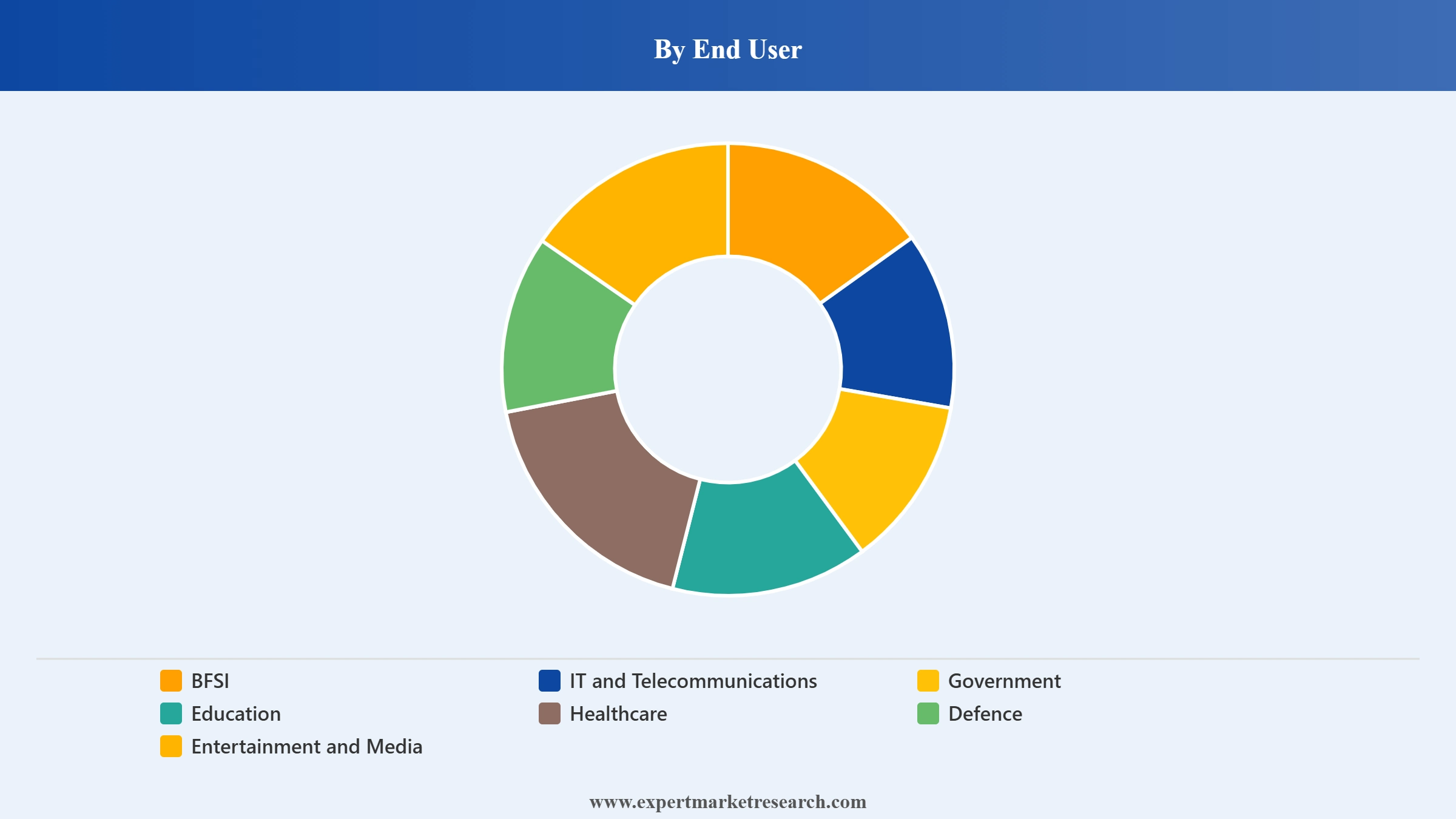
Market Breakup by End User
Key Insight: The BFSI, IT and telecommunications, government, education, healthcare, defence, entertainment and media, and other end users are adopting containerised data centres to expand computing capacity with shorter deployment timelines. IT and telecommunications remain prominent users, supported by cloud, 5G, and edge workloads, while BFSI and healthcare require resilient infrastructure for data-intensive applications. Government and defence organisations are increasingly suited to modular systems for secure and distributed operations, whereas education and entertainment benefit from scalable computing. Growing AI workloads further strengthen demand across end users, with US data centre electricity consumption projected to increase nearly 2% annually through 2030.
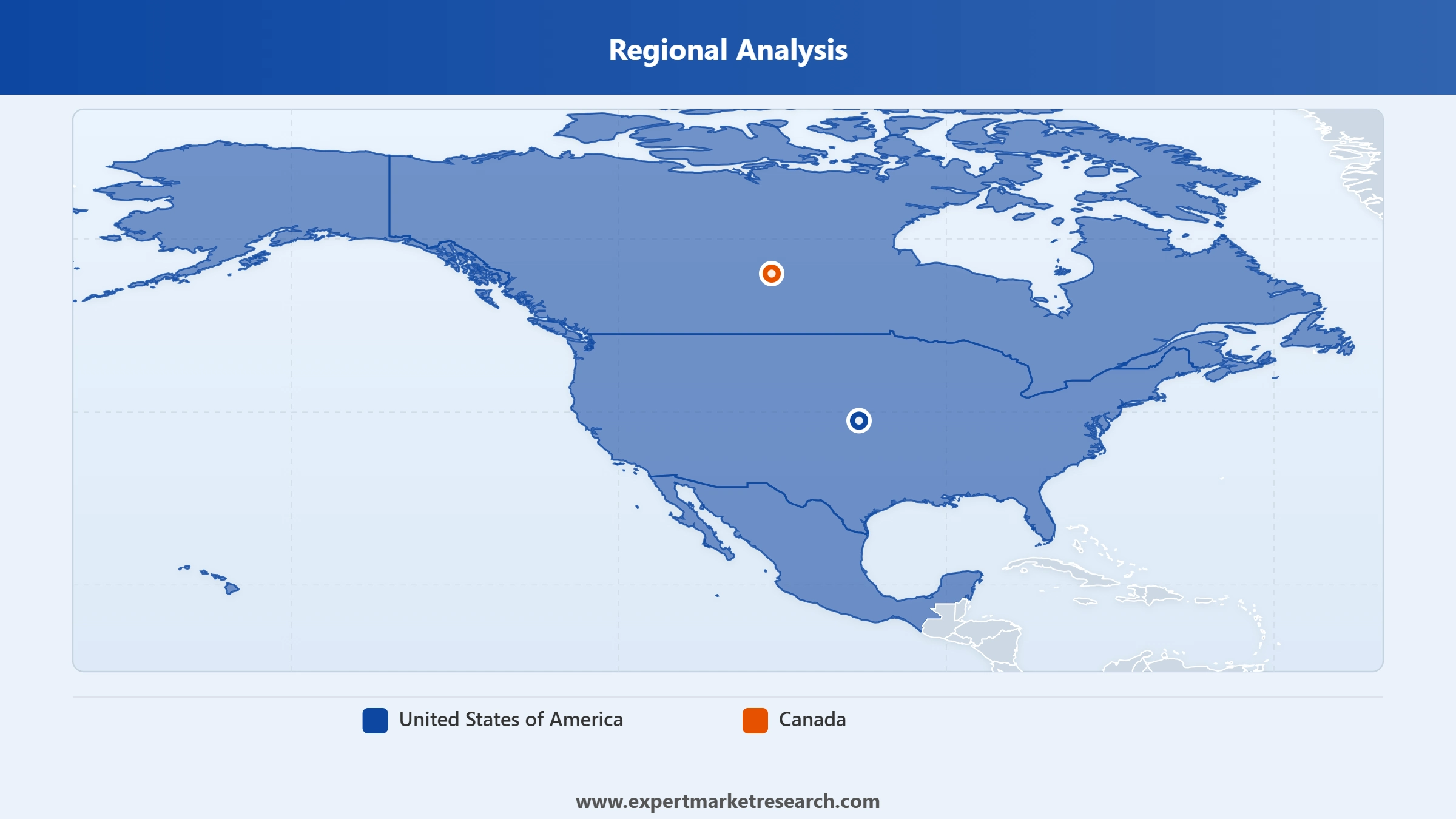
Market Breakup by Country
Key Insight: The United States of America and Canada are witnessing increasing adoption of containerized data centers owing to the rising need for scalable and quickly deployed computing infrastructure. The United States represents the larger market due to heavy investments made in cloud and AI infrastructures, while data center electricity usage is expected to increase by around 2% per year till 2030. On the other hand, Canada is gaining traction through data centre expansion and its availability of comparatively low-carbon electricity, supporting operators seeking energy-efficient and sustainable deployments.
Read more about this report - REQUEST FREE SAMPLE COPY IN PDF
By type, 40 ft containers dominate due to their balance of capacity, transportability, and deployment flexibility
The 40 ft container is positioned as the leading container format because it provides substantially greater usable space for integrated racks, cooling, power distribution, monitoring, and maintenance than smaller transportable modules while retaining standardized logistics. A strong 2026 example is Armada's deployment of its 40 ft Triton containerised data centre at GrandSky on Grand Forks Air Force Base in North Dakota. The module accommodates five compute racks and is designed for local AI and sensor-data processing. This demonstrates the suitability of 40 ft architecture for defence, aerospace, edge AI, and industrial workloads requiring computing close to the point of data generation.
Read more about this report - REQUEST FREE SAMPLE COPY IN PDF
Customized containers are gaining traction as buyers increasingly require infrastructure engineered around AI workloads, environmental conditions, specialized power arrangements, and remote operations. Soluna's February 2026 agreement with Cormint provides a particularly relevant example. The companies planned eight modular data centre units for a 12 MW deployment in Texas, with the units integrating transformers, power distribution, cooling, monitoring, and racking. This model demonstrates how customized modules can be engineered as complete computing environments rather than simple equipment enclosures. Such configurations can be adapted to renewable-power sites, high-density computing, and locations where conventional data centre construction is difficult.
By application, greenfield projects lead as modular infrastructure can be incorporated directly into new capacity plans
Greenfield applications represent the strongest opportunity because containerised infrastructure can be incorporated into new projects without the constraints imposed by an existing facility. The scale of current North American construction activity supports this positioning. CBRE reported 7,481.1 MW of data centre capacity under construction across eight primary North American markets in H1 2026, up 24.8% from the previous period. Although this figure covers conventional and modular facilities collectively, it demonstrates the depth of new-build activity available to prefabricated infrastructure suppliers. New developments can incorporate standardized modules, factory-integrated power systems, and high-density cooling from the initial design stage, improving the commercial fit of containerised architectures. Such developments will thus boost North America containerised data centre market trends in the long run.
Read more about this report - REQUEST FREE SAMPLE COPY IN PDF
Upgrade and consolidation is emerging as an attractive application where operators need to add computing capacity without rebuilding entire facilities. The trend is particularly relevant as AI workloads increase rack density and create new requirements for power and thermal management. Vertiv's OneCore platform illustrates this direction by offering configurations from 5 MW to 50 MW and supporting 96 to 944 racks, with integrated electrical and thermal infrastructure. While OneCore is not limited to containerised deployments, its prefabricated architecture demonstrates how modular infrastructure can replace fragmented site-level installation and support staged capacity expansion. This creates opportunities for containerised suppliers serving existing campuses that need incremental high-density capacity.
By end user, IT and telecommunications lead due to distributed computing, networking, and edge infrastructure requirements
IT and telecommunications remains the strongest end-user opportunity because distributed computing, network services, cloud infrastructure, and edge applications require computing capacity close to users and connected assets. Armada's 2026 deployment at GrandSky demonstrates the shift toward localized computing for data-intensive operations. The Triton module enables aircraft and sensor data to be processed locally, while supporting AI and machine-learning applications before mission-critical information is transmitted to cloud environments. This type of deployment illustrates why telecom operators, cloud infrastructure companies, and technology providers can use containerised systems to address latency and bandwidth constraints while expanding capacity incrementally.
Read more about this report - REQUEST FREE SAMPLE COPY IN PDF
Defence sector is a strong opportunity for market growth since the operations of military and aerospace become increasingly dependent on computing power that needs to be delivered at locations where the operations take place instead of being available only from central locations. This is demonstrated by the deployment of the Armada 2026 unit at Grand Forks Air Force Base. The 40 ft Triton was installed for GrandSky, which is an operation test site for Unmanned Aircraft Systems. It will process data from aircrafts and sensors and also facilitate AI applications. The same project also sits alongside plans for a 1 MW data centre at GrandSky, highlighting how containerized and conventional capacity can operate together within specialized defence ecosystems.
By country, the United States benefits from its extensive cloud, enterprise, and AI infrastructure ecosystem
North America has a well-developed digital infrastructure ecosystem, with the United States serving as the principal demand center and Canada offering additional opportunities in sovereign computing, research, and regional infrastructure. The US market benefits from established cloud and colocation providers, large enterprise IT requirements, and growing investment in AI workloads. Containerised data centres can support new deployments as well as localized capacity for industrial, telecommunications, and disaster recovery applications. However, the underlying market for data centres is considerably broader than the market for transportable containerised facilities. Total data centre energy consumption and investment should therefore not be treated as direct measures of containerised market revenue, thereby directly boosting the North America containerised data centre market regional growth.
Read more about this report - REQUEST FREE SAMPLE COPY IN PDF
Canada's opportunity is increasingly shaped by domestic computing requirements and public-sector priorities. The federal government introduced its Responsible Data Centre Development Principles in September 2026, establishing expectations around local benefits, electricity affordability, water use, transparency, and strategic value. These considerations may influence project design and supplier selection, particularly where modular infrastructure can be adapted to regional conditions. The country's large geographic area and dispersed industrial activities also create use cases for localized computing, although local electricity capacity and permitting can constrain deployment. Across both countries, growth will depend on how effectively suppliers coordinate equipment delivery with power availability, cooling design, connectivity, and site approvals.
Leading North America containerised data centre market players are aiming to reduce deployment timelines while providing scalable infrastructure for cloud computing, artificial intelligence, edge computing, and enterprise workloads. Companies are focusing on modular designs that allow additional computing, power, cooling, and storage capacity to be installed as demand increases, avoiding the lengthy construction periods associated with conventional data centres.
North America containerised data centre companies are also developing factory-built modules with standardised components to improve quality control and simplify installation. Another priority is flexible deployment across urban, remote, industrial, and temporary locations where conventional data centre construction may be challenging. Through prefabricated systems and integrated power and cooling solutions, market participants are seeking to provide customers with predictable deployment schedules, lower construction complexity, and greater operational flexibility. These capabilities are particularly important as North American businesses require faster access to high-density computing capacity and distributed digital infrastructure.
Established in 1911 and headquartered in Armonk, New York, IBM provides enterprise computing, hybrid cloud, infrastructure software, and AI-related services. Its relevance to containerised data centre projects lies primarily in enterprise workloads, hybrid infrastructure integration, data management, and AI deployment. IBM can support organizations that need to coordinate modular computing with existing applications, security controls, and enterprise IT operations. Its role in a project depends on the chosen hardware architecture and delivery partners.
Established in 1984 and headquartered in San Jose, California, Cisco supplies networking, cybersecurity, collaboration, and infrastructure management technologies. Its networking and security portfolio is relevant to containerised data centres that require reliable connectivity between servers, enterprise networks, cloud environments, and remote facilities. Cisco technologies can support network segmentation, operational visibility, and secure access. For buyers, integration with existing network architecture and long-term support requirements are important considerations when designing distributed modular computing environments.
Vertiv's corporate predecessor, Emerson Network Power, traces its origins to Emerson's 1890 founding, while Vertiv became an independent public company in 2020. It is headquartered in Westerville, Ohio. The company supplies critical digital infrastructure, including power management, thermal management, and integrated data centre solutions. Its prefabricated infrastructure products address the need to coordinate electrical distribution, cooling, and supporting systems for high-density deployments. These capabilities make Vertiv relevant to modular, edge, enterprise, and hyperscale infrastructure projects.
Established in 1836 and headquartered in Rueil-Malmaison, France, Schneider Electric provides energy management, electrical distribution, automation, and data centre infrastructure solutions. Its offerings include prefabricated modular data centre systems, power distribution equipment, rack infrastructure, and cooling-related solutions. The company's modular portfolio addresses buyers seeking integrated systems that can be factory assembled and configured for different computing densities. Its US manufacturing and integration presence also supports its ability to serve North American infrastructure projects.
Other key players in the North America containerised data centre market include PCX Holding LLC, Dell Inc, Hewlett Packard Enterprise Company, and Huawei Digital Power Technologies Co. Ltd, among others.
*Please note that this is only a partial list; the complete list of key players is available in the full report. Additionally, the list of key players can be customized to better suit your needs.*
Explore the North America Containerised Data Centre Market trends 2026 to understand the evolving demand for modular infrastructure, high-density computing, and scalable power and cooling systems. Request a sample report from Expert Market Research to examine market segmentation, competitive positioning, and regional opportunities. The North America Containerised Data Centre Market forecast 2026-2035 can support strategic planning, supplier evaluation, investment assessment, and long-term infrastructure decisions.


Upto 15% Off
USD
$2499 $2249
$3999 $3599
$4999 $4249
$5999 $5099


*While we strive to always give you current and accurate information, the numbers depicted on the website are indicative and may differ from the actual numbers in the main report. At Expert Market Research, we aim to bring you the latest insights and trends in the market. Using our analyses and forecasts, stakeholders can understand the market dynamics, navigate challenges, and capitalize on opportunities to make data-driven strategic decisions.*
In 2025, the market reached an approximate value of USD 4.90 Billion.
The market is projected to grow at a CAGR of 18.30% between 2026 and 2035.
The containerised data centre market in North America is expected to reach a value of USD 26.31 Billion by 2035.
Key strategies include modular deployment, energy-efficient cooling, renewable power integration, scalable infrastructure, edge computing expansion, prefabricated construction, advanced monitoring, enhanced cybersecurity, and strategic partnerships. Providers are also focusing on rapid deployment and customisable containerised solutions to address growing AI, cloud, and distributed computing requirements.
Key trends aiding market growth include the growing demand for energy efficient data centres, rise of edge computing, and adoption of modular data centre solutions.
Major countries in the market are the USA and Canada.
A containerised data centre is a shipping container designed to house IT equipment such as storage devices, servers, networking gear, uninterruptible power supplies, generators, and cooling equipment.
Key players in the market are IBM Corporation, Cisco Systems Inc., Vertiv Group Corp., Schneider Electric, PCX Holding LLC, Dell Inc, Hewlett Packard Enterprise Company, and Huawei Digital Power Technologies Co. Ltd, among others.
The key challenges include high initial investment, complex cooling and power requirements, limited availability of suitable sites, cybersecurity risks, supply chain disruptions, regulatory compliance, and difficulties integrating containerised infrastructure with existing data centre systems and networks.
Explore our key highlights of the report and gain a concise overview of key findings, trends, and actionable insights that will empower your strategic decisions.
| REPORT FEATURES | DETAILS |
| Base Year | 2025 |
| Historical Period | 2019-2025 |
| Forecast Period | 2026-2035 |
| Scope of the Report |
Historical and Forecast Trends, Industry Drivers and Constraints, Historical and Forecast Market Analysis by Segment:
|
| Breakup by Container Type |
|
| Breakup by Application |
|
| Breakup by End User |
|
| Breakup by Region |
|
| Market Dynamics |
|
| Competitive Landscape |
|
| Companies Covered |
|
Datasheet
One User
USD 2,499
USD 2,249
tax inclusive*
Single User License
One User
USD 3,999
USD 3,599
tax inclusive*
Five User License
Five User
USD 4,999
USD 4,249
tax inclusive*
Corporate License
Unlimited Users
USD 5,999
USD 5,099
tax inclusive*
*Please note that the prices mentioned below are starting prices for each bundle type. Kindly contact our team for further details.*
Flash Bundle
Small Business Bundle
Growth Bundle
Enterprise Bundle
*Please note that the prices mentioned below are starting prices for each bundle type. Kindly contact our team for further details.*
Flash Bundle
Number of Reports: 3
20%
tax inclusive*
Small Business Bundle
Number of Reports: 5
25%
tax inclusive*
Growth Bundle
Number of Reports: 8
30%
tax inclusive*
Enterprise Bundle
Number of Reports: 10
35%
tax inclusive*
How To Order

Select License Type
Choose the right license for your needs and access rights.

Click on ‘Buy Now’
Add the report to your cart with one click and proceed to register.

Select Mode of Payment
Choose a payment option for a secure checkout. You will be redirected accordingly.
Strategic Solutions for Informed Decision-Making
Gain insights to stay ahead and seize opportunities.

Get insights & trends for a competitive edge.

Track prices with detailed trend reports.

Analyse trade data for supply chain insights.

Leverage cost reports for smart savings

Enhance supply chain with partnerships.

Connect For More Information
Our expert team of analysts will offer full support and resolve any queries regarding the report, before and after the purchase.
Our expert team of analysts will offer full support and resolve any queries regarding the report, before and after the purchase.
We employ meticulous research methods, blending advanced analytics and expert insights to deliver accurate, actionable industry intelligence, staying ahead of competitors.
Our skilled analysts offer unparalleled competitive advantage with detailed insights on current and emerging markets, ensuring your strategic edge.
We offer an in-depth yet simplified presentation of industry insights and analysis to meet your specific requirements effectively.




