

Consumer Insights
Uncover trends and behaviors shaping consumer choices today
Procurement Insights
Optimize your sourcing strategy with key market data
Industry Stats
Stay ahead with the latest trends and market analysis.
The North America next generation packaging market attained a value of USD 2.75 Billion in 2025 and is projected to expand at a CAGR of 6.40% through 2035. The market is further expected to achieve USD 5.11 Billion by 2035. The trend towards automation within packaging continues as processors look to increase changeover speed, improve material control, reduce dependency on labor, and utilize machinery that enables data collection through connected equipment.
Food processors are looking at solutions that not only extend shelf life but use less material and minimize waste, boosting growth in the North America next generation packaging market. Moreover, logistics providers are using connected labels and item-level tracking capabilities for greater precision in inventory and order fulfillment. These demands push packaging companies to integrate material science and sensor technology into automated systems that run on digital platforms.
Material innovation is becoming a key focus for packaging companies seeking to improve functionality, sustainability, and product differentiation. Amcor is expanding its production of next generation packaging in North America by adding printing, laminating, and converting capabilities for protein applications. This investment is being rolled out gradually over the first half of 2026 and also includes its AmPrima recycle ready range. Amcor claims to launch more than 1,000 new products every year and spends around USD 180 million every year on research and development activities. It shows the growing importance of material science in packaging differentiation.
The North America next generation packaging market is further shifting from providing protection to the product to managing the product environment, communicating information, and enabling circularity in packaging solutions. For example, in September 2025, NOVA Chemicals partnered with Charter Next Generation to commercialize recycled polyethylene for sustainable flexible packaging applications. Such trends are encouraging converters and brand owners to redesign their structures without compromising barrier protection and production compatibility.

Read more about this report - Request a Free Sample
Questar integrated United States and Canadian business operations by including seven distribution centers that help increase the packaging availability and fulfillment services throughout North America. Providers have the capacity to enhance their regional warehousing capabilities and localized fulfillment processes, boosting growth in the North America next generation packaging market.
Amcor and Dow collaborated on the creation of low-carbon packaging through polyethylene-based solutions and carbon footprint information that would aid Scope 3 emission targets. Packaging and materials companies can create low-carbon substitutes through quantifiable carbon emission information.
Atlantic Packaging initiated New Earth Ventures to invest in innovations related to packaging technology, alternate materials, automation, AI, and supply chain management. Start-up companies can attract investments and partnerships in terms of AI packaging intelligence, automation, recycled materials, and supply chain optimization.
BOBST North America launched Packaging Forward to facilitate networking between young professionals and innovations in packaging technology, workflow process, sustainability, digitization, and industry experts. Companies in the North America next generation packaging market can create opportunities for workforce-oriented training, demonstration and partnership programs.
The design innovation in the flexible segment is being used to produce recyclability without compromising barrier, seal strength, or line compatibility. Amcor's AmFiber series offers paper-based sachets which provide recyclability and barrier functionality. While Amcor's AmPrima series targets recyclable flexible structures. In September 2026, Dow and Amcor announced a strategic collaboration to accelerate adoption of low-carbon packaging solutions among brands and retailers. Meanwhile, Sealed Air is also working on its recyclable and recycled-content trays for food processors and retailers. This innovation trend in the North America next generation packaging market is important for business-to-business buyers since packaging innovation should be able to integrate with existing filling, sealing, and distribution lines.
Intelligent packaging is evolving from simple identification to package level information that helps with traceability, freshness detection, stock management, and even consumer engagement, reshaping the entire North America next generation packaging market dynamics. Moreover, in September 2026, BOBST and Packitoo announced plans to showcase AI-driven digital solutions, cloud connectivity, and automated sales workflows for corrugated packaging. This represents an opportunity for companies able to integrate RFID, sensors, digital printing and identification technologies in packaging production without affecting packaging production.
Active packaging is growing commercially valuable due to the needs of food and pharmaceutical makers who need packaging that goes beyond simple isolation from environmental influences. Humidity regulation, oxygen regulation, antimicrobial features, and modified atmosphere variants are among those functionalities included in the construction of better-performing materials. USDA funding is working on developing bio-based active packaging that will be able to handle pathogens, extend shelf-life, and cut down food waste. This North America next generation packaging market trend is commercially relevant since it indicates a way towards packaging material combining chemical preservation features with biomaterials. In March 2024, Aptar and ProAmpac launched moisture-absorbing flexible packaging using Activ-Polymer technology, protecting moisture-sensitive products without desiccant sachets.
The North America next generation packaging market is being developed along with machinery, software, and manufacturing processes. The CRYOVAC product line of Sealed Air includes films, machinery, diagnostics, and process control, allowing food processors to enhance the efficiency of production. Sealed Air's current product range also comprises connected systems that change operating conditions and gather production information. In September 2026, Sealed Air offered ZeroPrep pouches and vertical form-fill-seal system for foodservice applications with the machinery producing up to 80 packages per minute. This is evidence of companies aiming at complete packaging processes.
With governments making the North America next generation packaging market more accountable for the number of data-driven regulations being passed, packaging providers must adhere to new levels of compliance and reporting. With the implementation of Canada’s Federal Plastics Registry that demands producers to disclose the number of plastic packaging items put into the market and expanding reporting to cover collection, diversion, and disposal, the government plans on implementing recycled content and misleading recyclability labels. In September 2026, MotionTech entered the United States market with end-of-line packaging, storage, conveying, and automation solutions for North American customers.
The Expert Market Research's report titled “North America Next Generation Packaging Market Report and Forecast 2026-2035” offers a detailed analysis of the market based on the following segments:
Market Breakup by Type
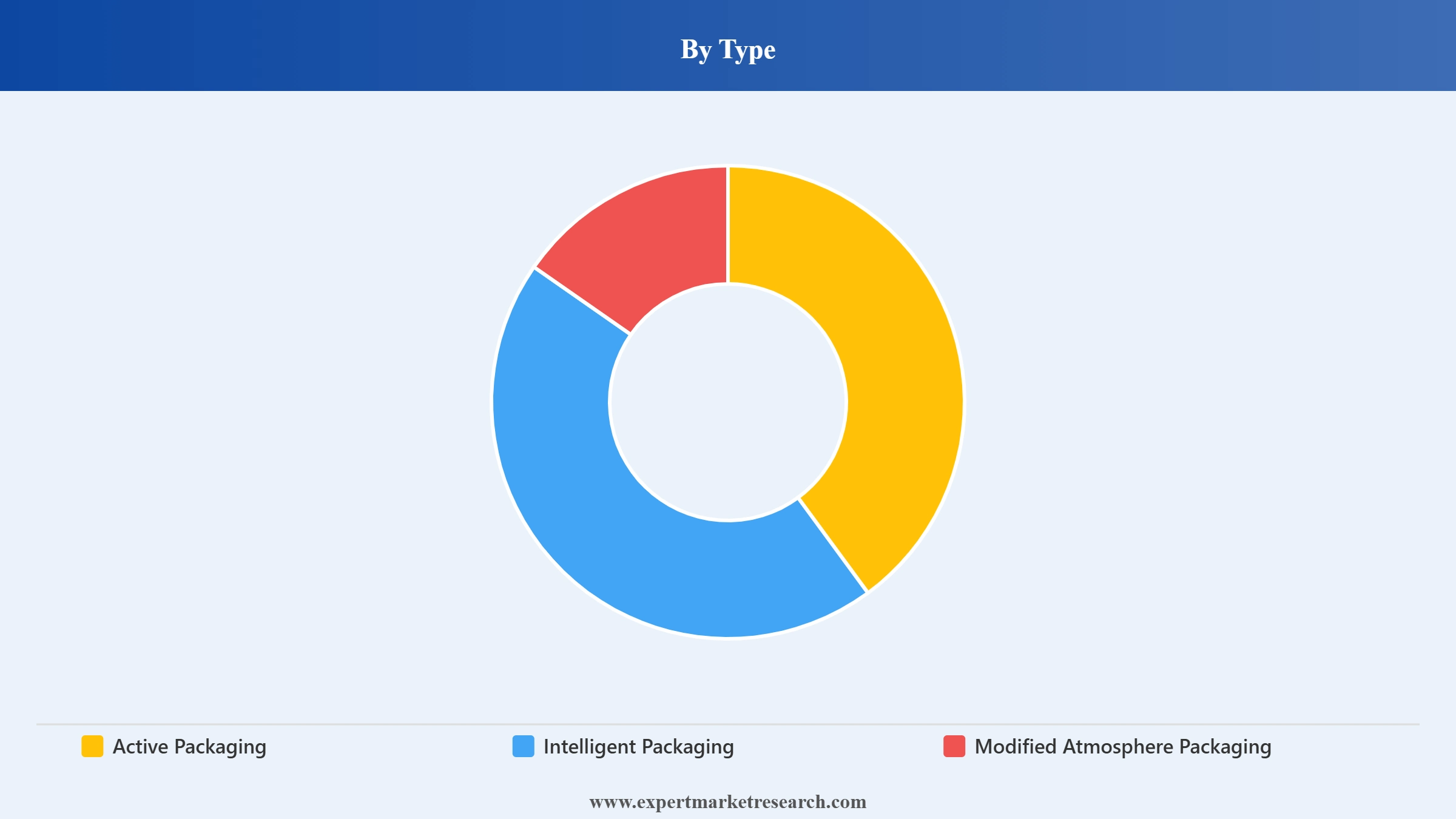
Key Insight: Active packaging consists of functions such as gas scavengers, gas emitters, antimicrobials, and others that help regulate product conditions. Gas scavengers may be used when oxygen reduction is significant, and gas emitters can help to control the atmosphere, strengthening demand in the North America next generation packaging market. Antimicrobial packaging aims at reducing microbial growth and protecting products. Intelligent packaging involves sensors, indicators, and tags that are designed for different information needs. Sensors show the condition of the package or the product itself; indicators display some changes as visual signals, and tags help to track digital identification of packages.
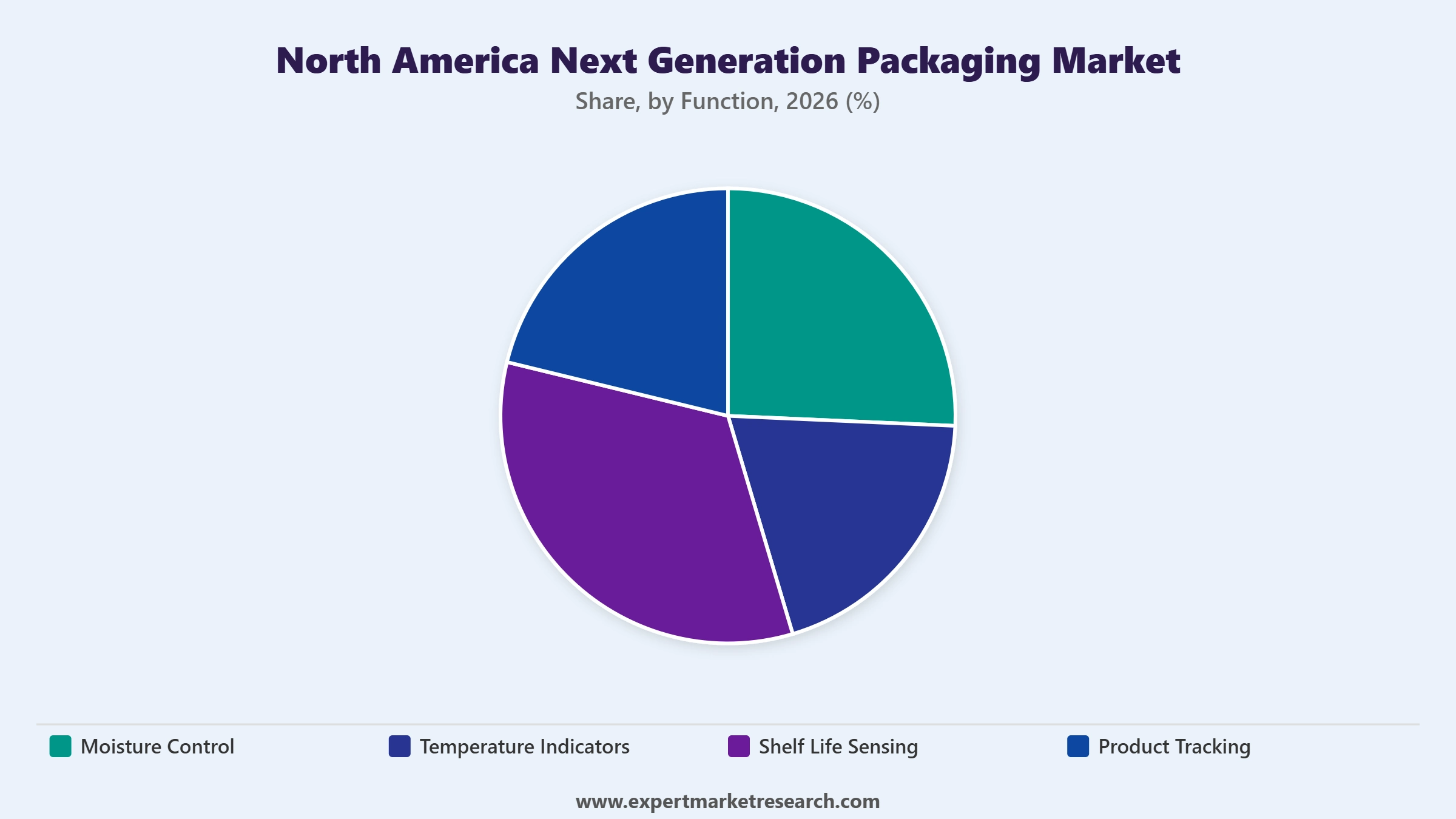
Market Breakup by Function
Key Insight: Moisture control remains relevant to goods needing moisture protection; therefore, this technology is useful in the food industry, pharmaceuticals, and special applications. Temperature indicators alert when a product undergoes inappropriate temperatures and hence, this solution facilitates the handling of the cold chain, propelling North America next generation packaging market opportunities. Shelf-life sensing helps detect any possible deterioration of the goods by recognizing some changes. Product tracking enables the linkage between packaging and inventory or logistics processes. In June 2026, Bradman Lake announced plans to showcase integrated packaging automation, intelligent motion systems, recyclable materials, and energy-efficient technologies at PACK EXPO International 2026.
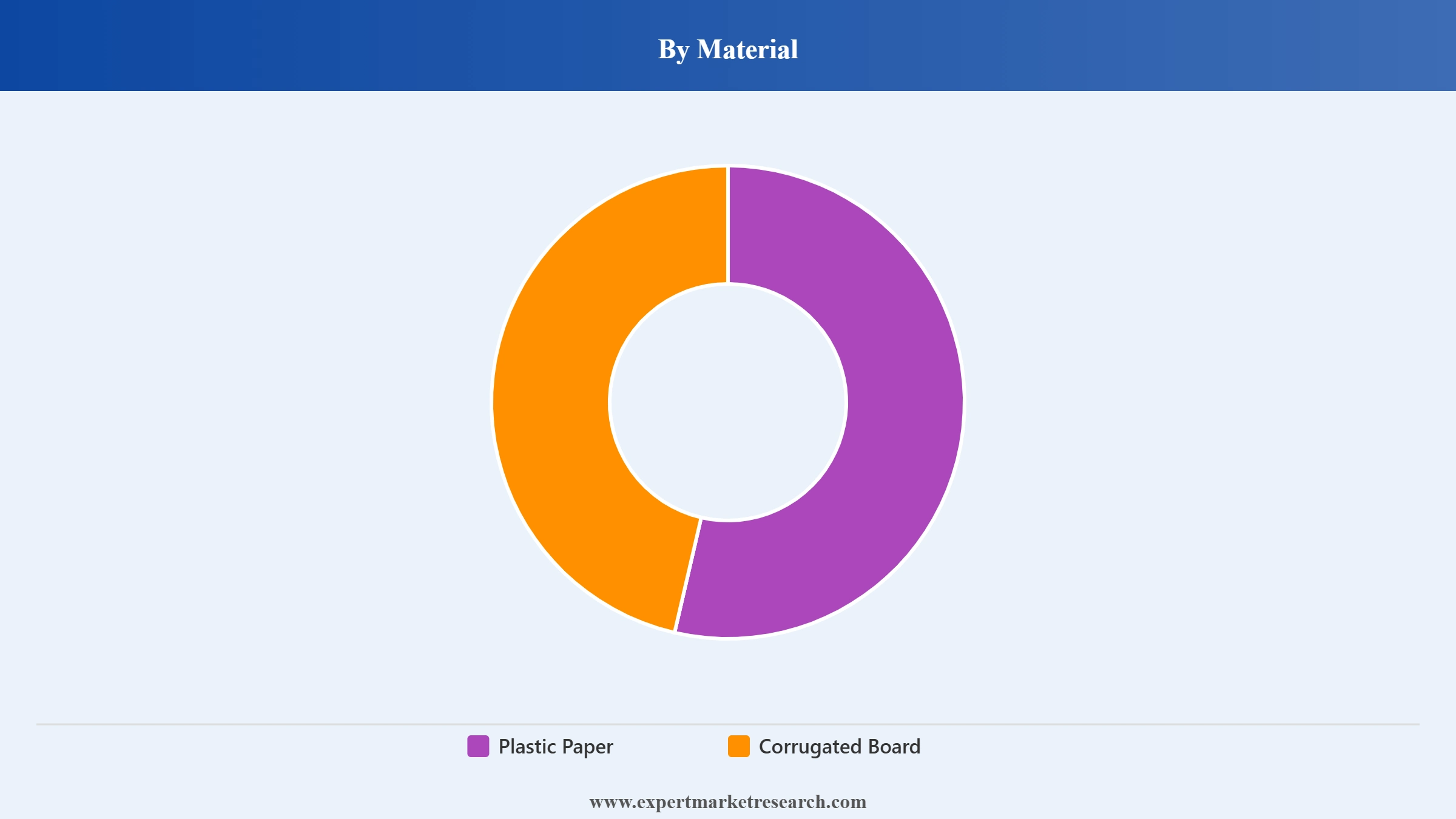
Market Breakup by Material
Key Insight: The significance of plastic continues to be relevant where flexibility and high barrier properties are required, along with other applications like pouches and films, widening the North America next generation packaging market scope. Paper is useful to brands looking for a material based on fibers and improved recyclability, particularly for dry goods and consumer products. The corrugated board is useful for transportation needs where strength and light weight are essential. In September 2026, Fastmarkets RISI proposed a North American corrugated box cost benchmark to improve transparency around manufacturing and delivery costs. There are other materials such as aluminum, specialty films, coatings, and composite packaging that may be useful if there are certain barrier or protective features required.
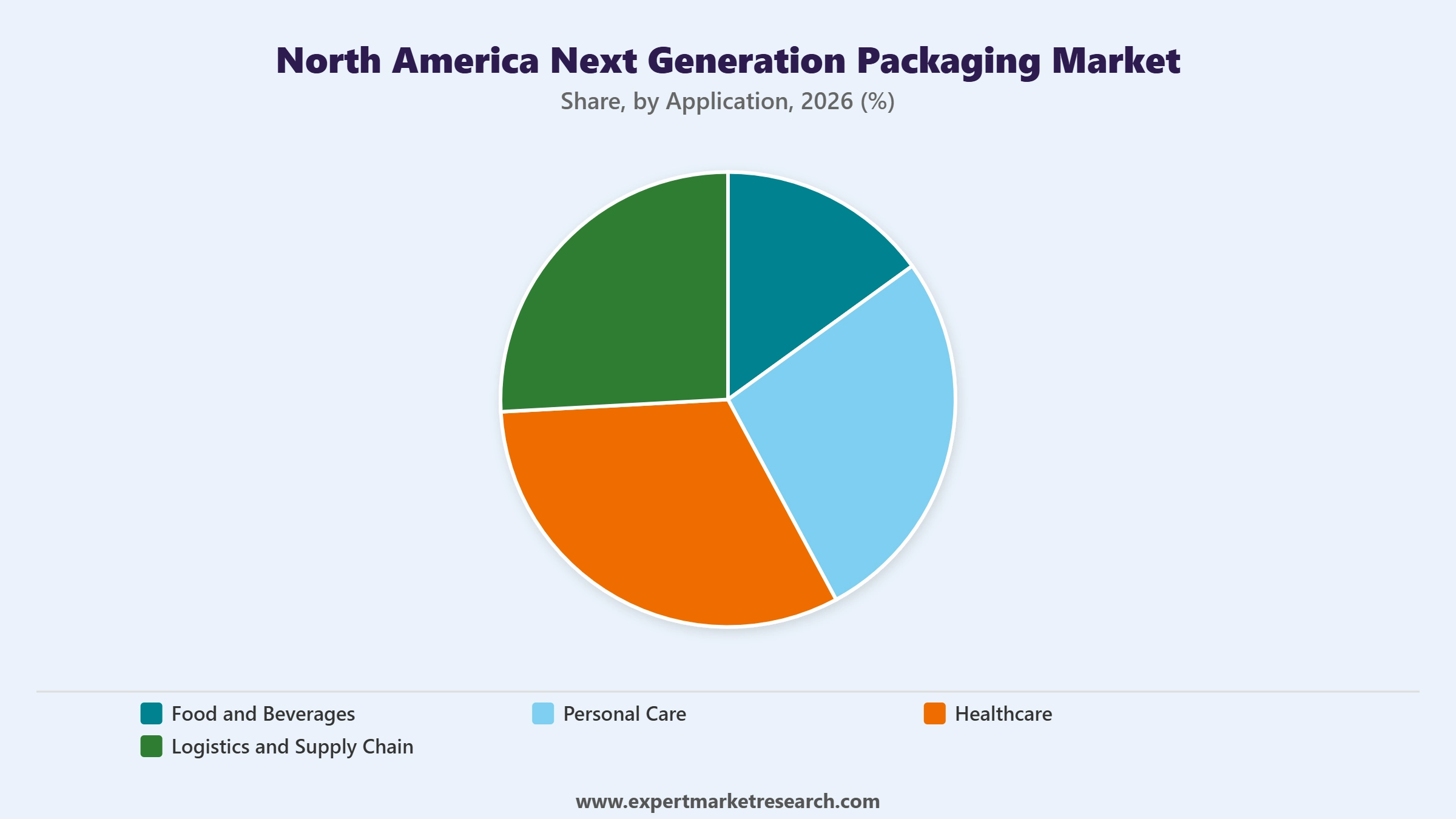
Market Breakup by Application
Key Insight: The food and beverages application makes use of advanced packaging technology in order to enhance freshness, safety, shelf life, and processing. Personal care applications highlight packaging for premium aesthetics, dispensing, barrier, and lightweight, widening the North America next generation packaging market scope. The healthcare industry needs packaging for sterilization, integrity, traceability, and controlled distribution. The logistics and supply chain application concentrates on protection, automation, tracking, and fulfillment visibility. In December 2026, BeFC and ONiO partnered to develop sustainable, battery-free smart packaging and IoT devices using biofuel cells and ultra-low-power technology.
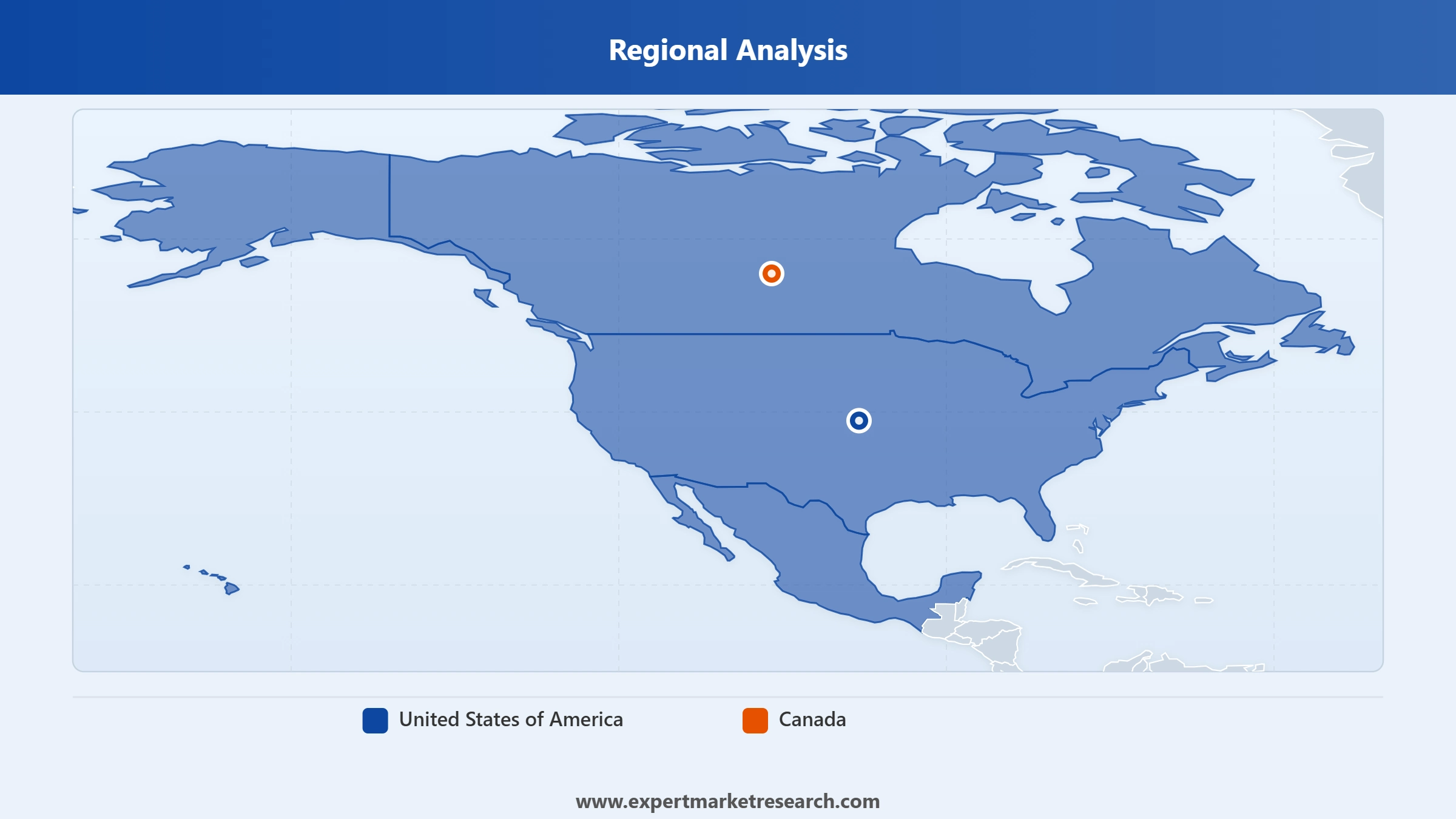
Market Breakup by Country
Key Insight: The strengths of the United States market lie in the economy of scale in manufacturing, established brands, advanced logistics network, and high demand for automation of packaging machines. The Canadian market is being driven by the implementation of extended producer responsibility, mandatory plastic reporting at the federal level, and increased focus on recycled content and end-of-life issues. The demand in the North America next generation packaging market is especially high in the areas of food, healthcare, e-commerce, and industrial packaging, where suppliers develop connectivity and advanced materials.
Read more about this report - Request a Free Sample
Active packaging is the leading sub-segment in terms of North America next generation packaging market share owing to rising demands for packaging that maintains a control over the oxygen level, humidity, microbial growth, and product spoilage without any major modifications in the existing processes in the production facility. In this case, gas scavengers and emitters are highly important in case of sensitive to atmospheric conditions and oxygen products. Anti-microbial forms are under investigation in the context of fresh foods and medical application areas. In September 2026, Tageos expanded microwave-compatible RFID inlays, enabling packaged food tracking, inventory visibility, and traceability throughout product handling.
Read more about this report - Request a Free Sample
Intelligent packaging observes rapid growth in the North America next generation packaging market since manufacturers and retailers are looking for such package characteristics which will be able to provide them with some valuable information related to the package itself. Sensors are used to measure environmental factors, while indicators give information concerning the state of the product inside the package. Tags can be combined with digital identification platforms, thus allowing organizations to link physical goods with information stored in cloud storage.
Moisture control is the most significant function that is boosting demand in the North America next generation packaging market because controlling moisture continues to be important in food, pharmaceuticals, electronics, and special product packaging. Excessive moisture can affect the quality of the products, cause degradation, or affect their physical properties. This is why packaging companies are designing packaging structures that will control the transmission of vapor but have flexibility and sealing abilities. Packaging incorporates desiccant-containing components, barrier films, and moisture-sensitive materials depending on the product's sensitivity. In September 2026, Source One Packaging launched Desiccant Direct, offering industrial silica gel packets, bulk desiccants, and moisture-control solutions online.
Read more about this report - Request a Free Sample
Product tracking applications register significant share in the North America next generation packaging market value as manufacturers and logistics providers seek more precise data about their products. Tags, RFID technology, printed codes, and connected labels enable companies to match packaging with production, inventory, shipping, and destination information. This process becomes more effective when the products are transferred from suppliers, to warehouses, then retailers, and finally to consumers.
Plastic continues to be the dominant material since it provides converters with a wide range of barrier, lightweight, flexibility, durability, and high-speed processability, accelerating the overall North America next generation packaging market growth. Flexible plastic structures continue to play an important role in applications such as food, healthcare, and personal care, which need sealing and product protection properties. On the other hand, the material is evolving into formats that utilize recycled content and are easier to recycle. The recycle-ready formats from Amcor show an example of such development. In October 2025, Amcor launched AmSecure thermoformed trays and rollstock, offering cost-effective, recyclable healthcare packaging with PETG-comparable performance.
Read more about this report - Request a Free Sample
The most rapidly growing sub-segment is represented by corrugated board paper due to increased demand for fiber-based shipping packaging driven by the growth of e-commerce and automation of the fulfillment processes. In addition, sustainability demands require development of lighter and cushionable board structures, printable surfaces, and right-size packaging, stimulating the overall North America next generation packaging market revenue. The paper cushioning system from Sealed Air shows how the protective packaging made of paper is being integrated in modern pack stations. Corrugated formats allow for easy material separation compared to some multi-layer structures.
The food and beverages application continues to be the most dominant in the North America next generation packaging market since packaging affects product freshness, shelf-life, food safety, serving sizes, and retail merchandising. Active packaging, modified atmosphere packaging, vacuum systems, and high barrier films are highly relevant for applications for fresh protein, dairy, seafood, prepared food, and beverage processors. In September 2026, Sealed Air’s CRYOVAC launched ZeroPrep pre-filled pouches, reducing condiment preparation, cleaning, contamination risks, and food waste for restaurants. Suppliers are also innovating recyclable trays and flexible forms due to material requirements.
Read more about this report - Request a Free Sample
The logistics and supply chain application observes fast-paced growth in the North America next generation packaging market as companies need packaging that will protect their product throughout their logistics process and provide more shipment visibility. E-commerce and omnichannel fulfillments encourage right-sizing packaging, automated bagging, protective paper systems, digital labeling, and package level tracking. Sealed Air is offering automated packaging machinery combined with materials and technical services, and Avery Dennison is focusing on intelligent identification for logistics.
The United States commands the largest share of the North America next generation packaging market due to the presence of a large number of markets like food processing, healthcare, consumer goods, retail, logistics, and e-commerce. The region also has a good set of packaging converters and technology providers who have the capability to commercialize new materials and automation solutions. Suppliers are making investments in manufacturing capabilities and innovation centers in the United States to stay closer to large brand owners. In September 2026, Lactips and SmartSolve partnered to advance plastic-free, water-soluble packaging solutions, scaling bio-based materials for global sustainable packaging applications.
Read more about this report - Request a Free Sample
Canada is the fastest growing country in the North America next generation packaging market due to regulations around reporting and extended producer responsibility which are pushing companies to redesign their packaging and reporting the flow of materials. The Federal Plastics Registry mandates the reporting on plastic packaging that is available in the Canadian market. This leads to the requirement of recyclable structures, recycled content, material identification, and end-of-life information. In such a scenario, companies across the food, beverages, pharma, and consumer goods industries are analyzing their packaging from a sustainability perspective.
Competition in the market space is gradually shifting towards integrated solutions and away from just packaging materials. Leading North America next generation packaging market players are focused on developing recyclable designs, active barriers, smart labels, automation systems, and digitized identification systems. Emerging areas include healthcare packaging, fresh protein packaging, e-commerce packing solutions, and food traceability. There is also an effort to enhance the innovation models in such a way that brand owners have the ability to test their packaging ideas before large-scale production begins.
Material science continues to be relevant, but there is growing importance attached to compatibility of equipment and data as well. Another opportunity is the assistance to customers with the complex recycling and producer responsibility regulations. North America next generation packaging companies able to integrate performance and lifecycle data with automation and manufacturing capabilities will be able to participate in more stages of the customer’s packaging process.
Established in the 1860, Amcor operates from its base in Zurich, Switzerland, and has a substantial presence in North America. Amcor provides flexible and rigid packaging for applications in the food, beverage, healthcare, and personal care industries. The areas of focus of Amcor include recycle-ready solutions, paper packaging, healthcare trays, material science, and package development.
Founded in 1960, Sealed Air is based out of New Jersey, United States. Sealed Air comprises CRYOVAC food packaging, protective packaging, automated systems, and equipment. The company is currently innovating sustainable trays, paper cushioning, connected packaging processes, and automated food packaging processes that optimize throughput, yield, food safety, and material usage.
Founded in 1912, Constantia Flexibles' headquarters are located in Vienna, Austria. It designs flexible packaging materials intended for consumer goods and pharmaceutical industries and operates manufacturing plants in several countries. Areas of specialization of Constantia Flexibles include recyclable structures, aluminum and film packaging, pharmaceutical packaging, and Ecolutions packaging solutions that minimize the impact on the environment.
Founded in 1935, the headquarters of Avery Dennison are based in California, United States. It integrates material science with intelligent labeling through labels and packaging solutions. It uses its Intelligent Labels platform to provide traceability, visibility, and connection in food, logistics, and products.
Other key players in the market include Tetra Laval Group, WestRock Company, Huhtamäki Oyj, and Desiccare, Inc., among others.
*Please note that this is only a partial list; the complete list of key players is available in the full report. Additionally, the list of key players can be customized to better suit your needs.*
Unlock the latest insights with our North America next generation packaging market trends 2026 report. Discover regional growth patterns, consumer preferences, and key industry players. Stay ahead of competition with trusted data and expert analysis. Download your free sample report today and drive informed decisions in the market.


Upto 15% Off
USD
$2499 $2249
$3999 $3599
$4999 $4249
$5999 $5099


*While we strive to always give you current and accurate information, the numbers depicted on the website are indicative and may differ from the actual numbers in the main report. At Expert Market Research, we aim to bring you the latest insights and trends in the market. Using our analyses and forecasts, stakeholders can understand the market dynamics, navigate challenges, and capitalize on opportunities to make data-driven strategic decisions.*
In 2025, the market reached an approximate value of USD 2.75 Billion.
The market is projected to grow at a CAGR of 6.40% between 2026 and 2035.
The market is estimated to witness a healthy growth in the forecast period of 2026-2035 to reach a value of around USD 5.11 Billion by 2035.
Stakeholders are developing recyclable structures, integrating intelligent identification, expanding automated packaging capabilities, strengthening lifecycle data, partnering with brands, and designing solutions around evolving producer-responsibility requirements.
The key trends aiding the market expansion include the integration of blockchain technology into packaging and improvements in logistics infrastructure, along with the growing trend of automation within the sector.
The major classifications based on function include moisture control, temperature indicators, shelf life sensing, and product tracking, among others.
The major applications of next generation packaging include food and beverages, personal care, healthcare, and logistics and supply chain, among others.
The key players in the market include Amcor Plc, Sealed Air Corporation, Constantia Flexibles Holding GmbH, Avery Dennison Corporation, Tetra Laval Group, WestRock Company, Huhtamäki Oyj, and Desiccare, Inc., among others.
Companies face high development costs, fragmented recycling infrastructure, inconsistent regulations, difficult material compatibility, limited recycled feedstock, customer qualification cycles, and the challenge of balancing sustainability with packaging performance.
Explore our key highlights of the report and gain a concise overview of key findings, trends, and actionable insights that will empower your strategic decisions.
| REPORT FEATURES | DETAILS |
| Base Year | 2025 |
| Historical Period | 2019-2025 |
| Forecast Period | 2026-2035 |
| Scope of the Report |
Historical and Forecast Trends, Industry Drivers and Constraints, Historical and Forecast Market Analysis by Segment:
|
| Breakup by Type |
|
| Breakup by Function |
|
| Breakup by Material |
|
| Breakup by Application |
|
| Breakup by Region |
|
| Market Dynamics |
|
| Competitive Landscape |
|
| Companies Covered |
|
Datasheet
One User
USD 2,499
USD 2,249
tax inclusive*
Single User License
One User
USD 3,999
USD 3,599
tax inclusive*
Five User License
Five User
USD 4,999
USD 4,249
tax inclusive*
Corporate License
Unlimited Users
USD 5,999
USD 5,099
tax inclusive*
*Please note that the prices mentioned below are starting prices for each bundle type. Kindly contact our team for further details.*
Flash Bundle
Small Business Bundle
Growth Bundle
Enterprise Bundle
*Please note that the prices mentioned below are starting prices for each bundle type. Kindly contact our team for further details.*
Flash Bundle
Number of Reports: 3
20%
tax inclusive*
Small Business Bundle
Number of Reports: 5
25%
tax inclusive*
Growth Bundle
Number of Reports: 8
30%
tax inclusive*
Enterprise Bundle
Number of Reports: 10
35%
tax inclusive*
How To Order

Select License Type
Choose the right license for your needs and access rights.

Click on ‘Buy Now’
Add the report to your cart with one click and proceed to register.

Select Mode of Payment
Choose a payment option for a secure checkout. You will be redirected accordingly.
Strategic Solutions for Informed Decision-Making
Gain insights to stay ahead and seize opportunities.

Get insights & trends for a competitive edge.

Track prices with detailed trend reports.

Analyse trade data for supply chain insights.

Leverage cost reports for smart savings

Enhance supply chain with partnerships.

Connect For More Information
Our expert team of analysts will offer full support and resolve any queries regarding the report, before and after the purchase.
Our expert team of analysts will offer full support and resolve any queries regarding the report, before and after the purchase.
We employ meticulous research methods, blending advanced analytics and expert insights to deliver accurate, actionable industry intelligence, staying ahead of competitors.
Our skilled analysts offer unparalleled competitive advantage with detailed insights on current and emerging markets, ensuring your strategic edge.
We offer an in-depth yet simplified presentation of industry insights and analysis to meet your specific requirements effectively.




