

Consumer Insights
Uncover trends and behaviors shaping consumer choices today
Procurement Insights
Optimize your sourcing strategy with key market data
Industry Stats
Stay ahead with the latest trends and market analysis.
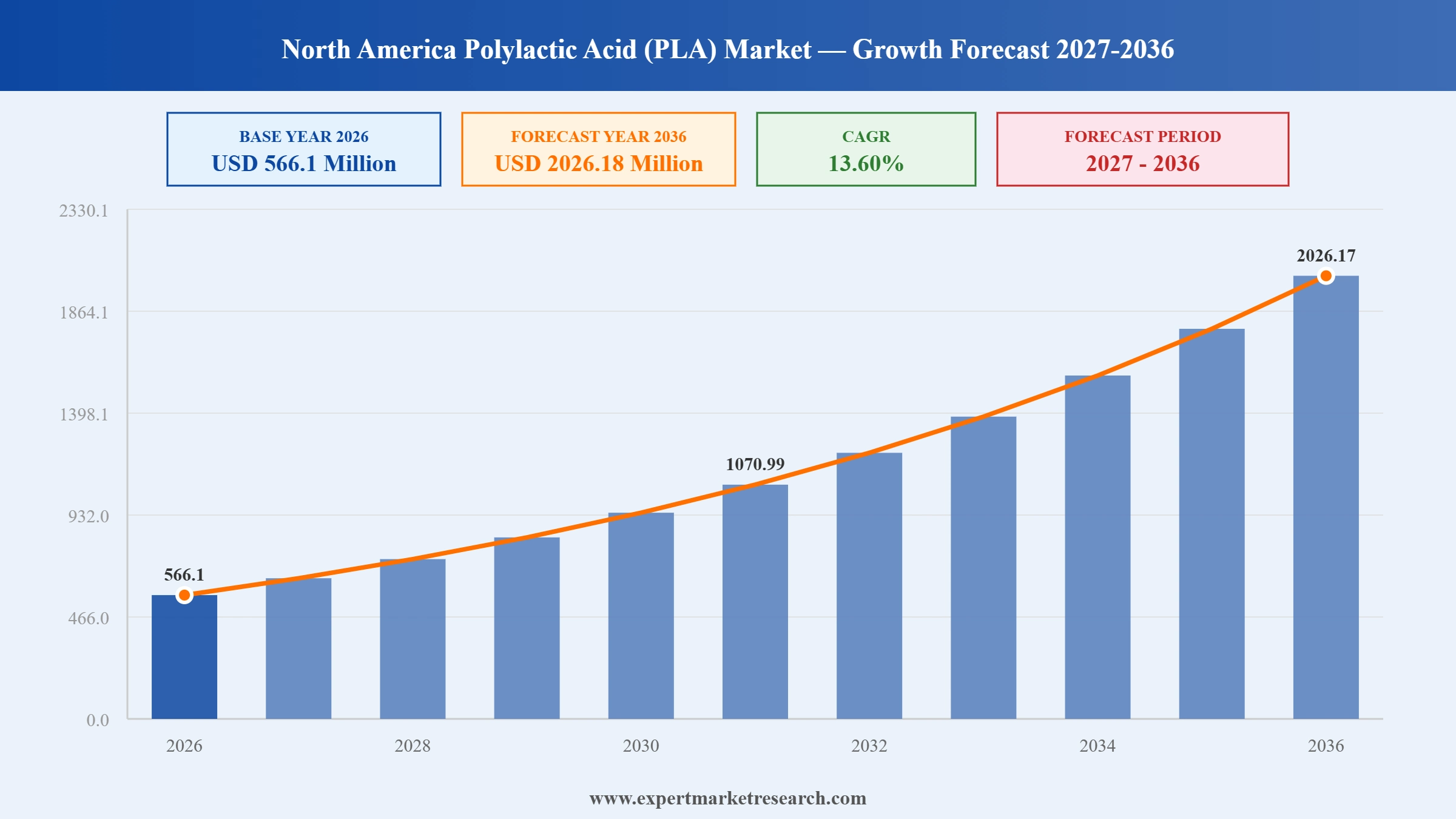
The North America polylactic acid (PLA) market attained a value of USD 498.33 Million in 2025 and is projected to expand at a CAGR of 13.60% through 2035. The market is further expected to achieve USD 1783.61 Million by 2035. The use of automated thermoforming machinery, which has the capacity to handle PLA, is minimizing the conversion difficulties, helping the North American manufacturers to consider PLA for high-volume food packaging and consumer goods.
The North America polylactic acid (PLA) market is witnessing product innovation that goes beyond the use of compostable packaging materials as NatureWorks launched Ingeo Extend in March 2025. Ingeo Extend is a family of products targeted at BOPLA film applications such as coffee capsules, candy wrappers, and single-portion packets, with features such as eight-times faster biodegradation and disintegration compared to existing PLA grades. The innovation is significant for converters as it combines the compostable feature of PLA with manufacturing productivity and efficiency.
In terms of the supply chain in North America, TotalEnergies Corbion is extending its Luminy PLA offerings in applications like packaging, food service, fiber, automotive components, filtration, and foams. FUTERRO is also consolidating its offering via an integrated strategy encompassing lactic acid, lactide, PLA production, and recycling processes, giving the company better feedstock and circular material management. In addition, BASF is using its expertise in polymer compounding to assist in creating sustainable materials solutions in packaging, consumer products, automotive and industrial applications. Similarly, in November 2025, Emirates Biotech launched Embio PLA grades for packaging, fibers, nonwovens, coated paperboard, and 3D printing applications. This is indicative of the fact that suppliers in the North America polylactic acid (PLA) market are increasingly competing in terms of performance, processability, and circular material solutions than compostable packaging only.
There are two specific trends that are driving the demand in the North America polylactic acid (PLA) market. First, increased use of 3D printing technology in industry and professional applications is resulting in more demand for filament-grade PLA. Second, there is increased shelf-life and barrier properties requirement for packaged foods by North American companies, resulting in demand for PLA film and coating that can be used with paper substrates.
Read more about this report - Request a Free Sample
Luminy FOAM 50F by TotalEnergies Corbion is being commercially launched, which is a high melt strength PLA material meant for extrusion foam food trays, clamshells, and bowls. It presents a possibility for North American food packaging converters to use this material as an alternate to polystyrene without having to invest in new extrusion equipment.
TotalEnergies Corbion increased the price of Luminy PLA resins due to an ongoing increase in raw material, energy, packaging, and transportation costs arising from geopolitical disruption. Resin consumers may improve their resilience to supply cost pressures by means of longer-term contracts, diversified suppliers and inventory management, strengthening growth in the North America polylactic acid (PLA) market.
Futerro showcased the LIFE VinoShield initiative, proving that PLA has a wide range of uses even in the agriculture sector. The LIFE VinoShield is a project that concentrates on the application of PLA-based solutions in viticulture, boosting demand in the North America polylactic acid (PLA) market.
TotalEnergies Corbion and Yuhan-Kimberly launched a washable biobased kitchen towel made from Luminy PLA, PHA, and FSC-certified pulp after three years of collaboration. The North American makers of hygiene products can use PLA/PHA blends in reusable wipes, towels, and specialty nonwovens, thus finding applications other than packaging.
Companies in the North America polylactic acid (PLA) market are designing technologies to improve film-processing efficiency while expanding PLA's suitability for flexible packaging applications. For example, the Ingeo Extend range of NatureWorks aims at overcoming one of the most important conversion bottlenecks with its release of biaxially oriented films for PLA. The Ingeo Extend 4950D grade allows stretching across the machine direction up to 7 times and can be extruded and stretched using machinery designed initially for polypropylene films. Application examples include coffee capsules, candy wrappers, and single-portion packets. On the other hand, in November 2025, Sulzer and TripleW scaled food-waste-derived PLA, converting bakery rejects and expired goods into bioplastic for consumer applications. This provides more viable options for converting compostable flexible packaging to North American film converters.
Suppliers are making efforts to enter the application area of molded foam where expanded polystyrene continues to dominate in terms of usage, broadening the North America polylactic acid (PLA) market scope. In April 2025, TotalEnergies Corbion and Useon announced their collaboration aimed at industrial implementation of bead-foaming technology allowing manufacturing of molded expanded PLA. As a result, EPLA materials are being developed for use in packaging and thermal protection applications as an industrially compostable alternative to EPS foams. The development opens up new possibilities for North American converters of PLA in protective packaging where lightweight structures and insulation performance matter.
Circularity is becoming a product development focus area as manufacturers aim at providing alternatives to virgin resins, reshaping the North America polylactic acid (PLA) market dynamics. According to the life cycle assessment released by TotalEnergies Corbion, in June 2025, Luminy PLA provides up to an 85% reduction in carbon footprint compared to conventional plastics, and recycled content pathways have the potential to enhance environmental benefits. The company noted that Luminy PLA can become carbon neutral with 30% recycled content and have a negative carbon footprint in the 100% recycled PLA scenario taking into account biogenic carbon. The company’s findings are encouraging brand owners and converters to consider mechanically and chemically recycled PLA together with compostable options.
Security of supply becomes more significant as North American converters assess PLA for their high-volume applications. NatureWorks runs a 150,000 metric ton per year capacity Ingeo PLA plant in Blair, Nebraska, providing the region with the basis for domestic production in connection with agricultural feedstock sources and converters' markets. The company keeps supplying Ingeo in packaging, food service, consumer products, medical uses, and 3D printing. Demonstrating such similar trends in the North America polylactic acid (PLA) market, in March 2024, eSUN and PhaBuilder formed a strategic partnership to develop PLA-PHA materials for 3D printing, textiles, packaging, and healthcare.
Instead of using standard packaging plastics, manufacturers of PLA are increasingly creating special application grades. This can be seen from the product range offered by TotalEnergies Corbion under the brand name Luminy, which caters to fresh food packaging, medical parts, fibers, automotive parts, food service articles, and 3D printing, thus showing how suppliers are catering to challenging applications. In addition, special grades have been created for melt-blown nonwovens and PLA foam, expanding its scope to filtration and light-weight construction. In July 2026, eSUN launched PLA-Coffee filament, combining recycled coffee grounds with PLA for sustainable FDM 3D printing applications. The significance of such diversification for manufacturers in the North America polylactic acid (PLA) market is that PLA is currently competing with regards to its thermal properties and processing characteristics.
The Expert Market Research's report titled “North America Polylactic Acid (PLA) Market Report and Forecast 2026-2035” offers a detailed analysis of the market based on the following segments:
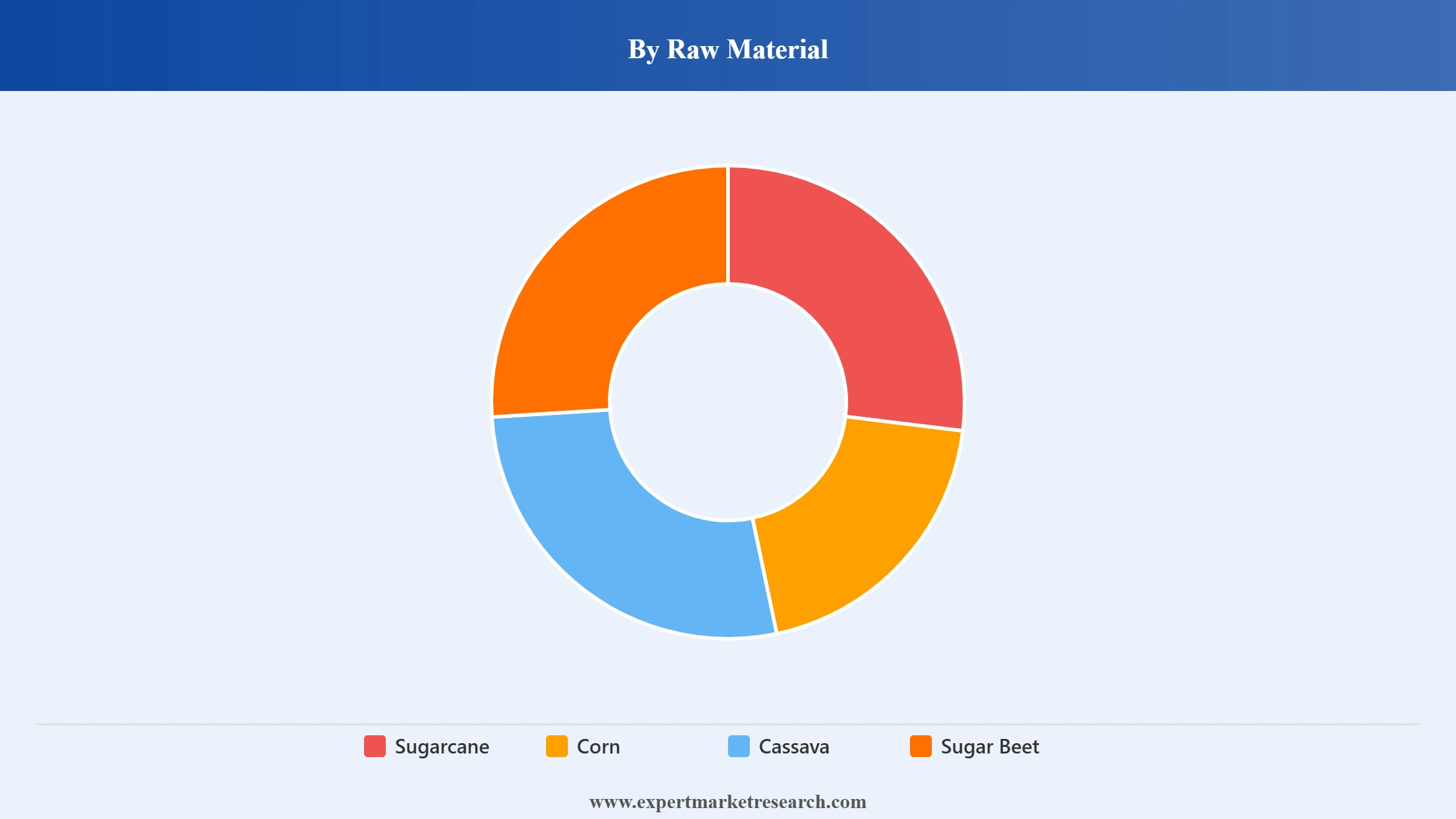
Market Breakup by Raw Material
Key Insight: Raw-material competition in the North America polylactic acid (PLA) market depends on economics of processing, availability of the raw material and carbon balance required by downstream processors. Corn is relevant since there are starches to dextrose processing plants that can provide reliable feedstocks for fermentation and also enable large scale production of resins. Sugarcane is becoming popular due to diversification of renewable feedstock and the need to improve lifecycle efficiency. Cassava could become an additional starch source in situations where starch derived from roots is able to be used in fermentation processes. In August 2026, Danforth Center launched HeatSmart Cassava, backed by a USD 4.9 million Gates Foundation grant, to improve heat resilience. Sugar beet could become an alternative sugar source with flexible raw materials sourcing capabilities.
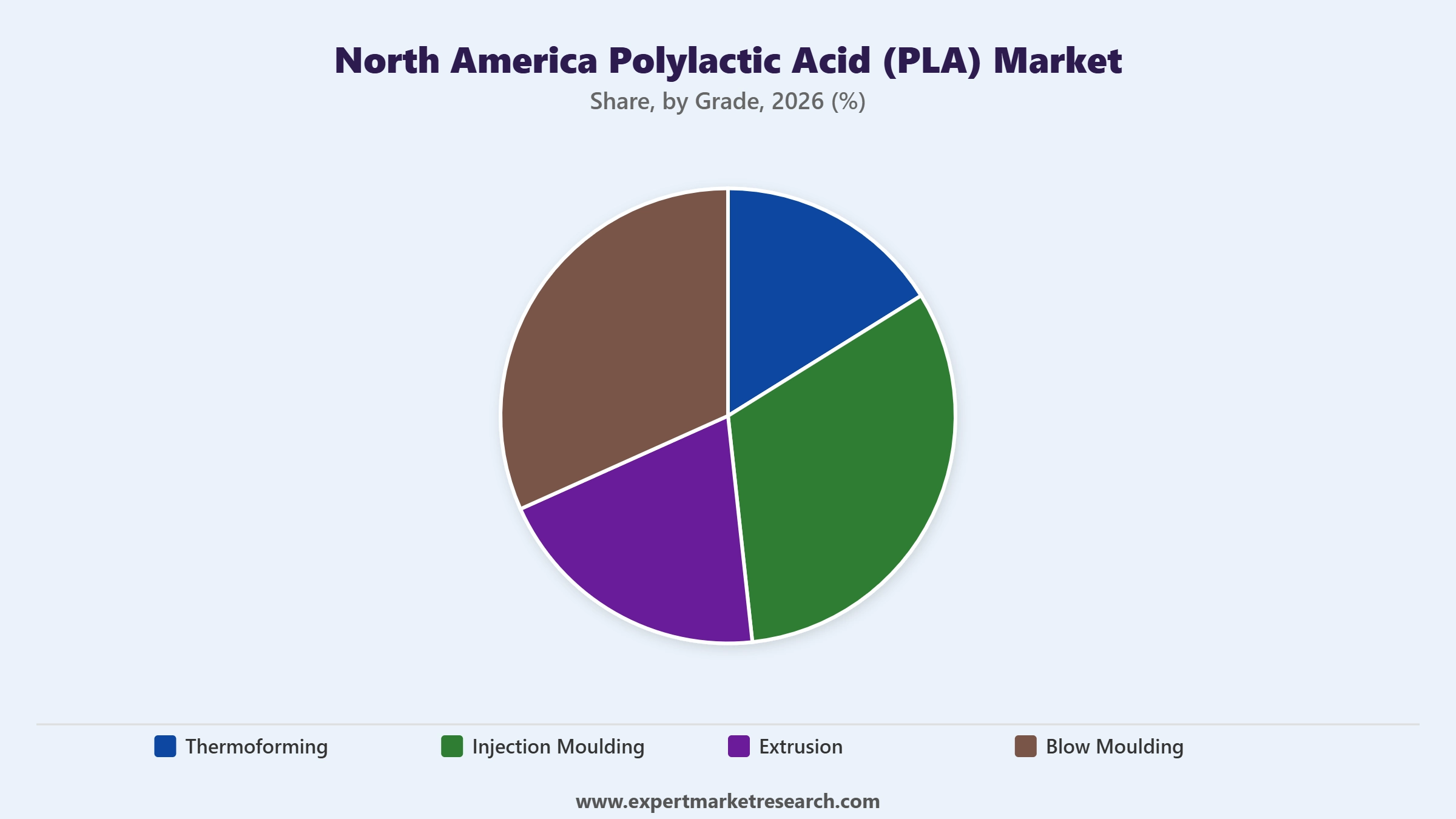
Market Breakup by Grade
Key Insight: The thermoforming category is driven by PLA’s transparency, hardness, and use in food packaging. The injection molding process caters to products like cutlery, cosmetics packaging, electronic housing, and agricultural parts, wherein specific grades are being developed to improve flow and heat resistance properties. Extrusion is gaining traction with improvements in film, sheet, and specialty structures. Blow molding continues to be an emerging area, specifically for bottles, as technologies to enhance melt strength and additives overcome previous problems in processing. Other processing methods such as fibers, foams, compression molding, and 3D printing are also opening up new opportunities in the North America polylactic acid (PLA) market.
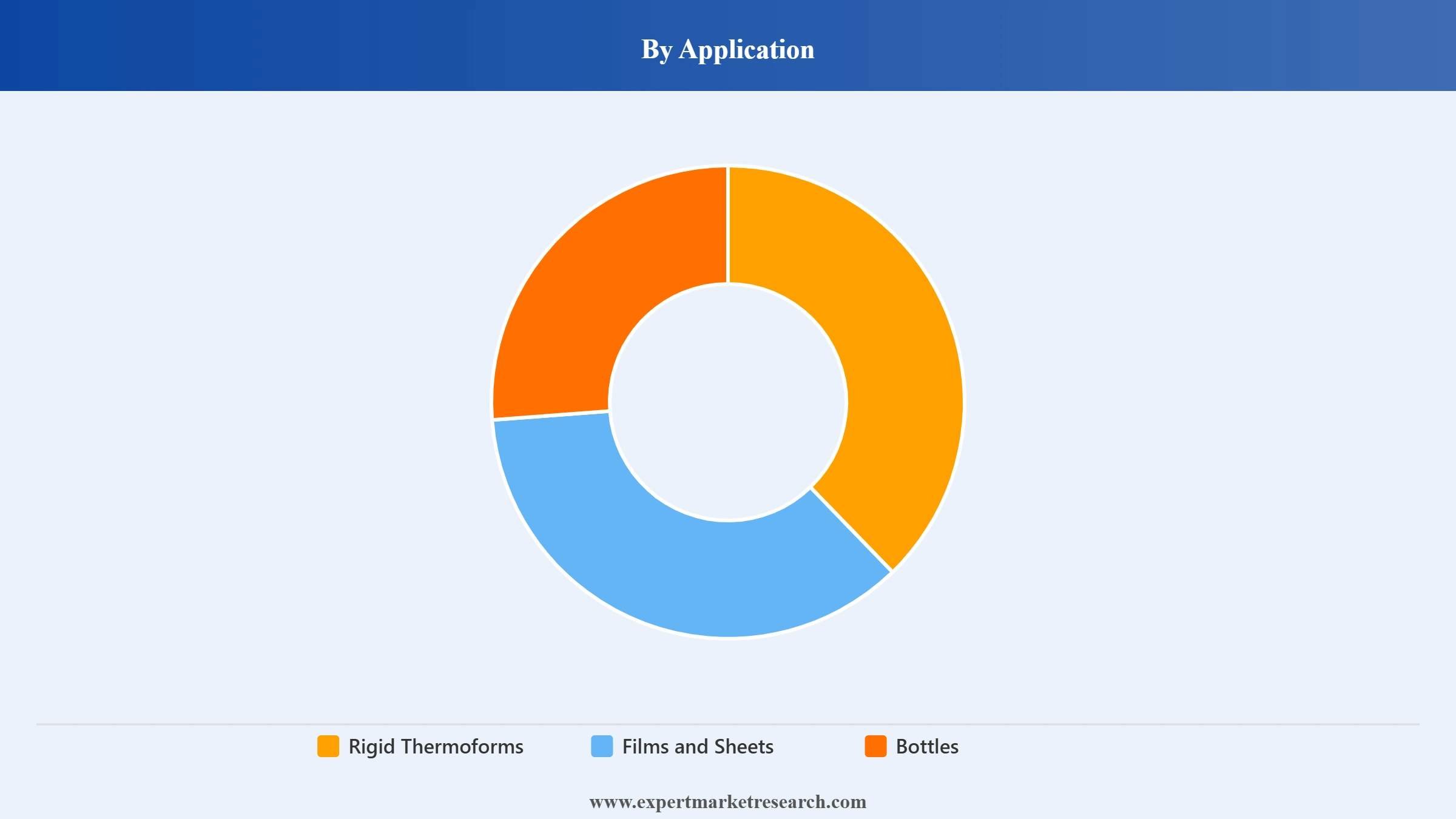
Market Breakup by Application
Key Insight: Demand dynamics in the North America polylactic acid (PLA) market depends on the properties of the material being processed and the needs of the formats themselves. Rigid thermoforms continue to be key as the clarity, stiffness and processing capabilities make them suitable for food containers and food service formats. Film and sheet are becoming more prominent as orientation. Sealability and heat resistance allow for flexible packaging uses. Bottles have a use due to the clarity and renewable material attributes, especially in selected beverage and personal care formats. Other applications include 3D printed objects, coated paper and specialty converted parts, where application specific grades can fill a need that other packaging materials cannot. In June 2026, International Paper completed its USD 360 million acquisition of North Pacific Paper Company, expanding lightweight recycled packaging capabilities.
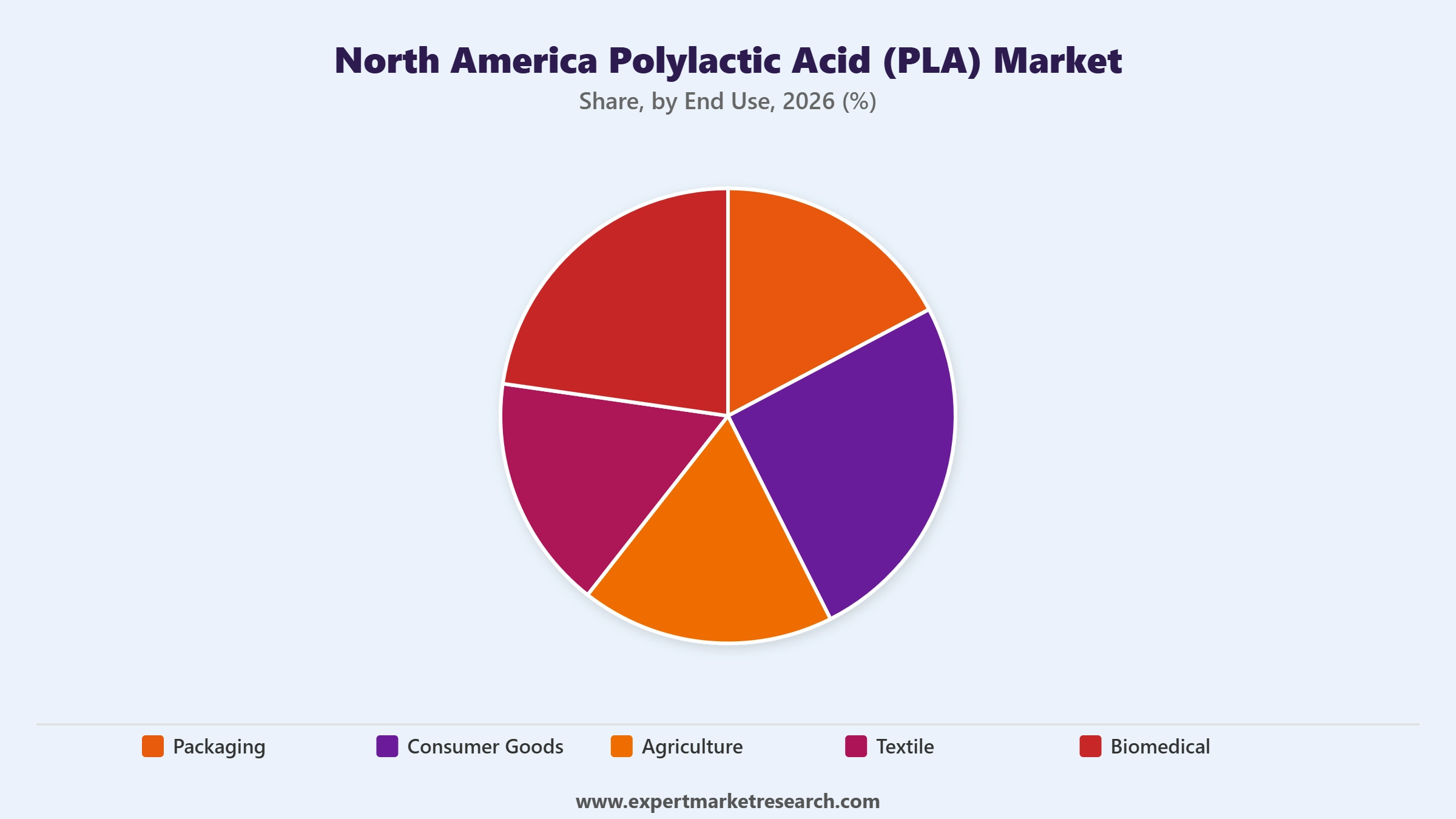
Market Breakup by End Use
Key Insight: The end-use demand in the North America polylactic acid (PLA) market is driven by applications in which PLA’s renewable-based feedstock can be combined with its performance properties during processing. Packaging continues to be the key segment because the material can be used by converters in the form of containers, films, cups, trays, and food service packaging through grades of PLA. Demand from consumer goods is driven by component applications and 3D printing materials that have requirements for appearance and dimensional performance. The agriculture industry utilizes PLA in select films, coatings, and degradation-controlled products. Textiles take advantage of PLA’s fiber and non-woven forms where having a renewable-based polymer is beneficial.
Market Breakup by Country
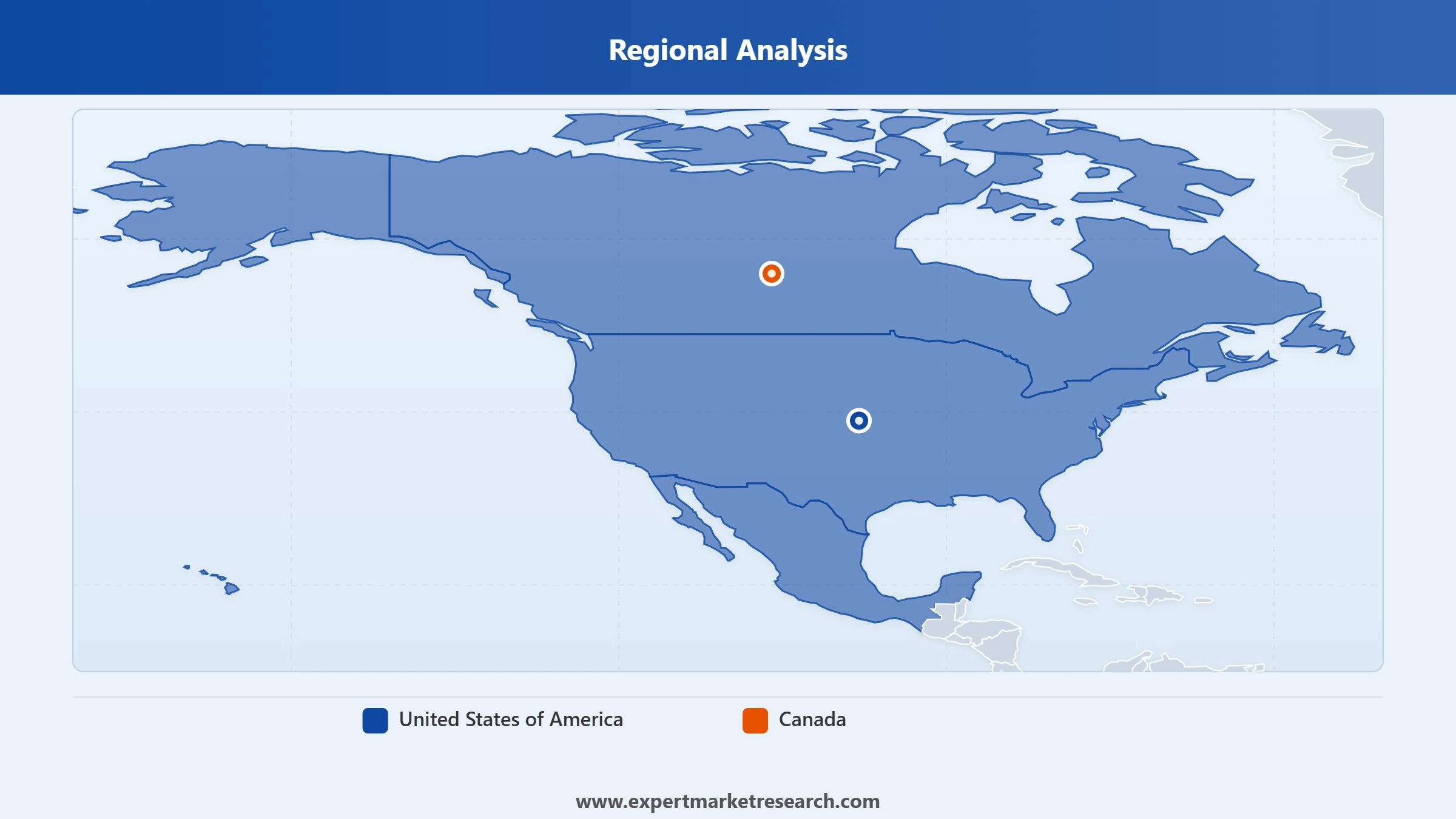
Key Insight: As per the North America polylactic acid (PLA) market report, regional demand is dominated by the United States because there is the presence of local PLA production, feedstock availability, conversion capabilities for packaging, and well-developed distribution channels which facilitate commercialization. Demand in the United States centers around thermoformed packaging, films, food service items, 3D printing, and specialty uses, thus providing multiple markets for resins. The smaller and developing market is that of Canada where there are favorable conditions in terms of packaging redesign, waste reduction needs, and sustainable procurement practices of retailing and food firms.
Read more about this report - Request a Free Sample
By raw material, corn dominates the market due to established feedstock infrastructure and fermentation capacity
Corn remains dominant as a PLA raw material because there are large amounts of cultivation, starch milling, and glucose processing that takes place in North America. This means that there are stable sources of dextrose for the fermentation process of making lactic acid, strengthening the North America polylactic acid (PLA) market value chain. The well-established agricultural systems enable easy access to raw materials. In January 2025, Corn Next launched CornNext-17, a corn-starch biobased material designed to biodegrade rapidly as an alternative to PLA and conventional plastics.
Read more about this report - Request a Free Sample
Sugarcane is the fastest-growing raw material for the production of PLA since manufacturers are seeking other sources of renewable raw materials. The fermentable sugars found in sugarcane can be converted into lactic acid and hence offer a way to diversify from the use of starch as raw material. North Americans are increasingly concerned about the source of the raw material in assessing the sustainability of PLA.
Thermoforming records notable growth due to strong demand for rigid foodservice and fresh-food packaging applications
Thermoforming emerges as the leading processing grade in the North America polylactic acid (PLA) market since PLA is a combination of being transparent, rigid, and suitable for efficient formation into trays, cups, containers, and foodservice packaging. For example, in February 2025, NatureWorks launched Ingeo 3D300, a high-speed PLA filament delivering printing speeds up to 300 mm/s with consistent quality and precision. This solution was able to produce at speeds equivalent to conventional polypropylene capsules, indicating how advances in processing PLA can overcome conversion barriers for packaging manufacturers.
Read more about this report - Request a Free Sample
Extrusion grades observe considerable growth in terms of North America polylactic acid (PLA) market share since PLA suppliers are developing grades with high melt strength, heat resistance, orientation, and production efficiencies. One example from the North American industry is the introduction of the Ingeo Extend 4950D from NatureWorks for BOPLA film production, which makes it possible for 7x transverse stretch along with the possibility of using equipment originally designed for polypropylene.
By application, rigid thermoforms dominate the market due to clarity, stiffness, and established conversion
The use of rigid thermoforms is most common in PLA products since PLA offers transparency, rigidity, and formability. Suppliers in the North America polylactic acid (PLA) market utilize the material for produce, bakery, deli trays, cups, and foodservice products that demand both clarity and rigidity. Converters have the benefit of being able to use their existing thermoforming equipment due to similar processing requirements. On the other hand, brand owners prefer thermoformed PLA for packaging where renewable material characteristics are required. In September 2025, Georgia-Pacific agreed to acquire Anchor Packaging, expanding rigid food packaging capabilities and strengthening its foodservice portfolio.
Read more about this report - Request a Free Sample
Films and sheets are the rapidly growing application areas for PLA since the suppliers continue improving PLA in the areas of orientation, heat resistance, sealability, and processing characteristics. The developments help converters explore flexible structures traditionally made of polyethylene, stimulating growth in the North America polylactic acid (PLA) market. The potential applications for flexible PLA include overwraps, labels, lidding films, pouches, and barrier films. PLA can be oriented biaxially to increase rigidity and dimensional stability. Film grade PLA is especially attractive for North American converters due to the thin structures and improved printability.
By end use, the packaging category dominates the market due to broad applications and established converter capabilities
Packaging largely contributes to the North America polylactic acid (PLA) market revenue, since the material is specified by brand owners in packaging applications including foodservice items, fresh-food packaging, and consumer packaging that needs transparency, rigidity, thermoforming, and bio-renewable content. Consumers are demanding that their packaging materials be able to do more and that they provide clear evidence of end-of-life disposal routes.
Read more about this report - Request a Free Sample
The biomedical sector observes the fastest growth in the North America polylactic acid (PLA) market owing to its biocompatible properties, biodegradable characteristics, and customizable degradation behavior. This provides developers with an opportunity to develop medical products made from PLA such as resorbable components, drug delivery devices, sutures, scaffolding, and even additively manufactured prototypes. Mechanical performance and degradation rates can be modified through molecular weight, crystallinity, and structure of the polymer. In March 2026, Emirates Biotech joined CIRCLE, converting food waste-derived lactic acid into PLA for automotive, cosmetics, and food packaging applications.
United States dominates the market due to domestic production, feedstocks, and conversion capacity
United States dominates the North America polylactic acid (PLA) market with a high margin because of its capability to produce the domestic biopolymer, convert packaging, and provide agricultural feedstock. Resin production and distribution channels ensure reliable delivery of resins to converters. Brand owners participate in buying renewable materials and design of packaging that create opportunities for developing unique PLA grades. Demand includes flexible packaging, thermoformed food packaging, 3D printing, food service packaging, and other specialty materials. In December 2023, Sulzer launched SULAC technology, enabling efficient lactide production and supporting scalable, circular PLA manufacturing for bioplastics.
Read more about this report - Request a Free Sample
Canada represents the fastest-growing regional markets for PLA due to the growing interest of packaging converters and brand owners in using renewable and compostable resins for food service, fresh foods, and consumer applications. The need for waste reduction drives the development of better material and its end-of-life suitability, boosting the North America polylactic acid (PLA) market value. Moreover, the Canadian converters have a geographic advantage related to the proximity to United States PLA production and distribution, ensuring reliable resin supply.
The market is becoming increasingly driven by applications, with the suppliers’ competition based on speed of processing, specialty grades, circularity, and processing compatibility with existing converting equipment. North America polylactic acid (PLA) market players like NatureWorks are improving their film properties by leveraging Ingeo Extend. At the same time, TotalEnergies Corbion is taking its PLA products into new applications such as melt blown filter media, automotive, electronics, and foams for packaging.
North America polylactic acid (PLA) companies are creating their value proposition around lactic acid, PLA, and recycling knowledge, thus giving the possibility of vertical control and circular feedstocks. Others have extensive experience with polymers’ formulations and compounding, thus making it possible for it to focus on applications in which PLA needs its performance enhanced as opposed to simply being substituted. Therefore, the biggest opportunity for the suppliers lies in the area of engineered PLA grades, drop-in processing, and recycling content.
NatureWorks was founded in 2001 and operates in Plymouth, Minnesota, United States. The company produces Ingeo PLA out of renewable raw materials. NatureWorks has a production plant in Blair, Nebraska that operates at the annual capacity of 150,000 metric tons. The company aims at increasing its output using Ingeo Extend, enabling BOPLA films for coffee capsules, wrappers, and single serving packing.
Founded in 1924 and operating from Courbevoie, France, TotalEnergies is involved in the production of PLA via TotalEnergies Corbion. Luminy is focused on packaging, filtration, automotive, electronics, healthcare, and foam applications. L040 for melt blown filters and FOAM 50F have been introduced by TotalEnergies recently; FOAM 50F is an alternative to XPS in extrusion machines.
Founded in 1992 and located in Belgium, Futerro has gained experience in lactic acid, lactide, PLA, and recycling technologies. The strategy for its development focuses on integration and circularity and PLA commercial sale started in 2021. The company is working on building a new European plant that will integrate lactic acid, lactide, PLA, and recycling technologies.
Founded in 1865 and located in Ludwigshafen, Germany, BASF uses its broad expertise in polymers, compounding, and chemicals to take part in sustainable plastics, enhancing its presence in the North America polylactic acid (PLA) market. Its wide materials portfolio can help customers with the improvement of performance and processing. The opportunity for BASF is the integration of PLA with formulation technologies and customers' relations.
Other key players in the market include Jiangxi Keyuan Bio-Material Co., Ltd., Jilin COFCO Biomaterial Co., Ltd., China BBCA Group, and Unitika Ltd, among others.
*Please note that this is only a partial list; the complete list of key players is available in the full report. Additionally, the list of key players can be customized to better suit your needs.*
Unlock the latest insights with our North America polylactic acid (PLA) market trends 2026 report. Discover regional growth patterns, consumer preferences, and key industry players. Stay ahead of competition with trusted data and expert analysis. Download your free sample report today and drive informed decisions in the market.


Upto 15% Off
USD
$2499 $2249
$3999 $3599
$4999 $4249
$5999 $5099


*While we strive to always give you current and accurate information, the numbers depicted on the website are indicative and may differ from the actual numbers in the main report. At Expert Market Research, we aim to bring you the latest insights and trends in the market. Using our analyses and forecasts, stakeholders can understand the market dynamics, navigate challenges, and capitalize on opportunities to make data-driven strategic decisions.*
In 2025, the market reached an approximate value of USD 498.33 Million.
The market is projected to grow at a CAGR of 13.60% between 2026 and 2035.
The market is estimated to witness a healthy growth in the forecast period of 2026-2035 to reach USD 1783.61 Million by 2035.
Polylactic acid (PLA) is a biocompatible, biodegradable plastic used for medical implants, food packaging, and disposable cutlery.
Polylactic acid (PLA) is considered non-allergenic. It is a polyester made from renewable biomass, including fermented plant starch, such as corn, sugarcane, or cassava.
Stakeholders are prioritizing specialty grades, expanding converter partnerships, qualifying drop-in materials, developing recycling pathways, diversifying feedstocks, and targeting higher-value applications requiring differentiated PLA performance.
Key trends aiding market expansion include growing awareness of environmental pollution, research in raw materials for producing bioplastics, and governmental focus on enhancing the use of bioplastics.
Major countries in the market are the United States of America and Canada.
The raw materials of polylactic acid (PLA) are sugarcane, corn, cassava, sugar beet, and others.
The key players in the market include NatureWorks LLC, TotalEnergies SE, FUTERRO S.A., BASF SE, Jiangxi Keyuan Bio-Material Co., Ltd., Jilin COFCO Biomaterial Co., Ltd., China BBCA Group, and Unitika Ltd, among others.
Companies face feedstock volatility, limited PLA recycling infrastructure, processing constraints, higher qualification requirements, inconsistent composting access, and competition from lower-cost conventional plastics.
Explore our key highlights of the report and gain a concise overview of key findings, trends, and actionable insights that will empower your strategic decisions.
| REPORT FEATURES | DETAILS |
| Base Year | 2025 |
| Historical Period | 2019-2025 |
| Forecast Period | 2026-2035 |
| Scope of the Report |
Historical and Forecast Trends, Industry Drivers and Constraints, Historical and Forecast Market Analysis by Segment:
|
| Breakup by Raw Material |
|
| Breakup by Grade |
|
| Breakup by Application |
|
| Breakup by End Use |
|
| Breakup by Region |
|
| Market Dynamics |
|
| Competitive Landscape |
|
| Companies Covered |
|
Datasheet
One User
USD 2,499
USD 2,249
tax inclusive*
Single User License
One User
USD 3,999
USD 3,599
tax inclusive*
Five User License
Five User
USD 4,999
USD 4,249
tax inclusive*
Corporate License
Unlimited Users
USD 5,999
USD 5,099
tax inclusive*
*Please note that the prices mentioned below are starting prices for each bundle type. Kindly contact our team for further details.*
Flash Bundle
Small Business Bundle
Growth Bundle
Enterprise Bundle
*Please note that the prices mentioned below are starting prices for each bundle type. Kindly contact our team for further details.*
Flash Bundle
Number of Reports: 3
20%
tax inclusive*
Small Business Bundle
Number of Reports: 5
25%
tax inclusive*
Growth Bundle
Number of Reports: 8
30%
tax inclusive*
Enterprise Bundle
Number of Reports: 10
35%
tax inclusive*
How To Order

Select License Type
Choose the right license for your needs and access rights.

Click on ‘Buy Now’
Add the report to your cart with one click and proceed to register.

Select Mode of Payment
Choose a payment option for a secure checkout. You will be redirected accordingly.
Strategic Solutions for Informed Decision-Making
Gain insights to stay ahead and seize opportunities.

Get insights & trends for a competitive edge.

Track prices with detailed trend reports.

Analyse trade data for supply chain insights.

Leverage cost reports for smart savings

Enhance supply chain with partnerships.

Connect For More Information
Our expert team of analysts will offer full support and resolve any queries regarding the report, before and after the purchase.
Our expert team of analysts will offer full support and resolve any queries regarding the report, before and after the purchase.
We employ meticulous research methods, blending advanced analytics and expert insights to deliver accurate, actionable industry intelligence, staying ahead of competitors.
Our skilled analysts offer unparalleled competitive advantage with detailed insights on current and emerging markets, ensuring your strategic edge.
We offer an in-depth yet simplified presentation of industry insights and analysis to meet your specific requirements effectively.




