

Consumer Insights
Uncover trends and behaviors shaping consumer choices today
Procurement Insights
Optimize your sourcing strategy with key market data
Industry Stats
Stay ahead with the latest trends and market analysis.
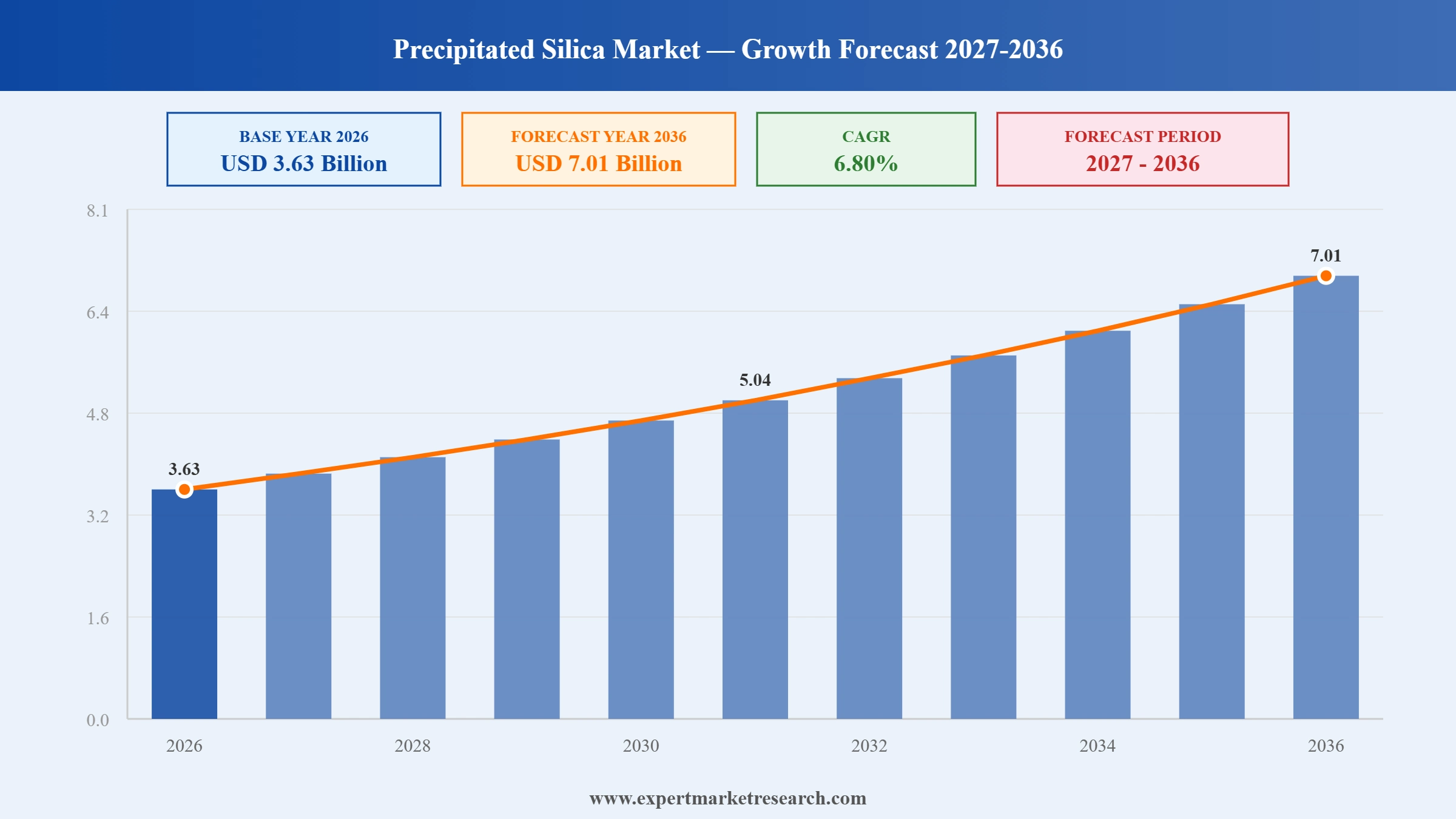
The Precipitated Silica market was valued at USD 3.40 Billion in 2025. The market is expected to grow at a CAGR of 6.80% during the forecast period of 2026-2035 to reach a value of USD 6.56 Billion by 2035. Rising demand for fuel-efficient green tires, growing adoption of precipitated silica in oral care and food applications, and continued sustainability-driven raw material innovation are collectively driving market growth.
The Precipitated Silica market is shaped by rising demand for fuel-efficient green tires and growing sustainability-driven raw material innovation across the specialty chemicals industry. Asia Pacific dominated the market, supported by China's dominant tire manufacturing base and extensive chemical synthesis capacity. Rubber accounts for the largest share by application, reflecting precipitated silica's critical role as a reinforcing filler in tire manufacturing.
Established specialty chemicals manufacturers are reinforcing their market presence through continued capacity investment, sustainability-driven raw material innovation, and strategic business realignment rather than relying on a single growth lever. In September 2025, for example, Solvay announced it would convert its highly dispersible silica production in Qingdao, China and Gunsan, South Korea to use ISCC+ certified circular waste sand starting in 2026. This continued pace of sustainability investment is helping leading manufacturers differentiate their offerings even as tire makers pursue increasingly stringent circular raw material targets.
The competitive landscape remains moderately consolidated, with supply concentrated among established global specialty chemicals manufacturers such as Evonik, Solvay, and PPG Industries that maintain extensive production capacity and long-standing tire industry relationships. Participation requires sustained investment in production infrastructure, raw material sourcing, and sustainability certification, creating meaningful entry barriers while leaving room for regional producers to compete on niche application segments and localized supply.
Read more about this report - REQUEST FREE SAMPLE COPY IN PDF
|
Precipitated Silica Market Report Summary |
Description |
Value |
|
Base Year |
USD Billion |
2025 |
|
Historical Period |
USD Billion |
2019-2025 |
|
Forecast Period |
USD Billion |
2026-2035 |
|
Market Size 2025 |
USD Billion |
3.40 |
|
Market Size 2035 |
USD Billion |
6.56 |
|
CAGR 2019-2025 |
Percentage |
XX% |
|
CAGR 2026-2035 |
Rubber |
7.1% |
|
CAGR 2026-2035 - Market by Region |
Silane-Treated Grade |
8.3% |
|
2025 Market Share by Region |
Asia Pacific |
43.0% |
The precipitated silica market is being shaped by bio-based and circular silica for low-rolling-resistance tires, regional capacity additions in Asia Pacific, and tire makers' push for better silica dispersion across Europe, Asia Pacific and the Middle East.
Evonik received ISCC PLUS certification on 16 June 2026 for ULTRASIL eCO, a circular precipitated silica, at its Egesil Kimya plant in Adapazari, Turkey, its first certified silica site in EMEA. The mass-balance approach lets tire and rubber customers in Türkiye, Eastern Europe and the Middle East verify circular content. Overall, certified circular grades are becoming a practical way for silica suppliers to meet tire makers' sustainability requirements.
At the WBCSD annual meeting in Montreux on 27-28 April 2026, Linglong Tire presented a concept tire with 85% sustainable materials, including rice husk ash silica and bio-based rubber, while keeping EU Tire Label A-grade rolling resistance and wet braking. Linglong targets a 100% sustainable-material tire by 2040. Overall, tire makers' sustainability goals are building Asian demand for bio-based silica.
Quechen, a major Chinese silica producer, presented bio-based silica from rice husk ash and carbonized silica at Tire Technology Expo on 5 March 2026. The carbonized route captures gases during sodium silicate preparation, with zero CO2 tail-gas emissions claimed. Overall, Chinese suppliers are positioning low-carbon silica grades as tire makers seek lower-emission inputs.
Solvay opened its Livorno, Italy plant making highly dispersible silica from rice husk ash, cutting CO2 emissions by 35% per tonne versus conventional output. Tire makers can reach up to 15% recycled or renewable content, with 40% targeted by 2030, and Continental is a launch customer. Overall, premium low-carbon tire silica is scaling in Europe with tire-maker backing.
Silica dispersion in the rubber compound largely determines how well a tire balances rolling resistance, wet grip and wear. In May 2026, European Rubber Journal's 2026 Tire Tracker lists Yokohama's BluEarth-AllSeason2, which uses ART Mixing technology to improve silica dispersal and wet grip. The tire shows an 8% reduction in rolling resistance and 35% higher wear resistance versus its predecessor, showing a Japanese tire maker using better silica dispersion to meet efficiency targets.
Tire makers want circular silica that fits existing compounds without costly reformulation, and silica suppliers use trade events to present such grades. At Tire Technology Expo on 4 March 2026, Solvay presented bio-sourced and recycled precipitated silica it says is chemically and physically equivalent to conventional silica, avoiding costly reformulation. It also highlighted High Surface Area grades for non-tread passenger and truck compounds, targeting better wear and lower rolling resistance for EV and truck efficiency.
High-silica tread compounds are a key route for passenger tires to improve braking and mileage. In January 2026, European Rubber Journal's 2026 Tire Tracker lists Hankook's Laufenn S Fit 2 summer tire, built on a high-silica compound. Hankook claims a 16% shorter braking distance than its predecessor and a new polymer generation that improves mileage by 15%, an example of silica-rich tread compounds reaching mainstream passenger tires.
Precipitated silica is a key reinforcing filler for tires, and producers add capacity in step with tire demand. Tata Chemicals' board approved on 21 November 2025 a Rs 775 crore project adding 50 ktpa of precipitated silica capacity at Cuddalore, Tamil Nadu, against 13.8 ktpa existing, to be completed within 27 months. The expansion targets rising specialty silica demand from rubber and tire makers in India and Asia Pacific.
The Expert Market Research's report titled "Precipitated Silica Market Report and Forecast 2026-2035" gives an in-depth analysis of the global precipitated silica market, assessing the market based on its segments like application, grade, end-use industry, and major regions.
Market Breakup by Application
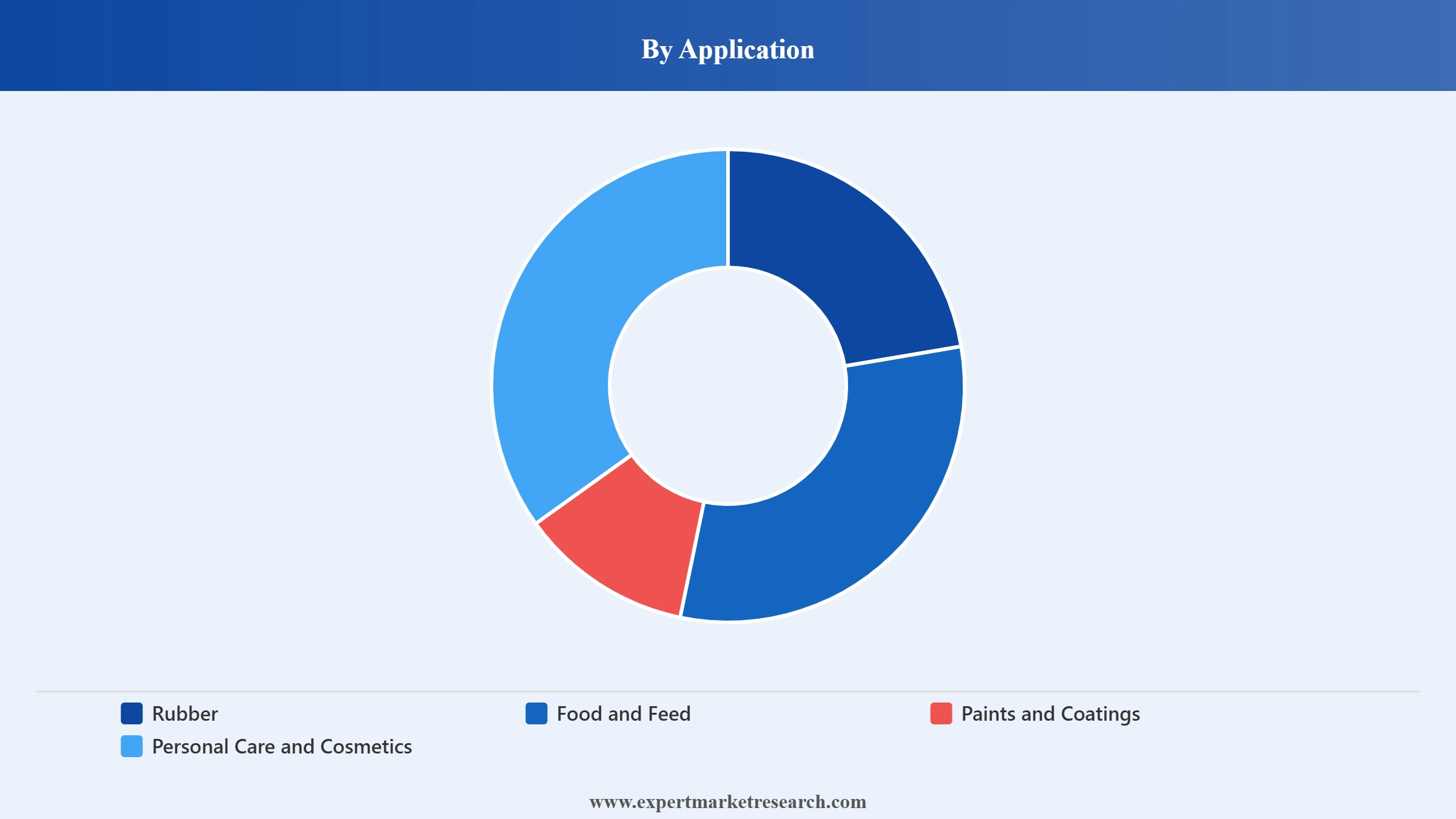
Key Insight: Rubber accounts for the largest share of the precipitated silica market by application, reflecting its critical role as a reinforcing filler in tire manufacturing to improve rolling resistance, wet traction, and wear resistance. The ongoing shift toward silica-based "green tire" compounds, driven by fuel efficiency regulations and consumer demand for safer, longer-lasting tires, continues to reinforce rubber's dominant position within overall silica consumption. In December 2025, Continental was re-elected co-chair of the Tire Industry Project, the global tire industry's sustainability forum operating under the World Business Council for Sustainable Development, alongside Bridgestone, Goodyear, and Michelin, reflecting sustained cross-industry collaboration on tire and road wear particles and end-of-life tire management that continues to support silica-reinforced green tire adoption. Food and feed applications use precipitated silica as a carrier and anti-caking agent, paints and coatings use it as a matting and rheology-control additive, personal care and cosmetics, notably toothpaste, use it for its abrasive and thickening properties, and others cover the remaining industrial uses. Non-tire rubber goods, including footwear soles and industrial rubber products, contribute additional demand within this leading application segment.
Market Breakup by Grade
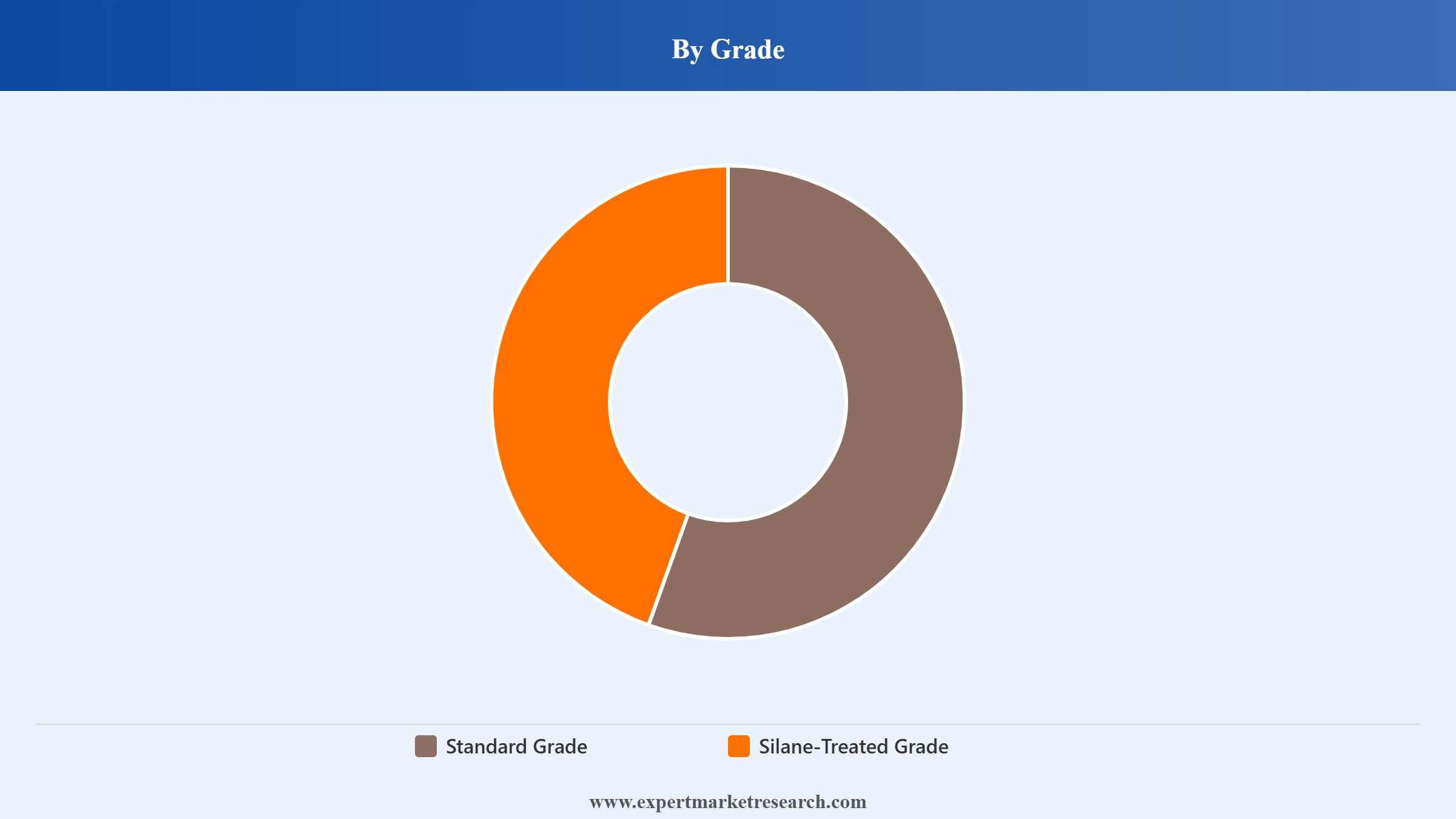
Key Insight: Standard grade precipitated silica remains the dominant grade within the market, given its balanced performance and cost-effectiveness across rubber, coatings, food, and personal care applications where highly specialized purity or dispersion properties are not required. Its comparatively lower production cost relative to highly dispersible and specialty grades makes it the preferred choice for high-volume industrial uses, while manufacturers continue to reserve premium-priced specialty grades for performance-critical applications such as green tires and battery separators. In August 2026, Evonik reported results for April-June 2026 and cited higher demand for precipitated silicas within its Advanced Technologies segment, underscoring steady underlying volume growth across silica grades. Silane-treated grade is the fastest-growing grade as tire manufacturers value its enhanced dispersion and compatibility with rubber polymers, while others cover the remaining specialty and blended grades. This cost advantage keeps standard grade material the default specification across many general-purpose rubber compounding applications worldwide.
Market Breakup by End-Use Industry
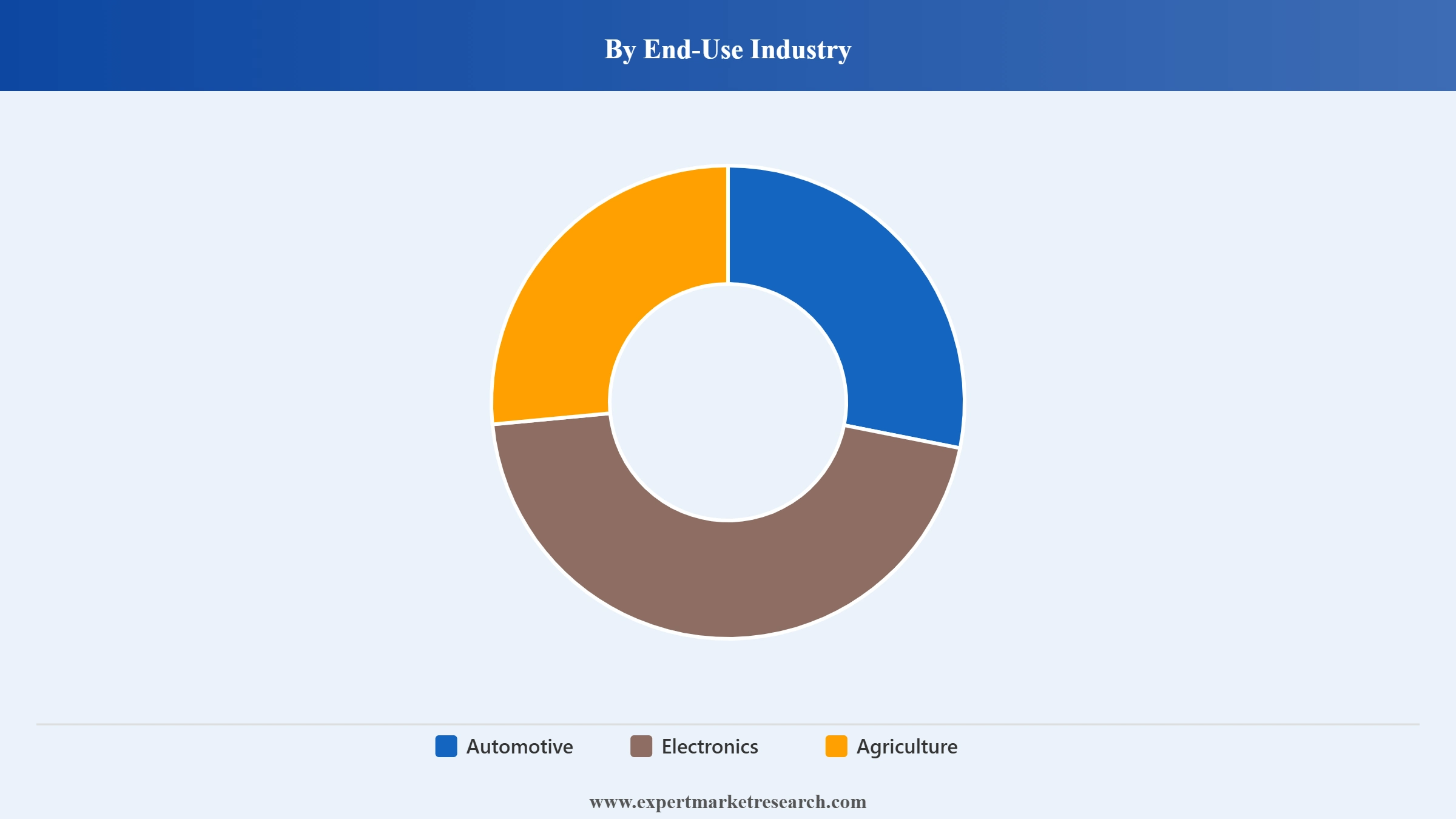
Key Insight: The automotive end-use industry accounts for the largest share of the precipitated silica market, attributed to extensive application of rubber-grade precipitated silica in tire manufacturing for new vehicles and the replacement market. Sustained global vehicle production volumes, combined with regulatory pressure to improve fuel efficiency through lower rolling-resistance tires, continue to anchor automotive demand as the largest single end-use category. In January 2025, Hankook Tire & Technology and Solvay Silica signed a memorandum of understanding on 10 January to co-develop circular silica for tire manufacturing, reflecting automotive tire makers' push for sustainable silica supply. Electronics is the fastest-growing end-use industry as rising consumer electronics demand increases use of silicone rubber components made with precipitated silica for connectors, cables, and switches, agriculture draws on the material as a carrier and anti-caking agent in feed and crop-protection formulations, and others cover the remaining end-use industries. The steady, recurring nature of tire replacement demand further provides this segment with a more stable consumption base compared with other end-use industries.
Market Breakup by Region
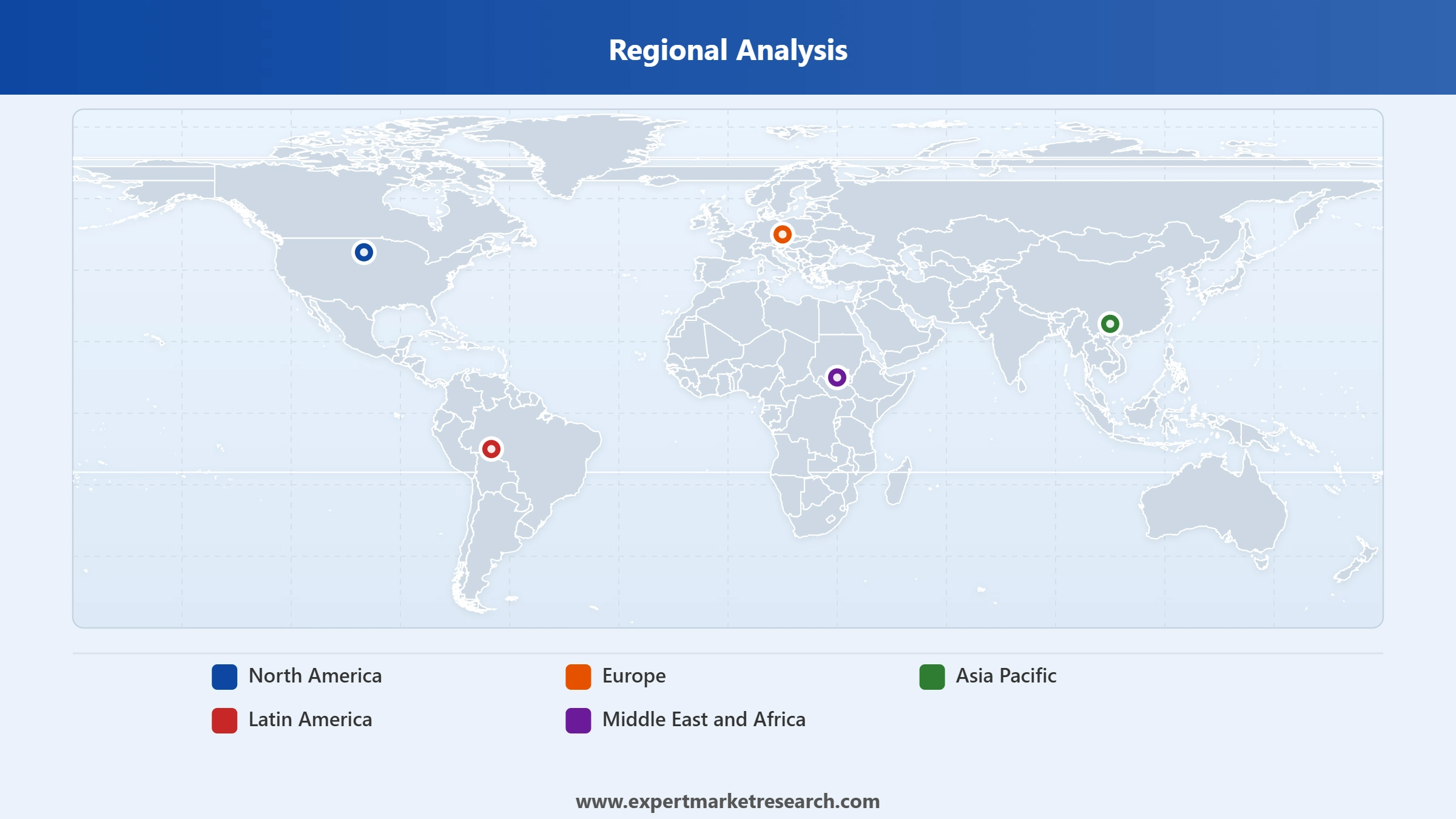
Key Insight: Asia Pacific dominates the precipitated silica market, supported by China's dominant tire manufacturing and chemical synthesis capacity, alongside strong regional automotive production growth across China, India, and Southeast Asia. The region's dense concentration of both silica producers and downstream tire manufacturers reduces logistics costs and supports close technical collaboration between suppliers and customers. In September 2025, Solvay announced it would convert highly dispersible silica production at its Qingdao, China and Gunsan, South Korea plants to ISCC+ certified waste sand from 2026, which could make over half of its regional capacity circular. Europe is a mature market centered on specialty and tire-grade production, North America benefits from established tire and personal care demand, and Latin America and Middle East and Africa account for smaller volumes tied to growing automotive and consumer goods activity. Continued capacity expansions by regional producers are expected to further reinforce Asia Pacific's leading position within the global precipitated silica market.
Read more about this report - REQUEST FREE SAMPLE COPY IN PDF
By application, rubber dominates the market due to its critical role as a reinforcing filler in tire manufacturing
Rubber accounts for the largest share of the precipitated silica market by application, reflecting its critical role as a reinforcing filler in tire manufacturing to improve rolling resistance, wet traction, and wear resistance. Continued adoption of green tire formulations is reinforcing rubber's leading position. In July 2025, Continental said it is increasingly using silica obtained from rice husks as an alternative to quartz-sand silica across its tire portfolio, with renewable and recycled materials averaging 26% of its 2024 tire production.
Read more about this report - REQUEST FREE SAMPLE COPY IN PDF
Personal care and cosmetics is a fast-growing application as manufacturers increasingly adopt precipitated silica in toothpaste, skincare, and cosmetic formulations for its abrasive, thickening, and anti-caking properties. In October 2025, the European Commission mandated the EU's Scientific Committee on Consumer Safety to conduct an updated safety assessment of synthetic amorphous silica, including hydrated silica, used as nanomaterials in cosmetic products, reflecting regulatory scrutiny and product-stewardship attention as formulators scale up use of this ingredient across oral care and cosmetic formulations.
By grade, standard grade leads the market due to its balanced performance and cost-effectiveness across diverse applications
Standard grade precipitated silica remains the dominant grade within the market, given its balanced performance and cost-effectiveness across rubber, coatings, food, and personal care applications where highly specialized purity or dispersion is not required. In June 2025, India's Aksharchem added 6,000 tonnes per annum to its precipitated silica plant at Dahej, Gujarat, lifting total capacity to 18,000 tonnes per annum from 24 June 2025 to serve tyre and rubber industry demand, reinforcing the segment's role as the market's volume backbone.
Read more about this report - REQUEST FREE SAMPLE COPY IN PDF
Silane-treated grade is the fastest-growing grade as tire manufacturers increasingly value its enhanced dispersion, compatibility, and reinforcement properties for demanding rubber and coatings applications. In February 2026, Momentive announced it would present its NXT P97 mercapto silane, with 79% renewable carbon content, for passenger car and EV tires and its NRX silane for truck-and-bus radial tires at Tire Technology Expo in Hanover, highlighting silane coupling systems that bind silica to rubber and underpin demand for this higher-value, highly dispersible grade.
By end-use industry, automotive leads the market due to extensive application of rubber-grade precipitated silica in tire manufacturing
The automotive end-use industry accounts for the largest share of the precipitated silica market, attributed to extensive application of rubber-grade precipitated silica in tire manufacturing for new vehicles and the replacement market. In July 2025, Pirelli said its P Zero tire developed for Jaguar Land Rover is its first standard production tire with over 70% bio-based and recycled materials, with tread silica obtained from rice processing waste, first fitted to Range Rover 22-inch wheel options, supporting sustainable automotive tire demand.
Read more about this report - REQUEST FREE SAMPLE COPY IN PDF
Electronics is the fastest-growing end-use industry as rising demand for consumer electronics increases consumption of silicone rubber components manufactured using precipitated silica for connectors, cables, and switches. In June 2026, Wacker Chemie opened a new specialty silicone production site in Karlovy Vary, Czech Republic, making room-temperature-curing silicones, solid silicone rubber, and thermally conductive silicones for electric vehicle thermal management and global grid infrastructure, illustrating how silicone producers are scaling capacity to serve this fast-growing electronics and electrical end-use segment worldwide.
Asia Pacific dominates the market due to China's dominant tire manufacturing and chemical synthesis capacity
Asia Pacific dominates the precipitated silica market, supported by China's dominant tire manufacturing and chemical synthesis capacity, alongside strong regional automotive production growth. The region's dense network of silica producers and downstream tire manufacturers keeps supply chains tightly integrated, supporting rapid scale-up of new capacity. In March 2026, the board of China's Zhongce Rubber Group approved a RMB 1.04 billion (about US$151 million) investment in Phase I of a tyre manufacturing base in Vietnam, illustrating the scale of ongoing regional tire manufacturing investment that continues to anchor Asia Pacific's leading position in global precipitated silica demand.
Read more about this report - REQUEST FREE SAMPLE COPY IN PDF
China is expected to register the most significant growth within Asia Pacific as tire manufacturers and specialty chemical producers continue to expand regional production capacity. In December 2025, Yokohama Rubber held the opening ceremony of its new passenger car tire plant in Hangzhou, which began production in November 2025, one month ahead of schedule, with annual capacity of 9 million tires, further reinforcing China's growth trajectory within the broader Asia Pacific region.
|
CAGR 2026-2035 - Market by |
Region |
|
North America |
5.1% |
|
Europe |
4.8% |
|
Asia Pacific |
8.2% |
|
Latin America |
6.0% |
|
Middle East and Africa |
5.6% |
The global precipitated silica market features a moderately consolidated competitive structure led by precipitated silica market players that are large multinational specialty chemicals manufacturers with extensive production capacity, deep technical formulation expertise, and long-standing relationships with major tire manufacturers.
Leading precipitated silica market companies are focusing on capacity expansion, sustainability-driven raw material innovation, and strategic business realignment to strengthen their market position and meet increasingly stringent circular sourcing commitments from tire industry customers.
Evonik Industries, founded in 1847 and headquartered in Essen, Germany, and one of the world's leading silica producers, manufactures precipitated silica across a global network of 18 production sites, serving tire, oral care, and coatings customers worldwide. The company's geographically diversified manufacturing footprint supports regional supply reliability and close technical collaboration with major global tire manufacturers.
Founded in 1863 and headquartered in Brussels, Belgium, Solvay manufactures precipitated silica under its Zeosil brand, supplying tire manufacturers globally and pursuing an active circular raw material sourcing strategy across its production network. The Zeosil product line is positioned around high-dispersion, green-tire-grade silica developed in close partnership with leading global tire producers.
PPG Industries, founded in 1883 and headquartered in Pittsburgh, Pennsylvania, United States, manufactures precipitated silica and silica-based products serving coatings, rubber, and specialty chemical applications globally. The company leverages its broader specialty chemicals and coatings expertise to supply silica grades tailored to performance requirements across these diverse industrial end markets, drawing on its established global manufacturing and distribution infrastructure.
Wacker Chemie, founded in 1914 and headquartered in Munich, Germany, manufactures precipitated and pyrogenic silica products as part of its broader silicones portfolio, serving automotive, construction, and electronics customers worldwide. The company's integrated silicones and silica production base allows it to supply customized grades tailored to demanding technical specifications across these varied industrial applications.
Other key players in the market report include Tosoh Corporation (founded in 1935), Oriental Silicas Corporation, J.M. Huber Corporation (founded in 1883), W.R. Grace & Co. (founded in 1854), and Zeon Corporation (founded in 1950), among others.
*Please note that this is only a partial list; the complete list of key players is available in the full report. Additionally, the list of key players can be customized to better suit your needs.*
Explore the latest trends shaping the precipitated silica market 2026-2035 with our in-depth report. Gain strategic insights, future forecasts, and key market developments that can help you stay competitive. Download a free sample report or contact our team for customized consultation on the market trends 2026.


Upto 15% Off
USD
$2499 $2249
$3999 $3599
$4999 $4249
$5999 $5099


*While we strive to always give you current and accurate information, the numbers depicted on the website are indicative and may differ from the actual numbers in the main report. At Expert Market Research, we aim to bring you the latest insights and trends in the market. Using our analyses and forecasts, stakeholders can understand the market dynamics, navigate challenges, and capitalize on opportunities to make data-driven strategic decisions.*
In 2025, the precipitated silica market reached an approximate value of USD 3.40 Billion.
The market is projected to grow at a CAGR of 6.80% between 2026 and 2035.
The key players in the market include Evonik Industries AG, Solvay S.A., PPG Industries, Inc., Wacker Chemie AG, Tosoh Corporation, Oriental Silicas Corporation, J.M. Huber Corporation, W.R. Grace & Co., and Zeon Corporation, among others.
Leading manufacturers are pursuing capacity expansion, sustainability-driven raw material innovation, and strategic business realignment to strengthen their market position and meet increasingly stringent circular sourcing commitments from tire industry customers.
Key challenges include fluctuating raw material prices for sodium silicate and sulfuric acid, stringent environmental and silica emission regulations, and the significant capital investment required for capacity expansion.
Explore our key highlights of the report and gain a concise overview of key findings, trends, and actionable insights that will empower your strategic decisions.
|
Report Features |
Details |
|
Base Year |
2025 |
|
Historical Period |
2019-2025 |
|
Forecast Period |
2026-2035 |
|
Scope of the Report |
Historical and Forecast Trends, Industry Drivers and Constraints, Historical and Forecast Market Analysis by Segment:
|
|
Breakup by Application |
|
|
Breakup by Grade |
|
|
Breakup by End-Use Industry |
|
|
Breakup by Region |
|
|
Market Dynamics |
|
|
Competitive Landscape |
|
|
Companies Covered |
|
Datasheet
One User
USD 2,499
USD 2,249
tax inclusive*
Single User License
One User
USD 3,999
USD 3,599
tax inclusive*
Five User License
Five User
USD 4,999
USD 4,249
tax inclusive*
Corporate License
Unlimited Users
USD 5,999
USD 5,099
tax inclusive*
*Please note that the prices mentioned below are starting prices for each bundle type. Kindly contact our team for further details.*
Flash Bundle
Small Business Bundle
Growth Bundle
Enterprise Bundle
*Please note that the prices mentioned below are starting prices for each bundle type. Kindly contact our team for further details.*
Flash Bundle
Number of Reports: 3
20%
tax inclusive*
Small Business Bundle
Number of Reports: 5
25%
tax inclusive*
Growth Bundle
Number of Reports: 8
30%
tax inclusive*
Enterprise Bundle
Number of Reports: 10
35%
tax inclusive*
How To Order

Select License Type
Choose the right license for your needs and access rights.

Click on ‘Buy Now’
Add the report to your cart with one click and proceed to register.

Select Mode of Payment
Choose a payment option for a secure checkout. You will be redirected accordingly.
Strategic Solutions for Informed Decision-Making
Gain insights to stay ahead and seize opportunities.

Get insights & trends for a competitive edge.

Track prices with detailed trend reports.

Analyse trade data for supply chain insights.

Leverage cost reports for smart savings

Enhance supply chain with partnerships.

Connect For More Information
Our expert team of analysts will offer full support and resolve any queries regarding the report, before and after the purchase.
Our expert team of analysts will offer full support and resolve any queries regarding the report, before and after the purchase.
We employ meticulous research methods, blending advanced analytics and expert insights to deliver accurate, actionable industry intelligence, staying ahead of competitors.
Our skilled analysts offer unparalleled competitive advantage with detailed insights on current and emerging markets, ensuring your strategic edge.
We offer an in-depth yet simplified presentation of industry insights and analysis to meet your specific requirements effectively.




