

Consumer Insights
Uncover trends and behaviors shaping consumer choices today
Procurement Insights
Optimize your sourcing strategy with key market data
Industry Stats
Stay ahead with the latest trends and market analysis.
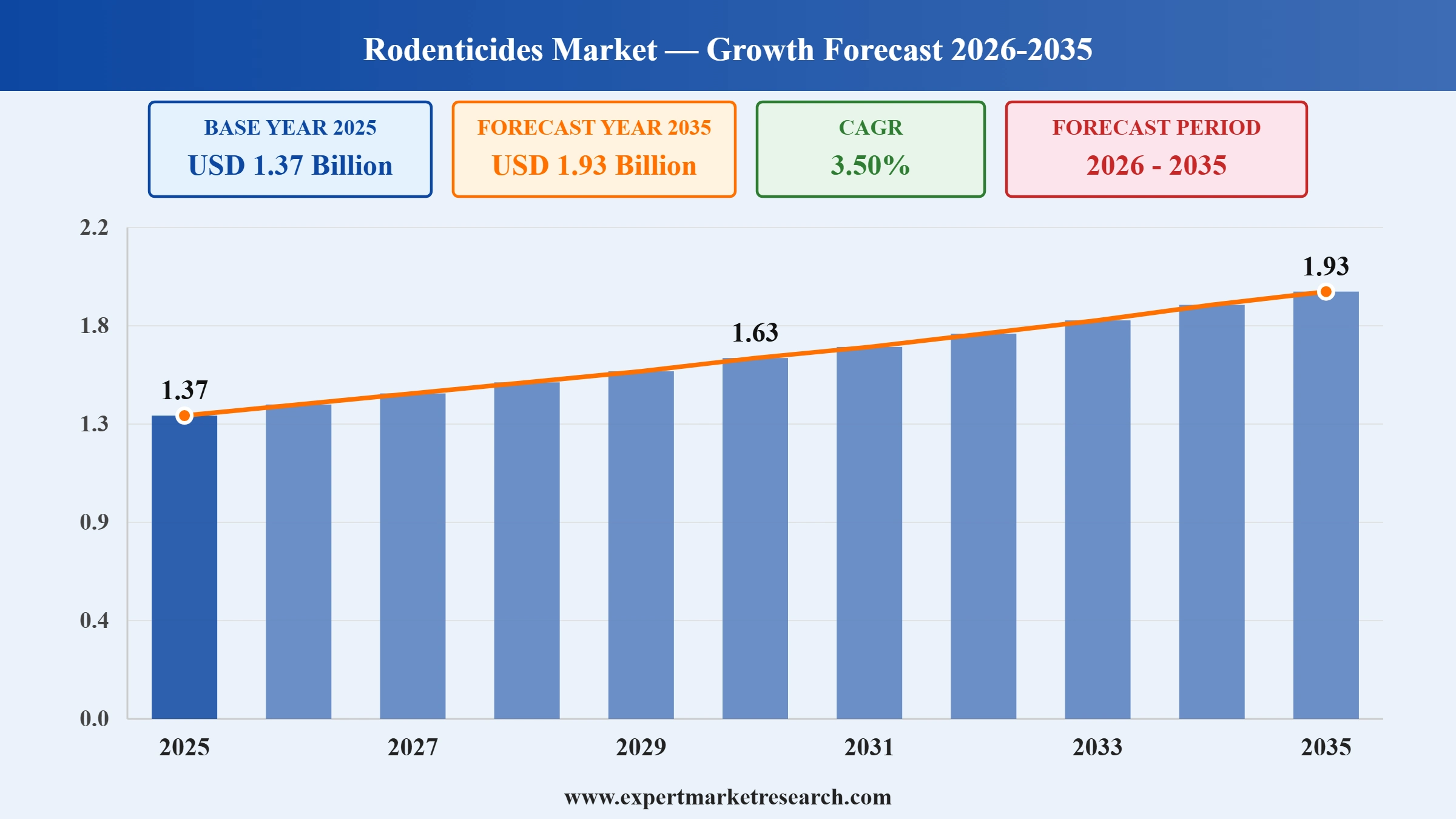
The global rodenticides market was valued at USD 1.37 Billion in 2025. The market is expected to grow at a CAGR of 3.50% during the forecast period of 2026-2035 to reach a value of USD 1.93 Billion by 2035. Strategic partnerships and licensing agreements between pest control technology providers and distribution companies are increasingly supporting innovation and commercialization within the market.
Rapid urbanization along with greater waste production is creating ideal conditions for the occurrence of rodent infestations both at homes and industries. This trend is compelling local municipal corporations, pest control organizations, and facility managers to adopt a clear rodent control plan. In addition to this, issues related to food security, prevention of diseases, and contamination are also adding to the requirement for efficient rodent control techniques, particularly in agricultural, storage, and urban environments, boosting the overall rodenticides market growth due to higher demands from end users.
Additionally, with an increasing need for effective means of controlling rodents in commercial enterprises, food storage locations, and urban infrastructure, companies are now working together to expand their portfolio of products and improve their network of distributors. Cooperation between organizations enables manufacturers to concentrate on developing new products as well as rely on the marketing capabilities of specialists in pest control technology. In addition, collaboration makes it easier to introduce improved rodenticide compounds designed for dealing with rodent resistance problems.
Such a rodenticides market trend was exemplified in May 2025, wherein Syngenta formed an agreement with Neogen Corporation for the strategic licensing and supply of their rodenticide products. According to this agreement, Neogen will get exclusive rights to distribute and sell Talon-G and Talon Weatherblok XT, which contain brodifacoum as their active ingredient and are developed to control rodents in a single feed. This partnership gives Syngenta the opportunity to work towards the development of advanced technology for pest control, while at the same time, Neogen will increase its reach in the competitive landscape of the rodenticides market.
Read more about this report - REQUEST FREE SAMPLE COPY IN PDF
The E.U.R.E.K.A. project highlighted its Rodent Log program, which was geared towards developing preventive housing strategies and better pest monitoring techniques to reduce rodent populations. This project underlined the significance of pre-emptive measures against rodents, thereby indirectly encouraging the implementation of better pest control solutions.
The BASF brand rebranded the Neosorexa range of rat and mouse poison by introducing Neosorexa Plus blocks, with an effective active ingredient of flocoumafen for more efficient elimination of rodents. The new design and composition of the bait helped to advance pest management technologies, further propelling the rodenticides market growth.
Lodi UK launched its revised Gems range for rodent control, offering new and innovative baits like Ruby, Jade, and Sapphire formulations to target rats and mice. This revamp in products was indicative of innovations within the product line, which contributed to the development of pest control solutions.
Syngenta launched the Talon Soft XT, a rodenticide in the form of a paste made up of brodifacoum, which can be applied via a caulk gun mechanism. As a single-feed product, it enhanced precision and efficacy to boost pest management solutions.
The evolution of rodenticides that can target certain types of rodents enhances the efficiency of pest control in agricultural, urban, and business settings. The efforts being put into research by manufacturers include developing rodenticides that are able to cater to unique features of rodents along with increasing their palatability and efficiency. This helps pest control experts in dealing with rodent infestation in an effective manner and saves costs associated with pest control, thereby creating new growth opportunities in the rodenticides market. For instance, in April 2023, BASF received approval to extend the use of its Selontra product line of rodenticides against field mice (Apodemus sylvaticus).
Regulation and safety evaluations are becoming critical aspects in the development of products in the pest control industry. Government agencies are assessing current rodenticide agents and involving stakeholders in the process in order to guarantee that the products continue being efficient while remaining safe for the environment, which, in turn, contributes to the rodenticides market development. In many cases, regulations inspire innovation in the form of new formulations from manufacturers that can conform to the changes in regulations. For instance, in August 2025, the United Kingdom Health and Safety Executive announced a consultation regarding the re-evaluation of some anticoagulant rodenticides under the GB Biocidal Products Regulation.
Product launches and efforts for geographic expansion are making advanced rodent control products more accessible globally. Companies are focusing on creating new rodenticide formulas that can work effectively under different climatic conditions while stabilizing the bait and increasing its consumption. Through these launches, pest control professionals gain an added advantage in dealing with rodent infestations in residential, agricultural, and industrial environments. For instance, Bell Laboratories launched Fastrac Soft Bait in Canada in June 2024. It is a bromethalin-based formulation that quickly controls rodents and is more durable over different environmental conditions, thereby amplifying the demand in the rodenticides market.
Innovation in technology is bringing about new ways of controlling pests by using rodenticide products and advanced digital monitoring systems. Pest management agencies that employ remote sensing technologies and automated detections have found it easy to detect the existence of rodents, thus facilitating them to apply treatment in a manner that reduces the usage of pesticides. This technology not only makes things easier but also enables business organizations and industries to develop pest control policies, further supporting the growth of the rodenticides market. An example of how such innovation works is the launch of the SecureChoice remote rodent monitoring system by Syngenta, launched in February 2024.
Regulatory clearances for new biocidal products in the form of rodenticides and other biocides are playing an important role in extending their accessibility in the global rodenticides industry. The implementation of stringent assessment criteria by the governments in order to make sure about the safety and efficiency of the products results in greater market trust and commercial success among the approved products. These regulatory clearances allow producers to launch new rodenticides while complying with the regulations. For instance, in January 2025, the South Korean government cleared 15 biocides, which include rodenticides, after assessing them in terms of their safety and effectiveness.
The EMR’s report titled “Global Rodenticides Market Report and Forecast 2026-2035” offers a detailed analysis of the market based on the following segments:
Market Breakup by Type
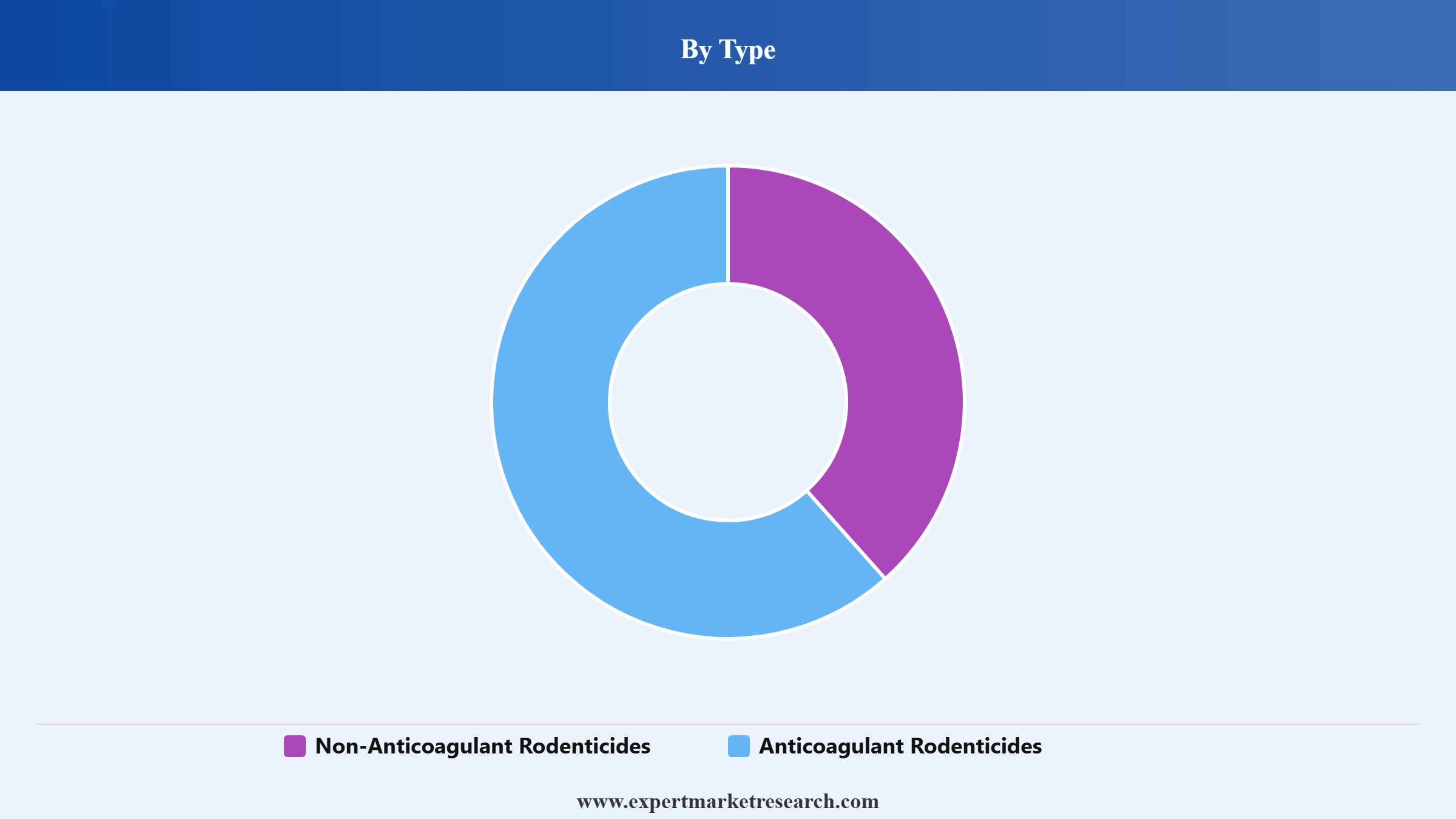
Key Insight: The rodenticides market scope includes both non-anticoagulant rodenticides and anticoagulant rodenticides. Both these rodenticides are widely used for managing rodent infestations in various environments like residential, industrial, and commercial areas. Anticoagulant rodenticides account for the majority share in the market since they are efficient in controlling rodents. Non-anticoagulant rodenticides are gaining significant traction in recent times for use in places where there is resistance against conventional formulations.
Market Breakup by End-use
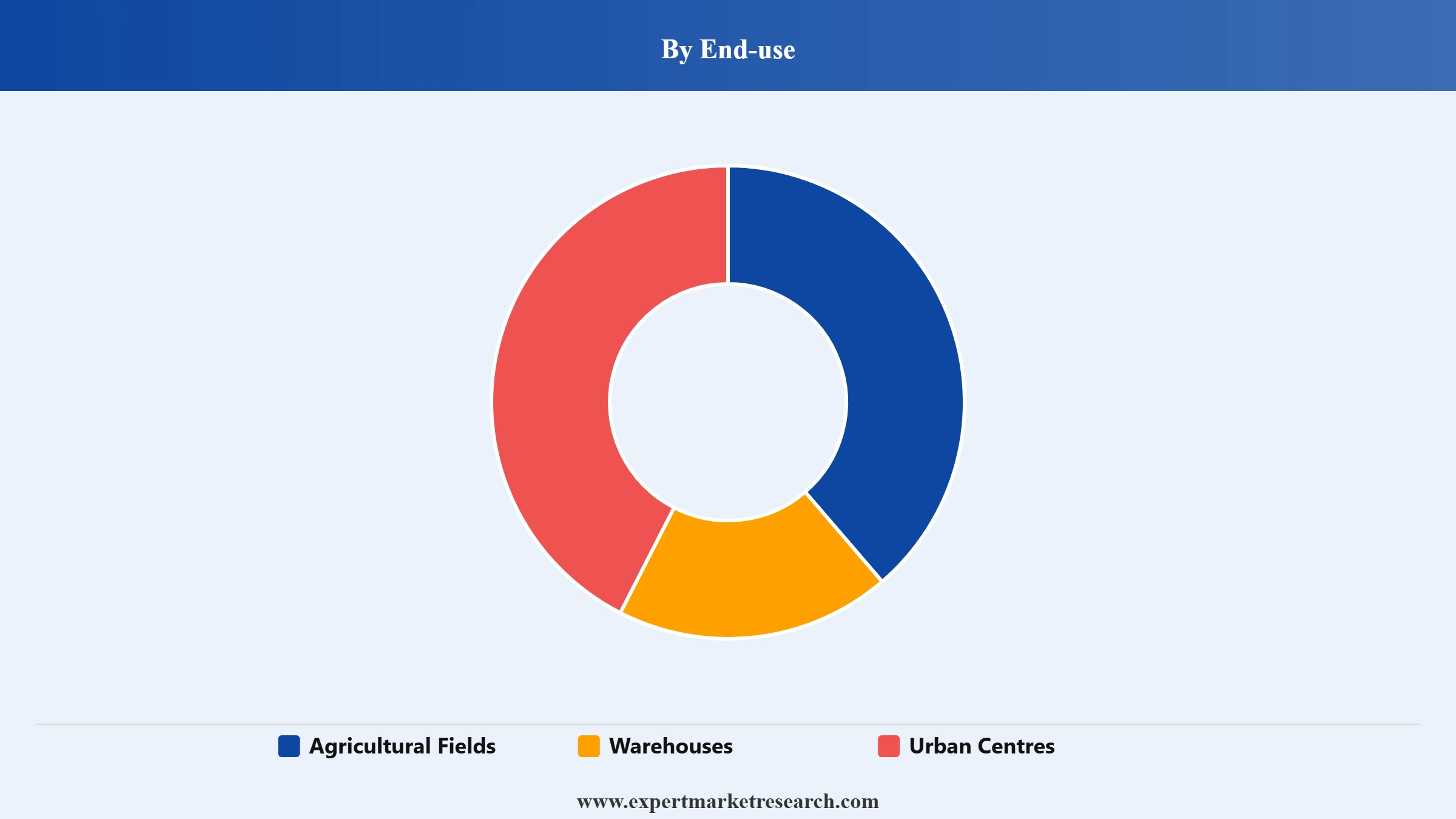
Key Insight: Rodenticides are highly utilized in agricultural areas, warehousing, and urban settings. Rodenticides are necessary for agricultural areas due to their ability to prevent crops and grain storage from being affected. Additionally, rodenticides are needed in warehouse locations to keep the food safe and to prevent any damage that may be done to logistics. Advanced products from companies such as Bayer AG, Bell Laboratories, and J.T. Eaton & Co. are contributing to the overall rodenticides market value addition.
Market Breakup by Application
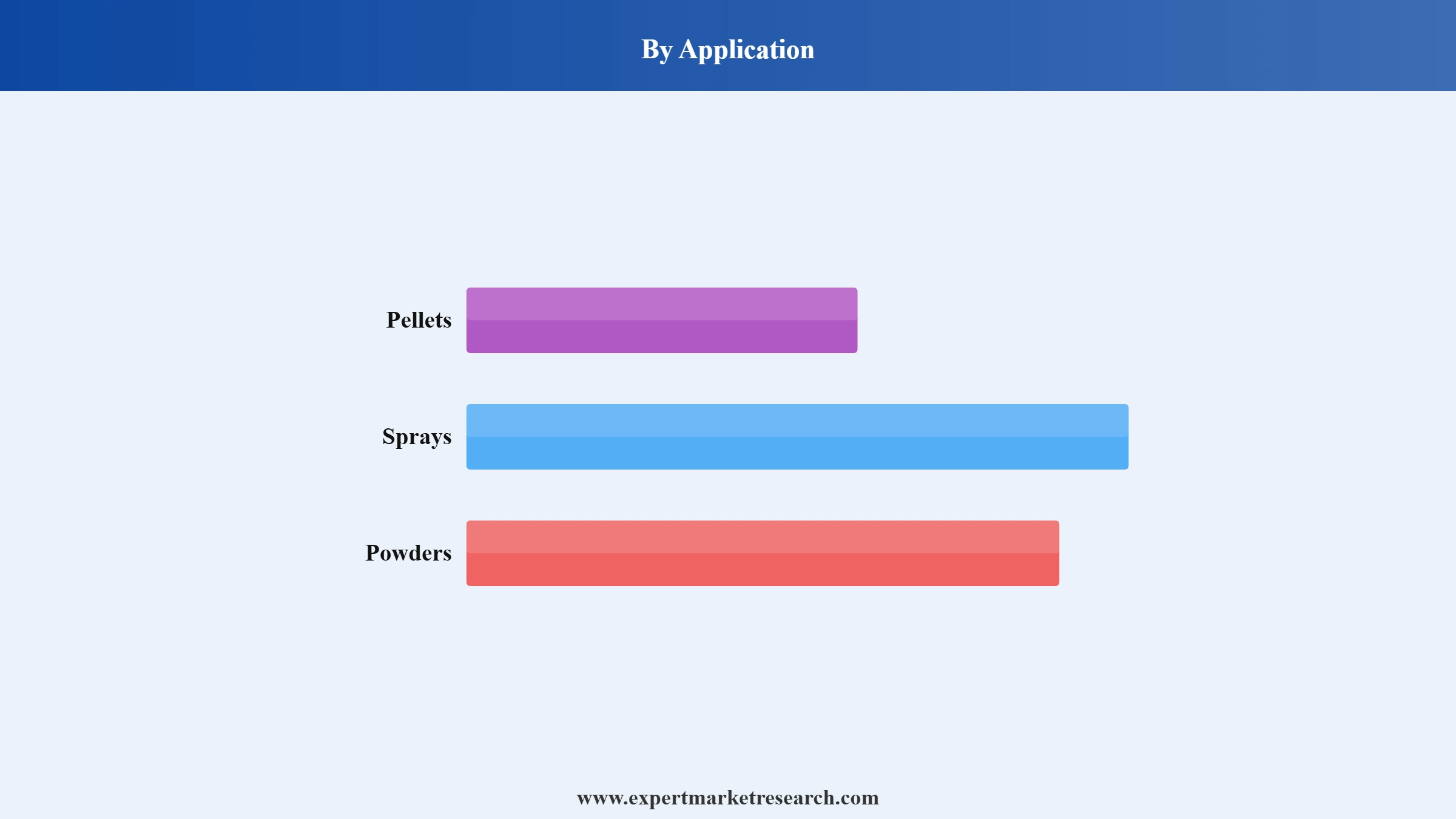
Key Insight: The products in the rodenticides industry are found in a variety of applications like pellets, sprays, and powders, depending on their usage purpose. The pellets are the most common form of rodenticides because they have been proven to be highly effective and convenient in terms of bait delivery. Sprays are used to target specific pests in small and enclosed areas. On the other hand, powders are utilized in inaccessible spots. To cope with the varying application preferences in the industry, firms like Syngenta Group, Liphatech Inc., and Bayer AG are improving their application systems.
Market Breakup by Region
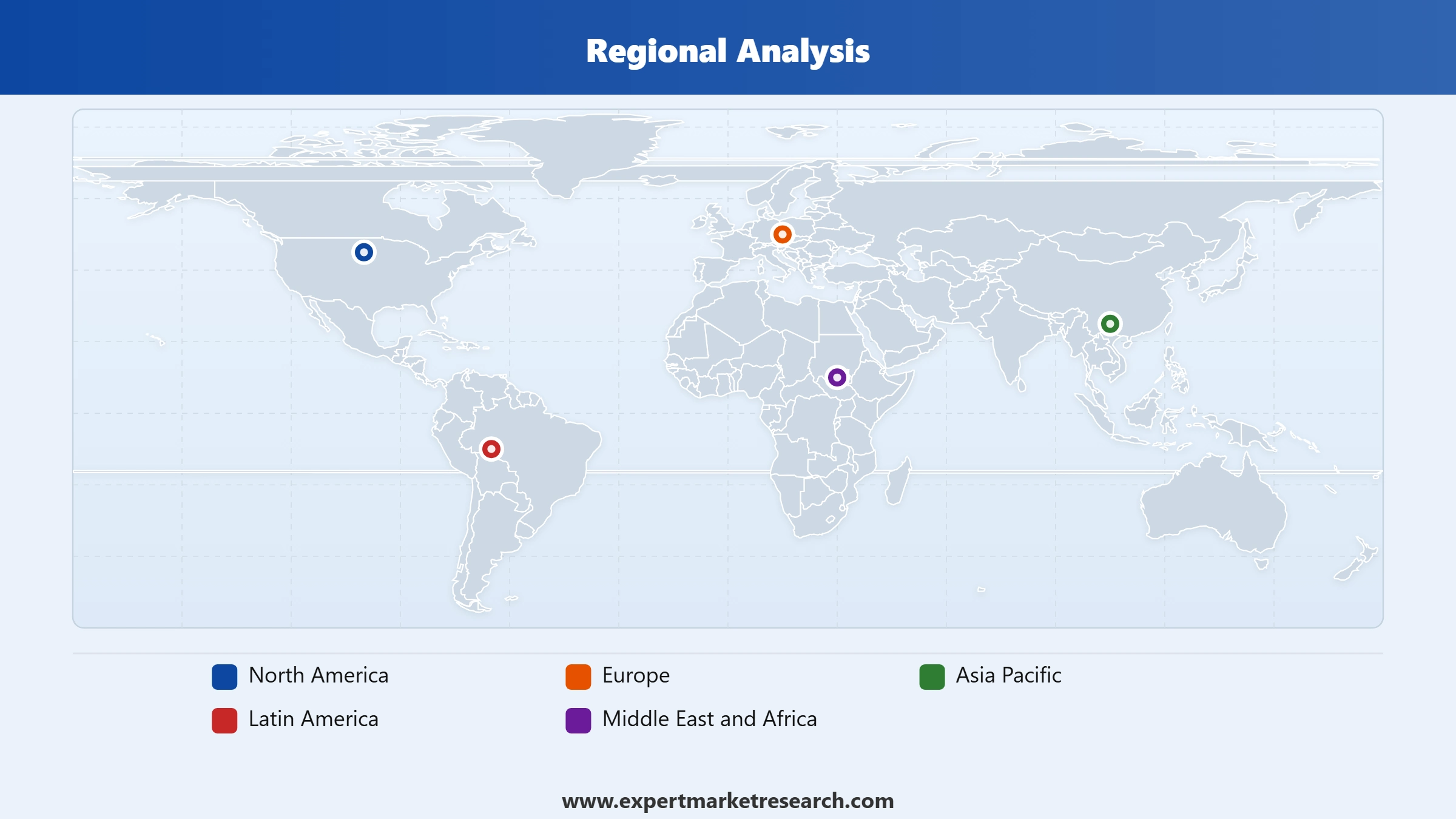
Key Insight: In terms of regional scope, the rodenticides market landscape covers regions such as North America, Europe, Asia Pacific, Latin America, and the Middle East & Africa, with varying demand factors driving each market. For instance, there is high adoption in North America and Europe due to the existence of pest control industry players and stringent food safety laws. The Asia-Pacific market is growing at a rapid pace owing to the rising agricultural and urbanization activities, while Latin America and the Middle East & Africa are witnessing an increasing demand for pest control products.

Read more about this report - REQUEST FREE SAMPLE COPY IN PDF
By type, anticoagulant rodenticide witnesses steady demand owing to the regulatory support strengthening product usage
Anticoagulant rodenticides are being used extensively since they work effectively in managing rodent infestations. The continuous review by regulatory authorities is helping sustain the application of the products under safety guidelines. Improvements in the quality of both active components and bait matrix are being executed to enhance efficiency. For example, in June 2025, the Biocidal Products Committee of the European Chemicals Agency gave approval for the continued usage of certain anticoagulant rodenticides after evaluating them. This is expected to sustain regulatory backing and product availability in the rodenticides market.
Read more about this report - REQUEST FREE SAMPLE COPY IN PDF
However, development of resistance to existing anticoagulant rodenticides is creating the need for non-anticoagulant rodenticides. They assist in the control of resistant rodents by professionals engaged in pest control activities. Innovation within companies has led to new rodenticide formulations that have an effective mechanism of killing rodents and a high bait acceptance rate. This explains why Efekto Garden & Home Protection came up with its latest product, named “Efekto Zero Rat" in July 2025. This product is designed to kill anticoagulant-resistant rats.
By end-use, agricultural fields show considerable product uptake owing to the increasing focus on crop protection driving agricultural rodent control
Rat infestations in agricultural lands can be quite dangerous to farm produce as well as grains. This necessitates efficient ways to manage pest control. Agribusiness operators make use of rat poison to reduce post-harvest losses and maintain agricultural production levels. Companies are collaborating with farmers in order to study patterns of rat resistance as part of efforts to control rats in agricultural settings. As an illustration, BASF SE, in November 2025, advised farmers in the United Kingdom to provide reports on resistance and pest control problems facing agriculture.
Read more about this report - REQUEST FREE SAMPLE COPY IN PDF
On the contrary, warehouses contribute significantly to the rodenticides market revenue. There is an increasing demand for efficient rodent control in warehouses due to the increasing construction of logistics hubs, distribution centers, and large warehouses that pose greater risks of being infested by rodents. In addition to damaging the packaging materials, rodents may destroy the stored products and hamper operations in the warehouse. As a result, some companies such as Rentokil Initial, Bell Laboratories, and Liphatech Inc. are improving their offerings in terms of rodenticides and monitors specific for storage areas.
By application, powders gain higher preference attributed to the surging demand for easy-to-apply powder formulations
Powder formulations are gaining notable traction in the rodenticides market dynamics because they help stick to the body hair of rodents and get ingested while grooming, thus proving to be efficient against those rodents who live in difficult-to-reach places like wall crevices. Companies are working on developing products in this segment, such as powders that can easily be used in wall crevices, warehouses, and such other difficult-to-reach places. For example, “Rodenticide Mouse Killer 24 Bags” was launched in February 2025 by Shimada Co., Ltd. It is a powder formulation that aids in efficient pest control.
Read more about this report - REQUEST FREE SAMPLE COPY IN PDF
Pellet-based products witness high adoption levels owing to their ease of use, accurate dosage, and applicability in bait stations for different agricultural, industrial, and urban areas. Companies manufacturing these products are conducting research on how to make these pellets more durable, palatable, and resistant to weather conditions, accelerating further demand in the rodenticides market. This helps maintain their efficiency even when used outdoors and within warehouses. Some of the notable organizations that continue to develop these pellets include BASF, Syngenta Group, and Liphatech Inc.
By region, Asia Pacific dominates the market, driven by the emerging pest control innovations supporting
Asia Pacific observes a rising need for rodent management products because of increased urbanization, growing agricultural activities, and the growing importance of food safety. Both governments and pest management service providers are utilizing advanced techniques to safeguard their infrastructures as well as ensure that their food distribution systems are not affected. Some companies are offering novel products that can cater to the specific requirements of this region as well as its climate. For example, in December 2024, experts in the field of pest management services emphasized increased use of rodenticides based on norbormide to target rats.
Read more about this report - REQUEST FREE SAMPLE COPY IN PDF
North America is emerging to be a prominent growth hub in the global rodenticides market. North America has a well-established system of pest control due to the existence of stringent food safety laws and the presence of an industry of professional pest controllers. Firms are improving pest control solutions through adoption of new technologies as well as diversifying products offered to cater for emerging needs. In addition, industry players are increasingly exploring biological pest control solutions to complement conventional rodenticide products, enabling more sustainable and integrated pest management approaches. For instance, in October 2025, GreenLight Biosciences announced plans focused on improving RNA pest control technologies.
The major rodenticides market players are working on product innovations by developing new formulations with improved performance characteristics in terms of efficacy, safety, and environmental acceptability through research and development. This includes efforts towards the development of bait matrices that are more attractive to rodents, faster-acting active substances, and targeted formulations for specific species. Moreover, there is a need for innovations in product packaging and application techniques for greater ease-of-use for the pest controllers.
Apart from product innovations, strategic collaborations, regulatory approval, and market growth in different regions are some other approaches being considered by rodenticide companies in order to increase their presence in the market. Investments in digital pest management systems and techniques for controlling rodents have become more advanced, thus making the processes more data-oriented. In addition, companies are also working in collaboration with regulatory authorities to ensure that safety and environmental requirements are met.
Bayer AG, a life sciences company, was founded in 1863 in Germany and currently operates on an international level. The company produces a variety of products in the areas of health care and crop protection which facilitates its application in rodent control.
The Syngenta Group of companies was established in 2000 and has its headquarters in Basel, Switzerland. The main focus of operations of the company is agricultural science and crop protection, providing pest management products as well as rodenticides products.
Liphatech, Inc. was established in 1946 and is headquartered in Milwaukee, Wisconsin, United States. The organization operates in the field of provision of technology-based solutions for rodent control. Liphatech Inc. produces a variety of agricultural rodenticides as well as professional rodenticides used for pest control purposes.
Established in 1932, J.T. Eaton & Co., Inc. is an organization that operates from Twinsburg, Ohio, United States. The organization specializes in pest control solutions manufacturing including such products as rodenticides, traps, and related products for use in professional pest control applications.
*Please note that this is only a partial list; the complete list of key players is available in the full report. Additionally, the list of key players can be customized to better suit your needs.*
Other key players in the market include Neogen Corporation (NASDAQ: NEOG), and PelGar International, among others.
Explore the latest trends shaping the global rodenticides market 2026-2035 with our in-depth report. Gain strategic insights, future forecasts, and key market developments that can help you stay competitive. Download a free sample report or contact our team for customized consultation on global rodenticides market trends 2026.


Upto 15% Off
USD
$2499 $2249
$3999 $3599
$4999 $4249
$5999 $5099


*While we strive to always give you current and accurate information, the numbers depicted on the website are indicative and may differ from the actual numbers in the main report. At Expert Market Research, we aim to bring you the latest insights and trends in the market. Using our analyses and forecasts, stakeholders can understand the market dynamics, navigate challenges, and capitalize on opportunities to make data-driven strategic decisions.*
The market is projected to grow at a CAGR of 3.50% between 2026 and 2035.
Key strategies driving the market include product innovation, regulatory approvals, strategic partnerships, geographic expansion, and the integration of digital pest monitoring technologies.
The key trends guiding the growth of rodenticides include the development of advanced technologies to control the population of rodents efficiently and the increased popularity of rodenticides in urban centres.
The major regions in the global rodenticides market are North America, Latin America, the Middle East and Africa, Europe, and the Asia Pacific.
Non-anticoagulant and anticoagulant rodenticides are the major types of the product in the market. Non-anticoagulant rodenticides are further divided into bromethalin, cholecalciferol, and strychnine. Anticoagulant rodenticides are further segmented into first generation anticoagulants and second-generation anticoagulants.
Agricultural fields, warehouses, and urban centres are the significant end uses of rodenticides. Urban centres are further divided into residential and commercial.
Pellets, sprays, and powders are the major applications of rodenticides.
The key players in the market include Bayer AG, The Syngenta Group, Liphatech Inc., J.T. Eaton & Co., Inc., Neogen Corporation (NASDAQ: NEOG), and PelGar International, among others.
In 2025, the global rodenticides market reached an approximate value of USD 1.37 Billion.
The market is estimated to witness a healthy growth in the forecast period of 2026-2035 to reach about USD 1.93 Billion by 2035.
The major challenges that the global rodenticides market players face includes stringent regulatory restrictions, growing environmental and safety concerns, rodent resistance to traditional formulations, and increasing preference for non-chemical pest control methods.
Explore our key highlights of the report and gain a concise overview of key findings, trends, and actionable insights that will empower your strategic decisions.
| REPORT FEATURES | DETAILS |
| Base Year | 2025 |
| Historical Period | 2019-2025 |
| Forecast Period | 2026-2035 |
| Scope of the Report |
Historical and Forecast Trends, Industry Drivers and Constraints, Historical and Forecast Market Analysis by Segment
|
| Breakup by Type |
|
| Breakup by End-use |
|
| Breakup by Application |
|
| Breakup by Region |
|
| Market Dynamics |
|
| Competitive Landscape |
|
| Companies Covered |
|
| Report Price and Purchase Option | Explore our purchase options that are best suited to your resources and industry needs. |
| Delivery Format | Delivered as an attached PDF and Excel through email, with an option of receiving an editable PPT, according to the purchase option. |
Datasheet
One User
USD 2,499
USD 2,249
tax inclusive*
Single User License
One User
USD 3,999
USD 3,599
tax inclusive*
Five User License
Five User
USD 4,999
USD 4,249
tax inclusive*
Corporate License
Unlimited Users
USD 5,999
USD 5,099
tax inclusive*
*Please note that the prices mentioned below are starting prices for each bundle type. Kindly contact our team for further details.*
Flash Bundle
Small Business Bundle
Growth Bundle
Enterprise Bundle
*Please note that the prices mentioned below are starting prices for each bundle type. Kindly contact our team for further details.*
Flash Bundle
Number of Reports: 3
20%
tax inclusive*
Small Business Bundle
Number of Reports: 5
25%
tax inclusive*
Growth Bundle
Number of Reports: 8
30%
tax inclusive*
Enterprise Bundle
Number of Reports: 10
35%
tax inclusive*
How To Order

Select License Type
Choose the right license for your needs and access rights.

Click on ‘Buy Now’
Add the report to your cart with one click and proceed to register.

Select Mode of Payment
Choose a payment option for a secure checkout. You will be redirected accordingly.
Strategic Solutions for Informed Decision-Making
Gain insights to stay ahead and seize opportunities.

Get insights & trends for a competitive edge.

Track prices with detailed trend reports.

Analyse trade data for supply chain insights.

Leverage cost reports for smart savings

Enhance supply chain with partnerships.

Connect For More Information
Our expert team of analysts will offer full support and resolve any queries regarding the report, before and after the purchase.
Our expert team of analysts will offer full support and resolve any queries regarding the report, before and after the purchase.
We employ meticulous research methods, blending advanced analytics and expert insights to deliver accurate, actionable industry intelligence, staying ahead of competitors.
Our skilled analysts offer unparalleled competitive advantage with detailed insights on current and emerging markets, ensuring your strategic edge.
We offer an in-depth yet simplified presentation of industry insights and analysis to meet your specific requirements effectively.




