

Consumer Insights
Uncover trends and behaviors shaping consumer choices today
Procurement Insights
Optimize your sourcing strategy with key market data
Industry Stats
Stay ahead with the latest trends and market analysis.
The global solar energy storage market attained a value of USD 14.34 Billion in 2025 and is projected to expand at a CAGR of 7.60% through 2035. The market is further expected to achieve USD 29.83 Billion by 2035. Developers are being compelled to give priority to dispatchable renewable energy with the rapid hybridization of solar-plus-storage projects, which is reshaping procurement strategies and speeding up the integration of batteries in grid-scale and distributed installations.
Demand in the solar energy storage market is fueled by the instability of the grid and the pressure on peak loads. In places such as California or certain parts of India, storage is being identified as an indispensable element for grid reliability. Simultaneously, corporate buyers are demanding renewable power around the clock, which makes storage a necessity. These factors combined are influencing developers to go for more sophisticated and profitable system architectures.
The global solar energy storage market is gradually entering a more results-focused phase, where product engineering and the speed of deployment are increasingly prioritized. In February 2025, Tesla Energy extended its Megapack 2 XL deployments to several utility-scale solar sites in Australia. The company was aiming for grid balancing contracts as opposed to standalone storage sales. It also noted that the company deployed 14.2 GWh of energy storage in the fourth quarter of 2025 and 46.7 GWh in the full year. This level of growth reflects a move towards storage-first solar infrastructure, where batteries are the main asset rather than the accessory.
The entire solar energy storage market is being transformed by major changes that are going to affect how storage is conceptualized and marketed. Developers have stopped considering solar and storage as two separate procurement streams. In fact, integrated systems are now being marketed as single assets, particularly in significant tenders in the United States, India, and the Middle East. For example, in March 2026, RenewSys inaugurated a 3 GW AI-powered solar module facility in Maharashtra, India, boosting capacity, automation, and the country’s domestic solar manufacturing ecosystem significantly. Manufacturers are adopting new approaches to system design in order to facilitate quicker installation cycles and increased energy density. Tools for forecasting, algorithms for grid participation, and AI-driven dispatch systems are currently part of storage products, which modifies the way value is captured.
Compound Annual Growth Rate
7.6%
Value in USD Billion
2026-2035
| Global Solar Energy Storage Market Report Summary | Description | Value |
| Base Year | USD Billion | 2025 |
| Historical Period | USD Billion | 2019-2025 |
| Forecast Period | USD Billion | 2026-2035 |
| Market Size 2025 | USD Billion | 14.34 |
| Market Size 2035 | USD Billion | 29.83 |
| CAGR 2019-2025 | Percentage | XX% |
| CAGR 2026-2035 | Percentage | 7.60% |
| CAGR 2026-2035 - Market by Region | Asia Pacific | 70.3% |
| CAGR 2026-2035 - Market by Country | India | 75.2% |
| CAGR 2026-2035 - Market by Country | China | 67.4% |
| CAGR 2026-2035 - Market by Storage Material | Molten Salt | 67.1% |
| CAGR 2026-2035 - Market by End Use | Residential and Commercial | 68.3% |
| Market Share by Country 2025 | UK | 3.6% |
Advait Greenergy launched a 30 MW electrolyzer assembly facility, enhancing green hydrogen capabilities and supporting the development of integrated renewable energy storage infrastructure. Companies in the solar energy storage market can look at hydrogen-based storage systems as a diversification option in energy storage portfolios and align themselves with upcoming trends of integrating clean energy systems.
Marstek launched a 2 kWh plug-in battery system targeting residential solar users, facilitating easy installation and entry into smaller-scale energy storage systems. Companies can, therefore, tap into plug-and-play energy storage systems targeting residential consumers looking for affordable energy independence options.
SolarEdge launched its Nexis integrated solar and storage system targeting residential buildings, providing users with an end-to-end energy system integrating solar energy generation, energy storage, and smart energy management. Companies in the solar energy storage market can also invest in integrated energy systems providing solar energy, storage, and smart energy management capabilities.
Saatvik Green announced its entry into the energy storage segment, aiming for a capacity of 20 GW. Saatvik Green is moving beyond solar manufacturing and into a full array of energy solutions. Companies can use vertical integration strategies to increase their market presence and create value in the solar energy storage market.
Utility operators have moved beyond trial phases and now fully rely on this storage solution. California is leading the United States battery storage growth, driven by renewable integration needs, grid reliability concerns, and strong policy support for clean energy expansion. This redefines how utilities consider planning capacity, reshaping the entire solar energy storage market dynamics. A company like Fluence, for instance, is creating systems that perform specific grid services, such as frequency regulation and load shifting, rather than mere energy storage. Aligning with this trend, in March 2026, Envusa Energy launched a 240 MW solar project in South Africa, supplying mining operations, strengthening grid capacity, and advancing industrial decarbonization efforts.
DC-coupled systems are becoming popular as they minimize energy wastage and maximize energy efficiency. Solar inverter manufacturers like Sungrow and Huawei have developed storage solutions that allow energy to be transferred directly between solar panels and batteries without the intermediate stages, resulting in increased overall system efficiency. This solar energy storage market trend is attaining more efficiency than that of AC-coupled configurations. In January 2026, Sungrow launched PowerTitan 3.0 BESS in Europe, offering grid-forming capabilities, modular design, enhanced efficiency, and improved safety for utility-scale storage projects.
Instead of acquiring storage systems at once, several commercial and industrial players are choosing service-based contracts. Companies like Wrtsil and NextEra Energy are providing storage as part of long-term service agreements, with clients making payment for the output instead of the physical assets. This trend in the solar energy storage market lowers the initial expenditures, and at the same time, it reduces operational risks for the providers. In markets of Southeast Asia and Latin America, this form of transaction is unlocking opportunities for faster adoption of storage technologies. For instance, in August 2024, Ausgrid launched Energy Storage-as-a-Service in Australia, enabling shared community battery access, reducing upfront costs, and supporting solar energy utilization for households.
LFP batteries are gradually being made the first choice of solar storage mainly as they are safer and have a more stable cost, thereby accelerating the solar energy storage market value. BYD and CATL have expanded their LFP production capacity to cater to the increasing demand in utility-scale projects. LFP systems have now become the main type of storage being put in place in most new deployments across the world. Compared to NMC batteries, they may have lower energy density, but their longer life cycles and superior thermal stability make them well-suited for stationary storage applications. In March 2026, LG Energy Solution signed a USD 4.3 billion deal supplying United States-made LFP batteries to Tesla, boosting energy storage capacity and reducing China reliance.
Companies are integrating AI in energy management systems to determine the best time and means of using stored energy, accelerating the solar energy storage market penetration. The Mosaic platform of Fluence, for example, relies on machine learning to predict energy prices and grid demand. With the increasing complexity of grids, these software features are not optional any longer; they are becoming the core of the functioning and monetization of storage assets. In March 2026, Sigenergy inaugurated a smart energy center and unveiled its “AI in All” strategy, integrating artificial intelligence across manufacturing, products, and energy systems.
Read more about this report - REQUEST FREE SAMPLE COPY IN PDF
The EMR’s report titled “Global Solar Energy Storage Market Report and Forecast 2026-2035” offers a detailed analysis of the market based on the following segments:
Market Breakup by Storage Material
Key Insight: The choice of storage materials significantly hinges on the project scale and the thermal needs of the plant, propelling the solar energy storage market growth. For instance, molten salt is the most suitable medium for large-scale solar thermal plants that require long-duration discharge, whereas phase change materials (PCM) are gradually making their way into small, modular applications. Systems based on water continue to be a good option at low temperatures, but these cannot be scaled up to utility projects. The remaining materials are either in the research or early commercialization stages, with manufacturers expressing concerns regarding cost and durability.
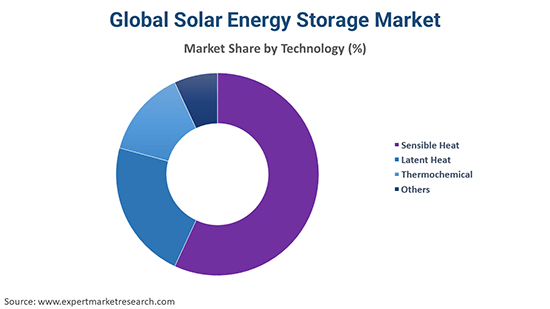
Market Breakup by Technology
Key Insight: Technology selection, as per the solar energy storage market report, depends on the requirements of a project. Sensible heat is more popular as it is dependable and less complex to carry out, whereas latent heat can be more efficient under certain circumstances. Thermochemical storage is one of the few options for long-duration storage, but it is still being developed. There are other technologies but so far, they have only been used in small-scale. The developers are trying to find a balance between price, effectiveness, and the ability to grow when deciding on storage techniques.
Market Breakup by Application
Key Insight: Solar energy storage applications are changing and going beyond just power production. There is no doubt that utilities are the main consumers of energy storage however other sectors, especially the industrial ones that are looking at energy storage for their process efficiency, are gaining momentum. According to the solar energy storage market report, thermal energy systems and district heating and cooling networks are increasingly utilizing storage solutions to manage energy consumption. For example, in February 2026, Naked Energy launched VirtuMAX ground-mounted solar thermal technology, delivering high-density renewable heat for industrial use while improving land efficiency and reducing reliance on grids. Every application has its own set of needs which determines the design of the system and the choice of technology. Instead of using one-size-fits-all models, developers are concentrating on tailoring storage systems to specific operations.
Market Breakup by End Use
Key Insight: Utilities are the main solar energy storage market players owing to their large scale and regulatory support; however, industrial users are also increasing their market shares rapidly since they aim at cost efficiency and sustainability. Residential and commercial segments are also adopting energy storage, albeit to a lesser extent, primarily driven by the desire for energy independence. In March 2026, PowerBank advanced 42 MW solar and 21.76 MWh storage projects across nine New York sites, entering construction phase to support community energy access.
Market Breakup by Region
Key Insight: The solar energy storage market is influenced by regional dynamics including policy, availability of resources, and infrastructure requirements. Asia Pacific secures the leading market position as a manufacturing hub and deployment capabilities, whereas Middle East and Africa are rapidly growing with new projects being commissioned. North America and Europe are heavily investing in advanced storage technologies and grid modernization. For example, in February 2026, Prime Power launched a United States platform delivering low-carbon energy to data centers, combining solar, wind, gas, and battery storage solutions. Latin America is also a potential market that witnesses slower growth compared to other regions.
By storage material, molten salt systems dominate the market due to high thermal stability and scalability
Molten salt remains the leading material choice since it integrates well with huge solar thermal plants, accelerating demand in the solar energy storage market. For utility-scale projects where long-duration storage is a must, but cycling losses have to be kept at a minimum, developers prefer molten salt. Companies like ACWA Power and Abengoa are working on improving two-tank molten salt systems so that the duration of discharge can be extended to more than 10 hours. Since the material remains stable even at high temperatures, operators are assured of its long-term performance. Capitalizing on this trend, in March 2026, Denmark unveiled a 1 GWh molten salt battery enabling long-duration storage, delivering up to 90% efficiency and supporting renewable energy grid stability.
Storage based on PCM is gaining popularity across the solar energy storage market scope, especially for applications where space is limited. Compared to molten salt, PCM offers higher energy density in smaller footprints, which fits in commercial installations and hybrid systems. Companies are trying out bio-based and salt hydrate PCMs targeted for thermal cycling reliability. Apart from that, performance levels vary across temperature ranges, but with materials engineering, this is being resolved eventually. Besides solar plants, startups in Europe and Japan are promoting modular PCM units that can be integrated into building systems as well. For instance, in July 2024, Hungarian startup Heatventors introduced a PCM-based thermal battery with 30 kWh/m³ density, enabling compact, long-cycle solar energy storage solutions.
By technology, sensible heat leads the market due to simplicity and cost-effective thermal storage design
Sensible heat storage continues to hold the main share in the solar energy storage market mainly due to the fact that it is simple to use and its performance is widely recognized. It is based on a simple principle of altering the temperature of materials such as molten salt or water, making system design relatively less complex. Developers typically focus on large-scale projects where reliability is prioritized over experimentation. Companies are also upgrading the insulation and heat exchange systems to get better performance. In March 2026, AstraZeneca launched a program targeting hard-to-abate industrial emissions, leveraging carbon credits, nature-based solutions, and advanced decarbonization strategies across operations.
Thermochemical storage is, on one hand, becoming more popular, but on the other hand, it is still in its nascent stage of development. The main benefit is that the energy density is greater, and it is possible to hold energy for a long time without significant losses. Companies as well as research entities are concentrating on the reversible chemical processes that can efficiently store and release heat. The demonstration works in Europe are indicating good results, particularly for the use of heat in producing industry. In December 2024, researchers developed and tested a proof-of-concept quantum battery enabling ultra-fast charging through quantum effects, advancing next-generation energy storage technologies.
By application, power generation leads the market growth due to large-scale solar integration and grid demand
Power generation accounts for the dominant share in the solar energy storage market revenue. Utilities and independent power producers are placing storage as an integral part of solar plants to solve the challenge of intermittency and to enhance dispatchability. This is particularly critical in regions with a high share of renewable energy sources. Power generation allows for the use of additional energy generated in the daytime during the evening peak demand period.
On the industrial side, solar storage is gradually being put to use for heating and cooling of processes, as a response to the need to lower carbon emissions and energy bills. The food processing, chemical, and textile industries are focusing on thermal storage options that can serve as a source of the uninterrupted supply of heat. These applications differ from power generation while they necessitate a steady and dependable energy output, boosting growth in the solar energy storage market. As a result, companies are creating personalized solutions for particular industrial operations.
Utility sector leads the market due to large-scale project deployments and grid integration
The utility industry continues to lead the demand in the solar energy storage market. Large-scale solar projects usually require energy storage to continue the power supply smoothly and maintain the grid. Utility companies are investing in integrated solar storage systems to fulfill renewable energy targets and peak demand management. Storage is increasingly seen as a key resource in grid development. Some market players are signing long-term contracts with utilities for supplying and managing storage systems. This not only yields reliable incomes but also cuts the risks associated with the projects. For example, in March 2026, Sunsure Energy signed a solar PPA with Jakson Engineering, supplying 7.28 million units annually, reducing emissions and boosting industrial renewable energy adoption.
Industrial solar energy users who integrate storage do so to reduce energy costs and improve operational efficiency, propelling the solar energy storage market value. Besides achieving sustainability targets, rising electricity prices are becoming a reason for companies to seek out alternative sources of energy. Environmental storage systems have also become a critical part of an industry's energy model as they enable the use of solar energy almost entirely, thus minimizing the reliance on the grid. Moreover, different industrial operations pose different requirements, and companies offer solutions customized to these needs which, in turn, accelerate the level of adoption.
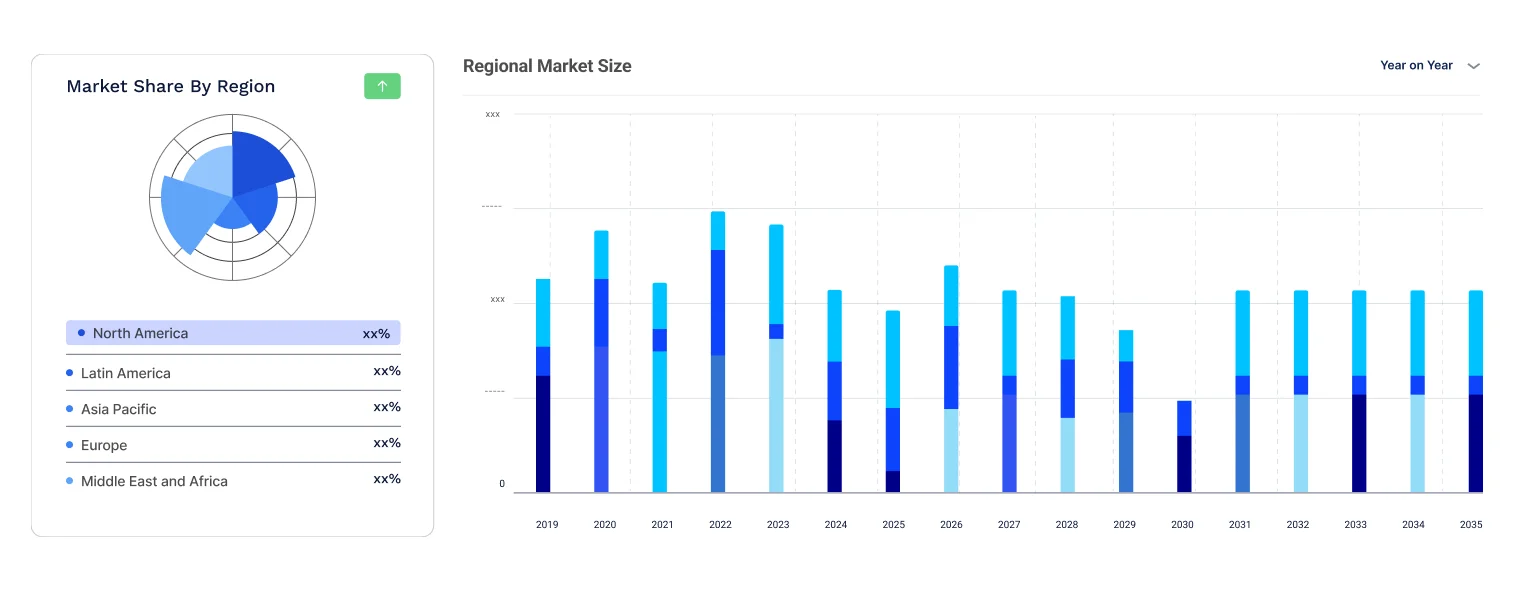
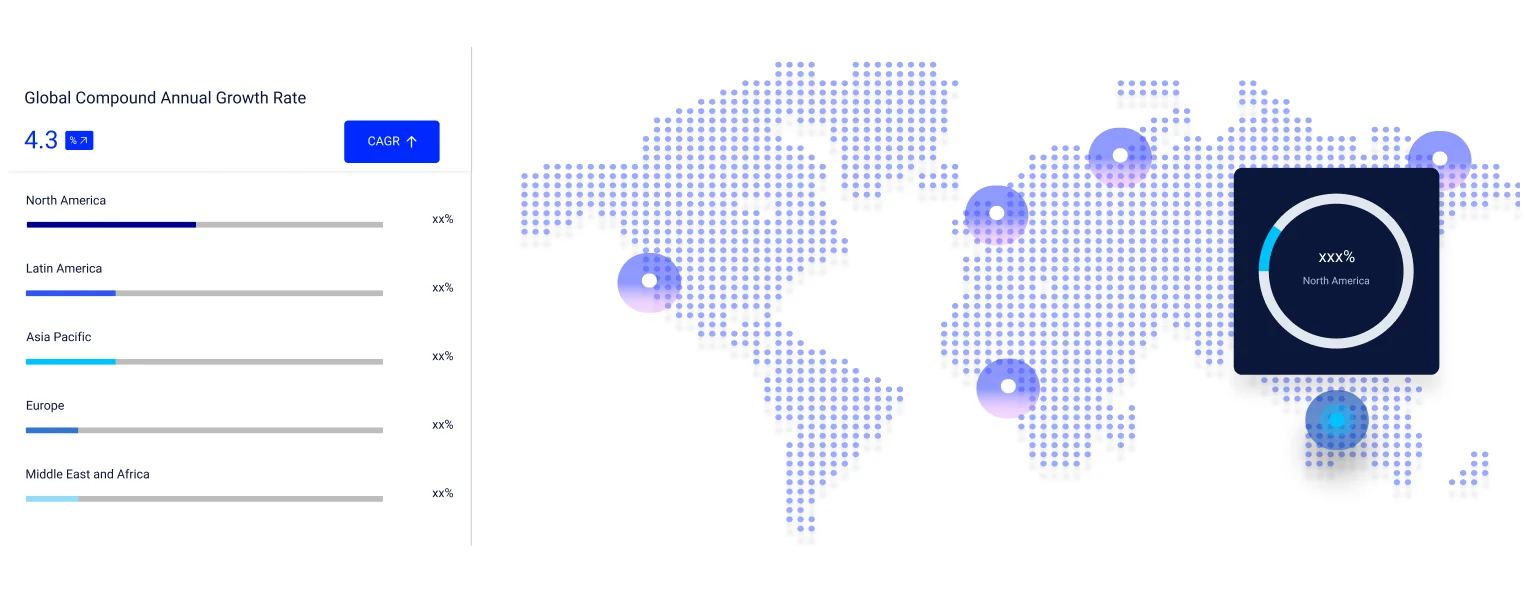
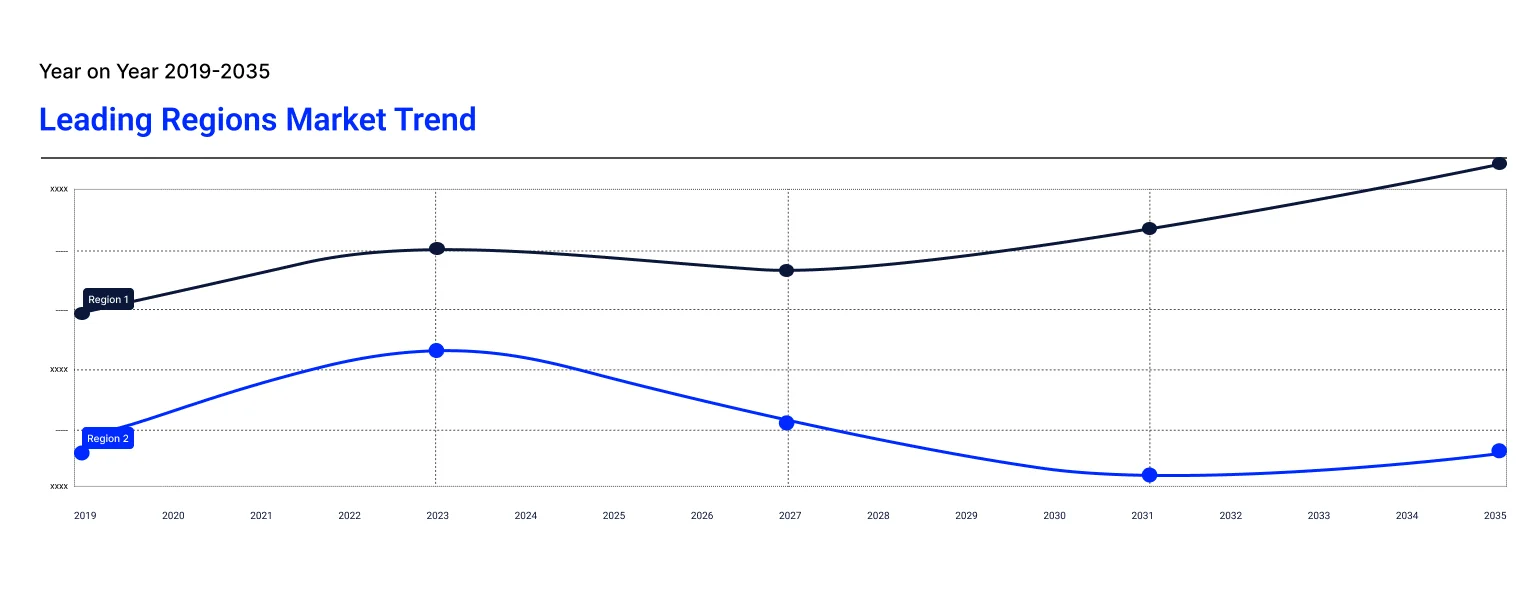
Asia Pacific registers the leading position of the market due to aggressive solar deployment and policy support
Asia Pacific emerges to be the leading region within the solar energy storage market dynamics due to large-scale solar installations in China, India, and Australia. The governments in these countries are not only backing the expansion of renewable energy with storage integration but also providing a wide range of supporting measures. Most notably, China is loading its battery manufacturing and deployment sectors with capital, thus strengthening its market position. Besides that, India is vigorously promoting solar-plus-storage projects by means of policy incentives and issuing tenders. Apart from that, the region is supported by robust manufacturing capabilities, as well as ever-increasing energy demand.
Both the Middle East and Africa are regions witnessing the emergence of solar energy storage as a fast-growing market. The integration of storage is a key component of large-scale projects in Saudi Arabia and the UAE, aimed at ensuring a reliable power supply. These parts of the world are endowed with tremendous solar resources, which makes solar energy a natural choice. Governments are spending on renewable energy with the intention of diversifying their energy mix and cutting down on the use of fossil fuels. Companies in the solar energy storage market, on the other hand, are conducting joint ventures with local partners to come up with advanced storage solutions. In August 2025, Sinovoltaics launched the first Middle East and Africa solar supply chain map, tracking manufacturing sites, capacities, and regional solar industrial expansion trends.
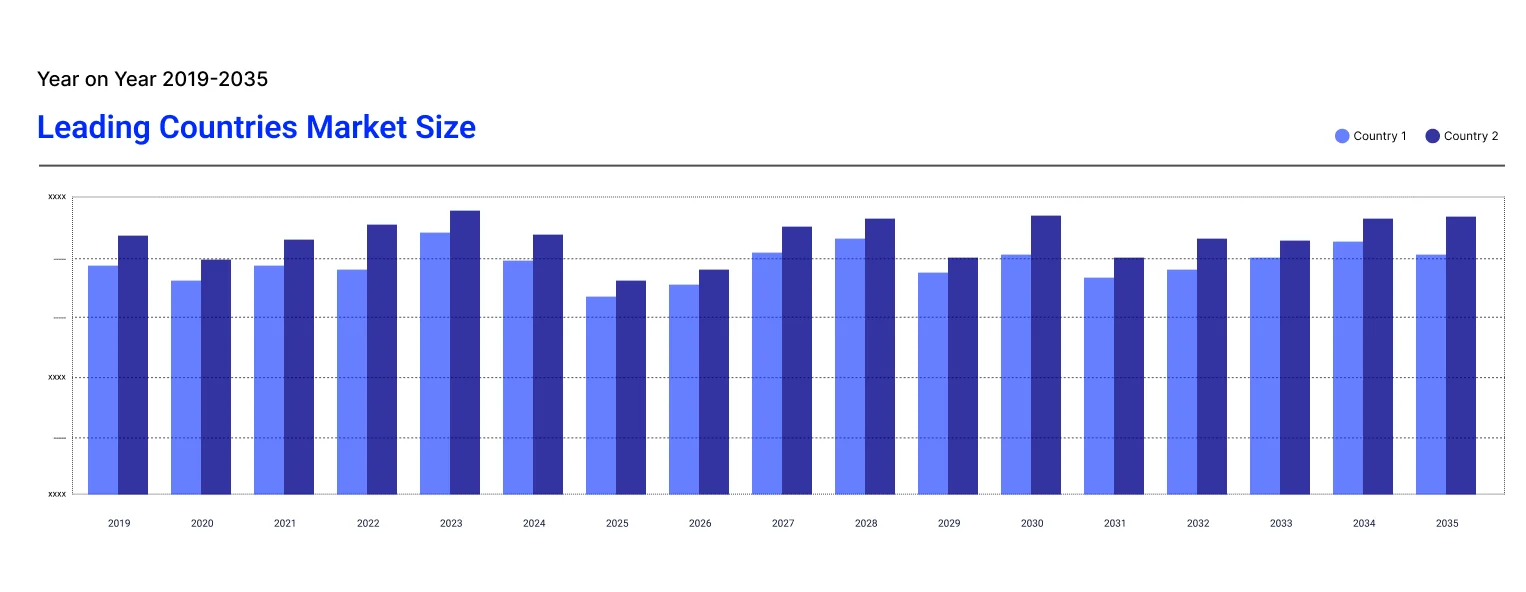
| CAGR 2026-2035 - Market by | Country |
| India | 75.2% |
| China | 67.4% |
| UK | 55.8% |
| USA | 54.4% |
| Germany | 50.2% |
| Canada | XX% |
| France | XX% |
| Italy | XX% |
| Japan | 42.0% |
| Australia | XX% |
| Saudi Arabia | XX% |
| Brazil | XX% |
| Mexico | XX% |
Key solar energy storage market players are shifting their focus toward integrated systems, moving away from standalone product offerings. Tesla, BYD, and Fluence are pushing fully packaged systems where hardware, software, and grid services come together. This shift is opening opportunities in long-term service contracts, not just equipment sales. At the same time, players are investing in localized manufacturing to reduce supply chain risks. In India and the United States, new gigafactories are being aligned with domestic solar expansion plans.
There is also a visible inclination toward hybrid systems, especially solar plus storage plus EV charging. Another area gaining traction is software-led optimization. Solar energy storage companies are eventually building AI-driven platforms to improve energy dispatch and pricing strategies, which could redefine margins over time.
Founded in 1995 and headquartered in Shenzhen, China, BYD Motors Inc. is ramping up production of their lithium iron phosphate battery systems for utility storage projects. The automotive company is also adapting the blade battery design for stationary storage, making the batteries safer and the cycle life longer. Moreover, they rely on vertically integrated manufacturing as a reliable means to keep cost and supply timeline under control.
Established in 1947 and headquartered in Seoul, South Korea, LG Chem through advanced battery chemistry and modular storage solutions, is working on widening its influence in the market. Its main focus is on developing new material for batteries, which offer higher energy density and longer lifecycles. In addition, it is teaming up with global developers to run large-scale renewable integration projects.
Founded in 2000 and based in Pennsylvania, United States, EnerSys is concentrating on industrial energy storage systems enhancing the reliability. The company aims at hybrid storage solutions for telecom and grid backup applications, expanding its portfolio. In addition, it focuses on developing battery management systems which provide better operations control.
Leclanché, established in 1909 and based in Yverdon-les-Bains, Switzerland, is expanding its presence in niche segments through customized lithium-ion storage solutions. The company leverages marine and microgrid projects, where customized energy storages are the norm. In addition, it has also taken a step towards eco-friendly battery production methods.
*Please note that this is only a partial list; the complete list of key players is available in the full report. Additionally, the list of key players can be customized to better suit your needs.*
Other key players in the market include Saft, and Adara Power, among others.
Unlock the latest insights with our solar energy storage market trends 2026 report. Discover regional growth patterns, consumer preferences, and key industry players. Stay ahead of competition with trusted data and expert analysis. Download your free sample report today and drive informed decisions in the market.


Upto 15% Off
USD
$2499 $2249
$3999 $3599
$4999 $4249
$5999 $5099


*While we strive to always give you current and accurate information, the numbers depicted on the website are indicative and may differ from the actual numbers in the main report. At Expert Market Research, we aim to bring you the latest insights and trends in the market. Using our analyses and forecasts, stakeholders can understand the market dynamics, navigate challenges, and capitalize on opportunities to make data-driven strategic decisions.*
The market is projected to grow at a CAGR of 7.60% between 2026 and 2035.
Investing in localized production, forming utility partnerships, developing AI-driven platforms, expanding hybrid solutions, and optimizing lifecycle costs are helping stakeholders strengthen positioning and improve long-term profitability.
The key trends guiding the market include the electrification of heat and transportation sector, the increasing number of electronically connected devices, and the digitalisation of modern economies.
The major regions in the market are North America, Latin America, the Middle East and Africa, Europe, and the Asia Pacific.
The major storage materials considered in the market report are water, molten salt, and PCM, among others.
The various technologies of solar energy storage considered in the market report include sensible heat, latent heat, and thermochemical, among others.
The significant applications of solar energy storage in the market are power generation, district heating and cooling, and process heating and cooling.
The several end uses of solar energy storage include residential and commercial, industrial, and utility.
The key players in the market include BYD Motors Inc., LG Chem, EnerSys, Leclanché, Saft, and Adara Power, among others.
In 2025, the market reached an approximate value of USD 14.34 Billion.
The market is estimated to witness a healthy growth in the forecast period of 2026-2035 to reach about USD 29.83 Billion by 2035.
High upfront costs, raw material supply risks, technology standardization gaps, and integration complexities with existing grid infrastructure are limiting faster adoption across several emerging and price-sensitive markets globally.
Explore our key highlights of the report and gain a concise overview of key findings, trends, and actionable insights that will empower your strategic decisions.
| REPORT FEATURES | DETAILS |
| Base Year | 2025 |
| Historical Period | 2019-2025 |
| Forecast Period | 2026-2035 |
| Scope of the Report |
Historical and Forecast Trends, Industry Drivers and Constraints, Historical and Forecast Market Analysis by Segment:
|
| Breakup by Storage Material |
|
| Breakup by Technology |
|
| Breakup by Application |
|
| Breakup by End Use |
|
| Breakup by Region |
|
| Market Dynamics |
|
| Competitive Landscape |
|
| Companies Covered |
|
| Report Price and Purchase Option | Explore our purchase options that are best suited to your resources and industry needs. |
| Delivery Format | Delivered as an attached PDF and Excel through email, with an option of receiving an editable PPT, according to the purchase option. |
Datasheet
One User
USD 2,499
USD 2,249
tax inclusive*
Single User License
One User
USD 3,999
USD 3,599
tax inclusive*
Five User License
Five User
USD 4,999
USD 4,249
tax inclusive*
Corporate License
Unlimited Users
USD 5,999
USD 5,099
tax inclusive*
*Please note that the prices mentioned below are starting prices for each bundle type. Kindly contact our team for further details.*
Flash Bundle
Small Business Bundle
Growth Bundle
Enterprise Bundle
*Please note that the prices mentioned below are starting prices for each bundle type. Kindly contact our team for further details.*
Flash Bundle
Number of Reports: 3
20%
tax inclusive*
Small Business Bundle
Number of Reports: 5
25%
tax inclusive*
Growth Bundle
Number of Reports: 8
30%
tax inclusive*
Enterprise Bundle
Number of Reports: 10
35%
tax inclusive*
How To Order

Select License Type
Choose the right license for your needs and access rights.

Click on ‘Buy Now’
Add the report to your cart with one click and proceed to register.

Select Mode of Payment
Choose a payment option for a secure checkout. You will be redirected accordingly.
Strategic Solutions for Informed Decision-Making
Gain insights to stay ahead and seize opportunities.

Get insights & trends for a competitive edge.

Track prices with detailed trend reports.

Analyse trade data for supply chain insights.

Leverage cost reports for smart savings

Enhance supply chain with partnerships.

Connect For More Information
Our expert team of analysts will offer full support and resolve any queries regarding the report, before and after the purchase.
Our expert team of analysts will offer full support and resolve any queries regarding the report, before and after the purchase.
We employ meticulous research methods, blending advanced analytics and expert insights to deliver accurate, actionable industry intelligence, staying ahead of competitors.
Our skilled analysts offer unparalleled competitive advantage with detailed insights on current and emerging markets, ensuring your strategic edge.
We offer an in-depth yet simplified presentation of industry insights and analysis to meet your specific requirements effectively.




