

Consumer Insights
Uncover trends and behaviors shaping consumer choices today
Procurement Insights
Optimize your sourcing strategy with key market data
Industry Stats
Stay ahead with the latest trends and market analysis.
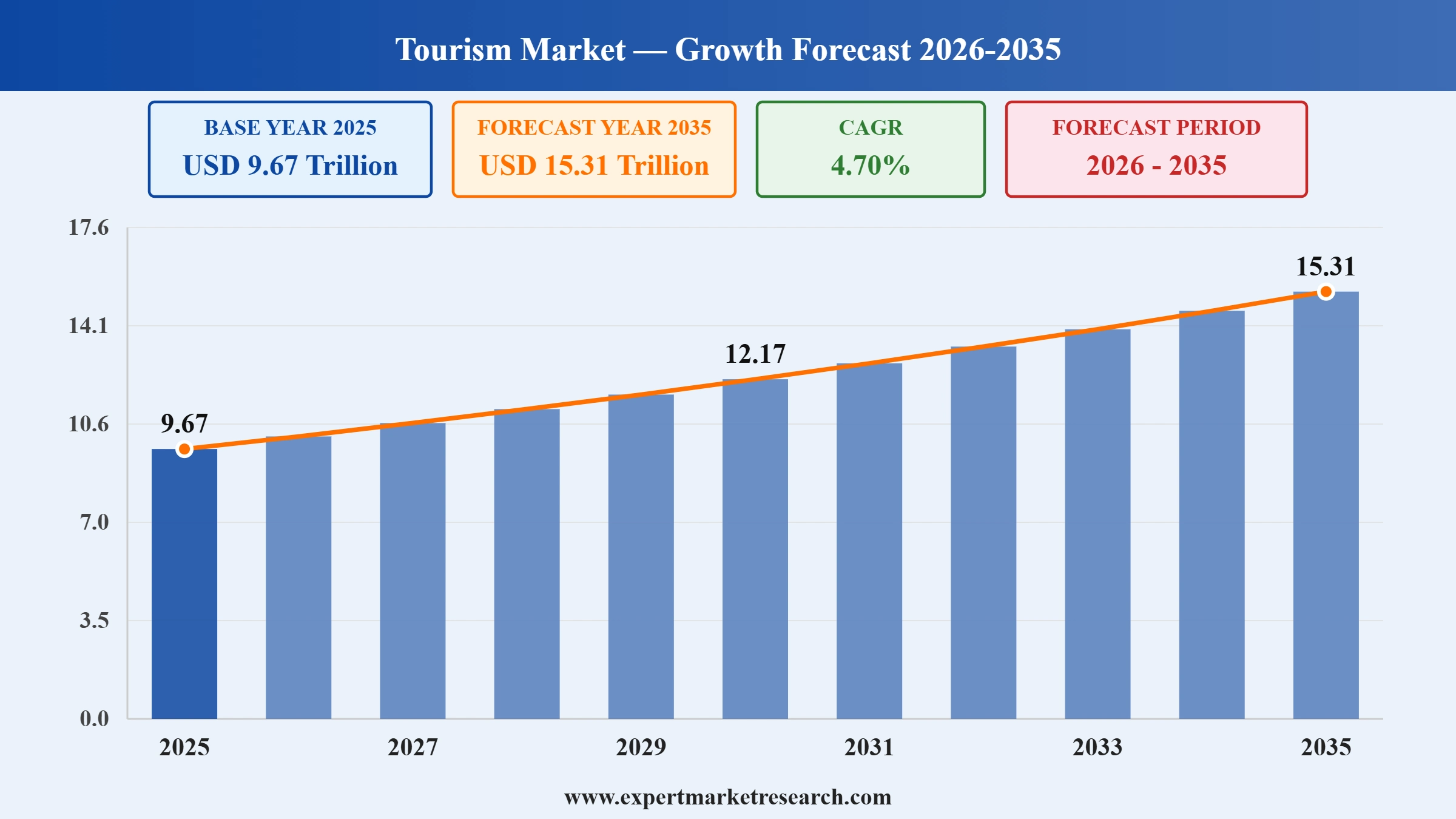
The global tourism market attained a value of USD 9.67 Trillion in 2025 and is projected to expand at a CAGR of 4.70% through 2035. The market is further expected to achieve USD 15.31 Trillion by 2035. The rise in spending on intelligent tourism infrastructure, artificial intelligence-based tourism management, and mobility solutions is helping players to enhance travelers’ experience, boost efficiency and attract affluent international travelers.
Government initiatives for the development of the tourism market and increased air connectivity are contributing to the growing demand for international travel. In line with these initiatives, hospitality businesses are increasing their investments in branded residences, concierge services through digital platforms and loyalty ecosystem which drive more repeat businesses and higher ancillary revenue. These initiatives are encouraging collaboration between airlines, hotels, tech companies and destination management organizations.
One key trend observed in the tourism market is the increased penetration of AI into travel platforms through more advanced integration of guest analytics and automatic travel itinerary suggestions on various brands. This trend is being instrumental in helping companies boost direct booking and traveler engagement in the process. For example, in July 2026, G6 Hospitality launched AI-powered virtual property tours, enhancing hotel showcases, franchise visibility, digital engagement, and booking conversions. According to the World Tourism Organization (UNWTO), international tourists exceeded 1.5 billion people in 2025. This is pushing many hotel chains, airlines, and destination management organizations to invest further in technology to improve their customer engagement and enhance travel profit margins.
Technological innovations in service delivery and diversification of destinations are also impacting the tourism market. Airlines, hotels, and online travel agencies are partnering with fintech companies, mobility firms, and experiences platforms to build travel ecosystems. Following this trend, in July 2026, MakeMyTrip launched OneCircle rewards, offering minimum 10% hotel booking rewards across 13,376 global accommodation properties. Generative AI is being implemented in customer service and support through dynamic pricing and package recommendations. Sustainable reporting is also emerging as a strategy to attract environmentally conscious travelers and institutional investors.
Read more about this report - REQUEST FREE SAMPLE COPY IN PDF
| Tourism Market Report Summary | Description | Value |
| Base Year | USD Trillion | 2025 |
| Historical Period | USD Trillion | 2019-2025 |
| Forecast Period | USD Trillion | 2026-2035 |
| Market Size 2025 | USD Trillion | 9.67 |
| Market Size 2035 | USD Trillion | 15.31 |
| CAGR 2019-2025 | Percentage | XX% |
| CAGR 2026-2035 | Percentage | 4.70% |
| CAGR 2026-2035 - Market by Region | Asia Pacific | 6.1% |
| CAGR 2026-2035 - Market by Country | India | 7.0% |
| CAGR 2026-2035 - Market by Country | Brazil | 5.1% |
| CAGR 2026-2035 - Market by Tourism Type | International Tourism | 5.2% |
| CAGR 2026-2035 - Market by Travel Purpose | Leisure Spending | 5.3% |
| Market Share by Country 2025 | Germany | 5.2% |
Royal Grand Resorts introduced a hospitality brand targeted at LGBTQ+ travelers with luxury offerings, inclusivity services, and resort offerings. This represents an innovation that responds to the rise of niche tourism experience demands. Niche tourism experiences can be introduced by other tourism firms to help destinations bring high-spending tourists from overseas through their specialized hotel brands.
The Radisson Hotel Group introduced AI-powered price matching of hotels in real-time. The AI price matching helps match the lower prices offered on third-party sites when customers make bookings. This innovation helps with improving direct bookings, price transparency, and customer trust, among others. Other firms can use AI-based pricing tools to improve direct bookings and revenue management, using these developments in the tourism market.
Summit Hotels achieved fast expansion leveraging various hospitality sectors, several brands, and growth through partnering to focus on leisure, pilgrimage, and premium tourism and improve regional hotel developments. Tourism firms can also use partnerships and brands to grow more quickly with low investment costs.
Saltstayz announced plans to add 22 hotels to their network, entering western and southern regions of India and bolstering its premium hotel offerings due to an increase in demand for business and leisure tourism across the country. Other tourism market firms can capitalize on emerging regional locations through hotel growth to attract increasing tourism demands in the country.
The development of artificial intelligence is reshaping the tourism market dynamics in terms of highly customized journey planning, pricing, and customer engagement. Some of the top players in this sphere are applying generative AI to offer destination recommendations, automation of trip planning, and multilingual customer support. Companies like Expedia Group and Booking Holdings are increasing investments in AI-based planning solutions to enhance booking success rates and traveler satisfaction. Similarly, in June 2026, Amadeus expanded its AI hospitality strategy with intelligent commerce, AI booking assistants, and automated hotel operations across booking channels. This trend helps tourism operators to maximize their occupancy rate, increase other sources of revenue, and retain customers while minimizing their expenses.
Sustainability is becoming not only an opportunity for branding but also a strategy that gives a competitive advantage in the tourism market. Hospitality businesses are implementing renewable energy, carbon accounting solutions, and eco-certification of accommodation establishments in order to attract ecologically minded tourists and business partners. Hilton introduced some sustainable hotel projects, in October 2025, that included energy-efficient solutions and responsible sourcing in construction of the new facilities. Moreover, green tourism strategies from the government side can be exemplified by New Zealand's Tourism Sustainability Commitment.
Increased government investment in intelligent destination infrastructure for enhancing visitor experiences and destination management is being witnessed in the tourism market. Intelligent visitor cards, real-time crowd control technology, and intelligent transportation systems are becoming common in many tourism destinations. Singapore Tourism Board is rolling out intelligent tourism solutions which incorporate data analytics to manage visitors and personalize their experience. For travel companies, these solutions help reduce congestion, improve operations planning, and marketing campaigns based on consumer behavior and destination competitiveness. In June 2026, Tamara launched India's first faith-intelligent hospitality brand, delivering immersive pilgrimage experiences through culturally sensitive, purpose-driven accommodation and services.
Tourism market players are moving away from traditional sightseeing packages to more premium experiences including wellness, culture, gastronomy, and adventures. Firms are offering premium travel experiences which are leading to increased per capita spending and prolonged stay of visitors. Companies like Marriott International are expanding their wellness-oriented resorts and destination experiences in several international markets to cater to wealthy consumers. On the other hand, in July 2026, EkoStay expanded premium boutique villas across Maharashtra and Karnataka, strengthening experiential, nature-led stays before monsoon travel demand surged.
With the increase in the number of remote workers, the tourism market witnesses a consistent need for extended stay tourism products and flexible accommodation arrangements. Companies operating in the hospitality industry are creating long stay packages that feature workspace facilities, wellness and fitness services, and social events aimed at attracting digital nomads. Countries such as Portugal, Spain, UAE, and Indonesia are introducing visas for digital nomads that would allow foreign professionals to reside and work in their jurisdictions. For example, in April 2025, the Philippines launched a digital nomad visa, attracting remote professionals through extended stays, flexible residency, and tourism growth. These government-led initiatives drive the demand for accommodation, transportation services, co-working facilities, and local services.
The EMR’s report titled “Global Tourism Market Report and Forecast 2026-2035” offers a detailed analysis of the market based on the following segments:
Market Breakup by Tourism Type
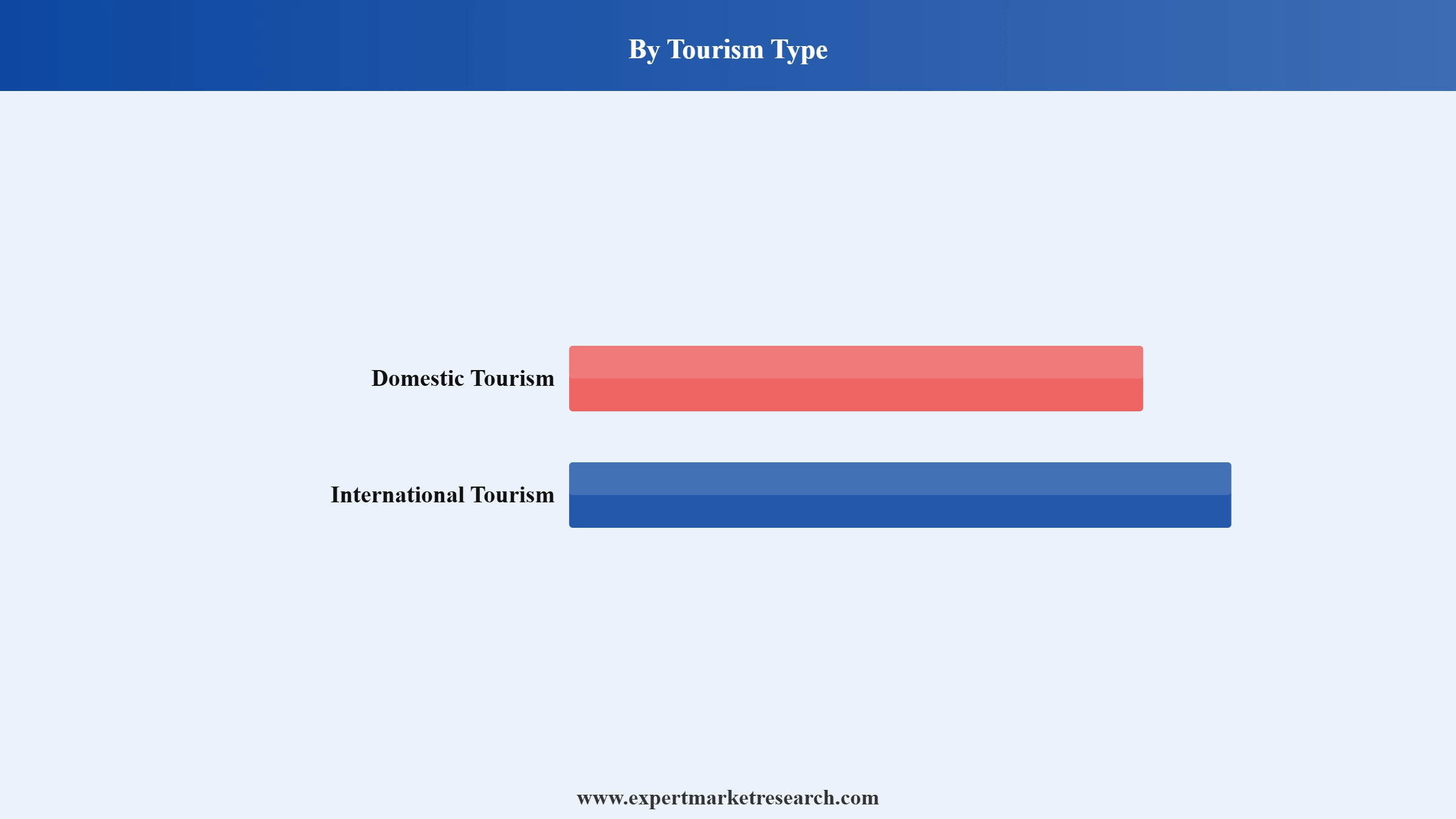
Key Insight: Balanced demand in both domestic and international markets is advantageous for the industry. The former is the main driving factor of the overall tourism market stability owing to regular trips within regions, family vacations, and improved infrastructure of local tourism. For example, in July 2026, flynas launched the Saudi Experiences platform, enabling seamless booking of curated local tourism experiences across Saudi Arabia's diverse destinations. The latter is developing fast owing to increased globalization and high demand for quality services, culture, and long-distance travel. Companies create individual products for each category through travel packages, booking systems, price policy, and loyalty programs. These two categories allow tourism companies to diversify their income, minimize seasonality, retain customers, and increase their stability.
Market Breakup by Travel Days
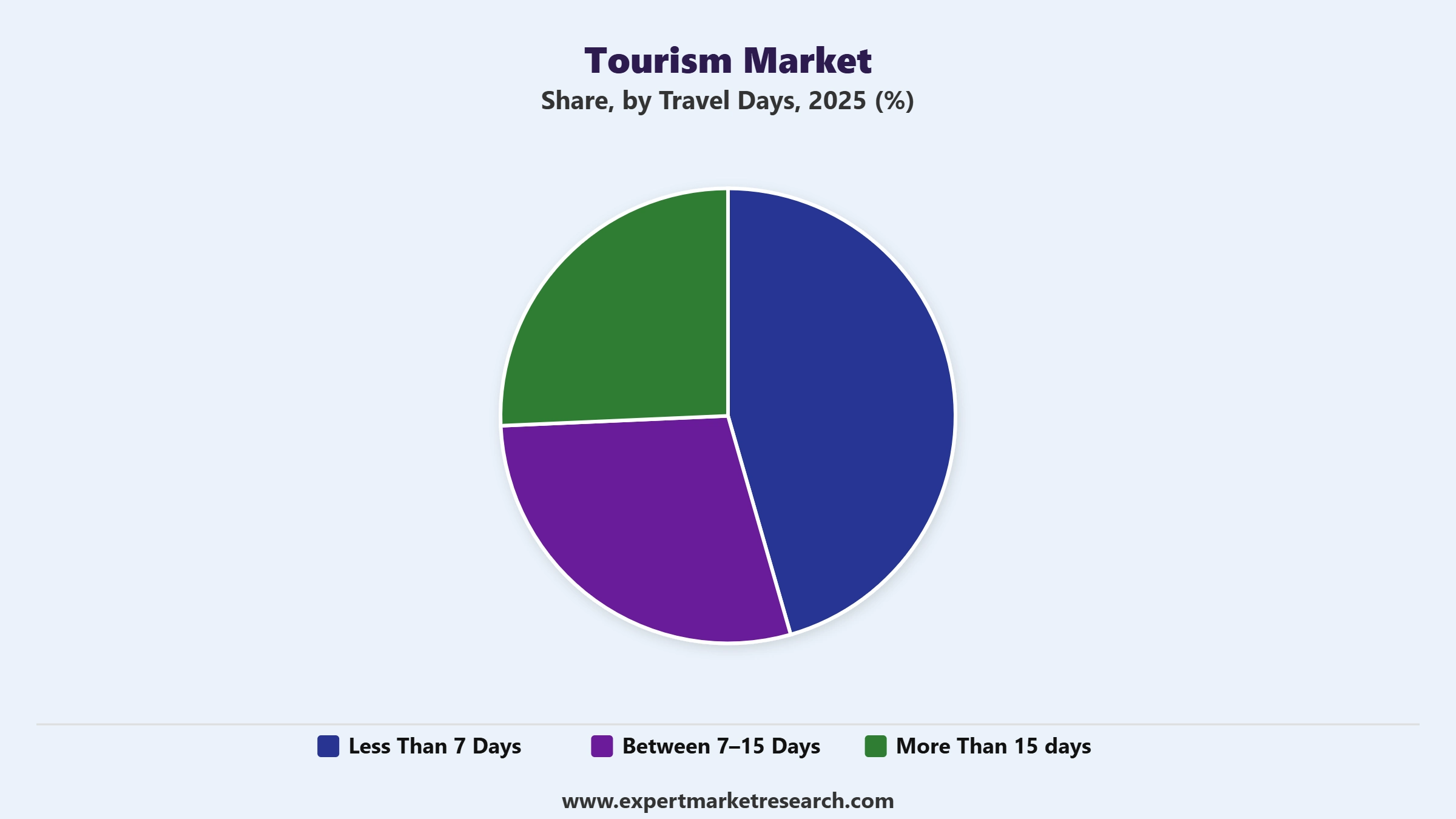
Key Insight: The length of time spent traveling is a key factor in determining tourism package buying behavior and the design of services. Traveling for short periods of time is generating maximum interest owing to the ease, affordability, and flexibility offered by such trips. The medium-length trips that fall in the range of 7-15 days are proving to be appealing for overseas holidays and multi-destination trips that need more planning. Longer periods of travel are growing in popularity due to remote working, wellness tourism, and experiential tourism becoming popular choices.
Market Breakup by Travel Purpose
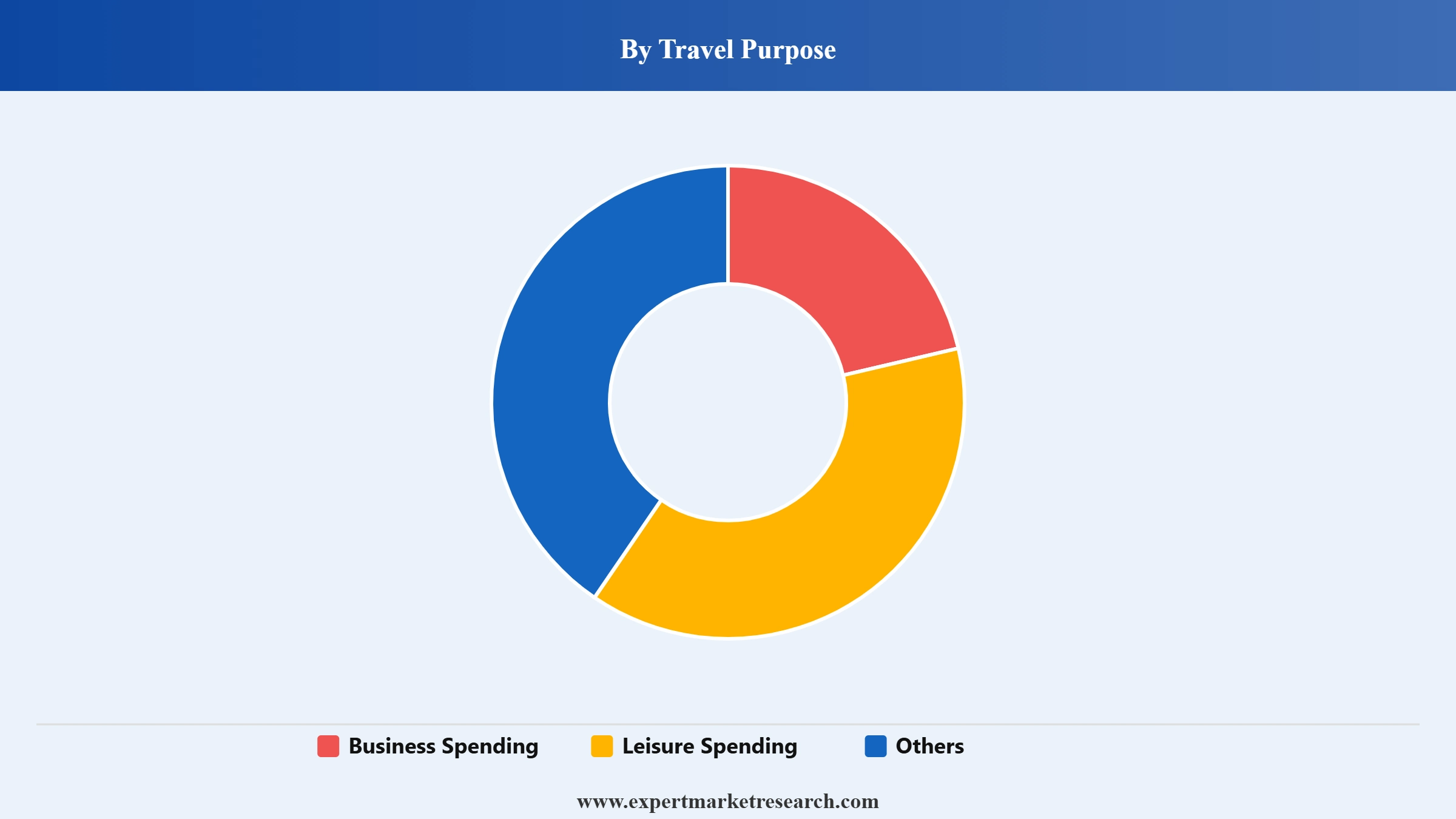
Key Insight: The purpose of traveling is what drives the development of products in the tourism market. Leisure spending makes up the majority of the contribution since people travel for relaxation and entertainment along with a destination experience provided through top-notch hospitality services. The trend of business travel is on the rise because companies focus more on face-to-face interaction and combine their business with leisure trips. There are other purposes of travel such as education, health care, religion, and visiting friends and family that add to the diversification of demand in the market.
Market Breakup by Region
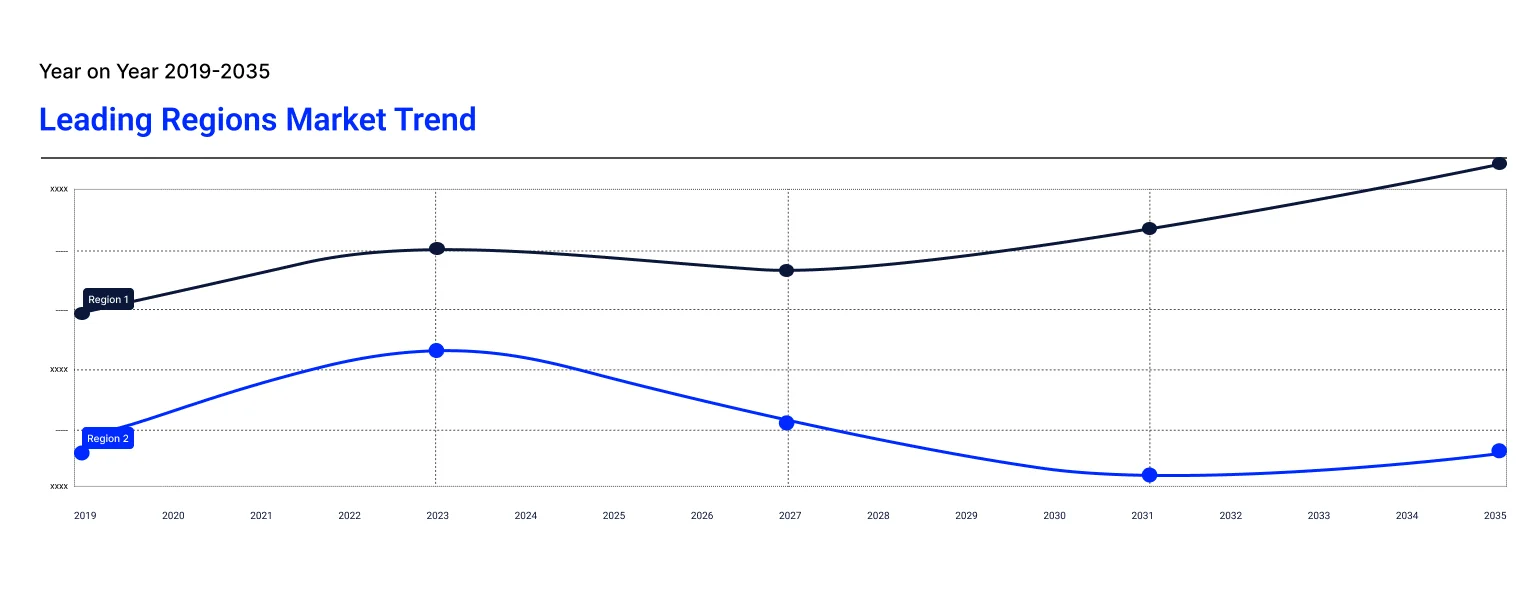
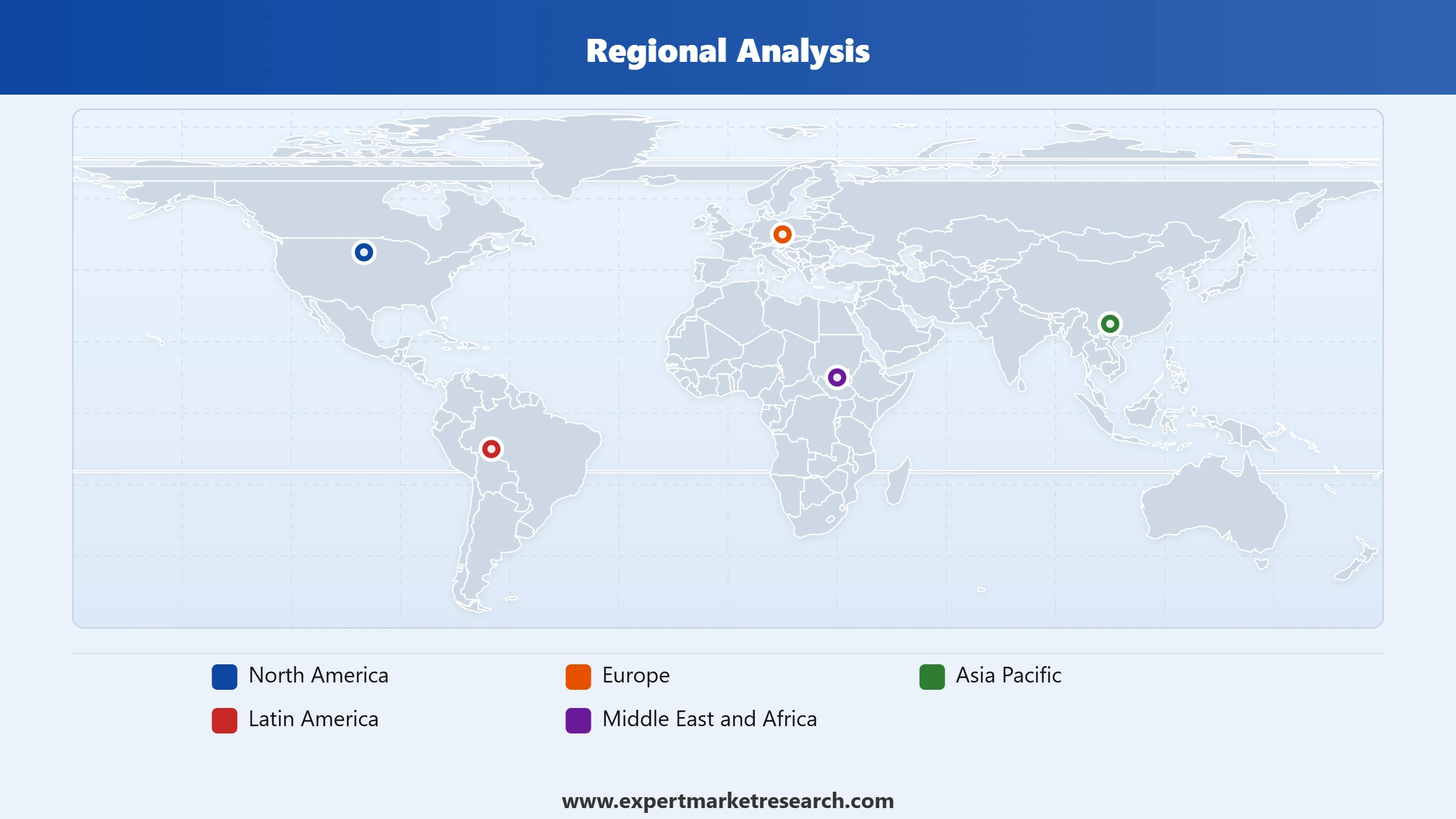
Key Insight: Performance in terms of regional tourism depends on several factors including infrastructure, tourists' preferences, economic development and destination diversification. The tourism market in Europe holds the leading position owing to well-developed tourism industry ecosystems and high connectivity with other countries. North America is favored because of its well-developed hospitality services and domestic tourism. The fastest growth in the Asia Pacific region can be attributed to the development of infrastructure, rise in income, and increased use of technology in traveling. Latin America is becoming attractive because of natural and cultural tourism, and the Middle East and Africa continue growing their luxury hospitality, connectivity and destination diversification.
Read more about this report - REQUEST FREE SAMPLE COPY IN PDF
Domestic tourism dominates the market due to stronger year-round travel demand
Domestic tourism is the most significant part of the tourism market since tourists prefer flexible and inexpensive tourism in their own countries. The hospitality firms, the transport companies and even the travel websites are developing localized and experience-oriented tourism packages in order to attract repetitive clients. In addition to that, governments encourage regional tourism through infrastructure development and destination marketing initiatives. The stable demand from families, weekend travelers and even hybrid workers ensure the occupancy rate of hotels, attractions, and all other related businesses. In July 2026, Nemesia Hotels & Resorts launched Nemesia Resort & Spa Rishikesh, expanding luxury wellness tourism with premium nature-inspired hospitality experiences in India.
Read more about this report - REQUEST FREE SAMPLE COPY IN PDF
The fastest-growing segment of the tourism market is represented by international tourism, and it is developing since there is an expansion in long-haul flights, and travelers prefer cross-border tourism. The luxury hospitality firms, travel agents, destination management companies are introducing customized international travel packages, and it is done due to the digital booking systems. Besides, the simplified visa policies and increased demand for experiential travel promote both outbound and inbound tourism. Premium accommodation and travel services help tourism firms to improve their revenue and expand in international markets.
By travel days, the less than 7 days category generates the largest share through frequent short leisure trips
Less than one-week holidays take up the majority of the tourism market revenue since they coincide with modern employment practices, weekend travel, and affordable holiday planning. Airline companies, hotels, and travel agencies create holiday packages focusing on city breaks, regional vacations, and extension of the business meetings. Instant online booking systems make it even easier to plan for such holidays. Stable demand from families, professionals, and young tourists helps tourism companies optimize their performance and occupancy rates in terms of hotel accommodation, transportation usage, and additional service income. In July 2026, Kaara Hotels launched Aayra, a boutique hotel brand, opening its first Dehradun property with contemporary urban hospitality experiences.
Read more about this report - REQUEST FREE SAMPLE COPY IN PDF
More than 15-day trips are becoming popular nowadays due to the rise of the lifestyle of digital nomads, extended vacations, wellness holidays, and deep cultural immersion. Participants in the tourism market provide long-term accommodation with the necessary amenities, including workspace and different subscription-based accommodation options. Modern tourists tend to combine business trips with vacations, which increases the consumption of services related to accommodation, dining, transportations, and attractions in the destination place.
Leisure spending accounts for the largest share through expanding experiential travel preferences
Leisure expenditure is significantly contributing to the tourism market value as people become more inclined towards vacations related to health, adventure, entertainment, and culture. Hotels, cruise companies, resorts, and travel agencies are investing in tailor-made experiences, high-quality accommodation and vacation packages, thereby adding to consumer value. Flexible booking options and rewards schemes help to create customer loyalty and generate additional income. The trend of choosing experiences over materialism is going to further boost the demand for leisure tourism. In May 2026, WITT expanded across Asia, certifying wellness hotels in Vietnam, Nepal, and Indonesia amid accelerating regional wellness tourism demand.
Read more about this report - REQUEST FREE SAMPLE COPY IN PDF
The business category is expanding its share in the tourism market at a rapid pace since multinational corporations are including international business trips, conventions, and client interaction tours along with leisure additions to corporate trips. Providers of hospitality services modernize their conference and meeting rooms and offer executive-level accommodation services as per their corporate needs. Airline carriers and hotels are designing flexible corporate travel programs with features for expense management through technology. In July 2026, ITC Hotels signed a 99-key Welcomhotel in Mysuru, expanding Karnataka's premium hospitality and cultural tourism footprint.
Europe holds the largest market share through diversified destinations and mature tourism infrastructure
Europe accounts for the major share in the tourism market because of the abundance of cultural sites, well-established hospitality networks, efficient transport systems, and connectivity between countries for travel purposes. The expansion of high-end services by global hotels, airlines, and travel operators remains prevalent in the region's tourism destinations. Europe has a developed tourism infrastructure, rich culture sites, and rail and air networks that facilitate travel across multiple countries. The expanding number of tourists, various options available for travel, and round the year tourism activities support the continuous growth of businesses. In February 2026, Belvilla entered Europe's hotel market, launching three Germany hotels to expand premium hospitality and vacation accommodation offerings.
Read more about this report - REQUEST FREE SAMPLE COPY IN PDF
The Asia Pacific region is witnessing the fastest growth in the tourism market because of the increase in disposable income, aviation capacity, and use of digital tourism platforms to facilitate domestic and international tourism. The governments and private players are working towards developing new airports, advanced tourism infrastructure, and hospitality projects in different parts of the region. Luxury resorts, adventure tourism, wellness tourism, and cultural tourism attract tourists from the region and all around the world. In July 2026, China unveiled a tourism development plan targeting 190 million inbound visitors by 2030 through expanded visa-free policies.
The global industry is becoming more competitive due to the emergence of AI-based trip planners, an interconnected booking ecosystem, sustainable tourism, and premium travel products. Prominent tourism companies are improving the direct interaction with customers through loyalty programs, dynamic pricing algorithms, and personalized travel recommendations based on advanced analytics. There is a tendency for strategic collaboration of airlines, hotels, fintech firms, and mobility companies to create a seamless end-to-end travel experience for customers.
Leading tourism market players are also offering destination experiences, wellness tourism, luxury accommodations, and digital concierges to increase the loyalty and spending of their customers. Smart tourism applications that offer integration of transport, accommodation, attraction, and local experiences all in one app constitute another promising trend. Flexible packages and subscriptions for travel are being offered by companies in order to target remote workers, multigenerational travelers, and experiential travelers.
Founded in 1923 and having its headquarters located in Hanover, Germany, TUI AG is one of the biggest integrated tourism companies in the world. It incorporates various activities, such as airline, hotel, and cruise while implementing digital booking technology and sustainable tourism along with other improvements in customer involvement and direct bookings.
Founded in 1996 and based in Norwalk, Connecticut, United States of America, Booking Holdings provides global travel platforms for accommodation, transport, car rental, and attractions. The company keeps developing AI-driven travel planning and connected trips features.
Expedia Group was founded in 1996 and is based in Seattle, Washington, United States. Expedia Group specializes in online travel arrangements through hotels, flights, vacation homes, cruise ships, and other activities. Expedia Group concentrates on trip planning with the use of generative AI, expanding the loyalty ecosystem and forming tech partnerships.
Founded in 1999 and based in Argentina, Despegar.com caters to the travel needs of Latin America through its online booking services. Despegar.com enhances the level of engagement of customers through mobile first booking, digital payments, travel packages, and other data-based recommendations suited for their regional travelers.
Other key players in the market include Contiki, Butterfield & Robinson Inc., Geographic Expeditions Inc., ROW Adventures, MT Sobek, and G Adventures Inc., among others.
*Please note that this is only a partial list; the complete list of key players is available in the full report. Additionally, the list of key players can be customized to better suit your needs.*
Unlock the latest insights with our tourism market trends 2026 report. Discover regional growth patterns, consumer preferences, and key industry players. Stay ahead of competition with trusted data and expert analysis. Download your free sample report today and drive informed decisions in the market.


Upto 15% Off
USD
$2499 $2249
$3999 $3599
$4999 $4249
$5999 $5099


*While we strive to always give you current and accurate information, the numbers depicted on the website are indicative and may differ from the actual numbers in the main report. At Expert Market Research, we aim to bring you the latest insights and trends in the market. Using our analyses and forecasts, stakeholders can understand the market dynamics, navigate challenges, and capitalize on opportunities to make data-driven strategic decisions.*
In 2025, the market reached an approximate value of USD 9.67 Trillion.
The market is projected to grow at a CAGR of 4.70% between 2026 and 2035.
The market is assessed to witness a healthy growth in the forecast period to reach around USD 15.31 Trillion in 2035.
The market is categorised according to the tourism type, which includes domestic tourism and international tourism.
Based on the travel days, the market is divided into less than 7 days, between 7 – 15 days and more than 15 days.
Based on the travel purpose, the market is divided into business spending, leisure spending and others.
The market is broken down into North America, Europe, Asia Pacific, Latin America, the Middle East, and Africa.
The key players in the market include TUI AG, Booking Holdings Inc., Expedia Group Inc., Despegar.com, Corp., Contiki, Butterfield & Robinson Inc., Geographic Expeditions Inc., ROW Adventures, MT Sobek, and G Adventures Inc., among others.
Managing rising operating costs, cybersecurity risks, evolving traveler expectations, climate-related disruptions, workforce shortages, and intense competition while maintaining personalized experiences, sustainable operations, and profitable digital transformation remains challenging.
Investing in AI-driven booking platforms, expanding sustainable tourism offerings, forming cross-industry partnerships, developing premium experiences, strengthening digital loyalty ecosystems, and enhancing smart destination collaborations are creating competitive advantages.
Explore our key highlights of the report and gain a concise overview of key findings, trends, and actionable insights that will empower your strategic decisions.
| REPORT FEATURES | DETAILS |
| Base Year | 2025 |
| Historical Period | 2019-2025 |
| Forecast Period | 2026-2035 |
| Scope of the Report |
Historical and Forecast Trends, Industry Drivers and Constraints, Historical and Forecast Market Analysis by Segment:
|
| Breakup by Tourism Type |
|
| Breakup by Travel Days |
|
| Breakup by Travel Purpose |
|
| Breakup by Region |
|
| Market Dynamics |
|
| Competitive Landscape |
|
| Companies Covered |
|
Datasheet
One User
USD 2,499
USD 2,249
tax inclusive*
Single User License
One User
USD 3,999
USD 3,599
tax inclusive*
Five User License
Five User
USD 4,999
USD 4,249
tax inclusive*
Corporate License
Unlimited Users
USD 5,999
USD 5,099
tax inclusive*
*Please note that the prices mentioned below are starting prices for each bundle type. Kindly contact our team for further details.*
Flash Bundle
Small Business Bundle
Growth Bundle
Enterprise Bundle
*Please note that the prices mentioned below are starting prices for each bundle type. Kindly contact our team for further details.*
Flash Bundle
Number of Reports: 3
20%
tax inclusive*
Small Business Bundle
Number of Reports: 5
25%
tax inclusive*
Growth Bundle
Number of Reports: 8
30%
tax inclusive*
Enterprise Bundle
Number of Reports: 10
35%
tax inclusive*
How To Order

Select License Type
Choose the right license for your needs and access rights.

Click on ‘Buy Now’
Add the report to your cart with one click and proceed to register.

Select Mode of Payment
Choose a payment option for a secure checkout. You will be redirected accordingly.
Strategic Solutions for Informed Decision-Making
Gain insights to stay ahead and seize opportunities.

Get insights & trends for a competitive edge.

Track prices with detailed trend reports.

Analyse trade data for supply chain insights.

Leverage cost reports for smart savings

Enhance supply chain with partnerships.

Connect For More Information
Our expert team of analysts will offer full support and resolve any queries regarding the report, before and after the purchase.
Our expert team of analysts will offer full support and resolve any queries regarding the report, before and after the purchase.
We employ meticulous research methods, blending advanced analytics and expert insights to deliver accurate, actionable industry intelligence, staying ahead of competitors.
Our skilled analysts offer unparalleled competitive advantage with detailed insights on current and emerging markets, ensuring your strategic edge.
We offer an in-depth yet simplified presentation of industry insights and analysis to meet your specific requirements effectively.




