

Consumer Insights
Uncover trends and behaviors shaping consumer choices today
Procurement Insights
Optimize your sourcing strategy with key market data
Industry Stats
Stay ahead with the latest trends and market analysis.
The insect pest control market was valued at USD 28.50 Billion in 2025. The market is expected to grow at a CAGR of 5.50% during the forecast period of 2026-2035 to reach a value of USD 48.68 Billion by 2035. Rising urbanisation, growing public health awareness of vector borne disease risk, and the accelerating adoption of digitally connected, sensor-based pest monitoring technologies across commercial food handling and hospitality accounts are collectively driving robust and sustained market growth worldwide.
The current insect pest control market dynamics reflect a structural shift from reactive, chemical only treatment toward continuously monitored, data driven pest management across both residential and commercial customer segments. Commercial operators in the food, beverage, hospitality, and healthcare sectors are increasingly contracting for sensor equipped rodent and insect monitoring programmes that produce documented, audit ready inspection records, while residential demand continues to be anchored by recurring termite pretreatment, seasonal mosquito control, and cockroach and ant management contracts across mature and emerging housing markets. Large, publicly listed pest management groups continue to expand route density through bolt on acquisitions of regional and independent operators, reinforcing service network scale across the insect pest control market.
Insect pest control market dynamics are also being reshaped by continued product innovation from established agrochemical manufacturers and a broader shift toward reduced risk, single treatment formulations as regulatory scrutiny of legacy synthetic chemistries intensifies across several developed markets. In April 2026, Anticimex AB launched an expanded digital rodent and insect monitoring platform across its European service network, illustrating how large operators continue to broaden reduced touch, continuously monitored treatment offerings for professional pest management customers. At the same time, consolidation of local and regional service operators into larger, multi brand platforms continue to reshape the competitive structure of the insect pest control market.
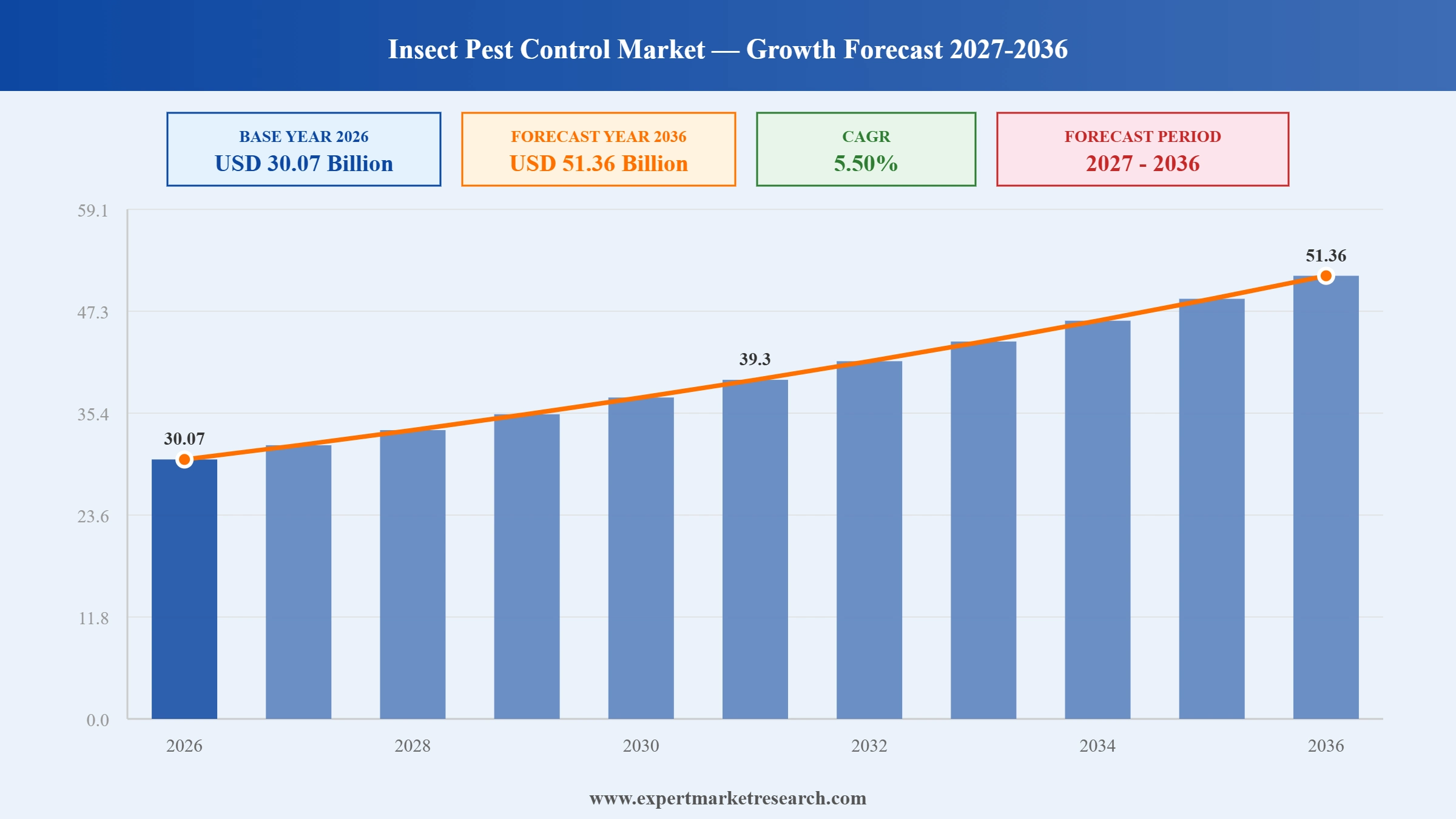
Read more about this report - Request a Free Sample
|
Insect Pest Control Market Report Summary |
Description |
Value |
|
Base Year |
USD Billion |
2025 |
|
Historical Period |
USD Billion |
2019-2025 |
|
Forecast Period |
USD Billion |
2026-2035 |
|
Market Size 2025 |
USD Billion |
28.50 |
|
Market Size 2035 |
USD Billion |
48.68 |
|
CAGR 2019-2025 |
Percentage |
XX% |
|
CAGR 2026-2035 |
Percentage |
5.50% |
|
CAGR 2026-2035 - Market by Region |
Asia Pacific |
7.5% |
|
CAGR 2026-2035 - Market by Pest Type |
Mosquitoes and Flies |
7.8% |
|
CAGR 2026-2035 - Market by Control Method |
Biological Control |
8.3% |
|
2025 Market Share by Region |
North America |
34% |
The insect pest control market is being reshaped by technology led service differentiation among the largest global operators, continued regulatory driven innovation in active ingredients, and consolidation of regional pest control operators through acquisitions. Growing demand for continuously monitored auditable commercial pest programmes and reduced risk chemistries is further reshaping the competitive landscape.
BASF SE showcased an expanded structural pest control portfolio at the PestWorld industry conference, including its Tectiva cockroach bait gel and Encircle termite detection system, reflecting continued investment in reduced risk active ingredients and detection technologies. Other companies in the market can leverage this trend by prioritising reduced risk ingredients in future product development plans.
Rentokil Terminix upgraded its PestConnect commercial monitoring network with wireless sensors that provide continuous rodent activity monitoring, resolving issues twice as fast while cutting chemical rodenticide bait use by up to 60 percent. Other companies in the insect pest control market can leverage similar sensor networks to convert inspection visits into continuously monitored digital service contracts.
Syngenta announced that its new PLINAZOLIN Technology insecticide active ingredient received United States Environmental Protection Agency registration, clearing the way for commercial launch across multiple insecticide products targeting structural and turf pests. Other companies in the insect pest control market can leverage similar regulatory approved active ingredients to expand reduced risk product portfolios.
Bayer Crop Science reported continued development of its Plenexos Care whitefly insecticide, with a planned commercial launch in Brazil targeted for 2026, extending its portfolio into higher value specialty chemistries. Other companies in the insect pest control market can leverage similar crop protection chemistry investments to extend their agricultural active ingredients into adjacent structural pest applications.
Large pest management companies are pairing connected sensors and automated equipment with centralised dashboards to convert recurring inspection visits into continuously monitored service contracts, reducing reliance on scheduled manual visits and lowering ongoing labour costs across large commercial accounts. For example, in May 2026, Ehrlich Pest Control, a Rentokil Terminix brand, completed installation of an automated mosquito repellent system powered by Thermacell at a senior living community in Florida, extending its commercial mosquito control service offering beyond scheduled technician visits.
Large, publicly listed pest control groups continue acquiring regional and independent operators to expand route density, add customer accounts, and cross sell recurring termite and mosquito contracts into newly acquired territories. Demonstrating such shifts in the insect pest control market, in June 2025, Anticimex acquired Safe Haven Pest Control, Abby's Pest and Termite Services, and Metro Guard Termite and Pest Control, marking its entry into the Texas market and adding local customer bases across the Dallas Fort Worth area.
Pest control operators in North America are pursuing bolt on acquisitions to expand residential and commercial customer bases across established service territories. Following such trends in the insect pest control market, in April 2025, Rollins, Inc. completed its acquisition of Saela Holdings, a residential and commercial pest control operator active across the western and midwestern United States, adding a substantial customer base and extending a multiyear pattern of route dense regional consolidation.
Mid-sized regional pest control providers are pursuing targeted, customer dense bolt on acquisitions to deepen coverage within existing service territories rather than expanding into new geographies. Supporting insect pest control market growth in the southeastern United States, in March 2025, Massey Services acquired Solve Pest Pros, a Jacksonville based residential pest and termite services provider, adding nearly 6,000 customers and bringing its total to 15 service centers across the Jacksonville area.
Food handling, hospitality, and healthcare customers are increasingly requesting continuous, auditable pest activity records rather than periodic manual inspection reports to satisfy internal and third-party food safety compliance requirements across their facilities. Reflecting this shift in the insect pest control market, in February 2025, Ecolab Inc. extended its Pest Intelligence programme, an IoT enabled rodent and insect monitoring service, across a wider set of commercial accounts within its Pest Elimination division.
The Expert Market Research's report titled "Insect Pest Control Market Report and Forecast 2026-2035" offers a detailed analysis of the market based on the following segments:
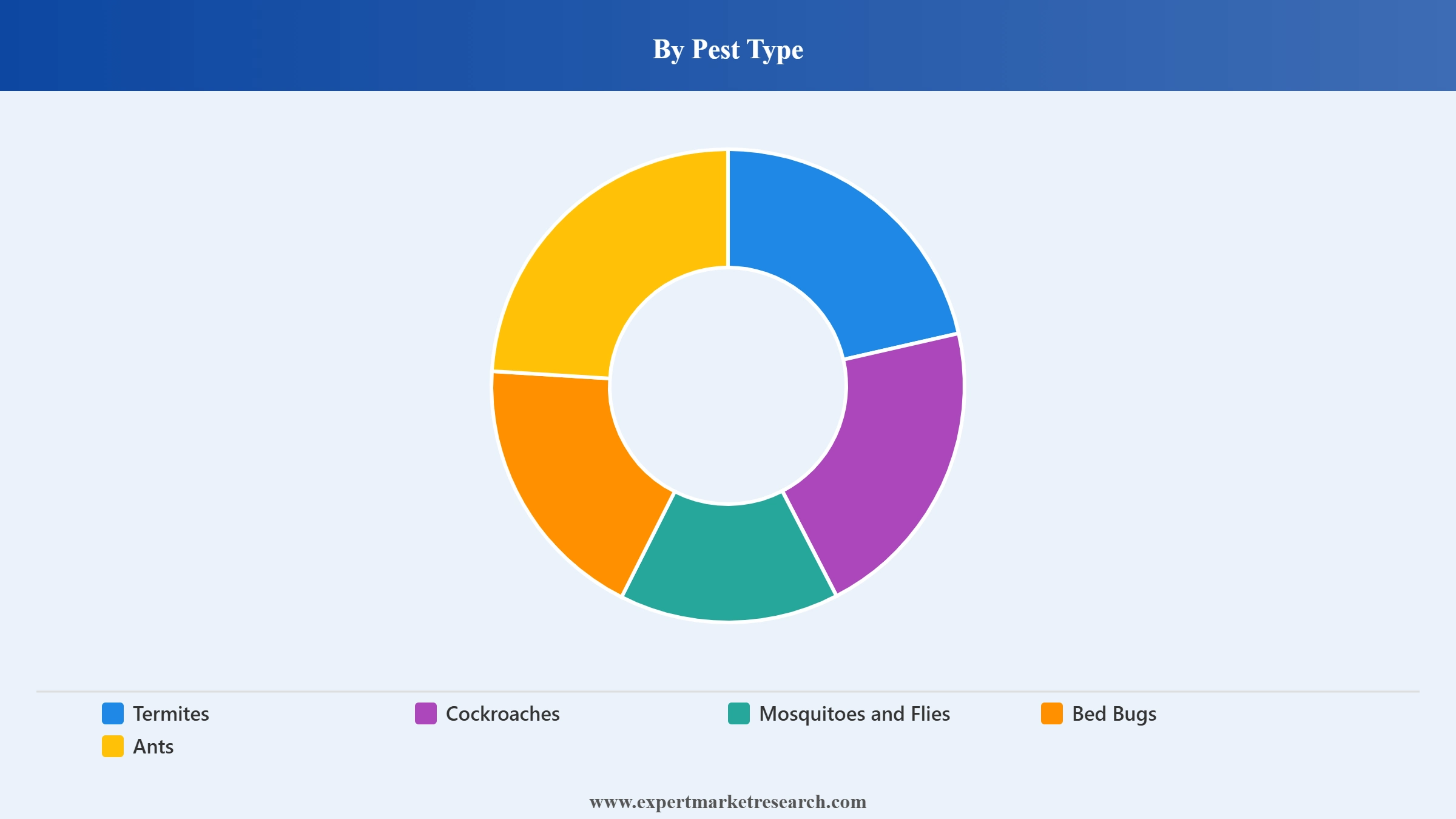
Market Breakup by Pest Type
Key Insight: Termites account for the largest share of the insect pest control market by pest type, reflecting sustained demand for pre-construction soil treatment and post construction baiting contracts across residential and commercial buildings in termite prone regions of North America and the Asia Pacific. Mosquitoes and flies form the fastest growing pest type segment, supported by intensifying public health vector surveillance and rising residential mosquito control subscriptions across tropical and sub-tropical economies. Highlighting this trend, in September 2026, FMC Corporation launched an expanded structural insecticide line targeting termites and mosquitoes across North American residential and commercial accounts. Cockroach and ant control continue to anchor recurring residential and food service contracts, while bed bug treatment demand remains concentrated in hospitality and multifamily housing accounts.
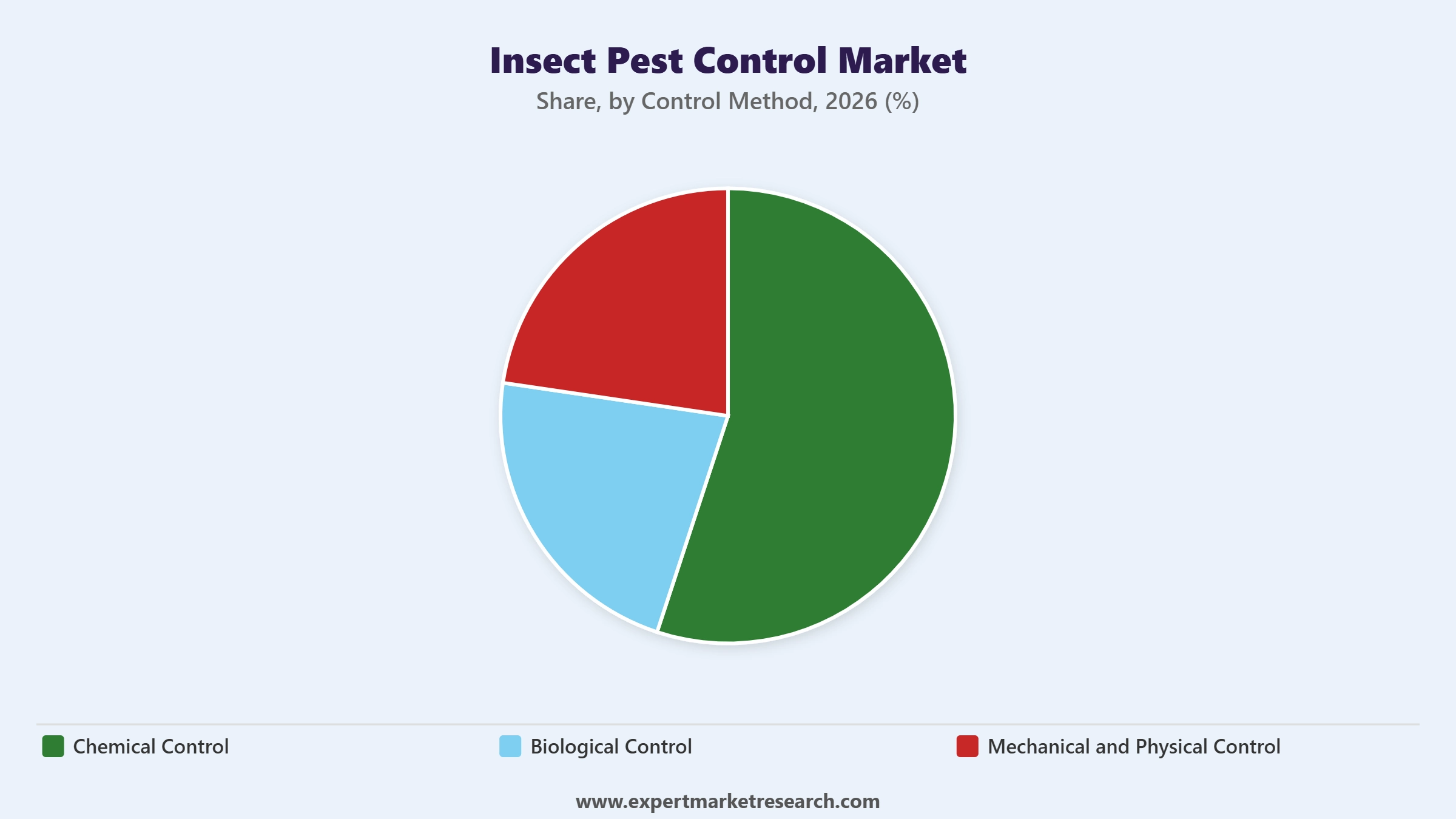
Market Breakup by Control Method
Key Insight: Chemical control remains the dominant control method within the insect pest control market, underpinned by the continued reliance of professional operators on termiticides, baits, and residual insecticides for structural and agricultural applications. Biological control is the fastest growing control method segment, as pheromone based mating disruption and microbial formulations gain regulatory favour amid tightening restrictions on legacy synthetic chemistries in several developed markets. Mechanical and physical control methods, including traps and barriers, remain complementary tools within integrated pest management programmes across both residential and commercial accounts.
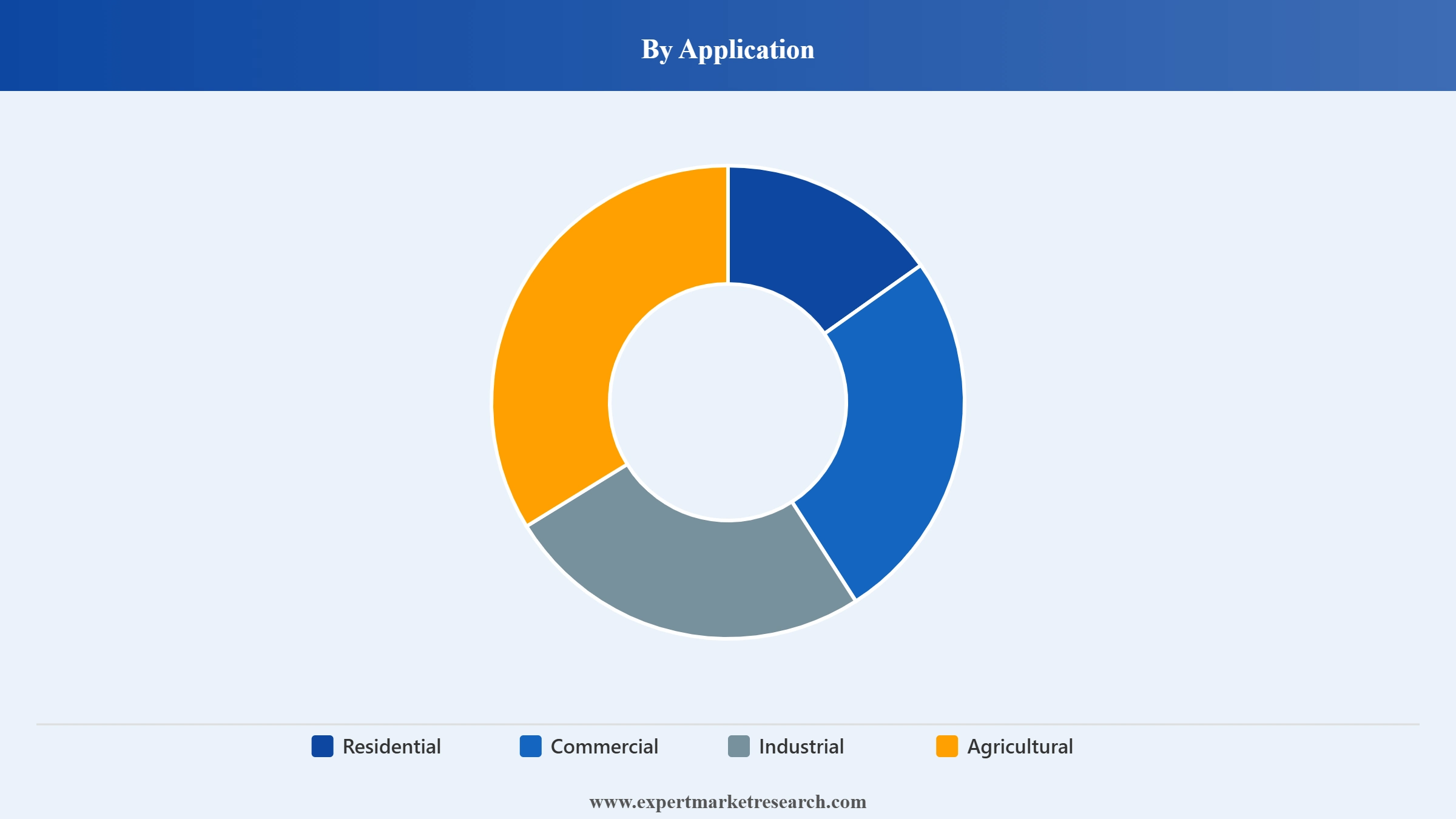
Market Breakup by Application
Key Insight: Residential applications account for the leading share of the insect pest control market by application, driven by recurring termite, cockroach, and seasonal mosquito control subscriptions across single family and multi-family housing. Commercial applications form the fastest growing application segment, as food service, hospitality, and healthcare operators increasingly contract for continuously monitored pest programmes with documented, audit ready inspection records. Industrial and agricultural applications continue to rely on scheduled treatment programmes tied to storage and processing facility audits.
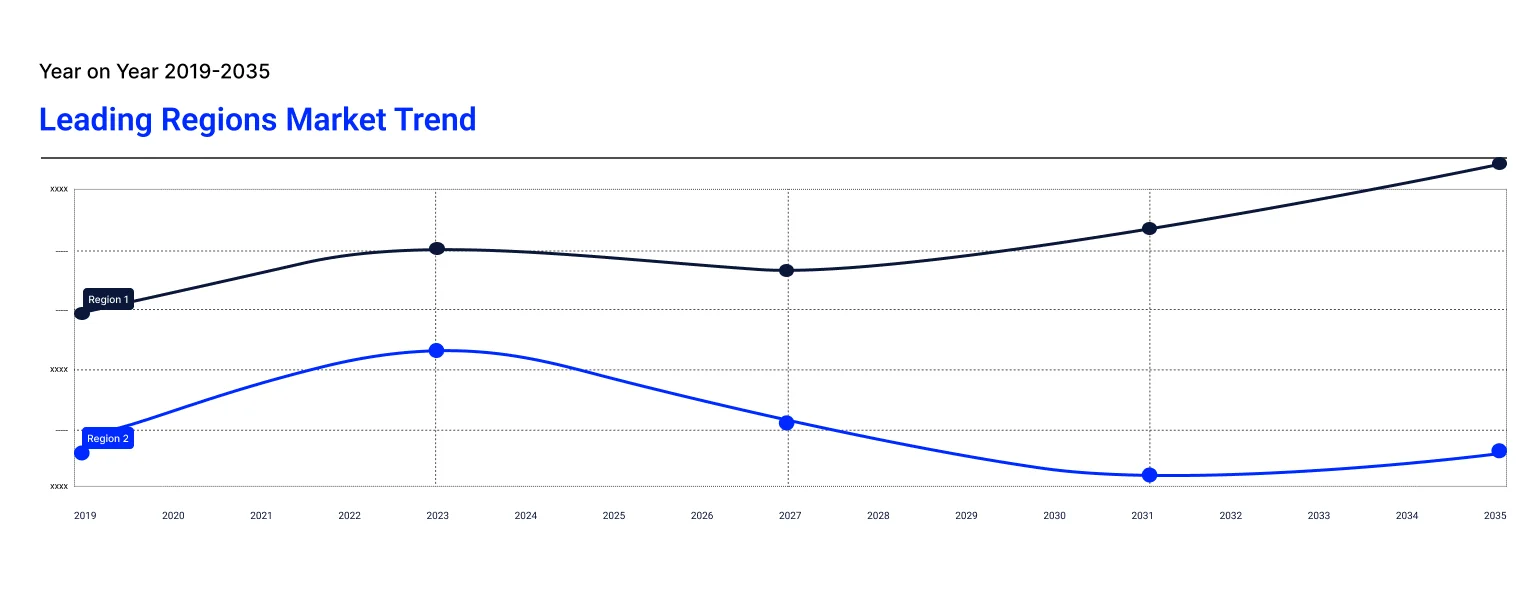
Market Breakup by Region
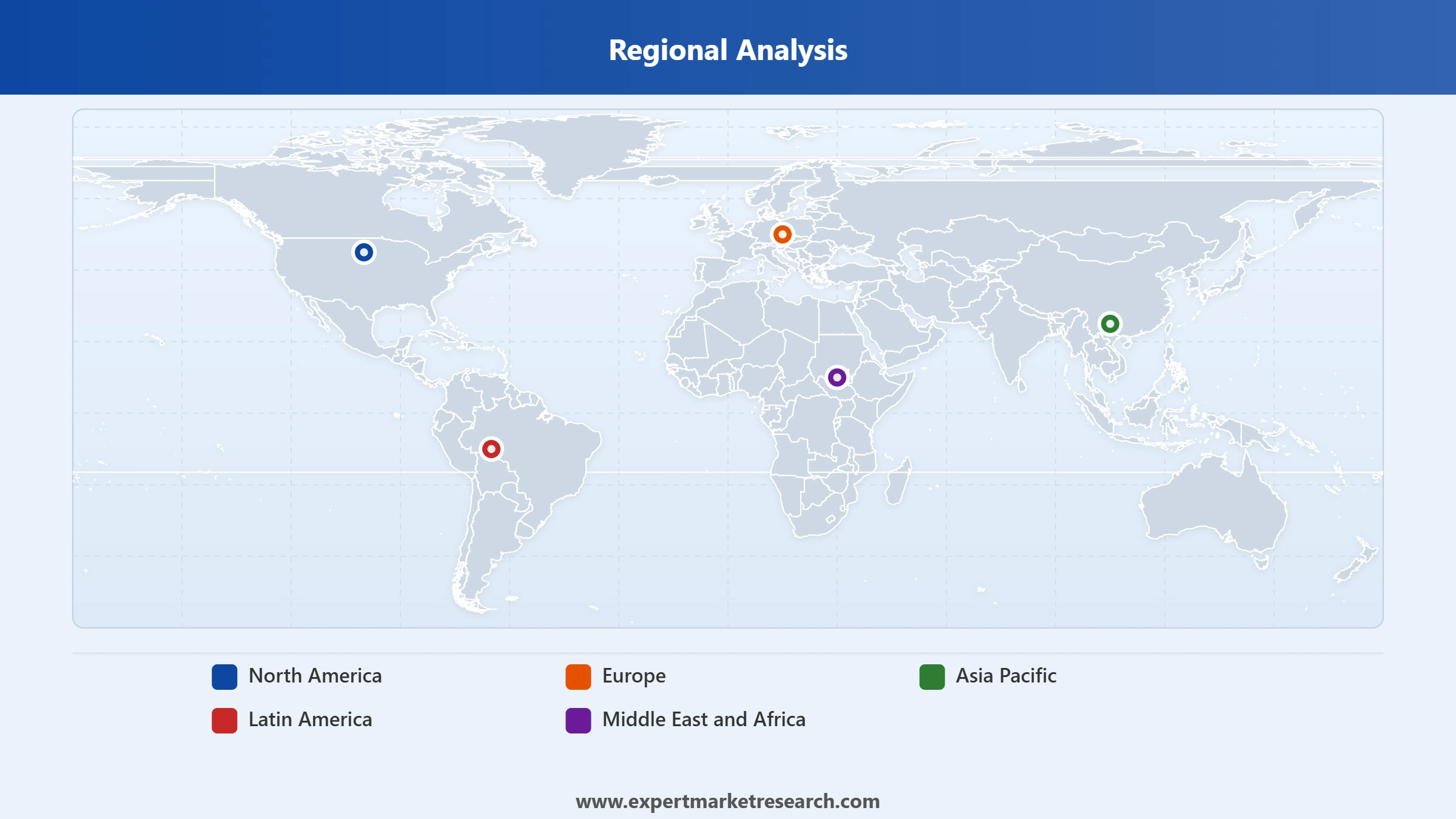
Key Insight: North America dominates the insect pest control market by region, supported by a mature, highly consolidated professional pest control services industry and high per household spending on recurring pest management contracts. Asia Pacific is the fastest growing regional segment, aided by rapid urban densification and intensifying mosquito borne disease surveillance across South and Southeast Asia. Reinforcing this trend, in November 2026, Bayer Crop Science opened an expanded structural pest control distribution network across Japan and South Korea. Europe remains a significant market anchored by established structural pest control demand, while Latin America and the Middle East and Africa witness steadier growth tied to expanding commercial food safety compliance and residential pest management adoption.
Read more about this report - Request a Free Sample
By pest type, termites dominate the market due to sustained structural pre and post construction treatment demand
Termites lead the pest type segment because professional pest control providers rely on recurring, contract-based soil treatment ahead of construction and baiting installation afterward, generating multiyear service and warranty renewal relationships. Building owners, property managers, and homebuilders in termite prone regions of North America and the Asia Pacific are the primary purchasers of these programmes, and the market benefits from the predictable, subscription like revenue that termite contracts provide to large service operators across residential and commercial portfolios.
Read more about this report - Request a Free Sample
Mosquitoes and flies represent the fastest growing pest type segment as public health agencies expand vector surveillance and community fogging programmes in response to elevated dengue case counts across tropical economies. Commercial and residential customers increasingly contract for scheduled mosquito abatement alongside termite and cockroach programmes. Illustrating this trend, in February 2026, Rollins, Inc.'s Orkin brand widened deployment of its sensor-based termite bait station monitoring system across its United States branch network, extending remote inspection coverage to residential accounts.
By control method, chemical control dominates the market due to continued reliance on termiticides and residual insecticides
Chemical control leads the control method segment as termiticides, residual insecticides, and baiting systems remain the most cost effective and widely available treatment technologies for professional operators serving structural and agricultural customers across the market. These formulations offer proven efficacy against termites, cockroaches, and ants, and are supported by an established distribution network of agrochemical manufacturers, giving pest control companies predictable product availability and pricing as they scale recurring insect pest control market service contracts across residential and commercial accounts.
Read more about this report - Request a Free Sample
Biological control is the fastest growing control method segment as pheromone based mating disruption and microbial formulations gain regulatory favour amid tightening restrictions on legacy synthetic chemistries. Customers in occupied residential buildings, food handling facilities, and healthcare settings are increasingly requesting lower toxicity treatment options. Reflecting this shift, in March 2026, Corteva Agriscience broadened distribution of its pheromone based mating disruption portfolio for structural and turf pest applications, supporting wider biological control adoption among professional operators.
By application, residential applications dominate the market due to recurring subscription-based treatment demand
Residential applications lead the application segment because homeowners in both mature and emerging housing markets increasingly purchase recurring termite, cockroach, and seasonal mosquito control subscriptions rather than one-time treatments, generating a stable base of repeat revenue for large service operators. Single family and multifamily housing developments in termite prone and vector active regions represent the largest source of residential demand, reinforcing the insect pest control market's reliance on subscription style customer relationships across the entire residential customer base.
Read more about this report - Request a Free Sample
Commercial applications represent the fastest growing application segment as food service, hospitality, and healthcare operators increasingly contract for continuously monitored pest programmes that produce documented, audit ready inspection records satisfying food safety compliance requirements. This shift toward auditable, sensor supported service delivery is broadening the addressable commercial customer base for large operators. Underscoring this shift, in October 2026, Massey Services expanded its Green Loop continuous monitoring service to additional food service and healthcare accounts across the southeastern United States.
Read more about this report - Request a Free Sample
North America dominates the market due to a mature, highly consolidated pest control services industry
North America leads the regional insect pest control market as the region hosts the largest concentration of publicly listed, multi brand pest management operators, supported by high per household spending on recurring pest management contracts and dense service networks spanning the United States and Canada. Continued acquisition led expansion by large operators consolidating regional and independent providers further reinforces route density, while established termite pretreatment and seasonal mosquito control programmes anchor recurring demand across residential and commercial accounts.
Asia Pacific is the fastest growing regional market, aided by rapid urban densification, rising residential pest management adoption, and intensifying mosquito borne disease surveillance across South and Southeast Asia. Municipal health agencies are expanding fogging and larvicide programmes as growing urban housing stock and commercial food service footprints create demand. Reflecting this momentum, in January 2026, Rentokil Initial plc opened new residential and commercial pest control service hubs across India, extending its branch network and customer growth in the country.
|
CAGR 2026-2035 - Market by |
Region |
|
North America |
5.1% |
|
Europe |
4.8% |
|
Asia Pacific |
7.5% |
|
Latin America |
6.2% |
|
Middle East and Africa |
6.6% |
The insect pest control companies feature a moderately consolidated competitive structure led by large, publicly listed multinational pest management service providers with multi-brand residential and commercial service portfolios, alongside major agrochemical manufacturers supplying professional grade termiticides, insecticides, and biological actives. Companies like Rentokil Initial plc, Rollins, Inc., and Ecolab Inc. are competing primarily through digital monitoring platform investment and route dense acquisition driven service network expansion, while BASF SE and other agrochemical manufacturers focus on reduced risk active ingredient innovation.
Leading insect pest control market players are focusing on IoT enabled pest monitoring technology, reduced risk active ingredient development, and bolt on acquisitions of regional operators to strengthen their competitive position. Increasing emphasis on continuously monitored, auditable commercial pest programmes are also enabling large service operators to expand their customer base while supporting long-term market growth.
Rentokil Initial plc, headquartered in Crawley, United Kingdom, and tracing its origins to 1925, is one of the largest pest control services providers worldwide, operating under brands including Terminix, Ehrlich Pest Control, and Presto-X across more than 90 countries. The company continues investing in its PestConnect digital monitoring network for commercial customers.
Rollins, Inc., headquartered in Atlanta, Georgia, entered the pest control industry through its acquisition of Orkin in 1964 and has since grown into one of the largest pest and termite control service groups in North America, operating the Orkin, HomeTeam Pest Defense, and Western Pest Services brands across residential and commercial customer accounts in the United States.
Ecolab Inc., headquartered in Saint Paul, Minnesota, and founded in 1923, serves commercial pest control customers through its Pest Elimination division, providing integrated pest management programmes to food processing, hospitality, healthcare, and retail customers worldwide. The division pairs technician led service visits with digital monitoring tools to help commercial customers maintain documented pest activity records for regulatory and audit purposes.
BASF SE, headquartered in Ludwigshafen, Germany, and founded in 1865, supplies the professional pest control industry through its Pest Control Solutions business, offering termiticide, rodenticide, and insecticide brands including Termidor, Selontra, Alpine, and Trelona. The business supports structural pest management companies with both chemical and reduced risk treatment technologies for termite, cockroach, and rodent control programmes.
Other key players in the market report include Anticimex AB, Bayer AG, Syngenta Group, FMC Corporation, and Massey Services, Inc., among others.
*Please note that this is only a partial list; the complete list of key players is available in the full report. Additionally, the list of key players can be customized to better suit your needs.*
Explore the latest trends shaping the insect pest control market 2026-2035 with our in-depth report. Gain strategic insights, future forecasts, and key market developments that can help you stay competitive. Download a free sample report or contact our team for customised consultation on the latest insect pest control market trends 2026.


Upto 15% Off
USD
$2499 $2249
$3999 $3599
$4999 $4249
$5999 $5099


*While we strive to always give you current and accurate information, the numbers depicted on the website are indicative and may differ from the actual numbers in the main report. At Expert Market Research, we aim to bring you the latest insights and trends in the market. Using our analyses and forecasts, stakeholders can understand the market dynamics, navigate challenges, and capitalize on opportunities to make data-driven strategic decisions.*
In 2025, the insect pest control market reached an approximate value of USD 28.50 Billion.
The market is projected to grow at a CAGR of 5.50% between 2026 and 2035.
The key players in the market include Rentokil Initial plc, Rollins, Inc., Ecolab Inc., Anticimex AB, Bayer AG, BASF SE, Syngenta Group, FMC Corporation, and Massey Services, Inc., among others.
Leading companies are pursuing route dense acquisitions, digital and IoT monitoring rollouts, and reduced risk active ingredient development to capture demand.
Key challenges include regulatory restrictions on legacy chemistries, resistance management, and fragmented competition from small independent operators.
Explore our key highlights of the report and gain a concise overview of key findings, trends, and actionable insights that will empower your strategic decisions.
|
Report Features |
Details |
|
Base Year |
2025 |
|
Historical Period |
2019-2025 |
|
Forecast Period |
2026-2035 |
|
Scope of the Report |
Historical and Forecast Trends, Industry Drivers and Constraints, Historical and Forecast Market Analysis by Segment:
|
|
Breakup by Pest Type |
|
|
Breakup by Control Method |
|
|
Breakup by Application |
|
|
Breakup by Region |
|
|
Market Dynamics |
|
|
Competitive Landscape |
|
|
Companies Covered |
|
Datasheet
One User
USD 2,499
USD 2,249
tax inclusive*
Single User License
One User
USD 3,999
USD 3,599
tax inclusive*
Five User License
Five User
USD 4,999
USD 4,249
tax inclusive*
Corporate License
Unlimited Users
USD 5,999
USD 5,099
tax inclusive*
*Please note that the prices mentioned below are starting prices for each bundle type. Kindly contact our team for further details.*
Flash Bundle
Small Business Bundle
Growth Bundle
Enterprise Bundle
*Please note that the prices mentioned below are starting prices for each bundle type. Kindly contact our team for further details.*
Flash Bundle
Number of Reports: 3
20%
tax inclusive*
Small Business Bundle
Number of Reports: 5
25%
tax inclusive*
Growth Bundle
Number of Reports: 8
30%
tax inclusive*
Enterprise Bundle
Number of Reports: 10
35%
tax inclusive*
How To Order

Select License Type
Choose the right license for your needs and access rights.

Click on ‘Buy Now’
Add the report to your cart with one click and proceed to register.

Select Mode of Payment
Choose a payment option for a secure checkout. You will be redirected accordingly.
Strategic Solutions for Informed Decision-Making
Gain insights to stay ahead and seize opportunities.

Get insights & trends for a competitive edge.

Track prices with detailed trend reports.

Analyse trade data for supply chain insights.

Leverage cost reports for smart savings

Enhance supply chain with partnerships.

Connect For More Information
Our expert team of analysts will offer full support and resolve any queries regarding the report, before and after the purchase.
Our expert team of analysts will offer full support and resolve any queries regarding the report, before and after the purchase.
We employ meticulous research methods, blending advanced analytics and expert insights to deliver accurate, actionable industry intelligence, staying ahead of competitors.
Our skilled analysts offer unparalleled competitive advantage with detailed insights on current and emerging markets, ensuring your strategic edge.
We offer an in-depth yet simplified presentation of industry insights and analysis to meet your specific requirements effectively.




